Artwork
Portrait of a Young Woman
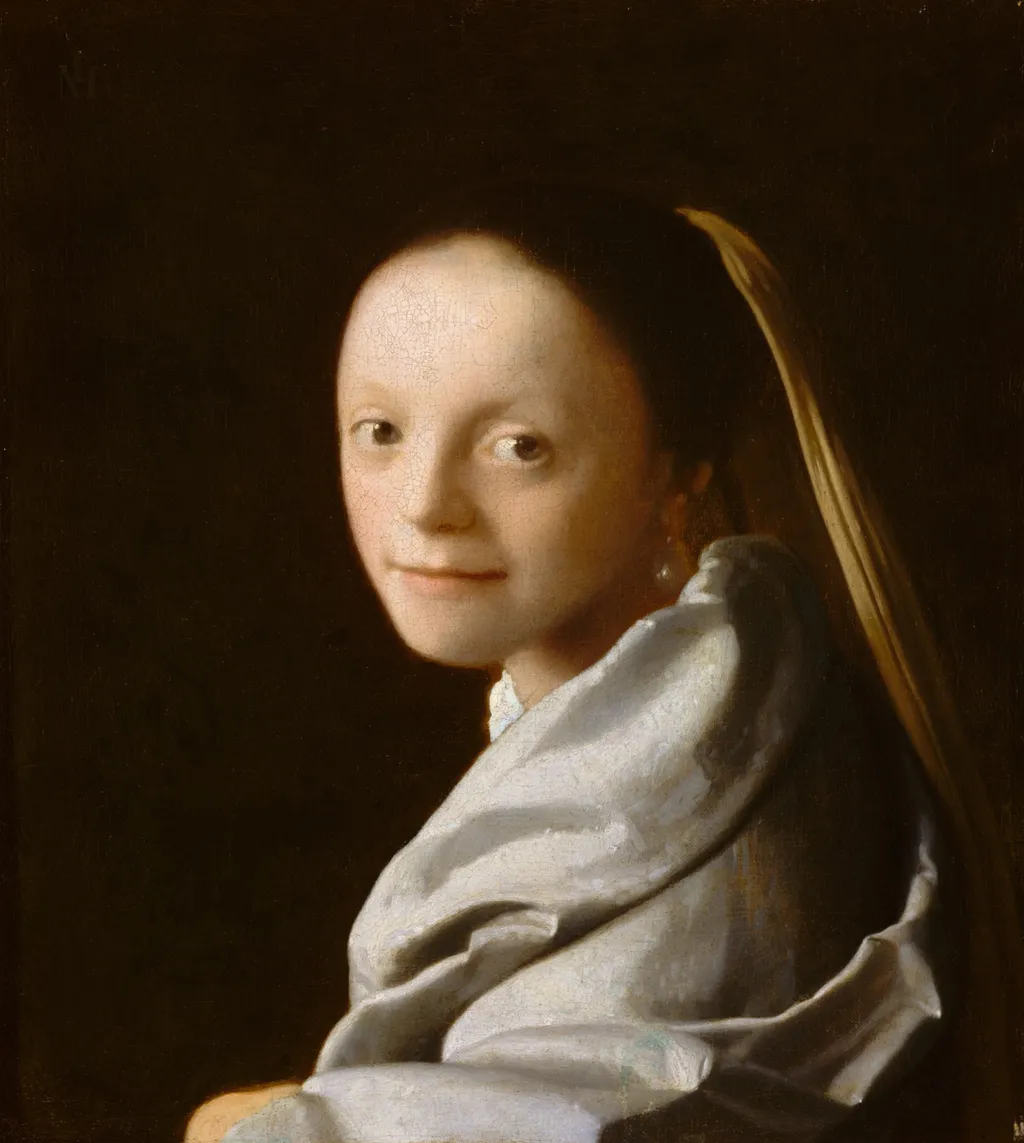
Portrait of a Young Woman is an oil painting by the Dutch Golden Age artist Johannes Vermeer. It dates from 1665 and is held in the collection of the Metropolitan Museum of Art.
About this work
Technique & Style
The figure is set against a uniformly dark, nearly black background that isolates the face and heightens the quiet, introspective mood.
The work is executed in oil paint on a plain woven canvas support, measuring about 44.5 × 40 cm. Vermeer's handling builds thin, translucent layers that model the sitter's soft skin, the pearl earring and the silk scarf with delicate gradations of light, while emphasizing his skill in rendering light on glossy fabrics. The figure is set against a uniformly dark, nearly black background that isolates the face and heightens the quiet, introspective mood. The painting is regarded as a tronie rather than a formal portrait, presenting an ordinary, broad-featured visage with a high forehead and thin lips, rendered without idealization.
History & Provenance
The work, titled Portrait of a Young Woman, was painted by Johannes Vermeer around 1665 as a tronie rather than a specific portrait. It entered the collection of Pieter Claesz van Ruijven before 1674, passing to his widow Maria de Knuijt and daughter Magdalena until 1695, then to Jacob Dissius, whose 1696 sale included the painting. It later passed through several hands before Prince Auguste Marie Raymond d'Arenberg acquired it in 1829, keeping it within his family until the 1950s.
Charles and Jayne Wrightsman purchased it privately and donated it to the Metropolitan Museum of Art, New York, in 1979 in memory of Theodore Rousseau, Jr. The work's exhibition history is not detailed in the cited sources.
Context
Scholars frequently classify Study of a Young Woman as a tronie, a Dutch 17th-century genre focused on expression and character rather than formal portraiture. Its composition and near-identical dimensions link it closely to Girl with a Pearl Earring, leading some to view it as a pendant or variant of that work. The sitter's unidealized features suggest the painting may have been a private commission or a depiction of the artist's daughter, Maria.
Art historian Edward Snow interpreted the work as transforming a desire for perfection into an acceptance of human flaws. The painting exemplifies Vermeer's mastery of light on fabric and his ability to evoke viewer engagement through the subject's direct gaze. Its dark background isolates the figure, a technique also found in contemporary portraits by artists like Frans van Mieris the Elder, situating the work within broader 1660s Dutch artistic trends.
Legacy
The painting's later reputation rests largely on its association with Vermeer's Girl with a Pearl Earring; scholars frequently describe it as a variant or pendant due to its near-identical dimensions, dark background, pearl earring and shoulder scarf. Classified as a tronie, it is valued for its study of expression and costume rather than a formal likeness. Its possible execution with optical aids has sparked debate linked to the Hockney–Falco thesis, and Edward Snow's 1994 reading praises its portrayal of flawed beauty as a 'loving acceptance.'
After the Wrightsmans' 1979 donation to the Metropolitan Museum of Art, the work has become a touchstone for Vermeer studies and public appreciation.
Overview
Johannes Vermeer's oil painting, known as "Portrait of a Young Woman" (also titled "Study of a Young Woman"), was completed between 1665 and 1667. This work is housed in the Metropolitan Museum of Art in New York. It is frequently considered alongside Vermeer's more famous "Girl with a Pearl Earring" due to their shared period of creation and striking similarities in size and compositional approach.
Subject & Meaning
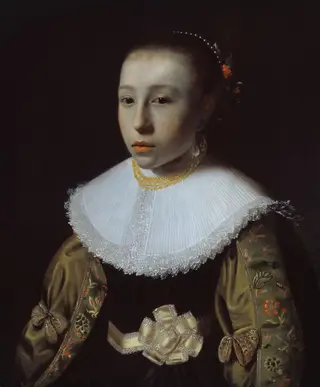
The painting depicts a young woman with light skin and pale lips, her gaze subtly directed to the side. Her hair is simply arranged, and a soft white collar falls over her shoulders, creating a strong contrast with the dark background. A gold earring near her ear catches the light, drawing attention to her profile. The composition focuses intently on her face, emphasizing her quiet demeanor.
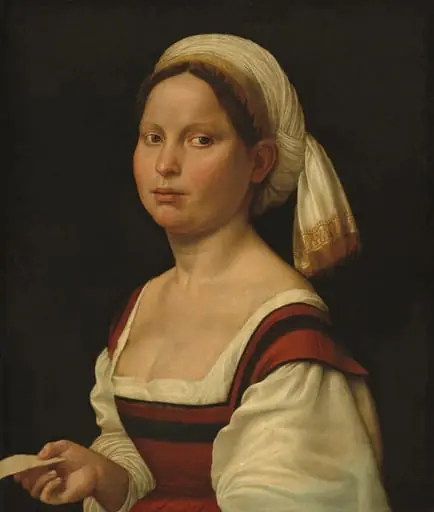
Own this work as a print
Artist & collection
Artist
Johannes Vermeer ( vər-MEER, vər-MAIR, Dutch:; see below; also known as Jan Vermeer; October 1632 – 15 December 1675) was a Dutch painter who specialized in domestic interior scenes of middle-class life.

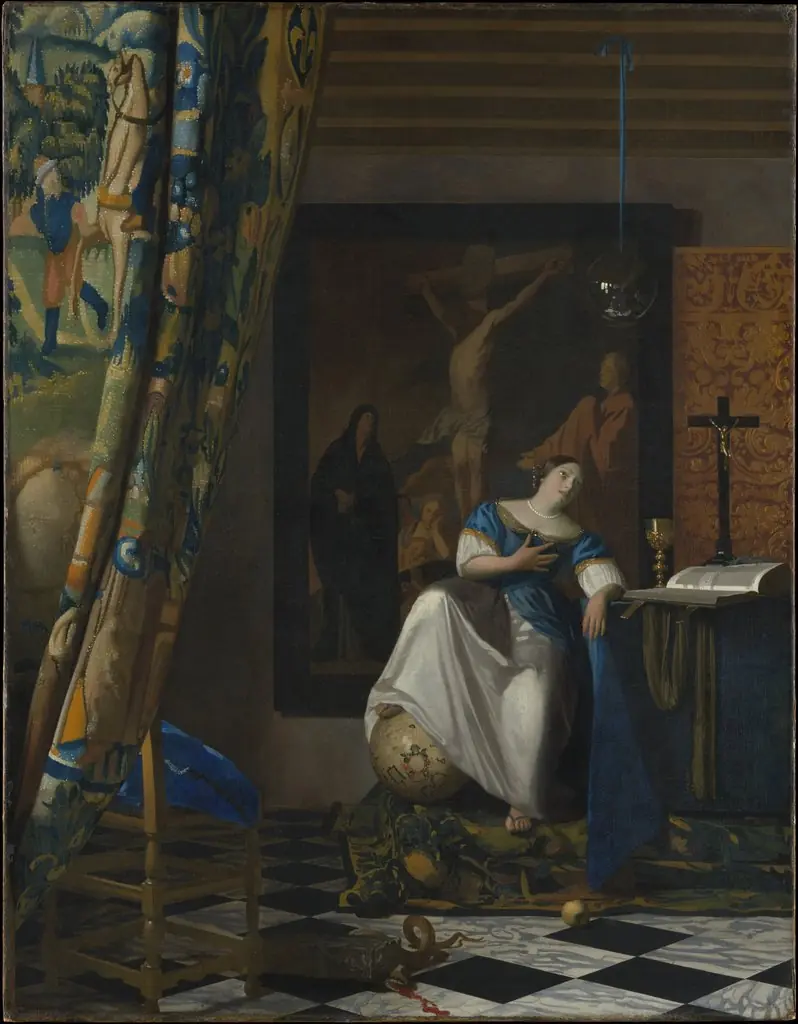
- Portrait of a Young Woman
 The Smiling Girl
 Portrait of a Young Woman
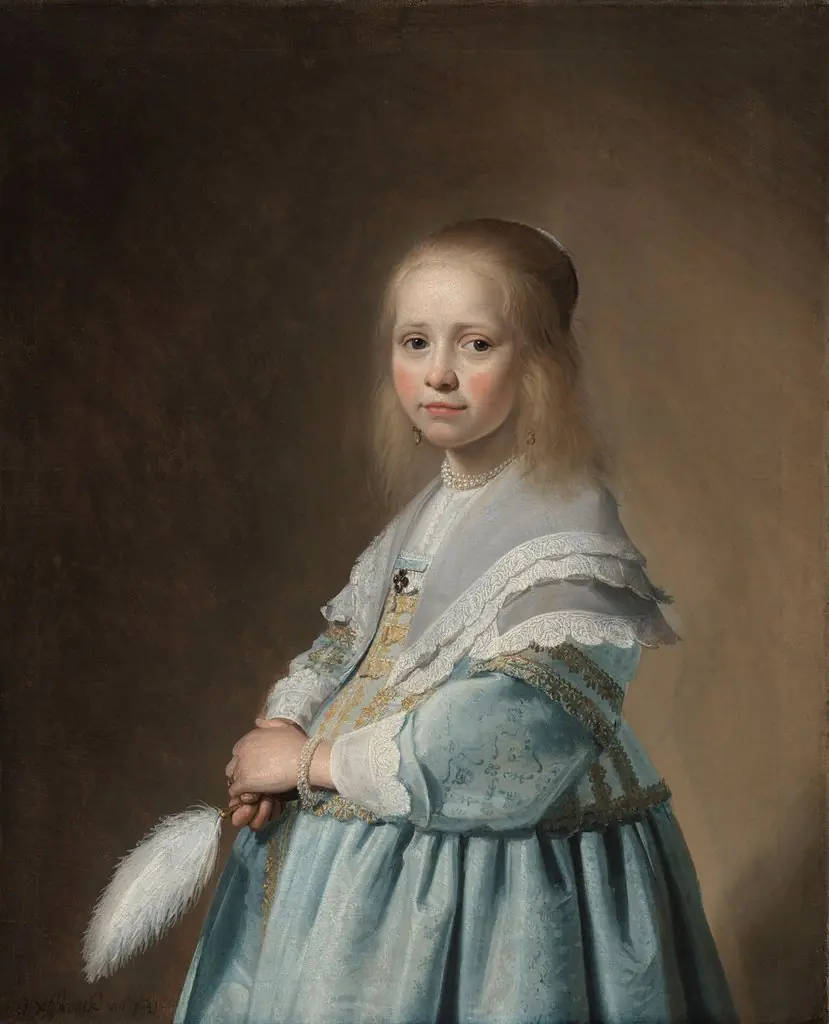 Portrait of a Girl Dressed in Blue
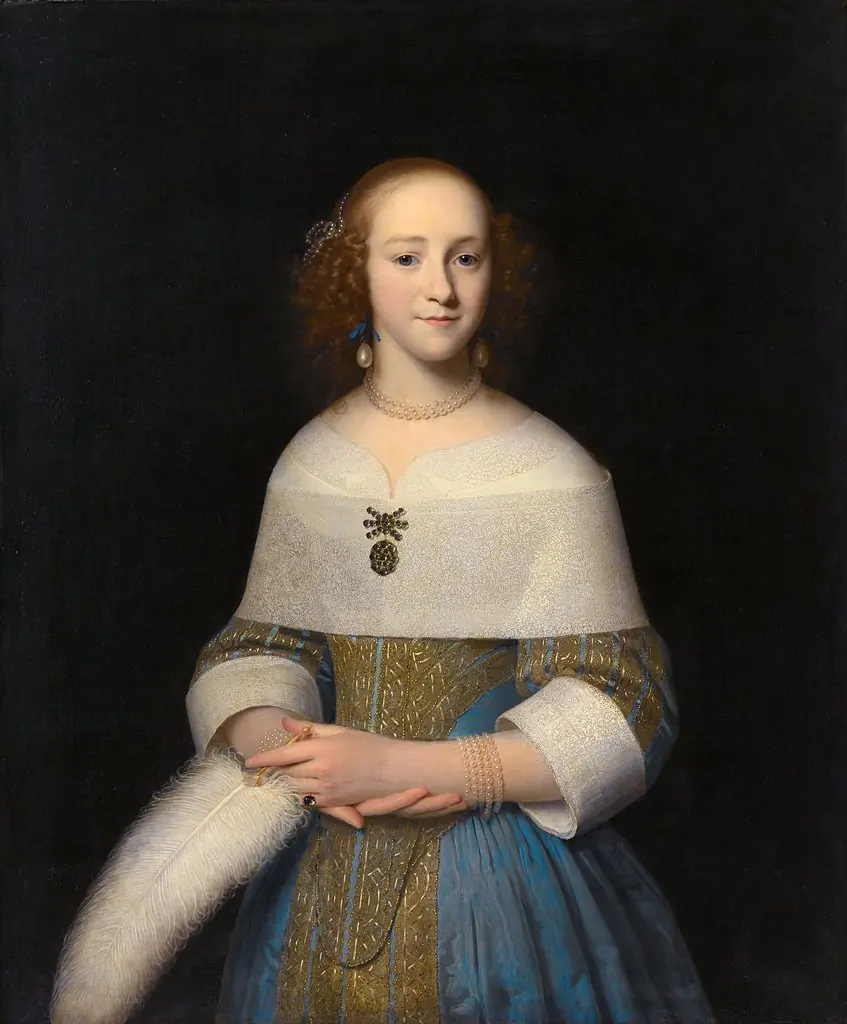 Portrait of a Young Lady
 Portrait of a Girl Dressed in Blue
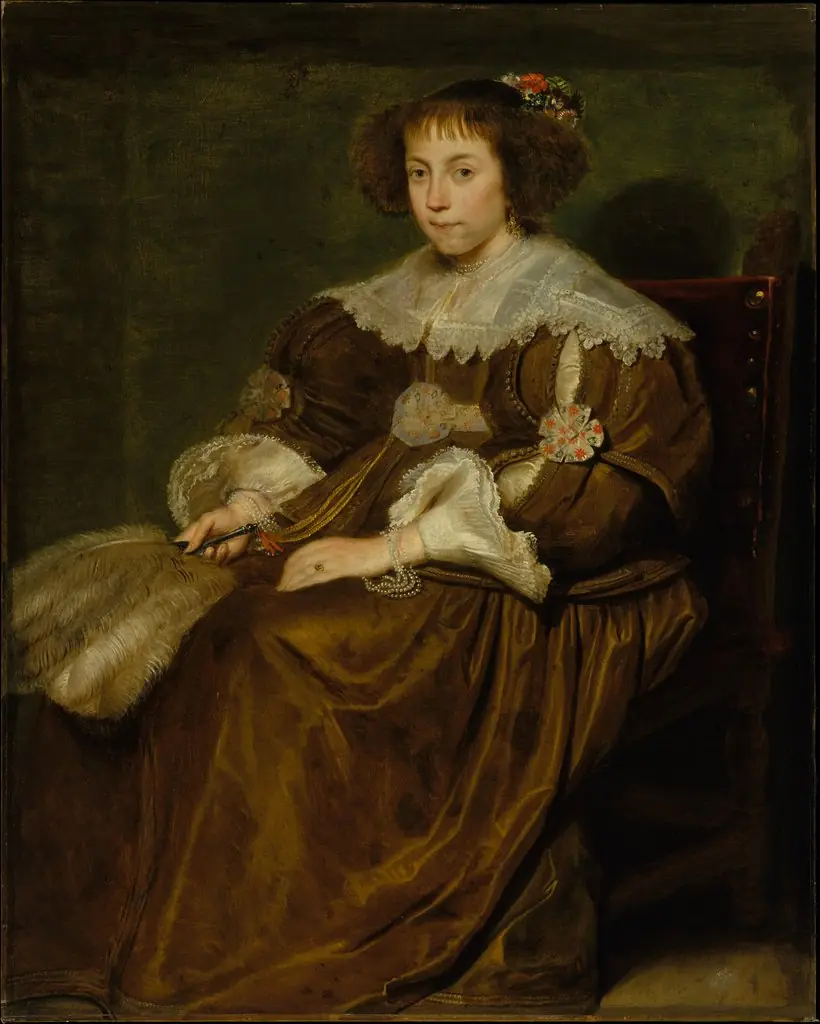 Portrait of a Young Woman
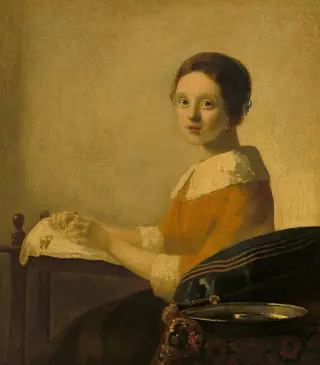 The Lacemaker
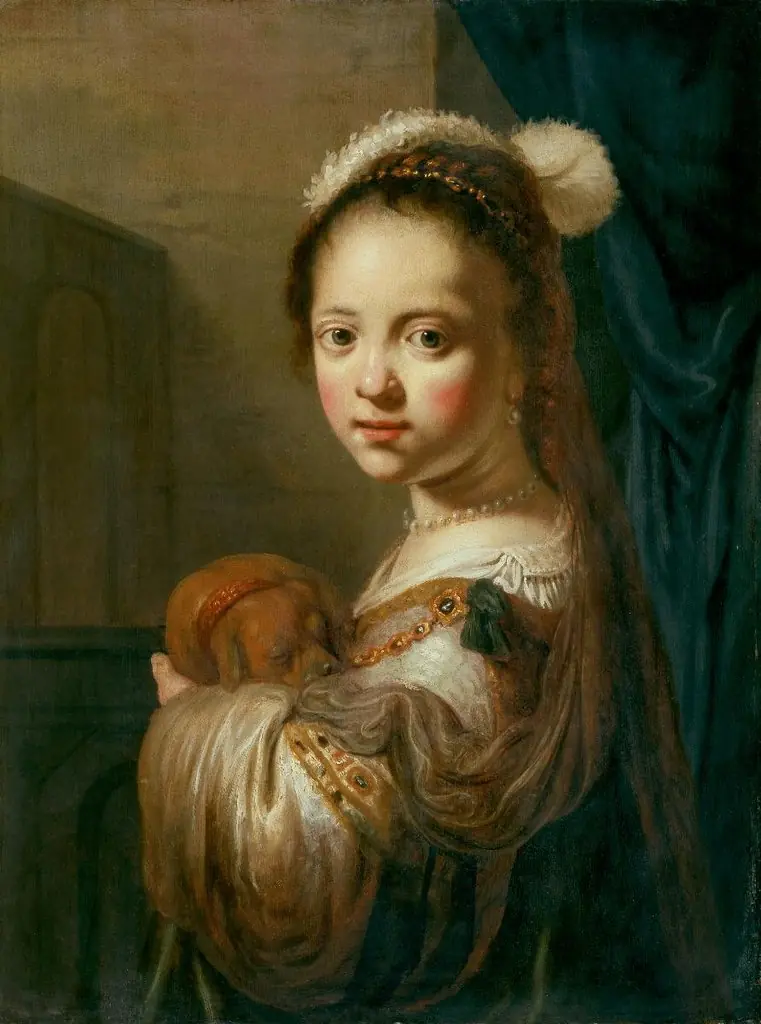 Mädchen mit einem kleinen Hund im Arm
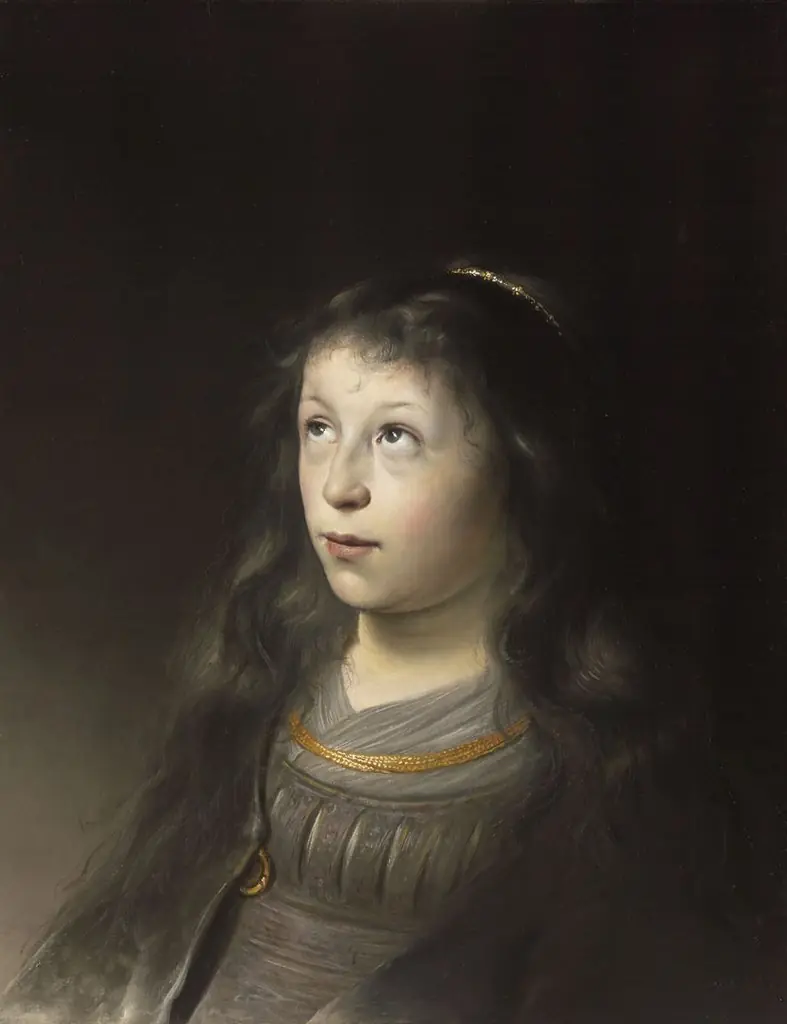 Head of a Young Girl
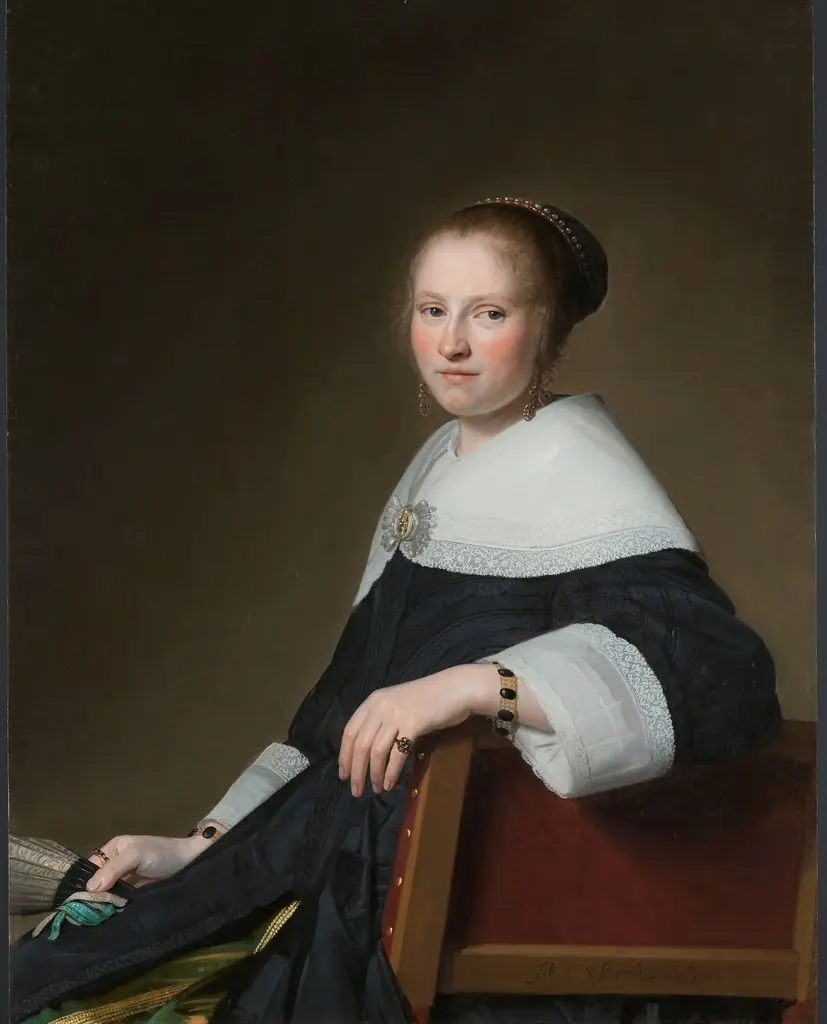 Portrait of Maria van Strijp
 Portrait of a Young Girl