Artwork
Edward Livingston
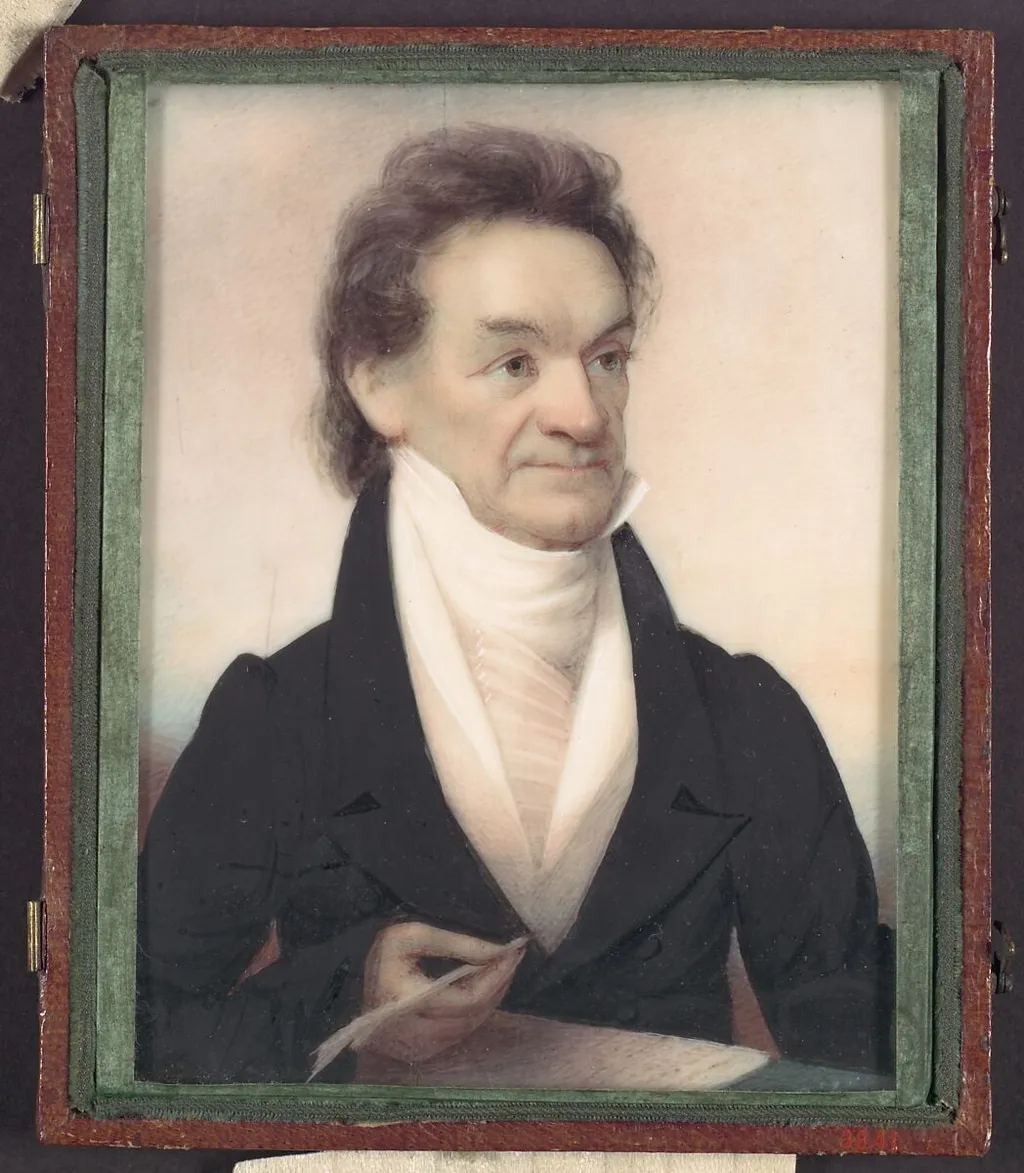
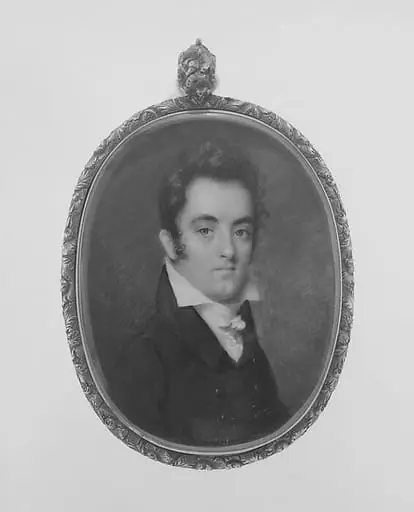
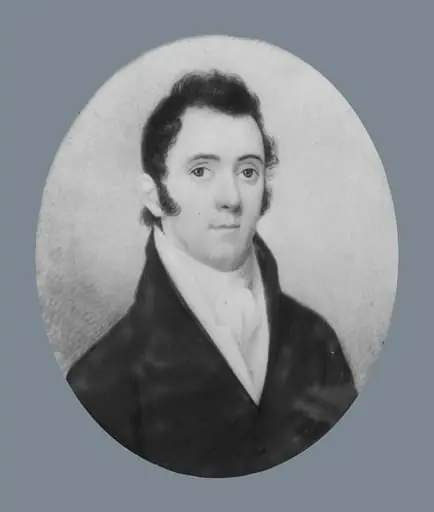
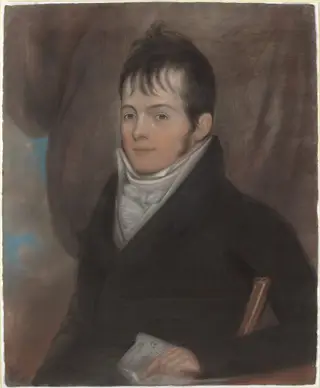
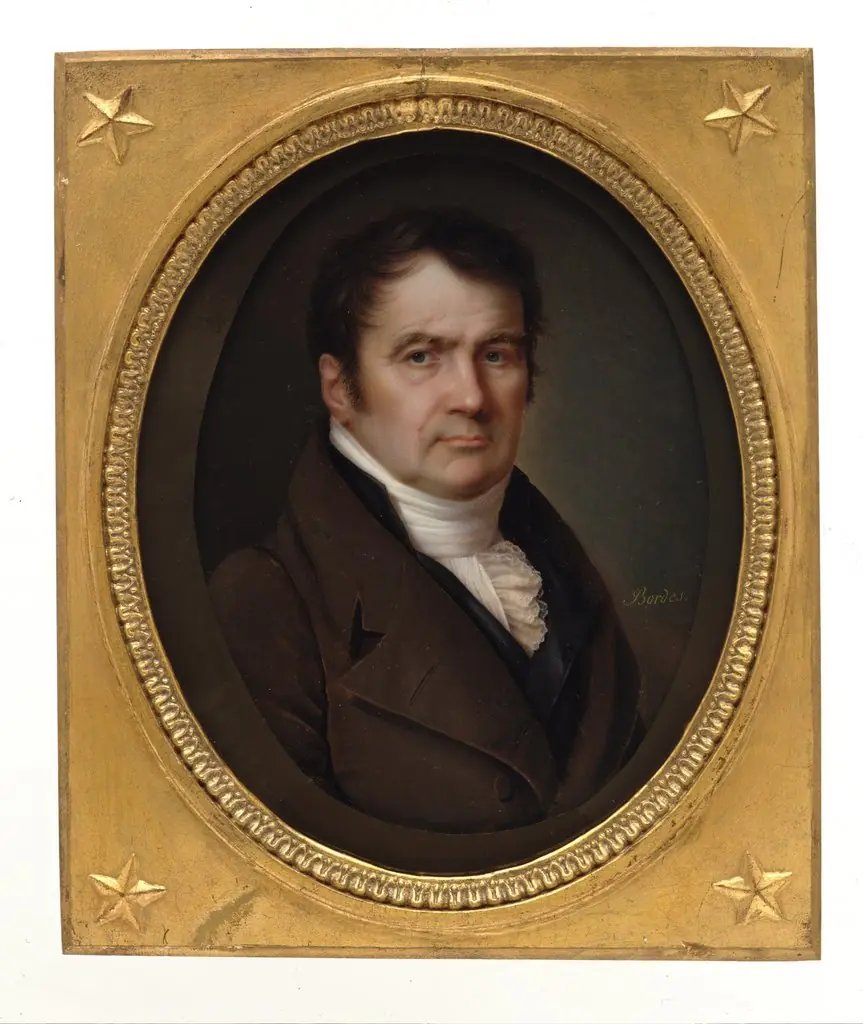
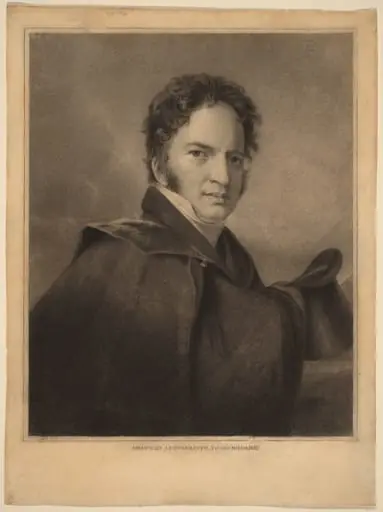
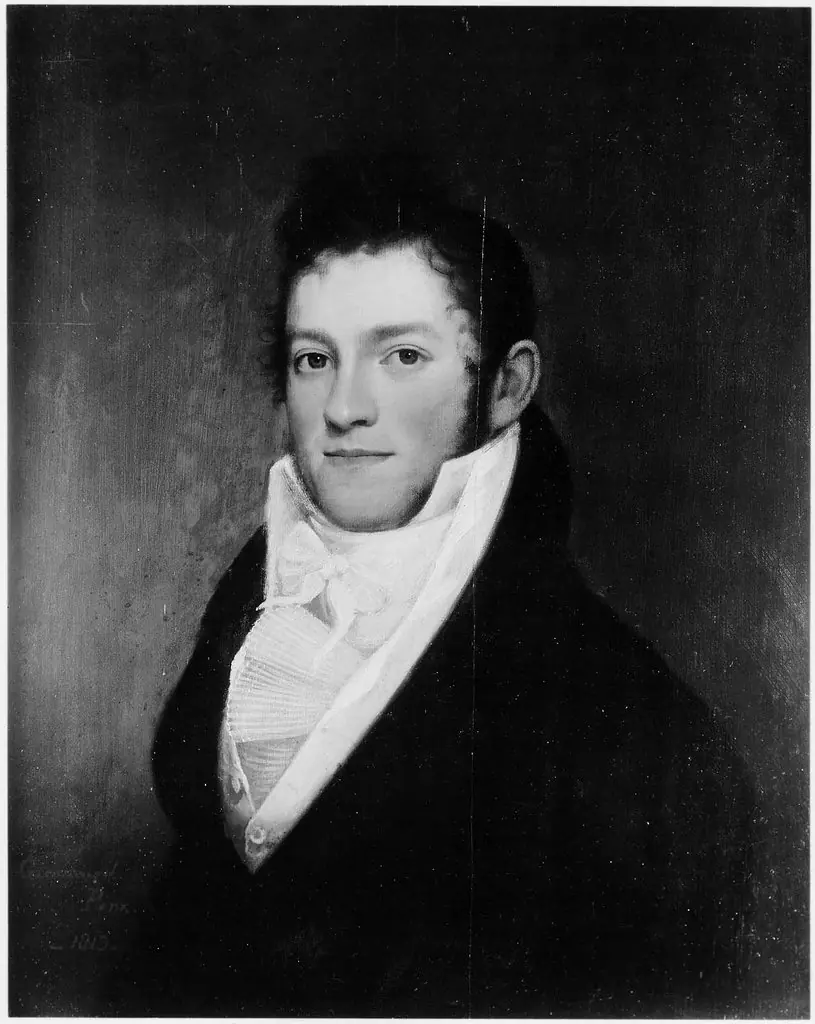
Edward Livingston is a watercolor painting by the American Folk Art artist Anson Dickinson. It dates from 1827 and is held in the collection of the Metropolitan Museum of Art.
About this work
Technique & Style
A quill is included among the depicted attributes, signaling Livingston's identity as a man of letters and legal or scholarly distinction.
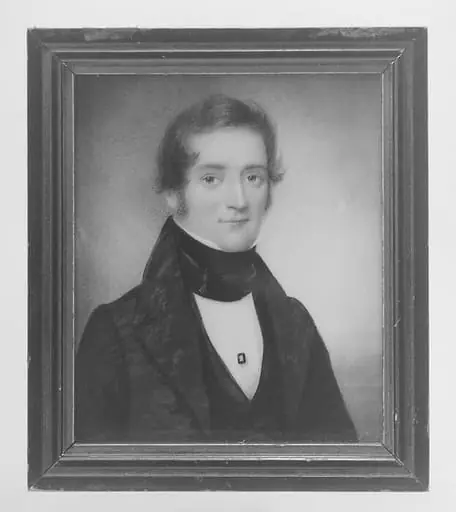
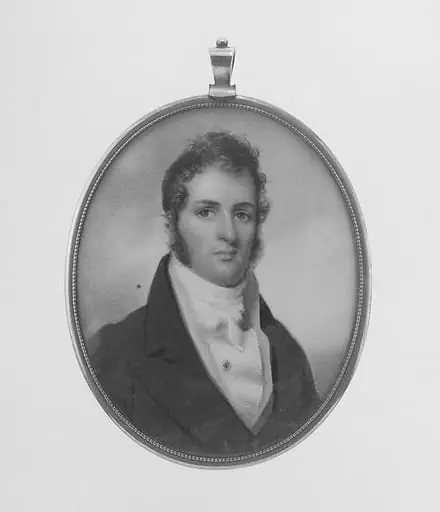
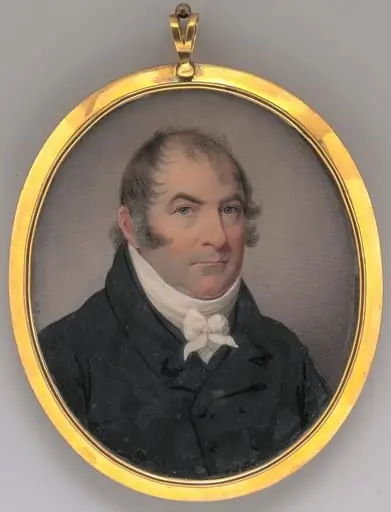
The portrait of Edward Livingston by Anson Dickinson is executed in watercolor on ivory, a miniature format characteristic of early nineteenth-century American portraiture. The support of ivory, prized for its luminous translucency, allowed the watercolor pigments to be applied in thin, delicate layers that produced a soft, lifelike rendering of the sitter's features. The work is a small-scale portrait, measuring 10.5 cm in height by 8.3 cm in width, consistent with the intimate dimensions typical of ivory miniatures intended for private viewing.
Stylistically, the composition adheres to the conventions of formal portrait miniatures of the period, presenting the subject in a restrained, dignified manner with attention to facial likeness. A quill is included among the depicted attributes, signaling Livingston's identity as a man of letters and legal or scholarly distinction.
History & Provenance
Edward Livingston was painted in 1827 by American miniaturist Anson Dickinson, who rendered the sitter in watercolor on ivory. The work depicts Livingston holding a quill, reflecting his role as a statesman and jurist. After its creation, the portrait entered the collection of the Metropolitan Museum of Art, where it is housed in the American Wing.
No earlier owners or commission details are recorded in the available sources, so the known provenance begins with Dickinson’s execution and continues with the Met’s stewardship.
Legacy
The portrait of Edward Livingston by Anson Dickinson, painted in 1827, is part of The American Wing’s collection at the Metropolitan Museum of Art and is recognized as an early‑American portrait that contributes to scholarship on the period’s political figures. Its inclusion in a major museum’s canonical holdings has allowed the work to serve as a reference point for studies of early‑American portraiture and the visual representation of public officials. The painting’s provenance, dimensions, and date are documented in museum records, supporting its reputation as a historically significant piece that continues to influence interpretations of early‑American art and its diplomatic subjects.
Overview
This miniature portrait depicts Edward Livingston, rendered in watercolor on ivory. The artwork, part of The American Wing collection, presents a man seated at a desk, engaged in writing. Such small-scale portraits were frequently created to be easily transportable, often carried as personal mementos within lockets or pockets, reflecting a common practice for preserving likenesses during the period.
Subject & Meaning
Edward Livingston is portrayed in a dark coat, seated at a desk with a quill poised over paper, suggesting an intellectual or professional occupation. His calm demeanor and direct gaze toward the viewer establish a sense of engagement. The intimate scale of the portrait, combined with the focused depiction of the sitter, emphasizes his individual presence and perhaps his significance to the original owner.
Artist & collection

Artist
Anson Dickinson (19 April 1779 – 9 March 1852) was an American painter of miniature portraits who achieved fame during his lifetime, producing a very large number of works, but who is now largely forgotten.