Artwork
Self-portrait
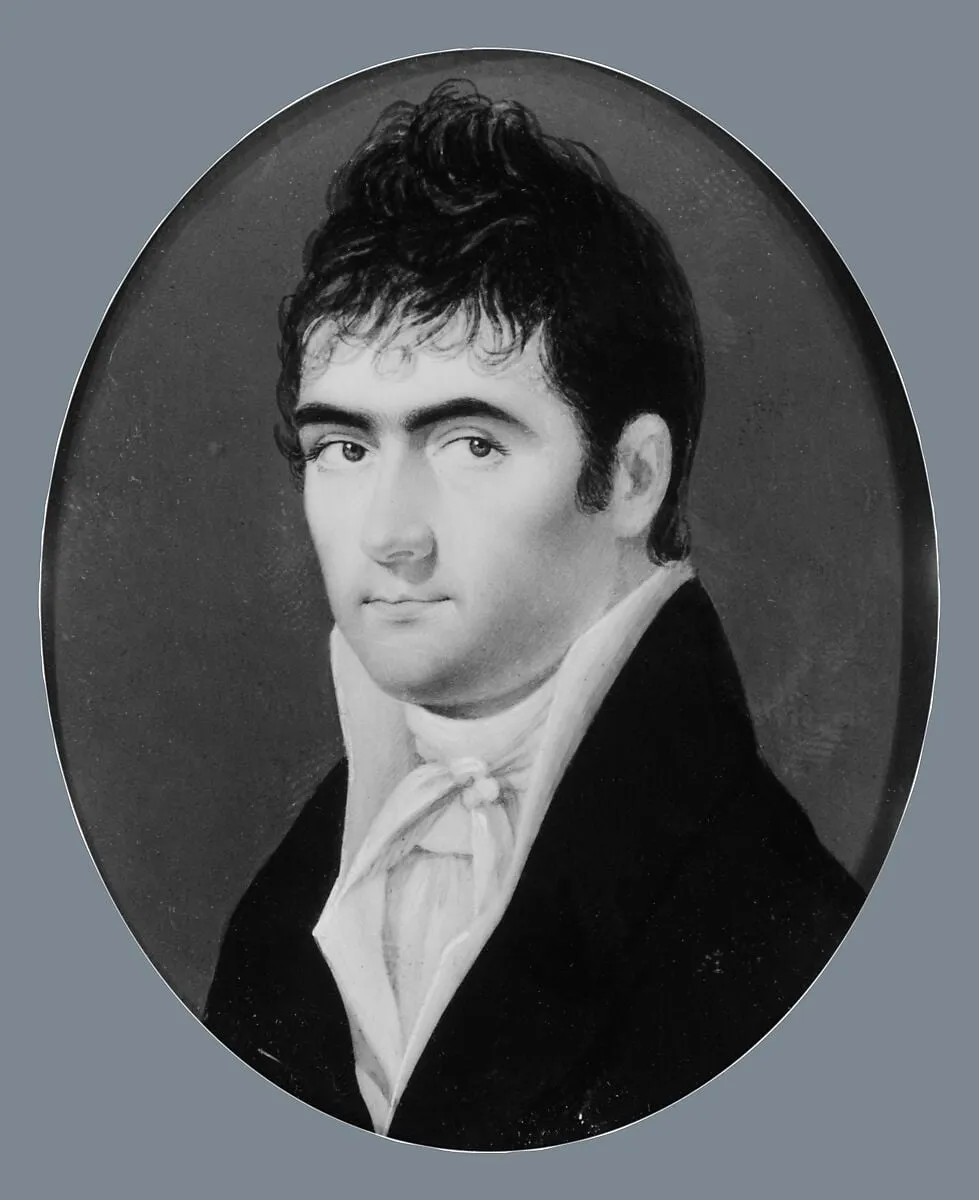
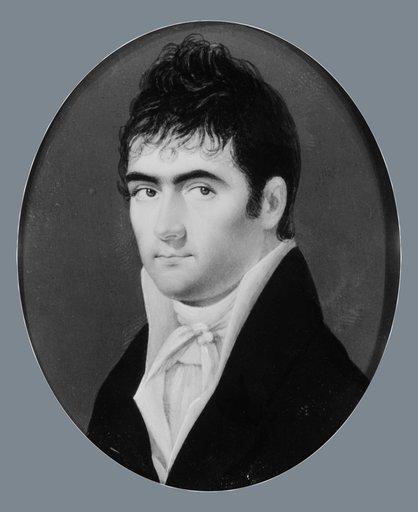
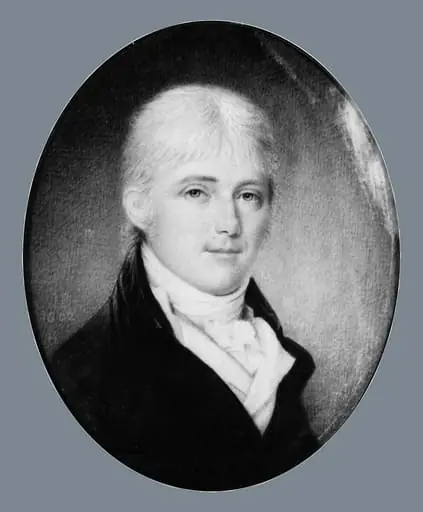
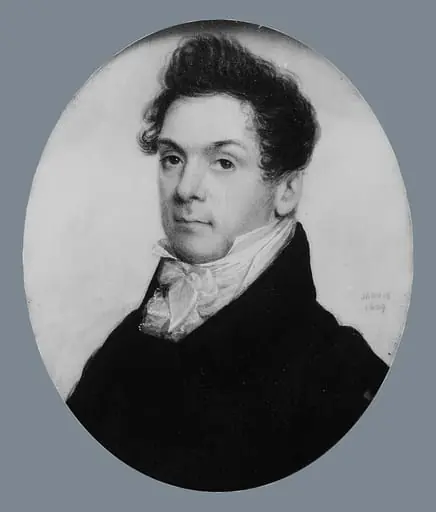
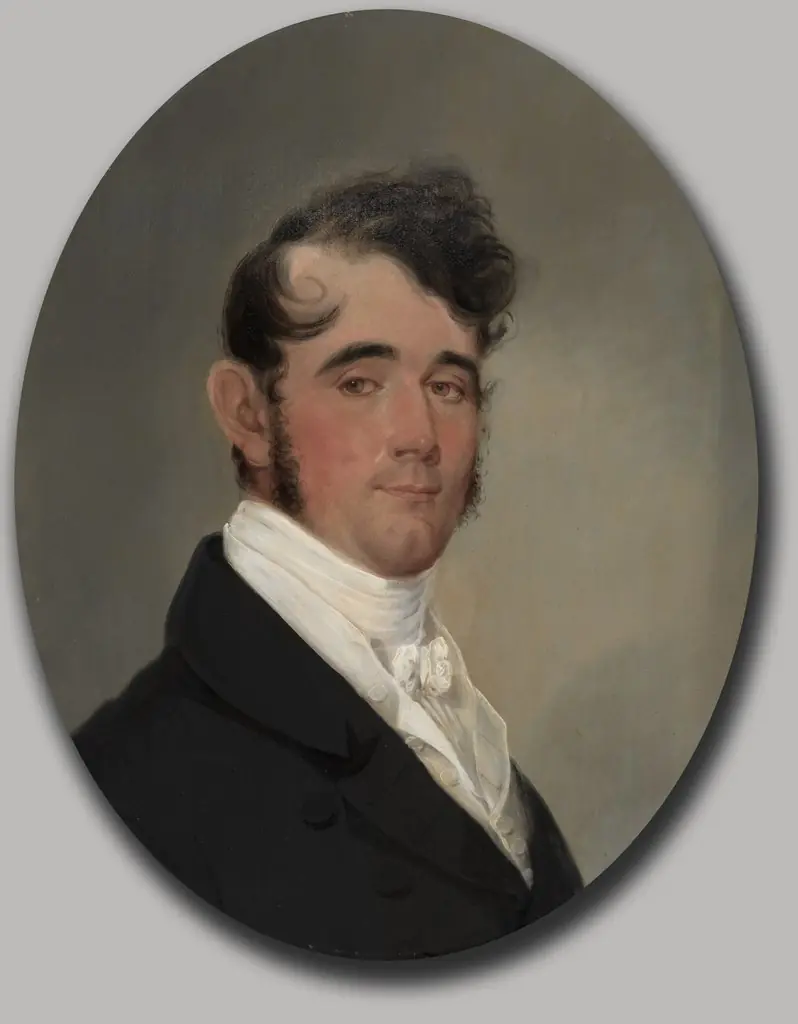
Self-portrait is a watercolor painting by the American Folk Art artist Thomas Gimbrede. It dates from 1805 and is held in the collection of the Metropolitan Museum of Art.
- Accession no.
- 38.146.7
- Credit line
- Fletcher Fund, 1938
About this work
Technique & Style
The handling favors fine, controlled brushwork typical of miniature portraiture, allowing delicate modeling of facial features and subtle transitions in tone.
Executed in 1805, the self-portrait is rendered in watercolor on a small ivory support measuring 7.6 cm in height and 6.2 cm in width. The handling favors fine, controlled brushwork typical of miniature portraiture, allowing delicate modeling of facial features and subtle transitions in tone. Stylistically, the work adheres to early nineteenth-century neoclassical conventions in its restrained palette and emphasis on linear precision, while the intimate scale and refined technique align with the portrait miniature genre’s conventions for conveying individual likeness and social status.
History & Provenance
Thomas Gimbrede created the watercolor self-portrait on ivory in 1805. The work, measuring 7.6 by 6.2 centimeters, depicts the artist himself. It is currently held in the collection of the Metropolitan Museum of Art, specifically within The American Wing.
The available records do not detail a specific commission or the intermediate steps of its ownership chain prior to its acquisition by the museum. The piece is classified as a portrait and is dated to the year 1805.
The self‑portrait by Thomas Gimbrede, created in 1805, is held by the Metropolitan Museum of Art, where it appears in the American Wing’s collection. The work is recorded as a watercolor on ivory portrait within that wing, and its classification is listed as a portrait. The available sources do not provide an explicit accession or inventory number, nor do they record a detailed exhibition history beyond its inclusion in the museum’s permanent displays of the American Wing.
Consequently, the only confirmed provenance is its presence in the Metropolitan Museum of Art’s American Wing collection since at least 1805.
Legacy
The 1805 watercolor self‑portrait by Thomas Gimbrede entered the Metropolitan Museum of Art and is now part of The American Wing, a department dedicated to American art. Its inclusion in this collection has helped shape a modest but recognized reputation for Gimbrede as an early American portraitist, influencing later scholarship on the nation’s early portrait tradition. The work’s presence in a major public institution has ensured continued visibility, allowing scholars and audiences to reference it when discussing the development of self‑portraiture in the United States during the early nineteenth century.
Overview
Thomas Gimbrede's Self-portrait, executed in 1805, is a miniature watercolor on ivory depicting the artist in a dark coat, gazing directly at the viewer with his face illuminated by soft side lighting. Measuring smaller than a playing card, the work exemplifies the delicate technique required for ivory miniatures, a medium then gaining prominence in American portraiture. Created when most artists favored oil on canvas, this piece stands as one of the earliest known American self-portraits in watercolor on ivory.
The composition focuses tightly on the head and shoulders, utilizing the translucent quality of the ivory to achieve a luminous skin tone and subtle gradations of shadow. Gimbrede, an American artist active in the early nineteenth century, produced this work during a period when the miniature format was transitioning from a European import to a distinct American practice. The painting demonstrates the artist's command of the medium's constraints, capturing a psychological immediacy through precise brushwork and restrained palette.
It remains a significant document of early American art history, illustrating the technical versatility of artists working outside the dominant oil tradition.
Context
This Self-portrait holds historical significance as one of the earliest examples of an American artist depicting themselves using watercolor on ivory. During this period, most artists in the United States primarily employed oil paints for their works. The choice of watercolor on ivory for a self-portrait thus represents an early exploration of this specific, delicate medium within American art.
Artist & collection