Artwork
Prinz Ludwig von Parma (1773-1803) mit seinen drei ältesten Geschwistern Karoline (1770-1804), Marie Antonie (1774-1841) und Charlotte (1777-1813)
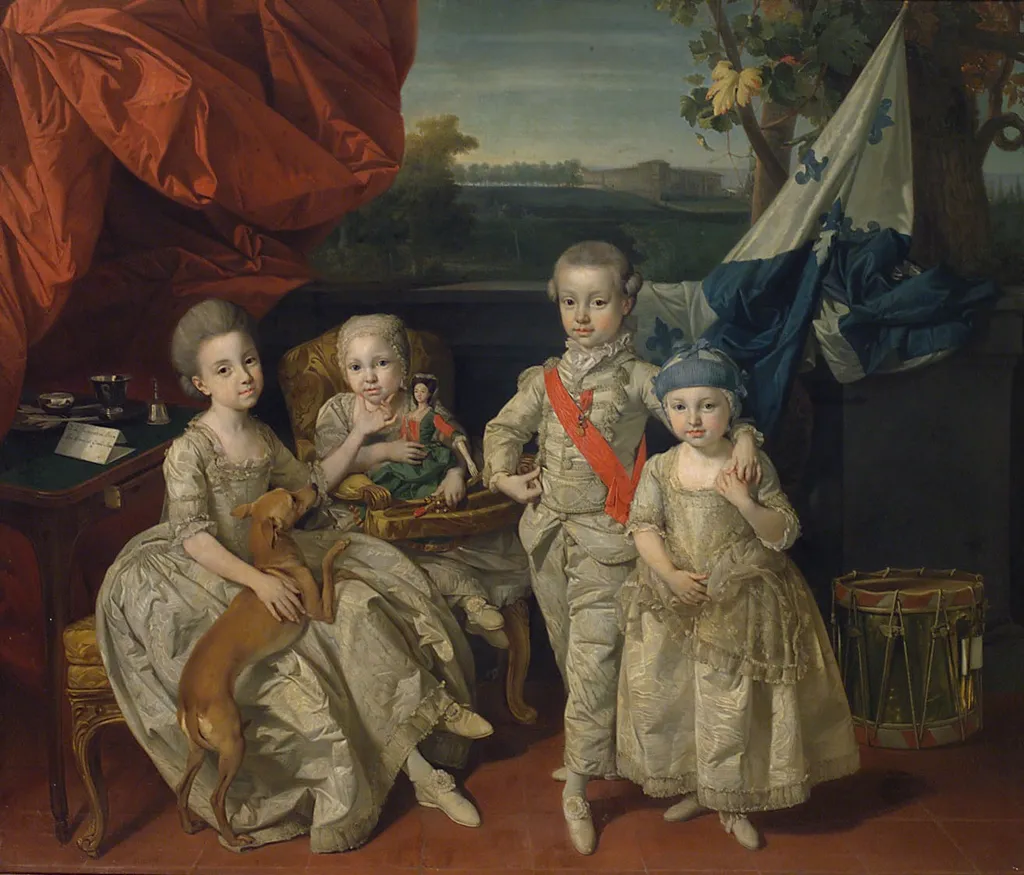
Prinz Ludwig von Parma (1773-1803) mit seinen drei ältesten Geschwistern Karoline (1770-1804), Marie Antonie (1774-1841) und Charlotte (1777-1813) is an oil painting by the Rococo painting artist Johann Zoffany. It dates from 1790 and is held in the collection of the Kunsthistorisches Museum.
About this work
Subject & Meaning
The composition conveys familial harmony and the innocence of childhood, while subtly referencing dynastic ties through the children's titles and attire.
The painting shows four young children of the Parma ducal family: Princess Maria Antonia, Princess Maria Carolina, Prince Louis (heir to the Duchy of Parma), and Princess Maria Carlotta. They are depicted informally in a room opening onto a garden at the Palace of Colorno, without overt symbols of aristocratic rank. Princess Maria Carolina holds a dog, Princess Maria Carlotta plays with a doll in a cradle, Prince Louis wears the Prince of Piacenza sash, and all wear simple grey‑yellow garments with blue headcovers.
The setting lacks formal court insignia, emphasizing a domestic, familial atmosphere. The work was commissioned by Empress Maria Theresa of Austria, who disliked the children's mother, Archduchess Maria Amalia, and intended the portrait for display in Vienna.
The composition conveys familial harmony and the innocence of childhood, while subtly referencing dynastic ties through the children's titles and attire. The informal setting and personal details, such as the dog and doll, highlight a private, nurturing environment rather than public authority.
Two additional versions were later painted by Johann Zoffany: a 1779 replica with altered colors and an 1780 replica created for a private ducal collection, both reflecting the original composition but differing in palette and brightness.
Technique & Style
Johann Zoffany executed this 1778 portrait in oil paint on canvas, with the work measuring 159 by 184.5 cm. The painting is noted for the striking likeness of the sitters' faces and physiques. Stylistically, Zoffany employs an informal and harmonious composition, depicting the children in a domestic interior with a view of the gardens at the Palazzo Reale di Colorno. The artist omits overt symbols of the sitters' high birth, instead surrounding them with everyday playthings such as a desk, a drum, and a flag.
The children's attire further enhances this casual atmosphere: the eight-year-old wears a grey-yellow dress while petting a dog, the infant plays with a doll in a cradle wearing white, the five-year-old heir wears grey with the sash of the Prince of Piacenza, and the four-year-old wears grey-yellow with a blue cap.
History & Provenance
The portrait was commissioned in 1778 by Empress Maria Theresa of Austria, grandmother of the depicted children, who engaged Johann Zoffany during his tenure as court painter in Parma (1773–1781). Zoffany executed the work that same year, depicting the siblings in an informal setting within the Palazzo Reale di Colorno. The commission reportedly strained relations with the children’s mother, Maria Amalia, who reluctantly allowed the painting to be sent to Vienna.
Two replicas followed: one in 1779, differing in color palette, and a second in 1780 for the private collection of the Dukes of Parma, noted for its enhanced luminosity. All versions were painted by Zoffany. The original has remained in the Kunsthistorisches Museum since its completion.
Legacy
The portrait of the Parma princes, painted by Johann Zoffany in 1778, has been recognized for its historical significance and artistic merit, influencing later depictions of royal family portraiture. Its representation of informal domestic settings among aristocratic siblings contributed to evolving perceptions of courtly representation in the late 18th century. Replicas commissioned by Empress Maria Theresa in 1779 and 1780 underscored its cultural resonance, while its inclusion in the Kunsthistorisches Museum collection has maintained its visibility in art historical discourse.
The work's detailed characterization of individual identities, such as the distinct attire and activities of the siblings, has informed scholarly analyses of familial dynamics in Enlightenment-era portraiture.
The painting's legacy persists through its continued study in art history, particularly in relation to its compositional innovations and the way it reflects the political and familial contexts of its patrons.
Overview
Johann Zoffany’s oil painting from 1790 presents the young Prince Louis of Parma, later king of Etruria, together with his three eldest sisters, Maria Carolina, Maria Carlotta and Maria Antonia. Executed in the late Rococo style, the work is part of the permanent collection of the Kunsthistorisches Museum in Vienna.
Context
The painting reflects the political reshaping of northern Italy after the French Revolutionary Wars, when the Duchy of Parma was reorganized as the Kingdom of Etruria under Napoleon’s influence. Depicting the ruling family in a relaxed, intimate manner served both dynastic propaganda and the era’s taste for private, sentimental portraiture.
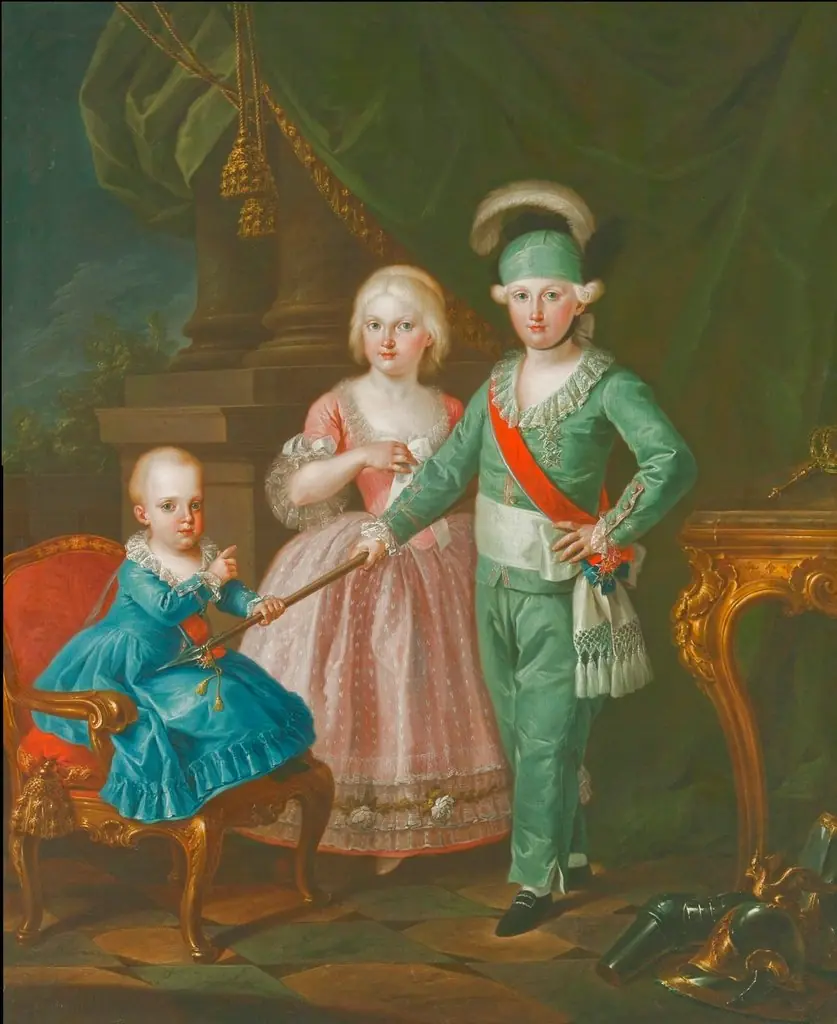
Artist & collection
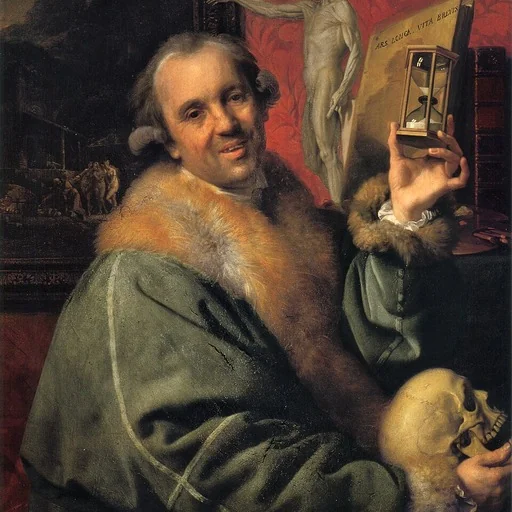
Artist
Johan / Johann Joseph Zoffany (born Johannes Josephus Zaufallij; 13 March 1733 – 11 November 1810) was a German neoclassical painter who was active mainly in England, Italy, and India.

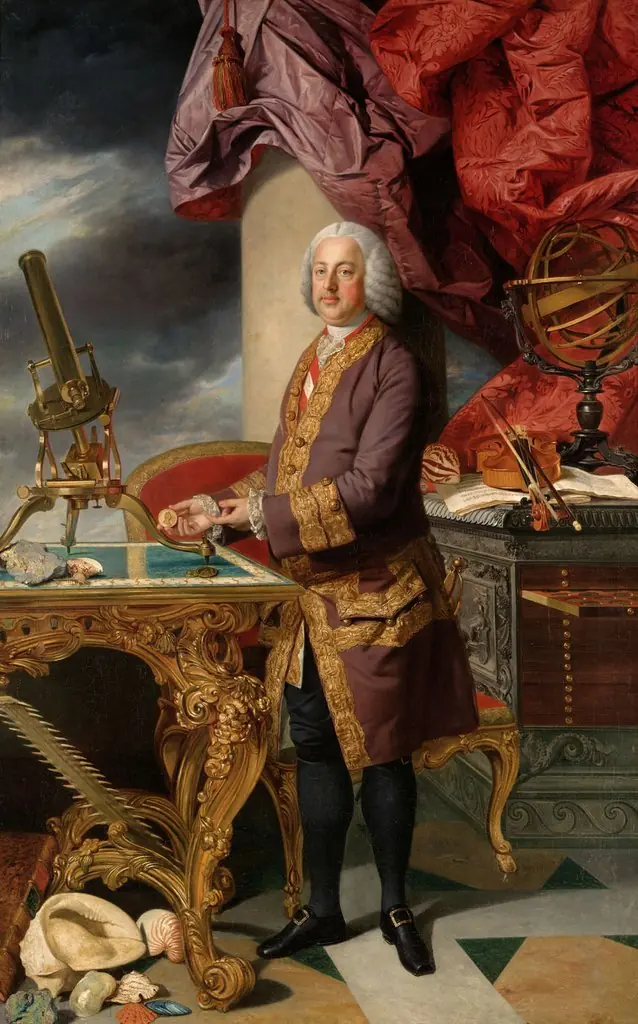
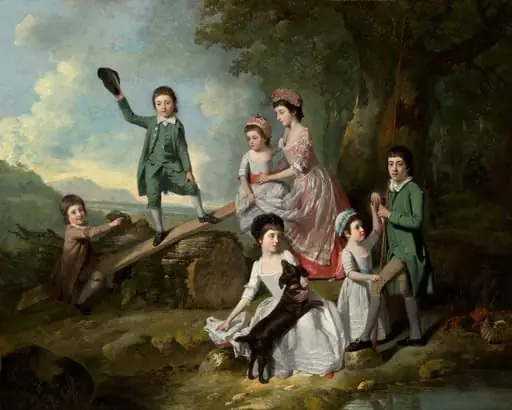
- I figli di Carlo di Borbone: Carlo, Maria Luisa, Francesco Saverio
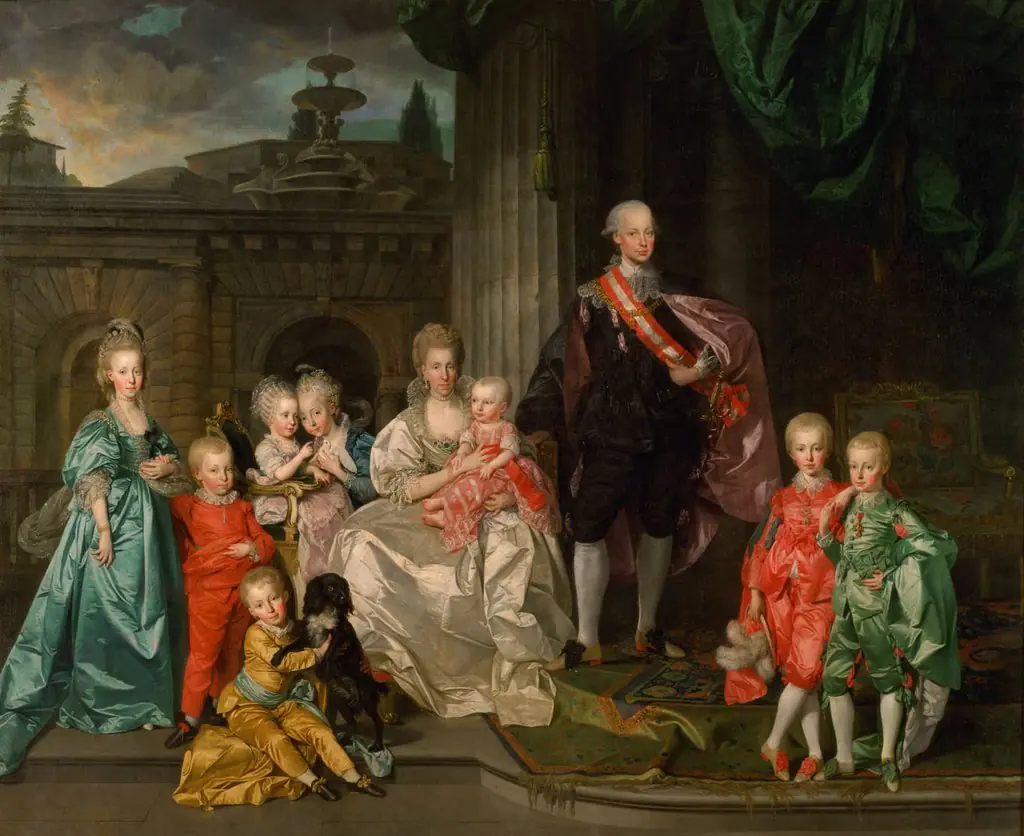 Leopold I, Grand Duke of Tuscany with his wife Maria Luisa and their children
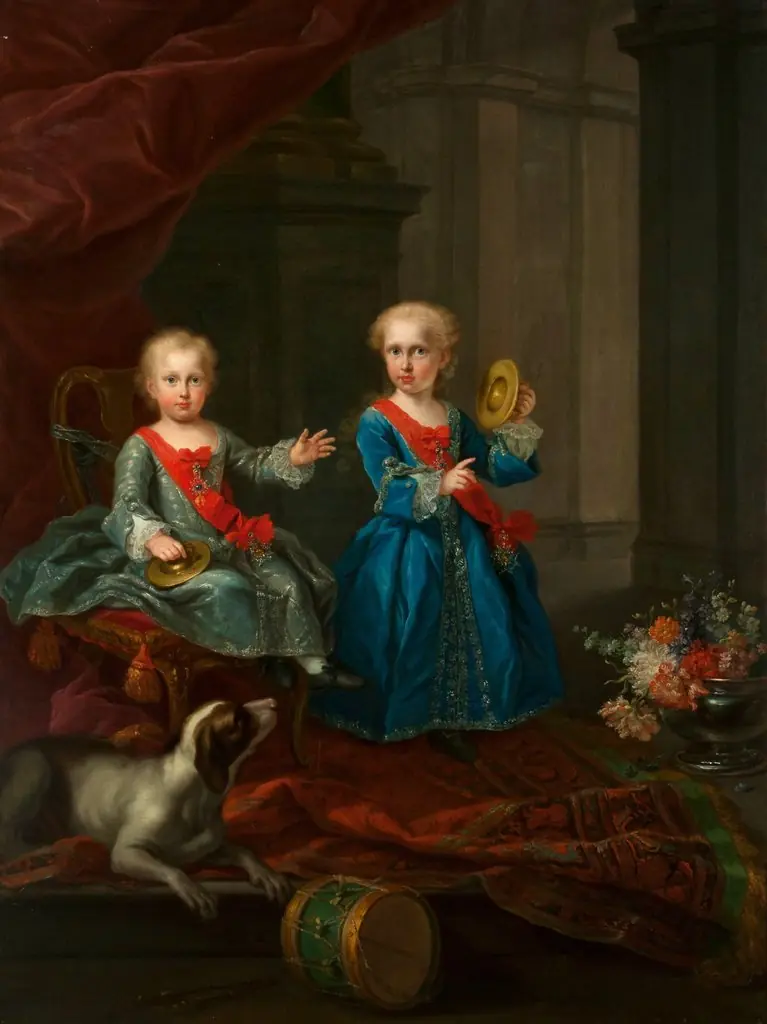 Francesco Saverio e Antonio Pasquale di Borbone
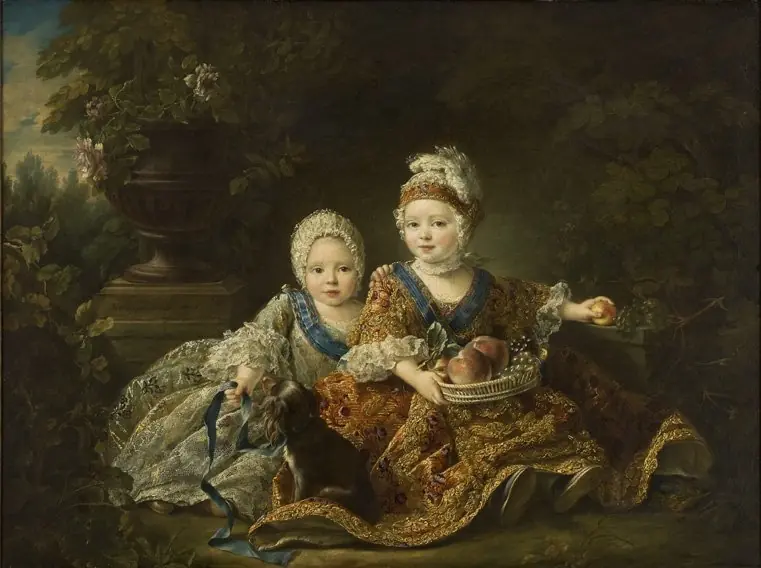 The Duke of Berry and the Count of Provence as Children
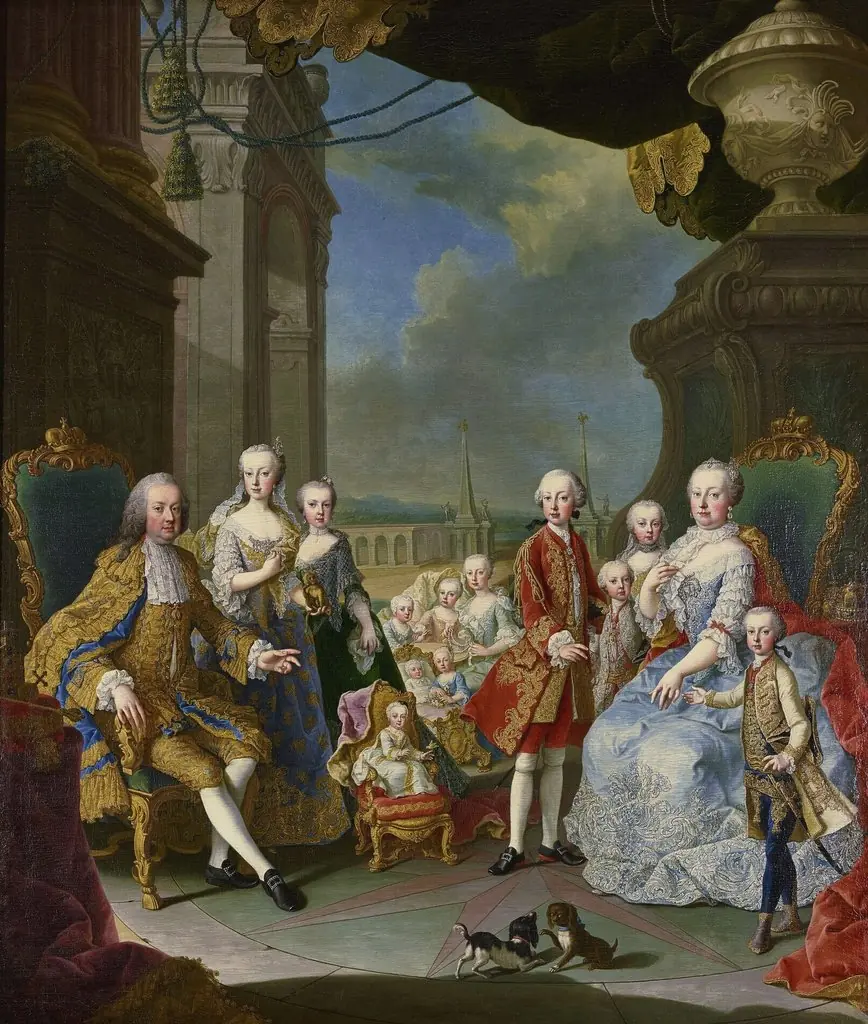 The Imperial family in 1756
 Portrait of Carolina Wilhelmina of Orange (1743-1787) and her Children
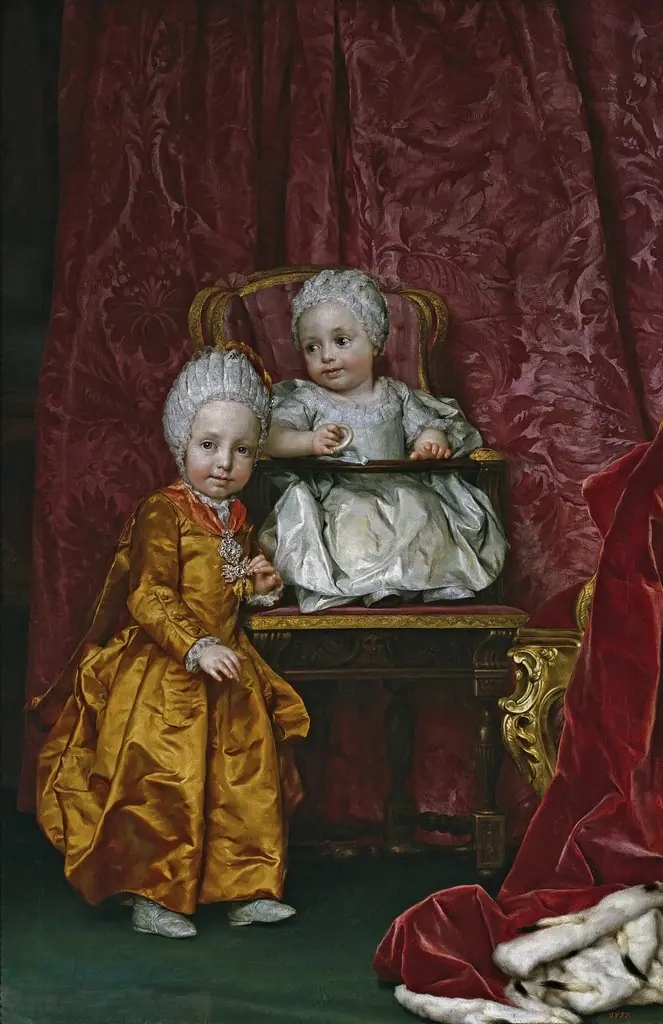 Archduke Ferdinand and Archduchess Maria Anna of Austria
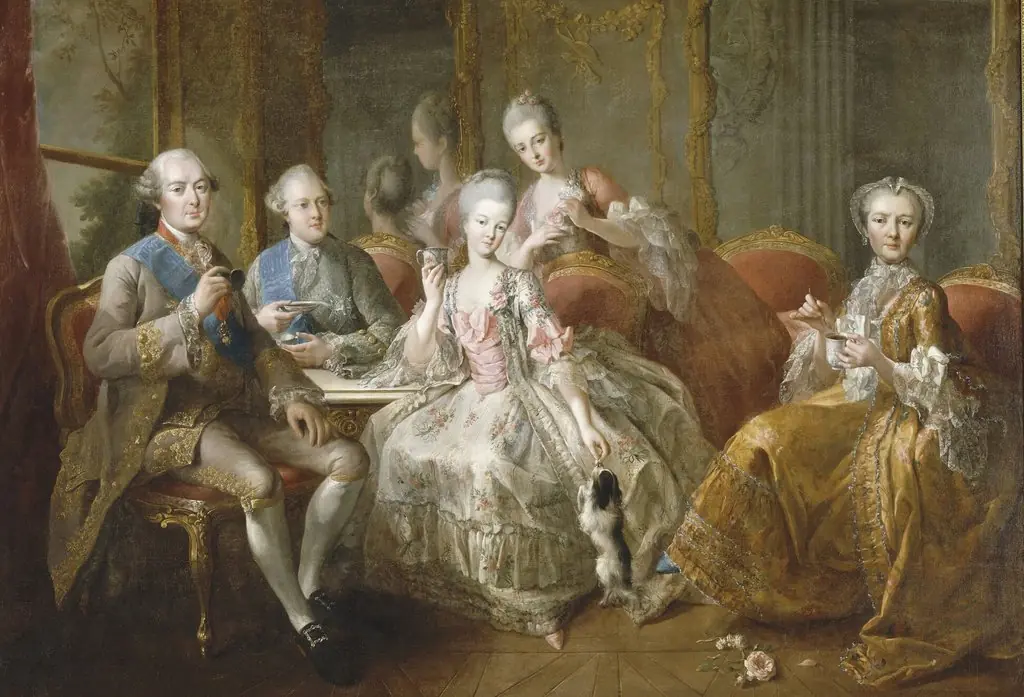 The family of the Duke of Penthièvre called la tasse de chocolat
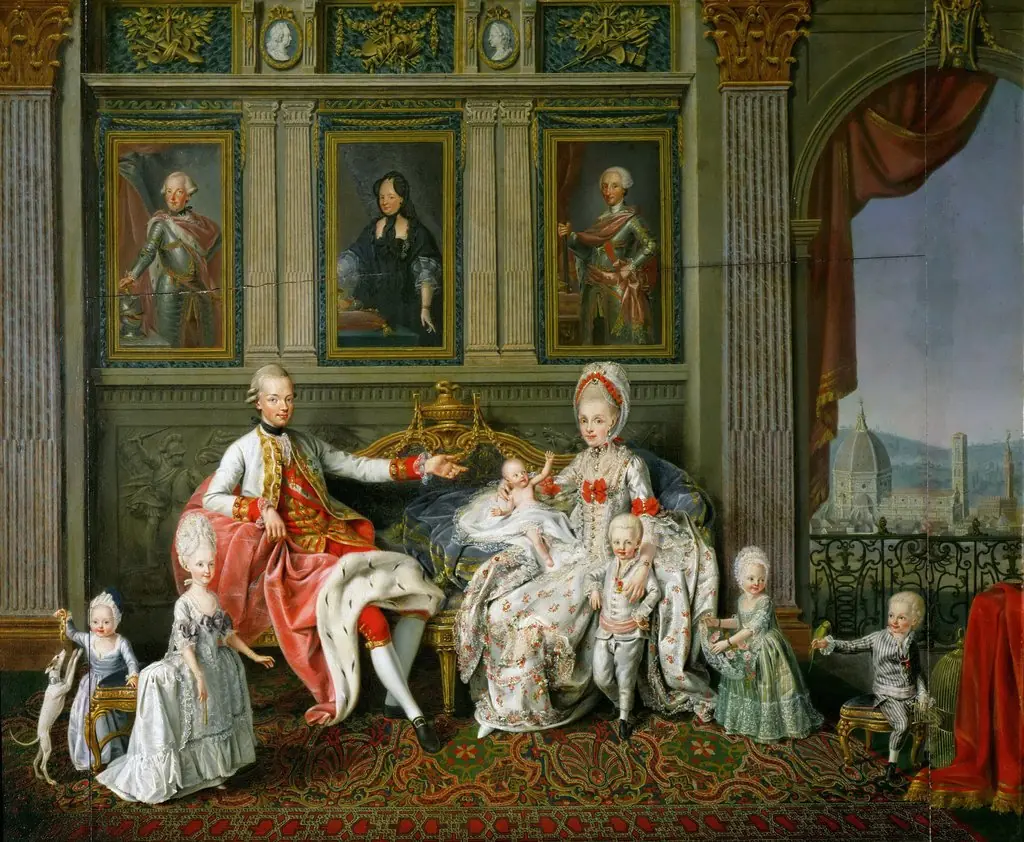 Grand Duke Leopold with his family (Emperor Leopold II, 1747-1792)
 A Family Group on a Terrace in the Grounds of a Villa. Possibly the English Businessman George Jackson and his Family
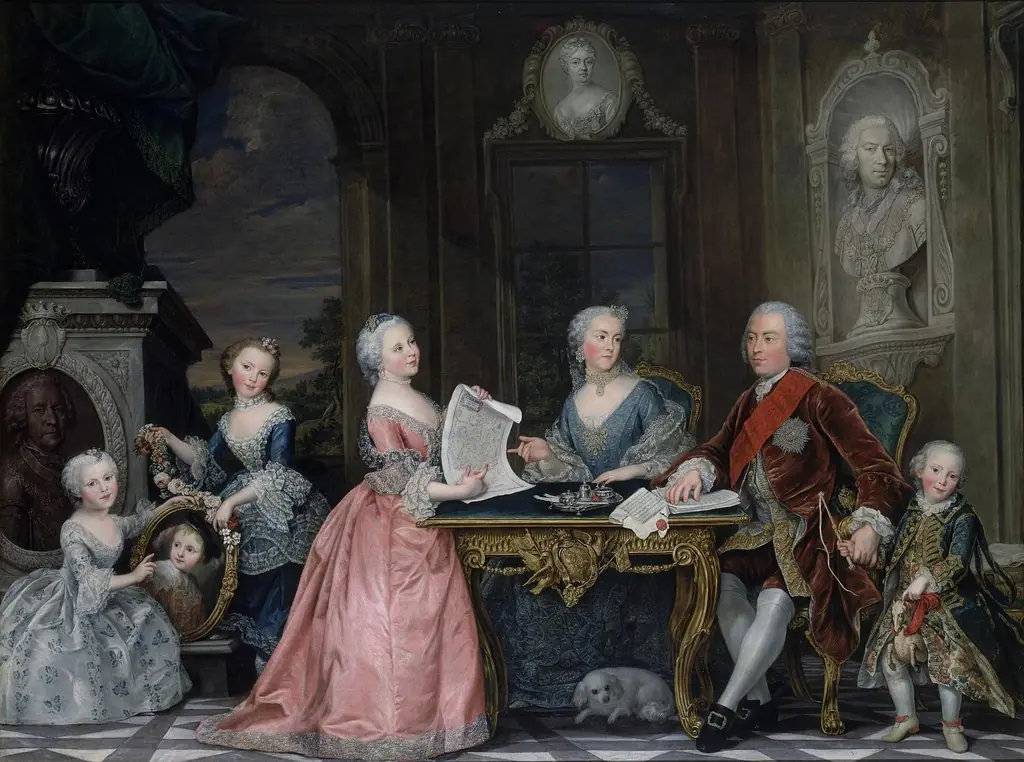 Portrait of Ambassador P.G. Chernyshev with Family
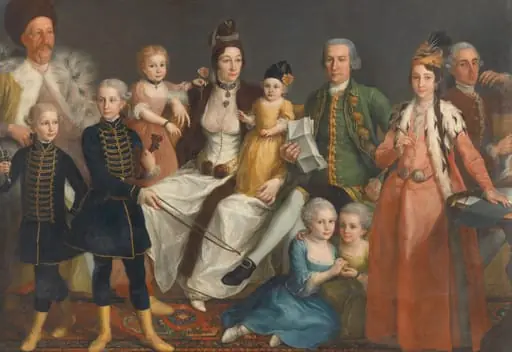 Portrait of the Van Lennep Family, a Merchant Family in Izmir