Artwork
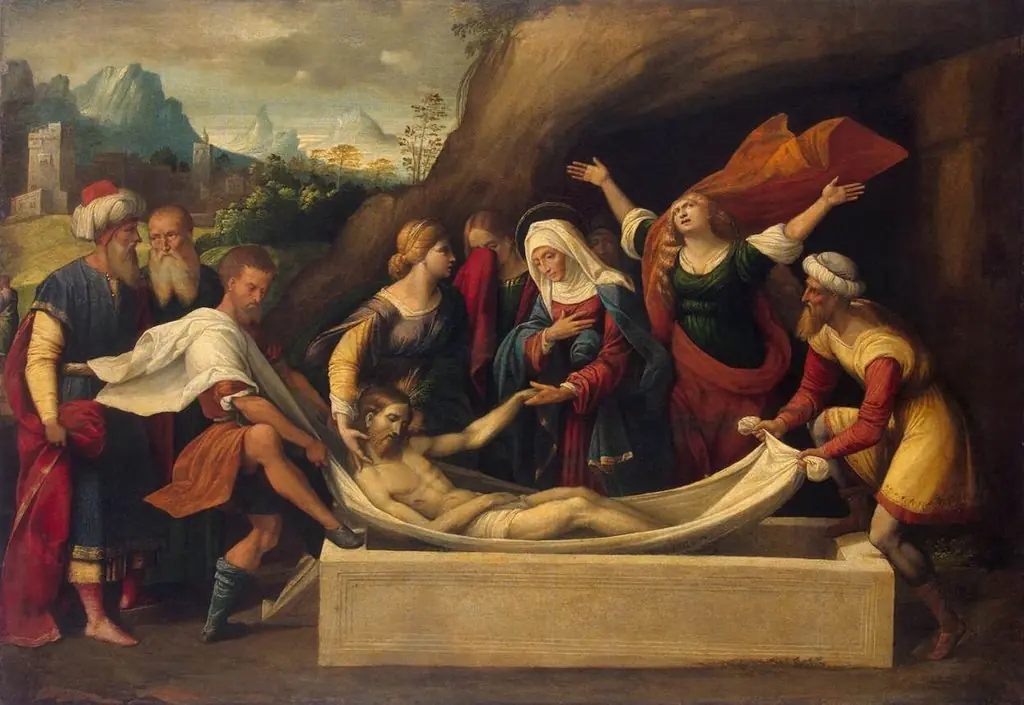
Lamentation of Christ
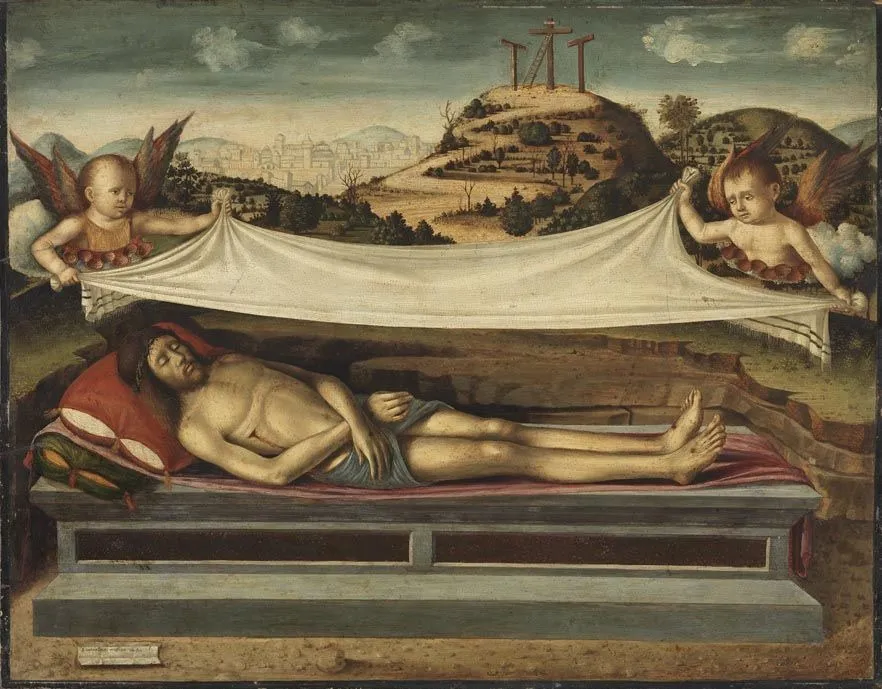
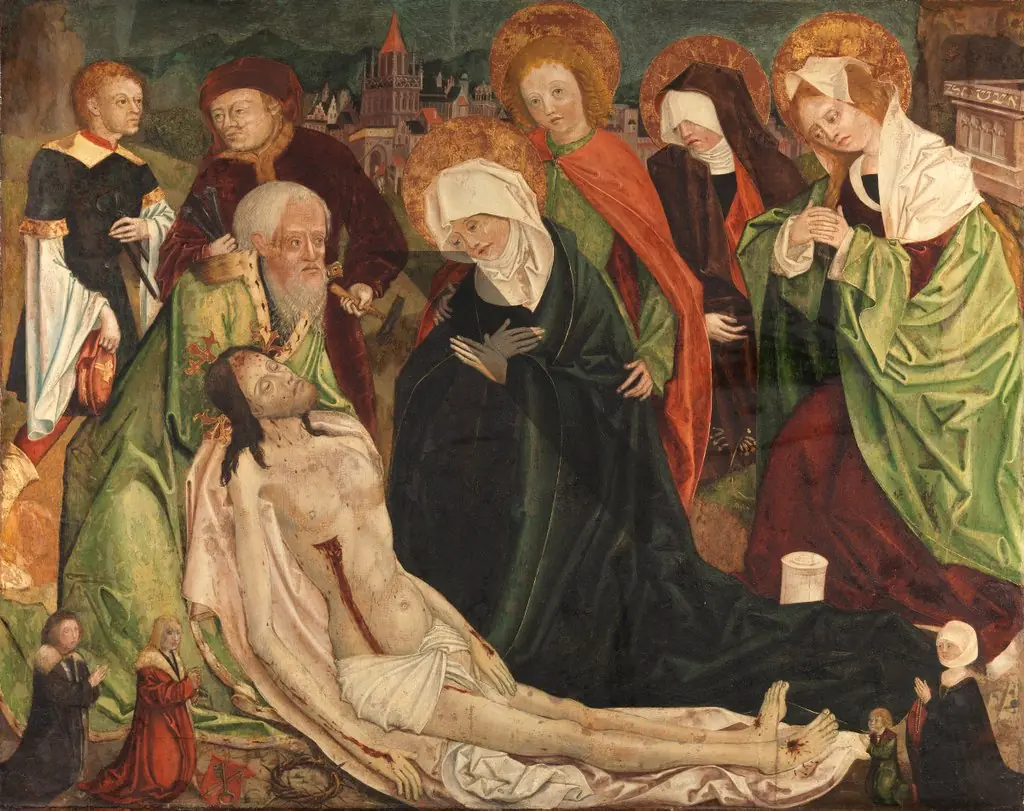
Lamentation of Christ is an unspecified painting by the Early Renaissance artist Antonello de Saliba. It dates from 1500 and is held in the collection of the Bavarian State Painting Collections.
About this work
Subject & Meaning
The artwork is a religious painting that depicts the Lamentation of Christ, with Jesus Christ as the central figure. This iconographic subject represents the mourning of Christ following his crucifixion, a theme intended to evoke contemplation of his suffering and sacrifice.
History & Provenance
The painting is held by the Bavarian State Painting Collections and is accessioned under the inventory number of the Alte Pinakothek in Munich.
The painting Lamentation of Christ was created in 1500 by the artist Antonello de Saliba. Classified as a religious work, it depicts the mourning of Jesus Christ. The piece is currently held within the Bavarian State Painting Collections and is housed at the Alte Pinakothek.
While the specific circumstances of its original commission and the detailed chain of ownership prior to its entry into the Bavarian collection are not provided in the available records, the work's inception is firmly dated to the turn of the sixteenth century.
The painting is held by the Bavarian State Painting Collections and is accessioned under the inventory number of the Alte Pinakothek in Munich. It has been part of the museum's exhibition schedule, appearing in displays of Renaissance religious art and recent retrospectives of Antonello de Saliba's work.
Context
Antonello de Saliba's 1500 Lamentation of Christ, housed in Munich's Alte Pinakothek, is recognized as a significant example of early 16th-century religious painting. Its composition and emotional intensity have been examined in scholarship focusing on the artist's role within the transition from late Gothic to Renaissance visual language in Central European art. The work's placement in a major Bavarian collection underscores its importance within the regional artistic tradition, while its formal qualities continue to inform studies of devotional imagery in pre-Reformation contexts.
Legacy
Antonello de Saliba's Lamentation of Christ (1500) has been recognized for its emotive realism and compositional balance, influencing later religious painters in Southern Europe. Its presence in the Bavarian State Painting Collections at the Alte Pinakothek has ensured continued scholarly attention and public display, reinforcing its reputation as a significant example of early 16th-century devotional art. The work's technical execution and thematic depth have contributed to its lasting legacy within the study of Renaissance painting.
Overview
Created circa 1500 by the Sicilian painter Antonello de Saliba, the Lamentation of Christ is an early Renaissance panel that presents the dead Christ laid upon a stone tomb. The composition centers on the figure wrapped in a red shroud, surrounded by subtle landscape elements and angelic figures, conveying a mood of restrained solemnity.
Technique & Style
De Saliba employs delicate modeling of flesh and drapery, using soft transitions of light to create a warm, intimate atmosphere. The rendering of the cherubs’ wings and the folds of the cloth demonstrates careful attention to texture, while the muted landscape recedes with atmospheric perspective, typical of early Renaissance spatial treatment.

Artist & collection
Artist
Antonio de Saliba, or Antonello de Saliba or Resaliba, (c.1466-c.1535) was an Italian painter of the Renaissance, mainly active in Sicily and Calabria.


 The Lamentation of Christ
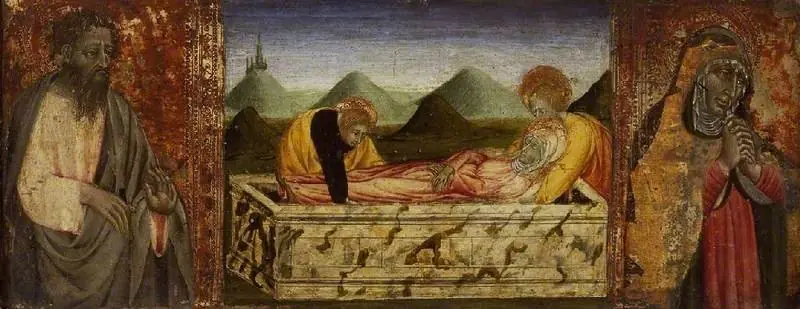 The Entombment of the Virgin; (left) St Bartholomew; (right) A female Saint
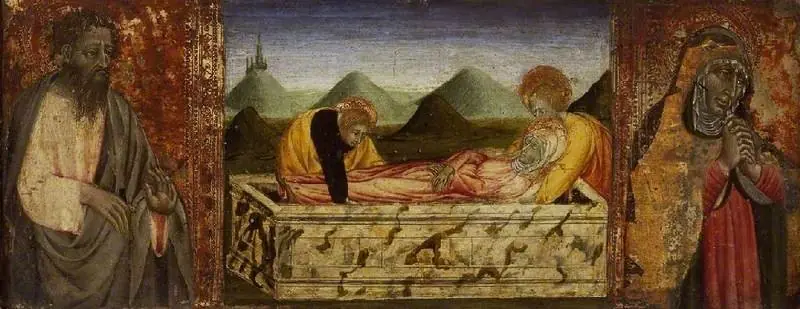 The Entombment of the Virgin with Saint Bartholomew (left) and a Female Saint (right)
 Saint Lawrence, Saint Michael and the Dragon, the Dormitio Virginis and the Martyrdom of Saint Catherine
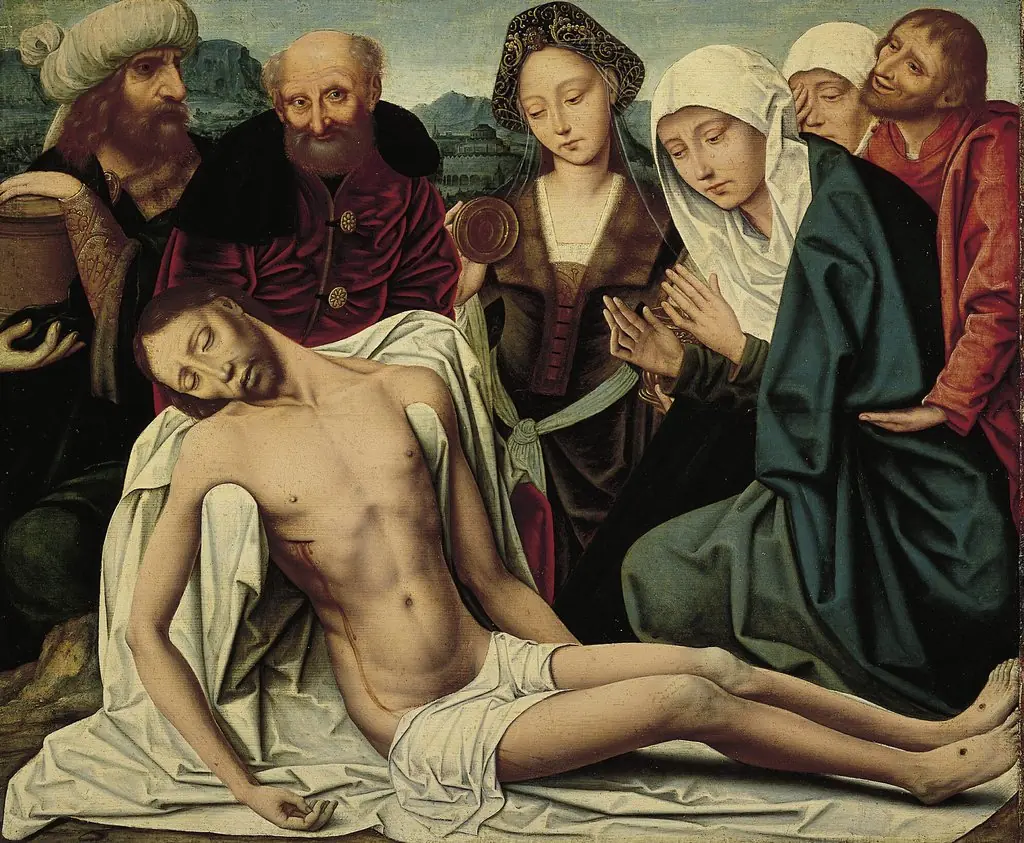 The Lamentation of Christ
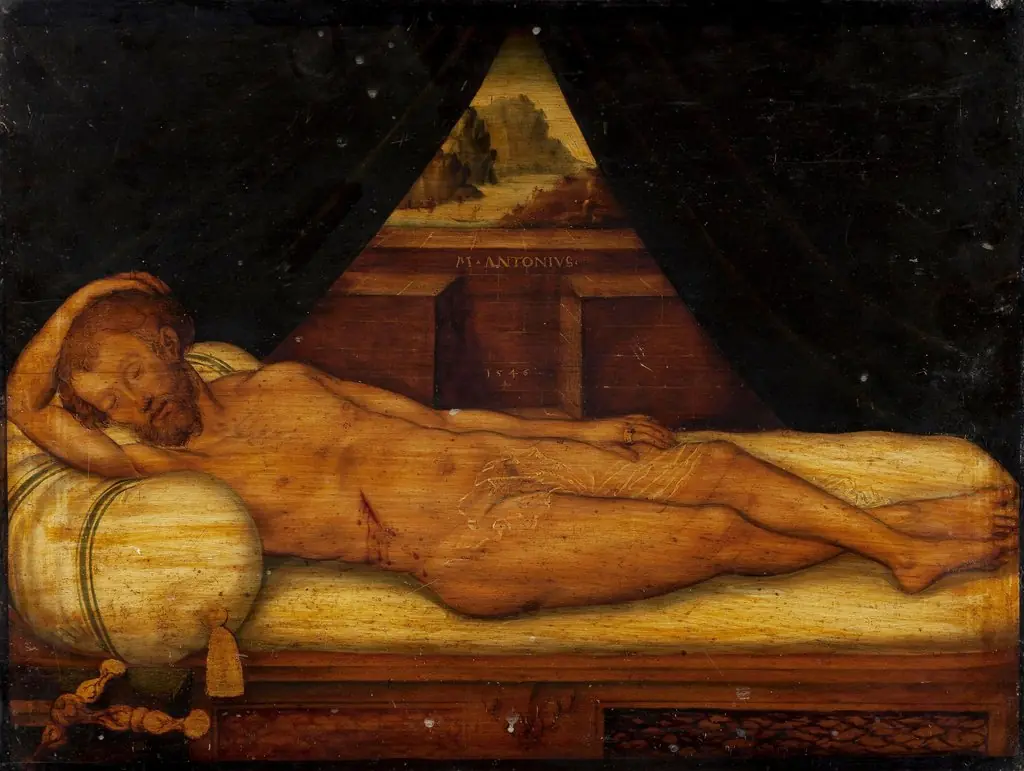 Mark Anthony
 Entombment