Artwork
St. Jerome
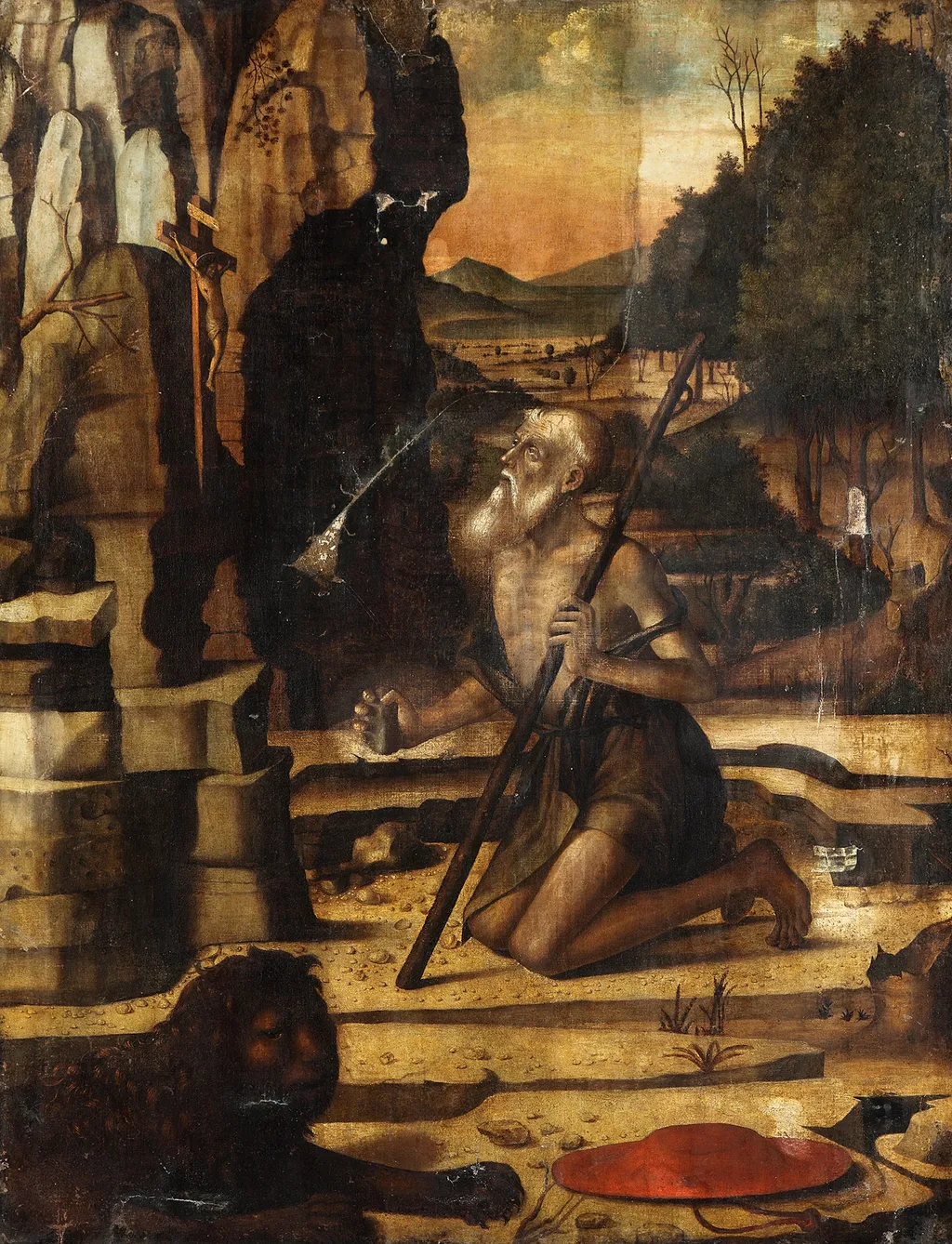
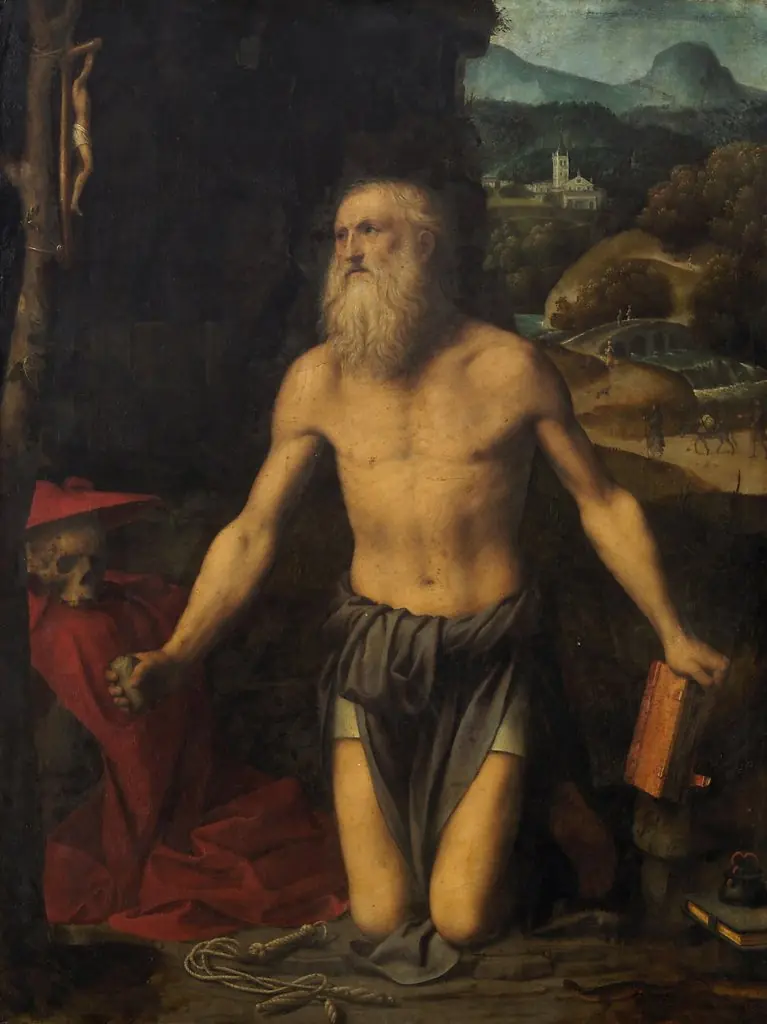
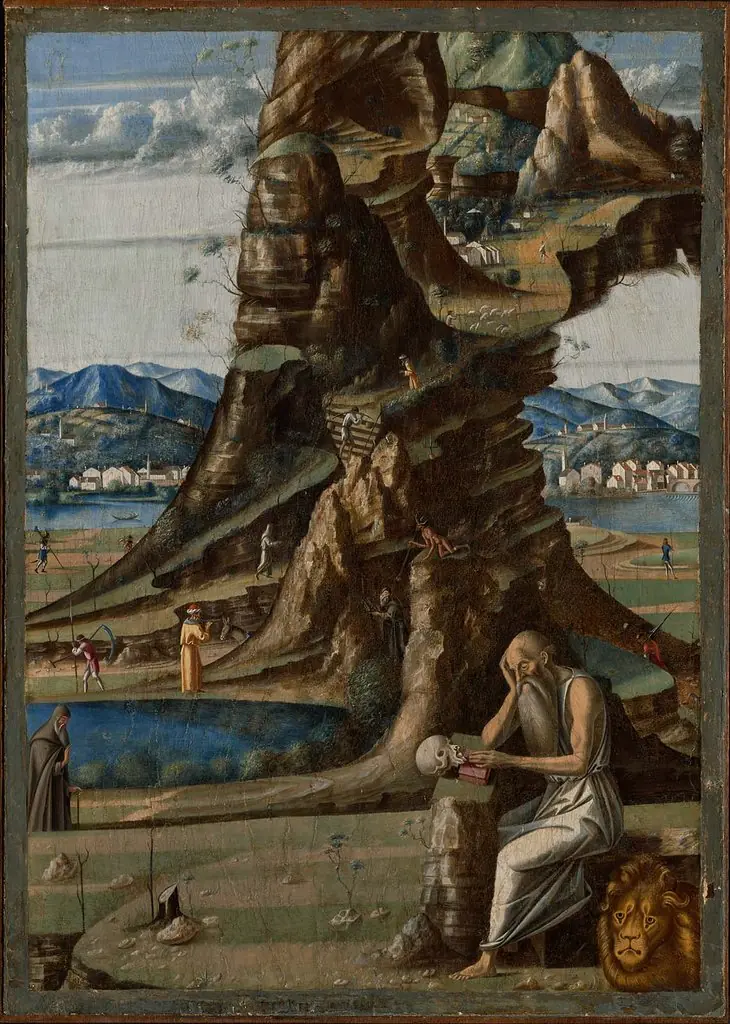
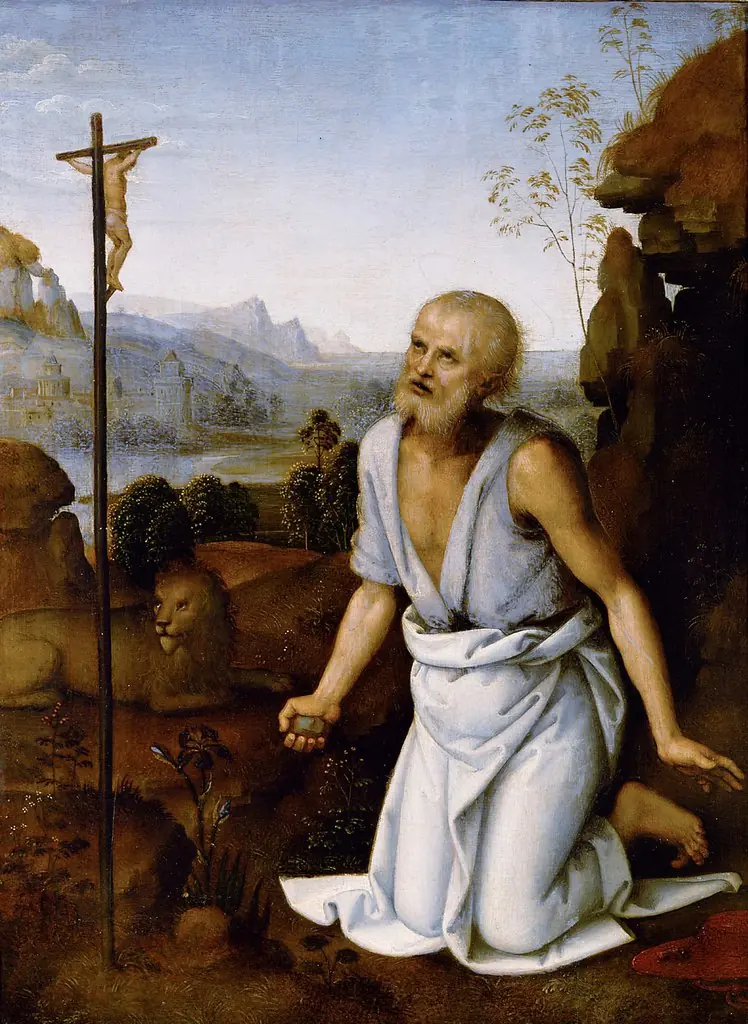
St. Jerome is a paint painting by the Sienese School artist Antonello de Saliba. It dates from 1510 and is held in the collection of the Gemäldegalerie Berlin. Created circa 1510, this tempera panel portrays a solitary figure kneeling amid a barren landscape.
About this work
Overview
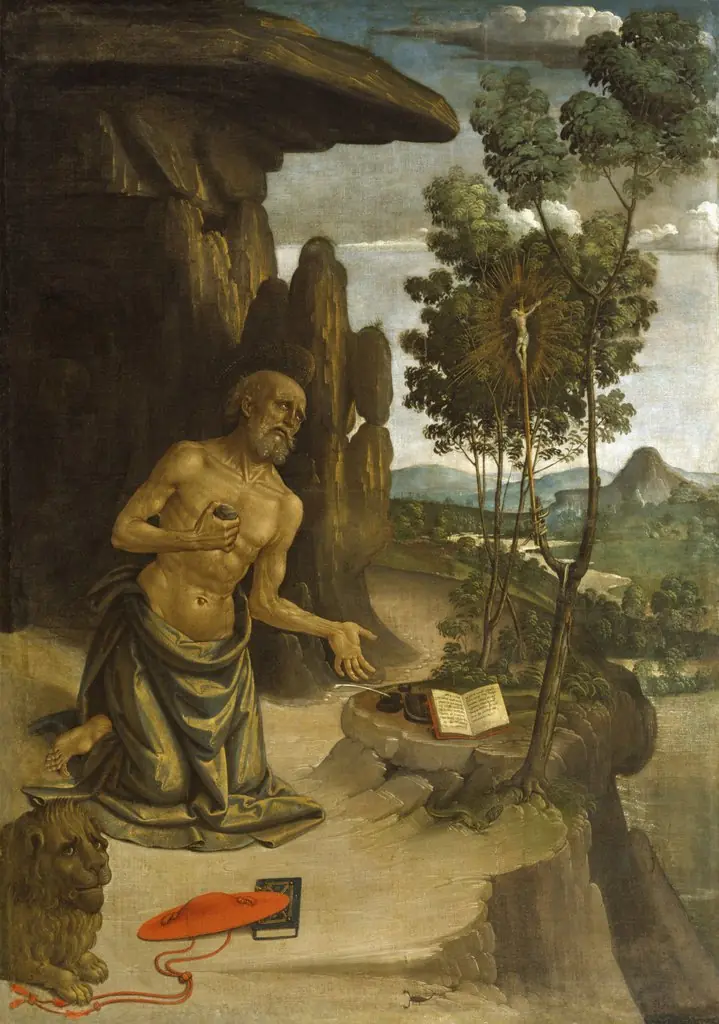
Created circa 1510, this tempera panel portrays a solitary figure kneeling amid a barren landscape. The central character, identified by his bald head, white beard and modest brown habit, holds a staff in his right hand and a book in his left, while a lion rests nearby. A small red object lies at his feet, and distant trees and mountains rise under a cloud‑filled sky.
Subject & Meaning
The composition references the traditional iconography of Saint Jerome, a 4th‑century hermit and biblical translator. The lion alludes to the legend of Jerome’s taming of a wild beast, while the book symbolizes his translation of the Scriptures into Latin. The austere setting underscores the saint’s withdrawal from worldly life and his dedication to scholarly contemplation.
Technique & Style
Executed in tempera on panel, the work displays the delicate layering and fine detail characteristic of the Sienese school. Soft modeling of flesh and drapery, combined with a restrained palette of earth tones, convey a sense of quiet reverence. The handling of light on the figure and the subtle atmospheric perspective in the background reflect the artist’s training in the Venetian tradition.
History & Provenance
The painting is attributed to Antonello de Saliba, a Sicilian painter active in the early 16th century. De Saliba, son of a woodcarver and nephew of Antonello da Messina, received instruction from his cousin Jacobello before spending time in Venice. The panel entered the collection of the Gemäldegalerie in Berlin, where it remains on display.
Context
De Saliba’s work bridges the late Gothic sensibilities of the Sienese school with the emerging naturalism of the Italian Renaissance.
De Saliba’s work bridges the late Gothic sensibilities of the Sienese school with the emerging naturalism of the Italian Renaissance. By integrating Venetian coloristic influences into a traditionally devotional subject, the painting exemplifies the cross‑regional artistic exchanges occurring in southern Italy during the period. It also reflects the continued popularity of saintly portraiture in private devotional settings.
Own this work as a print
Artist & collection
Artist
Antonio de Saliba, or Antonello de Saliba or Resaliba, (c.1466-c.1535) was an Italian painter of the Renaissance, mainly active in Sicily and Calabria.