Artwork
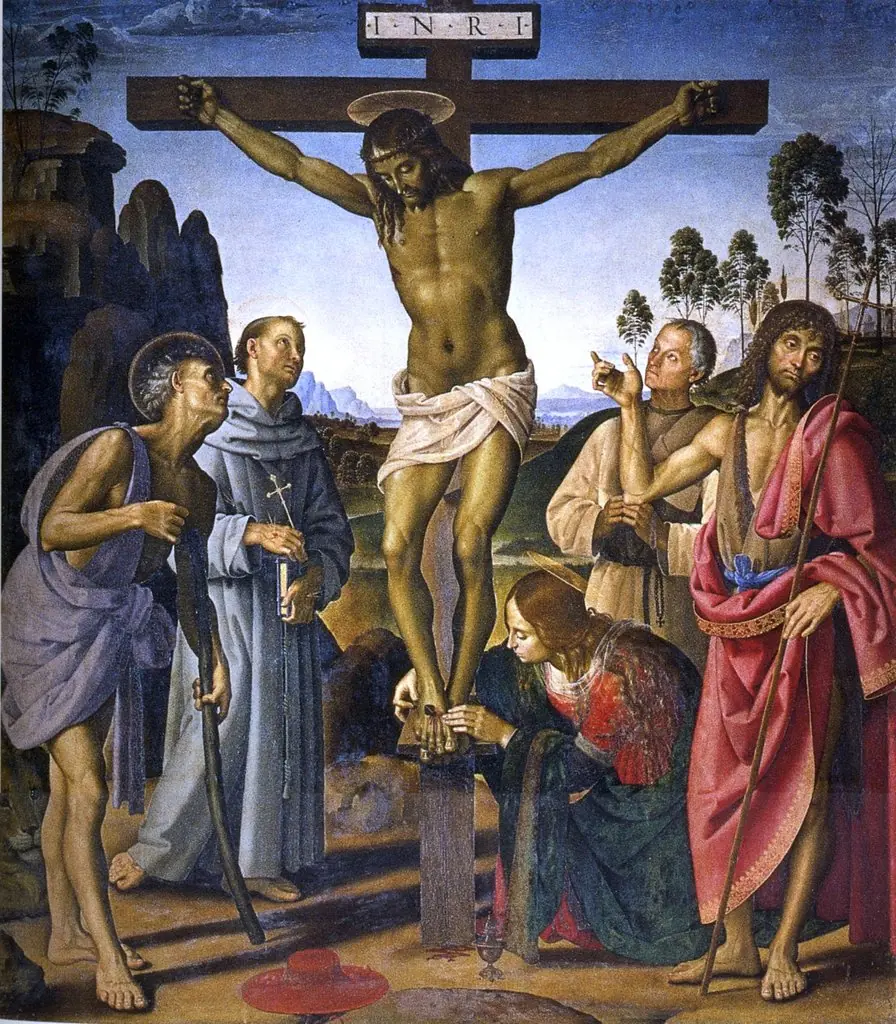
Crusifixion with the Virgin Mary and Sts Dominic, Jerome and Francis
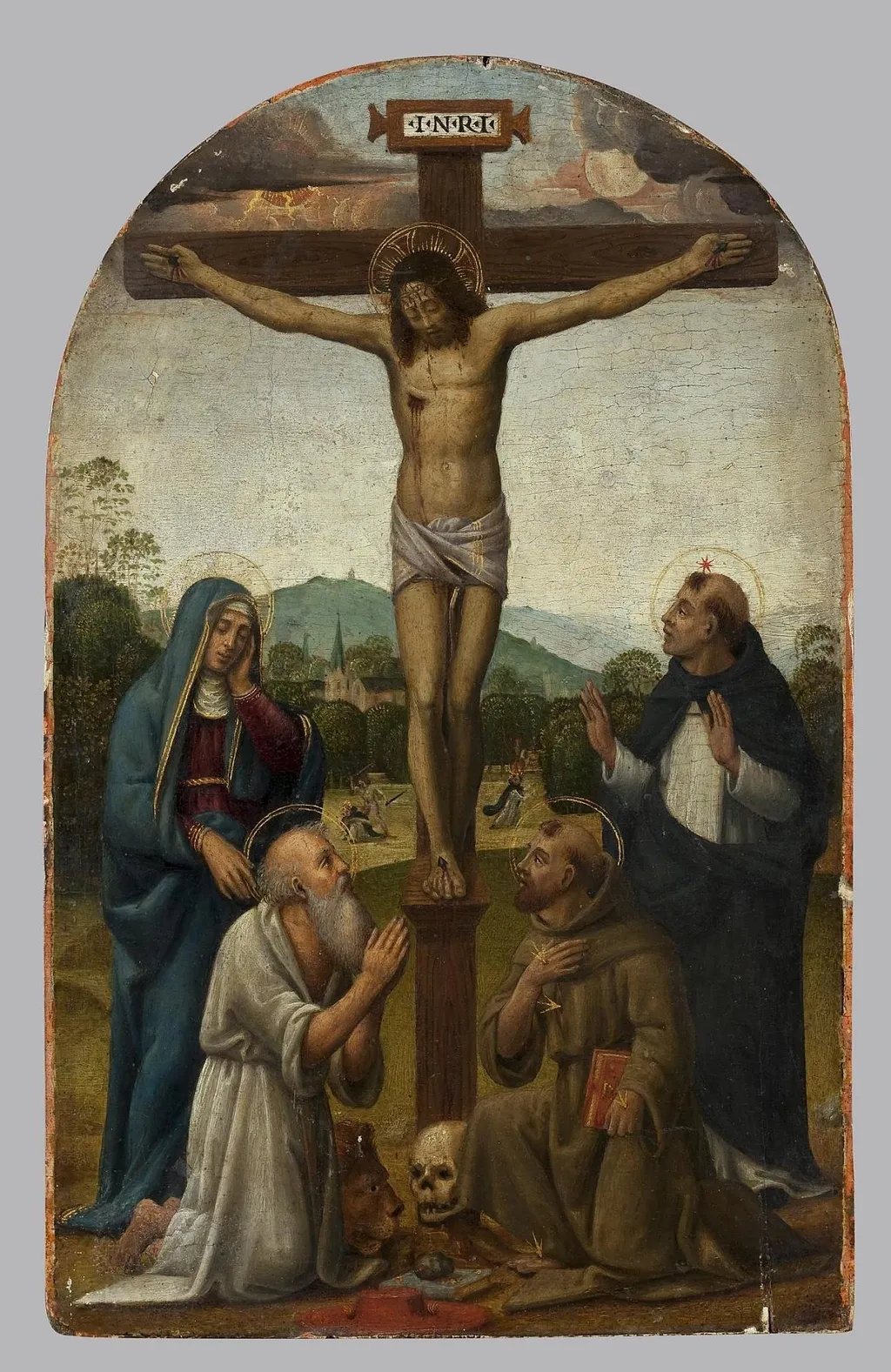
Crusifixion with the Virgin Mary and Sts Dominic, Jerome and Francis is a tempera painting by the Mannerist artist Antonio del Ceraiolo. It dates from 1529 and is held in the collection of the Hermitage Museum.
About this work
Subject & Meaning
The composition underscores the Virgin Mary's role as intercessor amid suffering, while the saints' attributes symbolize key aspects of Christian devotion.
The painting portrays the crucifixion of Jesus with the Virgin Mary at the foot of the cross, accompanied by the saints Jerome, Dominic, and Francis. Their presence emphasizes the work's devotional focus on penitence and Franciscan spirituality, reflecting Counter-Reformation themes of personal sacrifice and divine compassion. The composition underscores the Virgin Mary's role as intercessor amid suffering, while the saints' attributes symbolize key aspects of Christian devotion.
Technique & Style
Antonio del Ceraiolo employed tempera on a poplar panel to create this religious painting. The work measures 36.5 cm in height and 22.5 cm in width. It depicts the Crucifixion with the Virgin Mary alongside Saints Jerome, Dominic, and Francis.
The composition reflects early sixteenth-century Italian religious art conventions through its devotional subject matter and tempera technique on wood panel support. Formal elements include restrained coloration and hierarchical figure placement characteristic of the period.
History & Provenance
The painting was created in 1529 by Antonio del Ceraiolo, an Italian artist, and is executed in tempera on a poplar panel. Its inception is dated to 1529, with the broader working period of the artist given as 1520–1538. The work was produced in Italy and entered the collection of the Hermitage Museum, where it is currently held.
The painting is housed in the Hermitage Museum in Saint Petersburg, with accession number 1288. It has been part of the museum's collection since its acquisition, reflecting its established presence in a major European institution. The work was exhibited in the Hermitage's Italian Renaissance gallery, contributing to scholarly and public engagement with the period's religious art.
Context
Antonio del Ceraiolo painted this religious work in 1529, depicting the Crucifixion alongside the Virgin Mary, Saint Dominic, and Saint Jerome. Executed in tempera on poplar panel, the piece measures 36.5 cm by 22.5 cm and resides in the Hermitage Museum collection in St. Petersburg.
Scholarship situates the work within the broader trajectory of early 16th-century Italian religious painting, noting its stylistic affinities with contemporary devotional imagery in central Italy. The inclusion of Saints Dominic and Jerome reflects the growing prominence of mendicant orders in Counter-Reformation iconography, a context emphasized in recent studies of devotional practices in Italian art circa 1500-1550.
Overview
Created in 1529, this tempera panel presents the crucifixion of Christ surrounded by the Virgin Mary and three saints, Dominic, Jerome, and Francis. The central figure of Christ is affixed to a cross bearing the customary inscription, while a small skull rests at the foot, a traditional reminder of mortality. The composition is set against a distant landscape featuring a town, hills, and isolated figures.
Own this work as a print
Artist & collection
Artist
Antonio del Ceraiolo, also known as Antonio di Arcangelo (the nickname "Ceraiolo" derives from the profession of his father, a ceraiolo, or candle maker), was an Italian Renaissance painter active in his native Florence between 1518 and…

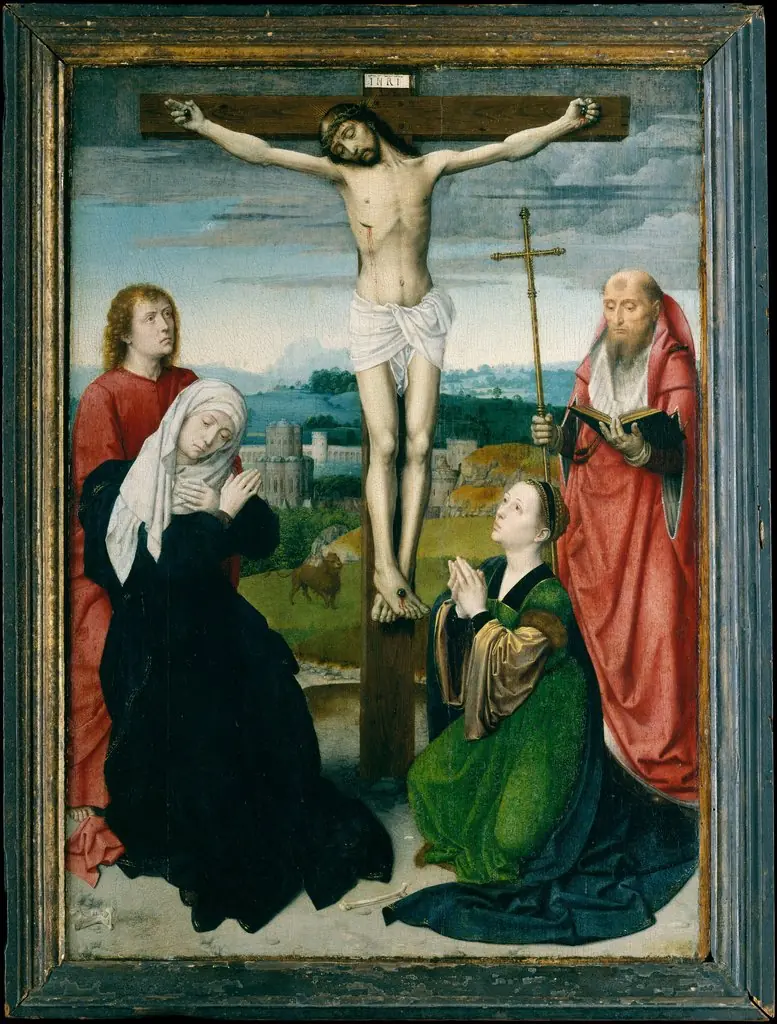
- Crucifixion with the Virgin, Saint John, Mary Magdalene, a Donor
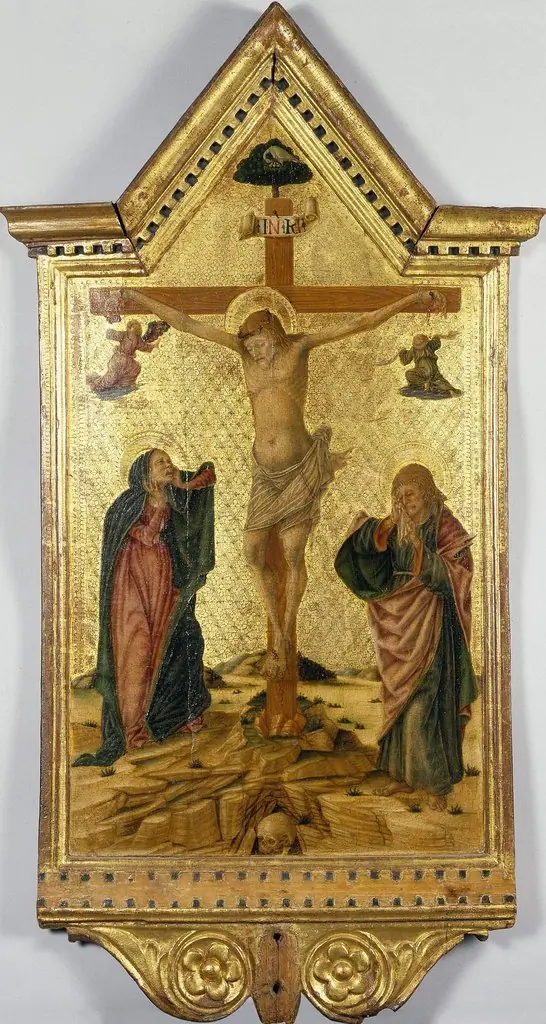 Crucifixion with the Virgin and St John
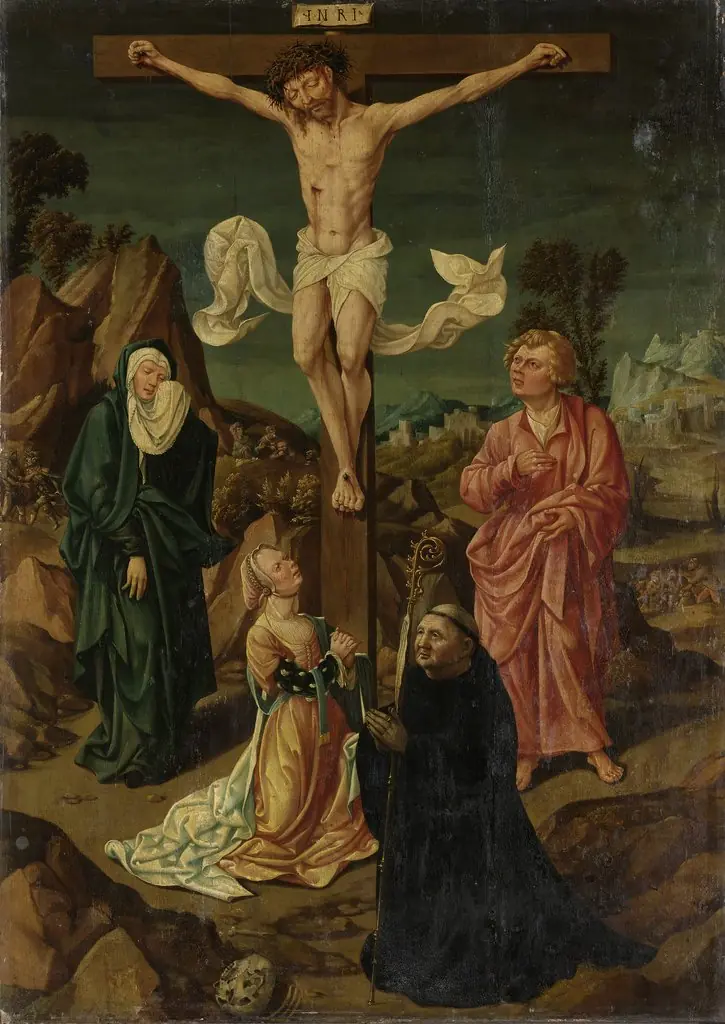
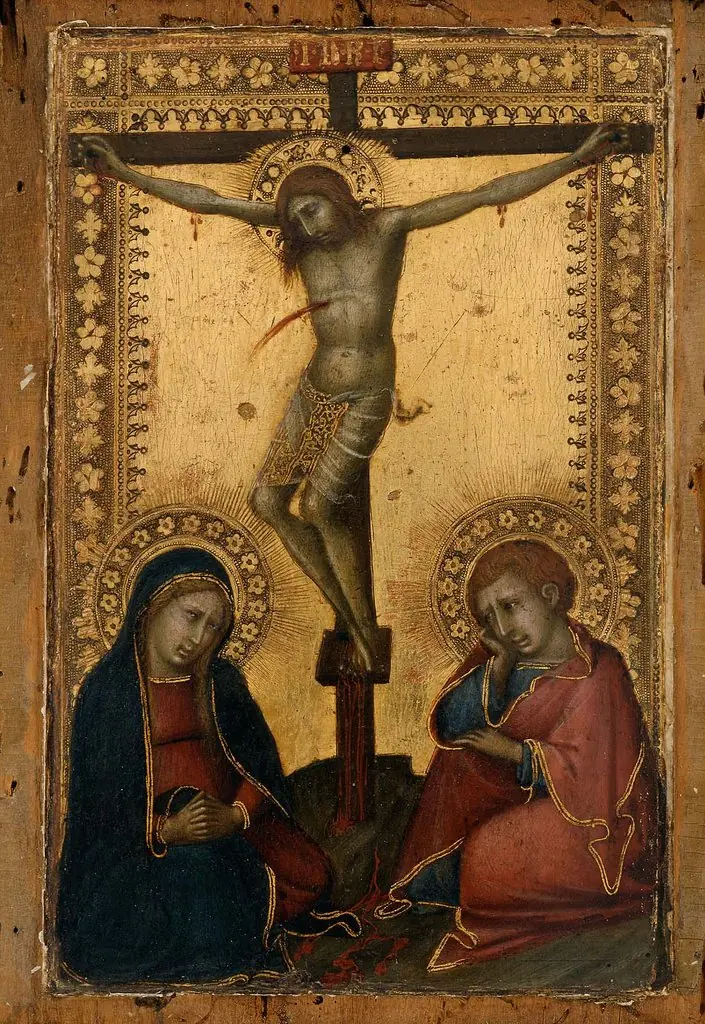 Crucified Christ with the Virgin and Saint John the Evangelist
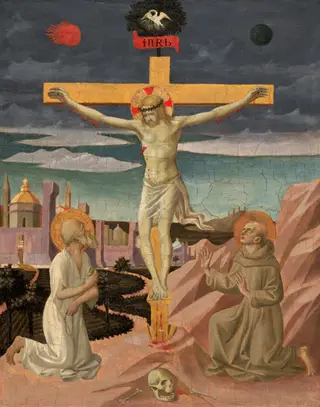 The Crucifixion with Saint Jerome and Saint Francis
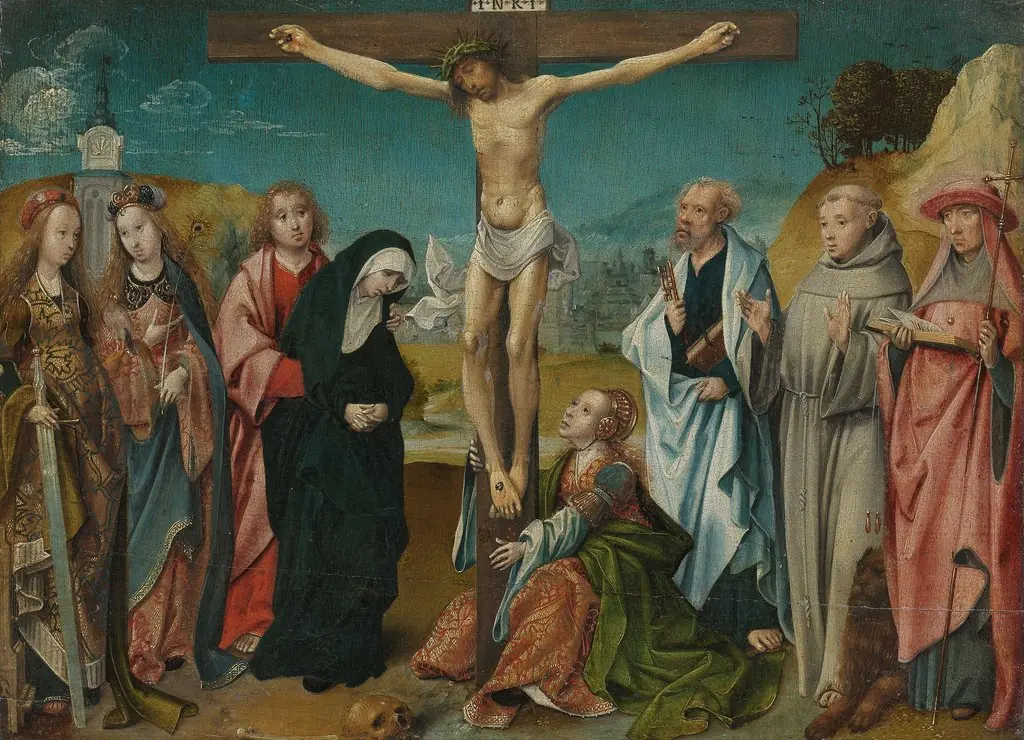 Christ on the cross with the Virgin, St John the Evangelist, Mary Magdalen, and Sts Cecilia and Barbara (left), and Sts Peter, Francis and Jerome (right)
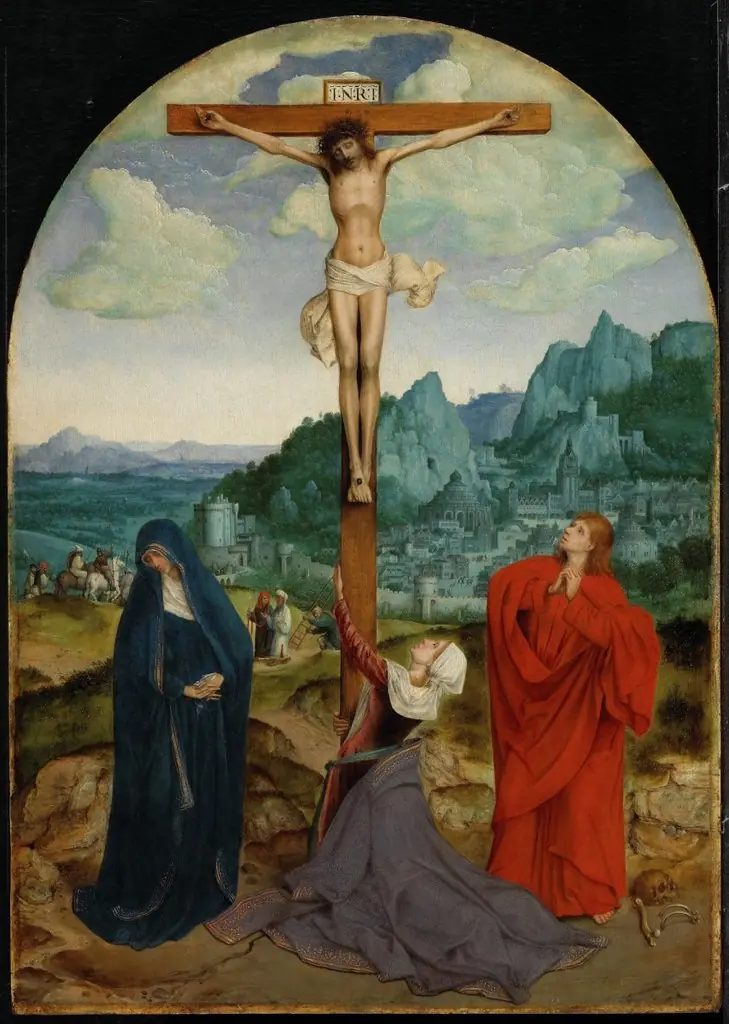 Crucifixion, with the Virgin and Saint John
 Crucifixion of Christ with saints