Artwork
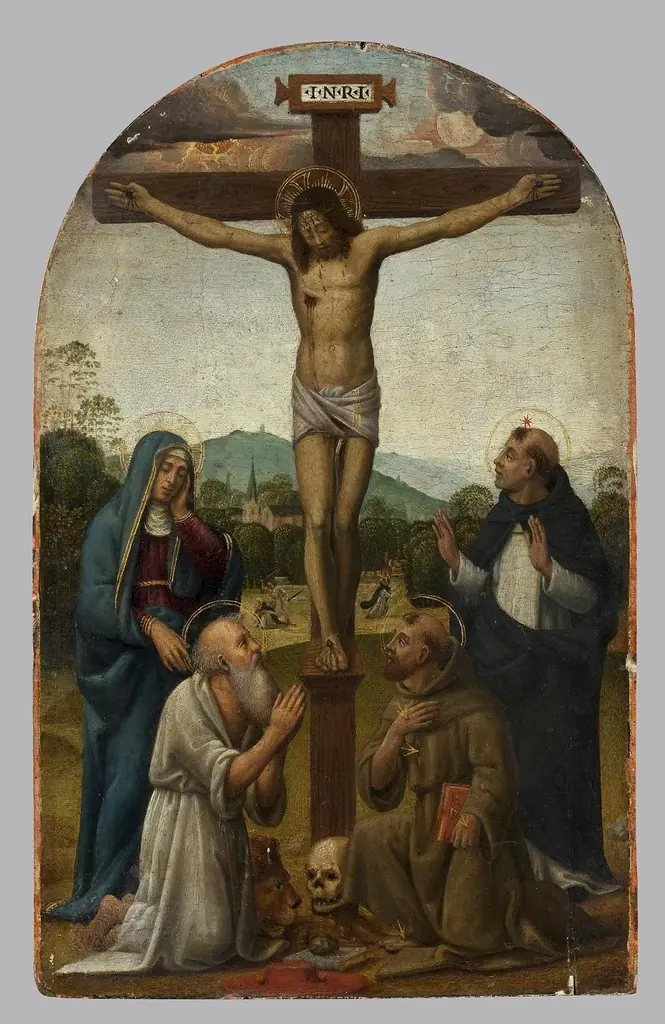
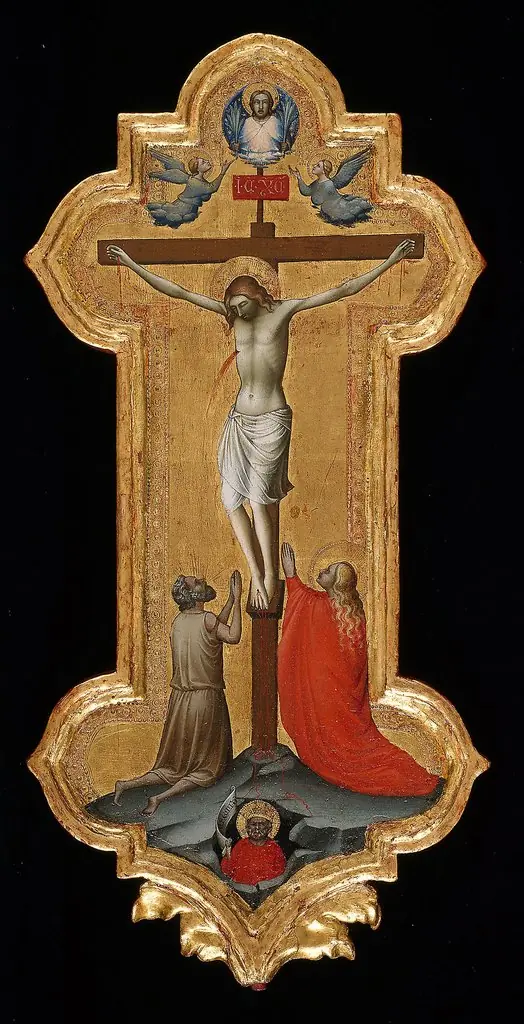
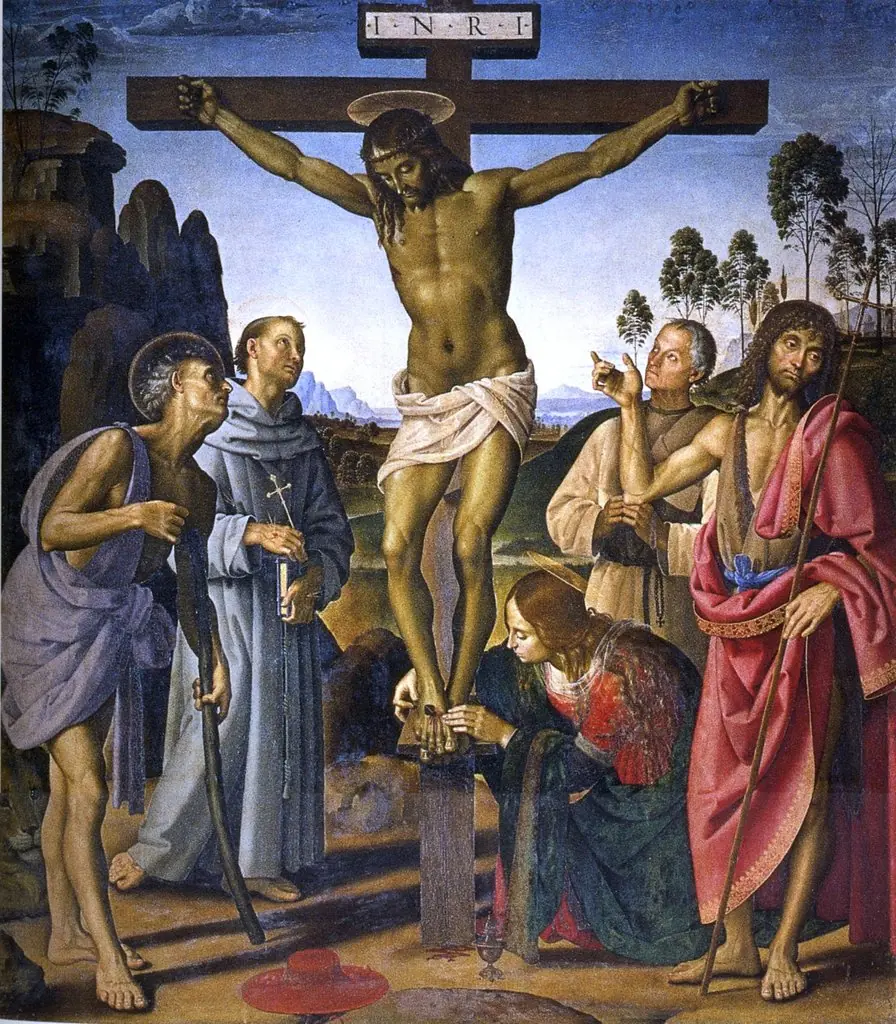
The Crucifixion with Saint Jerome and Saint Francis
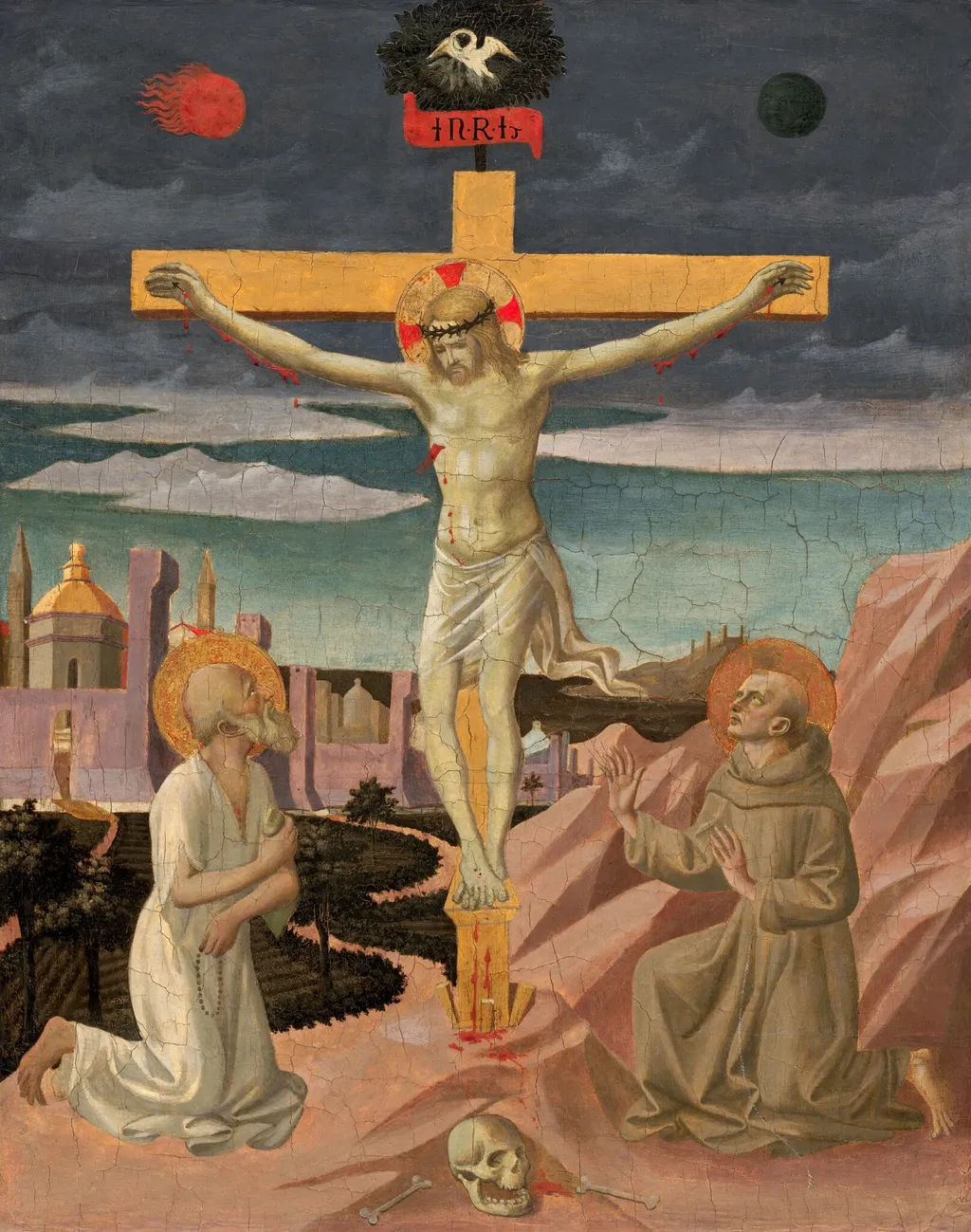
The Crucifixion with Saint Jerome and Saint Francis is a tempera painting by the Early Renaissance artist Francesco Pesellino. It dates from 1448 and is held in the collection of the National Gallery of Art.
- Inscription
- Inscribed:upper center on scroll: INRI (Jesus of Nazareth, King of the Jews)
About this work
Technique & Style
As a religious genre piece by Francesco Pesellino, the medium and support are characteristic of mid-15th-century Florentine panel painting.
Created around 1450, the painting is executed in tempera on a poplar panel support. The work measures 61.5 cm in height and 49.1 cm in width. As a religious genre piece by Francesco Pesellino, the medium and support are characteristic of mid-15th-century Florentine panel painting.
The National Gallery of Art in Washington, D.C., holds the work within its Samuel H. Kress Collection. The piece depicts religious figures, specifically Saint Jerome and Saint Francis, within a Crucifixion scene. The physical dimensions and material composition reflect the standard practices for devotional altarpieces or private commissions of the period, utilizing durable wood and pigments bound in egg tempera.
History & Provenance
The Crucifixion with Saint Jerome and Saint Francis, attributed to Francesco Pesellino, was executed circa 1450 as a tempera work on poplar panel. It originally belonged to the Melzi collection in Milan and entered the market via the dealer Count Alessandro Contini Bonacossi before being sold in July 1932 to the Samuel H. Kress Foundation. The Kress Foundation subsequently gifted the painting to the National Gallery of Art in Washington, D.C., in 1939. The work remains in the museum’s collection, catalogued within the Samuel H. Kress Collection.
The work is held by the National Gallery of Art in Washington, D.C., as part of the Samuel H. Kress Collection. Its provenance traces to the Melzi collection in Milan, though sources note ambiguity regarding whether this refers to the Duchessa Melzi d'Eril or the lawyer Gennaro Melzi. The painting was acquired by Robert Langton Douglas, then Count Alessandro Contini Bonacossi of Rome, before being sold to the Samuel H. Kress Foundation in New York in July 1932.
In 1939, the Kress Foundation gifted the panel to the National Gallery of Art, where it remains in the permanent collection. The gallery's preliminary catalogue from 1941 lists the work, and it is cataloged in subsequent scholarly volumes on the Kress collection. No specific exhibition history beyond its institutional placement is detailed in the provided sources.
Overview
Pesellino's The Crucifixion with Saint Jerome and Saint Francis, created around 1448, is a devotional painting executed in tempera on a poplar panel. This work depicts the central Christian event of the Crucifixion, with two prominent saints, Jerome and Francis, positioned nearby. The composition offers a serene and contemplative interpretation of the sacred narrative.
Subject & Meaning
The painting features Christ on the cross, flanked by Saint Jerome and Saint Francis. The inclusion of Saint Jerome, a revered scholar and translator of the Bible, highlights the connection between intellectual pursuit and spiritual understanding. His presence alongside Saint Francis, known for his profound piety, suggests a harmonious interplay between faith, learning, and devotion within Christian thought.
Own this work as a print
Artist & collection

Artist
Francesco Pesellino (probably 1422 – July 29, 1457), also known as Francesco di Stefano, was an Italian Renaissance painter active in Florence.