Artwork
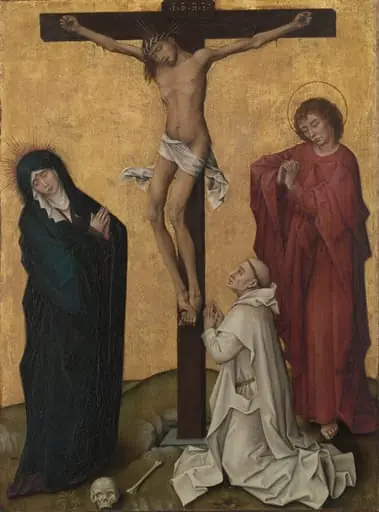
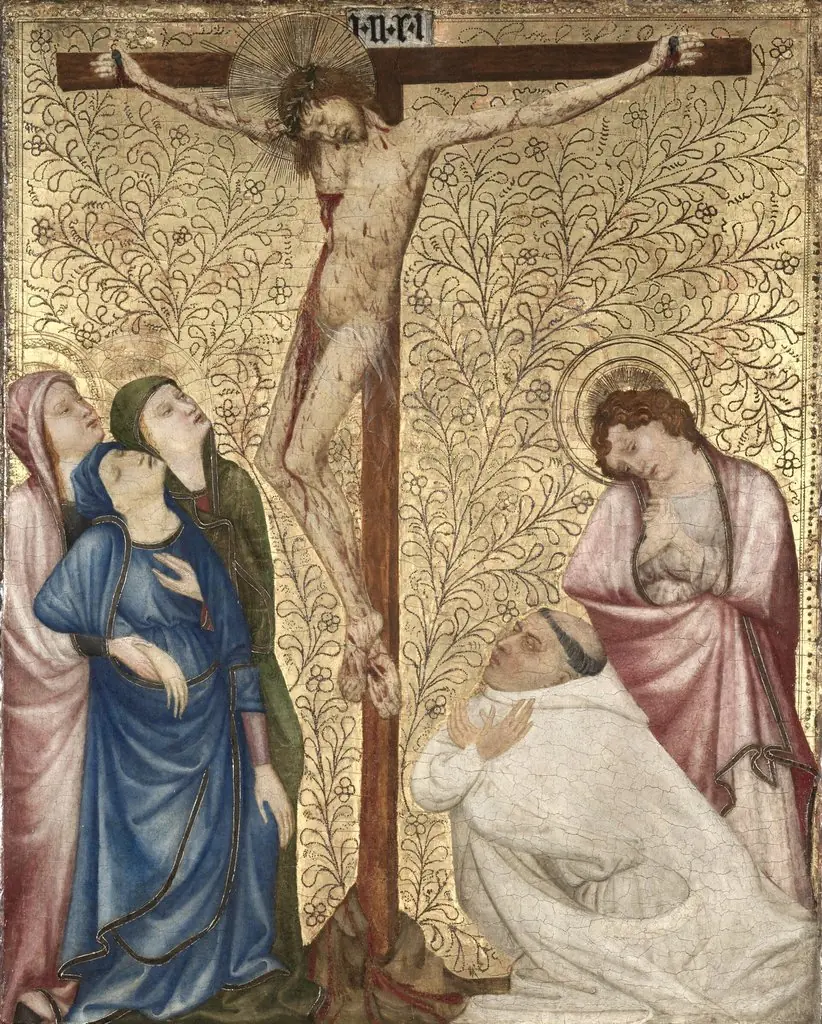
The Crucifixion with a Carthusian Monk
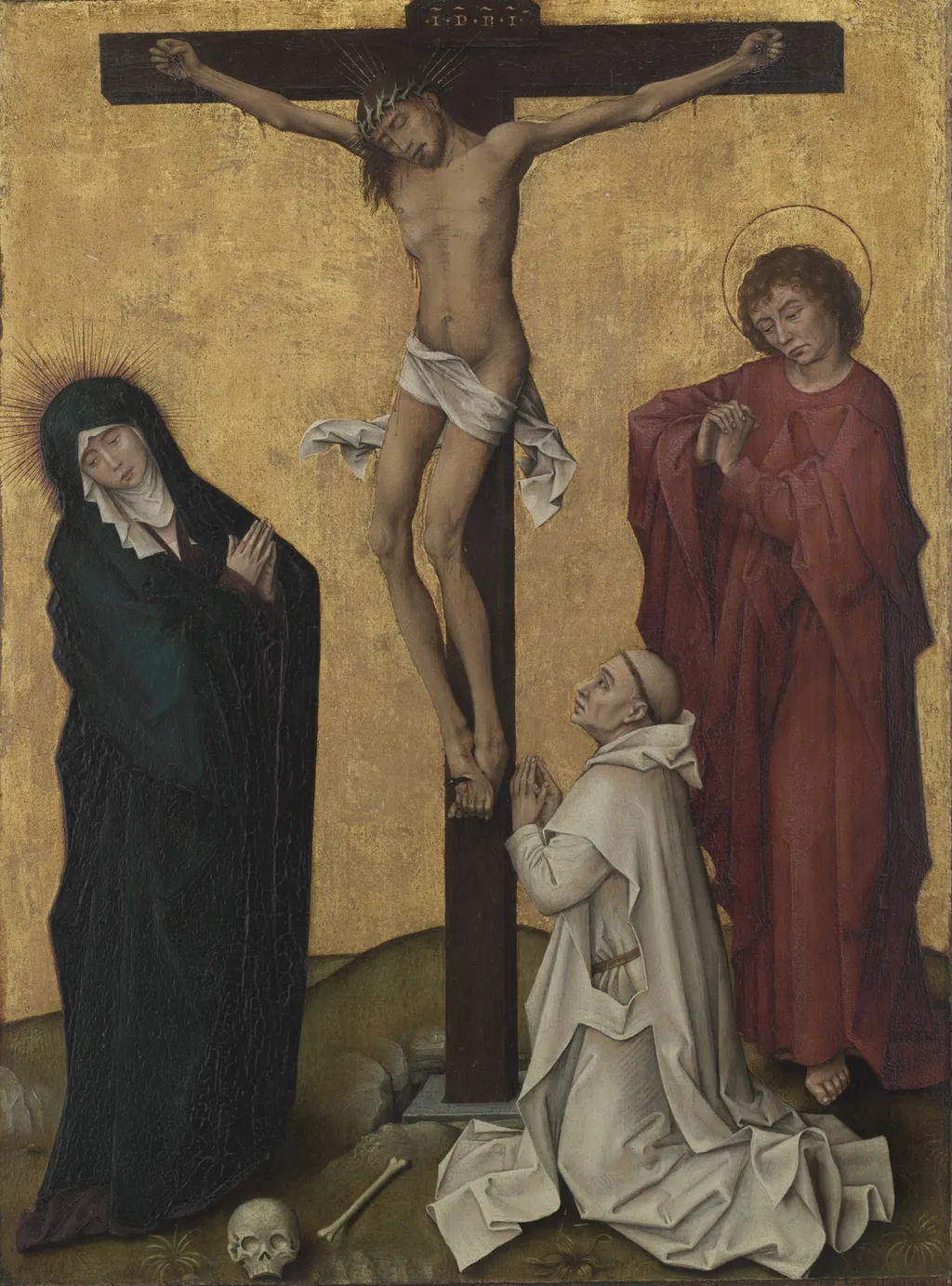
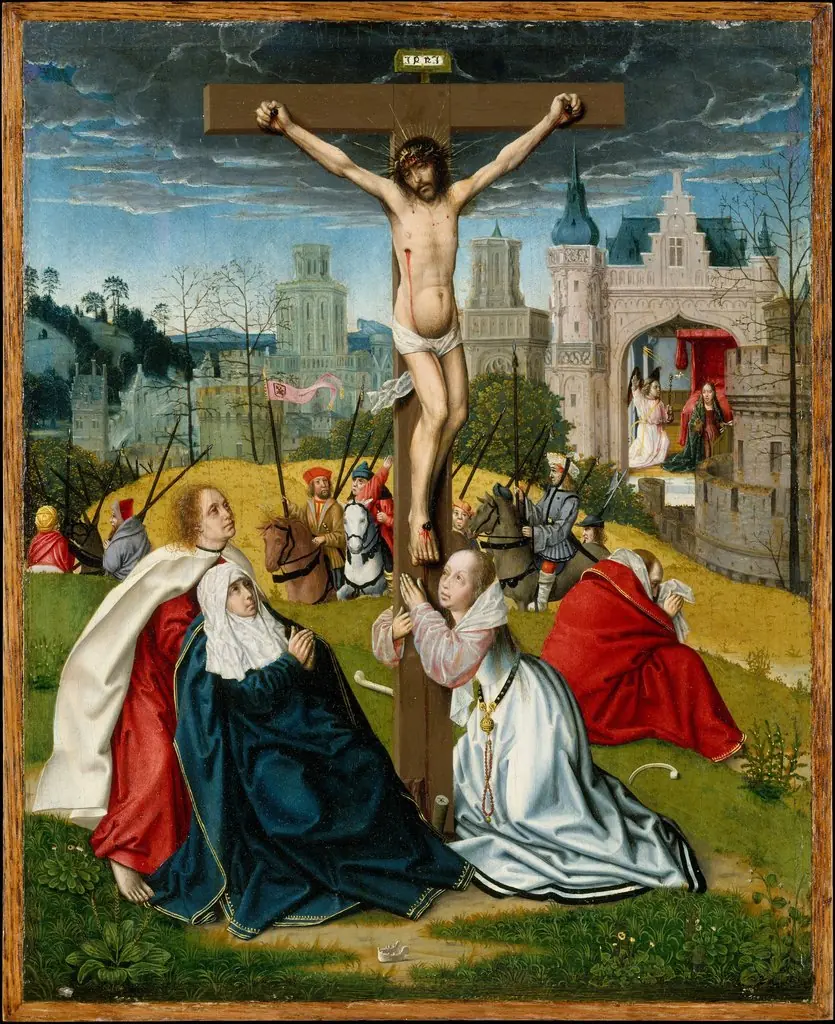
The Crucifixion with a Carthusian Monk is an unspecified painting by the Northern Renaissance artist Rogier van der Weyden. It dates from 1460 and is held in the collection of the Cleveland Museum of Art.
About this work
Subject & Meaning
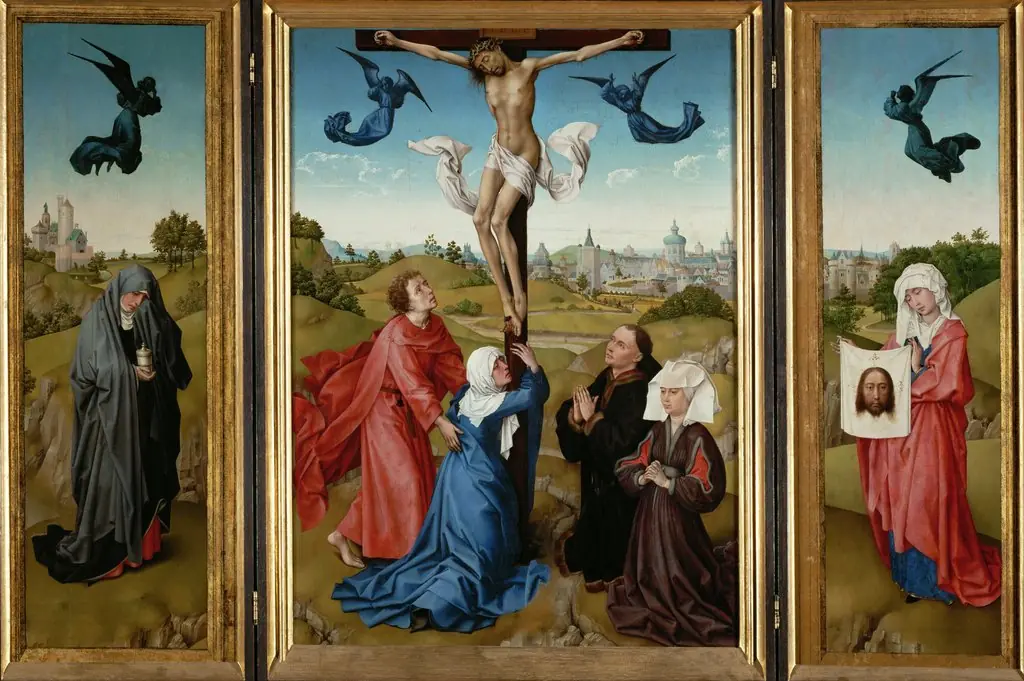
The work depicts the crucifixion of Jesus, serving as a central image of religious art created by Rogier van der Weyden in 1460.
The work depicts the crucifixion of Jesus, serving as a central image of religious art created by Rogier van der Weyden in 1460. The title and iconography explicitly include a Carthusian monk, indicating the figure's presence within the scene alongside the traditional representation of the Passion. This composition functions as a devotional image, likely intended to facilitate meditation on the sacrifice of Christ for a member of the Carthusian order or a patron associated with the order.
Technique & Style
Created in 1460, The Crucifixion with a Carthusian Monk is an oil painting on panel executed by Rogier van der Weyden. The work measures 38.4 cm in height and 29.2 cm in width. As a religious painting originating from the Netherlands, it depicts the crucifixion of Jesus. The piece is currently held in the collection of the Cleveland Museum of Art.
History & Provenance
The Crucifixion with a Carthusian Monk is a religious painting by Rogier van der Weyden, dated circa 1460. Executed in the Netherlands, the work depicts the crucifixion of Jesus with a Carthusian monk kneeling at the foot of the cross, and measures 38.4 cm in height and 29.2 cm in width. It is held in the collection of the Cleveland Museum of Art, where it is catalogued as accession number 1931.449. The sources consulted do not record earlier ownership, commission details, or exhibition history beyond its current holding.
Overview
Rogier van der Weyden's painting, The Crucifixion with a Carthusian Monk, created in 1460, exemplifies the devotional art prominent in the Northern Renaissance. This work portrays the central Christian event of the crucifixion, distinguished by the presence of a kneeling Carthusian monk. It reflects the artist's focus on religious narratives, a hallmark of his mid-15th-century output.
Context
Rogier van der Weyden was a leading figure among the Early Netherlandish painters during the mid-15th century. His reputation for creating profound religious works, including large altarpieces and triptychs, earned him significant patronage. Commissions from European nobility and aristocrats across the continent solidified his prominence, allowing him to shape the visual language of devotional art in the Northern Renaissance.
Own this work as a print
Artist & collection
Artist
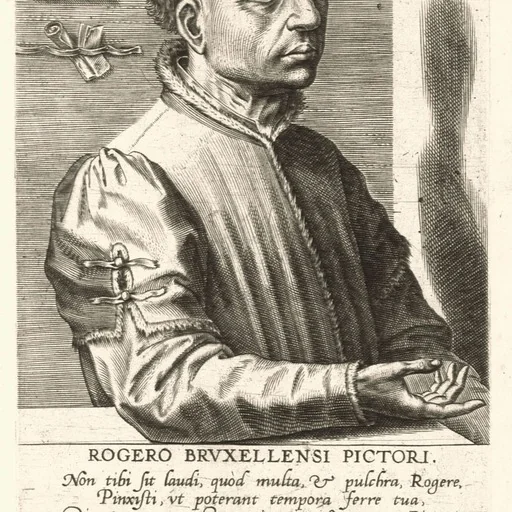
Rogier van der Weyden (Dutch:; 1399 or 1400 – 18 June 1464), initially known as Roger de la Pasture (French: ), was an early Netherlandish painter whose surviving works consist mainly of religious triptychs,…