Artwork
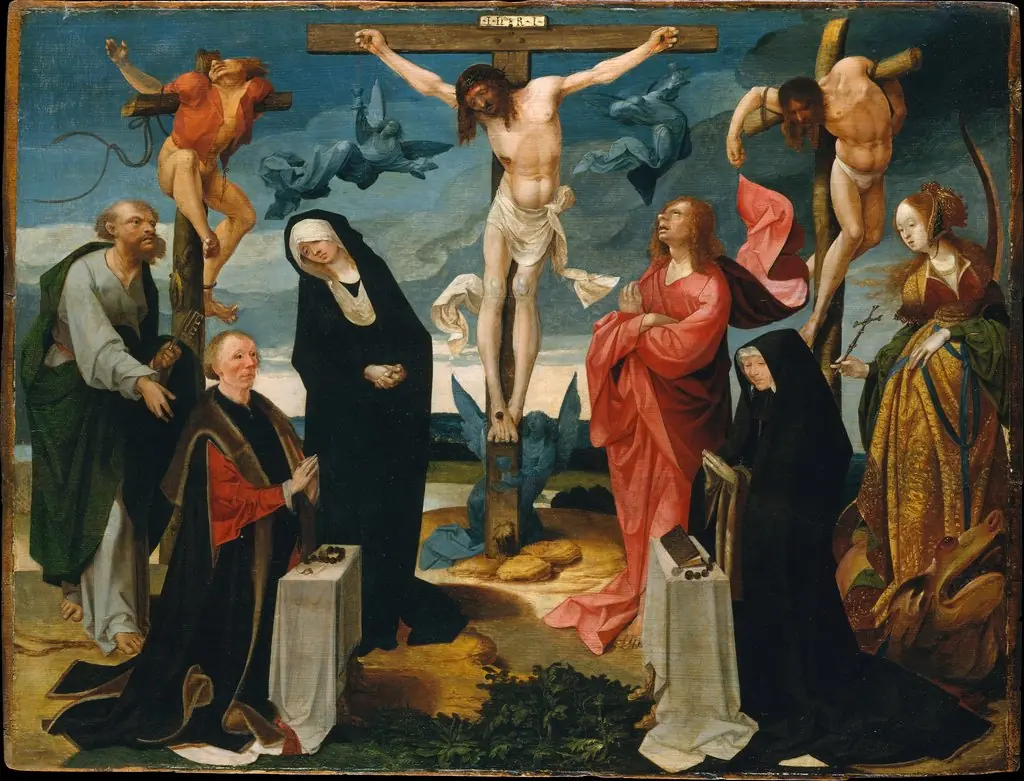
Crucifixion with the Virgin, Saint John, Mary Magdalene, a Donor
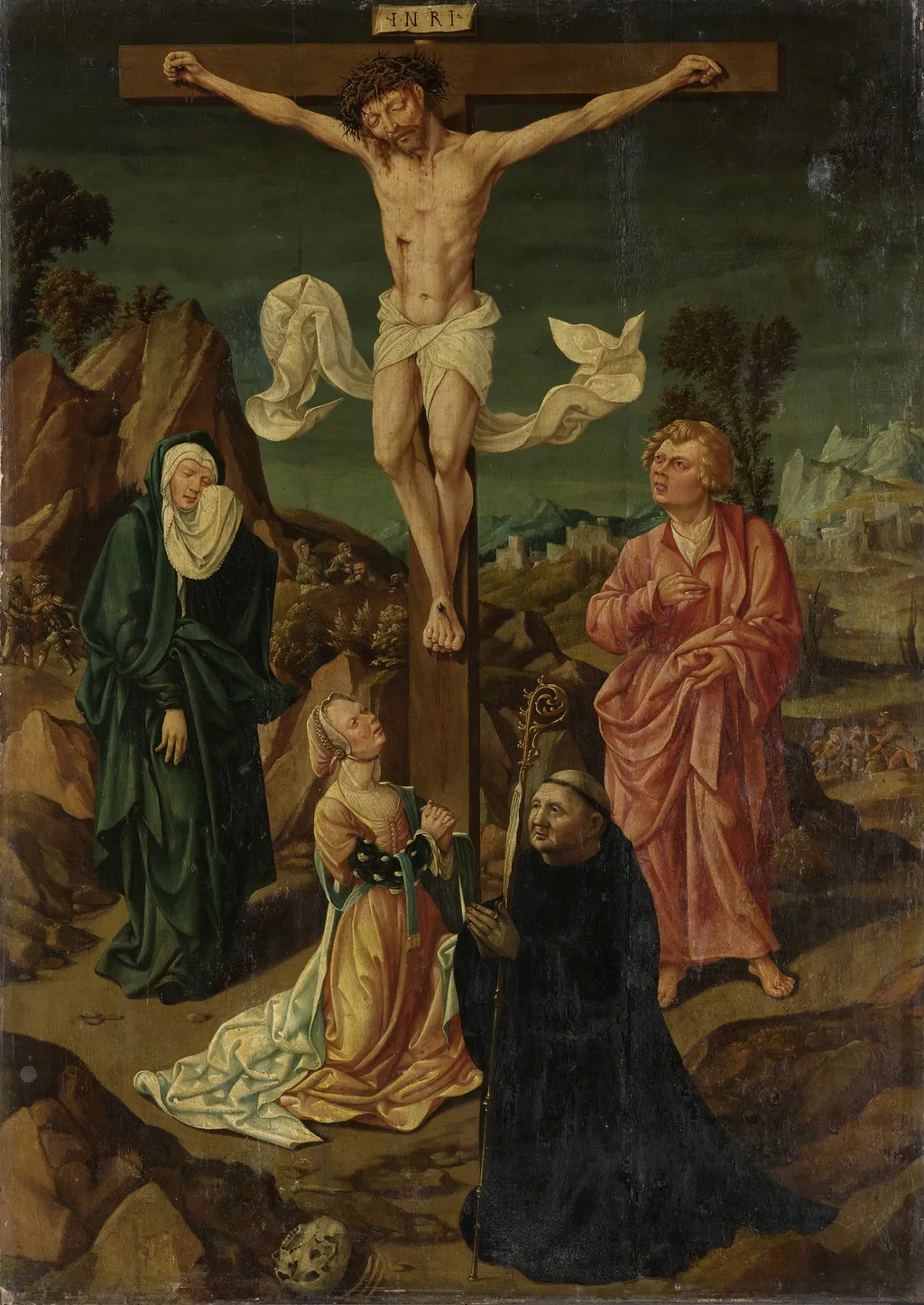
Crucifixion with the Virgin, Saint John, Mary Magdalene, a Donor is an oil painting. It dates from 1515 and is held in the collection of the Rijksmuseum.
About this work
Subject & Meaning
The presence of a donor figure indicates a personal appeal for intercession, linking the sacred narrative to individual devotion.
The painting shows the crucifixion of Christ accompanied by the Virgin Mary, Saint John, and Mary Magdalene, a composition typical of late medieval devotional art that emphasizes communal prayer and donor patronage. The presence of a donor figure indicates a personal appeal for intercession, linking the sacred narrative to individual devotion. Symbolically, the Virgin’s sorrowful stance and Mary Magdalene’s weeping convey themes of compassion and redemption, while the inclusion of Saint John underscores the witness of the beloved disciple.
The work’s religious genre reflects its function within private worship, reinforcing the donor’s piety and the broader spiritual aspirations of the late‑15th‑century Netherlands.
Technique & Style
The work is an oil painting created on a wooden panel, reflecting early 16th-century devotional practices. Executed in oil paint, the piece employs a naturalistic composition with precise spatial depth and emotive gestures characteristic of the period’s religious art. The figures of the Virgin, Saint John, and Mary Magdalene are rendered with delicate modeling, emphasizing their sorrowful expressions.
The donor’s inclusion suggests personal piety, while the panel’s dimensions (109 cm by 77 cm) align with contemporary altarpiece formats. The painting’s condition remains stable, with minimal craquelure and no significant losses.
History & Provenance
The painting was created in 1515, executed in oil paint on panel as a religious work depicting the Crucifixion with the Virgin, Saint John, Mary Magdalene, and a donor. By the early twentieth century it had entered the collection of Cornelis Hoogendijk, a Dutch collector. It subsequently passed into the holdings of the Rijksmuseum, where it remains today, classified as an anonymous religious painting.
The painting is held in the collection of the Rijksmuseum. According to the Wikidata record, it was previously owned by Cornelis Hoogendijk before entering the museum's holdings. The work, an oil-on-panel piece dating to 1515, measures 109 cm in height and 77 cm in width.
No specific inventory or accession number is recorded in the available sources, and no exhibition history is documented.
Context
The painting was created in 1515 by an anonymous artist, as documented in scholarly records and held in the collection of Cornelis Hoogendijk before entering the Rijksmuseum's holdings. Executed in oil on panel, it measures 109 cm in height and 77 cm in width, depicting the Crucifixion with the Virgin Mary, Saint John, and Mary Magdalene, reflecting the religious artistic conventions of the early 16th century in the Netherlands. Its stylistic analysis situates it within the broader context of devotional imagery produced during the transition from late Gothic to early Renaissance influences in Northern European art.
Overview
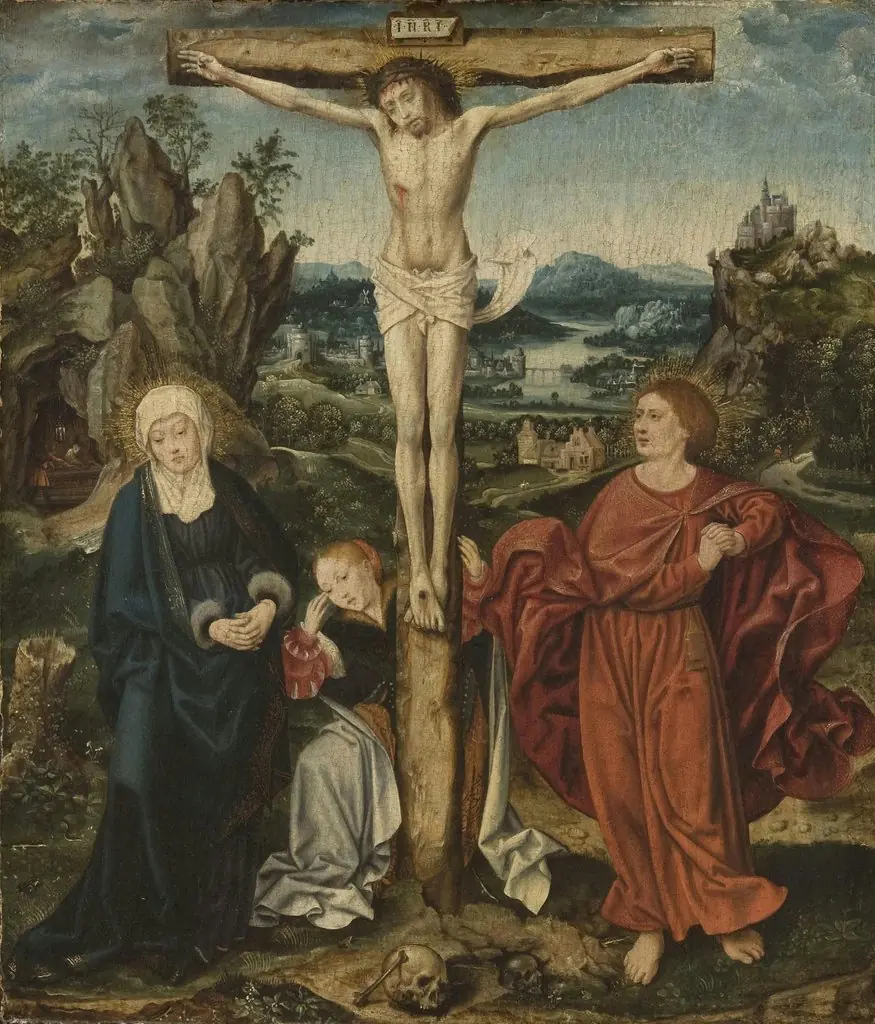
The oil painting depicts the crucifixion scene, with the central figure of a man on the cross bearing a crown of thorns and the inscription “INRI” above his head. Flanking the cross are two women, one in green kneeling with clasped hands, the other in yellow clutching a red cloth, while a man in red robes stands to the right with his hands together, and a bald figure in dark attire holds a golden staff. The landscape behind them features rugged hills, a distant town, and a skull at the foreground base.
Artist & collection

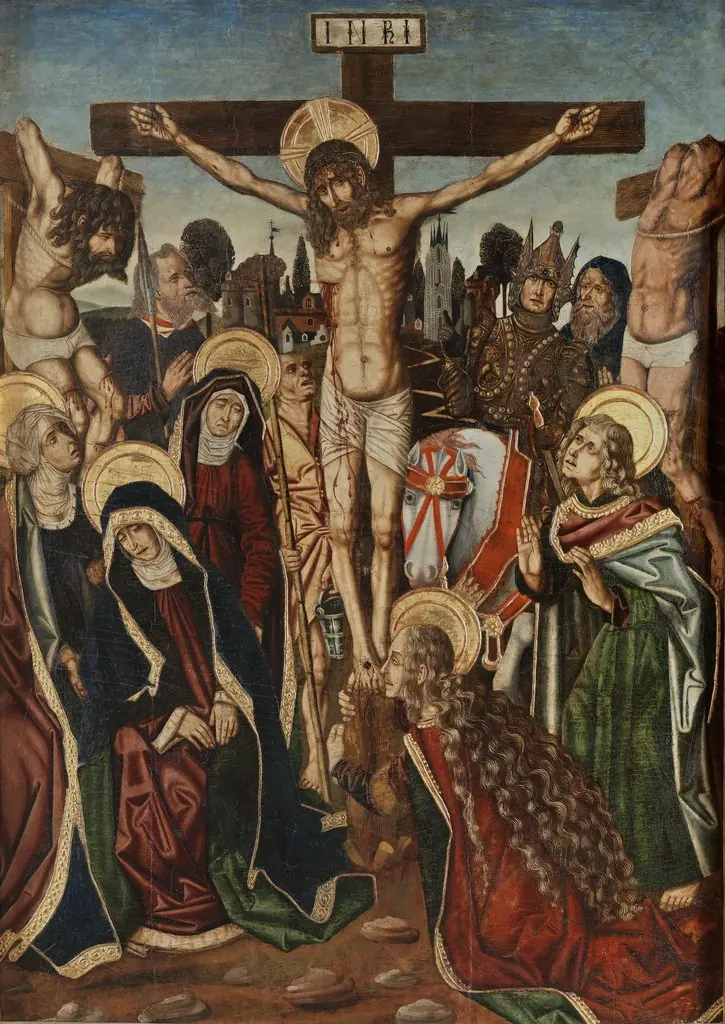
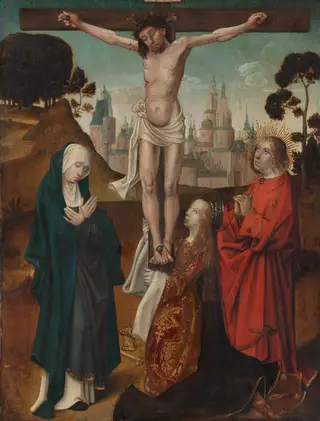
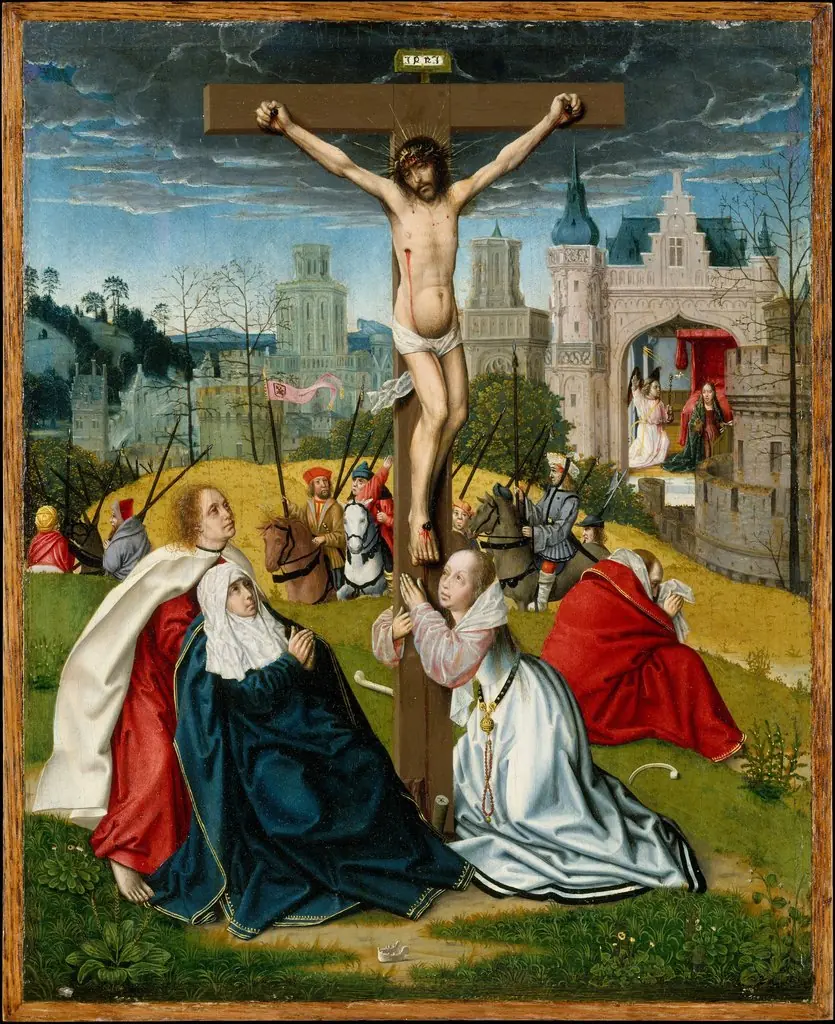
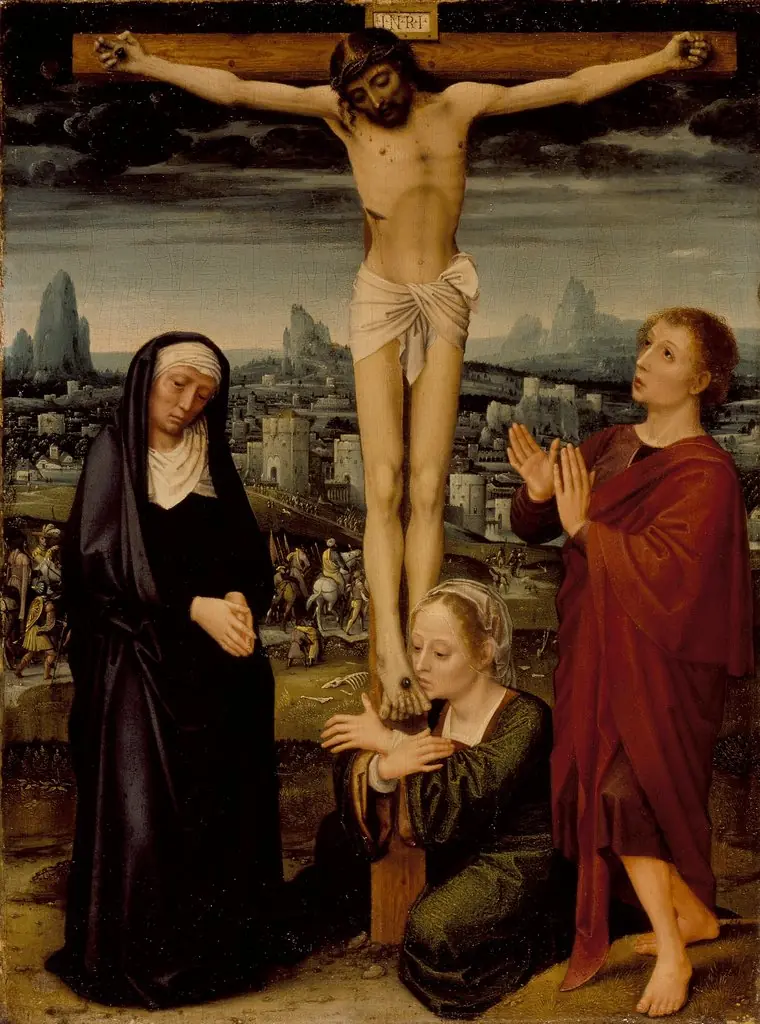
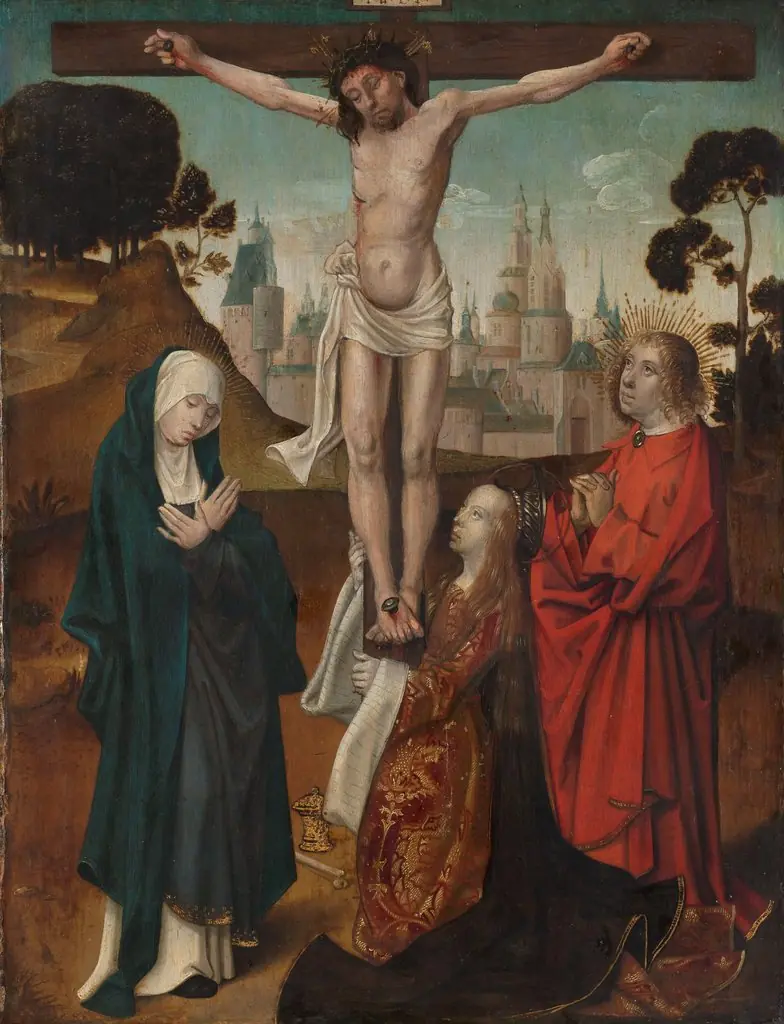
- Crucifixion with the Virgin, Mary Magdalen and St John the Evangelist
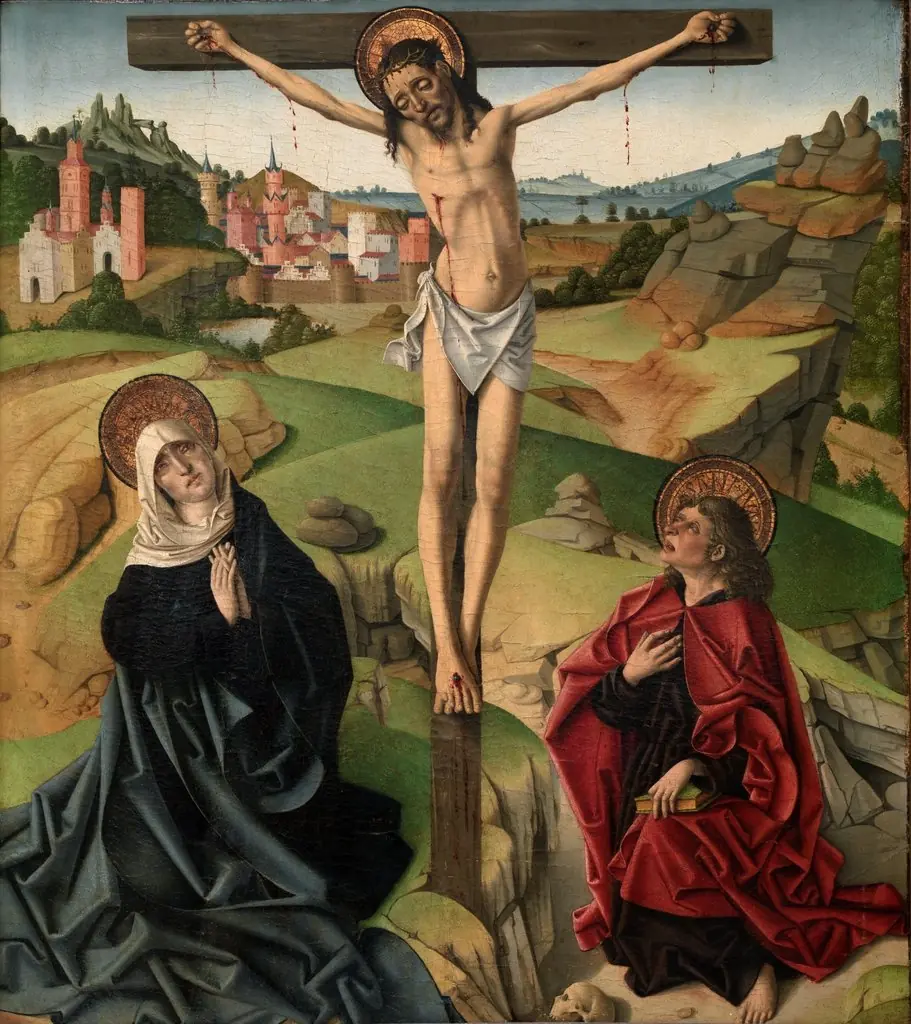
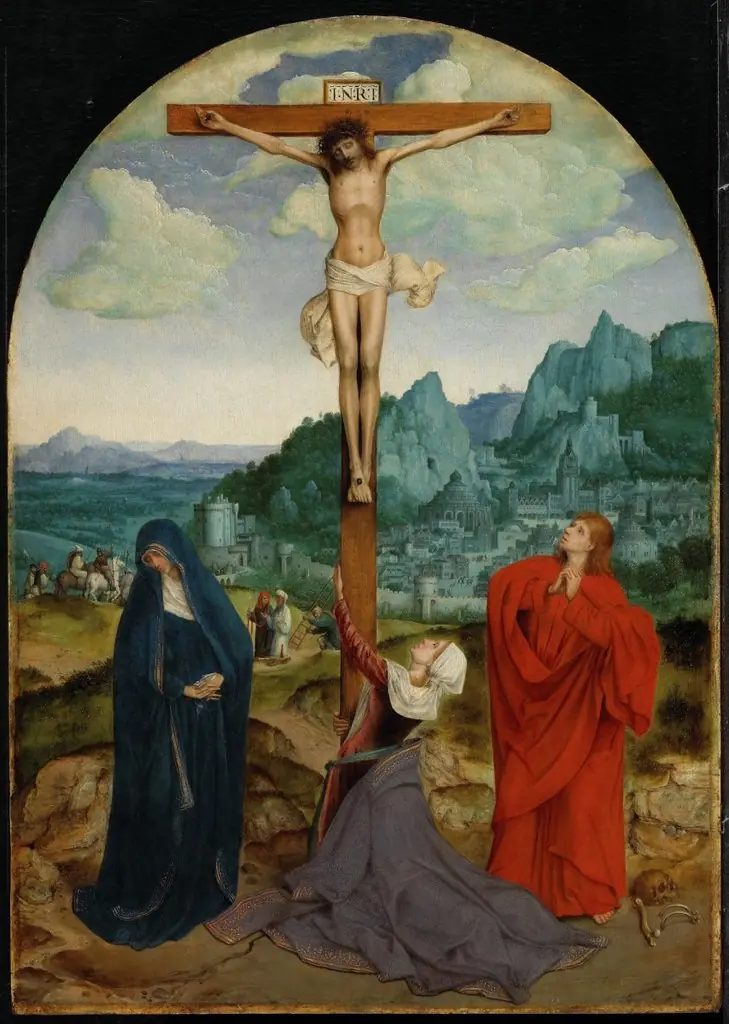 Crucifixion, with the Virgin and Saint John
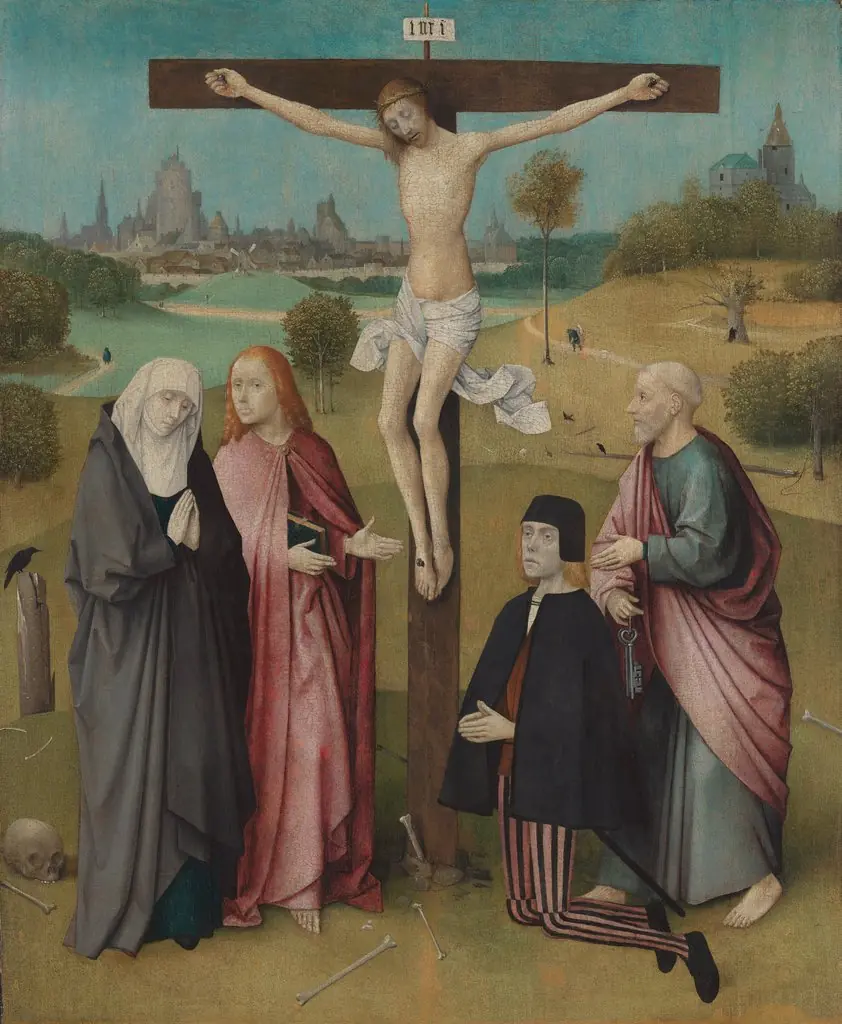 Crucifixion with a Donor
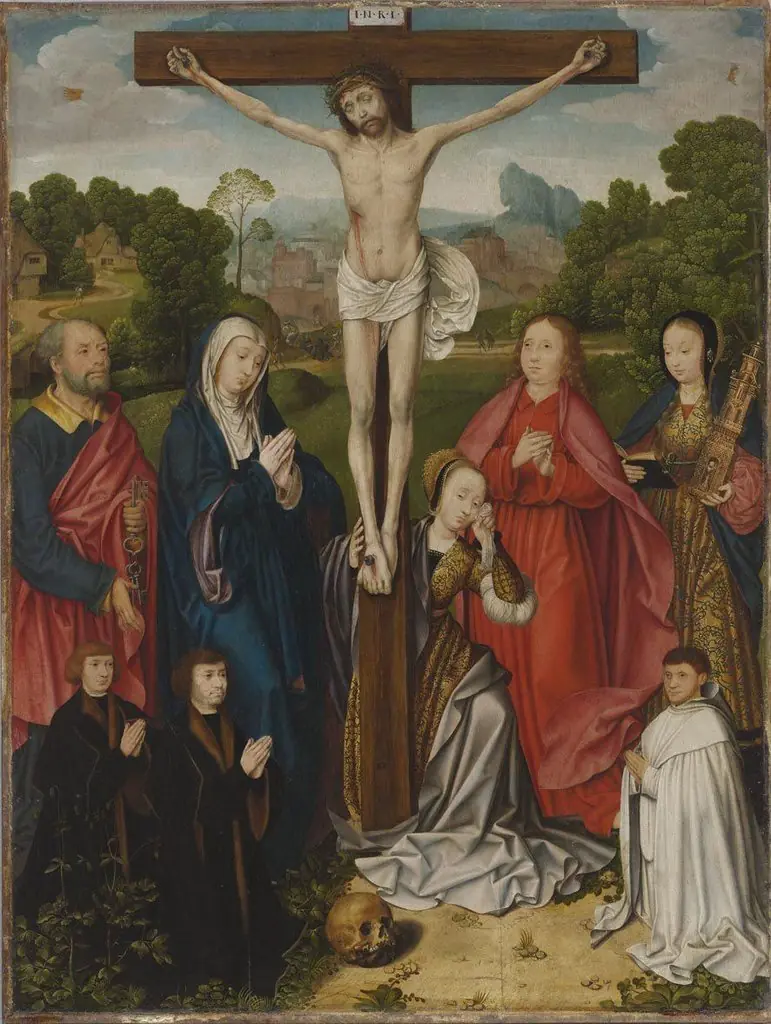 Christ on the cross with the saints Peter, Mary, Mary Magdalene, John the Evangelist and Barbara, with three donors
 The Crucifixion with Donors and Saints Peter and Margaret