Artwork
Die Sala del Maggior Consiglio im Dogenpalast
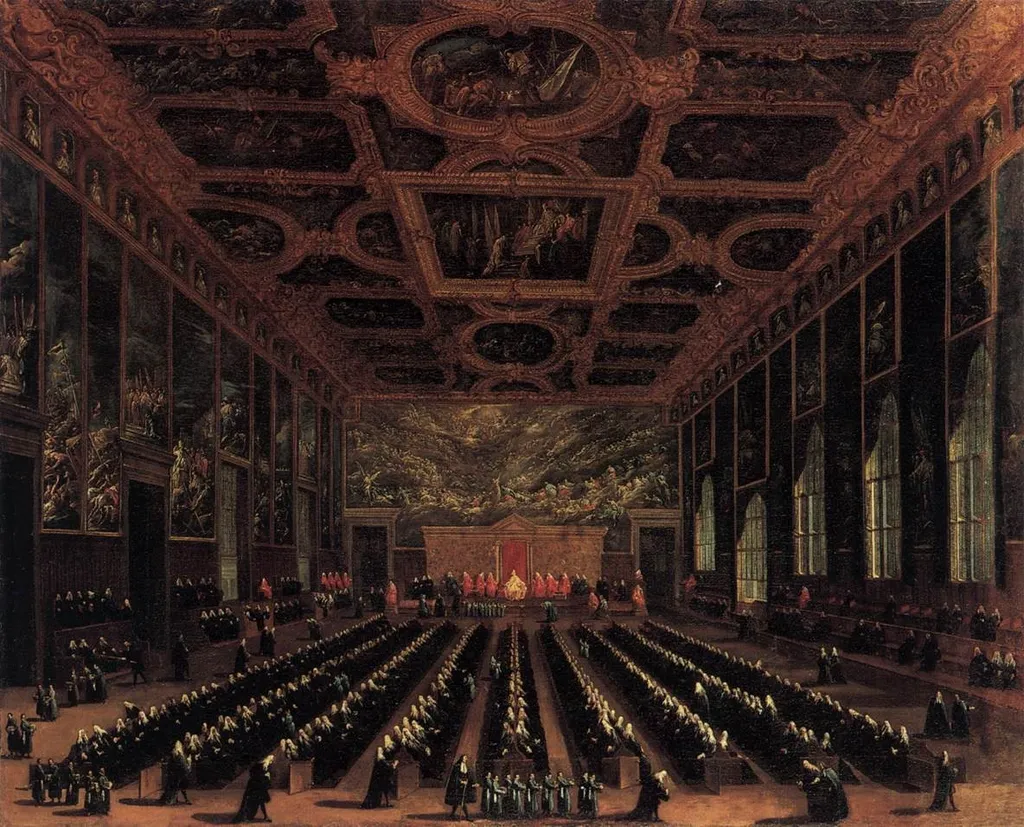
Die Sala del Maggior Consiglio im Dogenpalast is a paint painting by the Rococo painting artist Antonio Diziani. It dates from 1760 and is held in the collection of the Gemäldegalerie Berlin.
About this work
Overview
Antonio Diziani’s 1760 painting captures the interior of the Sala del Maggior Consiglio in Venice’s Doge’s Palace, rendered with the precision of a veduta.
Antonio Diziani’s 1760 painting captures the interior of the Sala del Maggior Consiglio in Venice’s Doge’s Palace, rendered with the precision of a veduta. As a follower of the Venetian tradition of architectural view painting, Diziani focused on documenting civic spaces with attention to spatial depth and decorative detail. The work reflects his training under his father, Gaspare Diziani, and aligns with the Rococo aesthetic of refined ornamentation and atmospheric light.
Subject & Meaning
The scene portrays the grand council chamber, where Venice’s ruling elite convened. Rows of seated figures, arranged in formal tiers, face a central platform, suggesting the ritualized nature of governance. The architecture itself becomes the subject, its gilded moldings, painted panels, and vaulted ceiling symbolize the authority and continuity of the Venetian Republic. No single figure dominates; the emphasis lies in the collective and institutional character of the space.
Technique & Style
Diziani employs soft, diffused lighting to highlight the ceiling’s intricate stucco and wall frescoes, creating a sense of spatial harmony. His brushwork is delicate, with careful attention to surface textures, marble, wood, fabric, without overt dramatization. While influenced by Zuccarelli and Zais, his approach avoids theatricality, favoring clarity and order.
Light falls evenly, enhancing architectural detail rather than casting deep shadows, distinguishing it from the chiaroscuro of Baroque painting.
History & Provenance
Painted in 1760, the work entered the Gemäldegalerie Berlin’s collection in the 19th century, likely through acquisitions of Venetian vedute by German collectors. Diziani’s reputation as a vedutista grew after his 1774 appointment to the Venice Academy, though he remained less prominent than contemporaries like Canaletto. The painting’s survival and preservation reflect its value as a documentary record of Venetian civic architecture during the late Republic’s final decades.
Context
In mid-18th century Venice, vedute paintings served both as souvenirs for Grand Tour travelers and as records of civic pride. The Sala del Maggior Consiglio, seat of the Republic’s highest governing body, was a frequent subject for artists seeking to depict Venice’s political grandeur. Diziani’s work aligns with a broader trend of documenting institutional spaces, contrasting with the more picturesque canal views popularized by Canaletto and Guardi.
Legacy
Diziani’s painting contributes to the historical record of Venetian architecture and governance, offering a quiet, unembellished view of a space central to the Republic’s identity. Though not widely celebrated in his time, his works remain valuable for their topographical accuracy and restrained elegance. Today, it stands as a testament to the role of art in preserving the visual culture of institutions before their decline.
Artist & collection
Artist
Antonio Diziani (9 February 1737 – 23 June 1797) was an Italian painter of the 18th century, active mainly in painting vedute or landscapes and vistas of Venice.

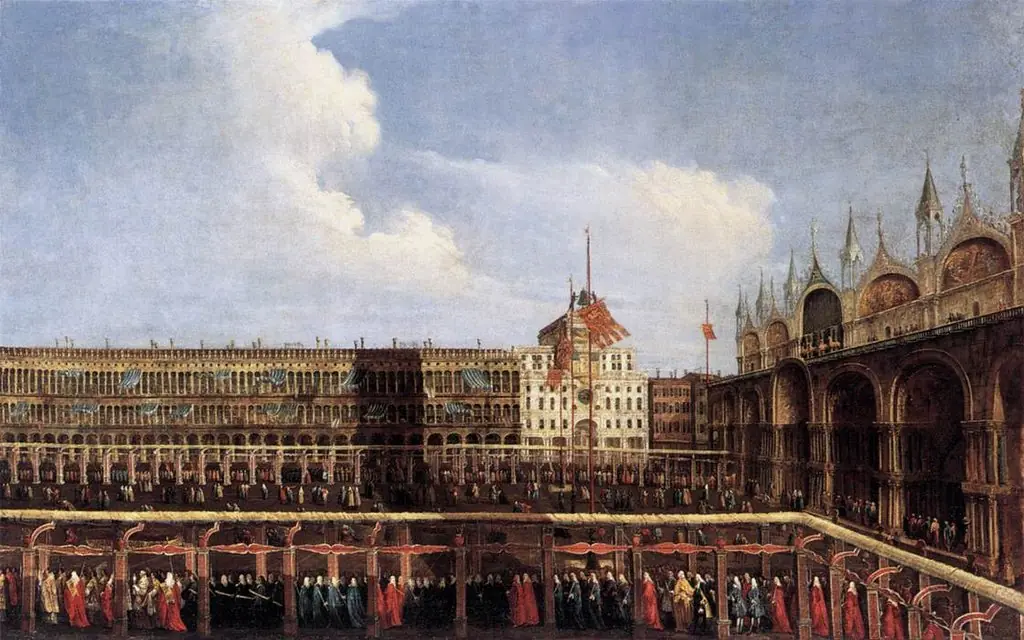
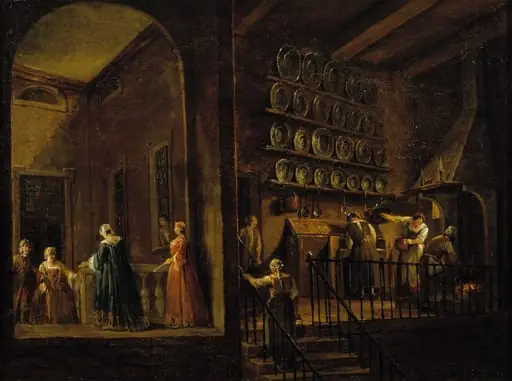
- Doge Morosini Receives the Command Staff
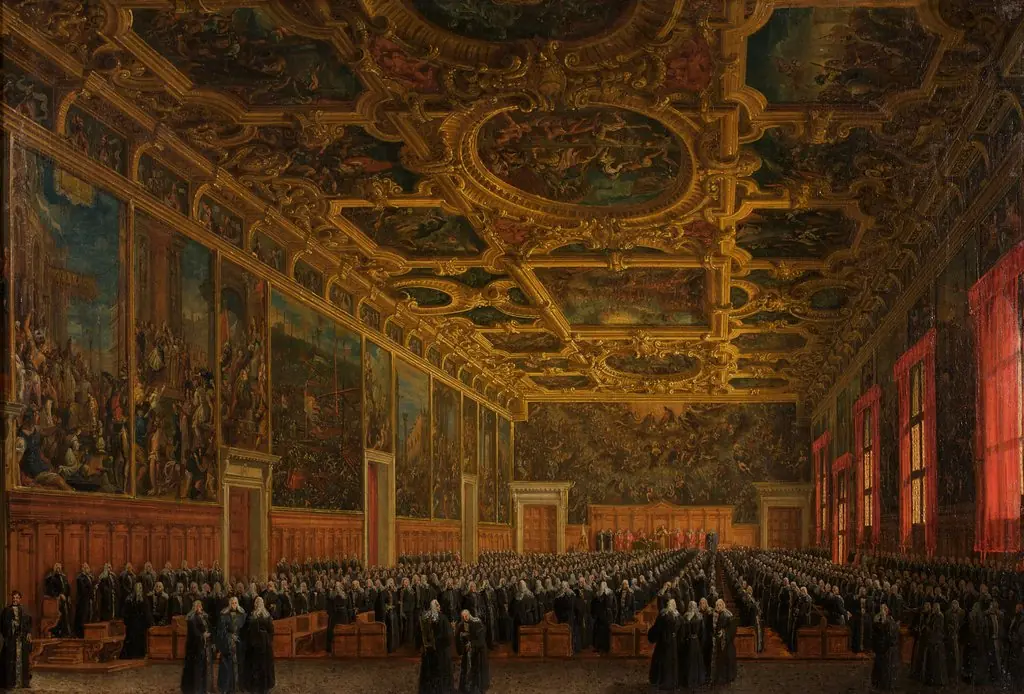
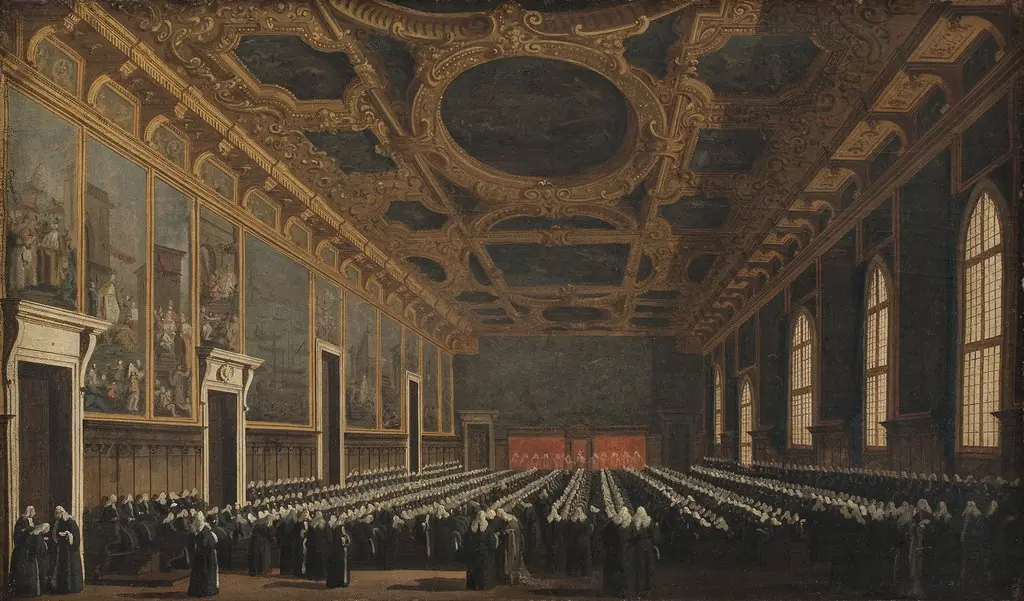 The Doge and Grand Council in Sala del Maggior Consiglio
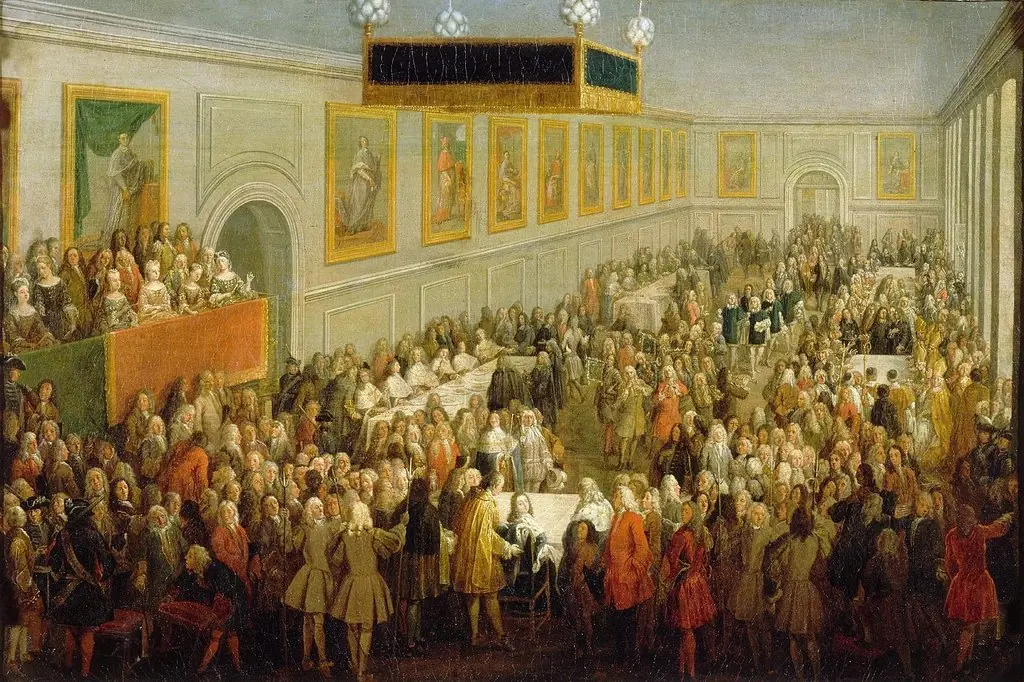 Feast given after the coronation of Louis XV of France
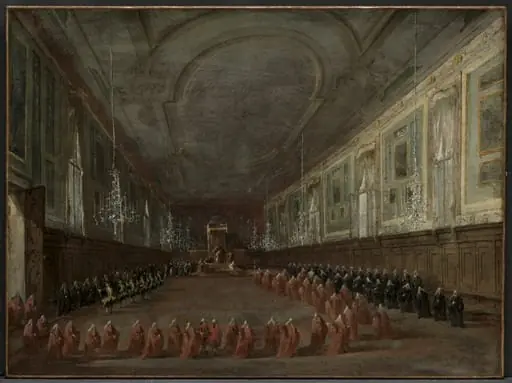 Pope Pius VI Descending the Throne to Take Leave of the Doge in the Hall of SS. Giovanni e Paolo, 1782
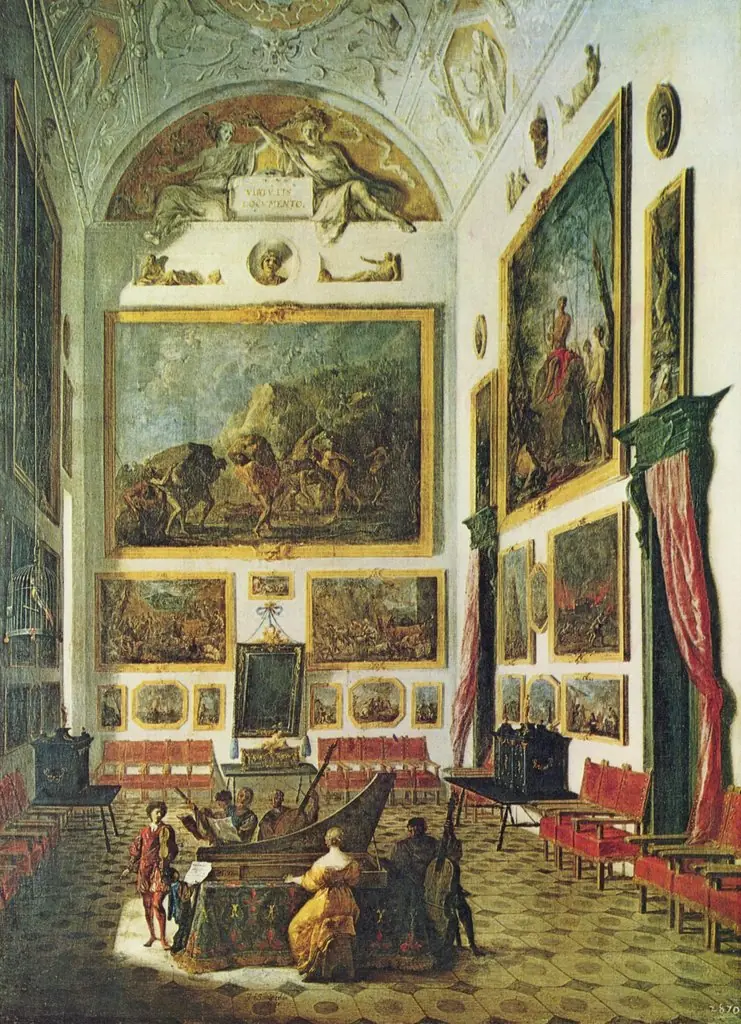 Musical Entertainment at the Spinet
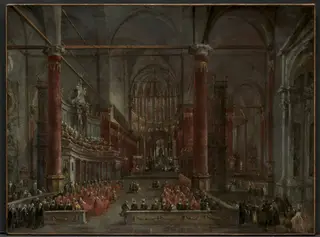 Pontifical Ceremony in SS. Giovanni e Paolo, Venice, 1782
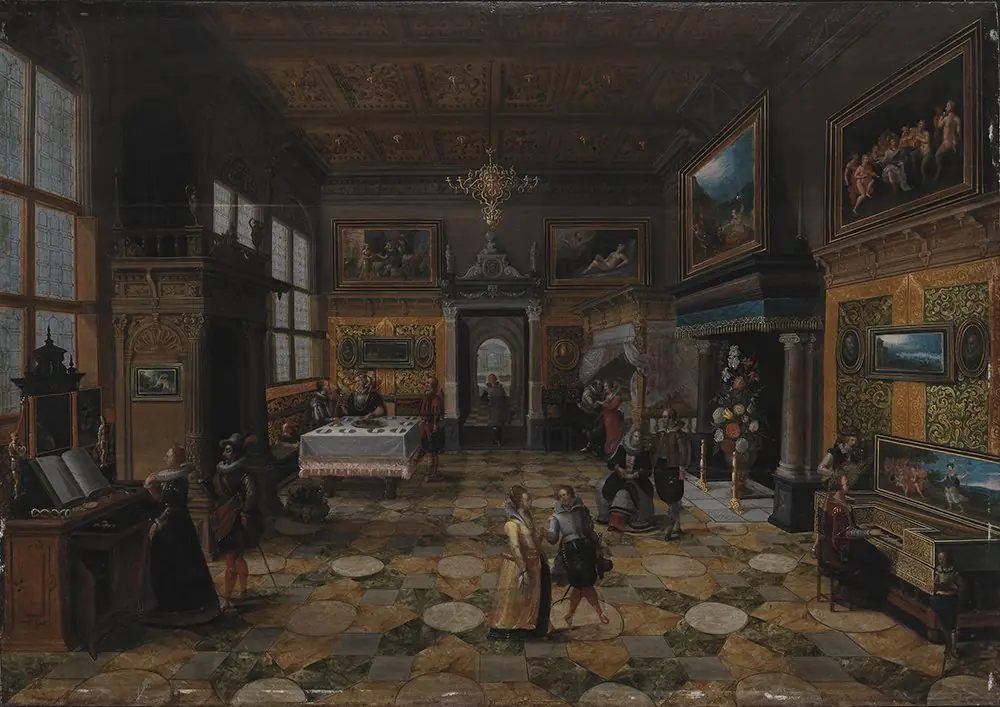 Party Scene
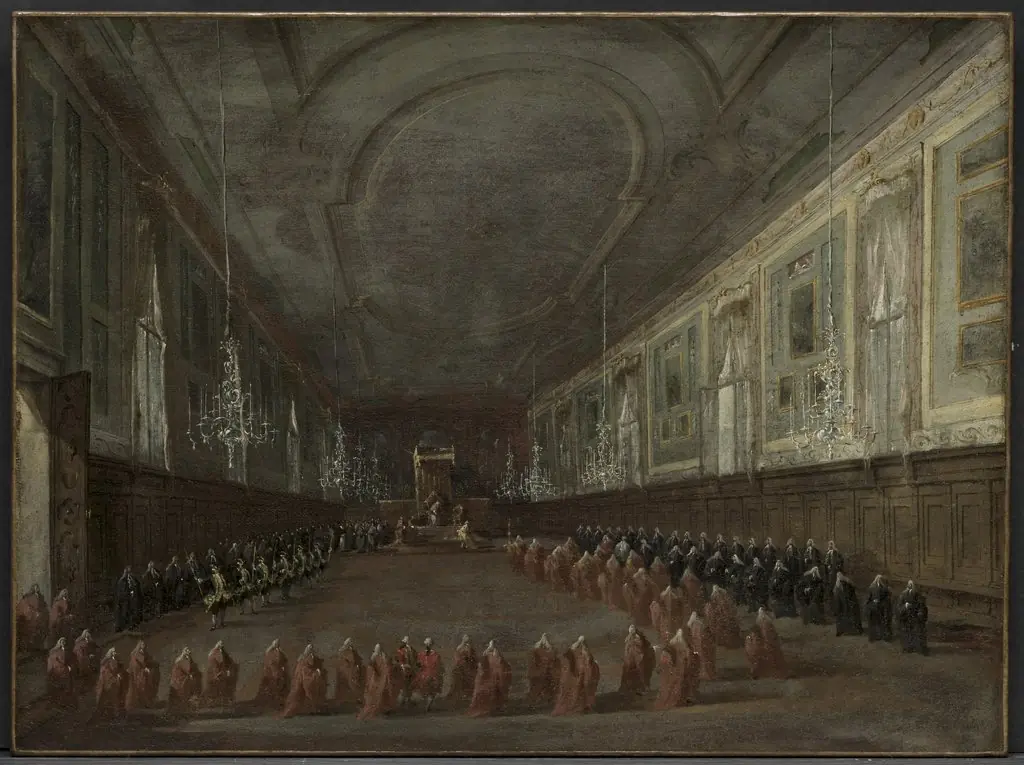 Pope Pius VI Descending the Throne to Take Leave of the Doge in the Hall of SS. Giovanni e Paolo, 1782
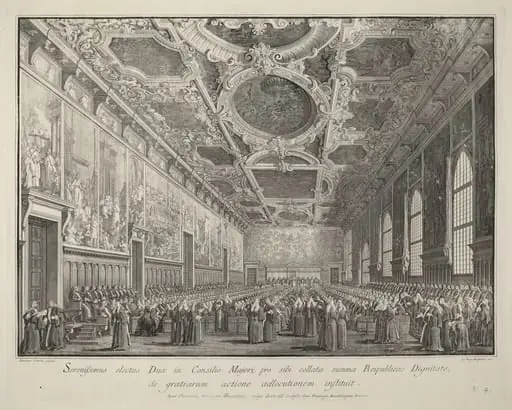 The Doge Returns Thanks in the Sala del Consiglio Maggior
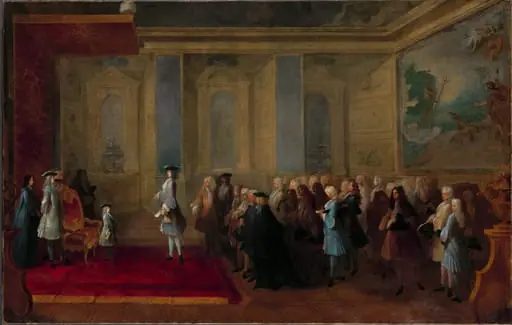 Untitled
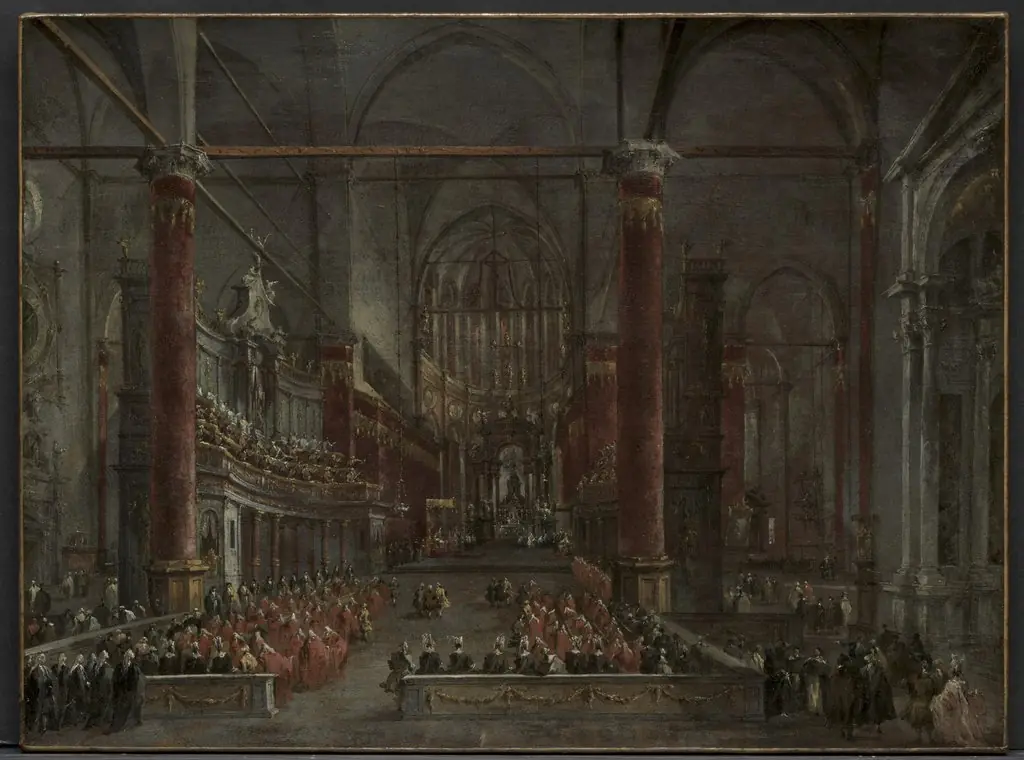 Pontifical Ceremony in SS. Giovanni e Paolo, Venice, 1782
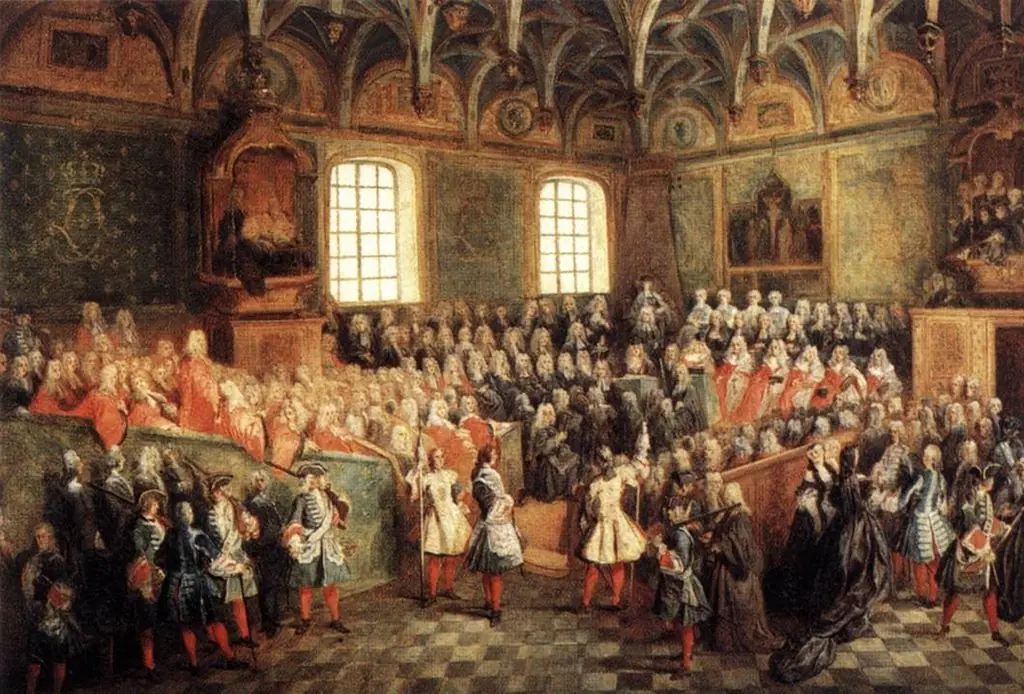 The Seat of Justice in the Parliament of Paris in 1723