Artwork
Capriccio with St. Paul's and Old London Bridge
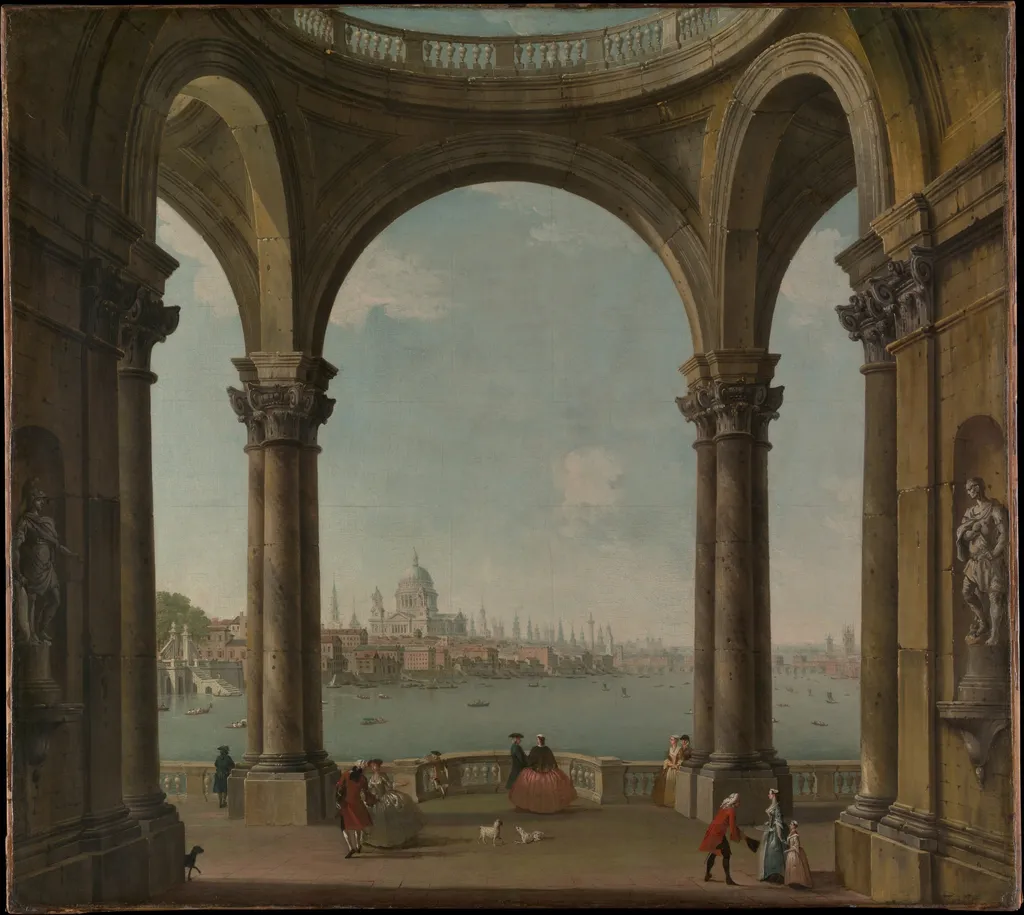
Capriccio with St. Paul's and Old London Bridge is an oil painting by the Rococo painting artist Antonio Joli. It dates from 1748 and is held in the collection of the Metropolitan Museum of Art. "Capriccio with St.
About this work
Subject & Meaning
By pairing Wren's dome with the medieval stone bridge, Joli evokes London's layered history, compressing centuries of building into one harmonious prospect.
The painting is a capriccio, an architectural fantasy that recombines real London landmarks into an imagined composition. It centers on St. Paul's Cathedral and the old London Bridge, two of the city's most recognizable monuments, joined in a single view that does not correspond to any actual vantage point. The Thames fills the foreground, animated by boats and figures, while a balcony, men, women, and a dog populate the scene, lending everyday life to the grand architectural setting.
By pairing Wren's dome with the medieval stone bridge, Joli evokes London's layered history, compressing centuries of building into one harmonious prospect. The capriccio format itself signals artistic invention rather than topographical record, inviting the viewer to appreciate the city as a stage of memory and imagination rather than a literal survey.
History & Provenance
The capriccio was executed in 1748 by the Venetian vedutista Antonio Joli, who rendered the scene in oil on canvas. Although the painting’s early patronage and subsequent owners are not documented in the available sources, it is known to have entered the collection of the Metropolitan Museum of Art, where it is currently held. The work’s date of creation is firmly established by both the artist’s signature and the inception year recorded for the piece.
Overview
"Capriccio with St. Paul's and Old London Bridge" is an oil painting depicting an imagined urban landscape. From a grand stone balcony, viewers observe figures in historical attire, while beyond, a river leads to a city skyline. This composition blends recognizable elements, such as a prominent domed church, with purely fictitious architectural features, characteristic of the capriccio genre. The artist constructs a picturesque, dreamlike vista rather than a literal depiction.
Technique & Style
The artist employed oil paint to render this detailed architectural fantasy. A notable aspect of the work's style is the use of chiaroscuro, a technique that manipulates strong contrasts between light and dark. This method creates a sense of volume and depth, enhancing the dramatic atmosphere of the scene and drawing attention to specific elements within the composition, from the foreground figures to the distant cityscape.
Own this work as a print
Artist & collection

Artist
Antonio Joli painted grand, sunlit views of Italian ruins and landscapes in the 1700s.

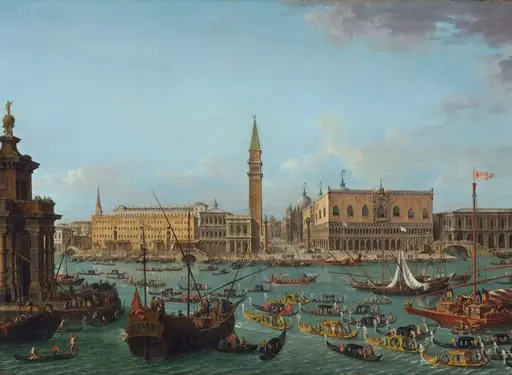
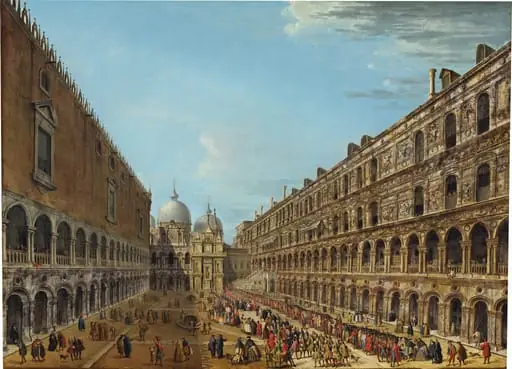
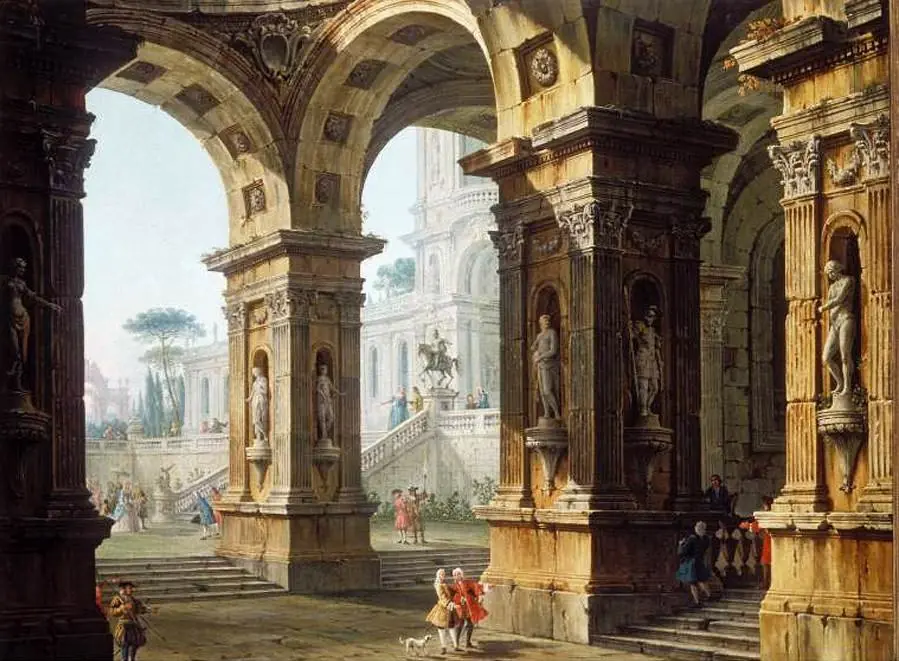
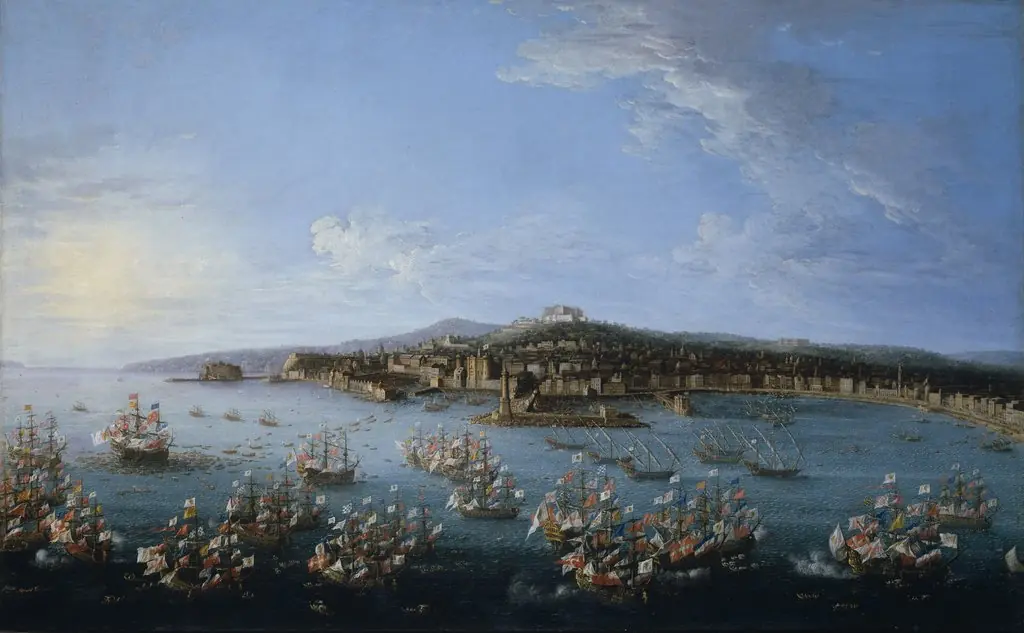
- Bacino di San Marco from the Piazzetta
 La Dogana i Venezia
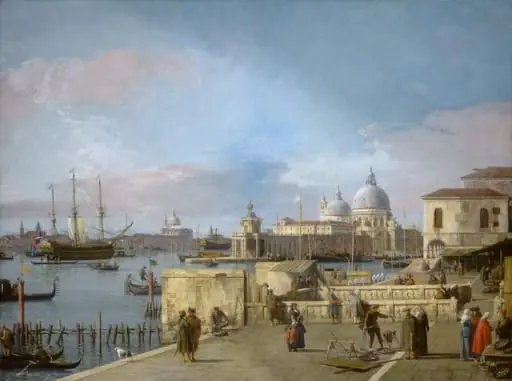 Entrance to the Grand Canal from the Molo, Venice
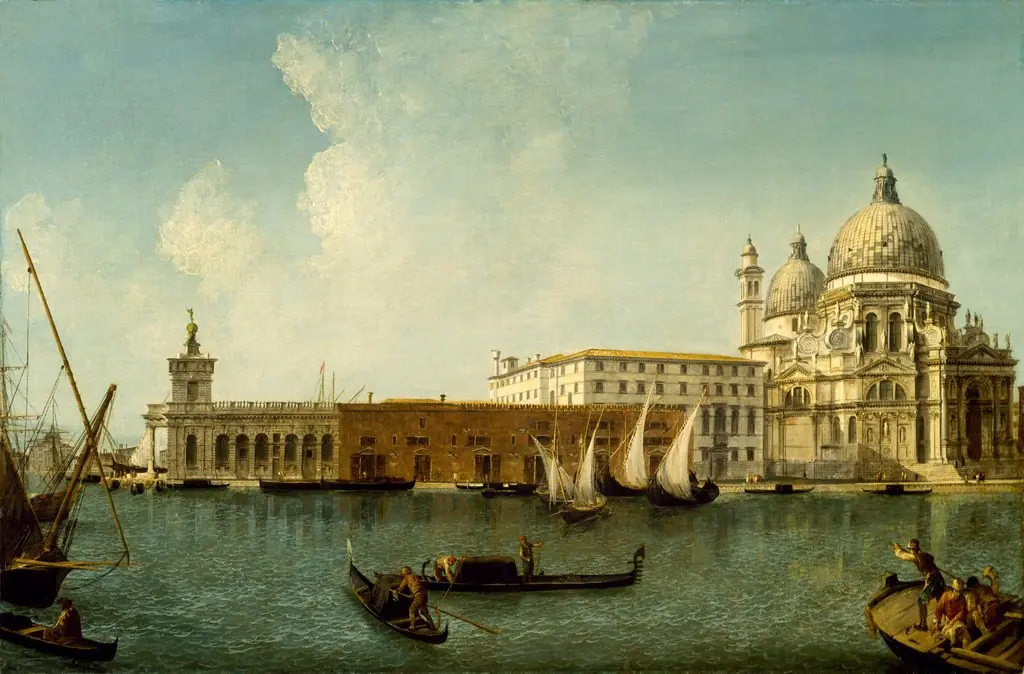 View of the Dogana and Santa Maria della Salute
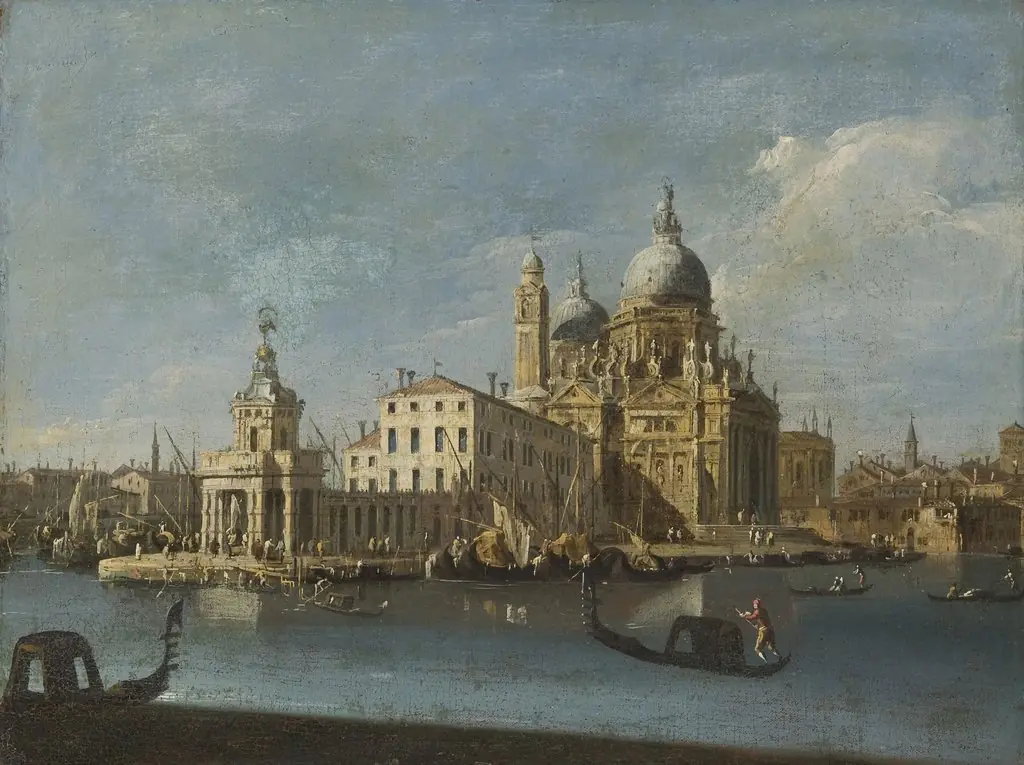 Santa Maria della Salute and the Dogana
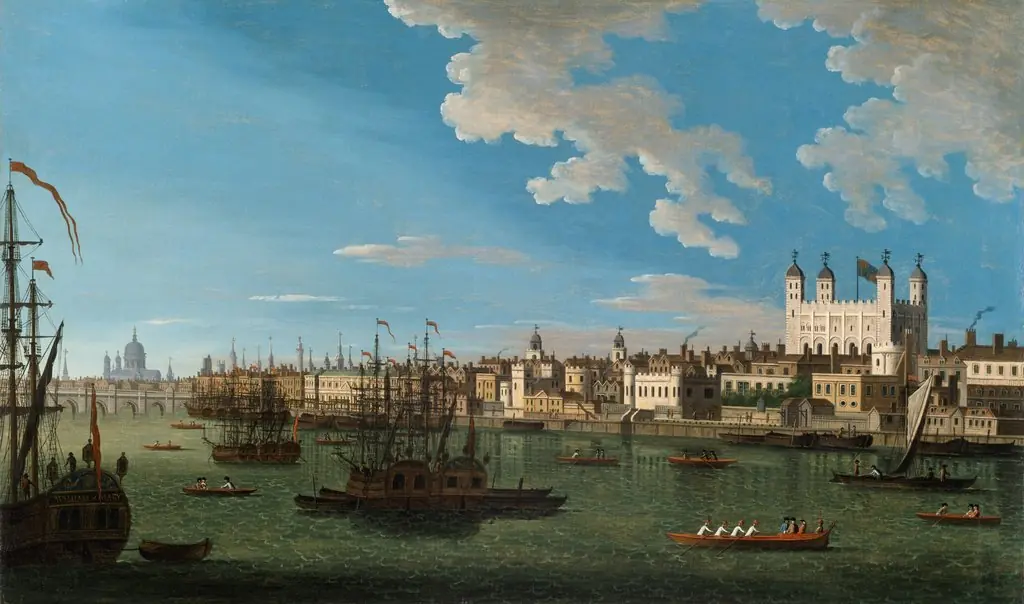 The Thames at the Tower of London with London Bridge and St. Paul's in the Distance
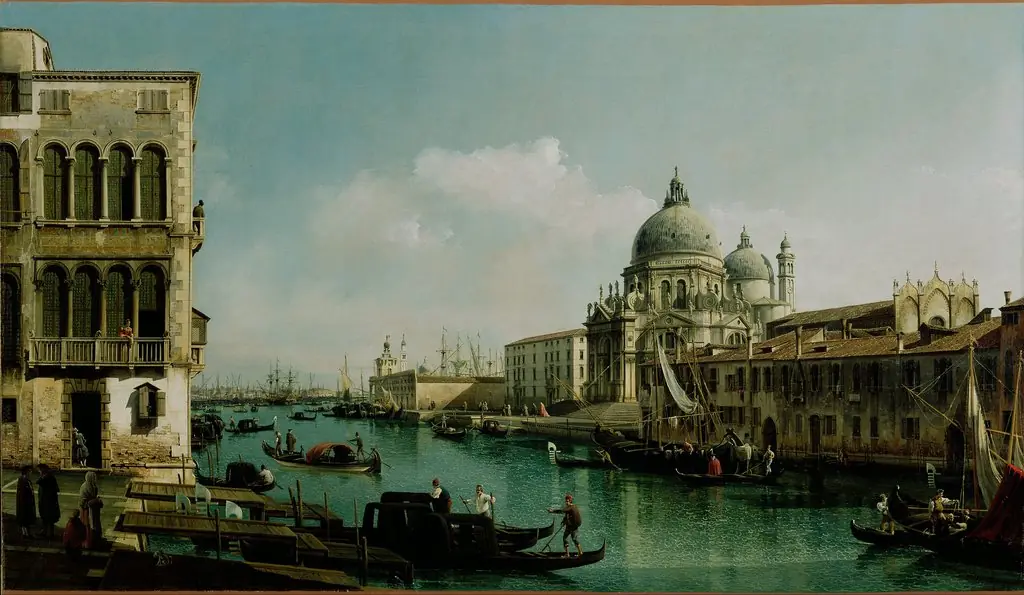 View of the Grand Canal: Santa Maria della Salute and the Dogana from Campo Santa Maria Zobenigo
 Untitled
 San Giorgio Maggiore Seen through the Arches of the Doge's Palace
 Santa Maria della Salute and Riva degli Schiavoni, Venice
 San Giorgio Maggiore: from the Bacino di S. Marco