Artwork
Carlos III leaving the Port of Naples, as Seen from the Sea
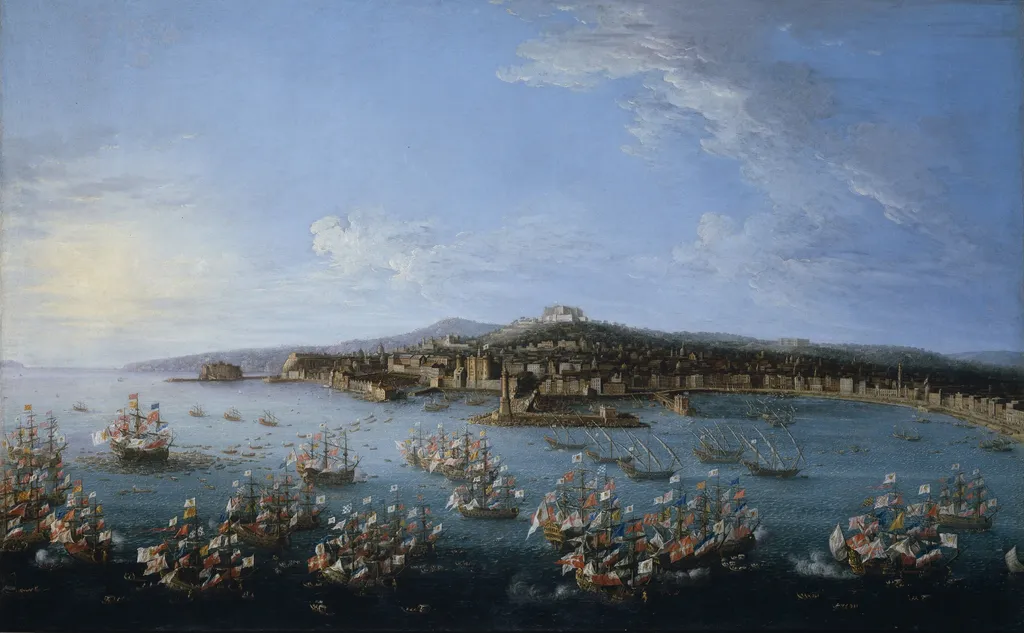
Carlos III leaving the Port of Naples, as Seen from the Sea is an oil painting by the Rococo painting artist Antonio Joli. It dates from 1759 and is held in the collection of the Museo del Prado.
About this work
Subject & Meaning
Antonio Joli’s 1759 oil painting depicts King Carlos III of Spain embarking from Naples’ port as viewed from the sea.
Antonio Joli’s 1759 oil painting depicts King Carlos III of Spain embarking from Naples’ port as viewed from the sea. The composition frames the monarch on a royal barge amid waves, with the distant Castel dell’Ovo and fortified harbor structures underscoring Spanish naval dominance and the kingdom’s strategic maritime power. Symbolic elements include the king’s regal attire and the unfurled Spanish flag, reinforcing his sovereign authority and the political narrative of Spain’s expanding influence during the mid‑18th century.
The work functions as a visual proclamation of Bourbon legitimacy, merging historical narrative with celebratory iconography to legitimize Carlos III’s rule through the metaphor of controlled, prosperous seaborne governance.
Technique & Style
Executed in 1759, this work by Antonio Joli is an oil painting on canvas. The piece measures 127.5 cm in height and 204.8 cm in width, presenting a broad horizontal format characteristic of large-scale history paintings. As a depiction of water transport and the port of Naples, the composition utilizes the fluidity of oil paint to render maritime scenes within the genre of history painting. The work is currently held in the collection of the Museo del Prado.
History & Provenance
Antonio Joli executed the oil painting Carlos III leaving the Port of Naples, as Seen from the Sea in 1759. The work, which depicts the monarch's departure via water transport, was created on a canvas measuring 127.5 cm by 204.8 cm. Historically, the painting entered the collection of the Museo de la Trinidad before becoming part of the holdings at the Museo del Prado, where it remains located.
Antonio Joli painted Carlos III leaving the Port of Naples, as Seen from the Sea in 1759 using oil on canvas. The work measures 127.5 cm in height and 204.8 cm in width. It belongs to the history painting genre and portrays Naples via water transport.
The painting is part of the collection at the Museo del Prado, specifically listed under the Museo de la Trinidad holdings. It has been exhibited at the Museo del Prado as part of displays highlighting 18th-century vedute and naval subjects.
Legacy
Antonio Joli's 1759 oil painting Carlos III leaving the Port of Naples, as Seen from the Sea entered the Museo del Prado collection and became a touchstone for later interpretations of Bourbon ceremonial subjects. Its depiction of Bourbon naval power informed 19th-century academic treatments of royal processions, while 20th-century art historians cited it as an early example of political propaganda rendered in the grand manner. The work's compositional influence can be traced in later vedute of Mediterranean ports that emphasized imperial maritime dominance.
Overview
Painted in 1759 by Antonio Joli, 'Carlos III leaving the Port of Naples, as Seen from the Sea' documents the departure of King Charles III of Spain from Naples to assume the Spanish throne. The composition is a panoramic maritime view executed in oil, capturing the bustling activity of the harbor as the royal fleet prepares to set sail. The foreground is densely populated with vessels of varying sizes, their masts and rigging creating a complex vertical rhythm against the water.
Flags flutter from the ships, signaling the state occasion. In the middle ground, the shoreline is lined with architectural structures, while the background features the walled city of Naples rising on a hill, crowned by a prominent castle. Joli, known for his vedute and theatrical stage designs, applies a precise, topographical approach to the scene, balancing the grandeur of the historical event with the detailed observation of the port's daily life.
This work serves as a significant historical record of the Bourbon transition in southern Italy, reflecting Joli's skill in combining narrative history painting with the detailed realism characteristic of 18th-century Neapolitan view painting.
Own this work as a print
Artist & collection

Artist
Antonio Joli painted grand, sunlit views of Italian ruins and landscapes in the 1700s.

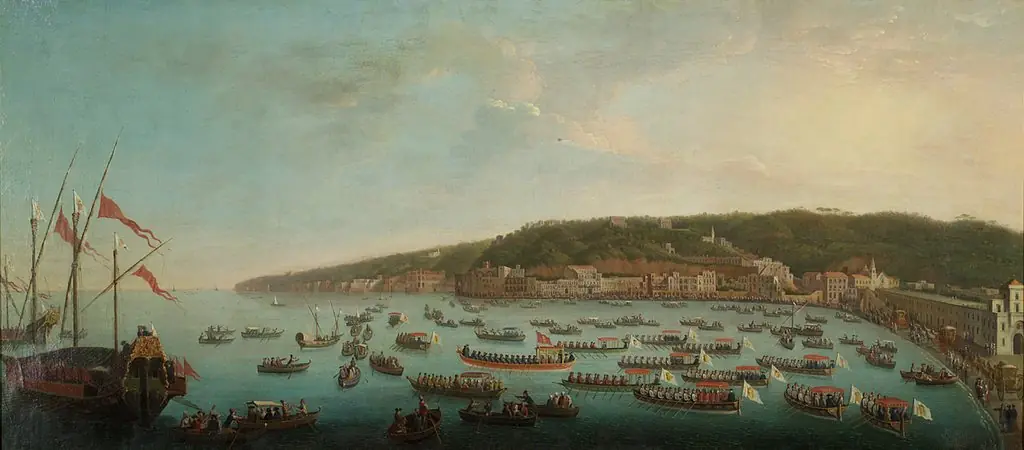 Abfahrt Ferdinands IV. nach Posilippo mit Zug der königlichen Barken
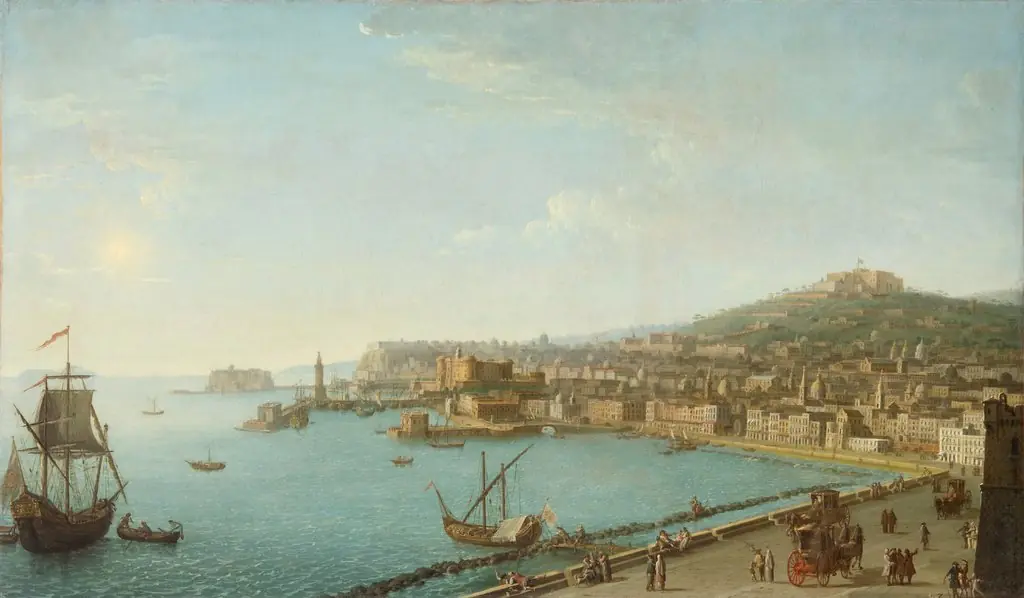 Ansicht von Neapel von Südosten
 Näkymä Kaivopuistosta Suomenlinnaan ja Särkälle (Suomenlinna nähtynä Kaivopuistosta)
 Het beleg van Schenkenschans in 1636
 View of Tunis
 Udsigt over Frederikshald i Norge
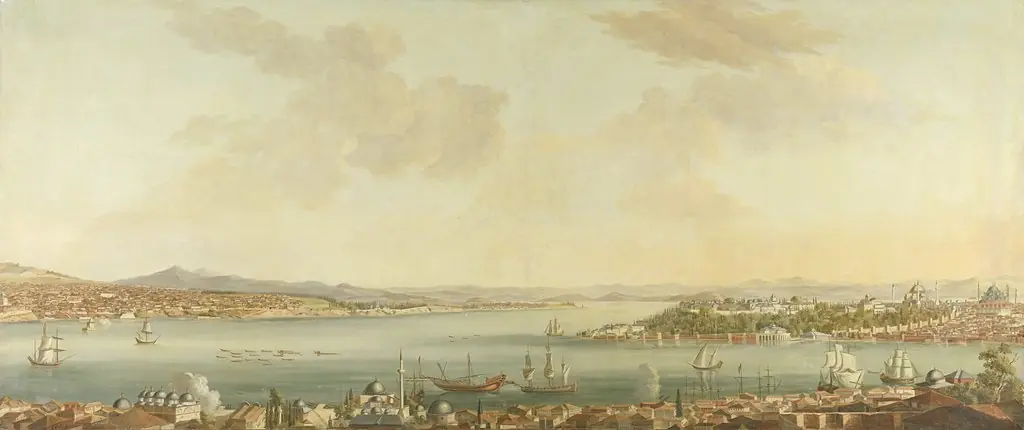 View of Constantinople (Istanbul) and the Seraglio from the Swedish Legation in Pera
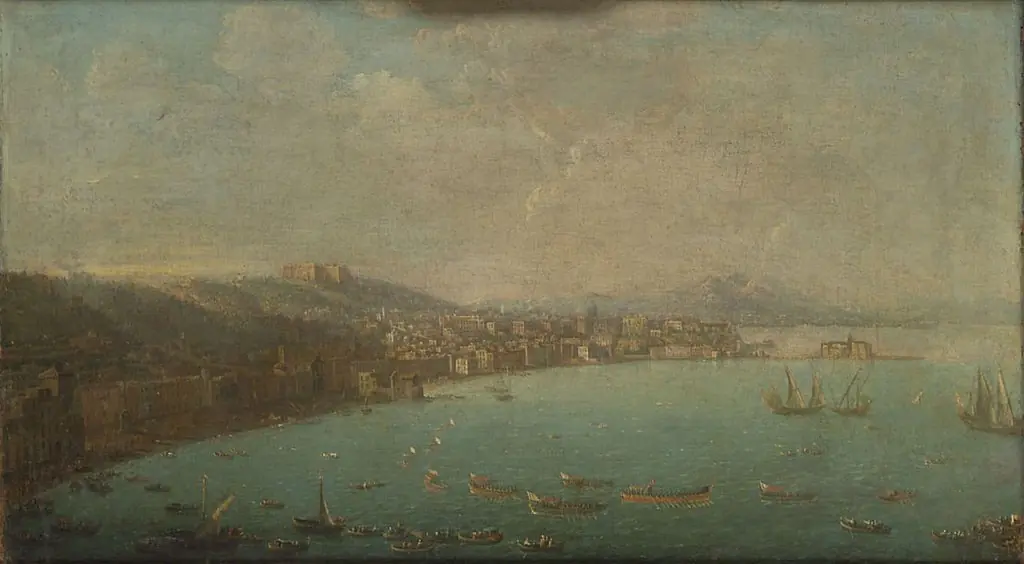 Ansicht von Posilippo auf Pizzofalcone in Neapel
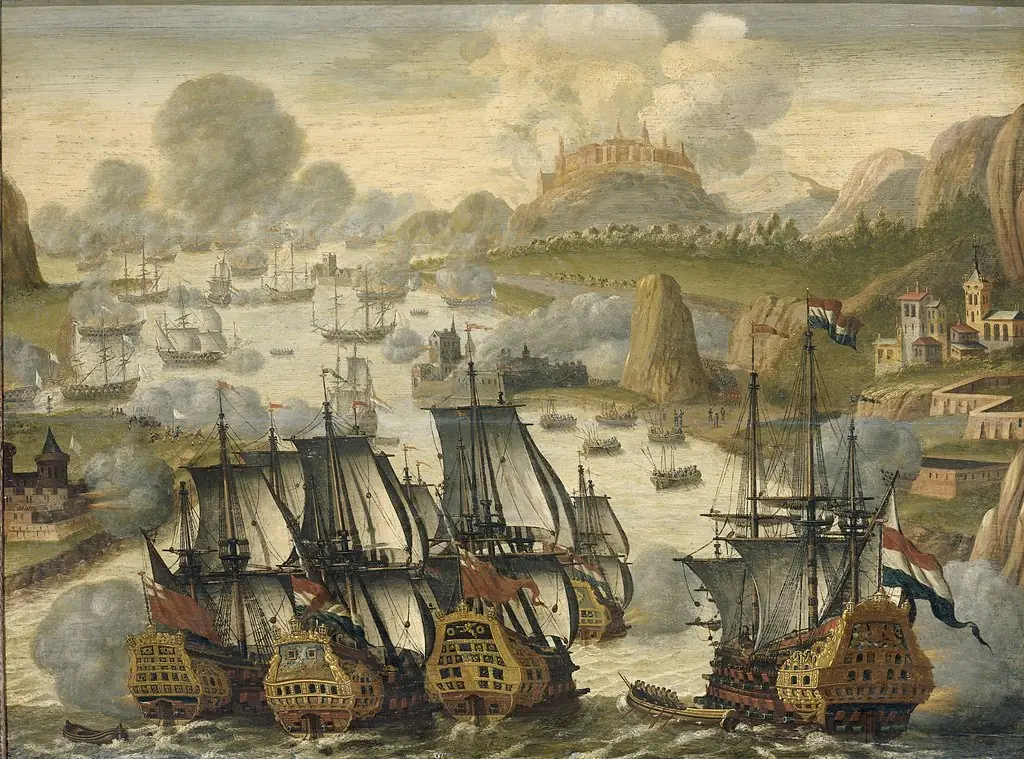 Naval Battle of Vigo Bay, 23 October 1702. Episode from the War of the Spanish Succession
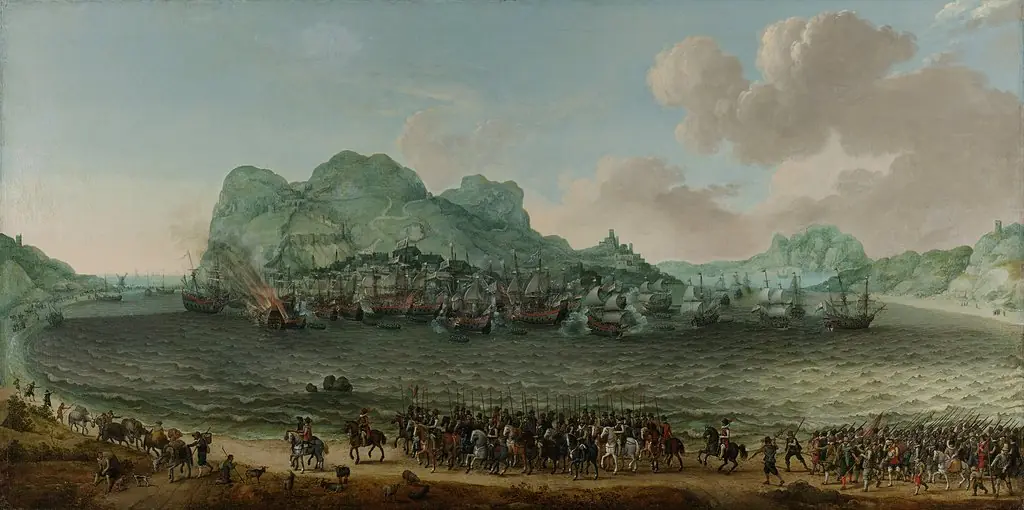 The defeat of the Spanish at Gibraltar by a Dutch fleet under command of Admiral Jacob van Heemskerck, 25 April 1607