Artwork
Reverberations of Taiga, Volume 2 (leaf 25)
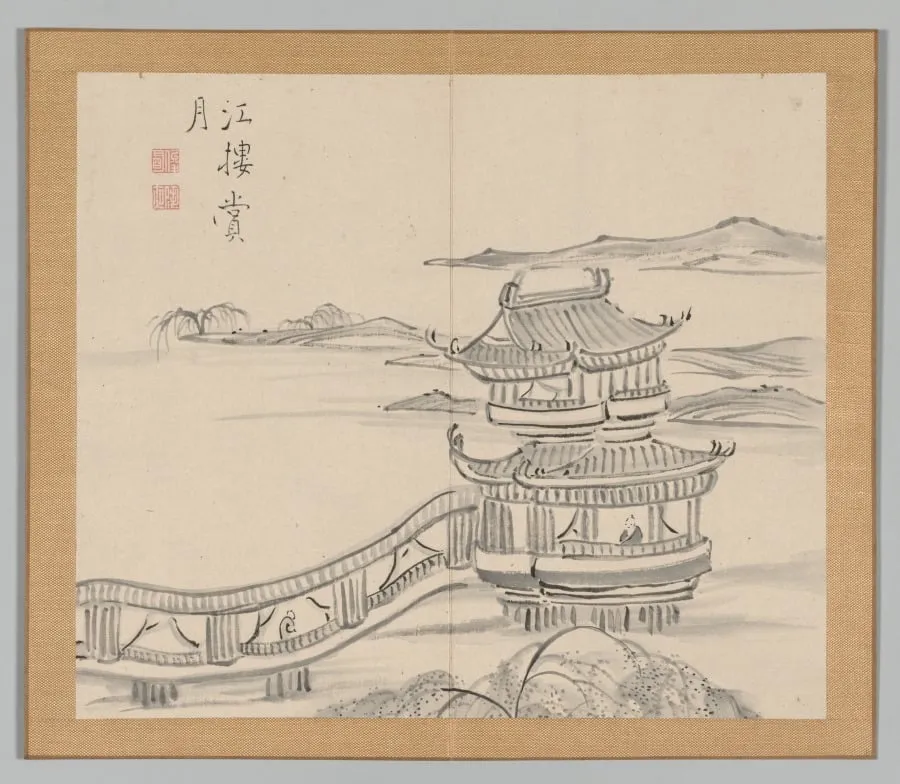
Reverberations of Taiga, Volume 2 (leaf 25) is a work on paper by the Baroque artist Aoki Shukuya. It dates from 1704 and is held in the collection of the Cleveland Museum of Art.
- Accession no.
- 1979.73.2.25
- Credit line
- Andrew R. and Martha Holden Jennings Fund
About this work
The original was a private gift for Taiga’s wife, so the mountain you’re looking at once hung in their home.
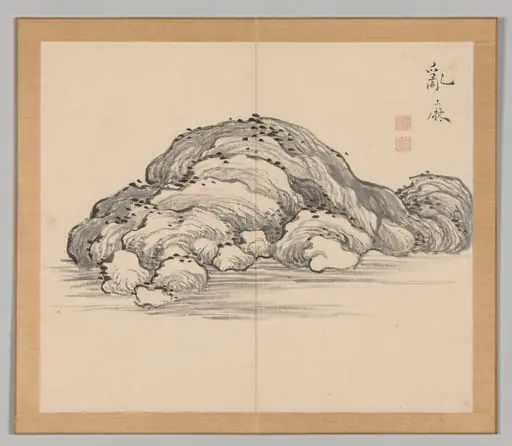
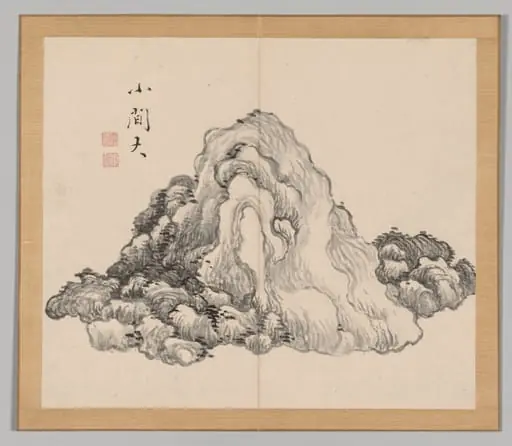
You see a single leaf from an album: ink on paper, a jagged mountain ridge half-hidden in mist.
This isn’t just a copy. Aoki Shukuya was the star pupil of Ike Taiga, and he painted this after Taiga’s own sketchbook. The original was a private gift for Taiga’s wife, so the mountain you’re looking at once hung in their home.
To see the sketchbook that started it all, look up japan, edo period (1615–1868).
Overview
Reverberations of Taiga, Volume 2 (leaf 25) is a single sheet from a larger album of ink drawings on paper. The image presents a jagged mountain ridge partially veiled by mist, rendered in monochrome brushwork typical of Edo‑period literati painting.
Subject & Meaning
The scene is titled “viewing the moon from a river pavilion,” referencing a Tang‑dynasty poem by Zhao Gu. In the poem a solitary figure watches the moon from a riverside pavilion, recalling a companion who shared the same view a year earlier, evoking themes of longing and transience.
Technique & Style
Executed in ink on paper, the composition employs delicate washes and bold line to suggest atmospheric depth. The mist‑shrouded peaks and minimalistic treatment reflect the nanga (Southern School) aesthetic championed by Ike Taiga and his followers, emphasizing personal expression over realistic detail.
History & Provenance
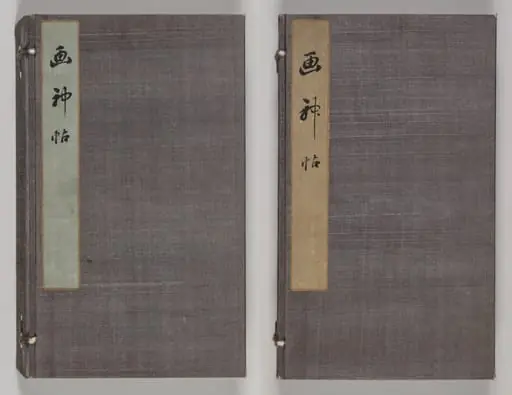
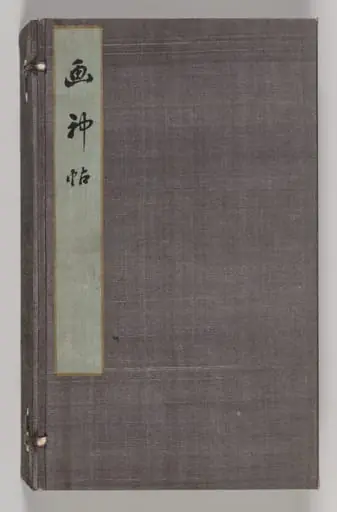
The drawing derives from a sketchbook created by Ike Taiga for his wife, the painter Tokuyama Gyokuran. Aoki Shukuya, Taiga’s foremost disciple, reproduced the image for a set of wood‑block printed volumes released in 1804. The volumes include a postscript by scholar Minagawa Kien, who documented the work’s origin.
Context
The work belongs to a tradition of literati art in which scholars and painters exchanged poems and images. By adapting Taiga’s private album for a published series, Shukuya helped disseminate the aesthetic values of the Edo‑period intellectual circle to a broader audience.
Artist & collection

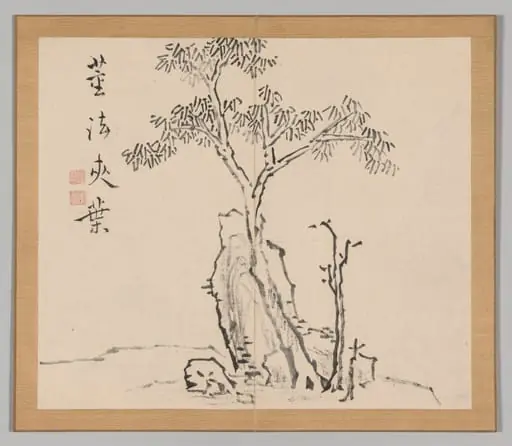 Reverberations of Taiga, Volume 1 (leaf 4)
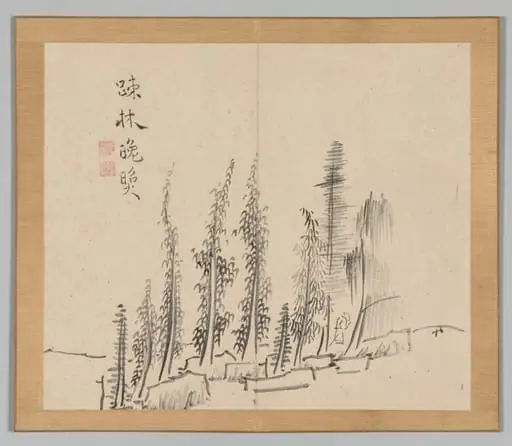 Reverberations of Taiga, Volume 2 (leaf 30)
 Reverberations of Taiga, Volume 1 (leaf 12)
 Reverberations of Taiga
 Reverberations of Taiga (Volume 1)
 Reverberations of Taiga, Volume 1 (leaf 7)
 Reverberations of Taiga, Volume 2 (leaf 29)
 Reverberations of Taiga, Volume 2 (leaf 20)
 Reverberations of Taiga, Volume 2 (leaf 15)
 Reverberations of Taiga, Volume 2 (leaf 24)
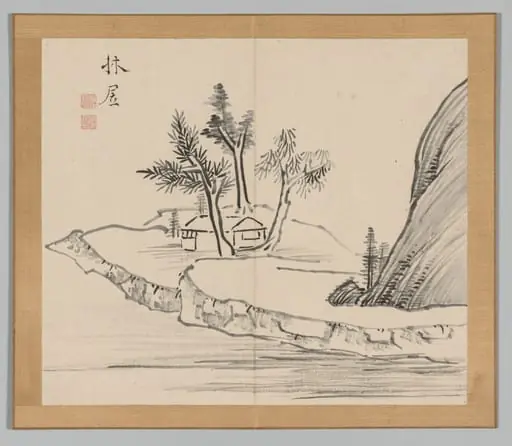 Reverberations of Taiga, Volume 2 (leaf 22)
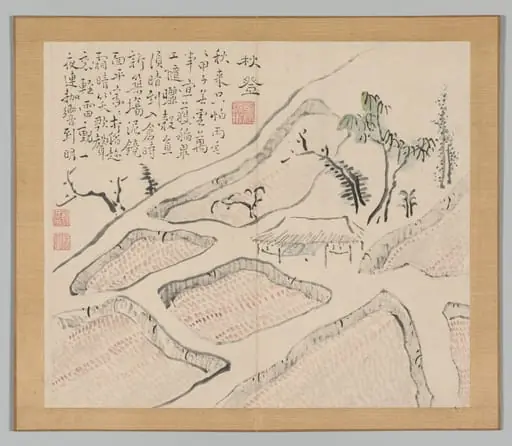 Reverberations of Taiga, Volume 2 (leaf 35)
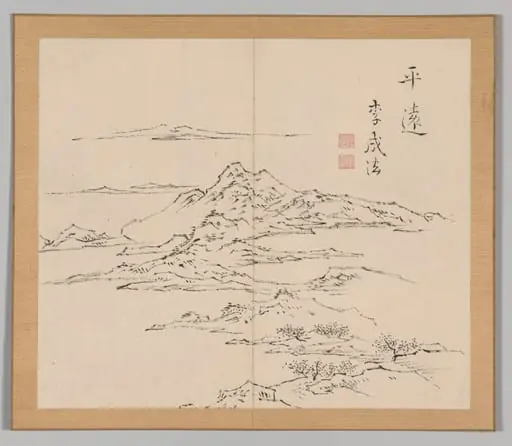 Reverberations of Taiga, Volume 2 (leaf 8)
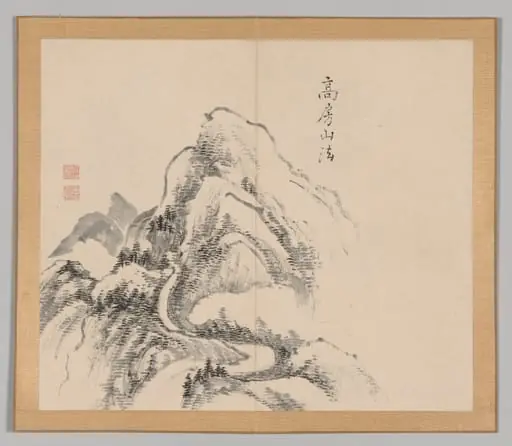 Reverberations of Taiga, Volume 1 (leaf 34)
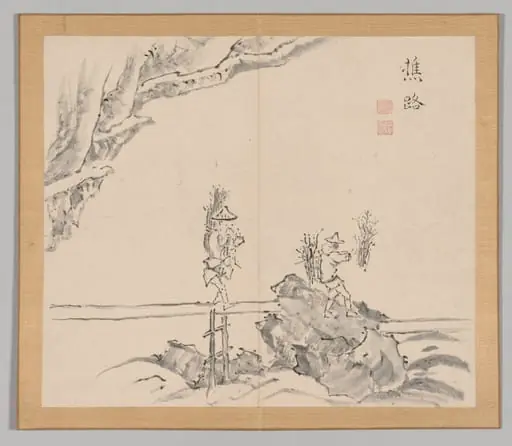 Reverberations of Taiga, Volume 1 (leaf 32)
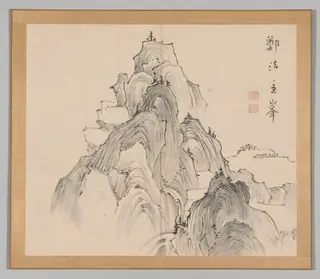 Reverberations of Taiga, Volume 2 (leaf 2)
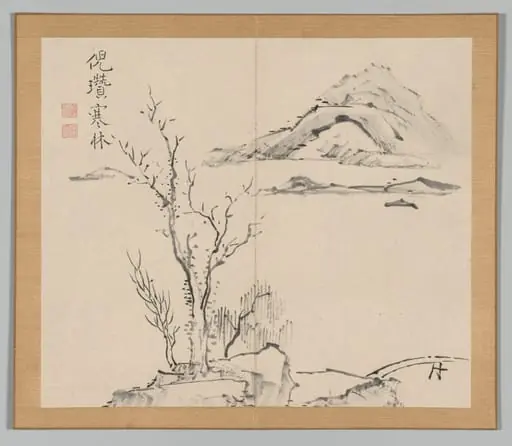 Reverberations of Taiga, Volume 2 (leaf 11)
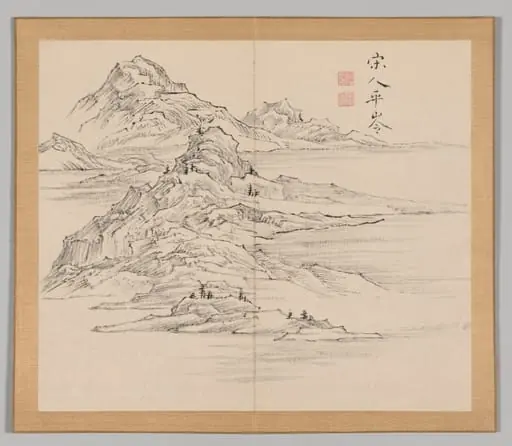 Reverberations of Taiga, Volume 1 (leaf 35)