Artwork
Cherubian Children
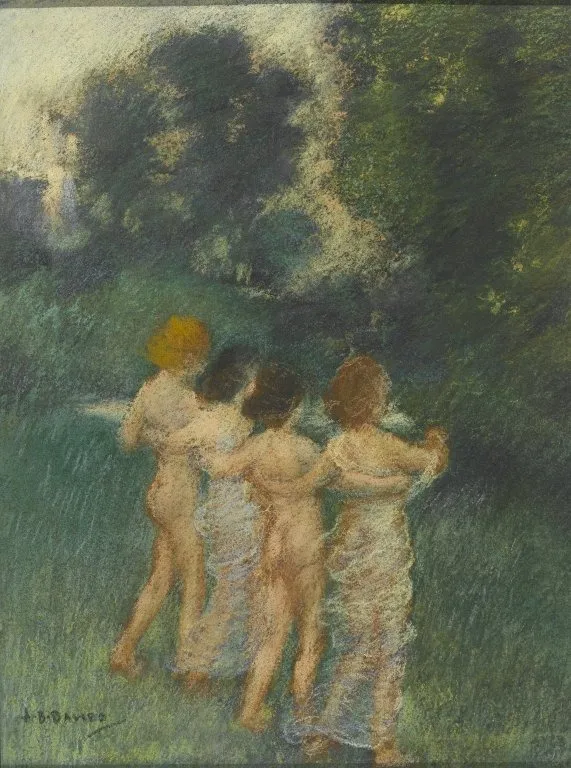
Cherubian Children is an unspecified painting by the Post-Impressionist artist Arthur B. Davies. It dates from 1900 and is held in the collection of the Brooklyn Museum.
About this work
Overview
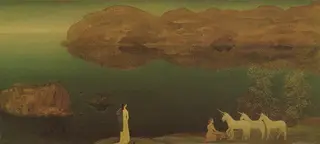
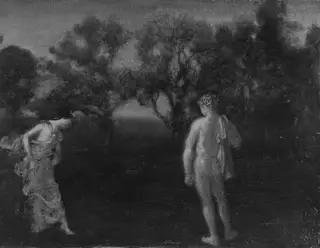
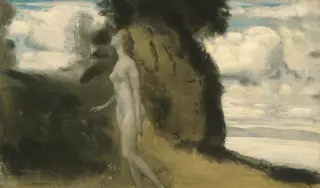
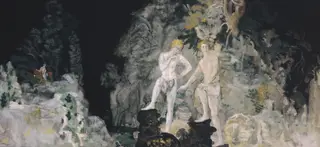
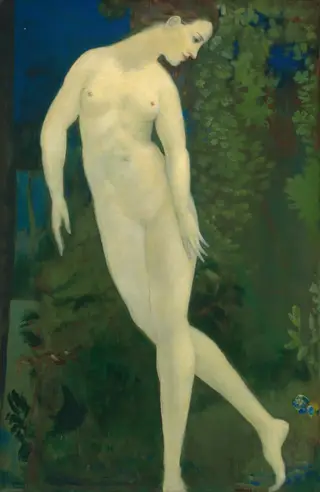
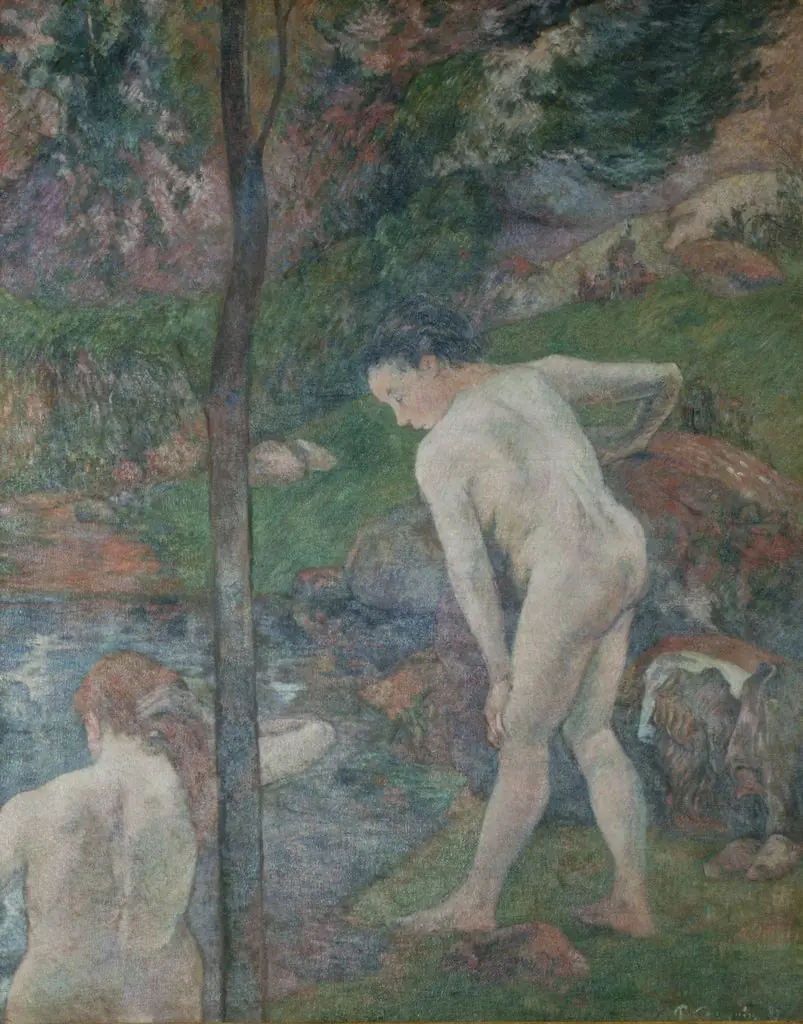
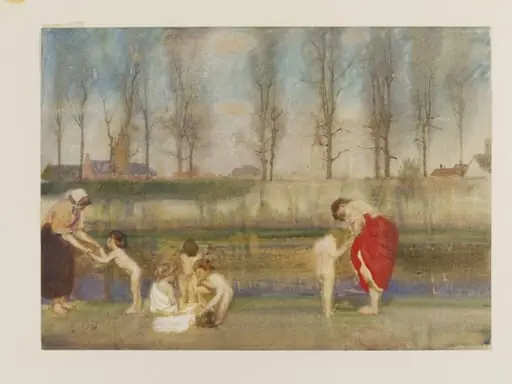
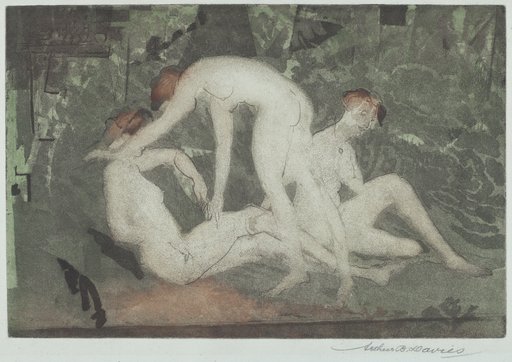
Arthur Bowen Davies painted Cherubian Children in 1900, an early example of his engagement with post‑impressionist ideas. The work is held by the Brooklyn Museum and presents three nude youths moving away from the viewer within a lightly rendered woodland setting.
Subject & Meaning
The composition shows the children walking side by side, their backs turned toward the observer, suggesting a moment of private play or innocent departure. The gentle, unguarded posture and the natural backdrop convey a sense of youthful purity and carefree exploration.
Technique & Style
Davies employs a soft, diffused light that models the figures with subtle shading, giving the skin a smooth, almost luminous quality. A muted green landscape punctuated by touches of blue and yellow hints at a sunny day, while the overall palette of gentle hues reinforces the painting’s intimate atmosphere.
History & Provenance
Created at the turn of the twentieth century, the painting entered the Brooklyn Museum’s collection, where it remains part of the institution’s holdings of early American modernism. Its acquisition reflects the museum’s interest in works that illustrate the transition from academic realism to more expressive, symbolic approaches.
Context
Cherubian Children aligns with the post‑impressionist focus on emotional resonance over strict naturalism. Davies, a central figure in promoting avant‑garde art in the United States, often explored imaginative subjects; this work exemplifies his interest in blending figurative representation with a dreamlike, symbolic ambience.
Artist & collection
Artist
Arthur Bowen Davies (September 26, 1862 – October 24, 1928) was an avant-garde American artist and influential advocate of modern art in the United States c. 1910–1928.