Artwork
The Port of Joy
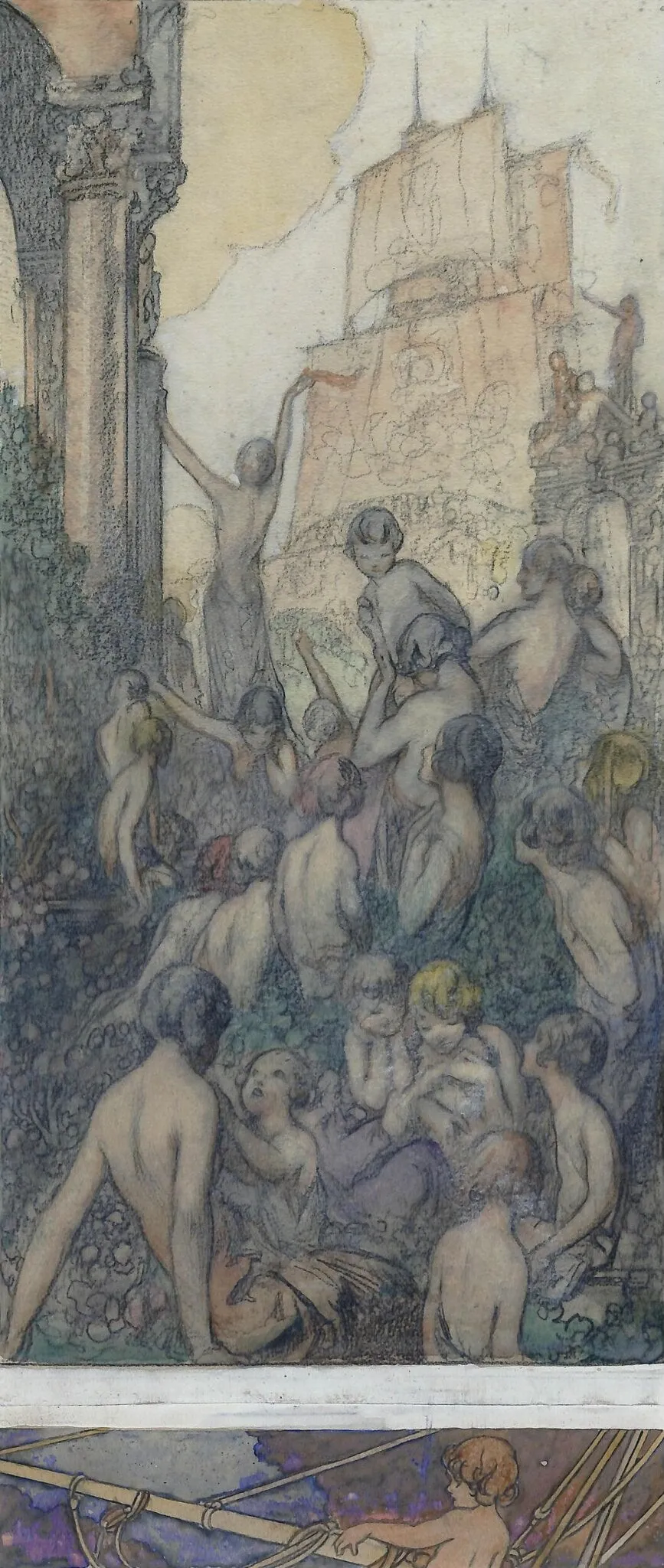
The Port of Joy is a watercolor work on paper by the Regionalist artist Charles Robinson. It dates from 1930 and is held in the collection of the Victoria and Albert Museum.
About this work
Overview
The Port of Joy is a watercolour painting by Charles Robinson, serving as the left panel of a triptych. Characterized by its Art Nouveau style, the work depicts a lively scene of mostly nude figures celebrating near a ship and a large stone structure, conveying a sense of joy and movement through flowing lines and organic shapes.
Subject & Meaning
The painting portrays a group of predominantly naked individuals, some wearing loincloths, engaged in a joyful celebration or party around a ship. The setting includes a prominent stone structure in the background, possibly a castle or temple, adding depth to the festive atmosphere.
Technique & Style
Robinson employed watercolour to create The Port of Joy, drawing on influences from Albrecht Dürer, the Pre-Raphaelites, and Japanese prints, blended with the distinctive flowing lines and organic forms of the Art Nouveau movement.
History & Provenance
Signed and titled on the reverse, The Port of Joy was bequeathed to the Victoria and Albert Museum in 1982 as part of a collection of 27 works by Robinson, donated by his daughter Edith Mary Robinson.
Context
Charles Robinson, trained in lithography and later elected to the Royal Institute of Painters in Watercolours (1932) and President of the London Sketch Club, created this work within the broader artistic landscape of the Edwardian period, reflecting diverse stylistic influences.
Legacy
As part of the Victoria and Albert Museum’s collection, The Port of Joy contributes to the institution’s holdings of Edwardian and Art Nouveau art, offering insight into Robinson’s eclectic style and the artistic tastes of his era.
Artist & collection
Artist
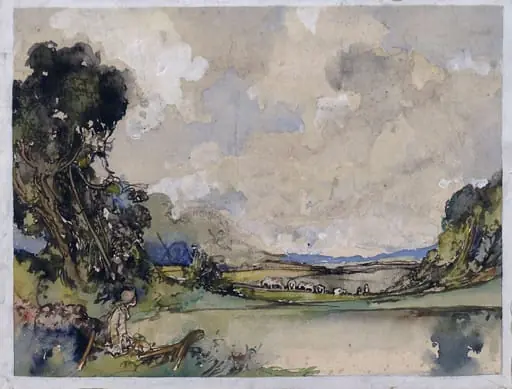
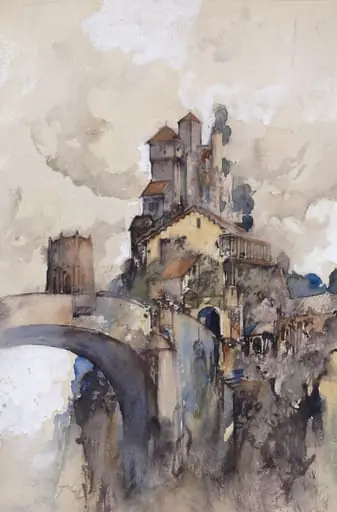
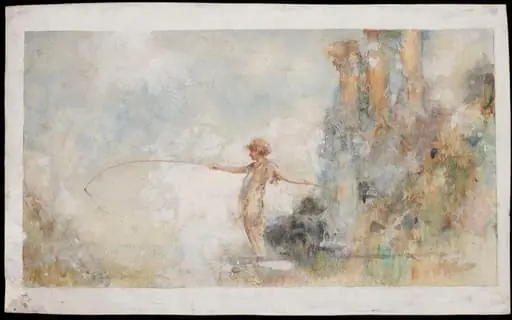
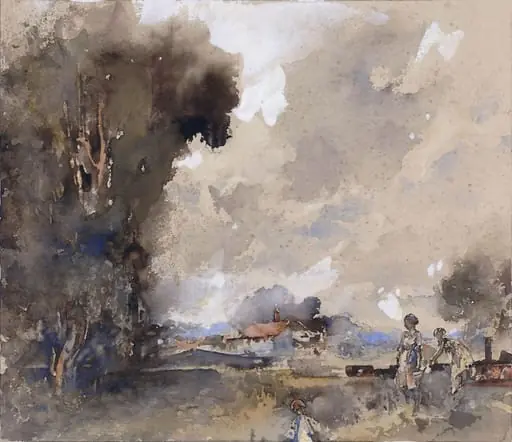
Charles Robinson painted dreamy watercolors in the 1930s, soft hills, medieval villages, and gentle nudes all in delicate washes.

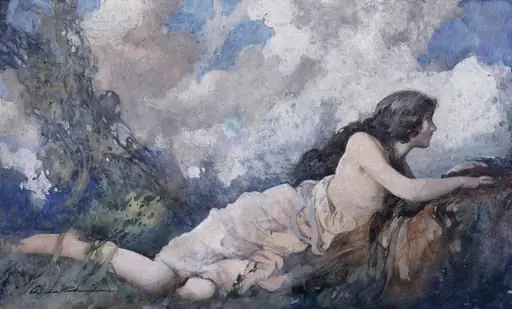
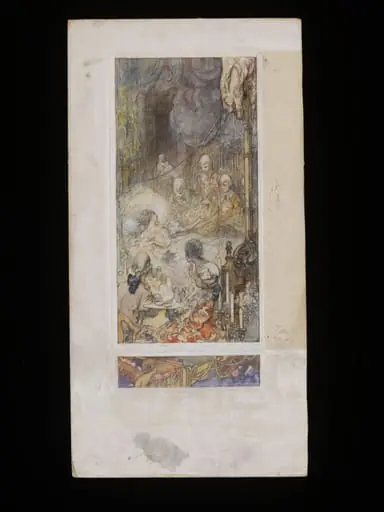
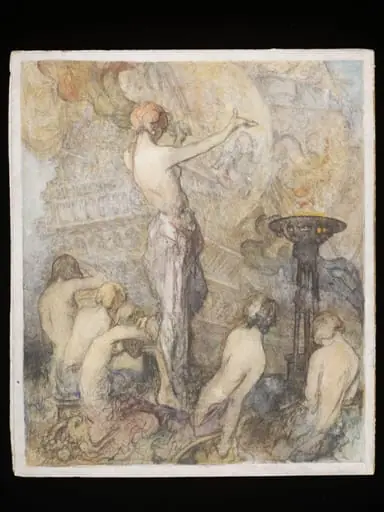
- Central panel of a triptych
 Fliehende Frauen und Entführer mit Pferd
 Summer Evening
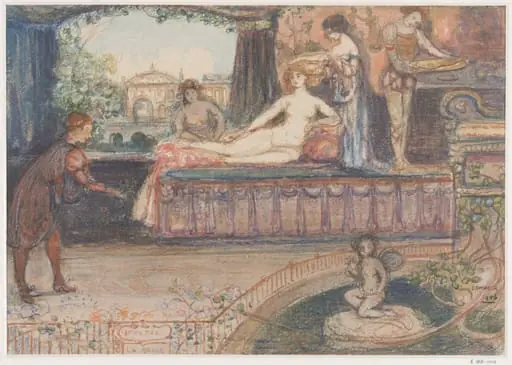 Imperia la Belle
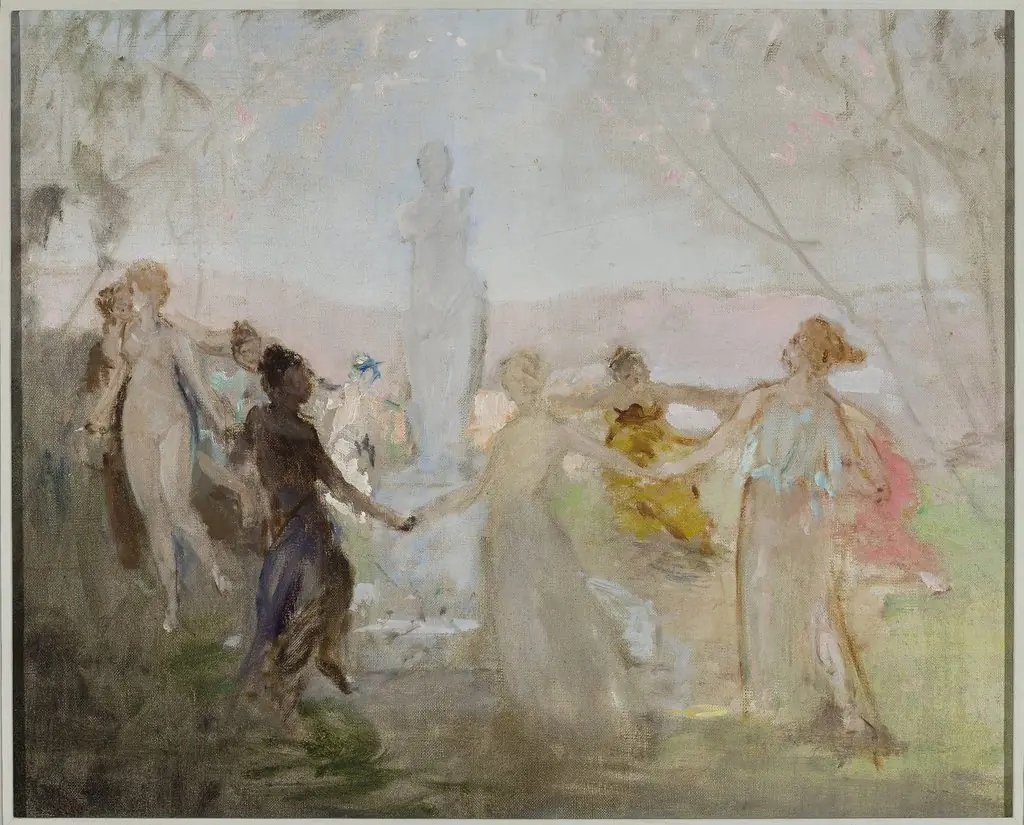 Sketch for the painting “Procession around the Venus de Milo statue”
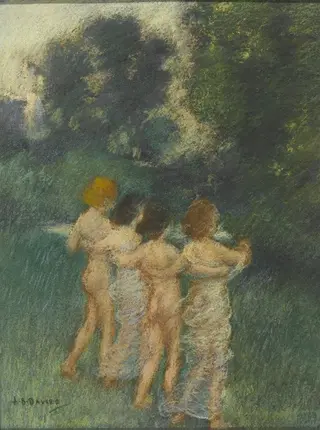 Cherubian Children
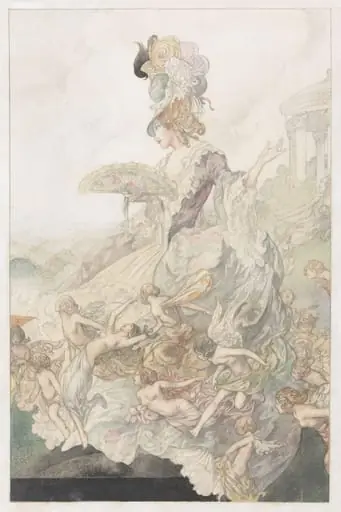 Lady with Fan, with attendant nymphs
 Studies of Pierre Renoir; His Mother, Aline Charigot; Nudes; and Landscape
 Untitled