Artwork
Pino
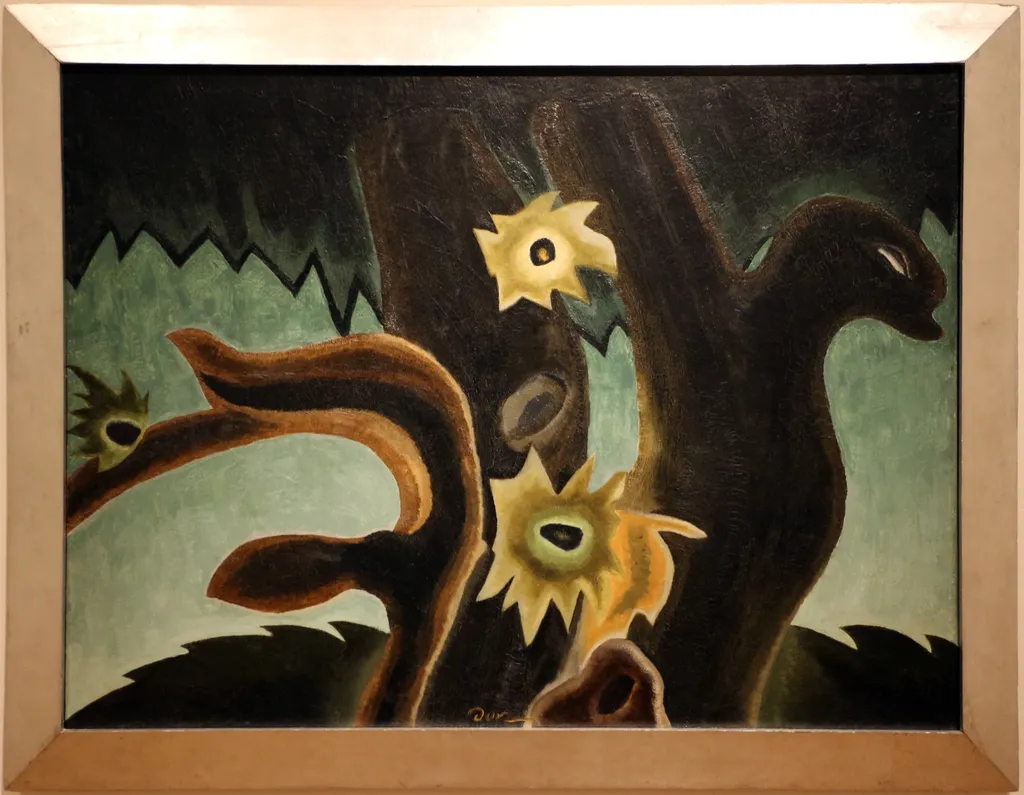
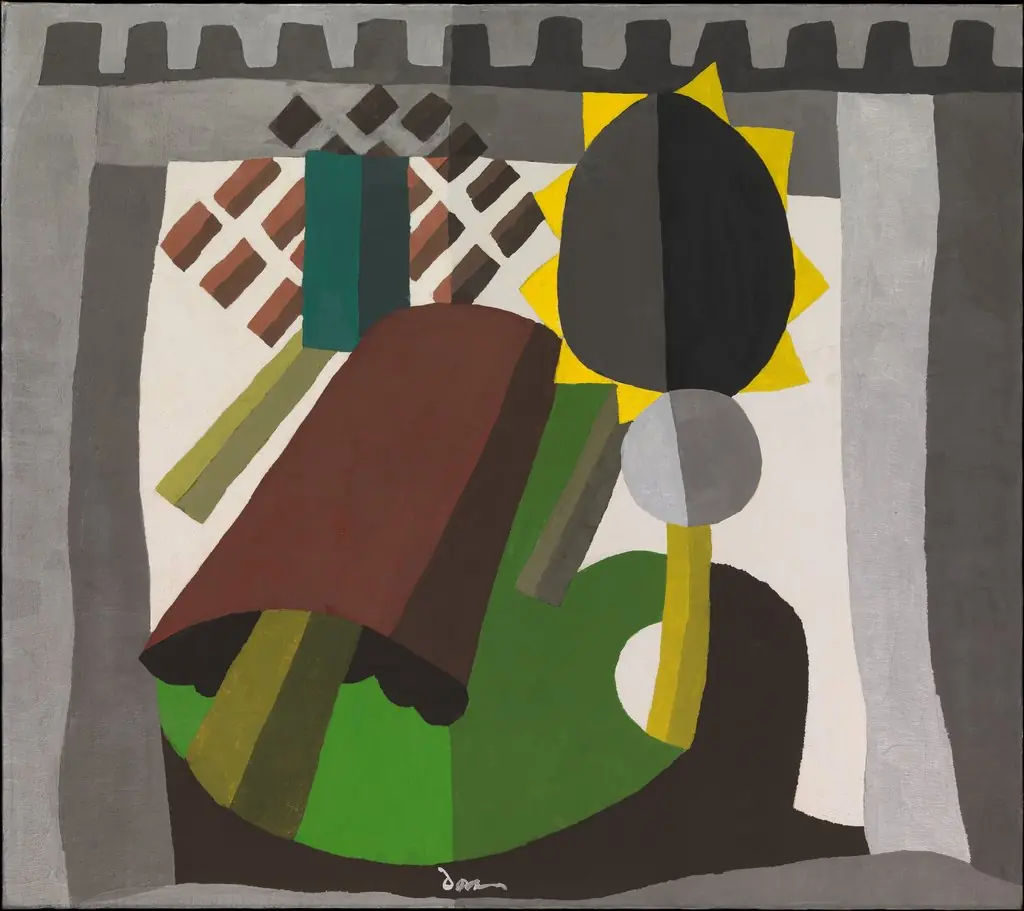
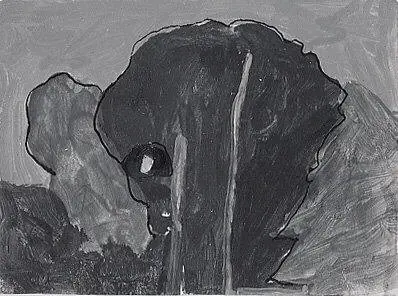
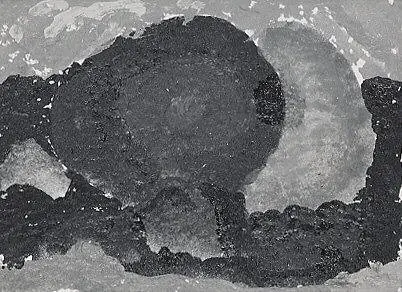
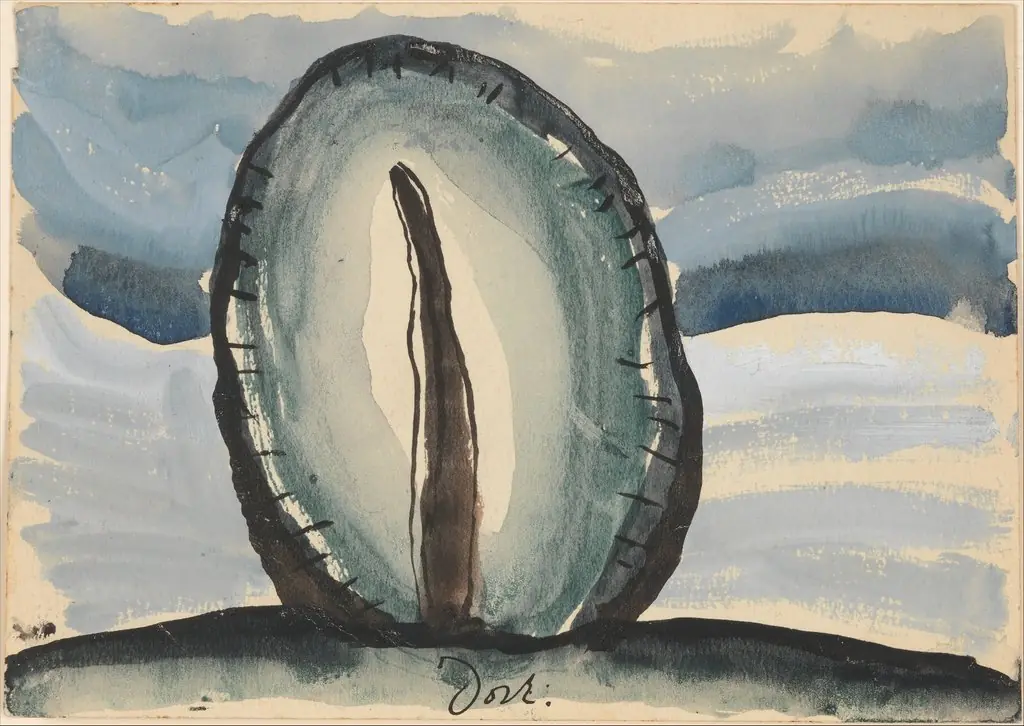
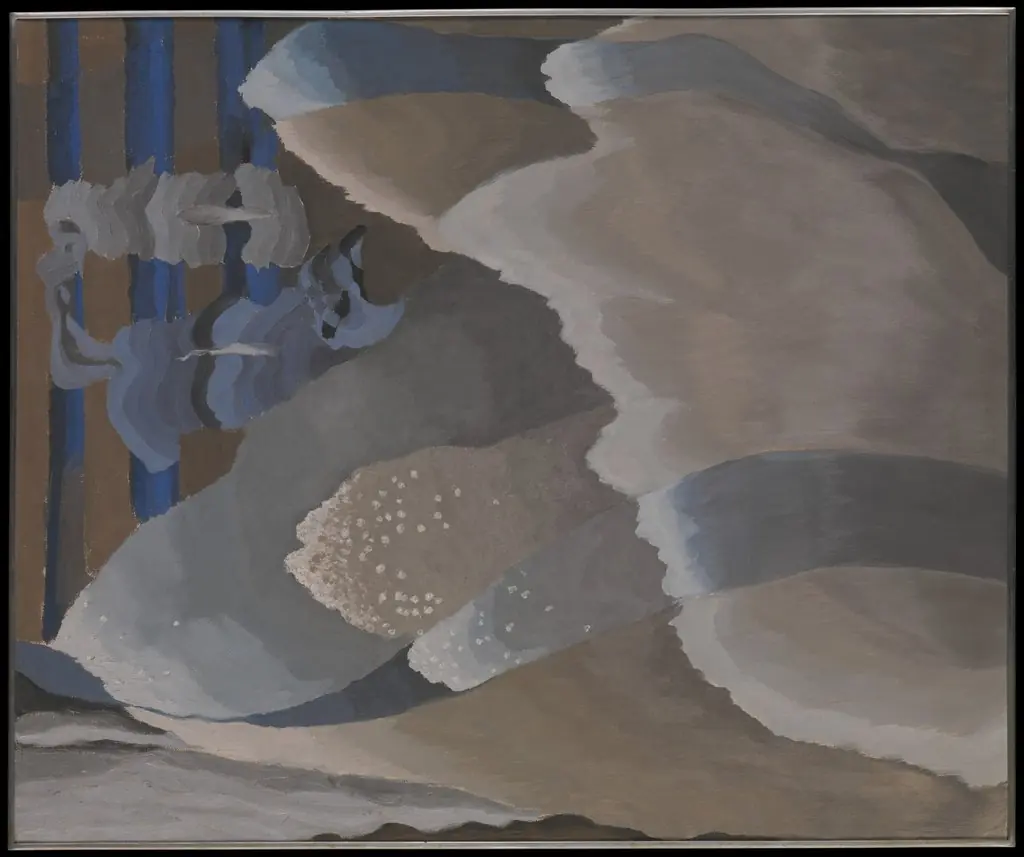
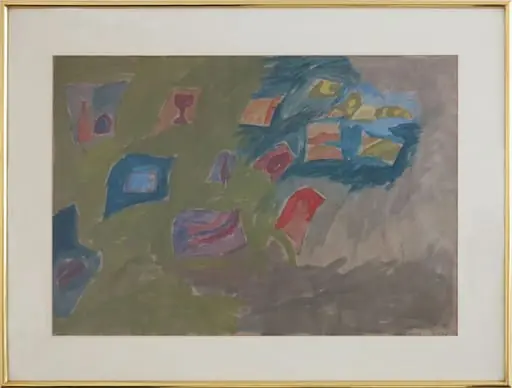
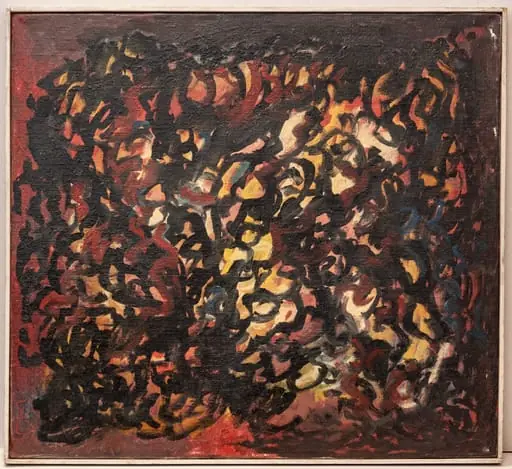
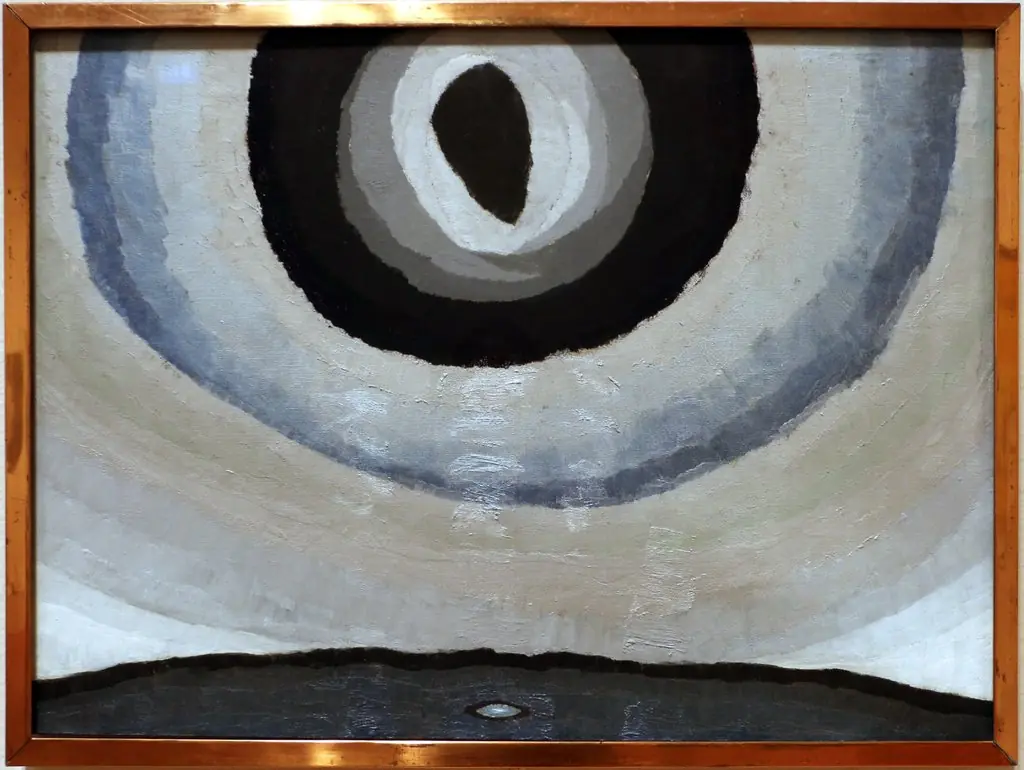
Pino is an unspecified painting by the Abstract Expressionist artist Arthur Dove. It dates from 1923 and is held in the collection of the Cleveland Museum of Art.
About this work
Overview
Created circa 1923, Pino is an early work by Arthur Dove, a pioneering figure in American modernism. The painting belongs to a series of experimental collages he produced in the 1920s, reflecting his ongoing investigation of abstract forms and unconventional materials.
Subject & Meaning
The composition presents a dark, ambiguous landscape populated by organic motifs that suggest leaves or blossoms. Jagged edges and curving lines intersect in muted browns, yellows, and greens, while lighter patches hint at reflected light or surface texture, inviting viewers to contemplate an unseen, perhaps interior, world.
Technique & Style
Dove combined traditional paint with mixed media, integrating collage elements to achieve layered depth. The surface balances flat color fields with textured highlights, employing a restrained palette that emphasizes tonal variation over representational detail, characteristic of his early abstract experiments.
History & Provenance
Pino emerged during Dove’s prolific 1920s period, when he was expanding his practice beyond pure painting into mixed-media constructions. The work was documented as part of his collage series, marking a transitional phase that linked his earlier pure abstractions with later, more complex assemblages.
Context
The early 1920s saw American artists seeking alternatives to European avant‑garde trends, and Dove’s work exemplifies this shift. By merging natural motifs with abstracted forms, he contributed to a distinctly American visual language that emphasized personal perception of nature.
Own this work as a print
Artist & collection
Artist
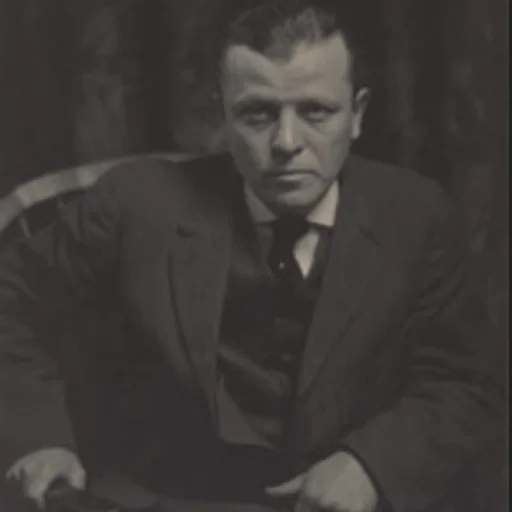
Arthur Garfield Dove (August 2, 1880 – November 23, 1946) was an American artist.