Artwork
Italy. The Festival of Pompei, The circus of gladiators
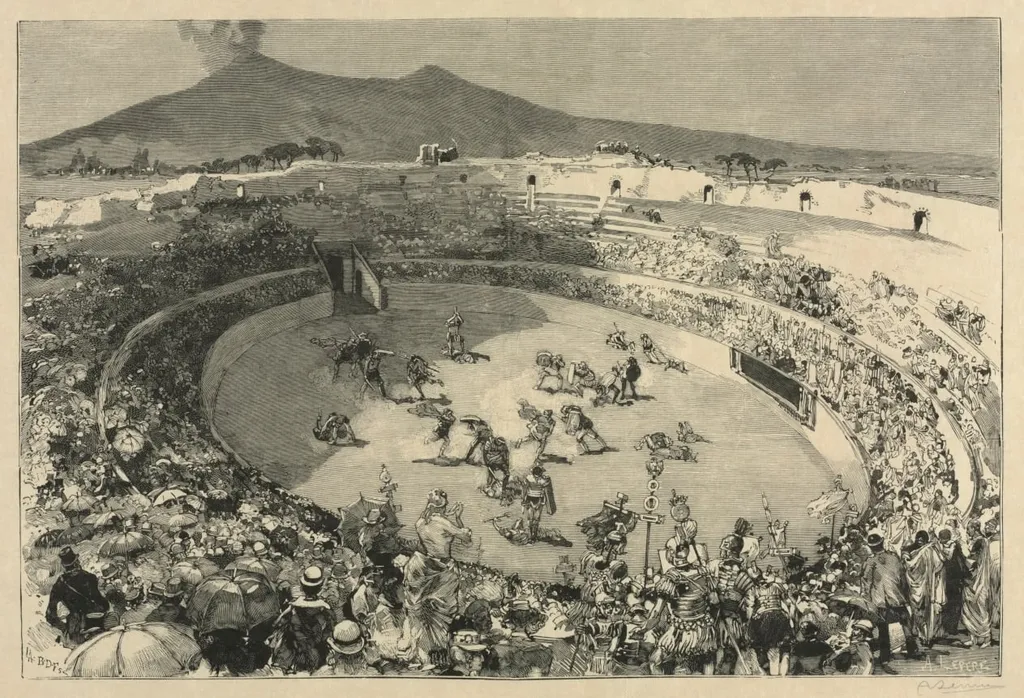
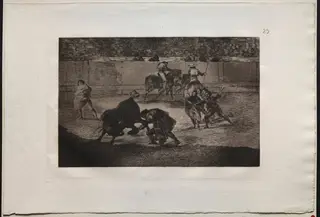
Italy. The Festival of Pompei, The circus of gladiators is a print by the Impressionist artist Auguste Louis Lepère. It dates from 1884 and is held in the collection of the Cleveland Museum of Art.
- Accession no.
- 2007.258
- Credit line
- Gift of John Bonebrake
About this work
Overview
Lepère, a key figure in the revival of wood engraving in Europe, rendered the scene with precise linear detail and tonal contrast.
Created in 1884 by French artist Auguste Louis Lepère, this wood engraving captures a Roman-era spectacle in Pompeii. Lepère, a key figure in the revival of wood engraving in Europe, rendered the scene with precise linear detail and tonal contrast. The work is part of the Cleveland Museum of Art’s collection, reflecting 19th-century European interest in classical antiquity and the technical revival of printmaking traditions.
Subject & Meaning
The scene portrays a gladiatorial contest within an amphitheater, surrounded by spectators under sunshades. The focus is on the organized chaos of public entertainment in ancient Pompeii, emphasizing social ritual over individual heroism. The inclusion of bystanders, animals, and distant figures suggests a broader civic event, not merely a fight, hinting at the cultural centrality of such spectacles in Roman life.
Technique & Style
Lepère employed fine-line wood engraving to achieve sharp definition and subtle gradations of tone. He used chiaroscuro to model forms and create spatial depth, particularly in the shadowed tiers of seating and the contours of the fighters. The composition is tightly structured, with clear spatial zones separating the arena from the audience and the surrounding landscape, reflecting a disciplined, almost architectural approach to narrative.
History & Provenance
The print was made during a period of renewed scholarly and artistic interest in Roman daily life, fueled by archaeological discoveries at Pompeii. Lepère, known for his technical precision, likely drew from contemporary reconstructions or illustrations of the site. The work entered the Cleveland Museum of Art’s collection in the 20th century, where it remains as an example of late 19th-century European printmaking engaged with classical themes.
Context
In the 1880s, European artists frequently turned to ancient Rome as a source of formal and thematic inspiration, especially as excavations at Pompeii revealed vivid details of public life. Lepère’s print aligns with this trend, but distinguishes itself through its focus on crowd dynamics and environmental detail rather than heroic individualism. It reflects a broader cultural fascination with reconstructing the past through disciplined visual observation.
Legacy
Lepère’s work contributed to the legitimacy of wood engraving as a fine art medium in France and beyond. While not widely reproduced, this print exemplifies how 19th-century artists used traditional techniques to interpret antiquity with modern precision. It stands as a quiet testament to the enduring appeal of Roman spectacle and the technical mastery of printmakers who sought to revive historical forms.
Artist & collection

Artist
Louis-Auguste Lepère (30 November 1849 – 20 November 1918) was a French painter and etcher. Lepère is also considered a leader in the creative revival of wood engraving in Europe.

 H Beard Print Collection
 Amphitheatre, Nimes
 Chariot Race
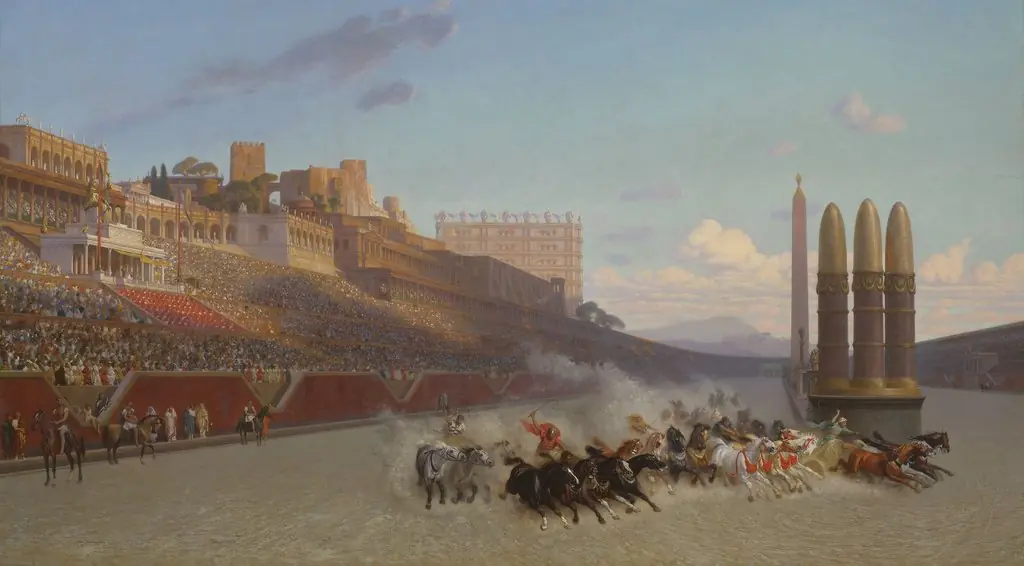 Chariot Race
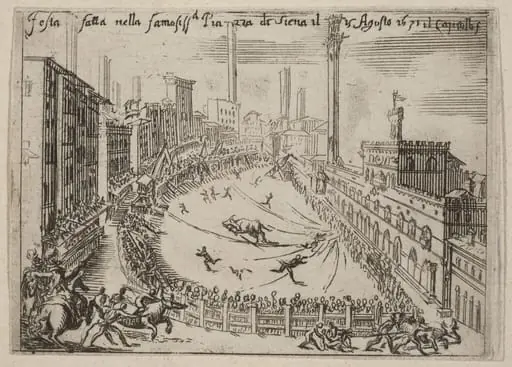 The Piazza, Siena
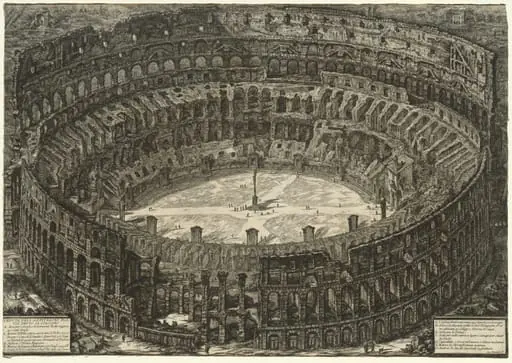 Views of Rome: The Colosseum
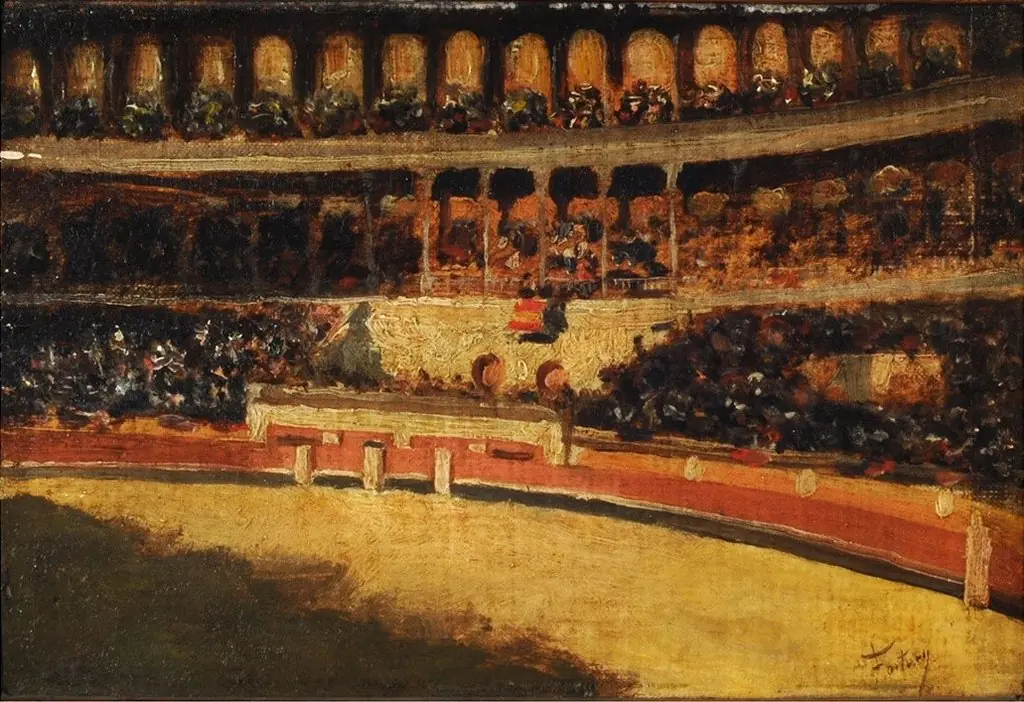 Antes de la corrida
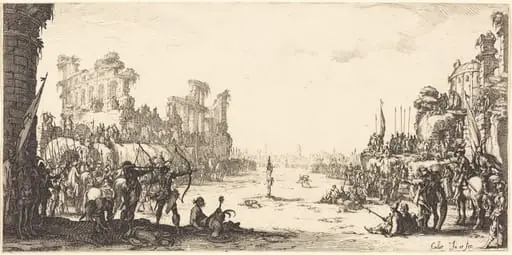 The Ordeal by Arrows (Saint Sebastian)
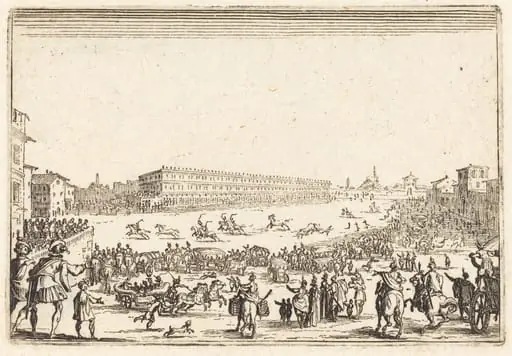 Piazza Presso alla Porta al Prato
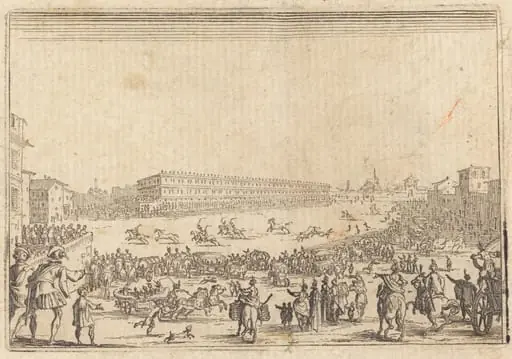 Piazza Presso alla Porta al Prato
 Bullfights: Pepe Illo Making the Pass of the "Recorte"
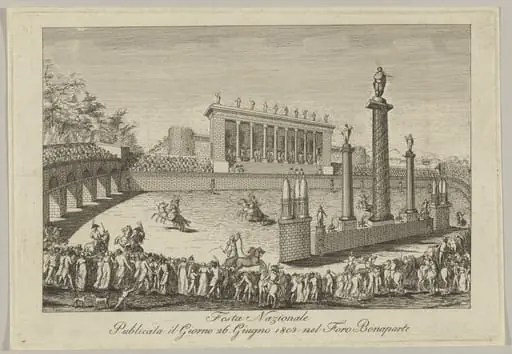
- Festa Nazionale (National Holiday)