Artwork
Paris under Snow
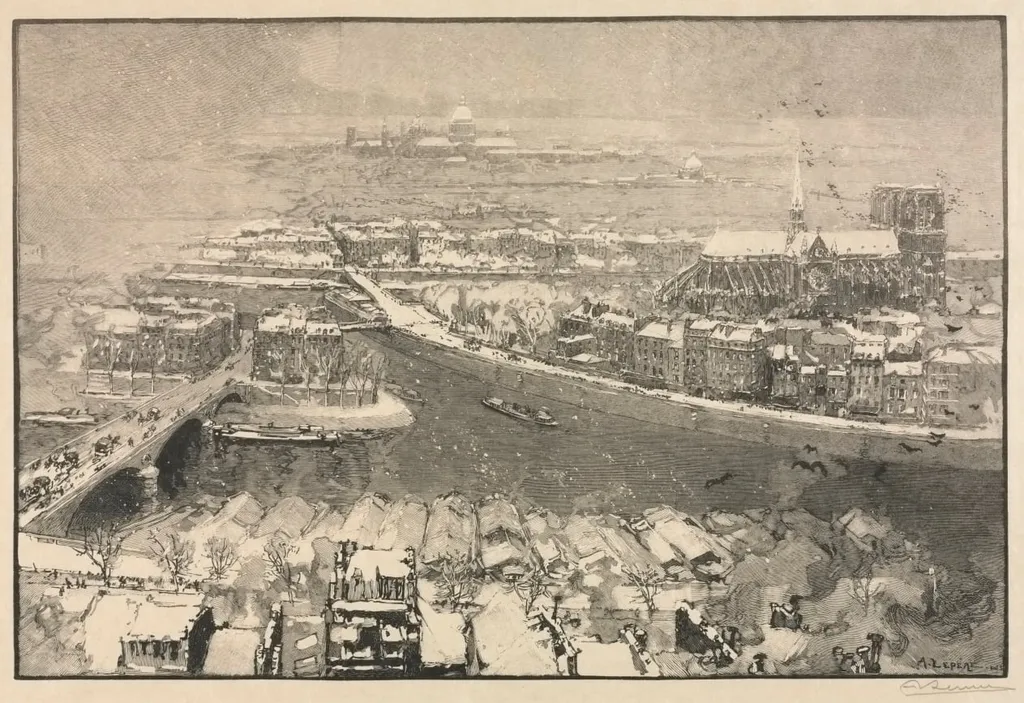
Paris under Snow is a print by the Impressionist artist Auguste Louis Lepère. It dates from 1890 and is held in the collection of the Cleveland Museum of Art.
- Accession no.
- 1947.138
- Credit line
- Gift of Mrs. Malcolm L. McBride
About this work
Overview
Paris under Snow is a wood engraving by Lepère, depicting a serene winter scene of central Paris. The artwork showcases the artist's mastery of the medium, capturing the cityscape under a blanket of snow.
Subject & Meaning
The engraving portrays Parisian rooftops covered in snow, set against a gray sky. The contrast between the white snowflakes, dark river, and distant blurred landscape conveys a sense of calm and wintry tranquility.
Technique & Style
Lepère utilized the wood engraving technique, where ink is applied to carved wooden blocks. The process allowed for intricate, closely set lines, resulting in a range of textures and tones. The snow appears as white lines against the dark, inky cityscape, creating a sharp yet quiet visual effect.
History & Provenance
Originally created by Lepère, this wood engraving is now part of The Cleveland Museum of Art's collection, where it is available for public viewing.
Artist & collection

Artist
Louis-Auguste Lepère (30 November 1849 – 20 November 1918) was a French painter and etcher. Lepère is also considered a leader in the creative revival of wood engraving in Europe.


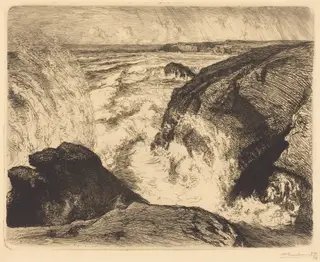
- Paris under Snow, View from St.-Gervais (Paris sous la neige, vu du haut de St.-Gervaais)
![[Large Steamer Ship at Dock, Paris], by Auguste Louis Lepère](https://artifactworldgallery.com/img/auguste-louis-lepere--large-steamer-ship-at-dock-paris--ed31099e42153820-w320.webp) [Large Steamer Ship at Dock, Paris]
[Large Steamer Ship at Dock, Paris]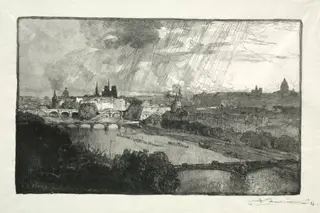 Paris, vu du Pavillon de Flore
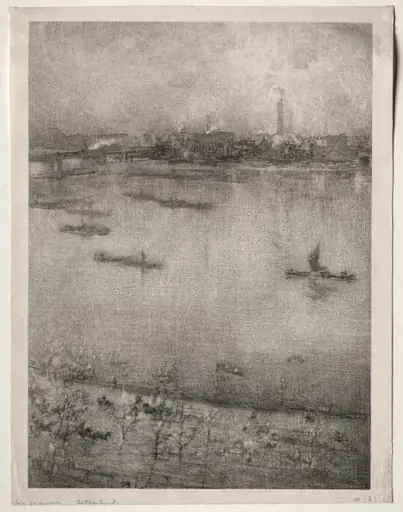 The Thames
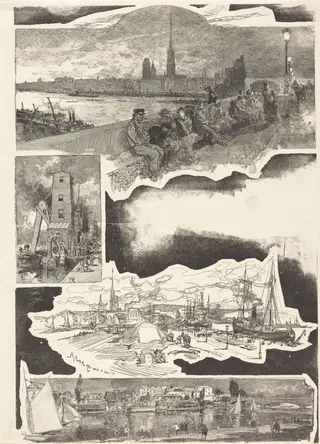
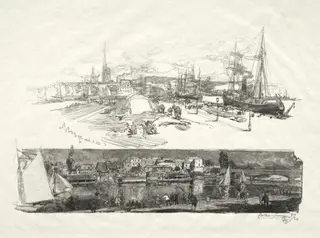 Rouen Illustré: Les Nouveaux Quais-L'Ile La Croix
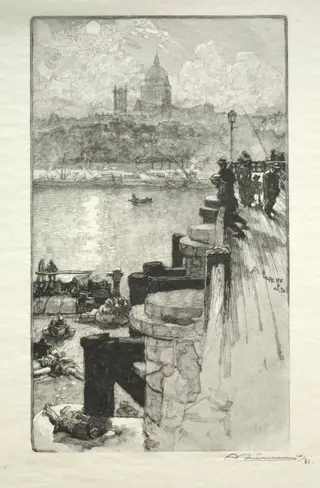
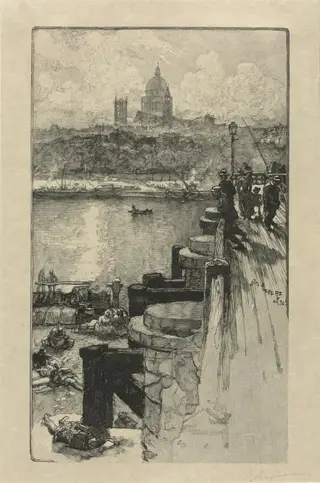 Fishermen on a Pier, Paris
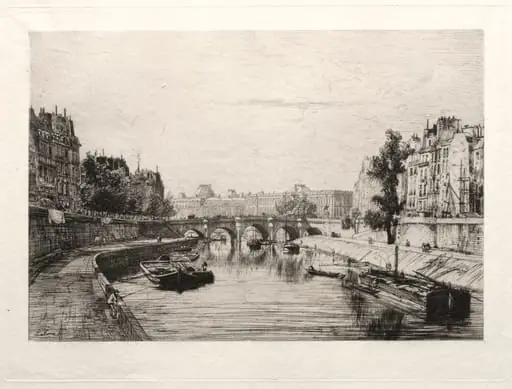 View from Pont St. Michel
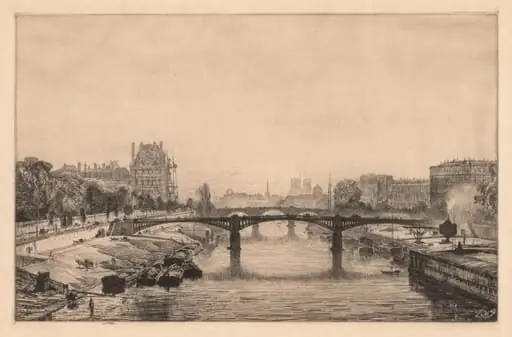 Paris, View from the Concorde Bridge
 Montagne Ste. Genevieve
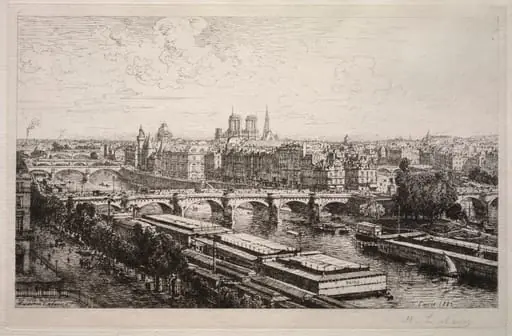 View from the Louvre
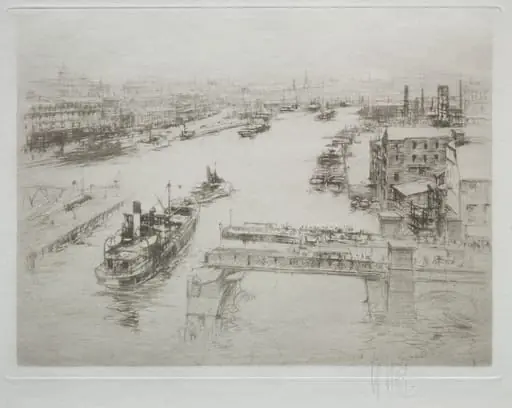 Arteries of Great Britain: The Tyne
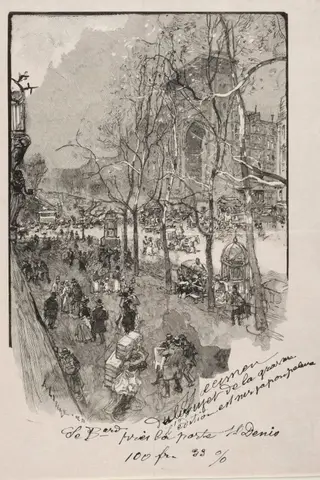 Les Boulevards, près de la Porte St. Denis