Artwork
Portrait of a Woman
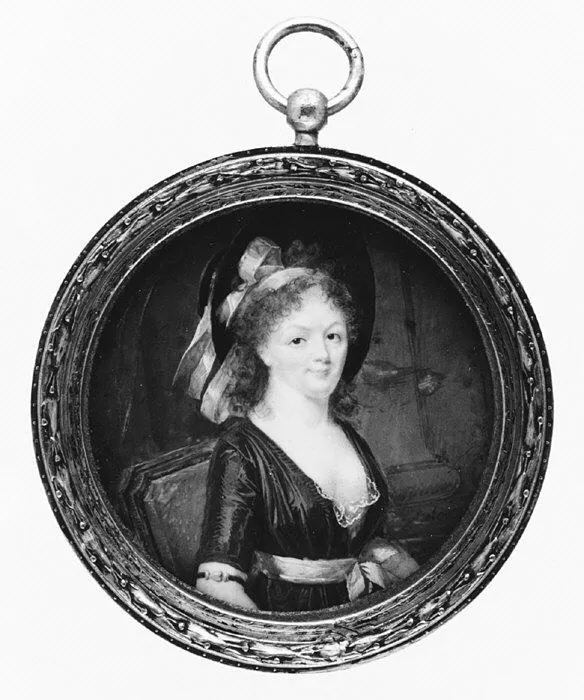
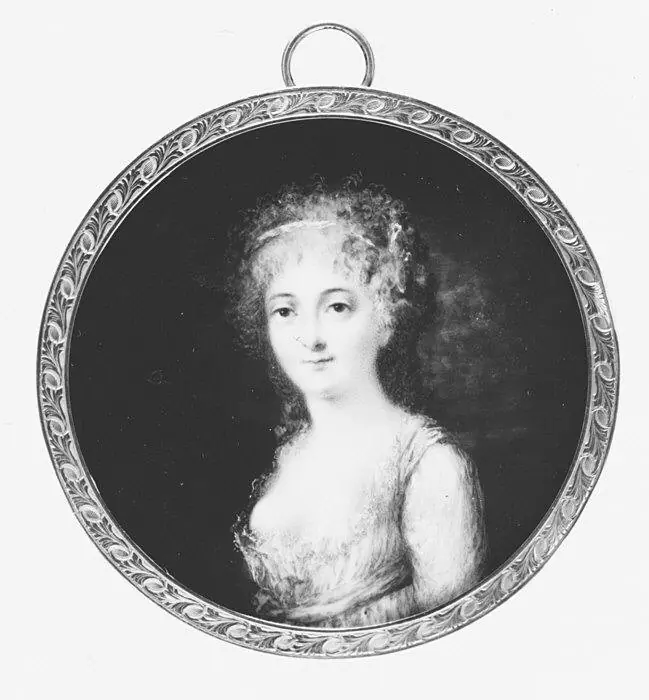
Portrait of a Woman is an unspecified painting by the Rococo painting artist Augustin Dubourg. It dates from 1795 and is held in the collection of the Metropolitan Museum of Art.
About this work
History & Provenance
It entered the collection of the Metropolitan Museum of Art, where it remains located, with its creation date corroborated by the museum’s records as 1789.
The portrait was painted by Augustin Dubourg in 1789, as indicated by both the artist’s records and the work’s classification in internal sources. It entered the collection of the Metropolitan Museum of Art, where it remains located, with its creation date corroborated by the museum’s records as 1789. The painting’s genre and subject, a portrait of a woman, are consistent with Dubourg’s known oeuvre and the documented focus of this work.
The Portrait of a Woman by Augustin Dubourg, dated 1789, is held in the Metropolitan Museum of Art in New York. The painting is part of the museum's permanent collection, though its specific accession number remains unconfirmed in available records. As of the latest documentation, the work has not been widely exhibited beyond its inclusion in the Metropolitan Museum's holdings, where it is accessible for public viewing within the museum's European paintings galleries.
Overview
Augustin Dubourg created this miniature, titled Portrait of a Woman, in 1795. This small painting captures an unidentified female sitter, presented within a circular metal frame designed for portability. The artwork is now part of the collection at The Metropolitan Museum of Art, offering a glimpse into late 18th-century portraiture and personal adornment.
Subject & Meaning
The portrait features a woman with light hair, elegantly attired in a dark dress accented with lace at the neckline and cuffs. Her elaborate hat, adorned with a prominent bow, and the small fan she holds, suggest a fashionable individual of her era. The plain, dark background ensures the sitter's figure and detailed costume remain the central focus, emphasizing her presence.
Technique & Style
Dubourg rendered the woman's face with delicate artistry, employing soft shadows and smooth transitions to depict her skin. The painting's diminutive scale is complemented by its original presentation: a round metal frame with an integrated loop, indicating it was likely intended to be worn or carried. This design underscores the intimate and personal nature characteristic of miniature portraits from this period.
Artist & collection

- Portrait of a Woman
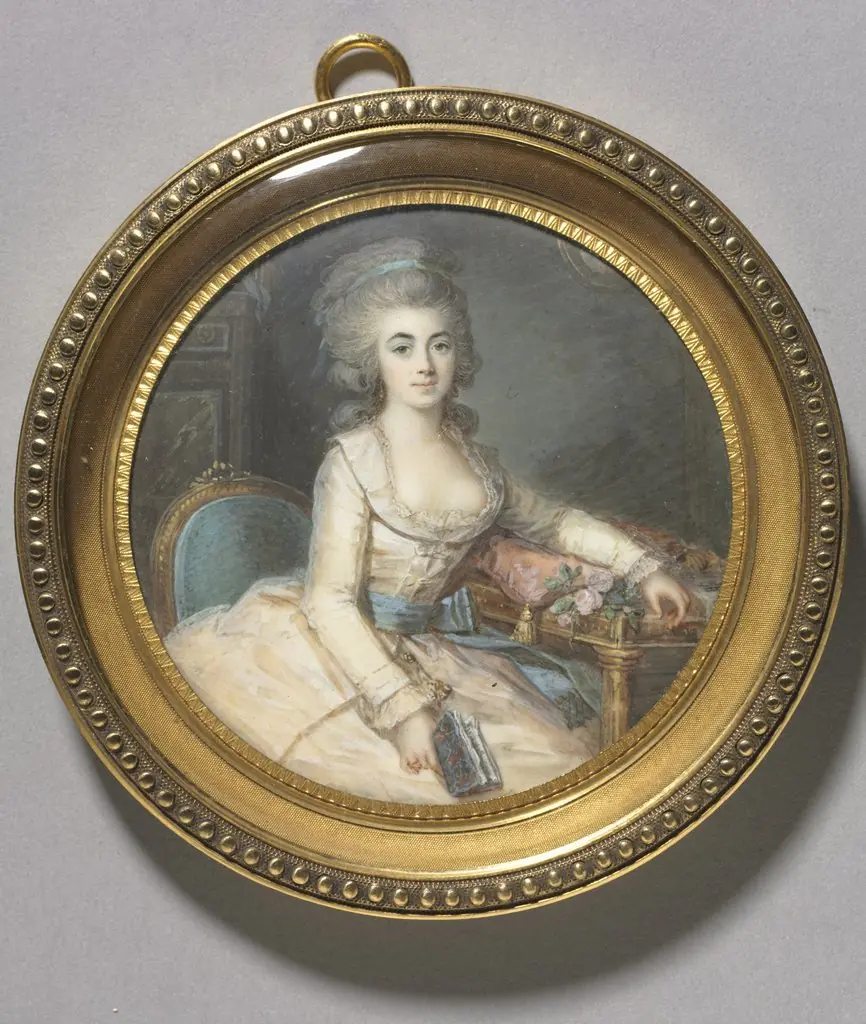 Portrait of a Woman
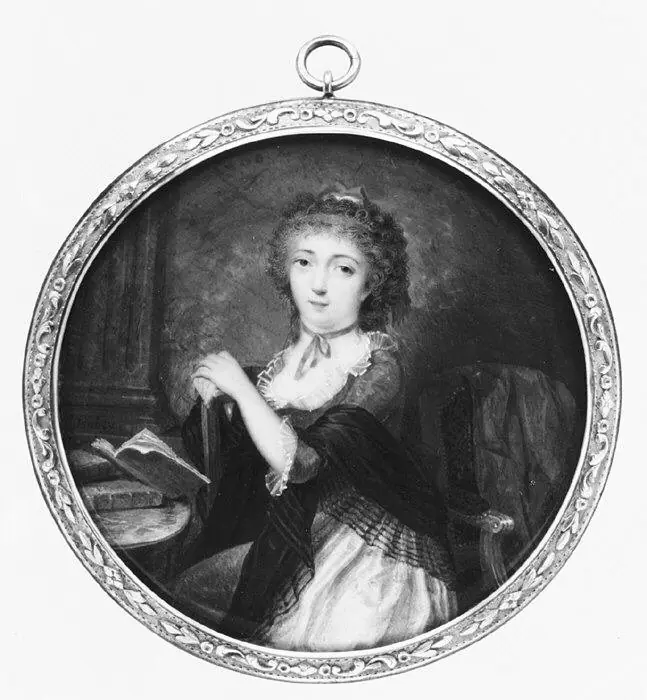 The Reader
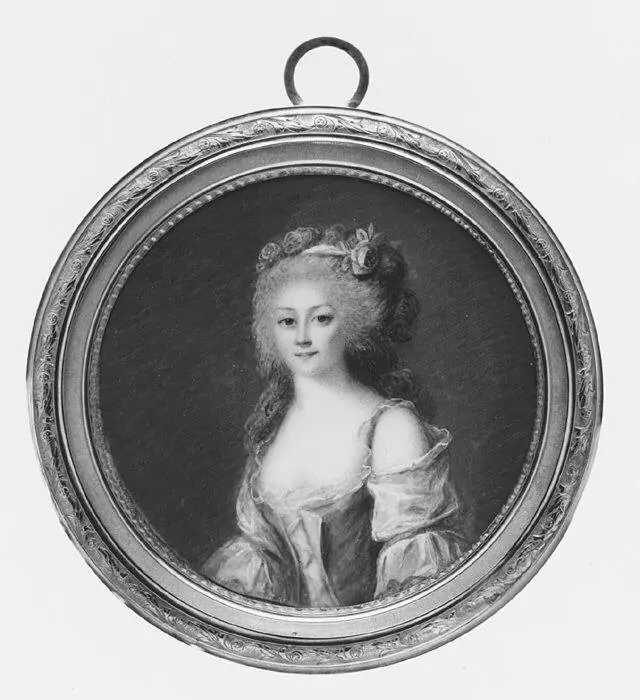 Portrait of a Woman
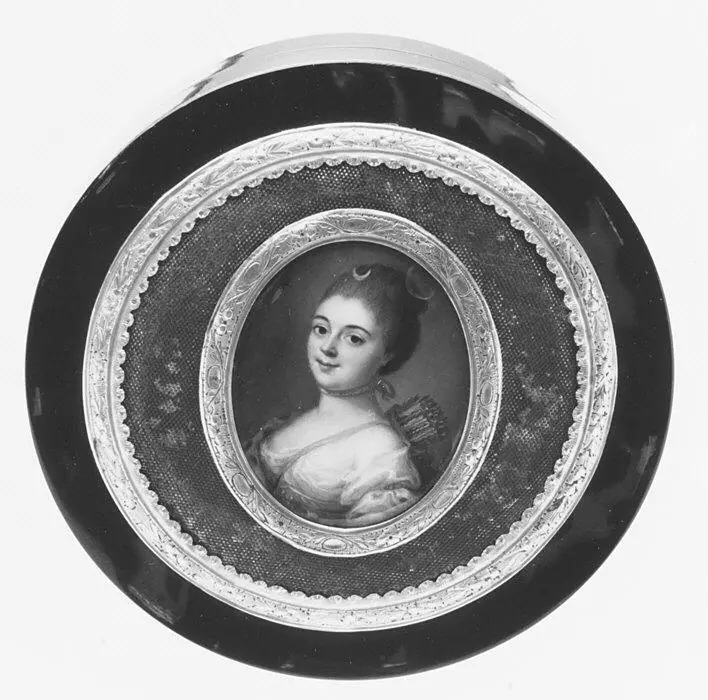 Portrait of a Woman as Diana
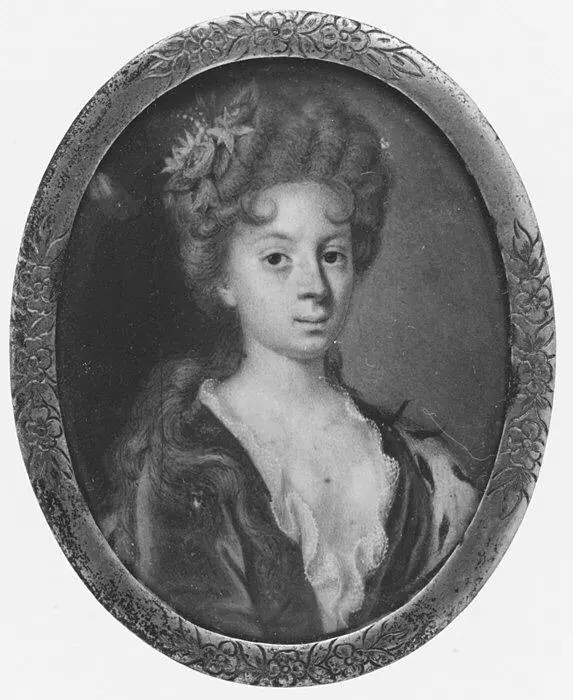 Caroline of Ansbach (1683–1737), Consort of George II of Great Britain and Ireland
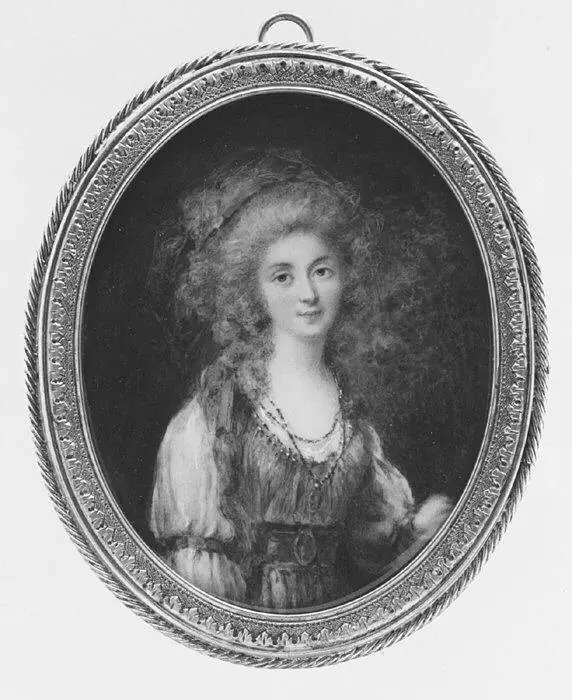 Portrait of a Young Woman
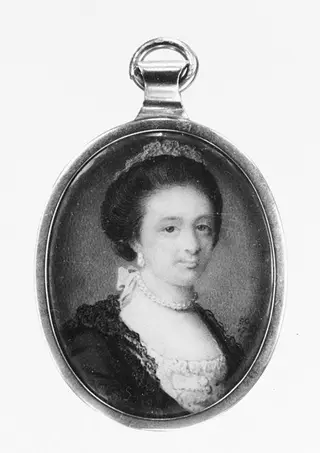 Portrait of a Woman
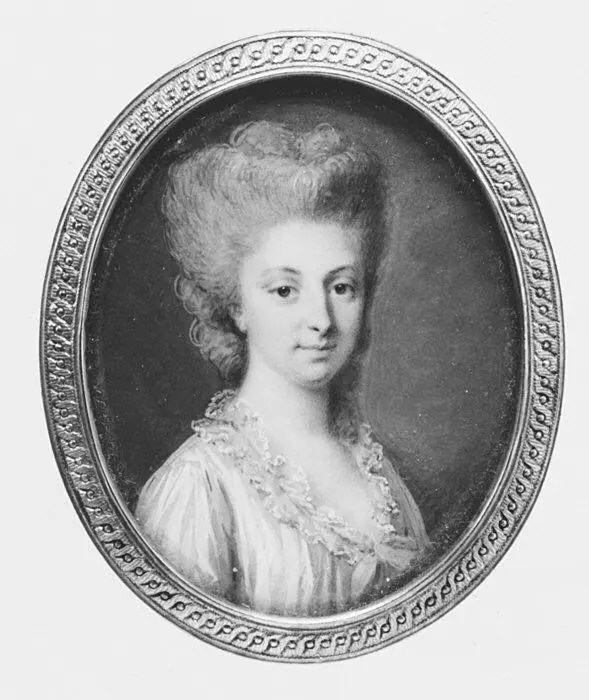 Portrait of a Woman
 Portrait of a Woman, Said to Be the Comtesse de Guiche
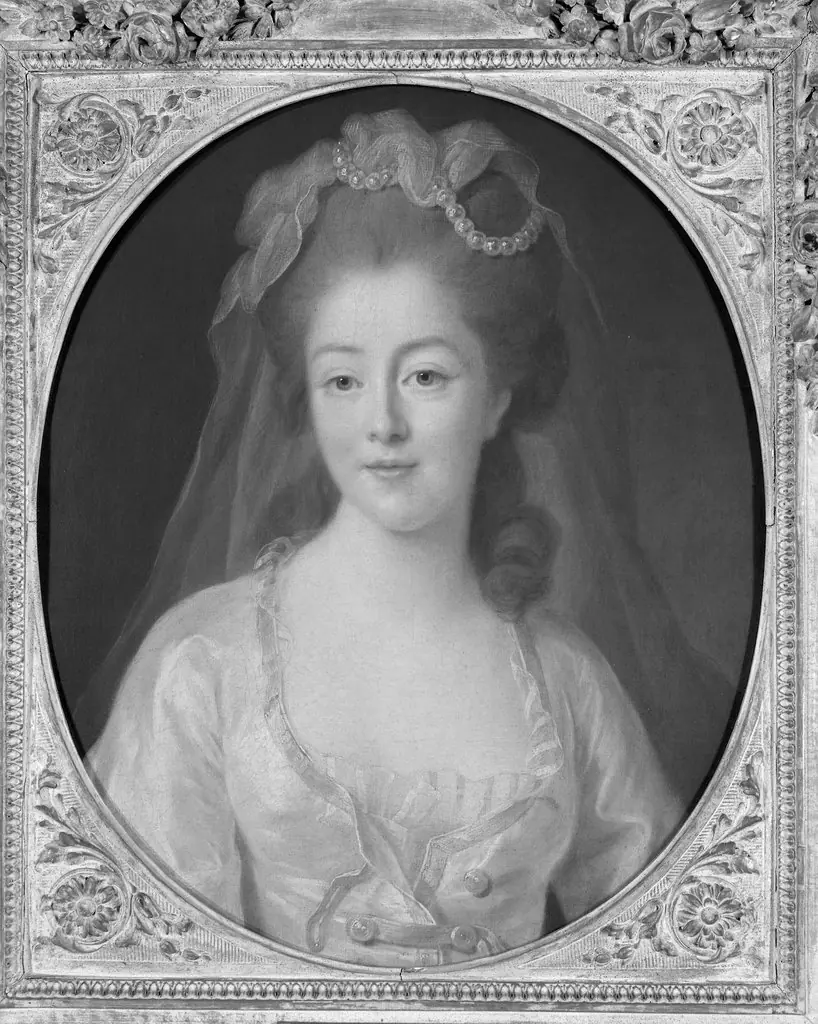 A Lady
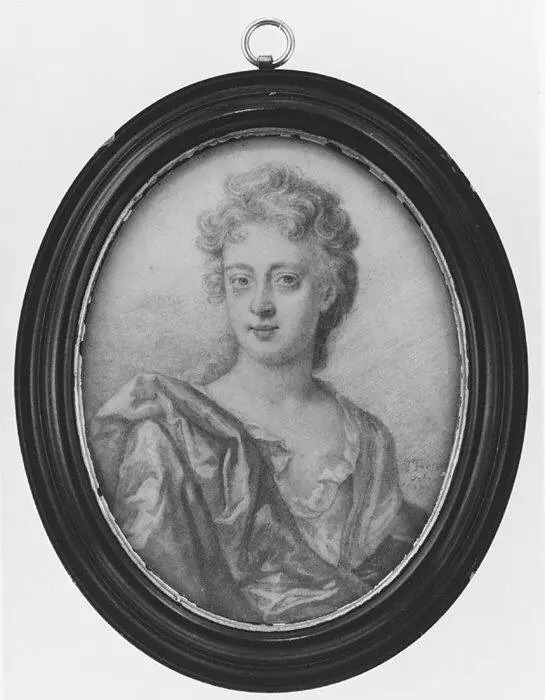 Portrait of a Woman