Artwork
Caroline of Ansbach (1683–1737), Consort of George II of Great Britain and Ireland
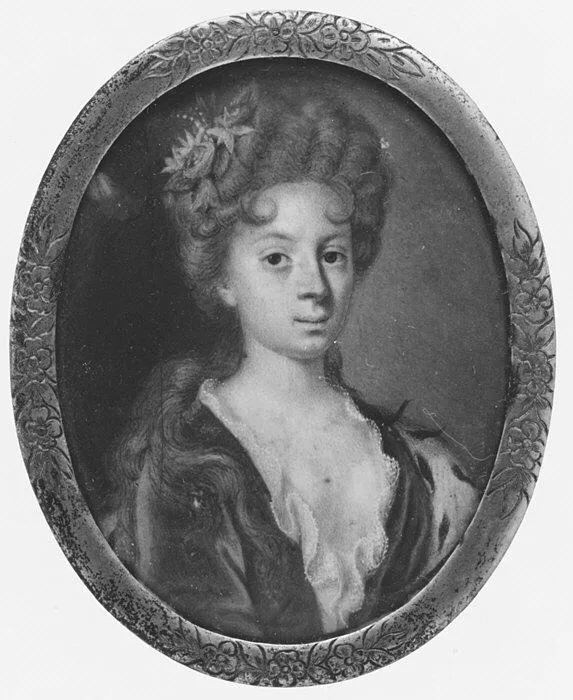
Caroline of Ansbach (1683–1737), Consort of George II of Great Britain and Ireland is an unspecified painting. It dates from 1800 and is held in the collection of the Metropolitan Museum of Art. This painting depicts Caroline of Ansbach (1683–1737), who served as the consort to George II of Great Britain and Ireland.
About this work
Subject & Meaning
The iconography focuses on the representation of the monarch's wife, capturing her appearance within the conventions of miniature portraiture.
The work is a miniature portrait depicting Caroline of Ansbach (1683–1737), consort of George II of Great Britain and Ireland. Created in the 18th century and attributed to Benjamin Arlaud, the composition functions as a formal likeness of the queen consort. The iconography focuses on the representation of the monarch's wife, capturing her appearance within the conventions of miniature portraiture.
History & Provenance
This miniature portrait of Caroline of Ansbach, measuring 57 mm in width and 68 mm in height, is attributed to Benjamin Arlaud and dated to the 18th century. It is housed in the Metropolitan Museum of Art under inventory number 55.107.1. No specific exhibition history or earlier ownership details are recorded in the available sources.
Overview
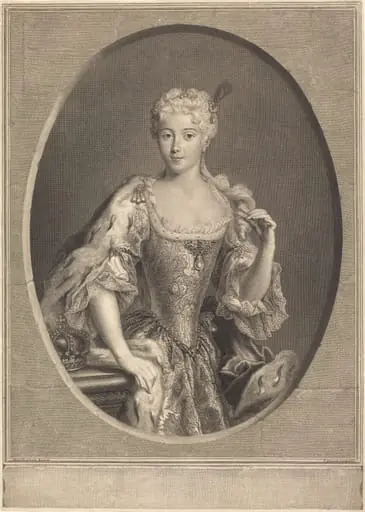
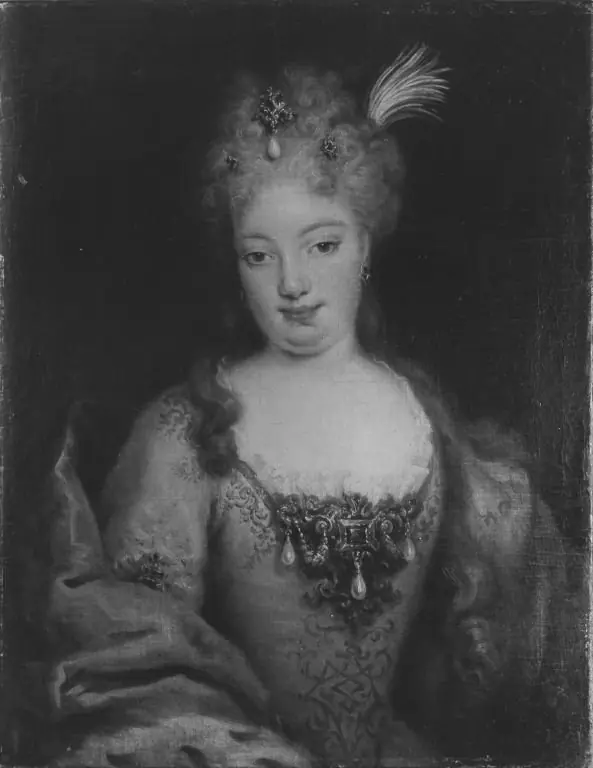
This painting depicts Caroline of Ansbach (1683–1737), who served as the consort to George II of Great Britain and Ireland. The portrait captures her likeness, presenting her with a composed demeanor. The artwork emphasizes her facial features and hands, setting them against a darker background to draw the viewer's attention to her presence as a royal figure.
Technique & Style
The artist employed strong contrasts of light and shadow to create depth and highlight the subject's form. This technique, often referred to as chiaroscuro, draws focus to Caroline's face and hands, making them prominent against the subdued background. Her light hair, styled in curls, further stands out, contributing to the overall visual emphasis on her person.
Context
Over time, the painting has acquired signs of age, including areas of fading and smudges, which are typical for historical artworks. The portrait is presented within a decorative frame, characterized by intricate swirling patterns. This ornate framing provides a traditional context for the depiction of a royal consort, complementing the formal nature of the subject matter.
Artist & collection

- Portrait of a Woman
 Portrait of a Woman
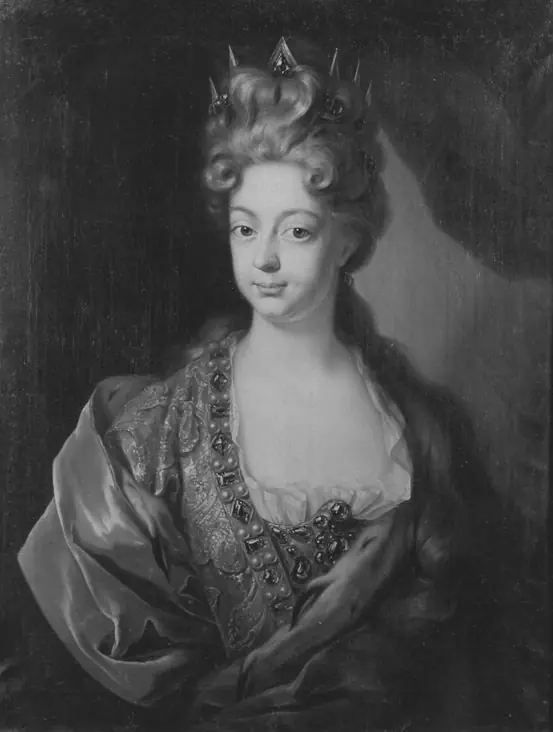 Portrait of Wilhelmine Amalie of Braunschweig-Lüneburg
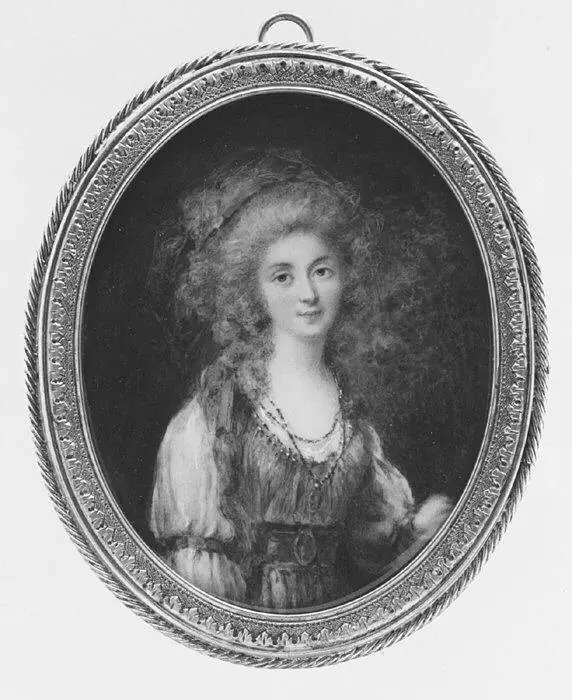 Portrait of a Young Woman
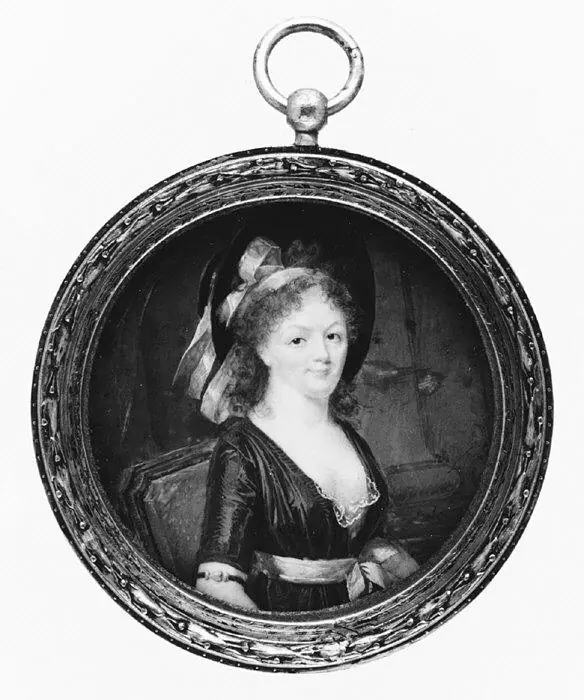 Portrait of a Woman
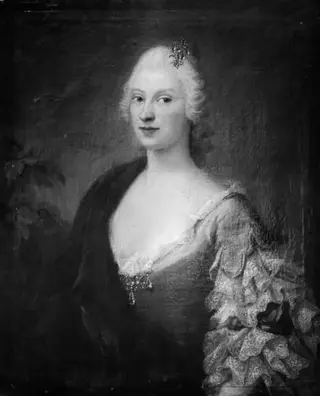 Portræt af fru Adelgunde Elisabeth Amalia von Scholten
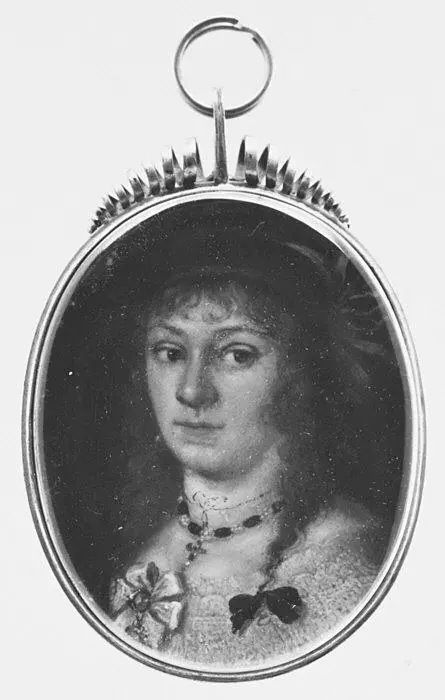 Portrait of a Woman
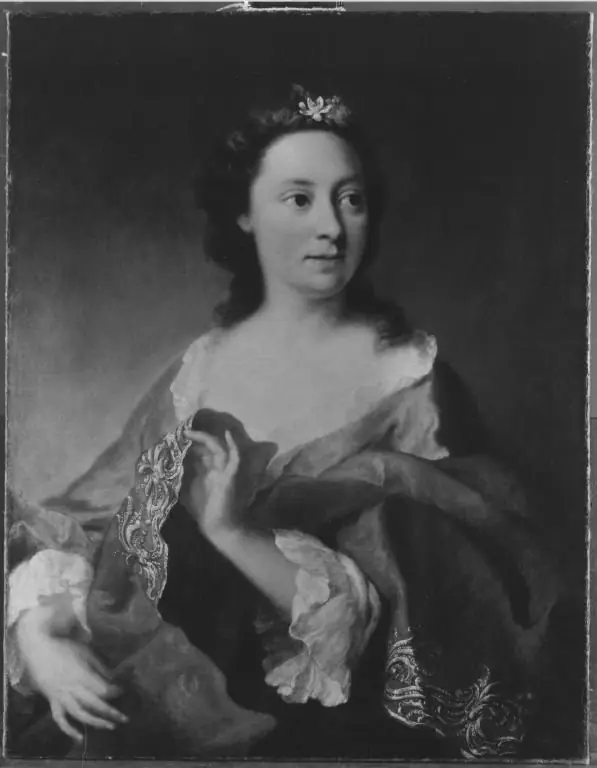 Bildnis der Gemahlin des Hofmedailleurs Franz Aandreas Schega
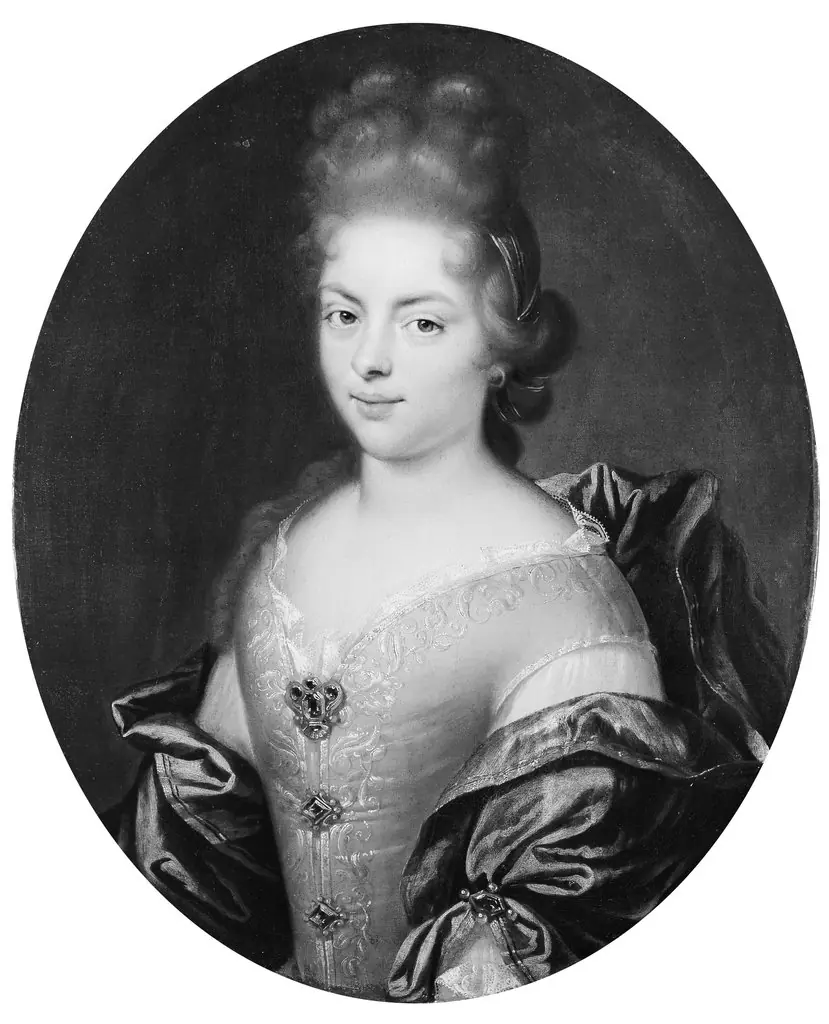 Portrait of a Woman in a Rose Dress
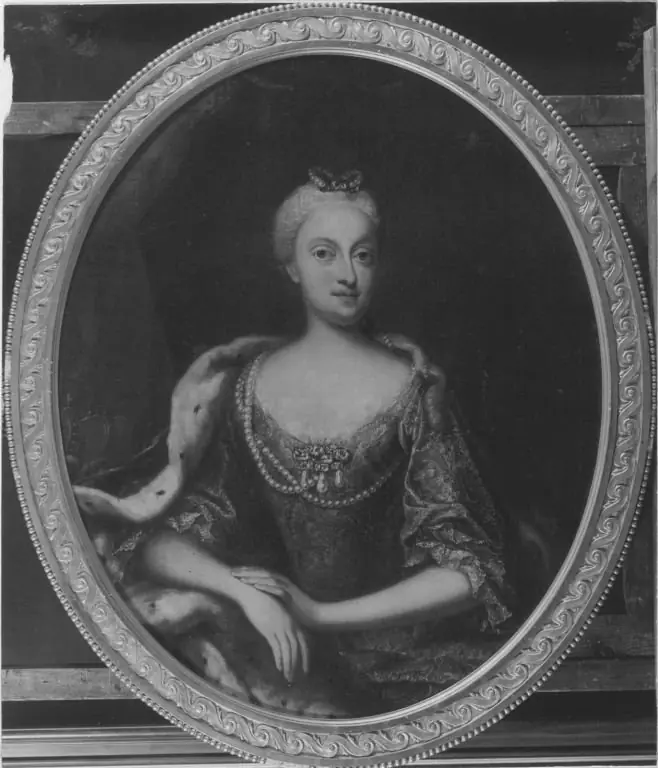 Kaiserin Maria Amalia, Gemahlin Kaiser Karls VII.
 Maria Klementyna Sobieska
 Bildnis einer Fürstin