Artwork
The Fireworks
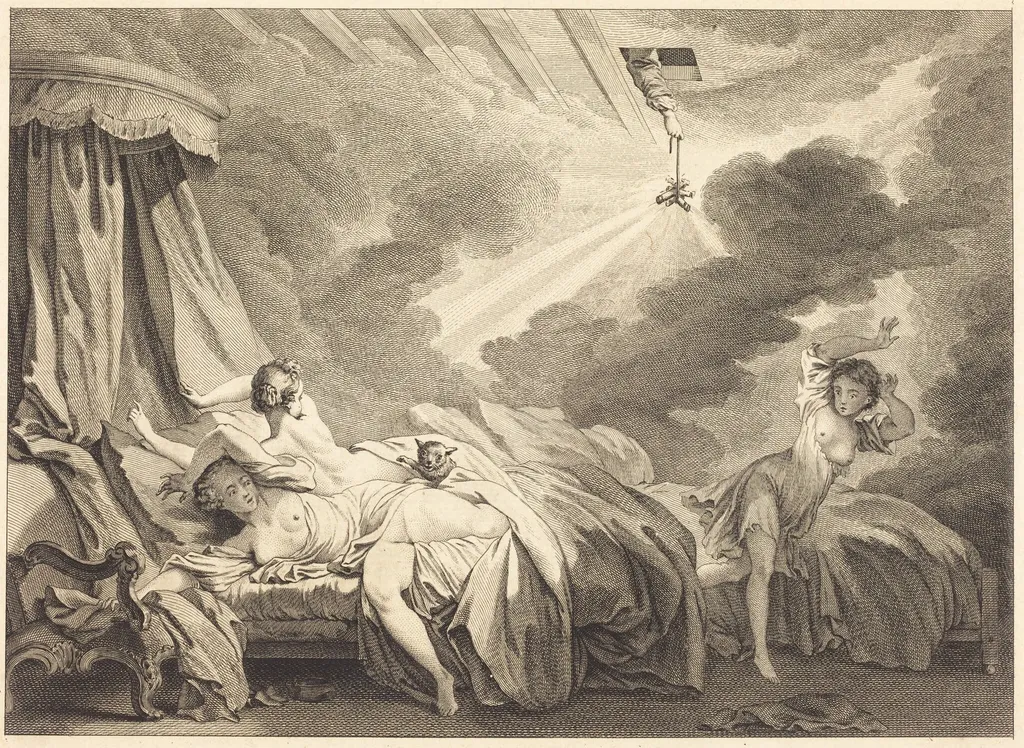
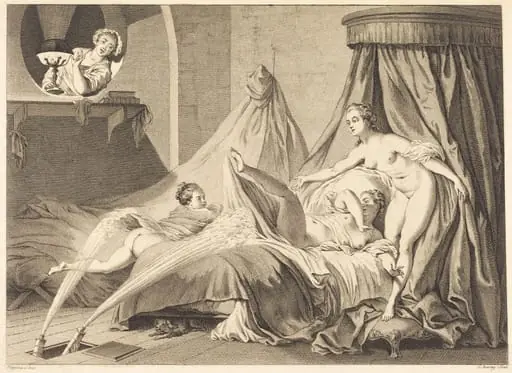
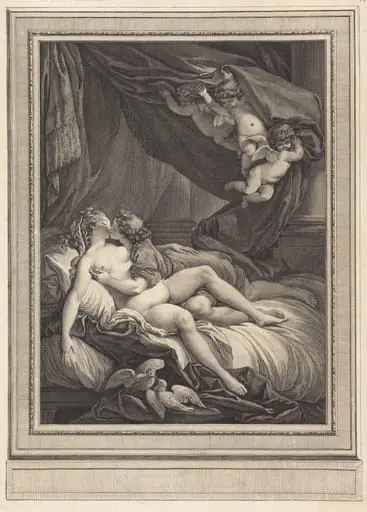
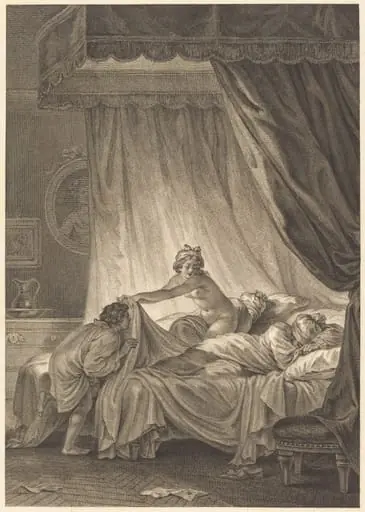
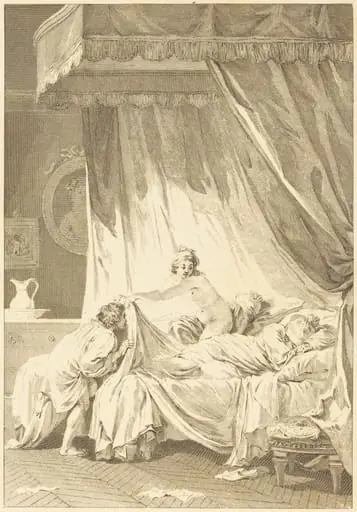
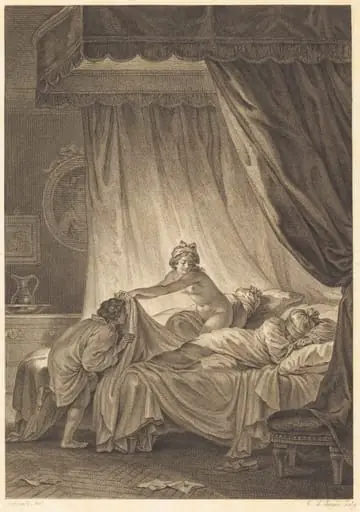
The Fireworks is an ink print by the Baroque artist Pierre-Laurent Auvray. It dates from 1776 and is held in the collection of the National Gallery of Art.
About this work
Overview
Unlike narrative paintings, this work relies on the precision of engraved lines to suggest motion and emotion, characteristic of late 18th-century graphic art.
The Fireworks is an 1776 engraving by Pierre-Laurent Auvray, produced during the height of Enlightenment-era printmaking. It captures a moment of quiet drama through fine linear detail and tonal contrast. Unlike narrative paintings, this work relies on the precision of engraved lines to suggest motion and emotion, characteristic of late 18th-century graphic art. The composition is contained yet evocative, inviting contemplation rather than immediate storytelling.
Subject & Meaning
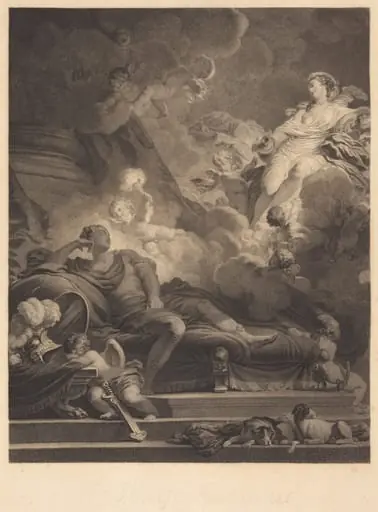
Three figures are arranged in a triangular composition: one reclines, partially veiled; another leans close, perhaps in concern; a third gazes upward, arm extended toward a luminous form in the heavens. The glowing element suggests celestial phenomena or divine presence, while the draped forms imply vulnerability or ritual. The scene resists clear interpretation, instead evoking a sense of awe or impending revelation, common in symbolic imagery of the period.
Technique & Style
Auvray employed fine, controlled engraving lines to model form and suggest atmosphere. Shading is achieved through cross-hatching and varying line density, creating depth without color. The swirling clouds and faint architectural outline are rendered with delicate precision, while the figures’ drapery flows with rhythmic contours. The technique emphasizes texture and spatial ambiguity, typical of academic engraving trained in the French tradition.
History & Provenance
Created in 1776, the engraving likely circulated among collectors and artists as part of the period’s thriving print market. No documented early ownership is recorded, but its style aligns with works produced for private cabinets and art academies. It was not widely reproduced or exhibited publicly, suggesting a limited, elite audience. Its survival reflects its craftsmanship rather than popular acclaim.
Context
In the years before the French Revolution, visual culture increasingly favored emotional restraint and symbolic ambiguity. The Fireworks reflects this shift, moving away from overt religious or mythological narratives toward introspective, atmospheric scenes. Engravings like this served as intermediaries between painting and print, allowing refined imagery to reach educated audiences beyond royal or ecclesiastical patrons.
Legacy
Though not widely known today, The Fireworks exemplifies the technical mastery of late 18th-century engraving. It stands as a quiet testament to the era’s interest in subtlety and suggestion over spectacle. Its preservation in institutional collections underscores its value as a specimen of craftsmanship, offering insight into how visual meaning was constructed through line and shadow in pre-romantic art.
Own this work as a print
Artist & collection