Artwork
Podróżni na osiołkach
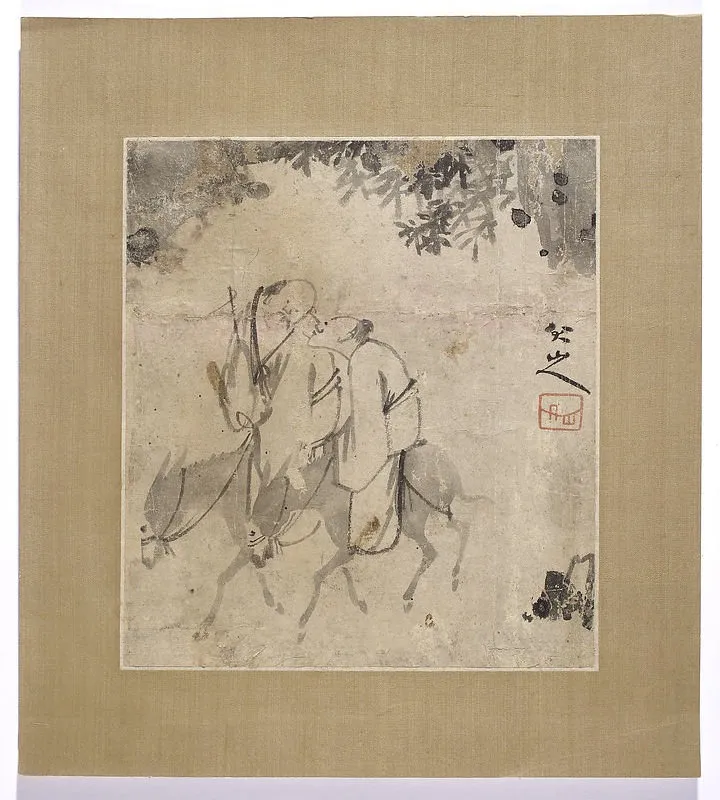
Podróżni na osiołkach is an unspecified painting by Bada Shanren. It dates from 1675 and is held in the collection of the National Museum in Warsaw.
About this work
Overview
Created around 1675 by the Chinese artist Bada Shanren, this ink-on-paper painting portrays two travelers on donkeys. It resides in the National Museum in Warsaw, part of a broader corpus of works produced after the artist’s retreat from public life following the fall of the Ming dynasty. The composition is restrained, emphasizing quiet movement and solitude.
Subject & Meaning
The two figures, dressed in traditional robes and riding donkeys, suggest a journey, perhaps physical, perhaps spiritual. One carries a staff, a common attribute of wandering scholars or recluses. The scene evokes the Daoist ideal of withdrawal from worldly affairs, reflecting Bada Shanren’s own life as a former Ming prince turned Buddhist monk.
Technique & Style
Bada Shanren employs sparse ink washes and delicate brushwork, avoiding detail in favor of suggestive forms. The light background enhances the sense of emptiness, while the minimal use of color and simplified lines convey stillness. His style, rooted in literati traditions, prioritizes expressive economy over realism, inviting contemplation rather than narrative clarity.
History & Provenance
The painting entered the National Museum in Warsaw’s collection in the 20th century, though its earlier ownership history remains undocumented. It was likely acquired through European collections that began gathering East Asian art in the late 19th and early 20th centuries. Its presence in Poland reflects broader patterns of Asian art dispersal during that era.
Context
Bada Shanren painted this during a period of personal and political upheaval. After the Ming collapse, he withdrew from society, adopting monastic life and producing art marked by melancholy and detachment. His works, often featuring solitary figures or animals, became expressions of cultural resistance and inner resilience among former Ming loyalists.
Legacy
Bada Shanren’s restrained aesthetic influenced later generations of Chinese artists, particularly those valuing emotional depth over technical flourish. This painting exemplifies his enduring contribution to literati painting: a quiet language of solitude that continues to resonate in modern interpretations of Chinese ink art.
Artist & collection



- Untitled
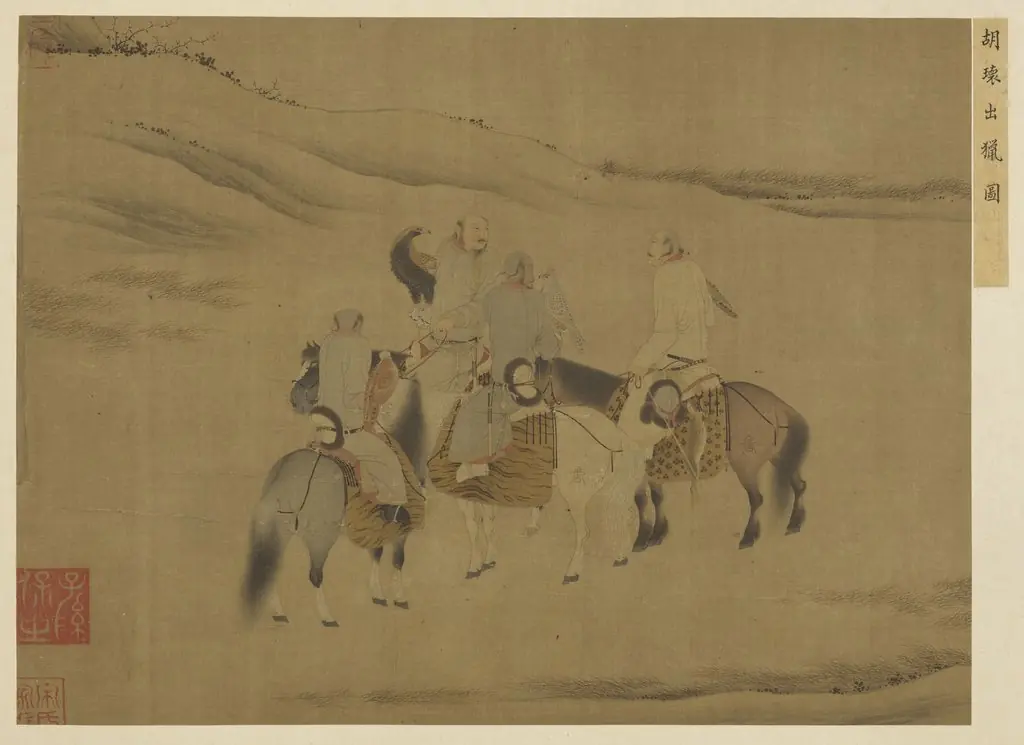 名繪集珍 冊 五代胡瓌出獵圖
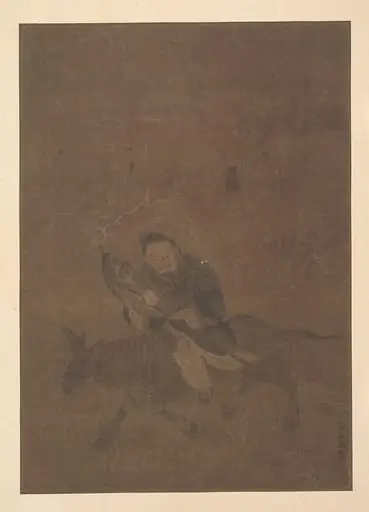 Untitled
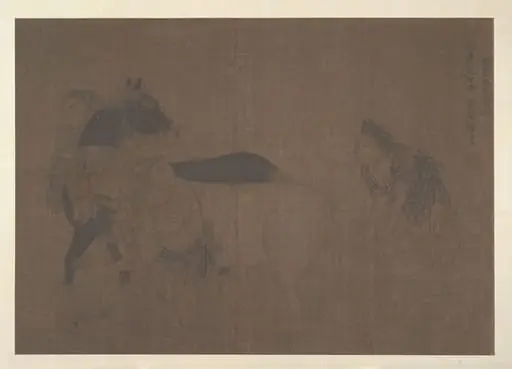 明/清 佚名 舊傳陸青 洗馬圖 冊頁|Washing a Horse
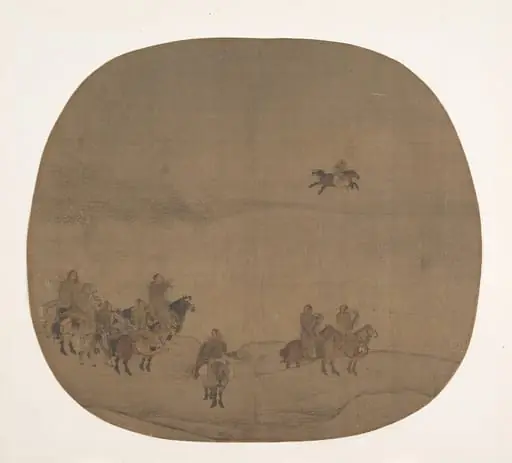 南宋 傳陳居中 胡騎春獵圖 團扇|Nomads hunting with falcons
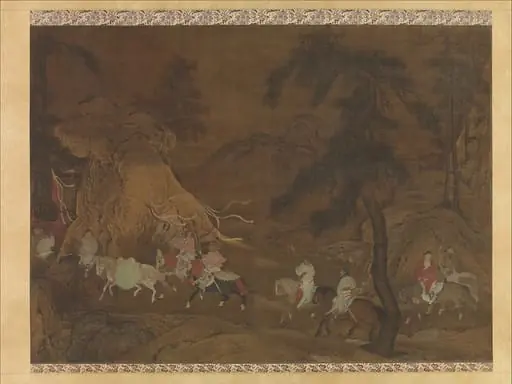 南宋 佚名 明皇幸蜀圖 軸|Emperor Xuanzong's Flight to Shu
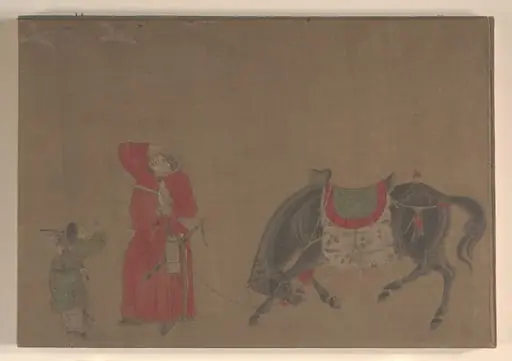 Untitled
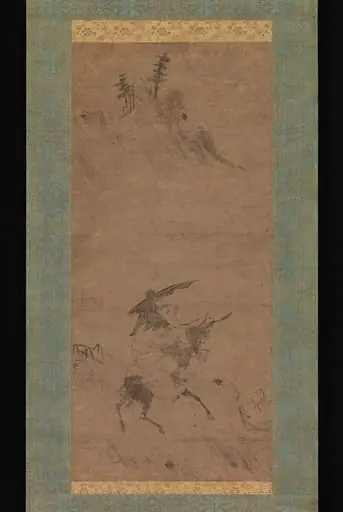 朴堂祖淳筆 蘇軾騎驢図|Su Shi Riding a Donkey
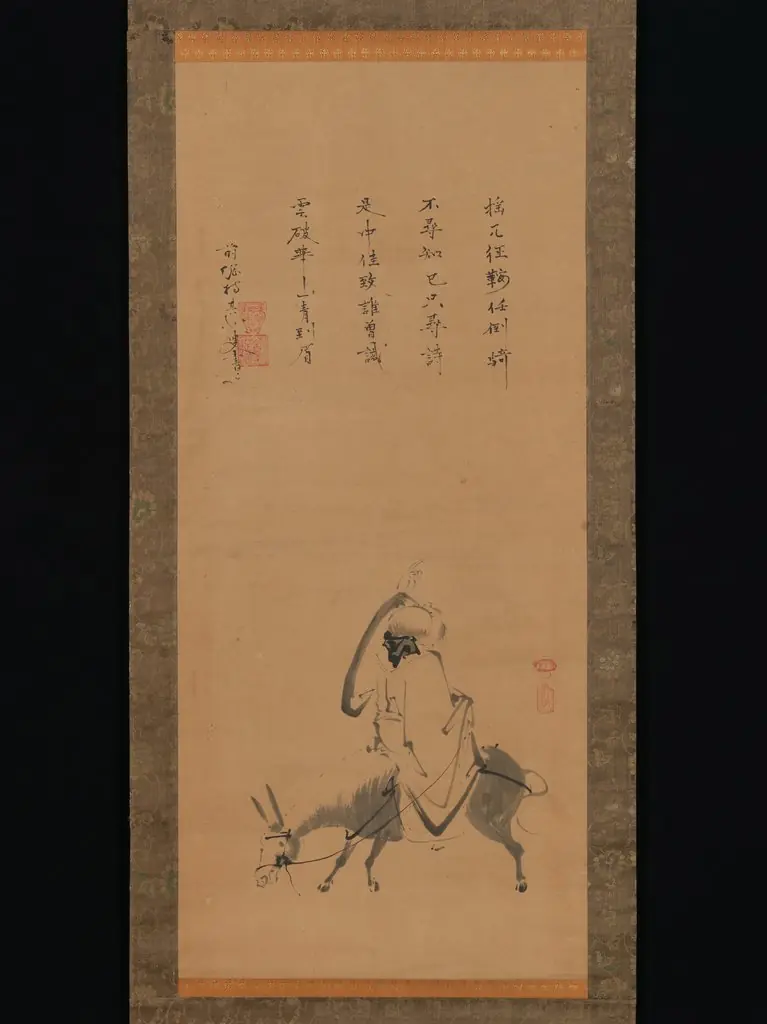 The Chinese Poet Pan Lang on a Donkey
 Hunting on Horses
 Su Dongpo Riding a Donkey
 Paintings after Ancient Masters: Laozi Riding an Ox