Artwork
南宋 佚名 明皇幸蜀圖 軸|Emperor Xuanzong's Flight to Shu
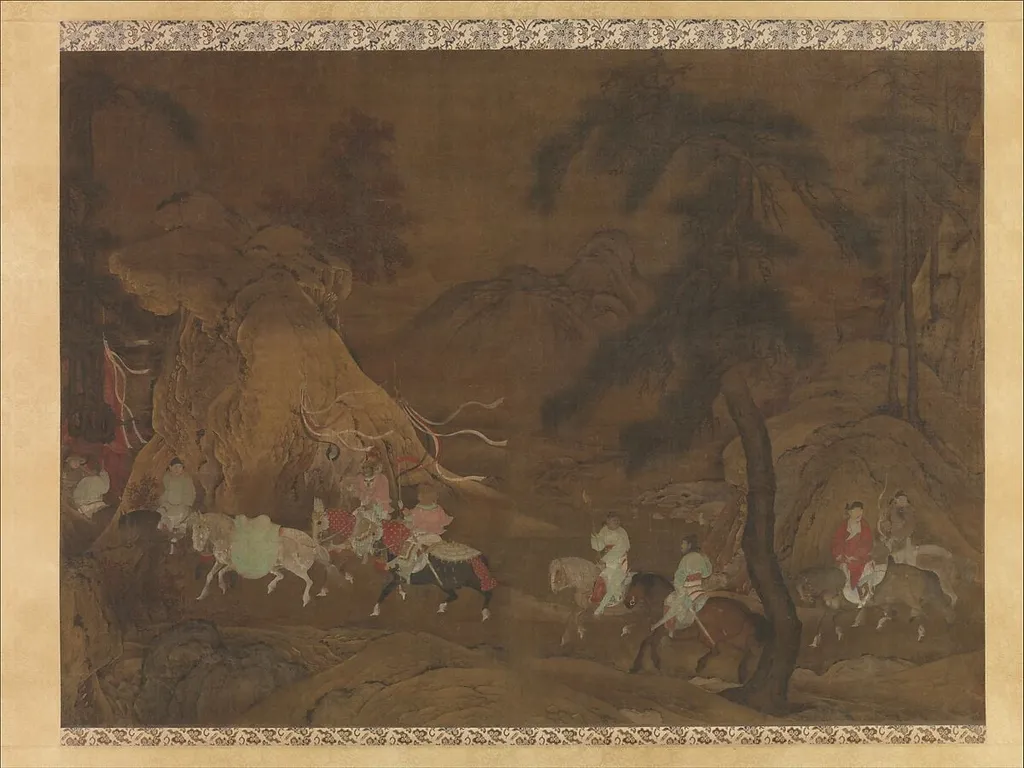
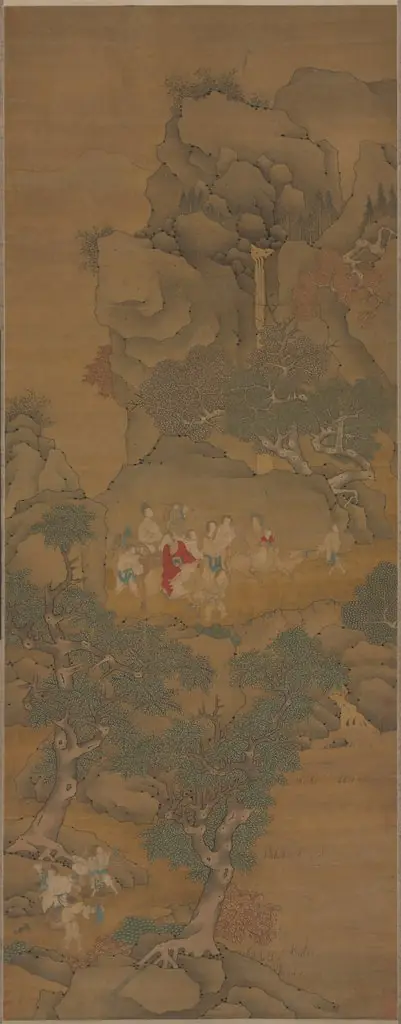
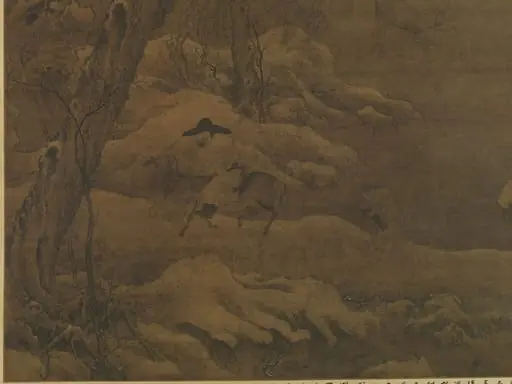
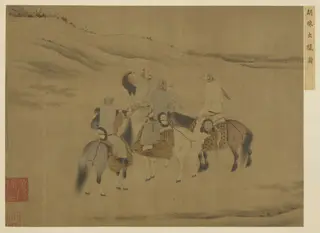
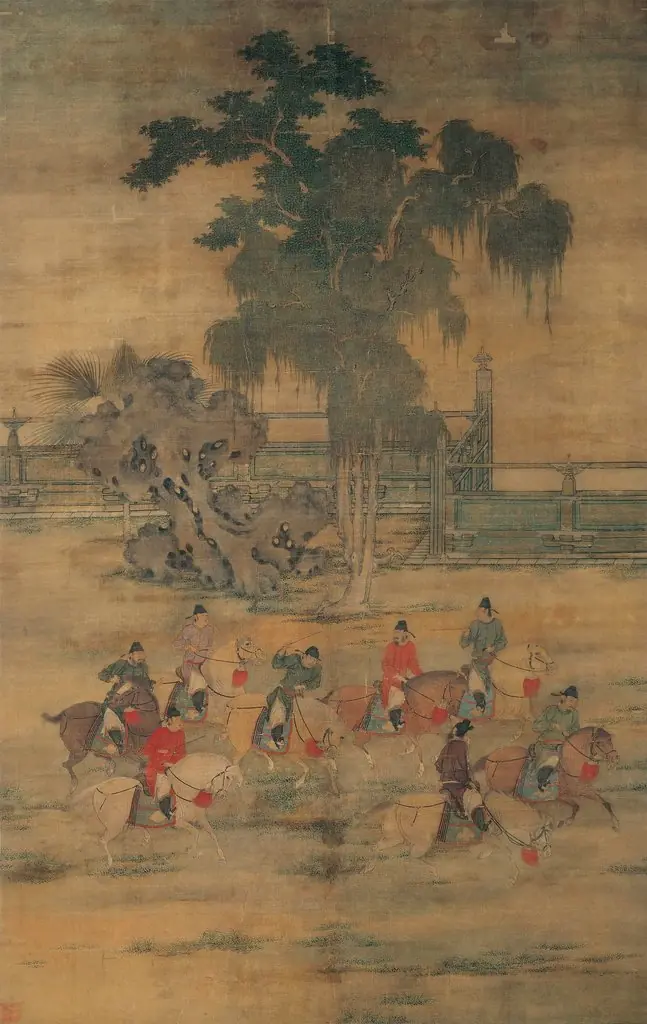
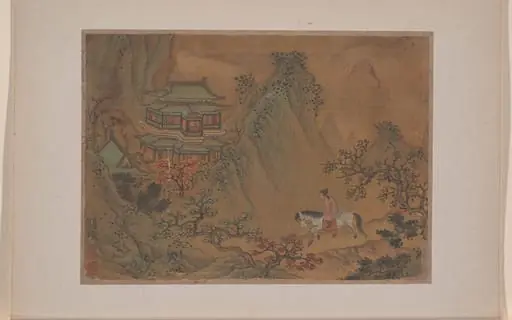
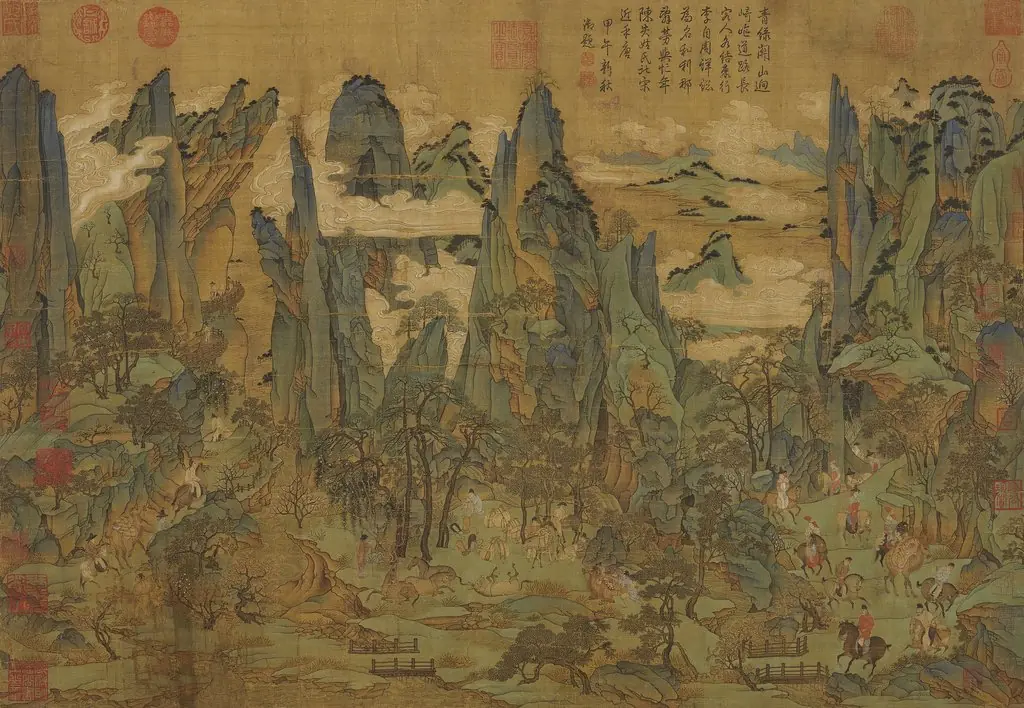
南宋 佚名 明皇幸蜀圖 軸|Emperor Xuanzong's Flight to Shu is an ink painting. It dates from 1150 and is held in the collection of the Metropolitan Museum of Art. This hanging scroll, titled "Emperor Xuanzong's Flight to Shu," depicts a historical journey undertaken by a Chinese emperor in 756.
About this work
Subject & Meaning
The scene thus functions as a moralized landscape, where history and allegory merge to comment on the cyclical rise and fall of states.
The scroll represents the historical episode of Emperor Xuanzong of Tang fleeing the capital Chang’an in 755–756 during the An Lushan Rebellion, a moment that became a symbol of dynastic disruption and cultural loss. The composition centers on the emperor as a lone rider, evoking the fragility of imperial authority and the peril of displacement. Surrounding peaks and mist convey both the physical journey and the emotional weight of exile, while the subdued palette and attenuated forms align with the lyrical Southern Song idiom to underscore nostalgia and impermanence.
The scene thus functions as a moralized landscape, where history and allegory merge to comment on the cyclical rise and fall of states.
Technique & Style
This hanging scroll, created circa 1150, is executed in ink, color, and gold on a silk support. The work measures 82.9 cm in height and 113.7 cm in width, characteristic of the vertical format used for Chinese landscape paintings. Stylistically, it belongs to the landscape genre, depicting equestrian figures traversing mountainous terrain.
The application of gold alongside ink and pigments suggests a sophisticated technique aimed at enhancing the visual richness of the scene. As an anonymous work from the Southern Song period, the painting demonstrates the formal qualities associated with the era's landscape tradition, focusing on the depiction of human figures within a natural setting.
History & Provenance
The hanging scroll known as Emperor Xuanzong's Flight to Shu is attributed to an anonymous artist and dated to approximately 1150 during the Southern Song dynasty. Executed in ink, color, and gold on silk, the work measures 82.9 cm in height and 113.7 cm in width. While the specific commission details and the original creator's identity remain unknown, the painting is currently held within the collection of the Metropolitan Museum of Art in New York.
The artwork depicts a landscape scene featuring equestrian figures, consistent with the genre of landscape painting popular in 12th-century China. No further records regarding its early ownership chain or specific provenance prior to its current institutional home are provided in the available documentation.
The painting is held in the collection of the Metropolitan Museum of Art, as recorded in its institutional data. According to the Wikidata entry for the work, its location is given as the Metropolitan Museum of Art, and the collection is likewise identified as the Metropolitan Museum of Art. The provided sources do not supply a specific inventory or accession number for the scroll, nor do they document any exhibition history, loans, or prior display venues.
No information on provenance, ownership transfers, or curatorial history is available in the cited material. Consequently, only the current holding institution can be stated with certainty on the basis of the sources provided.
Overview
This hanging scroll, titled "Emperor Xuanzong's Flight to Shu," depicts a historical journey undertaken by a Chinese emperor in 756. Rendered in ink, color, and gold on silk, the painting presents a winding mountain path traversed by numerous small figures, including soldiers, horses, and a central figure in red robes. The artist, whose identity remains unknown, imbued the scene with a dreamlike quality, particularly through the luminous depiction of clouds.
Context
This painting belongs to the rich tradition of Chinese landscape art, where natural settings often serve as backdrops for historical narratives or philosophical contemplation. During the Southern Song dynasty, artists frequently depicted grand natural vistas, using mountains not merely as scenery but as active elements in storytelling. This work exemplifies how a specific historical event could be elevated through a masterful and evocative landscape composition.
Artist & collection