Artwork
The Chinese Poet Pan Lang on a Donkey
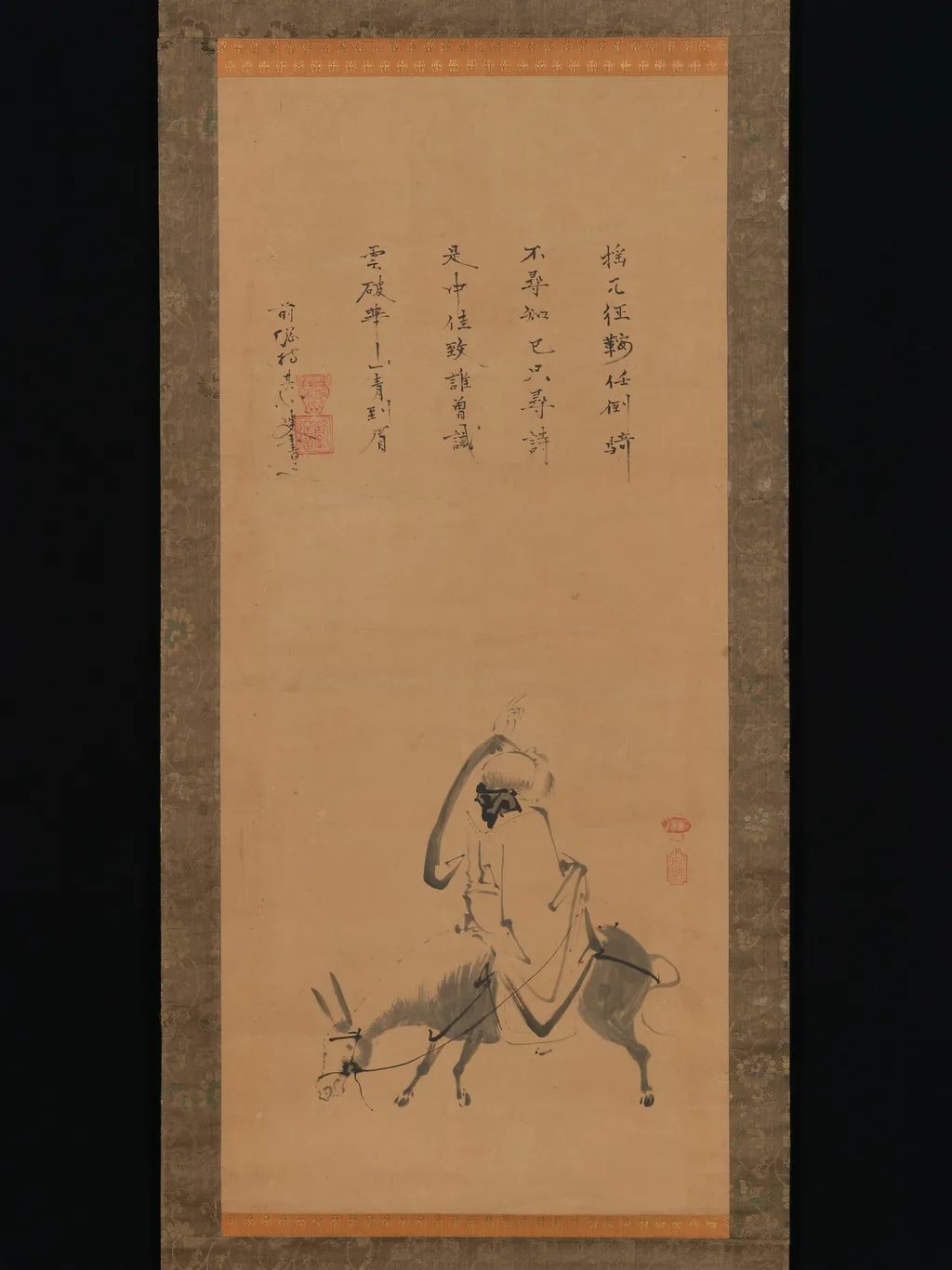
The Chinese Poet Pan Lang on a Donkey is an unspecified painting. It dates from 1644 and is held in the collection of the Metropolitan Museum of Art. The work depicts a solitary figure astride a donkey, clutching a long staff in his right hand.
About this work
Technique & Style
The work is a painting on canvas, created with ink and mineral pigments that give it a flat, decorative surface characteristic of early Edo period style.
The work is a painting on canvas, created with ink and mineral pigments that give it a flat, decorative surface characteristic of early Edo period style. The composition shows a poet astride a donkey, rendered in swift brushwork with minimal modeling, emphasizing outline and pattern over naturalism. Subtle gradations of color suggest atmospheric depth while the figures remain stylized, reflecting a synthesis of Chinese literary subject matter and Japanese decorative conventions.
The painting's condition is stable, with only minor craquelure along the edges of the canvas, and it is presented on a wooden panel that has been reinforced for display.
The stylistic qualities include a restrained palette of muted earth tones punctuated by bright accents in the poet's robes, and a compositional balance that draws the eye along the diagonal movement of the donkey's stride.
The artwork is housed in the Metropolitan Museum of Art in New York.
History & Provenance
Created in Japan in 1644, this painting is attributed to the artist Kano Kōya. While one internal record lists the creator as unknown, external documentation identifies the work as part of the collection at the Metropolitan Museum of Art. The piece depicts a man and a donkey, representing the Chinese poet Pan Lang.
No specific details regarding the original commission or the intermediate ownership chain prior to its arrival at the museum are provided in the available records.
Context
The painting attributed to the Kano school depicts the Tang dynasty poet Pan Lang riding a donkey, reflecting cross-cultural exchanges in 17th-century East Asian art. Created in Japan during the Edo period, the work illustrates how Chinese literary subjects were adapted within Japanese artistic traditions. The Metropolitan Museum of Art holds the piece in its collection, where it is studied as an example of cultural syncretism in Edo-period painting.
Overview
The work depicts a solitary figure astride a donkey, clutching a long staff in his right hand. Dressed in a flowing robe and capped headwear, the rider gazes downward toward the animal. The composition rests against a uniform light‑brown ground, while a line of black Chinese characters crowns the upper edge of the painting.
Subject & Meaning
The central figure is identified as the Chinese poet Pan Lang, traditionally associated with itinerant scholarship and modest travel. By placing him on a humble donkey rather than a horse, the image underscores themes of simplicity, perseverance, and the poet’s connection to the everyday world.
Legacy
Works portraying Pan Lang have served as visual exemplars of the wandering scholar ideal in Chinese art. This particular rendition continues the tradition of integrating portraiture, calligraphy, and landscape elements to convey moral and philosophical ideas.
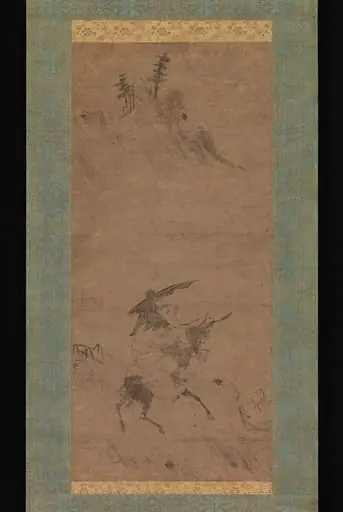
Artist & collection

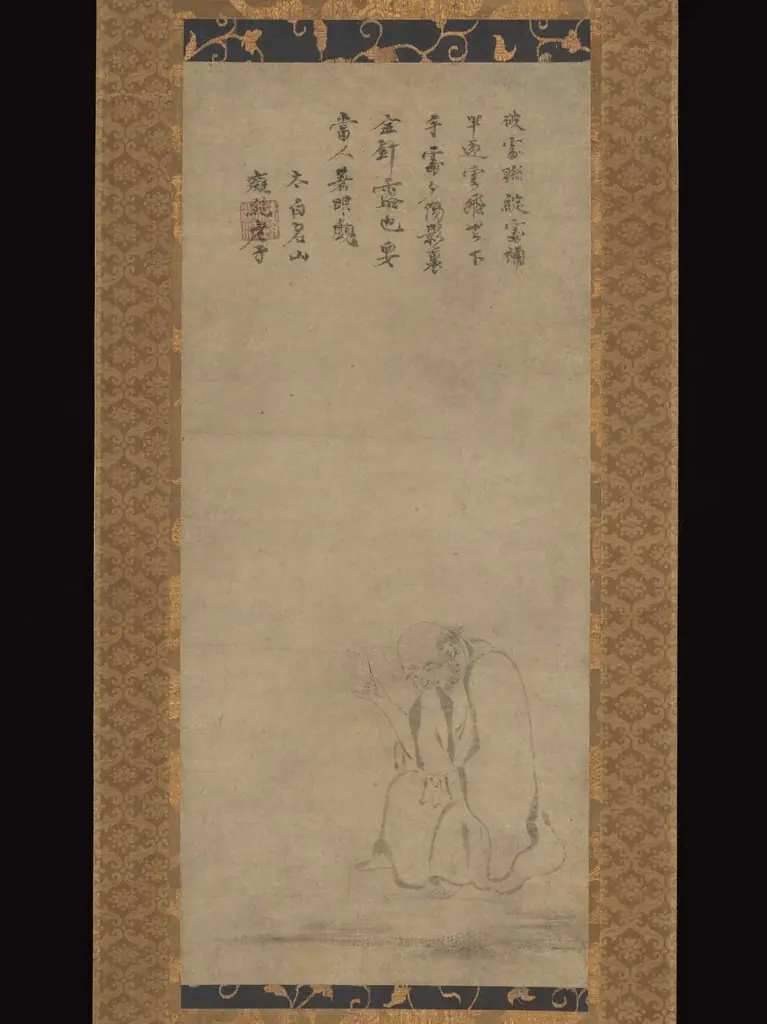 Mending clothes by daylight
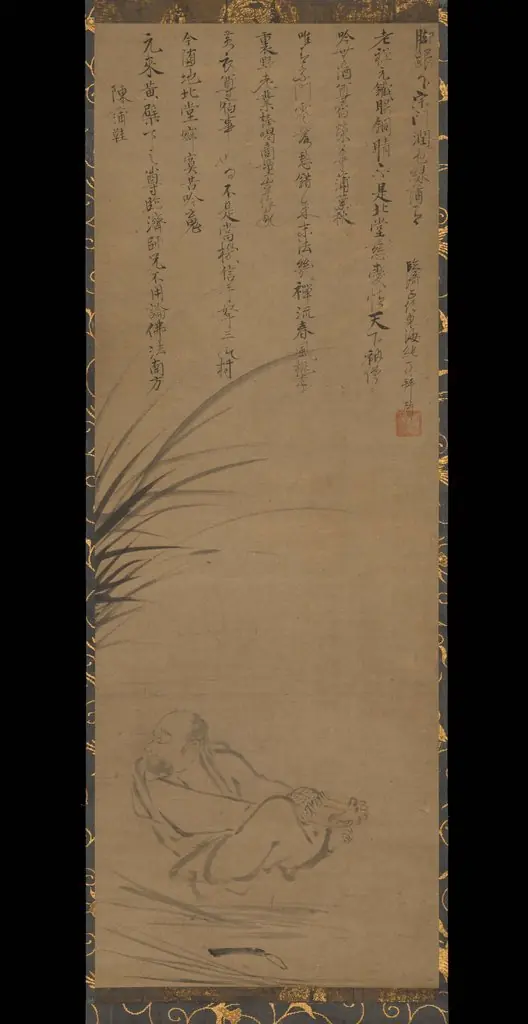 Inscription on the anonymous painting of Chen Puxie
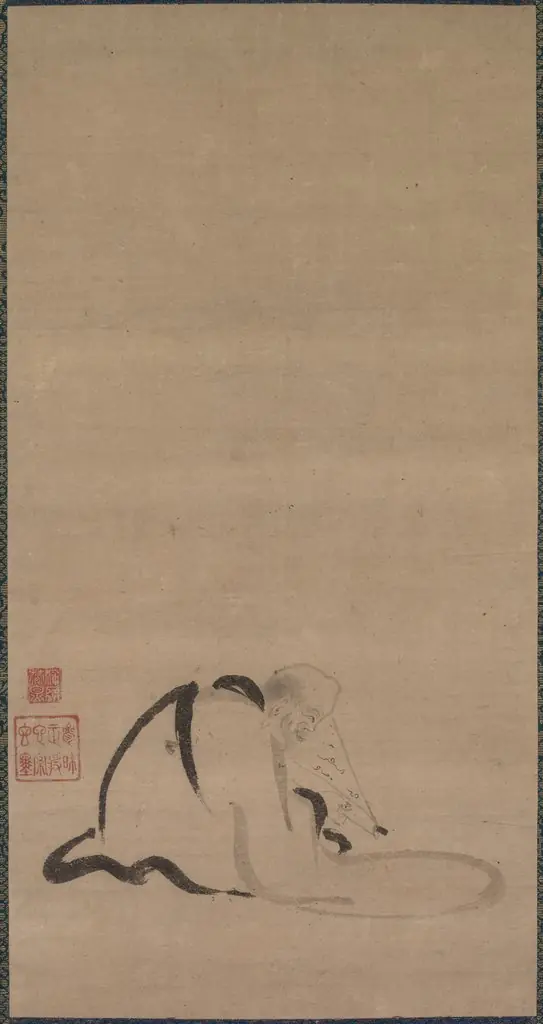 Seated Priest
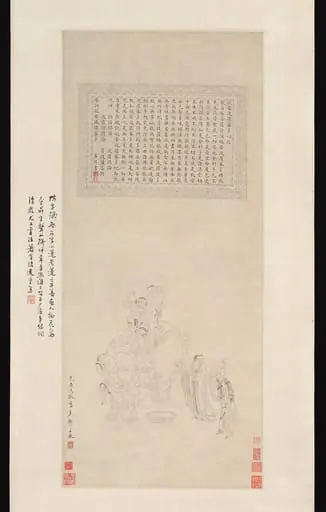 清 陳字 洗象圖 軸|Washing the White Elephant
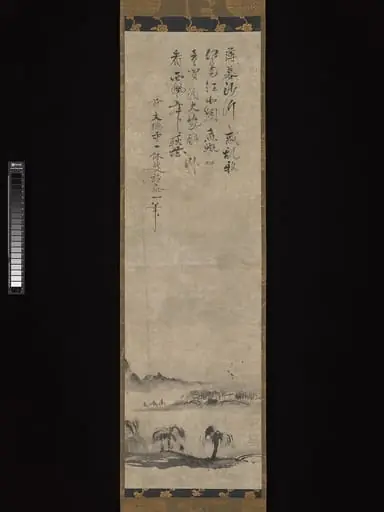 Untitled
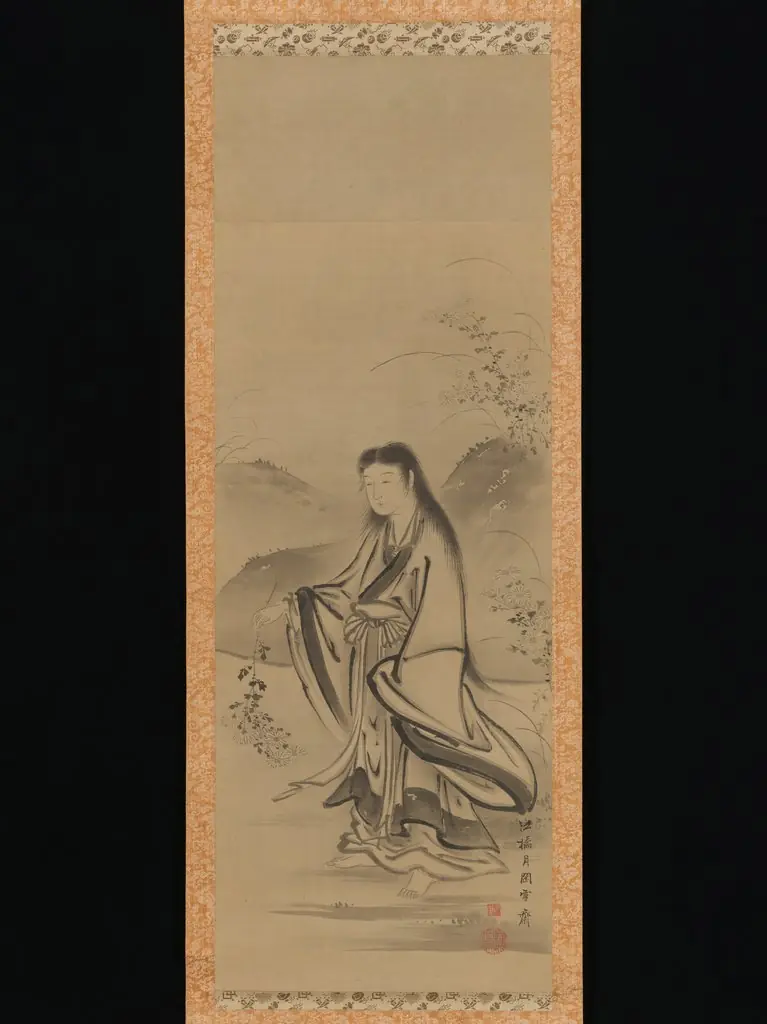 Kiku Jidō (Chrysanthemum Boy)
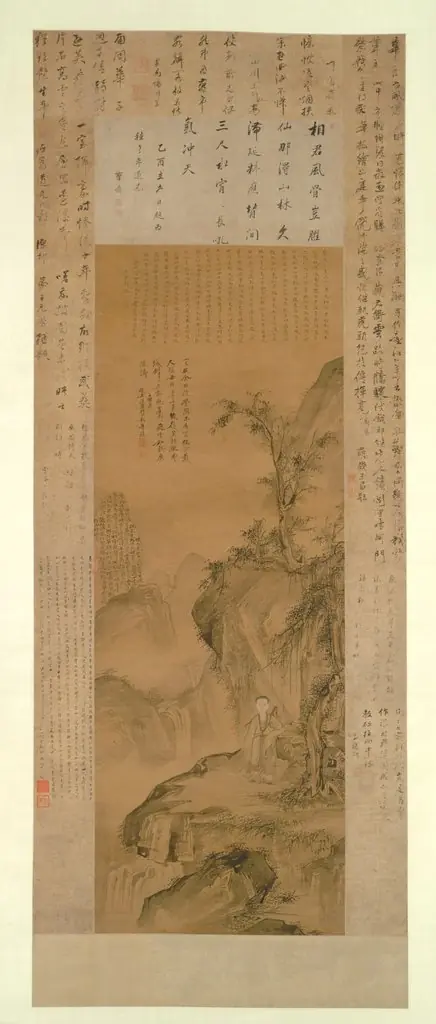 Layered Peaks and Splashing Waterfall: Portrait of Hua Yan as a Young Man
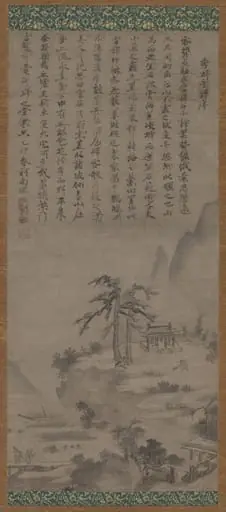 Shuyadō (Studio of Lofty Rusticity)
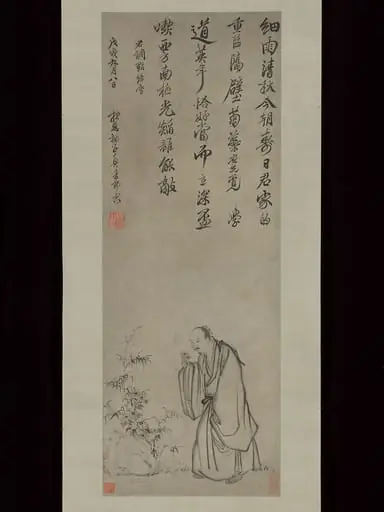 清 佚名 仿張風 摘菊圖 軸|Plucking Chrysanthemums
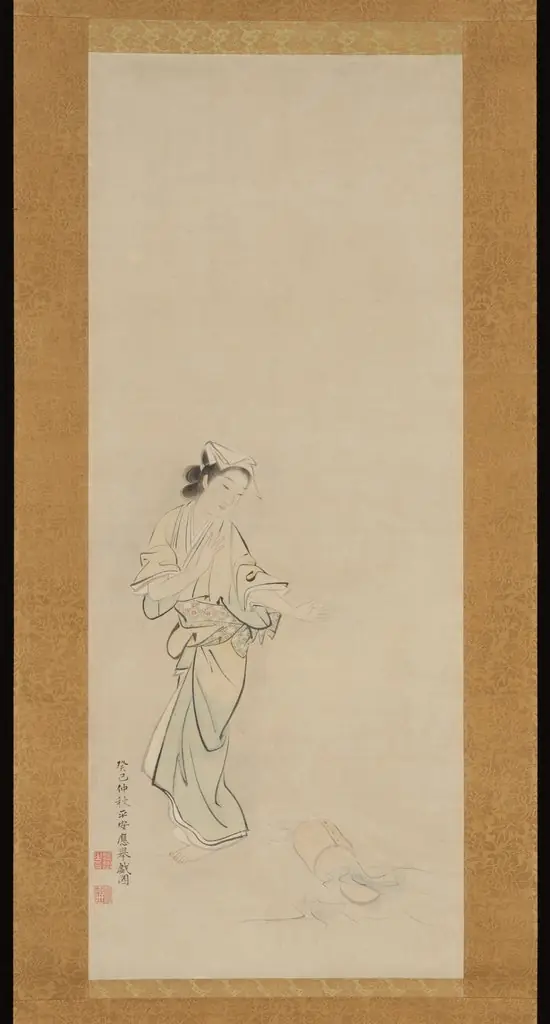 Lady Chiyono
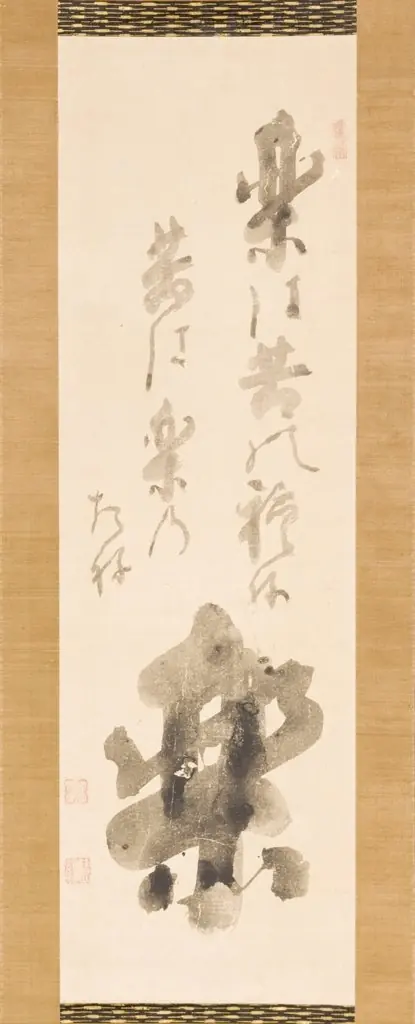 'JOY: In joy lie the seeds of sufferings; in sufferings lie the seeds of joy (RAKU: Raku wa kū no tane; Kū wa raku no tane)'
- 朴堂祖淳筆 蘇軾騎驢図|Su Shi Riding a Donkey