Artwork
清 朱耷 (八大山人) 行書節錄王羲之蘭亭序 軸|After Wang Xizhi's "Preface to the Orchid Pavilion Gathering Collection"
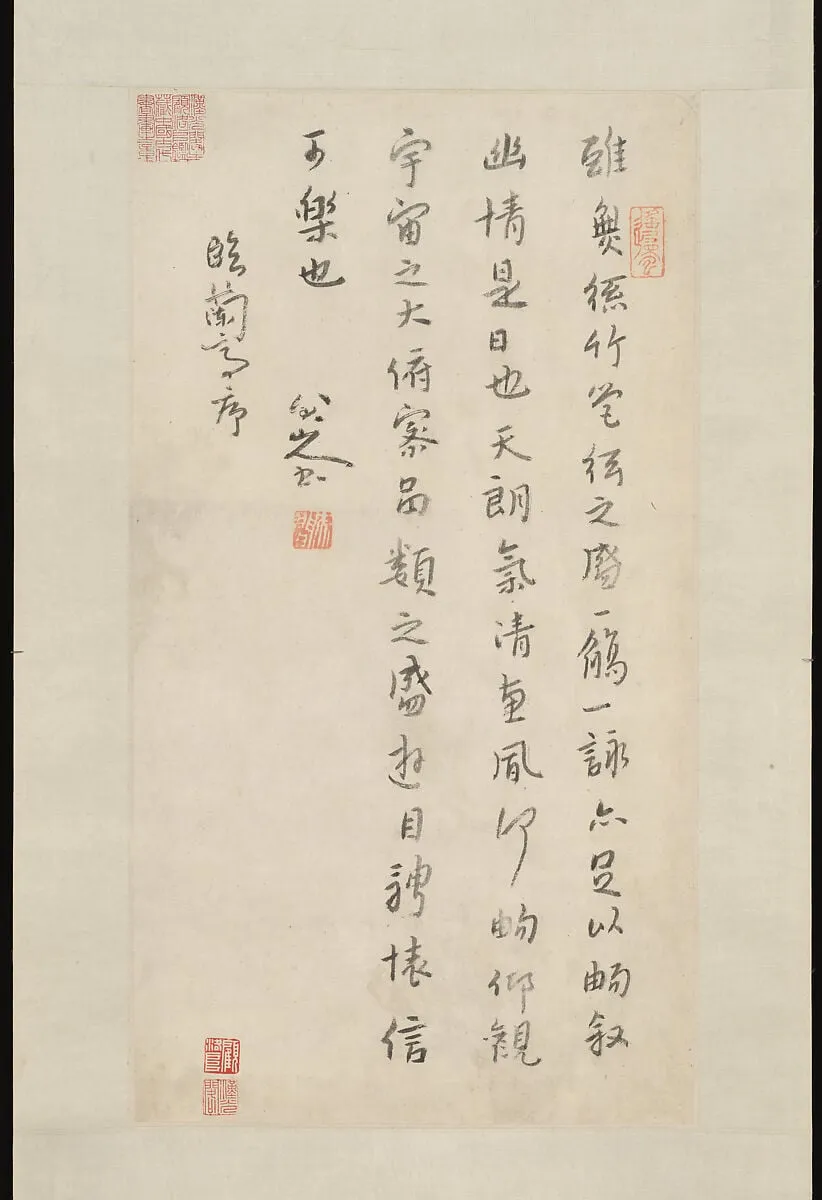
清 朱耷 (八大山人) 行書節錄王羲之蘭亭序 軸|After Wang Xizhi's "Preface to the Orchid Pavilion Gathering Collection" is an ink painting by the Baroque artist Bada Shanren. It dates from 1695 and is held in the collection of the Metropolitan Museum of Art.
About this work
Subject & Meaning
The hanging scroll portrays a fragment of Wang Xizhi's famed Orchid Pavilion Preface rendered in expressive cursive script, a composition that symbolizes the enduring spirit of scholarly refinement and the transitory beauty of nature. By quoting the celebrated calligrapher’s text, the work references the venerable tradition of literati culture while asserting the artist’s own identity as a master of the literati aesthetic. The scroll thus functions as both homage and personal statement, embodying themes of cultural continuity and individual expression within the Chinese painting tradition.
Technique & Style
This hanging scroll is executed in ink on paper, reflecting the literati tradition of expressive brushwork characteristic of late Ming–early Qing masters.
This hanging scroll is executed in ink on paper, reflecting the literati tradition of expressive brushwork characteristic of late Ming–early Qing masters. The work adapts Wang Xizhi’s famed Orchid Pavilion preface in semi‑cursive script, employing a fluid, spontaneous line that emphasizes personal interpretation over strict formalism. Brushstrokes vary from delicate, tapering strokes to broader, more gestural sweeps, conveying both scholarly refinement and emotive intensity.
The paper support shows typical aging of the period, with subtle discoloration but no significant damage noted in the source record.
History & Provenance
Created in 1694 in China, this hanging scroll features calligraphy by Bada Shanren (Zhu Da). The work consists of ink on paper and presents an excerpt from Wang Xizhi's "Preface to the Orchid Pavilion Gathering." The piece is currently held in the collection of the Metropolitan Museum of Art.
The work is held in the collection of the Metropolitan Museum of Art, as recorded in its Wikidata entry. identifies the painting's location and collection as the Metropolitan Museum of Art, and documents the work as a hanging scroll in ink on paper dated 1694. No specific accession number, acquisition date, or exhibition history is provided in the available sources.
Overview
Created in 1695, this hanging scroll presents a calligraphic excerpt from Wang Xizhi's seminal 'Preface to the Orchid Pavilion Gathering' by the artist Bada Shanren. Executed in ink on paper, the work features running script (xingshu) characterized by the artist's signature late style: sparse, elongated forms with a deliberate, almost weighty stillness that contrasts with the fluid dynamism of the original Tang dynasty models. The composition is arranged vertically on a light beige paper, punctuated by red seal impressions in the upper corners and near the bottom, which serve to balance the visual weight of the black ink.
As a former Ming prince who became a Buddhist monk, Bada Shanren frequently engaged with canonical texts to explore themes of impermanence and identity. This specific piece, dated to the artist's late period, reflects a mature synthesis of technical mastery and introspective restraint. Rather than merely copying the Writings of the Orchid Pavilion, the artist reinterprets the classic through a unique personal lens, utilizing irregular spacing and distinct brush pressure to convey a sense of quietude and detachment.
The work stands as a significant example of 17th-century literati calligraphy, demonstrating how traditional forms were revitalized by individual expression during the transition from the Ming to the Qing dynasty.
Context
Bada Shanren, a former monk turned painter, often employed classical texts as a vehicle for personal expression, intertwining scholarly homage with his own artistic voice. This work exemplifies the literati practice of reinterpreting historic calligraphy, situating the scroll within the broader Qing‑era revival of Song‑Dynasty aesthetic principles.
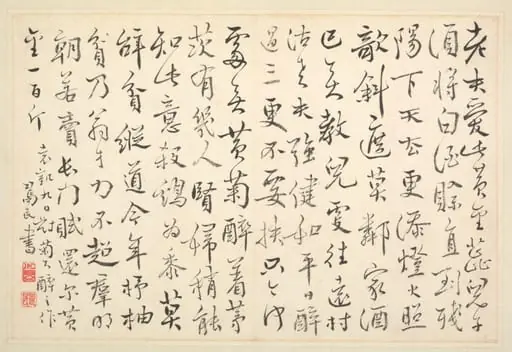
Artist & collection


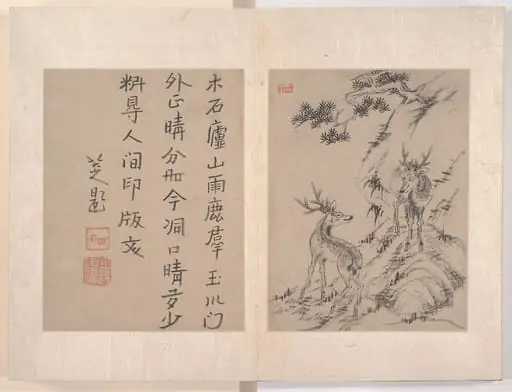
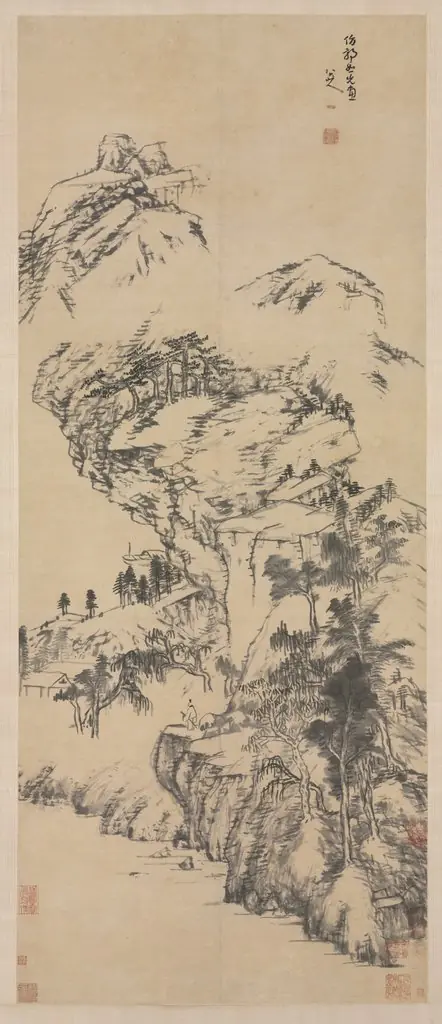

- Album of Calligraphy and Paintings
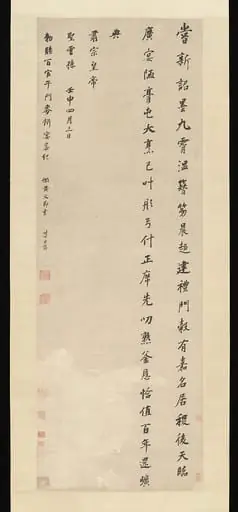 Untitled
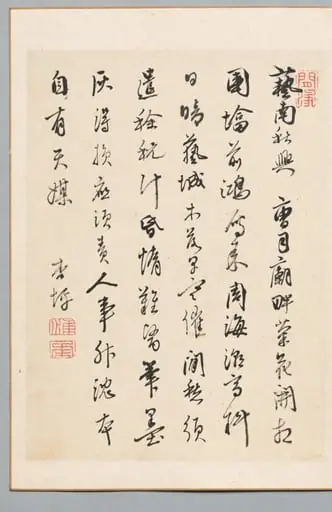 Poem
Poem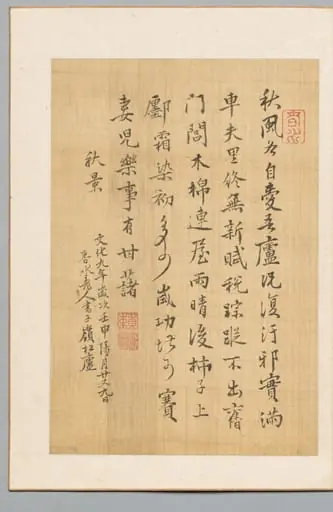 Poem
Poem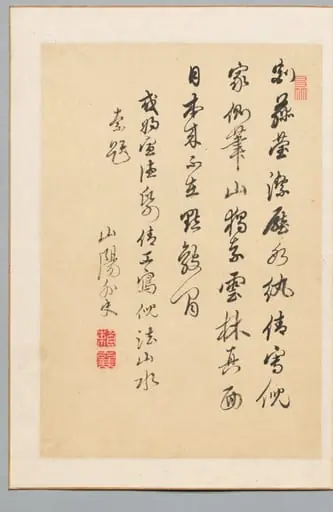 Poem
Poem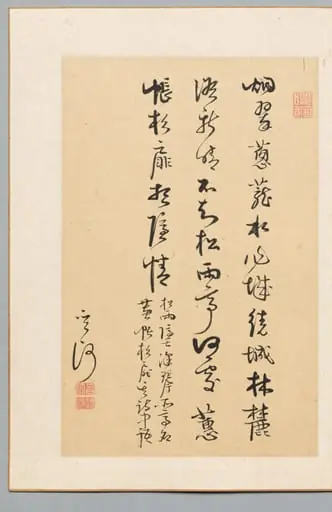 Calligraphy
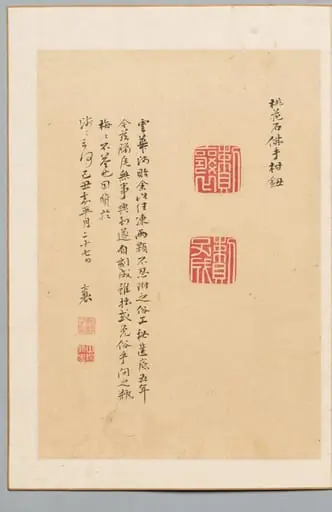 Inscription and Two Seals
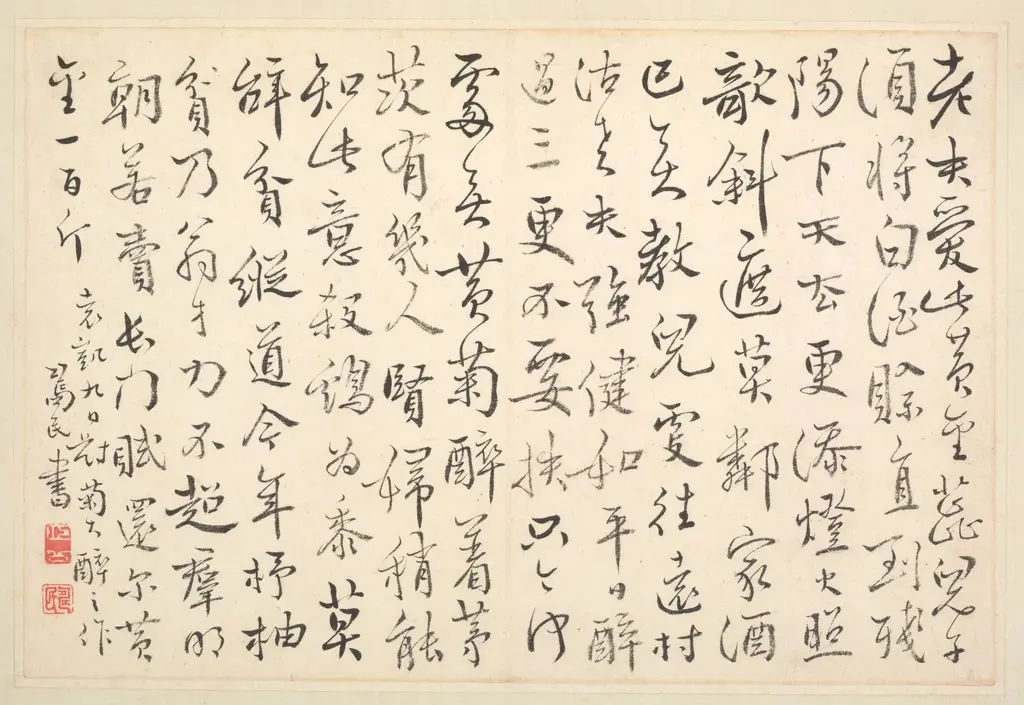 Album of Calligraphy and Paintings
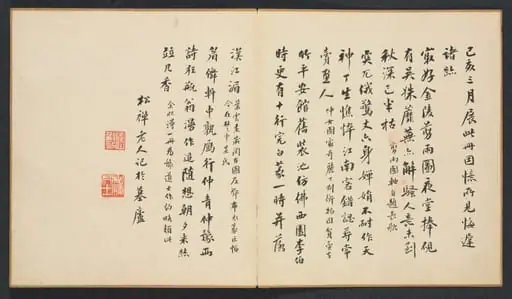 Paintings after Ancient Masters: Calligraphy
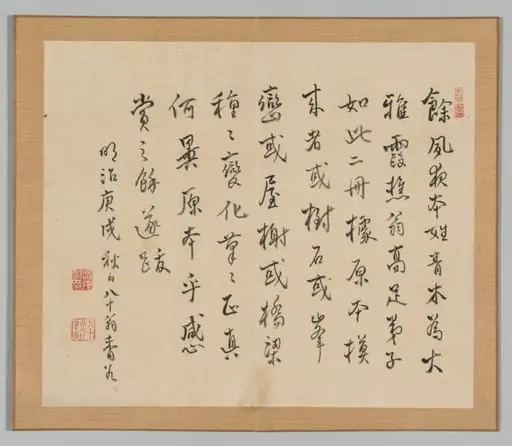 Postscript from “Reverberations of Taiga”
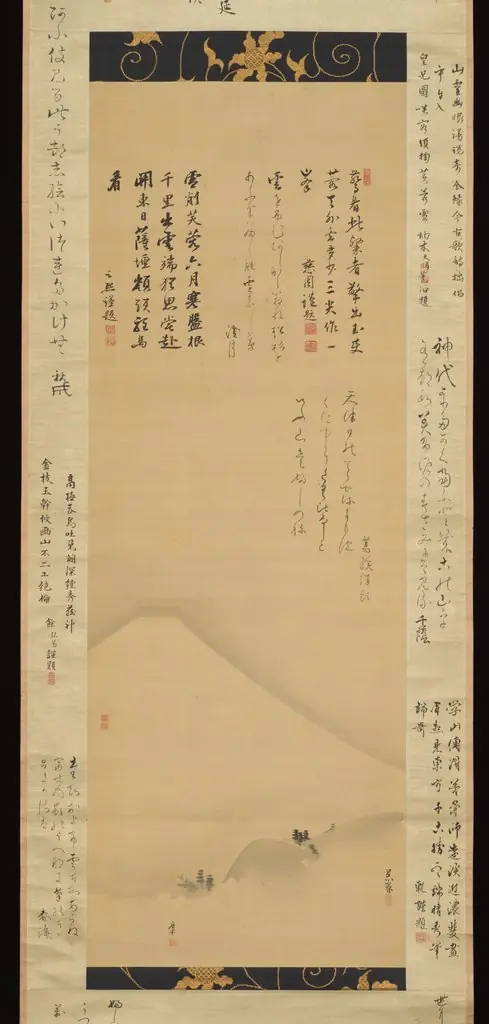 Gassaku: Mount Fuji 合作・富士山図 (Gassaku Fujisan zu)
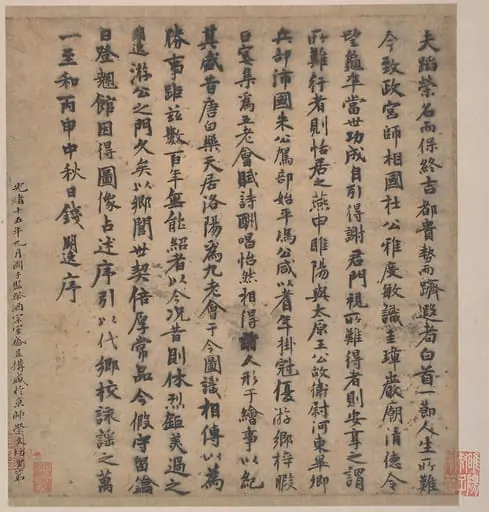 北宋–清 睢陽五老圖引首題跋 冊|Frontispiece and Colophons to the Album "Five Old Men of Suiyang"