Artwork
清 八大山人(朱耷) 魚石圖 軸|Fish and rocks
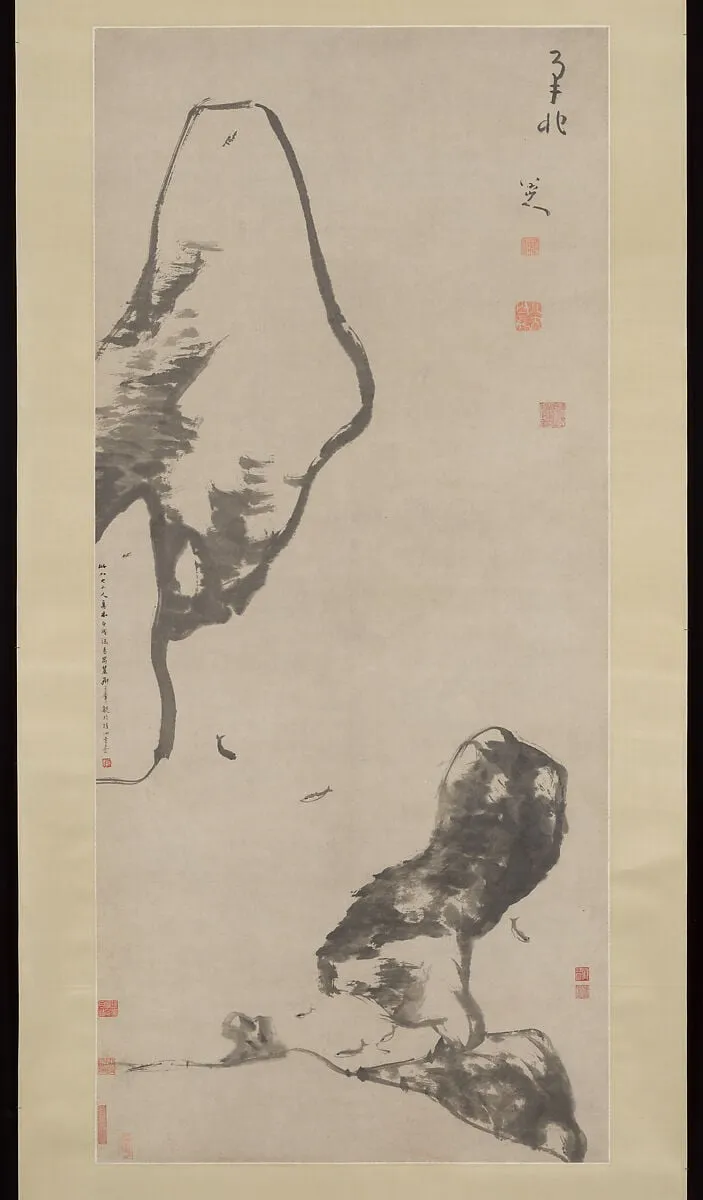
清 八大山人(朱耷) 魚石圖 軸|Fish and rocks is an ink painting by the Baroque artist Bada Shanren. It dates from 1699 and is held in the collection of the Metropolitan Museum of Art.
About this work
Subject & Meaning
Fish and rocks is an ink-on-paper hanging scroll by Bada Shanren (Zhu Da) that takes a still-life subject built around a fish, rendered in the spare, expressive brushwork characteristic of the artist's late period. The composition pairs a fish with rock forms, a pairing long favored in Chinese literati painting as a vehicle for contemplation rather than literal description. The fish, set against stark, angular stones, evokes the artist's signature themes of solitary existence and aloof withdrawal from the world, motifs closely tied to Bada Shanren's identity as a Ming royal descendant who became a Buddhist monk after the dynasty's fall.
The interplay between the animate fish and the inanimate rocks suggests resilience amid hardship, with the rocks functioning as both a compositional anchor and a metaphor for steadfastness. Executed in 1699, the work distills Bada Shanren's mature visual language into a compact symbolic statement about endurance, detachment, and the quiet dignity of a life lived apart from worldly affairs.
Technique & Style
As a piece classified within the still life genre, the handling of the medium emphasizes the fluidity and spontaneity typical of Bada Shanren's brushwork.
Executed in 1699, this work is a hanging scroll created with ink on paper. The composition focuses on the depiction of fish, rendered through the artist's characteristic monochromatic palette. As a piece classified within the still life genre, the handling of the medium emphasizes the fluidity and spontaneity typical of Bada Shanren's brushwork.
The support consists of paper mounted in a vertical format, consistent with traditional Chinese hanging scrolls produced during the Qing dynasty.
History & Provenance
The hanging scroll Fish and Rocks is dated 1699, aligning with Bada Shanren's late period activity. The painting entered the collection of the Metropolitan Museum of Art in 1989 as accession number 1989.363.137, where it remains held. No documented commission or early provenance prior to the twentieth century is recorded in the cited sources.
Overview
Created in 1699, this hanging scroll by the Qing‑dynasty painter Bada Shanren (Zhu Da) presents a solitary fish positioned beside a rock. Executed in ink on paper, the composition relies on stark black outlines and minimal washes, characteristic of the artist’s late‑period works. The piece exemplifies the restrained yet expressive approach that defines much of Bada Shanren’s oeuvre.
Context
Bada Shanren, a former Ming official turned Buddhist monk, produced works that blend playful spontaneity with an undercurrent of melancholy, reflecting his turbulent biography. This painting aligns with the broader Qing‑era literati movement, which favored personal brushwork and symbolic content over courtly ornamentation, situating the work within a tradition of intellectual self‑expression.
Legacy
The fish and rock composition continues to be referenced in studies of Chinese ink painting for its distilled use of line and its embodiment of the artist’s philosophical outlook. It remains a key example of how personal narrative and traditional technique converge in Qing‑dynasty art, influencing subsequent generations of ink painters.
Artist & collection



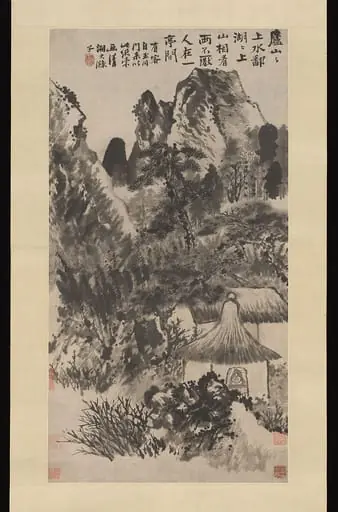
- 清 石濤 (朱若極) 廬山草堂圖 軸|Hermitage in Mount Lu
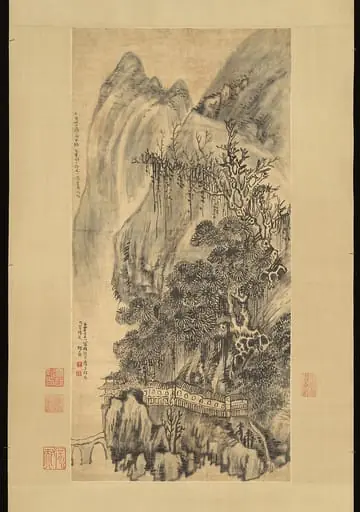 明/清 王鐸 山水圖 軸|Landscape
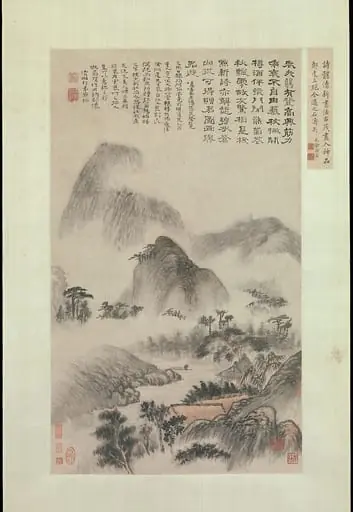 清 石濤(朱若極) 重陽山水圖 軸|Landscape Painted on the Double Ninth Festival
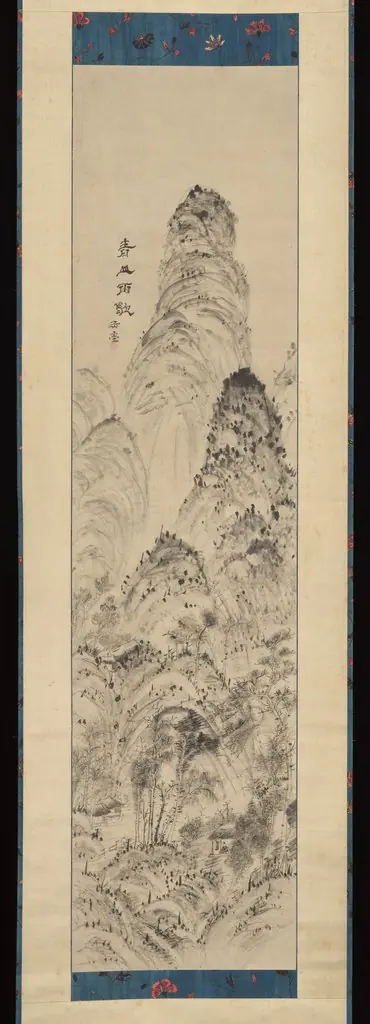 Green Mountains as the Rain Ceases
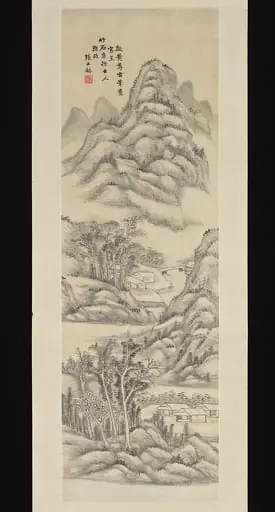 清 張上龢 山水 軸|Landscape
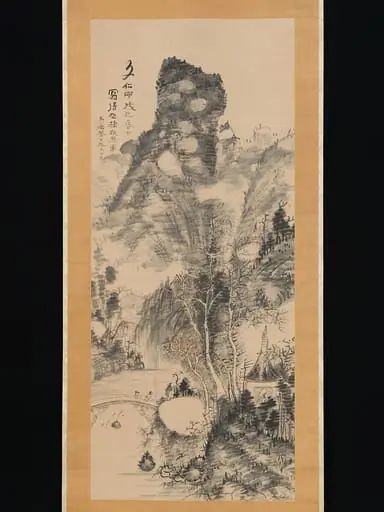 Untitled
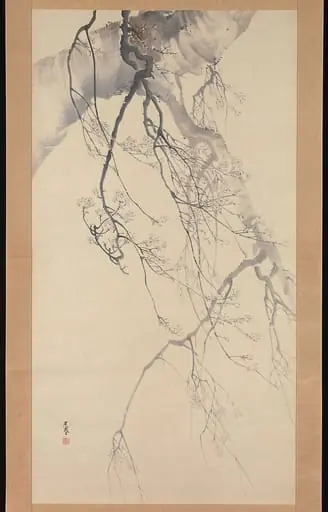 Untitled
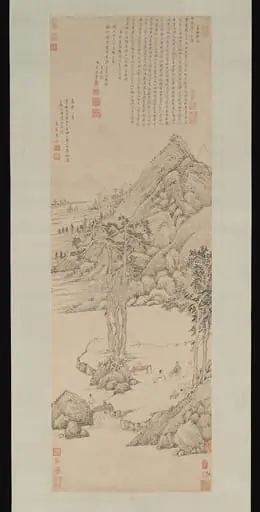 明 文嘉 為項元汴作山水圖 軸|Landscape dedicated to Xiang Yuanbian
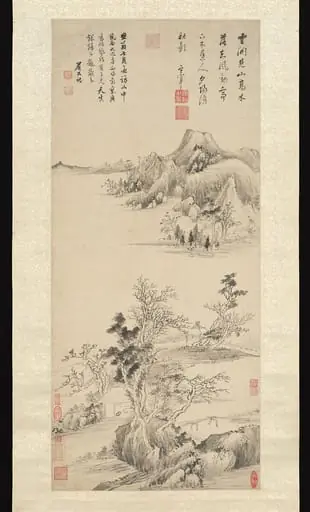 明 董其昌 秋山圖 軸|Autumn Mountains
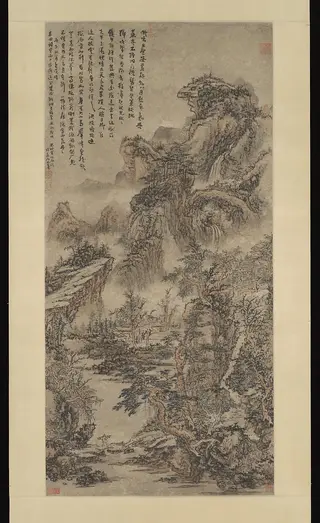 清 倣髡殘 蒸嵐昏巒圖 軸|Wooded Mountains at Dusk
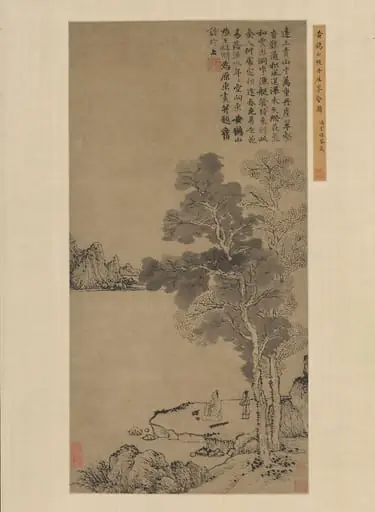 元 王蒙 丹崖翠壑圖 軸|Red Cliffs and Green Valleys
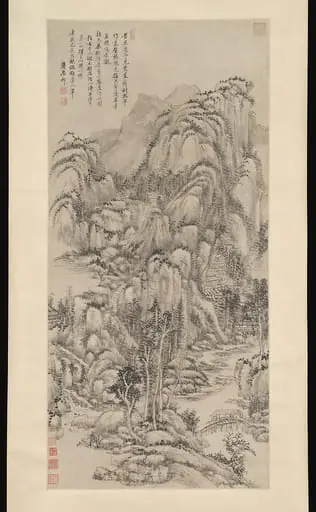 清 王原祁 倣吳鎮山水圖 軸|Landscape after Wu Zhen