Artwork
Untitled
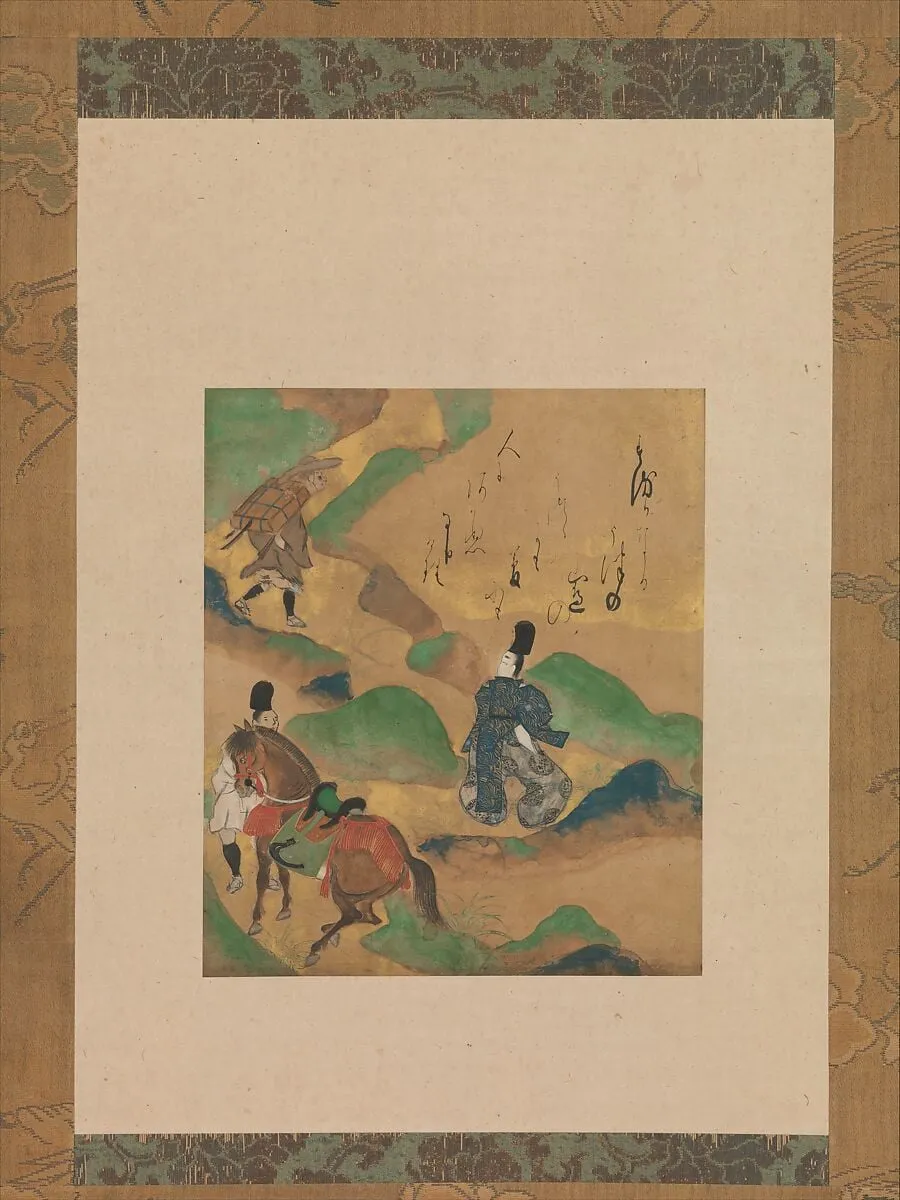
Untitled is an ink painting by the Baroque artist Tawaraya Sōtatsu. It dates from 1634 and is held in the collection of the Metropolitan Museum of Art.
About this work
Technique & Style
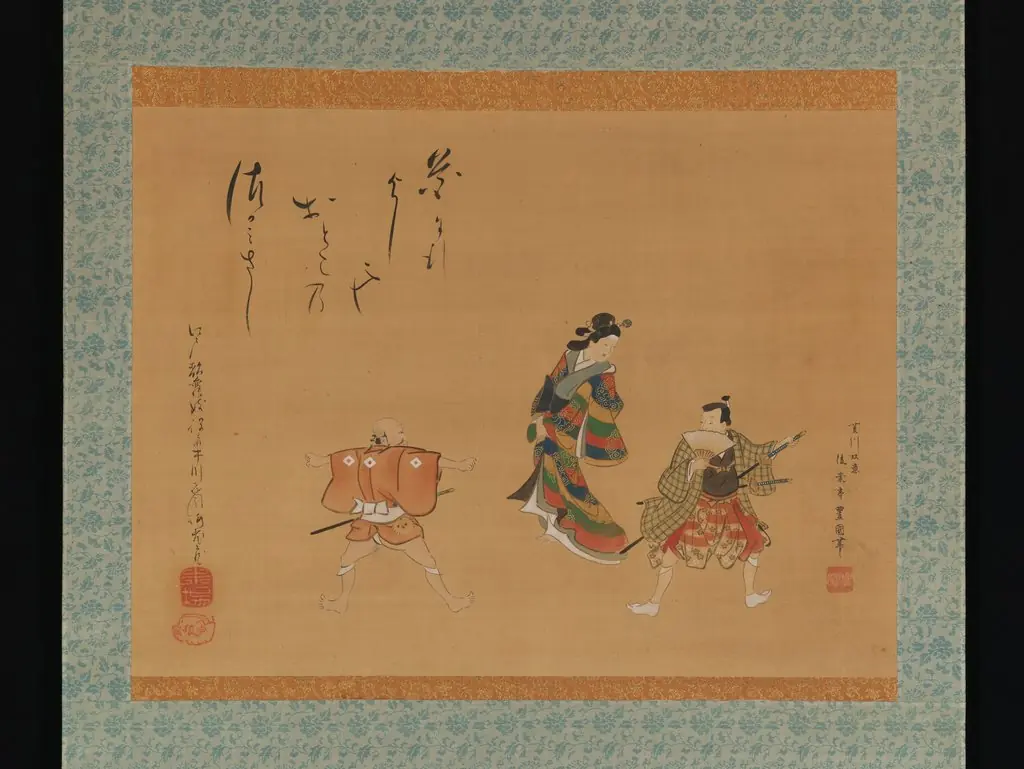
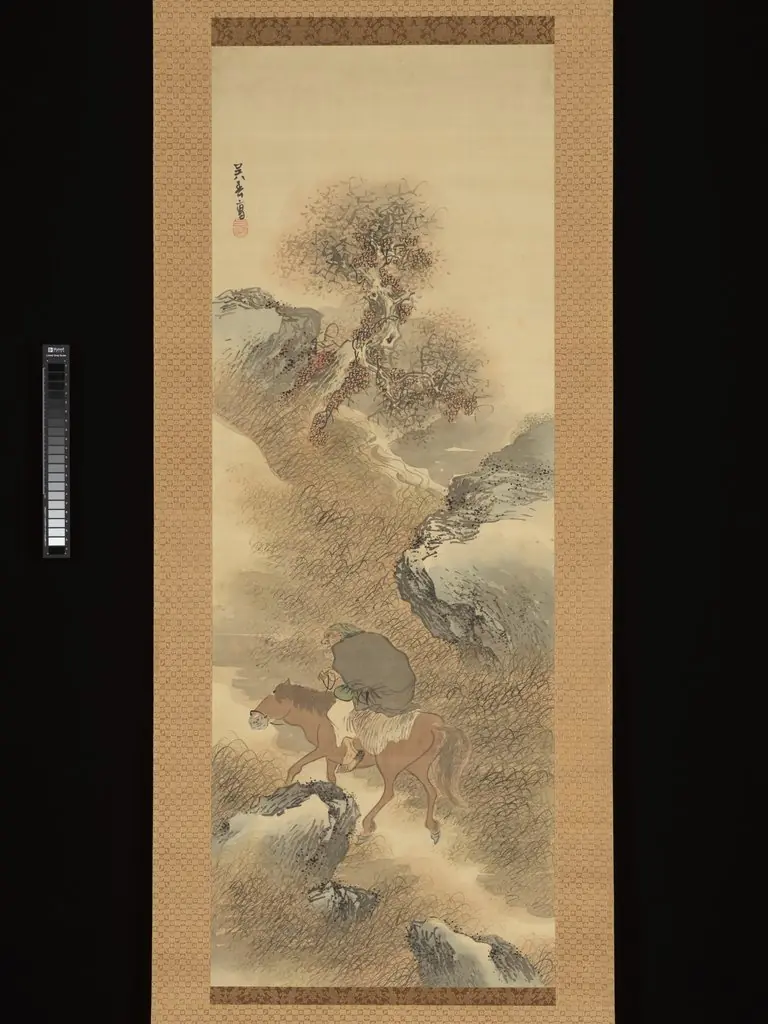
Created in Japan in 1634, the painting portrays a horse and a man within a religious context, reflecting the genre's iconography.
The work is a poem card (shikishi) that has been mounted as a hanging scroll. It is executed in ink, color, and gold pigments on a paper support, a combination that exemplifies the Rimpa school's signature use of delicate brushwork alongside metallic accents.
Created in Japan in 1634, the painting portrays a horse and a man within a religious context, reflecting the genre's iconography. The composition balances dynamic figure rendering with a restrained palette, while the application of gold highlights adds a luminous quality typical of Momoyama‑ and early Edo‑era scroll painting. The piece is part of the Metropolitan Museum of Art collection.
History & Provenance
The hanging scroll is dated to 1634 and is attributed to Tawaraya Sōtatsu, the leading Rimpa-school painter active in Kyoto during the early Edo period. The medium combines ink, color, and gold on paper, depicting a horse and a man in a religious context. The work entered the Metropolitan Museum of Art collection and is recorded as part of their holdings, with its creation place noted as Japan.
Legacy
This poem card by Tawaraya Sōtatsu, created in 1634 and mounted as a hanging scroll, depicts a horse and a man rendered in ink, color, and gold on paper. Its inclusion in the Metropolitan Museum of Art's collection reflects its enduring relevance to the study of early Edo period painting and Japanese religious art. The museum's stewardship has allowed continued scholarly examination of the piece, reinforcing its status within the canon of Japanese Rimpa painting.
Overview
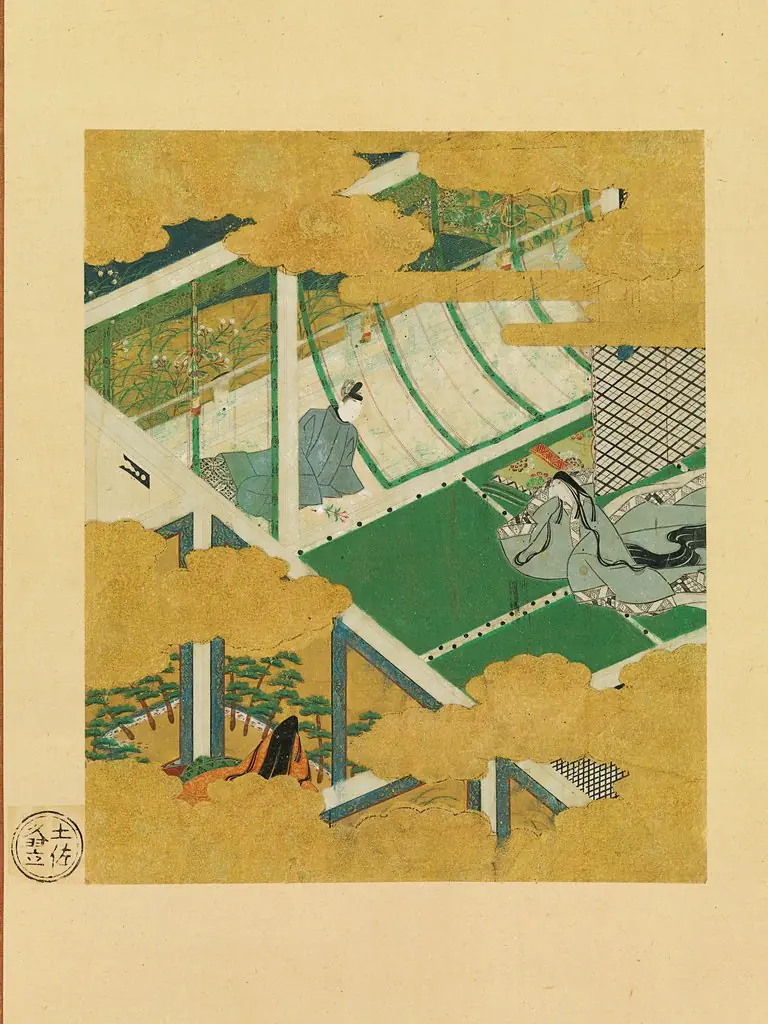
Created around 1634, this small hanging scroll by Tawaraya Sōtatsu presents a scene in which two robed figures guide a white horse beneath a gold‑leaf background. Though the work measures only about the size of a postcard, the expansive gold field gives the composition a sense of breadth beyond its physical dimensions.
Subject & Meaning
The image centers on a white horse being led by two men dressed in vivid robes, a motif that aligns with religious iconography of the period. The simplicity of the figures and the animal suggests a narrative of guidance or pilgrimage, resonating with contemporary devotional themes.
Artist & collection

Artist
Tawaraya Sōtatsu (俵屋 宗達; c. 1570 – c. 1640) was a Japanese furniture designer and painter of the Rinpa school. Sōtatsu is best known for his decorations of calligraphic works by his partner Hon'ami Kōetsu (1558–1637),…

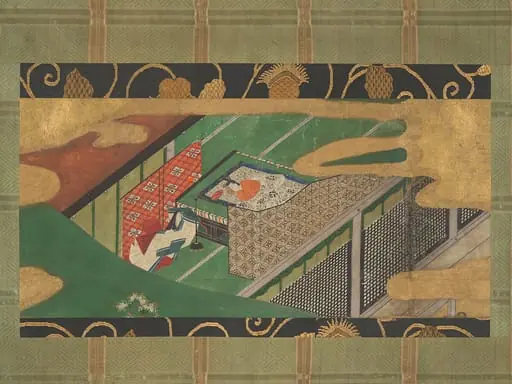 伝俵屋宗達筆 源氏物語図「宿木」 |“Trees Encoiled in Vines of Ivy” (Yadorigi)
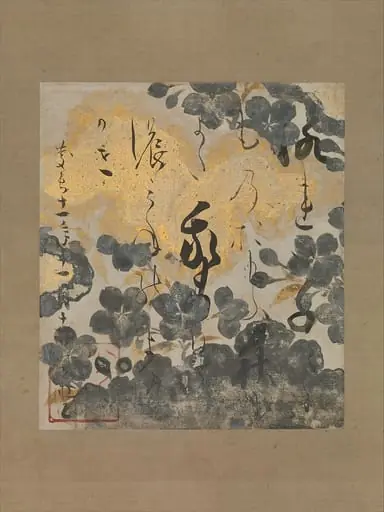 本阿見光悦書・俵屋宗達下絵 桜下絵和歌色紙 鴨長明|Poem by Kamo no Chōmei with Underpainting of Cherry Blossoms
 本阿弥光悦書・俵屋宗達下絵 小倉百人一首和歌巻断簡|Two Poems from One Hundred Poems by One Hundred Poets
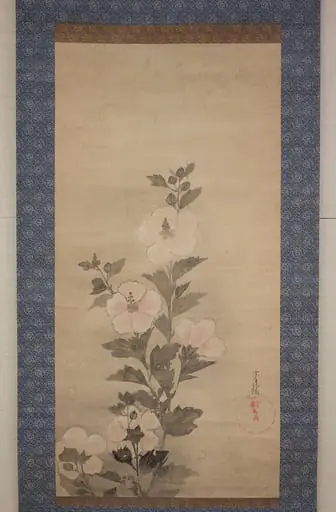 Untitled
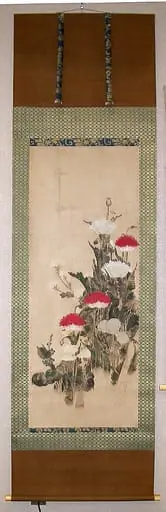 Untitled
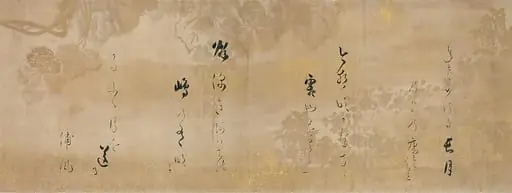 本阿弥光悦書 木版下絵和歌巻断簡|Twelve Poems from the New Collection of Poems Ancient and Modern
 Selections from the New Collection of Japanese Poems from Ancient and Modern Times (Shinkokin wakashū) with Printed Designs of Chinese Lions and Crab Finger Grass
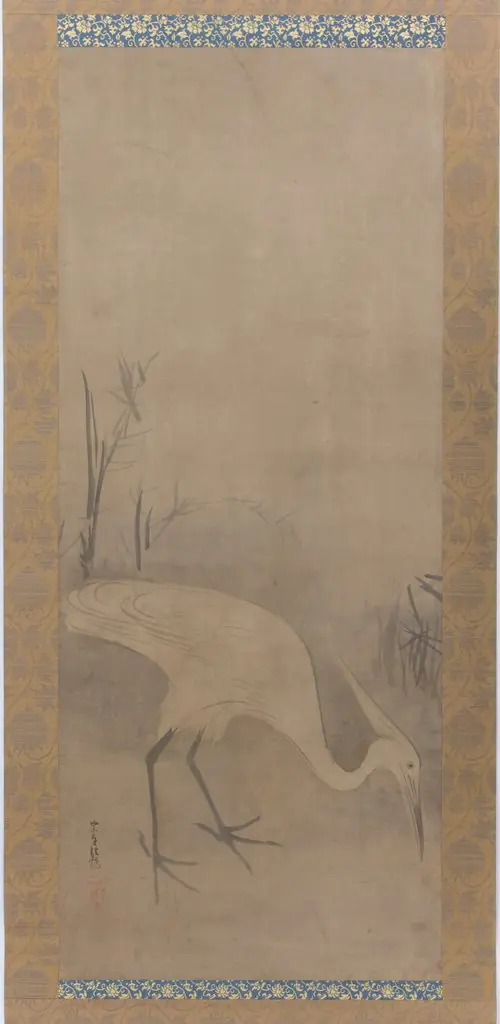 White Heron (Shirosagi zu)