Artwork
The Bewitched Groom
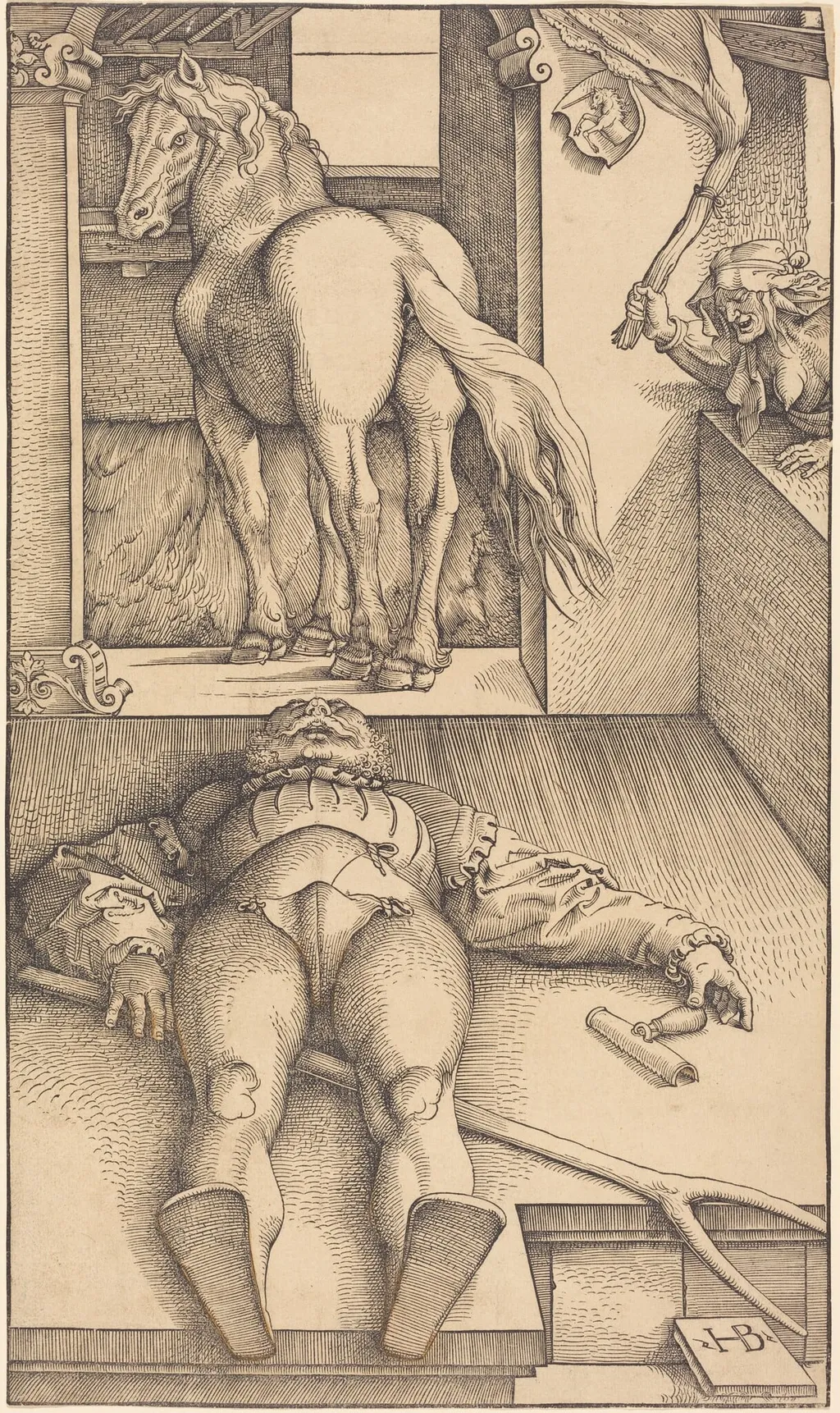
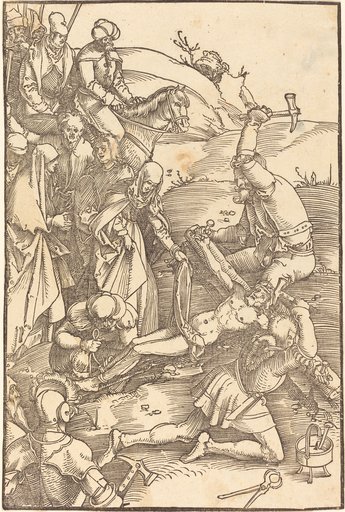
The Bewitched Groom is an ink print by the Renaissance artist Hans Baldung Grien. It dates from 1544 and is held in the collection of the National Gallery of Art.
About this work
Overview
The Bewitched Groom is a 1544 woodcut by Hans Baldung Grien, a German Renaissance artist known for blending precision with expressive Mannerist elements across various mediums.
Subject & Meaning
The print depicts a helpless groom levitated by witches, embodying Baldung’s fascination with witchcraft and moral allegory, common in his thematic explorations.
Technique & Style
Executed in woodcut, the work showcases Baldung’s characteristic blend of German Renaissance detail and Mannerist expressiveness, though specific visual details of this piece are not extensively documented.
History & Provenance
Created in 1544 by Hans Baldung Grien, a pupil of Albrecht Dürer, the woodcut’s provenance details are not provided in the available information.
Context
Part of a broader 16th-century European interest in the supernatural, The Bewitched Groom reflects the era’s fears and fascinations with witchcraft, often intertwined with moral teachings.
Legacy
As one of Baldung’s works exploring witchcraft, it contributes to his legacy of thematic innovation within the German Renaissance, though its direct influence or reception history is not specified here.
Own this work as a print
Artist & collection
Artist
Hans Baldung (1484 or 1485 – September 1545), called Hans Baldung Grien, (being an early nickname, because of his predilection for the colour green), was a painter, printer, engraver, draftsman, and stained glass…