Artwork
Adam and Eve
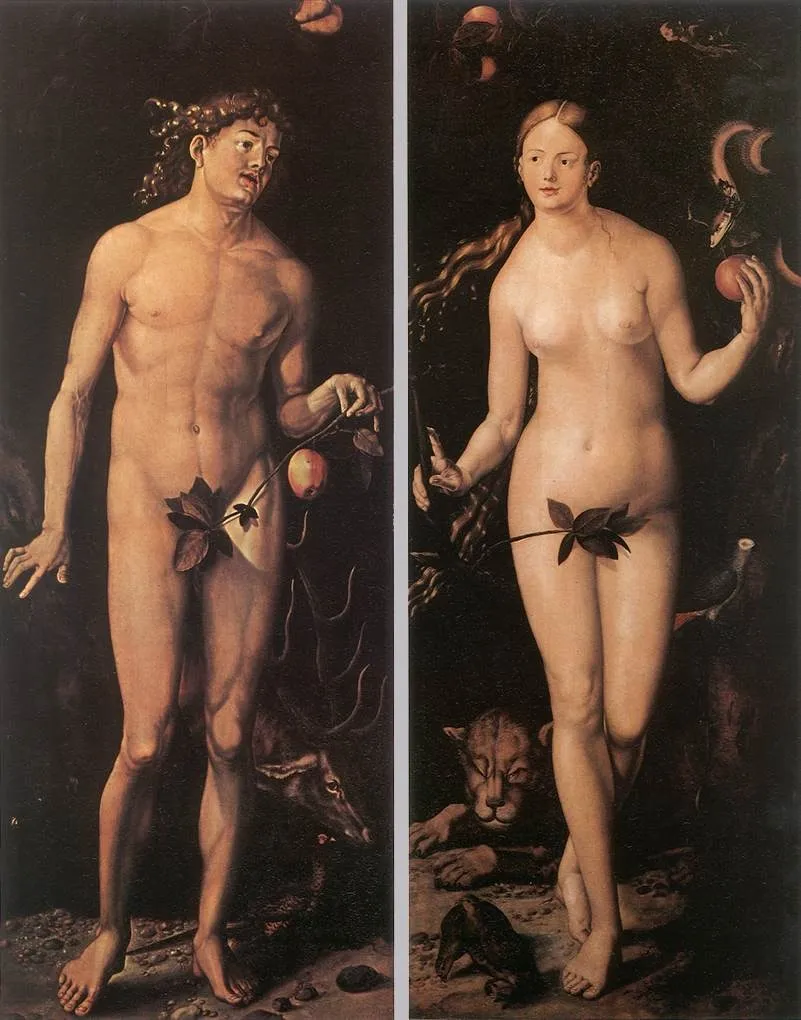
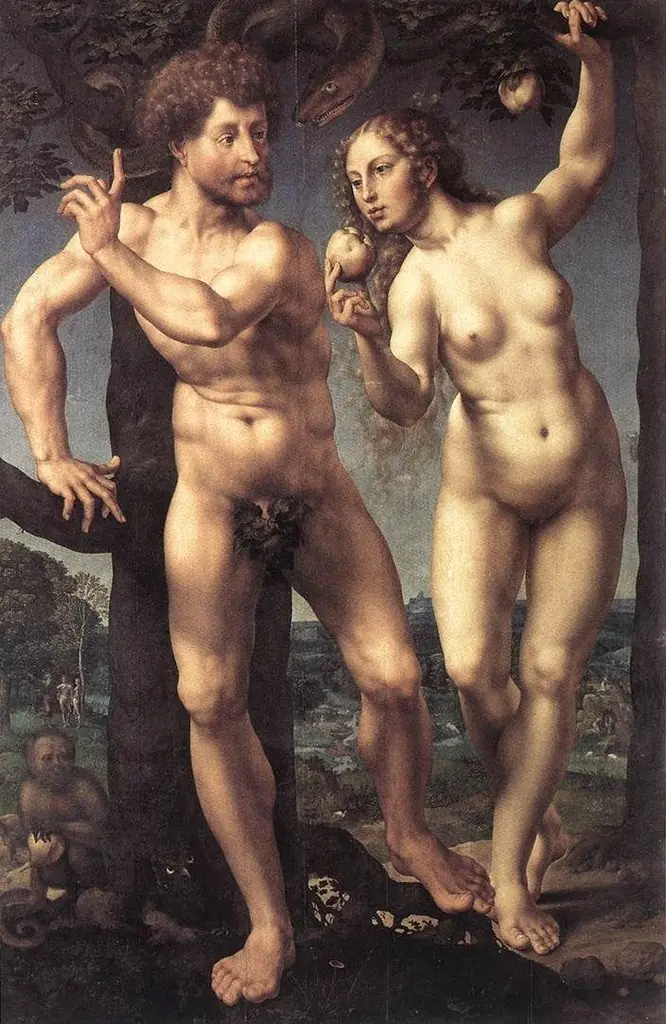
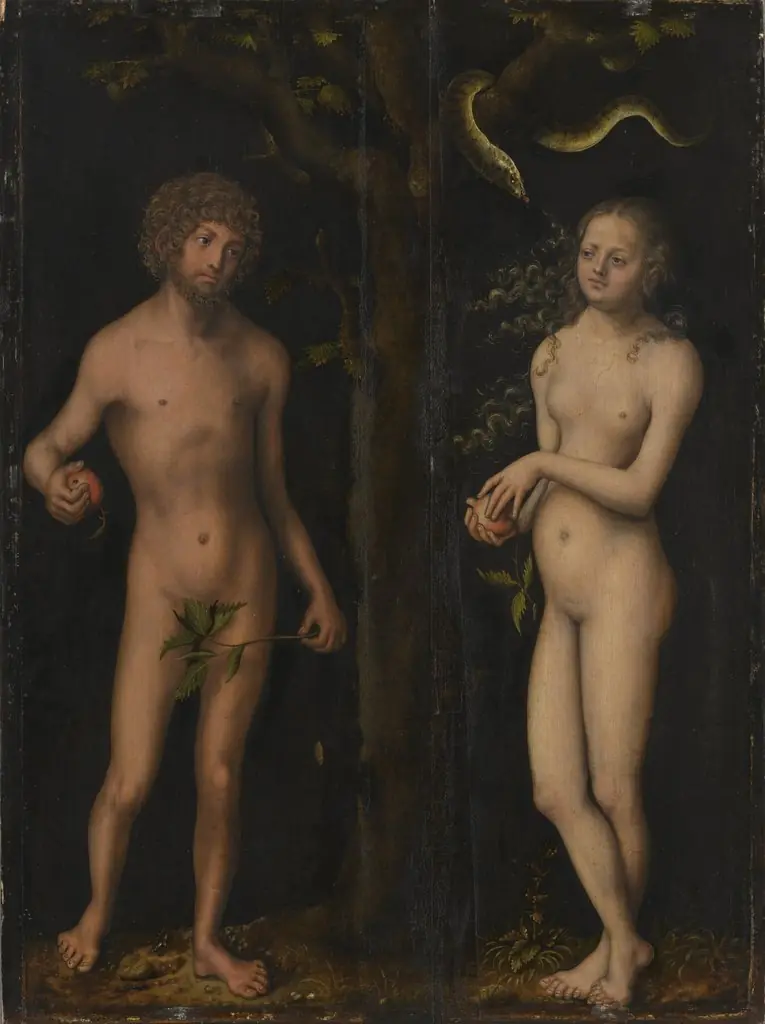
Adam and Eve is an oil painting by the Northern Renaissance artist Hans Baldung Grien. It dates from 1507 and is held in the collection of the Uffizi Gallery.
About this work
Subject & Meaning
The representation of the nude figures combines idealized physical beauty with an emphasis on bodily fragility.
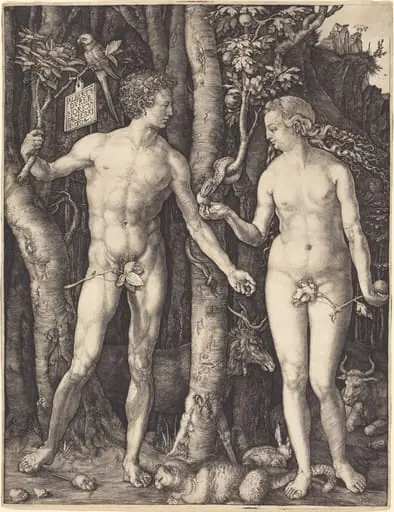
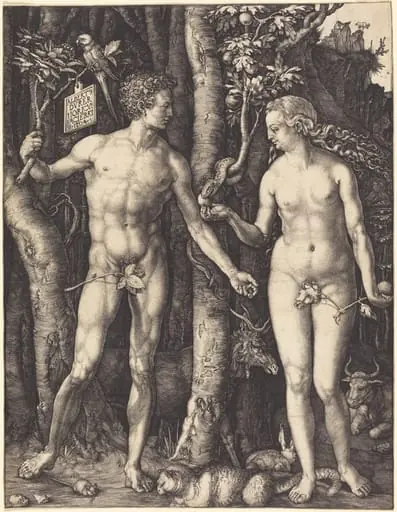
This diptych depicts the biblical Fall of Man, illustrating Adam and Eve based on the Book of Genesis. While closely following Albrecht Dürer's 1507 composition, the work introduces specific iconographic additions: a red deer accompanies Adam, a lion appears with Eve, and various birds are included to symbolize the four humours.
The representation of the nude figures combines idealized physical beauty with an emphasis on bodily fragility. This juxtaposition transforms the traditional religious narrative into a meditation on the vanitas theme, reminding viewers of human mortality and the transient nature of earthly perfection.
Technique & Style
Adam and Eve is executed in oil on panel, with each of the two panels measuring 212 × 85 cm. The work is a copy of Albrecht Dürer's 1507 pair, faithfully following the prototypes while adopting a quicker and drier handling. Baldung Grien renders the idealized nudes with a sharper, more abbreviated touch, and departs from Dürer's compositions by inserting additional motifs: a red deer beside Adam and a lion beside Eve, along with birds carrying symbolic value linked to the theory of the humours. The nude figures' classical beauty is paired with an emphasis on bodily fragility, lending the pair a vanitas interpretation of the fall of man.
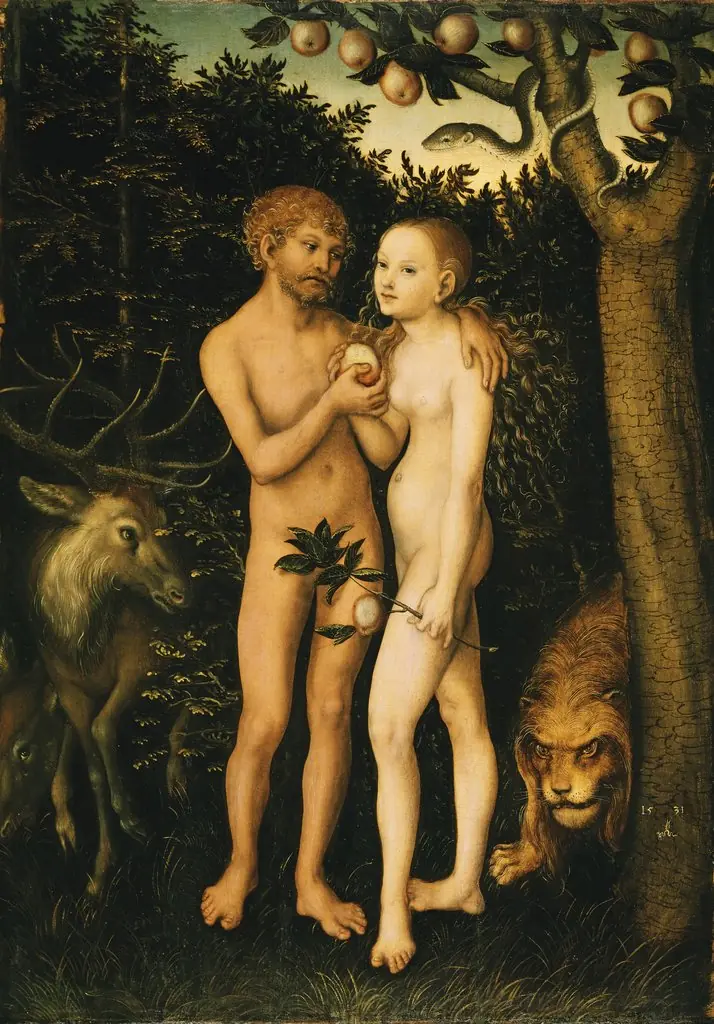
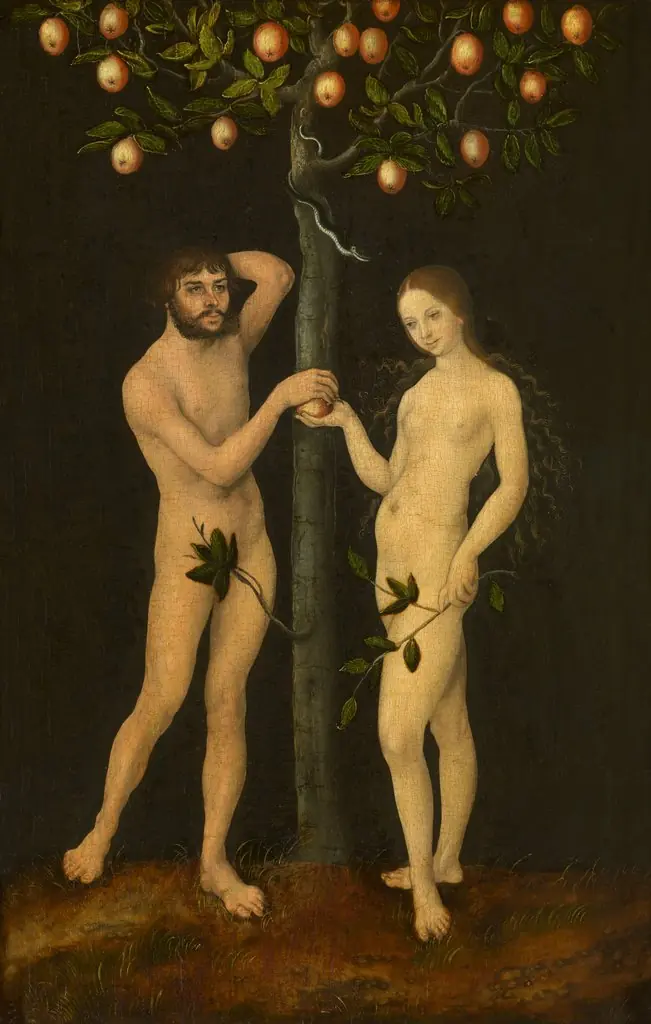
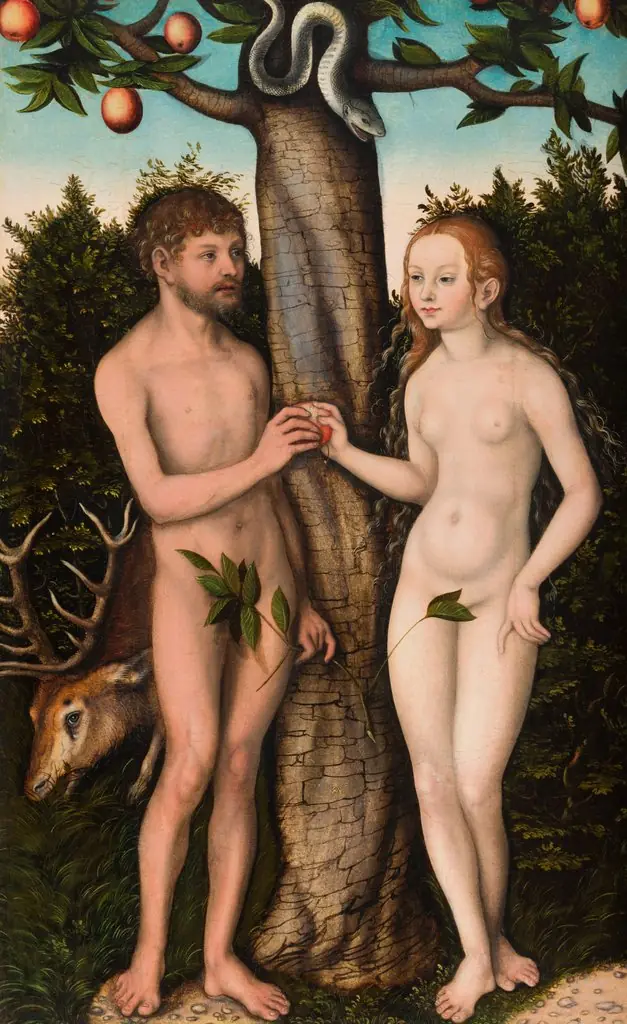
The two panels are housed in the Uffizi Gallery, where they are displayed near Lucas Cranach the Elder's Adam and Eve.
History & Provenance
Adam and Eve is a pair of oil-on-panel paintings by Hans Baldung Grien, dated to around 1520 and now held in the Uffizi Gallery in Florence. The work copies Albrecht Dürer's 1507 pair on the same subject, now in the Museo del Prado. A closely related version is preserved in Mainz at the Landesmuseum of Rhineland-Palatinate.
The attribution to Baldung Grien, identified by Von Terey in 1894 and later confirmed by Max Friedländer, is accepted by most art historians. The copies faithfully follow Dürer's compositions while adopting a quicker, drier handling and introducing additional symbolic details. Each panel measures 212 by 85 cm.
Context
Scholarship on the Uffizi diptych emphasizes its role as a 1520s copy of Dürer's 1507 Adam and Eve, highlighting the attribution to Hans Baldung Grien established by Von Terey (1894) and Max Friedländer, a consensus that persists. Critics note the quicker, drier execution and added symbolic elements such as the deer, lion and birds, which echo humoral theory and reinforce a vanitas reading of the figures' fragile idealized bodies. The work's placement within Baldung's oeuvre is situated amid his other religious commissions and his connection to the circle of Dürer's pupils, underscoring its significance in the transmission of Northern Renaissance motifs into Italian collections.
Legacy
Hans Baldung Grien's pair of Adam and Eve paintings, created around 1520, serves as a significant interpretive copy of Albrecht Dürer's 1507 originals, reflecting the master-disciple dynamic within the Northern Renaissance. Art historical consensus, established by Von Terey and Max Friedländer, identifies Baldung as Dürer's most talented pupil, a status reinforced by the work's stylistic deviations. While faithfully adhering to Dürer's composition, Baldung introduced a drier, quicker execution and distinct symbolic elements, a red deer, a lion, and birds representing the four humors, transforming the figures' idealized beauty into a meditation on physical fragility. The diptych's enduring reputation is further solidified by its permanent residence in the Uffizi Gallery.
Overview
Hans Baldung Grien's "Adam and Eve" comprises a pair of oil-on-panel paintings created around 1520, now housed in the Uffizi Gallery in Florence. These works represent the artist's interpretation of the biblical narrative of humanity's first parents. They are understood as a direct engagement with Albrecht Dürer's earlier treatment of the same subject, allowing Baldung Grien to explore the theme through his own artistic lens.
Artist & collection
Artist
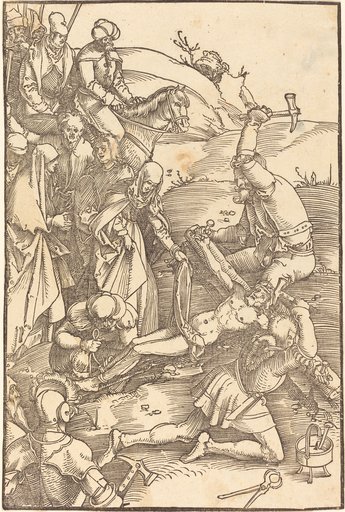
Hans Baldung (1484 or 1485 – September 1545), called Hans Baldung Grien, (being an early nickname, because of his predilection for the colour green), was a painter, printer, engraver, draftsman, and stained glass…