Artwork
Kingdom
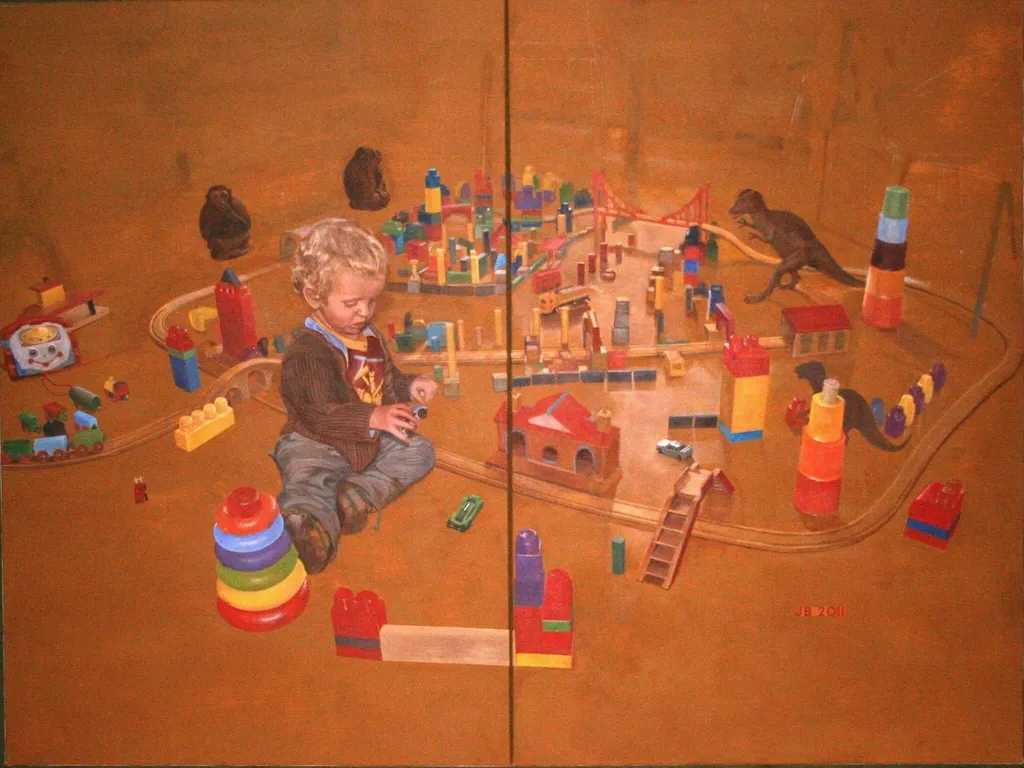
Kingdom is a paint painting by the Contemporary Realist artist John Bartlett. It dates from 2011 and is held in the collection of the Victoria and Albert Museum.
About this work
Overview
The scene unfolds in a softly blurred interior where domestic furnishings recede, allowing the objects of play to dominate the visual field.
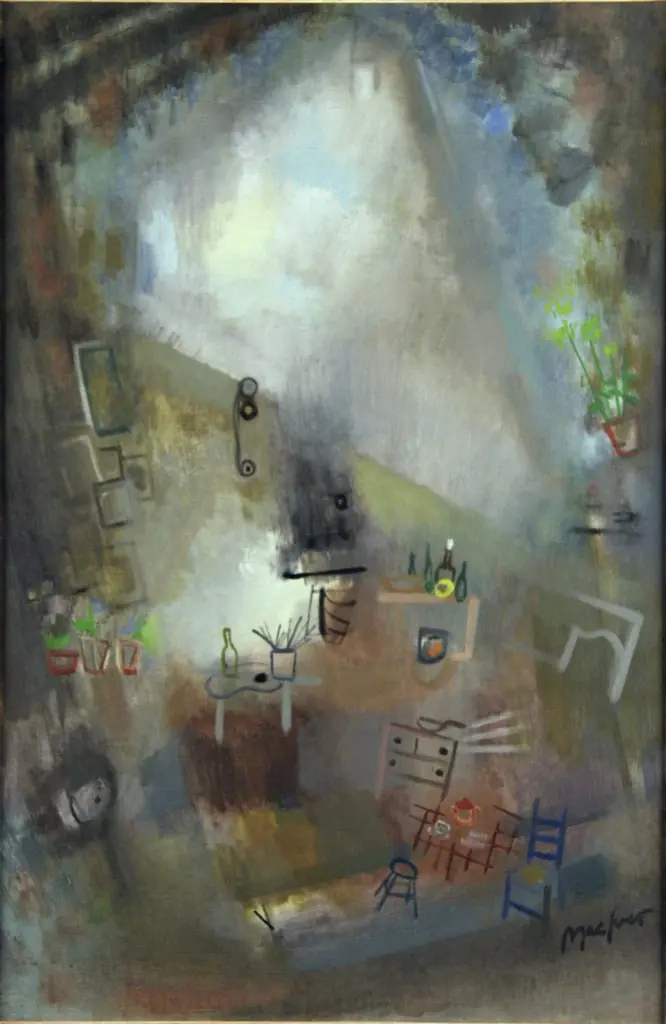
This painting captures a quiet moment of childhood immersion, centered on a young boy surrounded by an accumulation of toys passed through three generations of his family. The scene unfolds in a softly blurred interior where domestic furnishings recede, allowing the objects of play to dominate the visual field. The boy, absorbed in his activity, becomes the anchor of a space shaped by memory rather than realism.
Subject & Meaning
The boy’s play is not merely recreational but evokes a lineage of personal history. Toys from his own era, his father’s youth, and his grandmother’s childhood coexist in the same space, suggesting continuity across time. The presence of the See No Evil, Speak No Evil monkeys, traditional symbols of selective perception, hints at childhood as a realm where meaning is self-constructed, insulated from adult concerns.
Technique & Style
The artist employs a muted, atmospheric palette for the background, allowing the toys to emerge in sharper, more saturated tones. Brushwork varies: soft washes dissolve walls and furniture, while precise detail renders each object with tactile clarity. This contrast between blur and focus creates a psychological space where memory and imagination merge, reinforcing the emotional weight of the objects.
History & Provenance
The toys depicted are not generic but specific heirlooms: a Fisher-Price telephone from the 1960s, wooden building blocks, Brio trains, and plastic dinosaurs from the 1980s and 1990s. These items were collected from the artist’s own family, each carrying personal significance. The painting thus functions as a visual archive, preserving the material culture of a private lineage rather than a public narrative.
Context
Created in the early 21st century, the work responds to broader cultural interest in childhood, memory, and material heritage. It aligns with a trend in contemporary art that treats domestic objects as carriers of emotional history, rejecting nostalgia in favor of quiet, intimate documentation. The absence of adult figures underscores the child’s autonomy within this private world.
Legacy
The painting contributes to a growing body of work that redefines childhood as a site of cultural continuity. By elevating everyday playthings to the status of historical artifacts, it invites viewers to consider how personal objects shape identity across generations. Its quiet realism and emotional restraint distinguish it from sentimental portrayals of childhood.

Artist & collection
Artist
John Bartlett paints contemporary scenes that feel like quiet chapters from someone else’s life.