Artwork
Santo Domingo de Silos entronizado como obispo, de Bartolomé Bermejo (Museo del Prado)
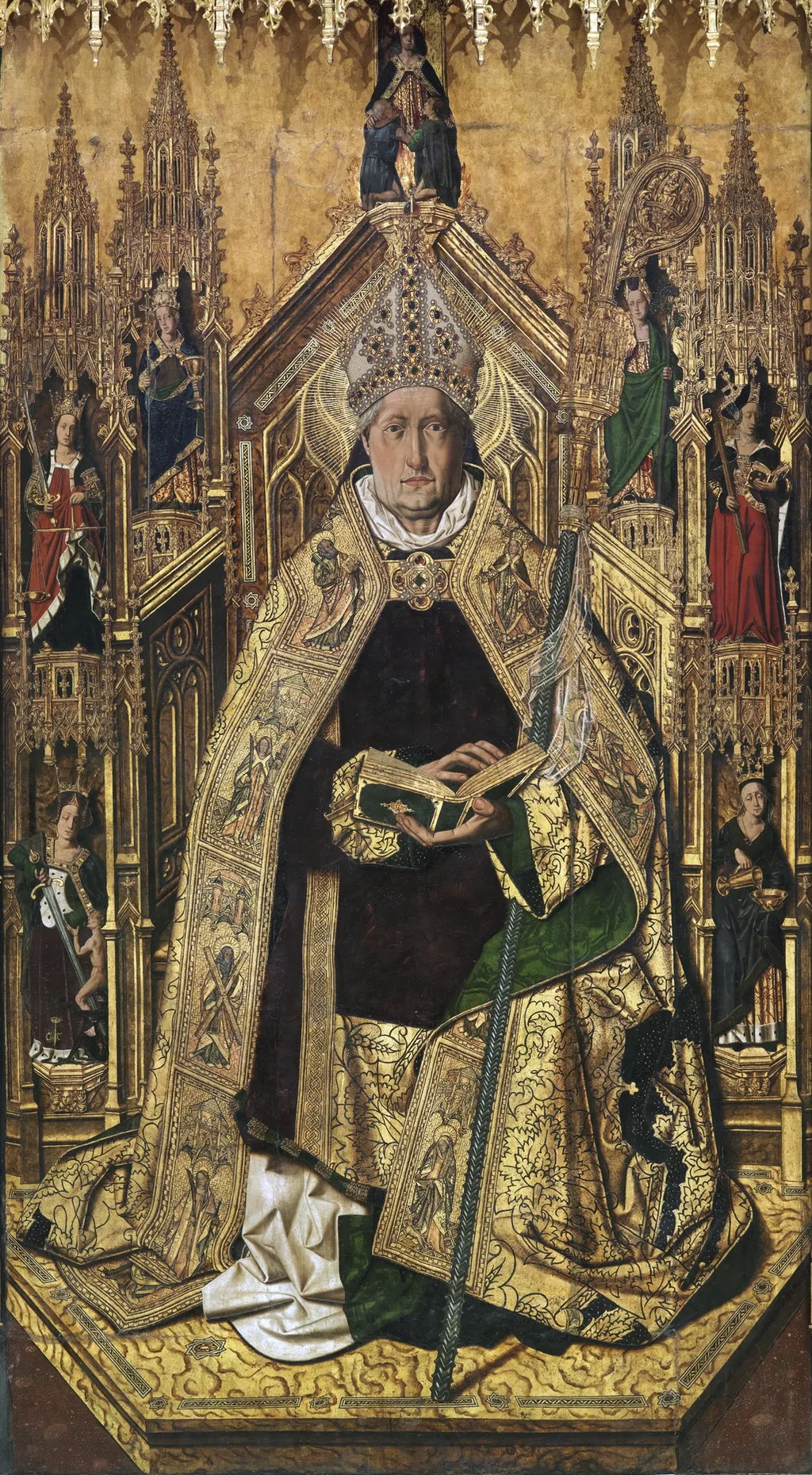
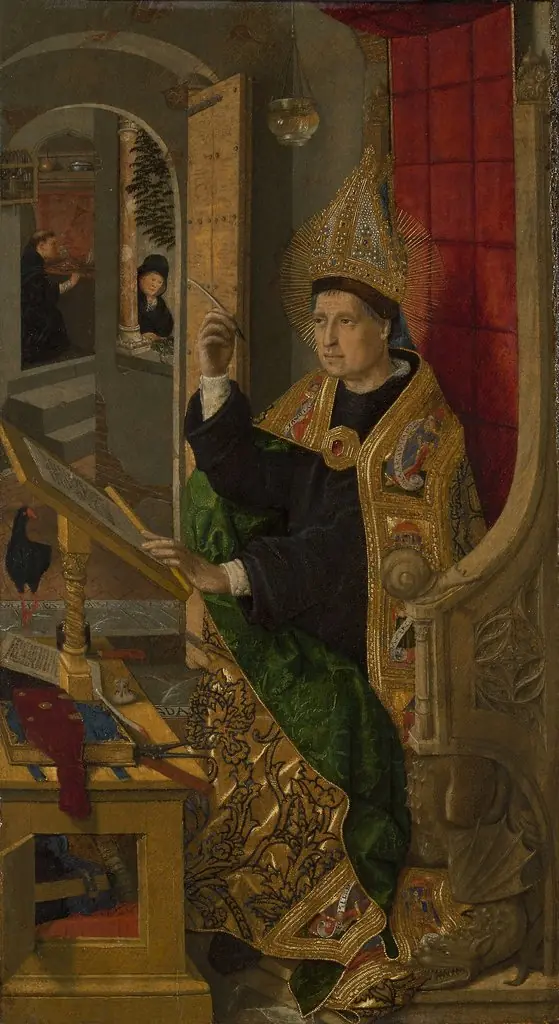
Santo Domingo de Silos entronizado como obispo, de Bartolomé Bermejo (Museo del Prado) is an oil painting by the Early Renaissance artist Bartolomé Bermejo. It dates from 1474 and is held in the collection of the Museo del Prado.
About this work
Subject & Meaning
The painting depicts Saint Dominic of Silos, the 11th-century monk who founded the monastery of Santo Domingo de Silos in Burgos and served as its first abbot.
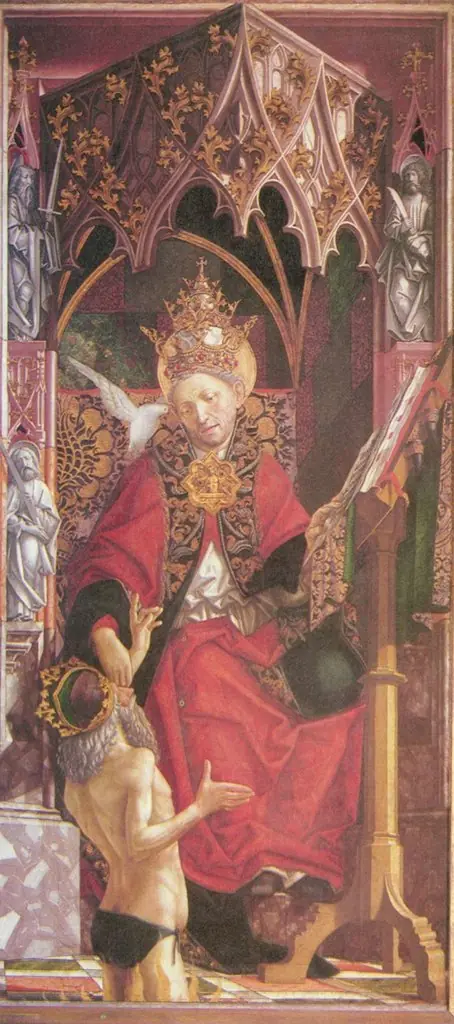
The painting depicts Saint Dominic of Silos, the 11th-century monk who founded the monastery of Santo Domingo de Silos in Burgos and served as its first abbot. Presented with monumental solemnity, the saint sits frontally on an ornate throne, dressed in magnificent pontifical vestments that shine with gold leaf, a technique reminiscent of Byzantine icons. He wears a mitre adorned with detailed precious stones, holds a crozier in his left arm, and is captured in the act of turning the pages of a book.
The throne itself is richly decorated with images of the seven virtues, rendered with intense color and realism: the three theological virtues of faith, hope, and charity, alongside the four cardinal virtues of fortitude, justice, prudence, and temperance. This iconographic program, combined with the realistic treatment of goldsmith objects, embroidery, and linen folds, reflects the influence of Flemish painting while maintaining the allegorical decorative themes typical of the late Hispano-Flemish style.
Technique & Style
Created between 1474 and 1477, this work is an oil painting on a wooden panel measuring 242 cm in height and 130 cm in width. The medium and large scale are considered unusual for Spanish painting of this period. The artist demonstrates mastery of oil technique, evident in the realistic rendering of facial features, which possess a solid corporeity enhanced by specific lighting effects.
The composition adopts a pyramidal structure with the saint seated frontally on an ornate throne. While the work reflects Flemish influence in its detailed treatment of gold objects, embroidery, and white linen folds, it incorporates gold leaf in a manner reminiscent of Byzantine icons, a trait typical of Spanish medieval art. The throne features painted tracery and pinnacles that mimic carved stone, alongside depictions of the seven virtues executed with intense color and realism.
History & Provenance
The panel was commissioned on 5 September 1474 in Daroca, Aragón. It served as the central panel of an altarpiece whose side panels were later completed by Martín Bernat after Bermejo left the commission unfinished.
The painting entered the Museo del Prado in 1920 through an exchange with the Museo Arqueológico Nacional. It remains in the Prado's collection.
The painting is held by the Museo del Prado in Madrid, where it has been since 1920, when it entered through an exchange with the Museo Arqueológico Nacional.
It is inventoried as the central panel of the altarpiece of Santo Domingo de Silos, accessioned to the Prado’s collection under that title.
Context
Bartolomé Bermejo's Santo Domingo de Silos entronizado como obispo is widely regarded as a masterpiece of the late Hispano-Flemish style and a pinnacle of Spanish Gothic painting. Created between 1474 and 1477, the work demonstrates the artist's synthesis of Northern European realism with Spanish traditions, particularly through its monumental scale and sophisticated oil technique. Art historical analysis highlights the painting's pyramidal composition and the saint's lifelike facial modeling, which reflect the influence of Hugo van der Goes and the Flemish school.
The work also incorporates Byzantine gold leaf practices typical of medieval Spanish art, creating a unique visual dialogue between cultures. Bermejo's mastery is further evidenced by the intricate rendering of liturgical vestments and the allegorical depiction of the seven virtues on the throne. This central panel, originally part of a larger altarpiece finished in part by Martín Bernat, established Bermejo as a founder of a significant artistic school in Aragon.
Overview
Created in 1474, this wooden panel by Bartolomé Bermejo portrays Saint Dominic of Silos seated on a throne. The figure dominates the composition, flanked by attendants in vivid red, green and gold garments. The work belongs to the early phases of the Renaissance in Spain and is part of the collection of the Museo del Prado in Madrid.
Artist & collection

Artist
Bartolomé Bermejo was a Spanish painter who adopted Flemish painting techniques and conventions and so is considered as an artist of the Hispano-Flemish style.