Artwork
Consecration of Saint Augustine
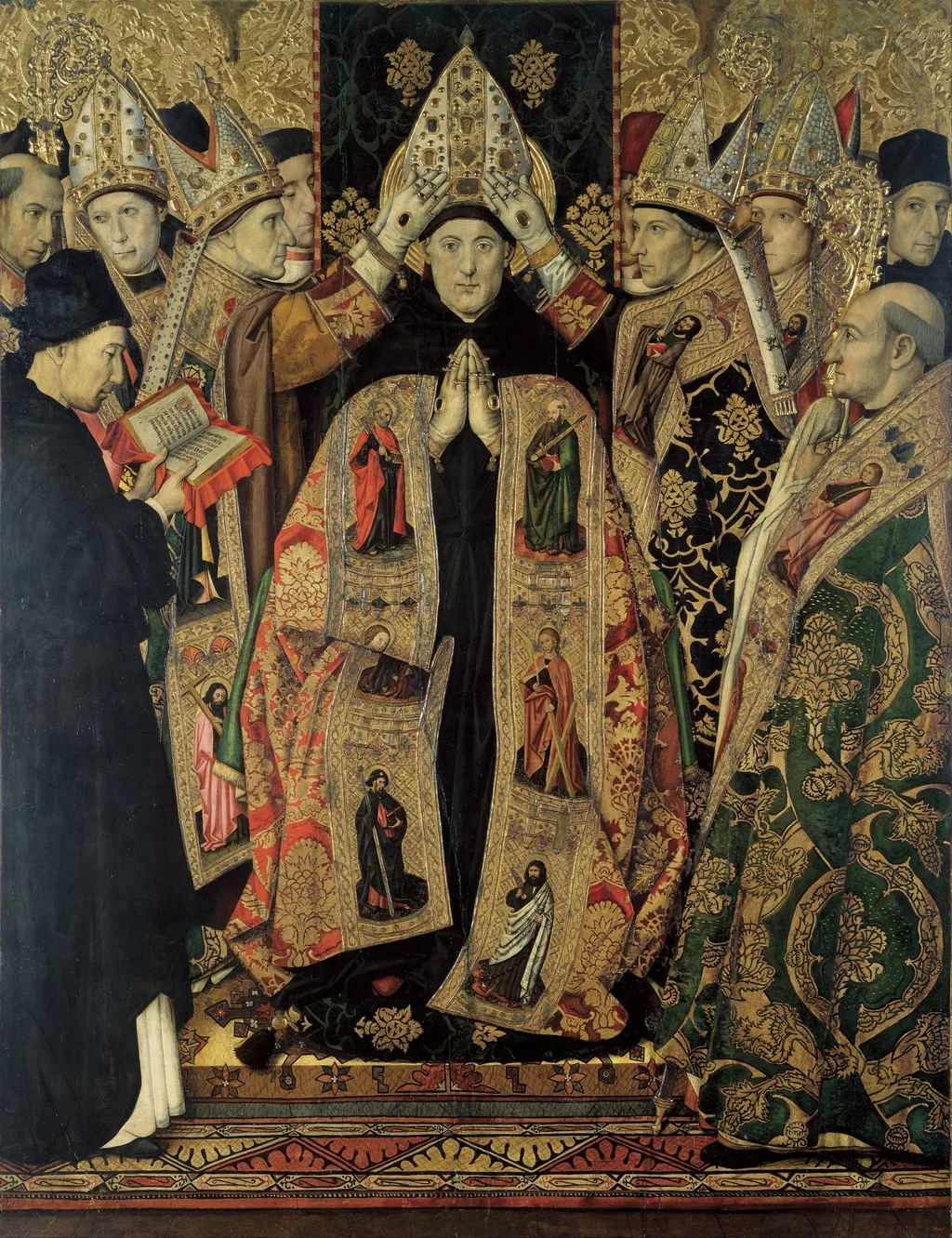
Consecration of Saint Augustine is a tempera painting by the Gothic painting artist Jaume Huguet. It dates from 1463 and is held in the collection of the Museu Nacional d'Art de Catalunya.
About this work
Overview
The work titled Consecration of Saint Augustine was executed in 1463 by the Catalan artist Jaume Huguet. Though described as a painting, the piece is rendered in stucco, reflecting the mixed-media practices of its time. It belongs to the late Gothic visual tradition and is presently displayed in the Museu Nacional d'Art de Catalunya.
Subject & Meaning
The composition depicts the moment of Saint Augustine’s consecration, a ritual that underscores his role as a bishop and theological authority. By focusing on this ecclesiastical ceremony, the work emphasizes themes of spiritual authority, doctrinal continuity, and the sanctification of clerical office within the medieval Church.
Technique & Style
Huguet employs the characteristic linear elegance and rich coloration of the Gothic style, adapting them to the stucco medium. The figures are outlined with precise contours, while the surface treatment creates a subtle relief that enhances the sense of depth without abandoning the flat decorative quality typical of the period.
History & Provenance
Since its creation in the mid‑15th century, the piece has remained within the Catalan artistic heritage, eventually entering the collection of the Museu Nacional d'Art de Catalunya. Its preservation in a public institution has allowed continued scholarly access and public viewing.
Context
The painting emerges from a period when Catalan workshops were integrating international Gothic influences with local devotional needs. Huguet, a leading figure in this milieu, frequently received commissions for altarpieces and liturgical scenes, situating this work within a broader program of ecclesiastical patronage.
Own this work as a print
Artist & collection

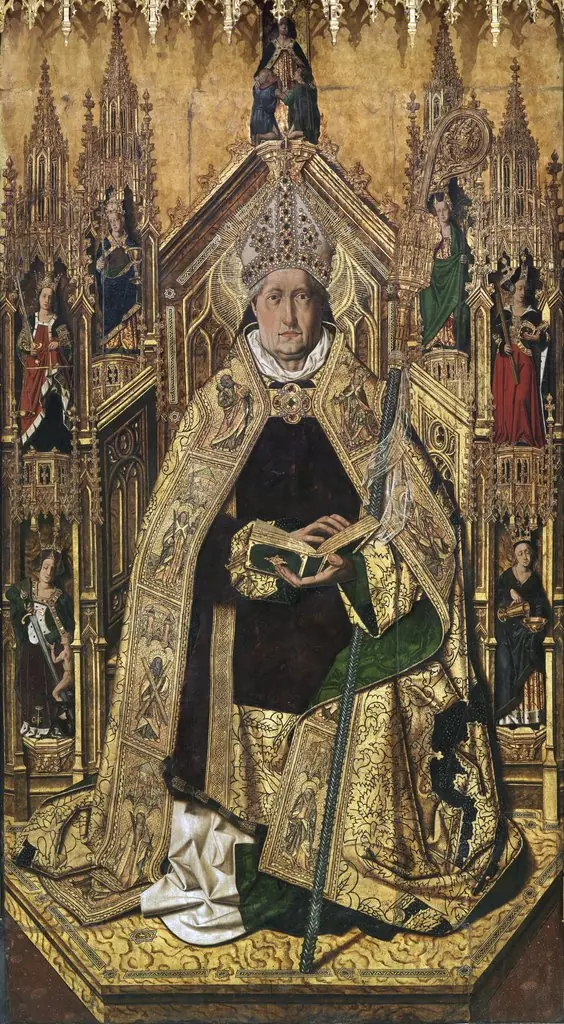 Santo Domingo de Silos entronizado como obispo, de Bartolomé Bermejo (Museo del Prado)
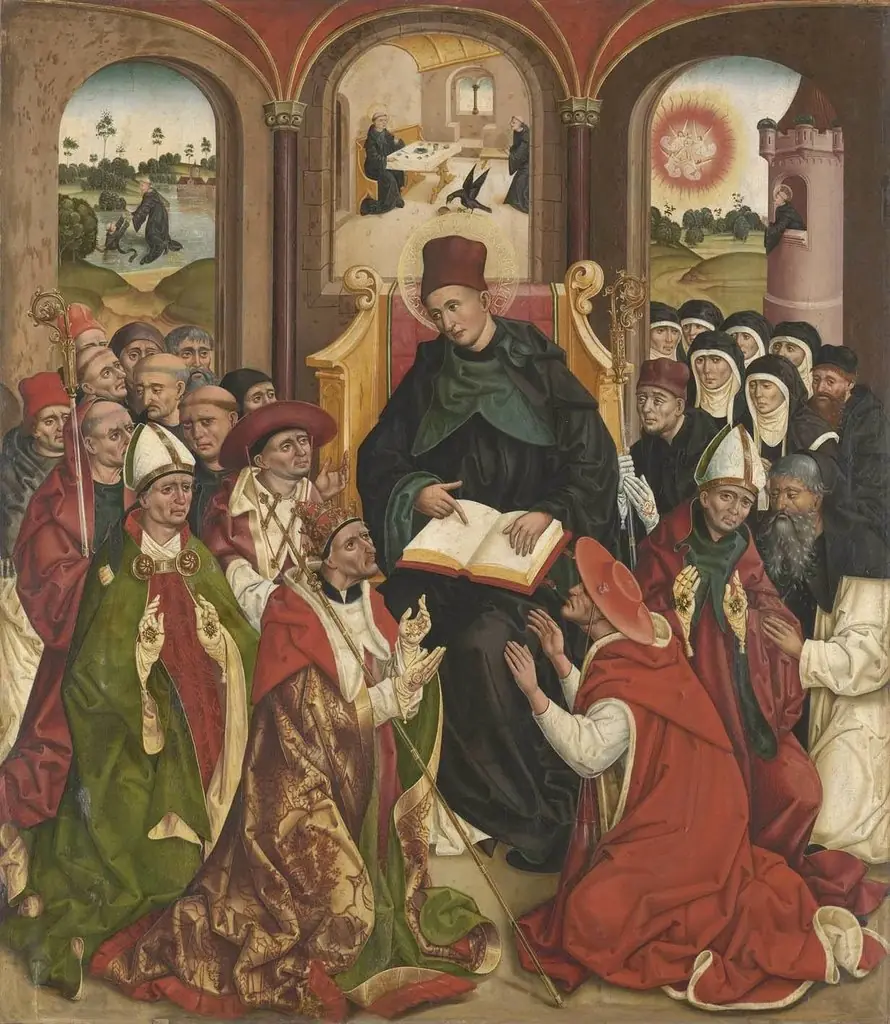 Weihenstephaner Altar: Der hl. Benedikt als Vater des abendländischen Mönchtums Rückseite: Kreuzannagelung Christi
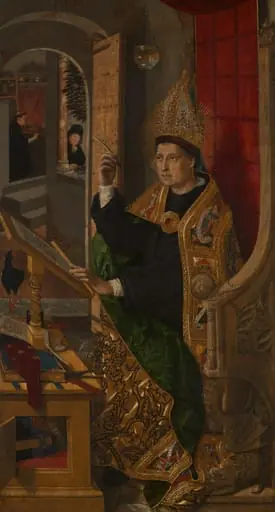 A Bishop Saint
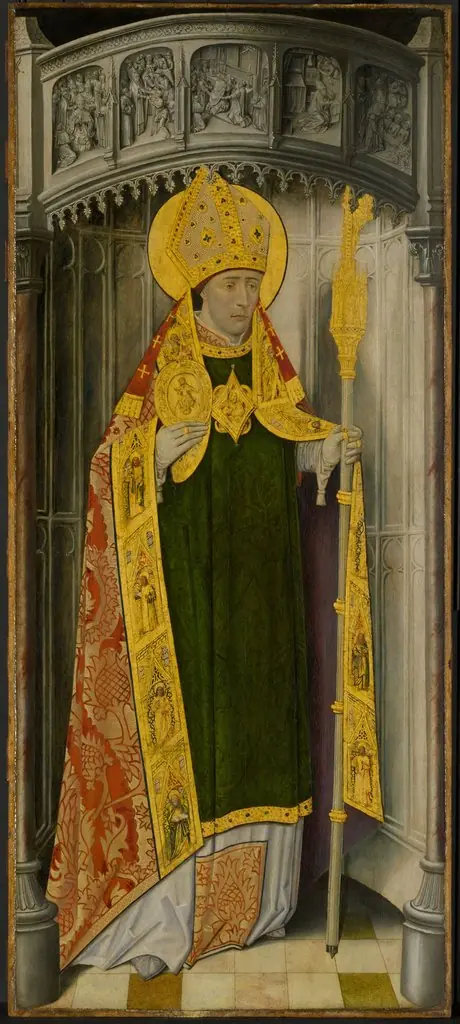 Altarpiece from Thuison-les-Abbeville: Saint Honoré
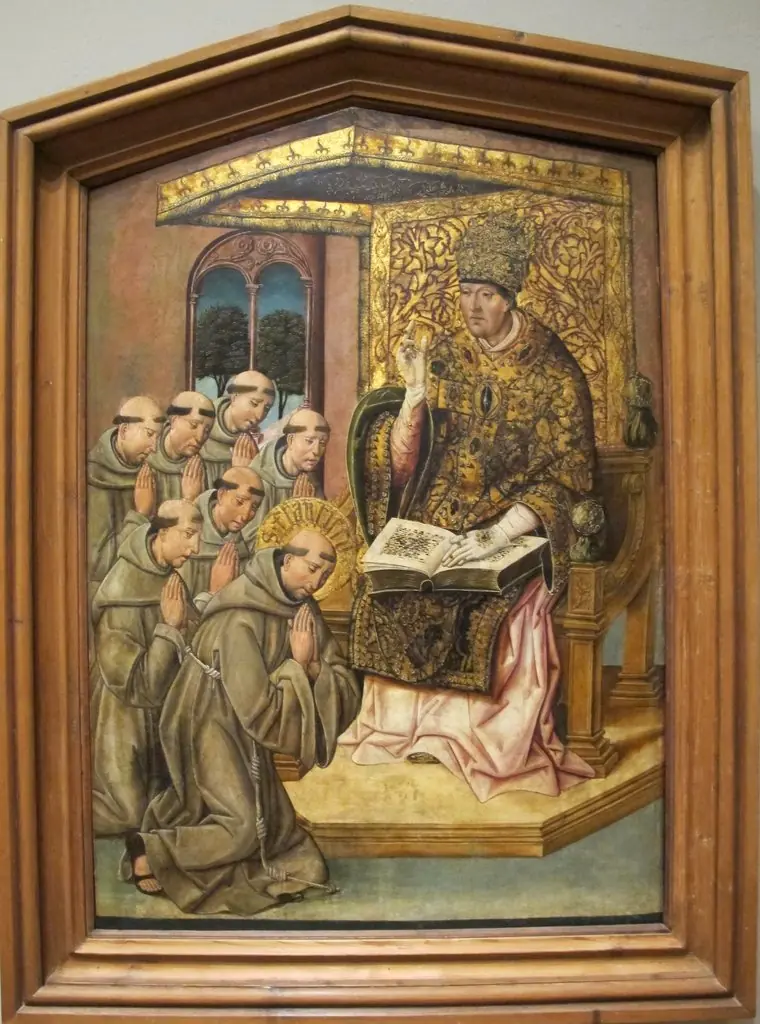 papa onorio III approva la regola francescana
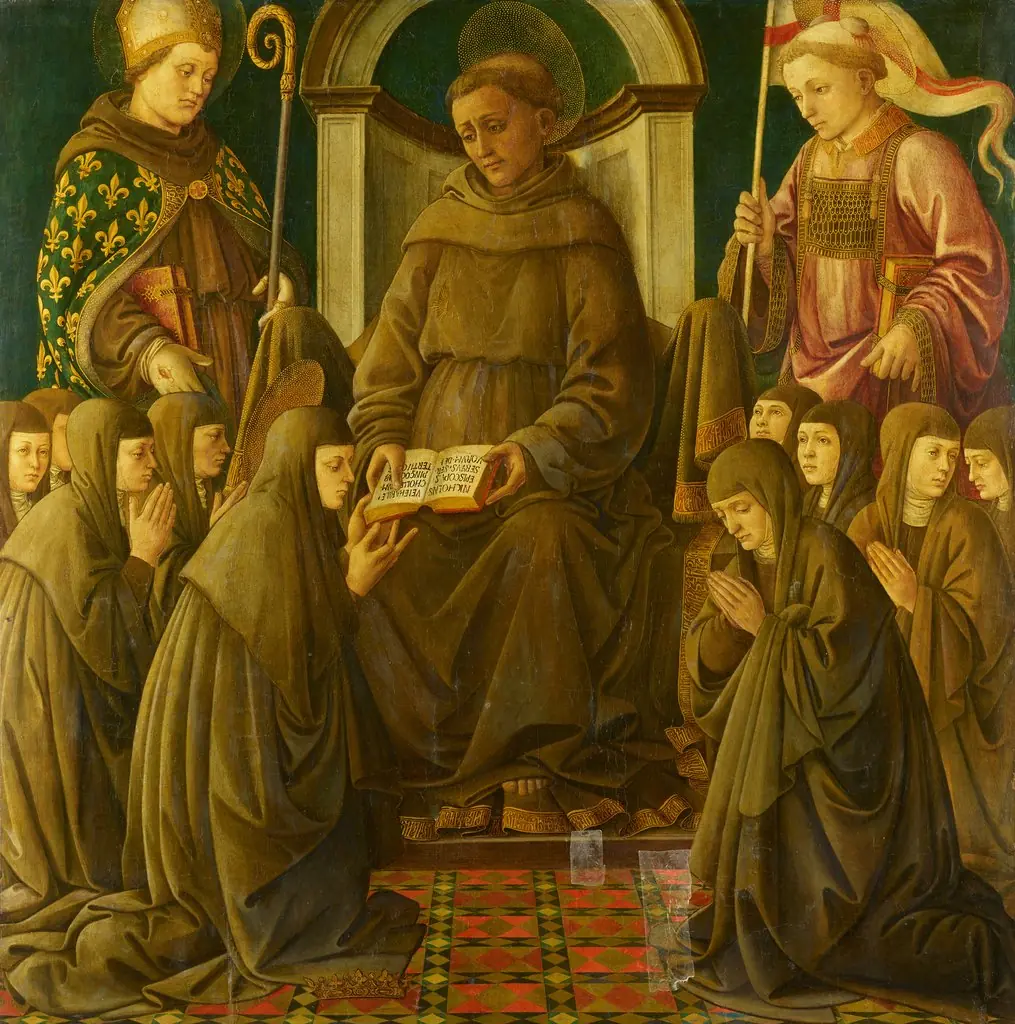 The enthroned St. Francis presents the rule of the order to St. Clare