Artwork
Naval Relics at Millbank
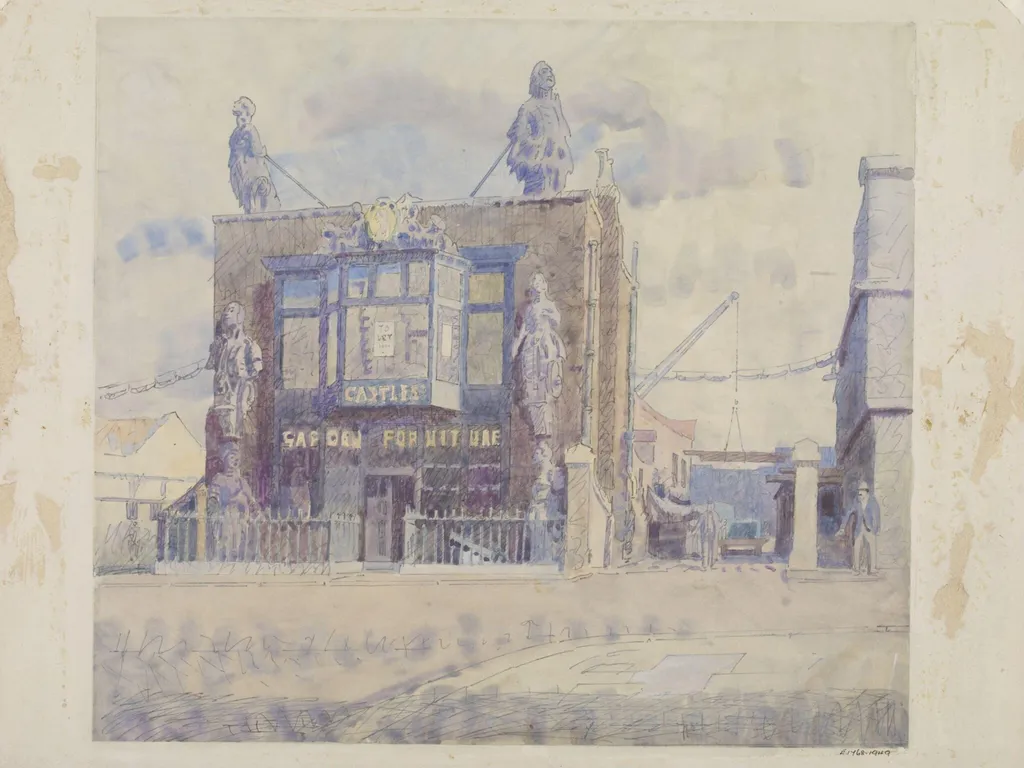
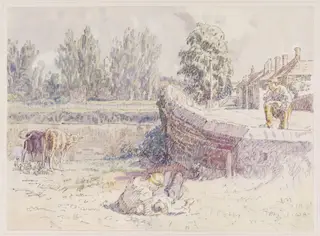
Naval Relics at Millbank is a watercolor work on paper by Bayes. It dates from 1940 and is held in the collection of the Victoria and Albert Museum.
About this work
Overview
Painted in 1940 by Bayes, this watercolour captures a modest commercial building on Millbank, London, transformed by the presence of maritime figureheads.
Painted in 1940 by Bayes, this watercolour captures a modest commercial building on Millbank, London, transformed by the presence of maritime figureheads. Created under the 'Recording Britain' initiative, the work documents everyday architecture at risk during wartime. The scene blends the mundane with the unexpected, turning a garden furniture seller into a repository of naval memory. Its quiet composition reflects the project’s aim to preserve visual traces of a nation’s evolving identity.
Subject & Meaning
The building, marked with signs for 'Castles' and 'Garden for Hire,' is adorned with weathered ship figureheads, likely salvaged from decommissioned vessels. These relics, repurposed as decorative elements, suggest a cultural layering of maritime heritage into civilian life. The juxtaposition of commerce and naval symbolism evokes a sense of continuity amid disruption. The painting does not idealize but observes, framing ordinary adaptation as a form of resilience.
Technique & Style
Bayes employed delicate watercolour washes to render the building’s textured facade and the soft, overcast sky. Muted tones and subtle gradations convey a hushed, contemplative mood. Brushwork is precise yet unobtrusive, capturing the grain of wood, the patina of stone, and the irregular placement of figureheads without embellishment.
The composition directs attention to the building’s eccentric ornamentation, grounding the scene in quiet realism rather than dramatic effect.
History & Provenance
Commissioned by the Pilgrim Trust and directed by Sir Kenneth Clark, 'Recording Britain' ran from 1940 to 1943 as a cultural preservation effort during wartime. Bayes was among 97 artists tasked with documenting vulnerable landscapes and structures. This work entered the Victoria and Albert Museum’s collection as part of the project’s archive, where it remains a record of civilian Britain’s overlooked corners during a period of national upheaval.
Context
The 'Recording Britain' project emerged as a response to the threat of aerial bombardment and rapid urban change. Artists were sent to record vernacular architecture, rural scenes, and industrial sites before they vanished. Urban anomalies like this building, where naval relics became garden decor, were valued not for their grandeur but for their local character. The initiative deliberately avoided Scotland, Northern Ireland, and most of Wales, focusing on England’s perceived cultural heartland.
Legacy
The painting endures as a quiet testament to the project’s ethos: that cultural memory resides in the ordinary. Its inclusion in the V&A’s collection ensures continued access to a visual archive of wartime Britain. Bayes’s work, like others in the series, invites reflection on how communities repurpose history in daily life. It stands as a modest but enduring record of how people sustained identity through adaptation, not monument.
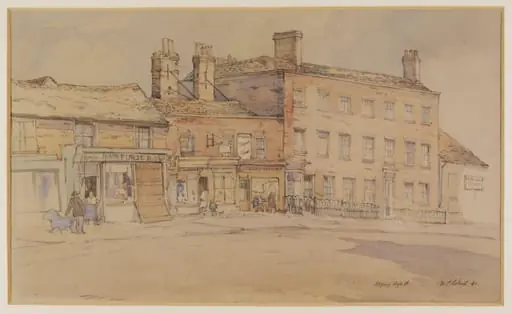
Artist & collection
Artist
Walter John Bayes was an English painter and illustrator who was a founder member of both the Camden Town Group and the London Group and also a renowned art teacher and critic.

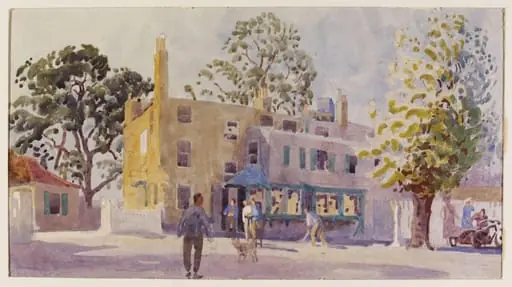
- Epping High Street
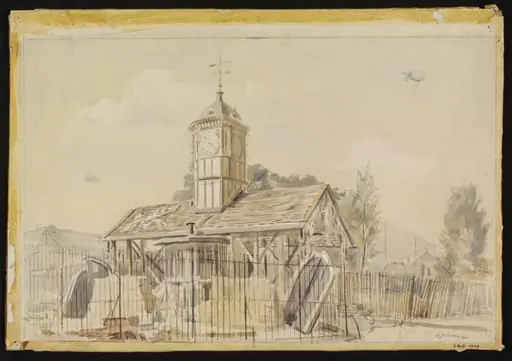 The Camel House, Zoological Gardens
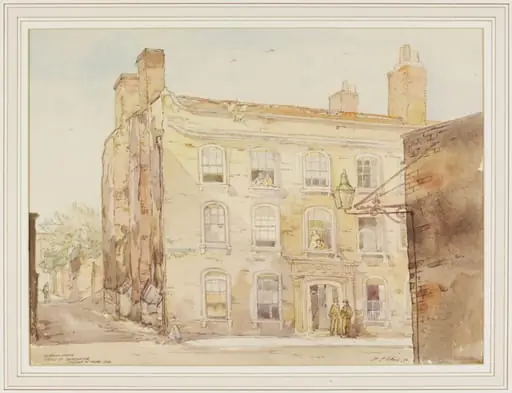 Georgian Houses, Castle Street, Bridgwater
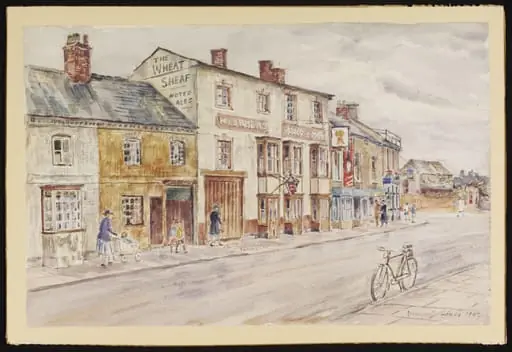 The Wheatsheaf Inn and Cottages, Newport Road, Swindon
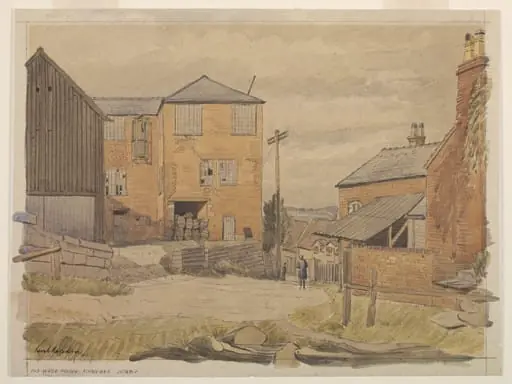 Old Warehouse, Ashbourne
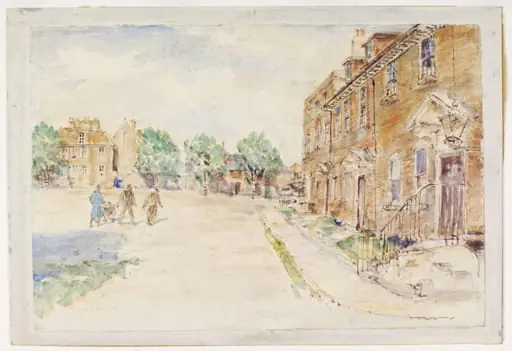 18th century houses at The Butts, Brentford
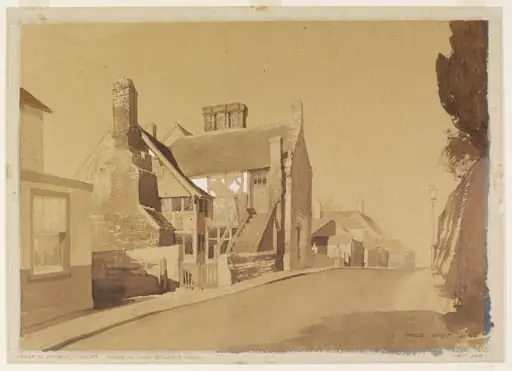 Anne of Cleves House, Ditchling
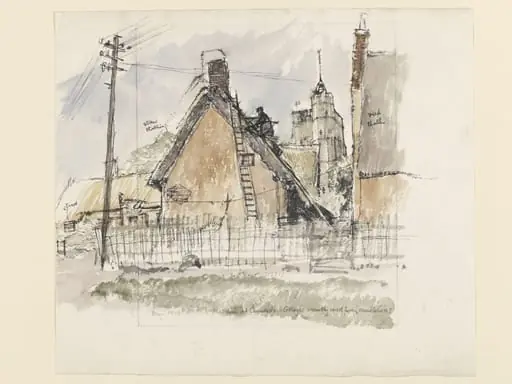 Thatching at Cavendish
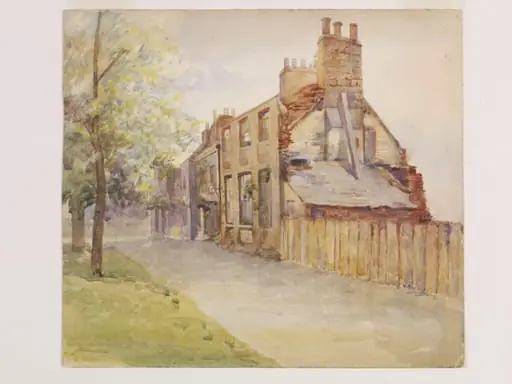 Old brick residences in the grounds of the South Kensington Museum (now the Victoria and Albert Museum)
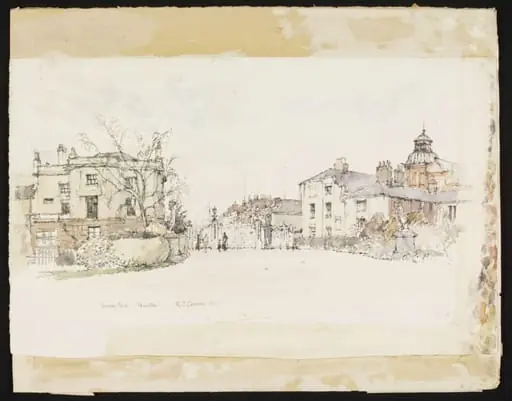 Vivary Park, Taunton
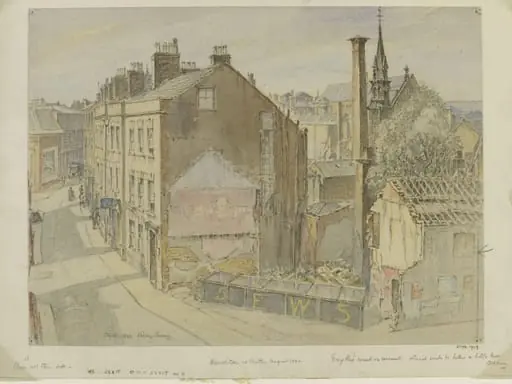 Demolition at Chester 1942
 Bridge over the Blackwater at Coggeshall