Artwork
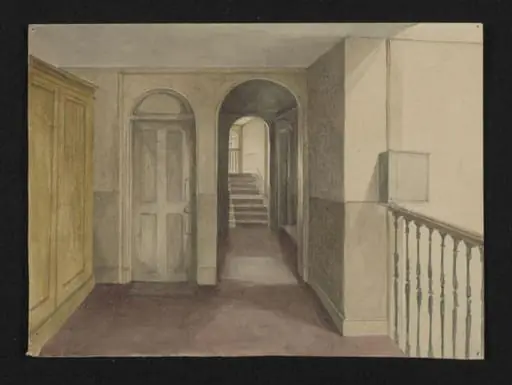
The fox following the stork up a staircase
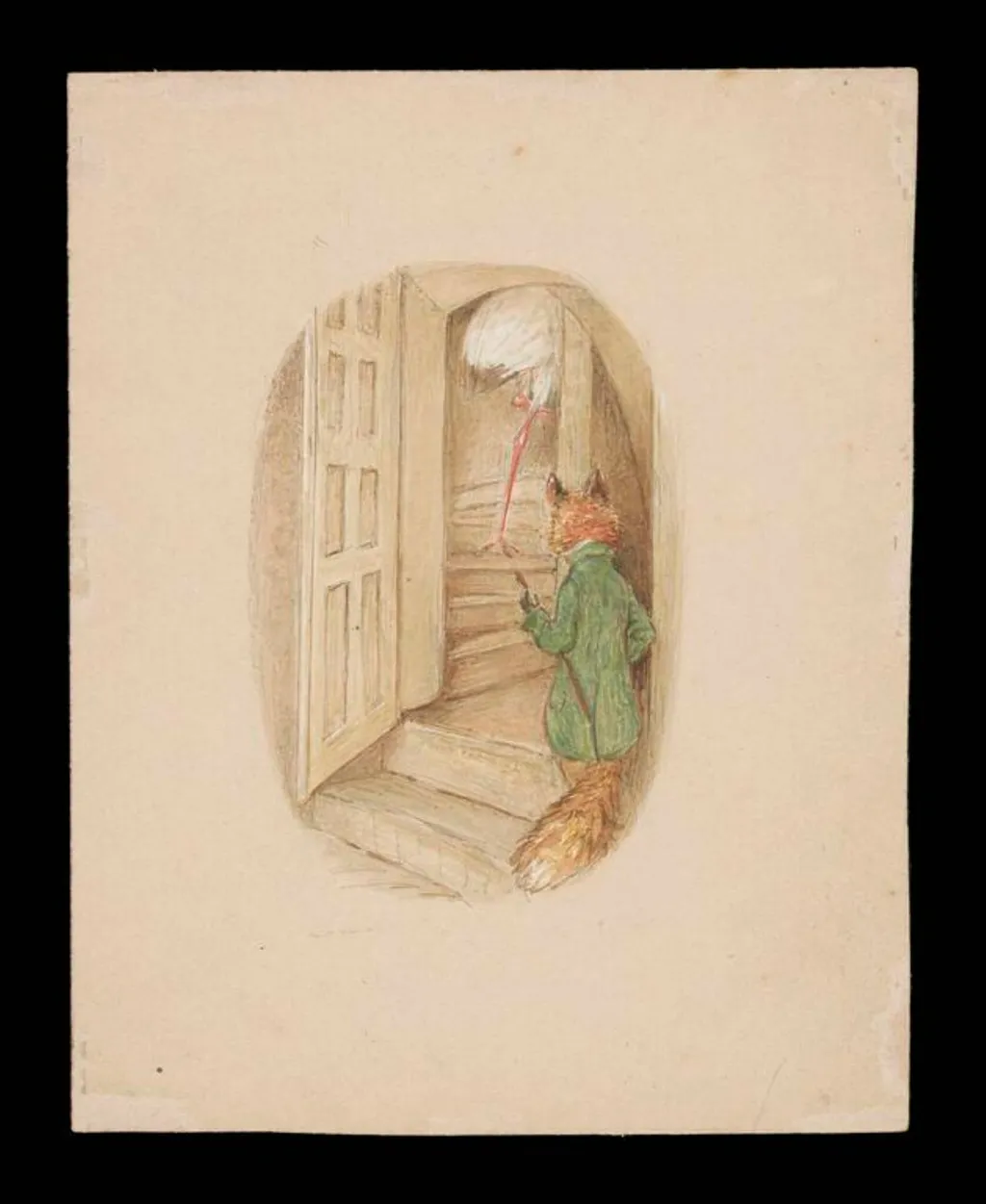
The fox following the stork up a staircase is a watercolor work on paper by the Naïve art artist Beatrix Potter. It dates from 1919 and is held in the collection of the Victoria and Albert Museum.
About this work
This watercolour shows a whimsical scene: a fox trailing a stork up a staircase inside a home.
This watercolour shows a whimsical scene: a fox trailing a stork up a staircase inside a home. Beatrix Potter painted it in 1919, later than her famous Peter Rabbit tales.
The work started as an illustration for an Aesop’s fable in the 1890s. Potter revisited animal tales in 1918 with The Tale of Johnny Town-Mouse.
Her skill blends playful charm with careful animal studies. See more of her work at the Victoria and Albert Museum.
Overview
This watercolour, created by Beatrix Potter in 1919, depicts a fox ascending a staircase behind a stork, a scene drawn from Aesop’s fable of the same name. Though best known for her Peter Rabbit stories, Potter returned in later years to earlier interests in animal fables. The work reflects her enduring fascination with naturalistic animal behavior and domestic settings, rendered with quiet precision and subtle humor.
Subject & Meaning
The image illustrates Aesop’s fable in which a fox invites a stork to dinner but serves soup in a shallow dish, making it impossible for the stork to eat. The stork later returns the favor by serving food in a narrow-necked jar, teaching a lesson in reciprocity. Potter’s staircase setting transforms the moral into a domestic farce, suggesting social etiquette and its consequences through animal roles in human spaces.
Technique & Style
Potter employed delicate watercolour washes to capture the textures of fur and feathers with anatomical accuracy, while maintaining a light, narrative tone. The staircase and interior details are rendered with restrained line work, grounding the whimsy in observable reality. Her brushwork balances scientific observation with gentle caricature, avoiding sentimentality while preserving charm.
History & Provenance
Potter began sketching Aesop’s fables in the 1890s, long before her commercial success. In 1918, she revived the project, leading to The Tale of Johnny Town-Mouse. This watercolour was part of a planned but unpublished collection featuring Miss Jenny Crow and other fable characters.
Her publisher rejected the concept in 1919, deeming it too derivative of Aesop rather than distinctly Potter’s own.
Context
By 1919, Potter had shifted from children’s publishing to farming and land conservation in the Lake District. Her return to fable illustration reflected personal artistic curiosity rather than commercial intent. The domestic setting and anthropomorphic animals echo her earlier work but reveal a more subdued, reflective approach, shaped by maturity and distance from the pressures of publishing.
Legacy
Though never published as part of a book, this watercolour remains a testament to Potter’s sustained engagement with animal fables across her career. It demonstrates her ability to reinterpret classical tales through intimate, observational artistry. Today, it is held in the Victoria and Albert Museum as part of a broader collection that underscores her contributions to illustration beyond the Peter Rabbit series.
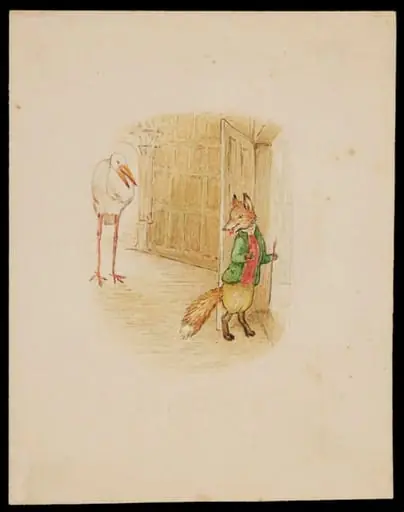
Own this work as a print
Artist & collection
Artist
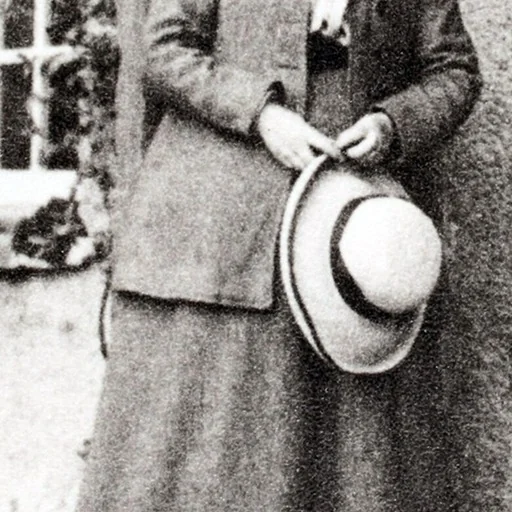
Helen Beatrix Heelis (née Potter; 28 July 1866 – 22 December 1943), usually known as Beatrix Potter ( BEE-ə-triks), was an English writer, illustrator, natural scientist, and conservationist.

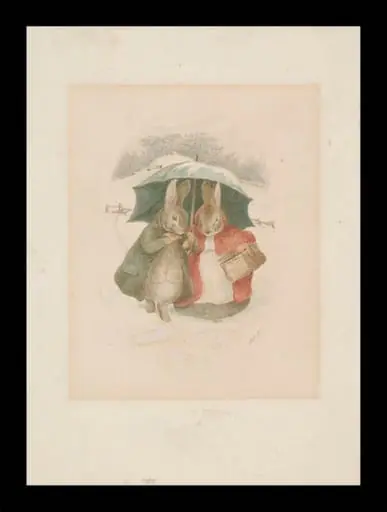
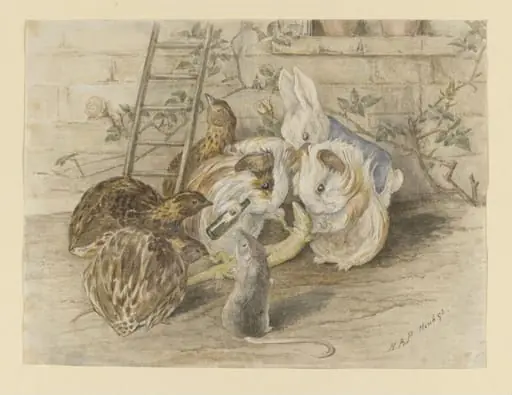
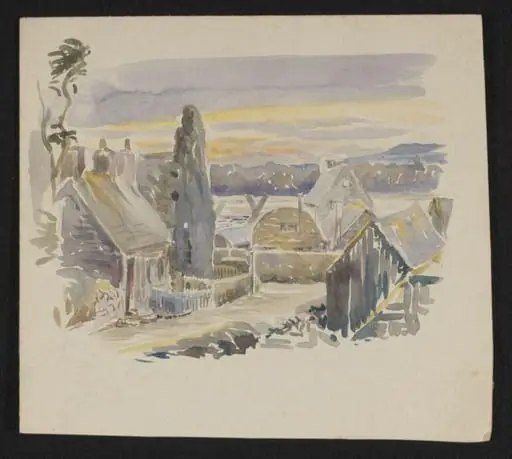
- The fox taking leave of the stork
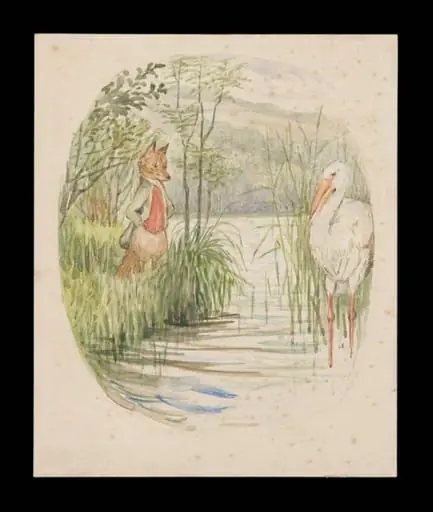 The fox looking over the stream at the stork
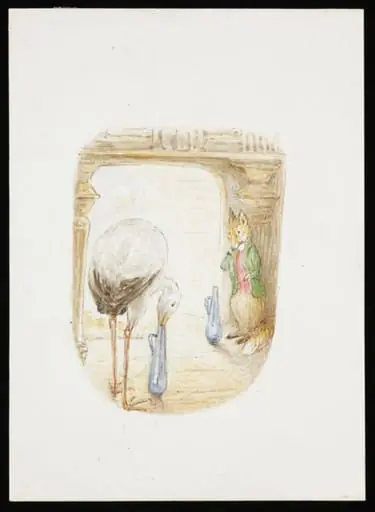 The fox watching the stork feeding from a narrow-necked jar
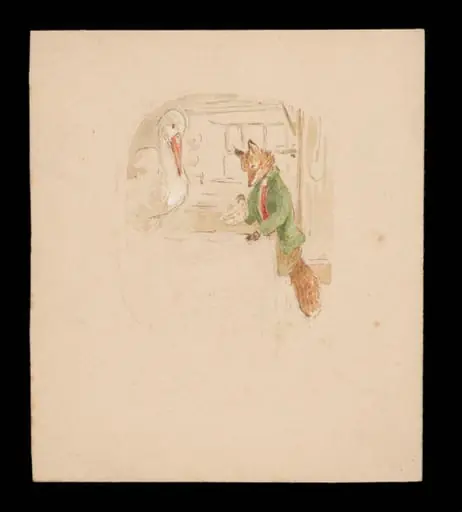 The fox pouring tea
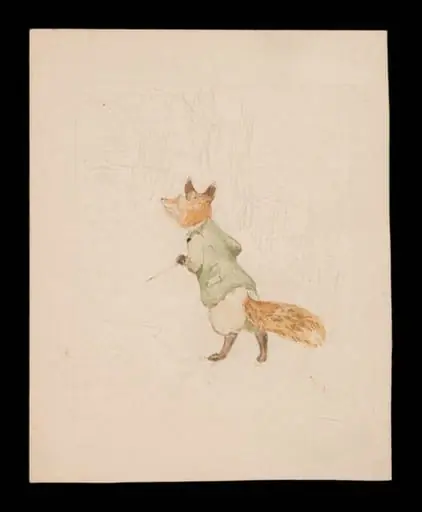 A fox walking through a wood
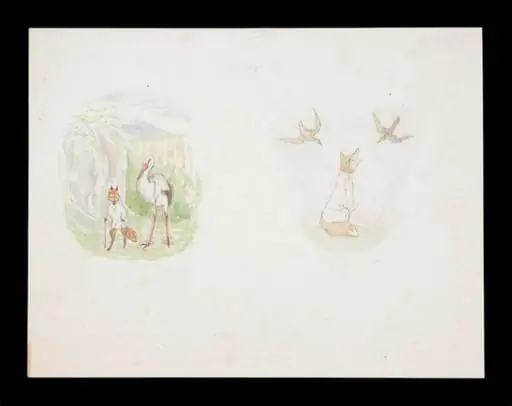 A fox in a glade with a stork; a fox looking up at two birds
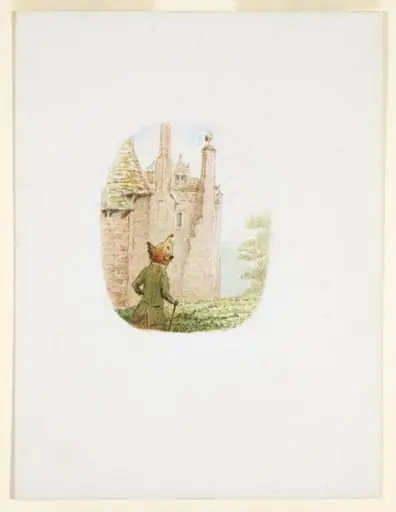 The fox looks up at the stork standing on top of a tower
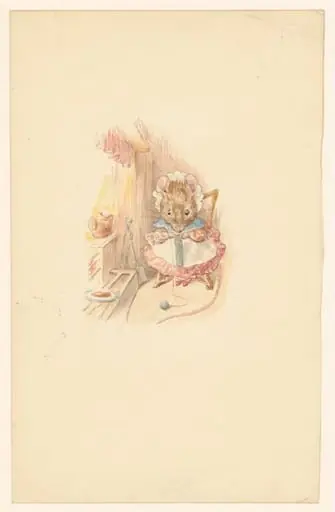 A mouse knitting
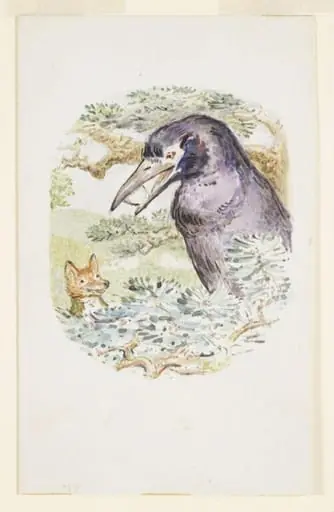 The Fox and the Crow
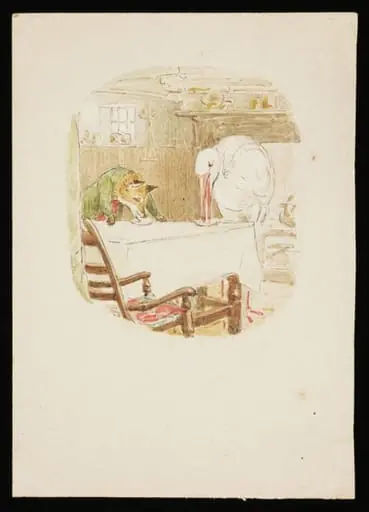 The fox and the stork eating a meal
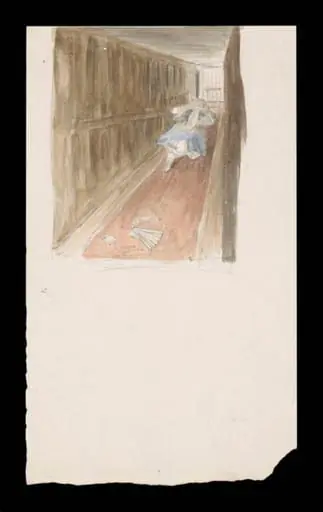 Rear view of the White Rabbit running away along the corridor
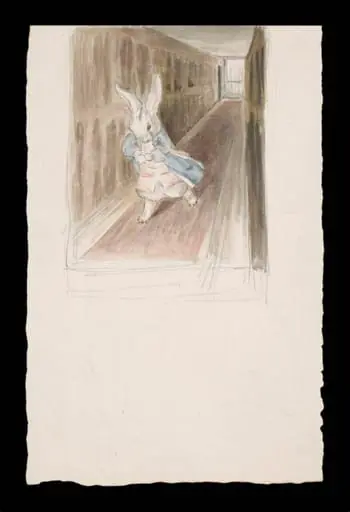 The White Rabbit running along a long panelled corridor