Artwork
Study for "Mr. and Mrs. Philip Wase"
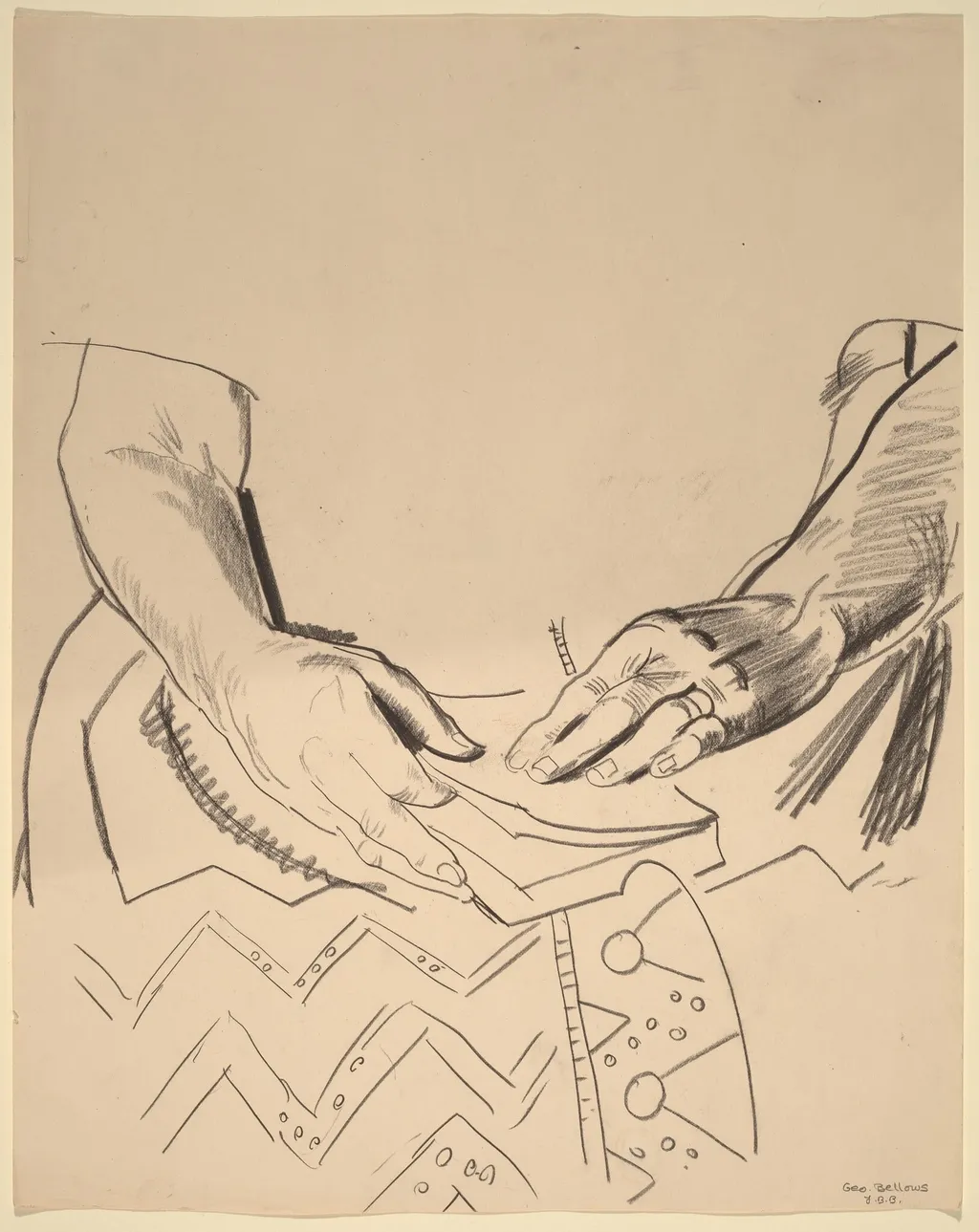
Study for "Mr. and Mrs. Philip Wase" is a crayon drawing by George Bellows. It dates from 1924 and is held in the collection of the National Gallery of Art. Study for 'Mr.
- Inscription
- Inscribed:lower right in graphite: Geo. Bellows / J.B.B. (Jean Bellows Booth)
About this work
Overview
Study for 'Mr. and Mrs. Philip Wase' is a 1924 drawing by George Bellows, executed in black conté crayon on wove paper, serving as a preparatory work for a portrait.
Subject & Meaning
The drawing focuses on a detail of the proposed portrait: two clasped hands resting on a table. The contrast between the large, relaxed hand and the smaller, more intricately drawn one may symbolize the subjects' relationship dynamics or individual personalities.
Technique & Style
Bellows employed quick, expressive lines to convey a sense of vitality. The piece juxtaposes detailed rendering, particularly in the smaller hand, with loose, sketchy elements, such as the table's contents and surroundings, creating a balance between realism and abstraction.
History & Provenance
Created in 1924, this study is part of Bellows' preparatory process for the portrait 'Mr. and Mrs. Philip Wase'. Specific provenance details (ownership history) are not provided in the available information.
Context
This work reflects Bellows' broader practice of using sketches to refine compositions and details before finalizing portraits, a common approach among portrait artists of his time.
Legacy
As a study, its significance lies in offering insight into Bellows' creative process. The piece's style and technique are characteristic of his body of work, potentially appealing to those interested in the artist's methods and portrait sketches from the early 20th century.
Own this work as a print
Artist & collection
Artist
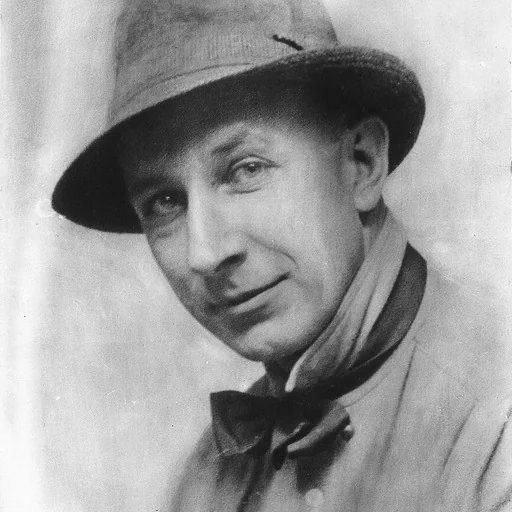
George Wesley Bellows (August 12 or August 19, 1882 – January 8, 1925) was an American realist painter, known for his bold depictions of urban life in New York City.

 Study for "Frieze of Prophets"
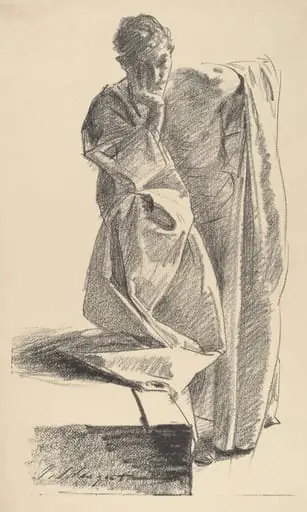 Study of a Young Man in a Robe, Standing
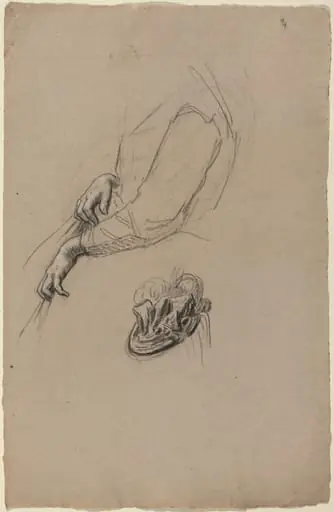 Young Woman's Hands and Beribboned Hat
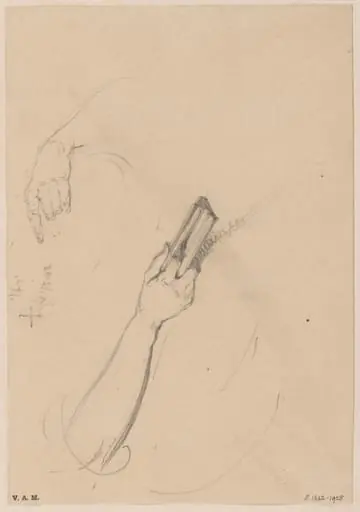 Studies of arms and hands, one holding a book
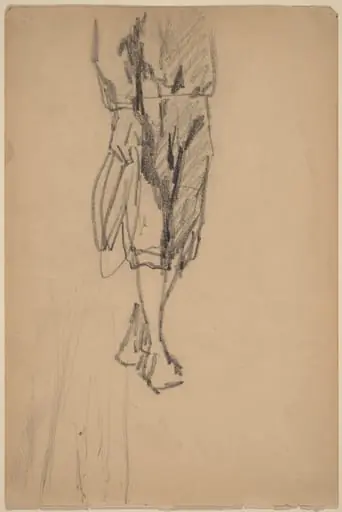 Partial Sketch of a Boy in Knickers
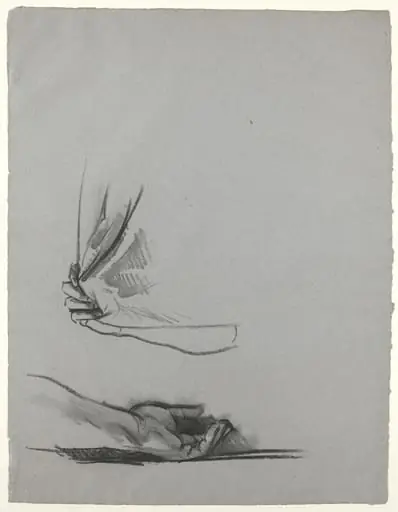 Studies of Hands
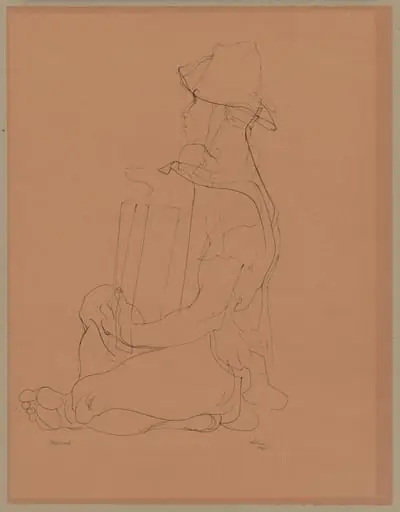 Untitled
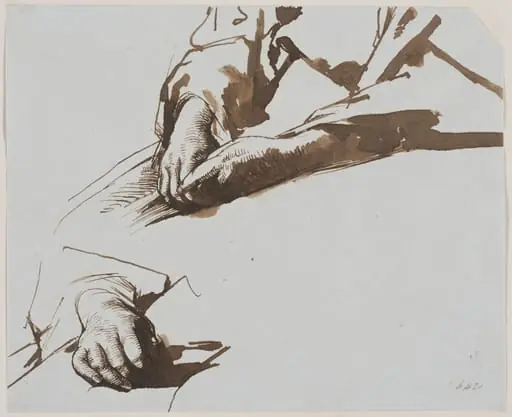 Untitled
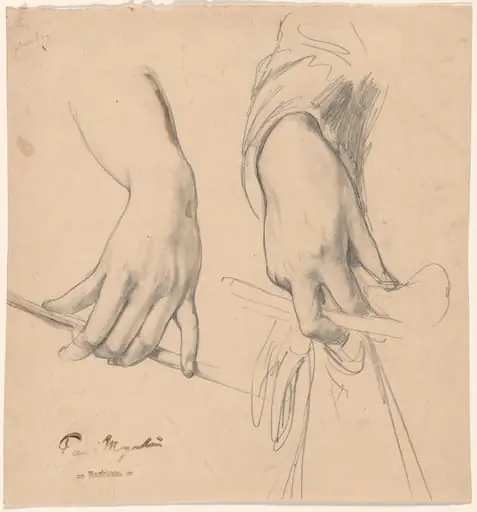 A Left Hand Holding a Staff and a Right Hand Holding a Glove and Riding Crop(?)
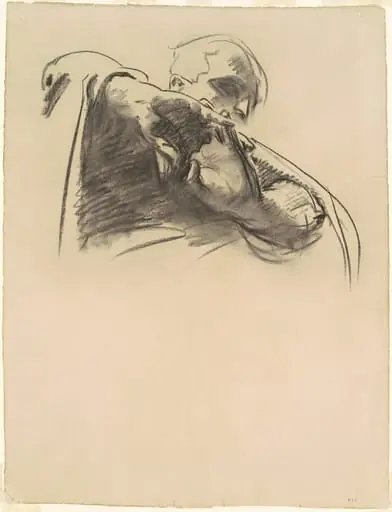 Study for "The Crucifixion and Death of Our Lord"
- Study for a Lunette
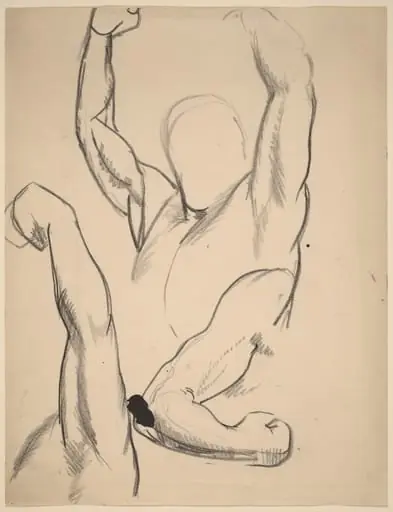 Arms of a Boxer