Artwork
The Red Vine, Matinicus Island, Maine
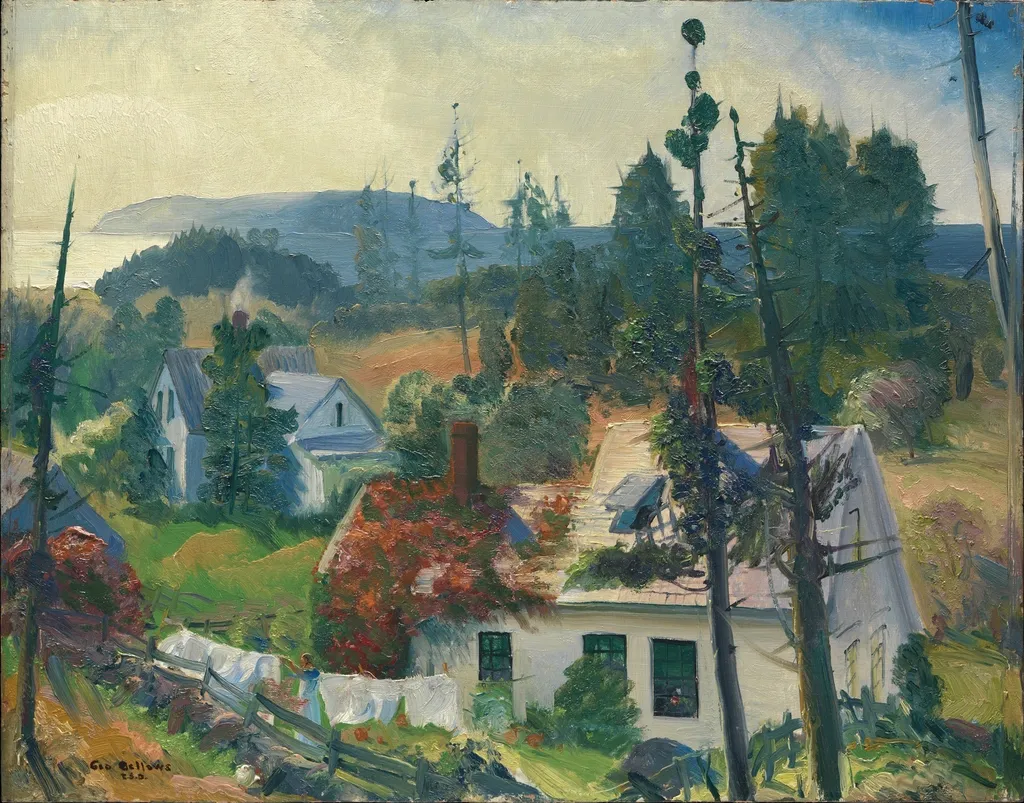
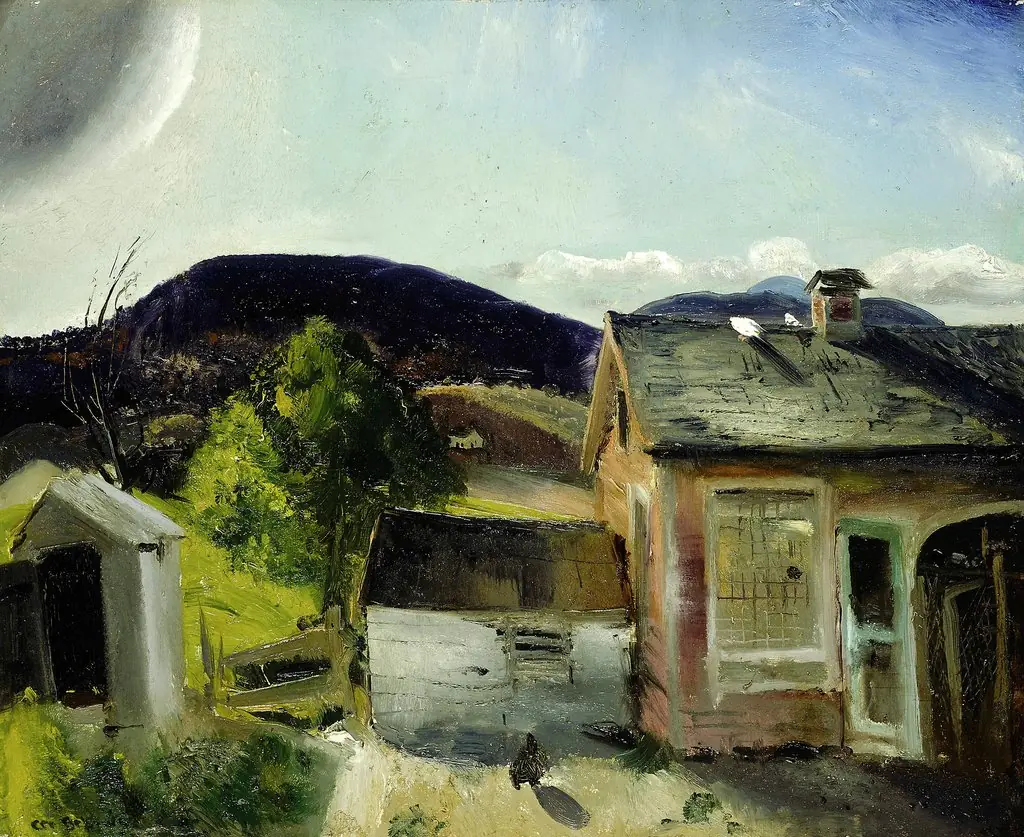
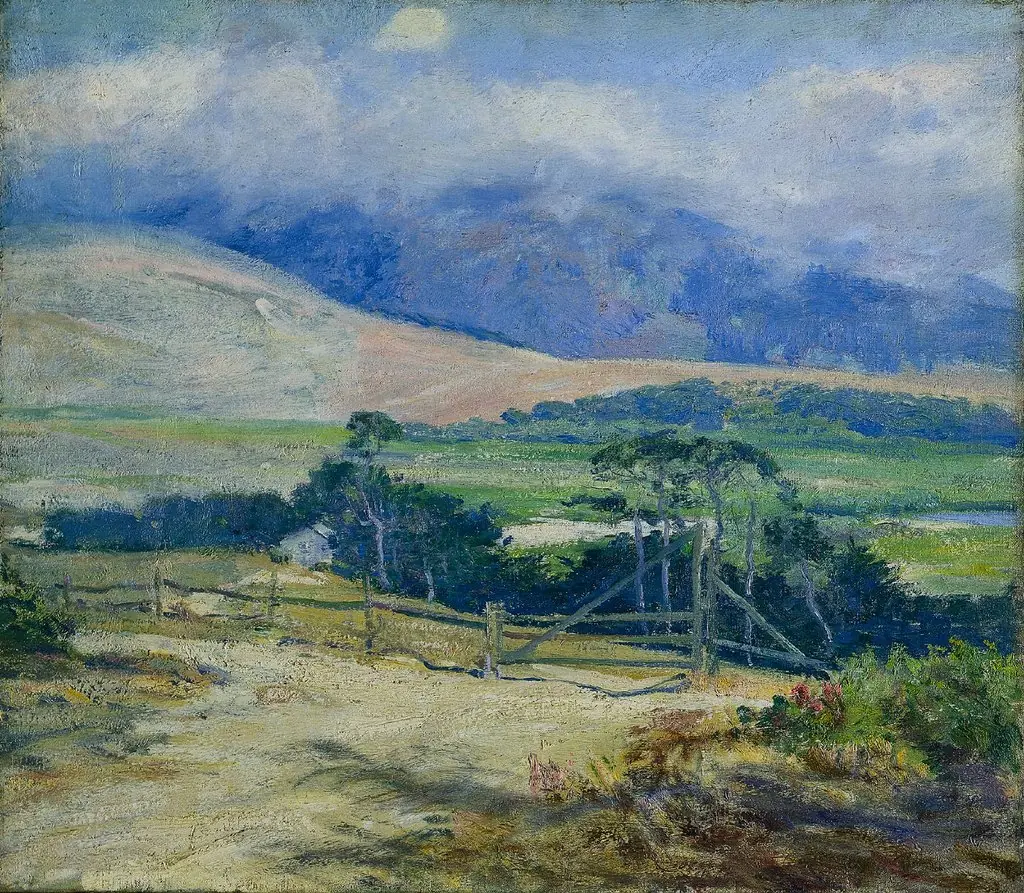
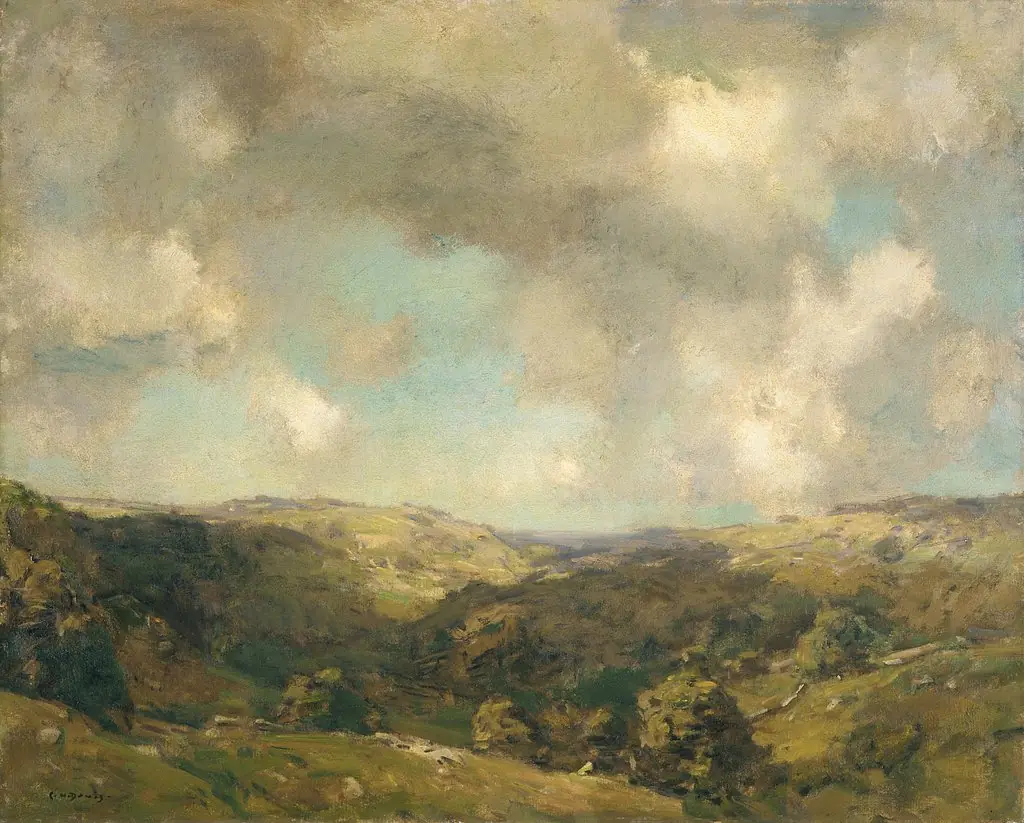
The Red Vine, Matinicus Island, Maine is an oil painting by the American Impressionist artist George Bellows. It dates from 1916 and is held in the collection of the Metropolitan Museum of Art.
About this work
Subject & Meaning
While the title emphasizes the vine, the imagery encompasses a broader rural setting that integrates the dwelling and topography into the overall view.
The work depicts a landscape scene centered on a red vine, situated on Matinicus Island, Maine. As a landscape painting, the composition features specific natural and structural elements, including a tree, a house, and a hill. Created in 1916, the piece captures the island's environment through these distinct visual components.
While the title emphasizes the vine, the imagery encompasses a broader rural setting that integrates the dwelling and topography into the overall view.
Technique & Style
The Red Vine, Matinicus Island, Maine (1916) is an oil painting executed on a wooden panel. The panel measures 55.9 × 71.8 cm and portrays a rural scene that includes a red vine, a tree, a house, and a hill. The work is classified as a landscape and demonstrates a balanced composition of these elements.
Its materiality, oil paint on panel, affords a smooth surface and subtle tonal transitions typical of early twentieth-century American landscape practice.
History & Provenance
George Bellows created The Red Vine, Matinicus Island, Maine in 1916 while working on location; the work is an oil painting on panel measuring 55.9 × 71.8 cm. The painting depicts a coastal scene featuring a tree, house, and hill. The piece entered the collection of the Metropolitan Museum of Art, where it has been displayed as part of the museum's landscape holdings. No record of a specific commission or subsequent private sales is documented in the available sources.
Overview
George Bellows, an American painter known for his depictions of city life, created The Red Vine, Matinicus Island, Maine in 1916. This oil painting represents a departure from his more common urban subjects, instead capturing a tranquil coastal landscape. The artwork is part of the collection at The Metropolitan Museum of Art, showcasing a different facet of Bellows's artistic output.
Context
While George Bellows is primarily recognized for his dynamic urban scenes and realist approach to early 20th-century American life, The Red Vine, Matinicus Island, Maine demonstrates his engagement with landscape painting. This work offers insight into his broader artistic range, showing his capacity to render natural environments with the same expressive energy he applied to his cityscapes, albeit with a different mood.
Own this work as a print
Artist & collection

Artist
George Wesley Bellows (August 12 or August 19, 1882 – January 8, 1925) was an American realist painter, known for his bold depictions of urban life in New York City.