Subject
Human Figure
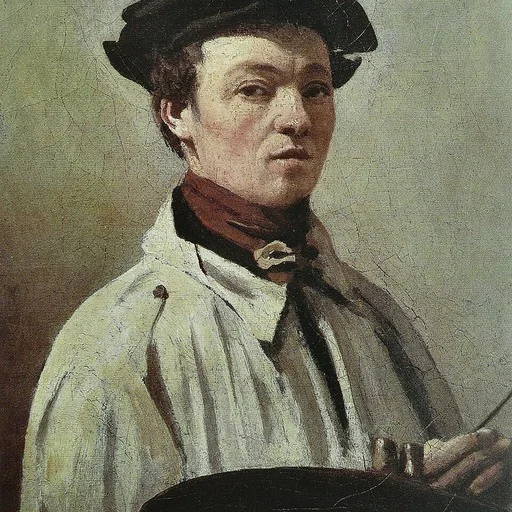
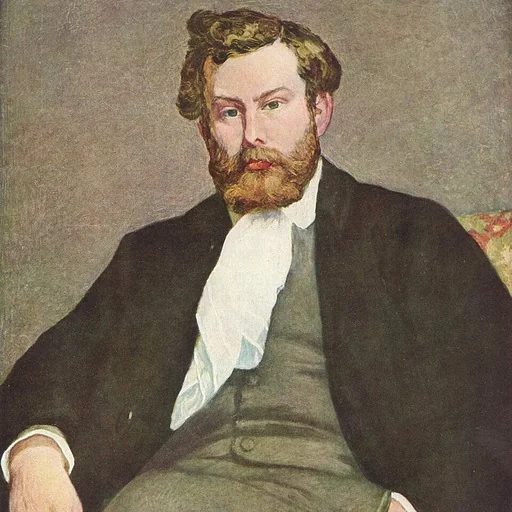
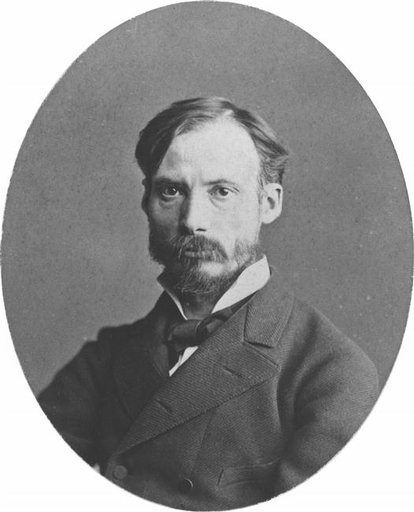
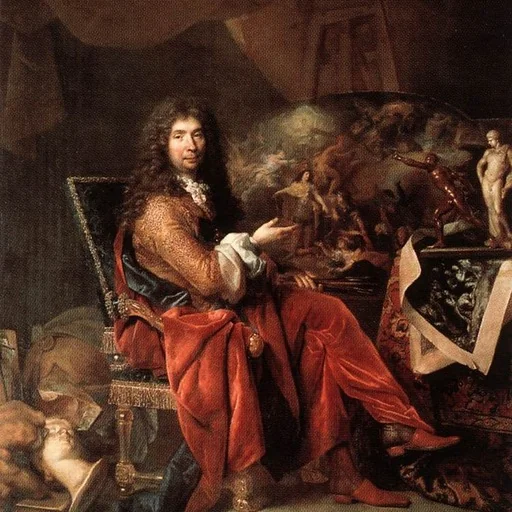
Human Figure is a subject in art. The gallery holds 200 works in this subject in art, including works by Jean Baptiste Camille Corot, Alfred Sisley and Pierre-Auguste Renoir.
The human figure is the oldest and most persistent subject in Western art, and the nude—the unclothed body studied for its own expressive and formal power—stands at its core. The tradition crystallised in Ancient Greece. Around 600 BCE the first monumental statues, the rigidly frontal, symmetrical male *kouroi*, were carved with the left leg advanced and arms held to the sides. Within a century Greek sculptors abandoned this fixed template for the study of the body as it actually moves and rests. The breakthrough was *contrapposto*, which appeared in the early 5th century BCE and let the figure express weight, balance, and inner disposition. Polykleitos codified the new ideal in his *Doryphoros* (Spear-Bearer) and an accompanying treatise, the *Canon*, that set down the perfect proportions of the male body.
After a semi-dormant period in the Middle Ages, when Christian culture largely suppressed the naked body, the figure returned to a central position with the Renaissance. Reviving classical proportion and the systematic study of anatomy, Italian masters dissected cadavers to understand the body from within. Leonardo da Vinci distilled this fusion of art and science in the *Vitruvian Man* (c. 1487), inscribing a nude in circle and square after the Roman architect Vitruvius, while Michelangelo built an entire heroic vocabulary—the *David*, the Sistine ceiling—on the muscular male nude.
From the seventeenth century onward the figure was the foundation of academic training, where drawing from the live model and the idealised nude were the measure of an artist's skill. That authority was deliberately shattered in the modern era. Édouard Manet's *Olympia* (1863) replaced the mythological excuse with a frank contemporary woman returning the viewer's gaze, and Pablo Picasso's *Les Demoiselles d'Avignon* (1907) dismantled anatomy, perspective, and scale altogether, fracturing the figure into angular planes and opening the way to Cubism.
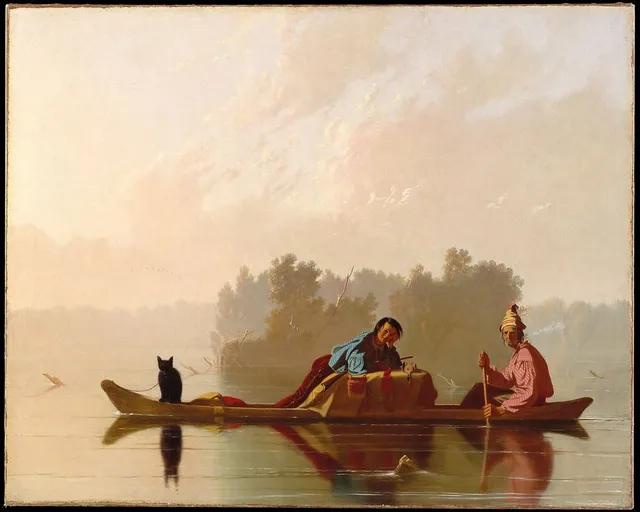
The human figure thus runs as a continuous thread—from Greek marble through Renaissance fresco to modernist rupture—against which landscape, still life, and abstraction define themselves. Even in collections weighted toward landscape, such as the river scenes of Corot, van Goyen, and Aert van der Neer or Bingham's *Fur Traders Descending the Missouri*, the human presence remains the element that gives scale, narrative, and meaning to the wider world.
Key artists
Works
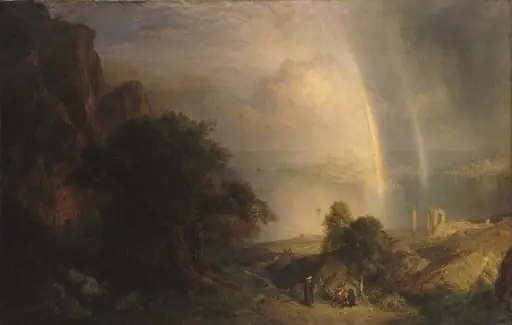 The Aegean Sea
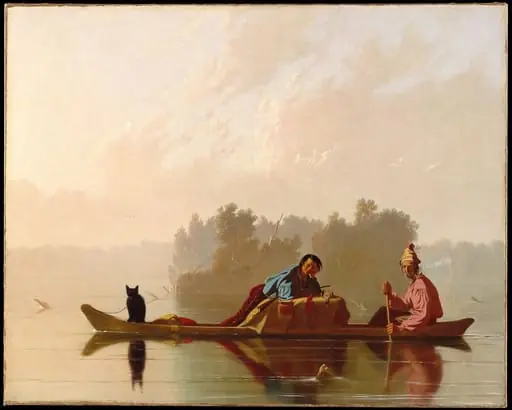 Fur Traders Descending the Missouri
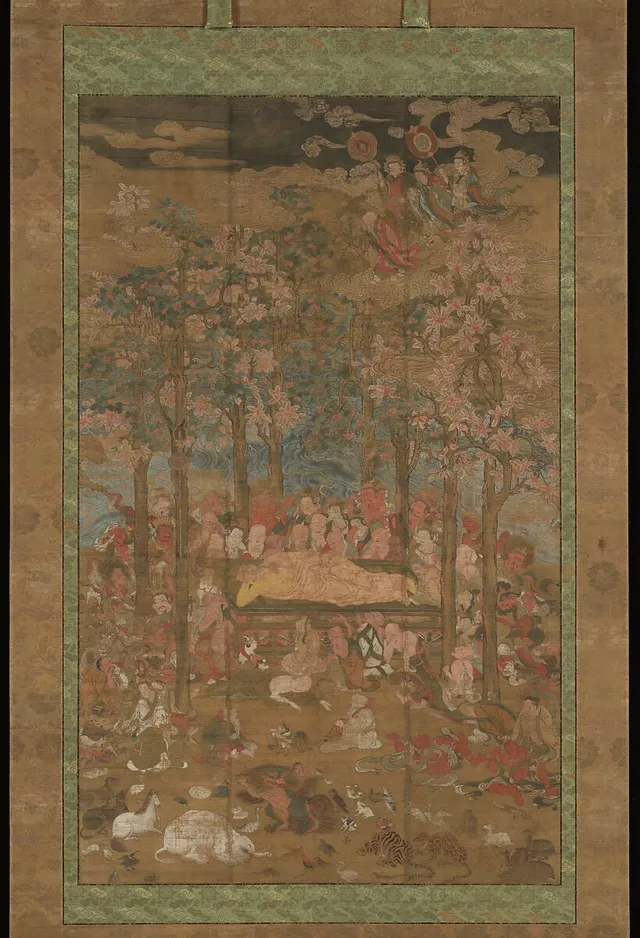
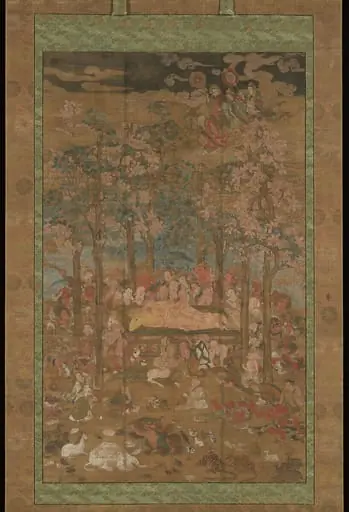 仏涅槃図|Death of the Historical Buddha (Nehan-zu)
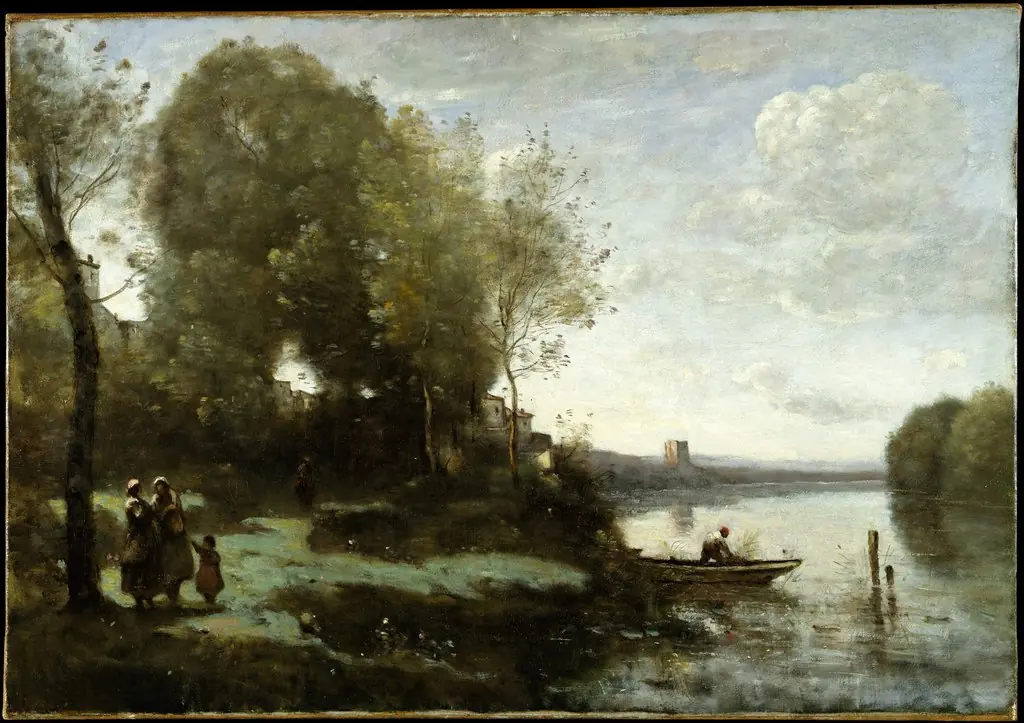 River with a Distant Tower
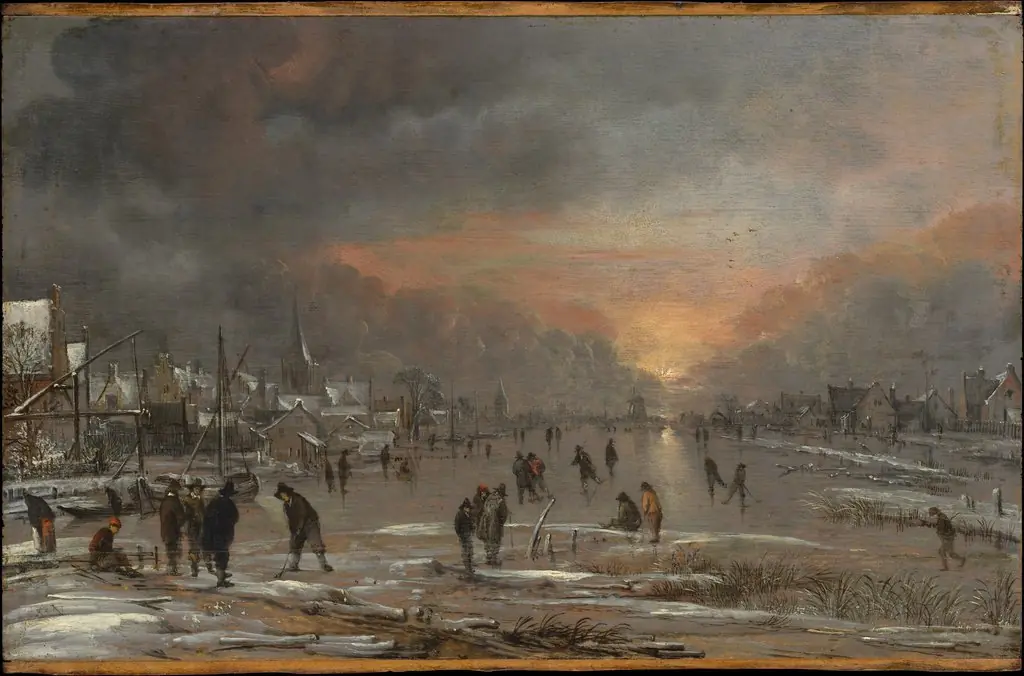 Sports on a Frozen River
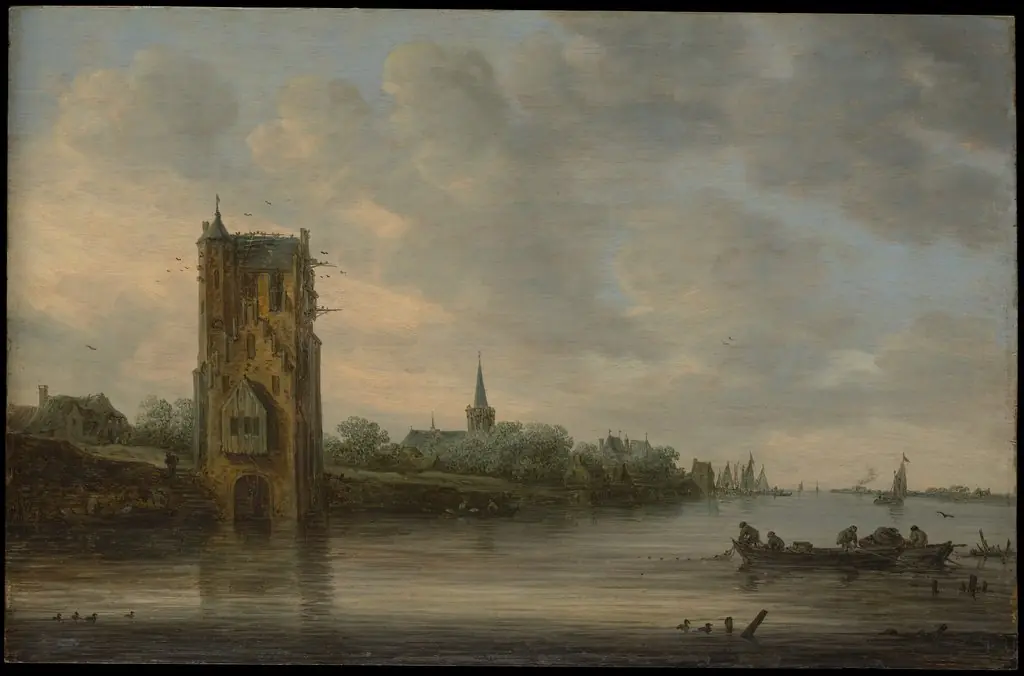 The Pelkus Gate near Utrecht
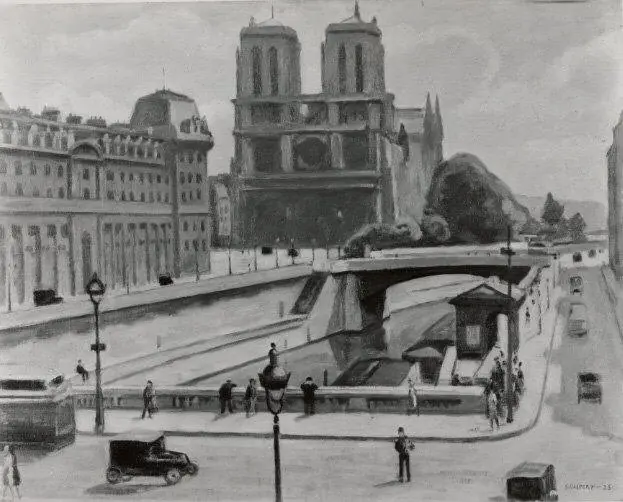 Notre Dame, Paris
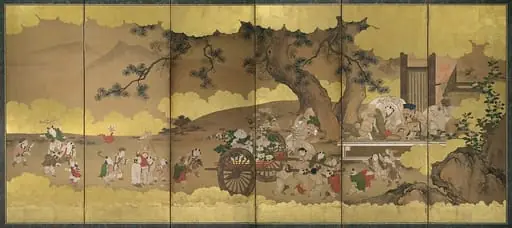 狩野周信筆 七福神唐子図屏風|Seven Gods of Good Fortune and Chinese Children
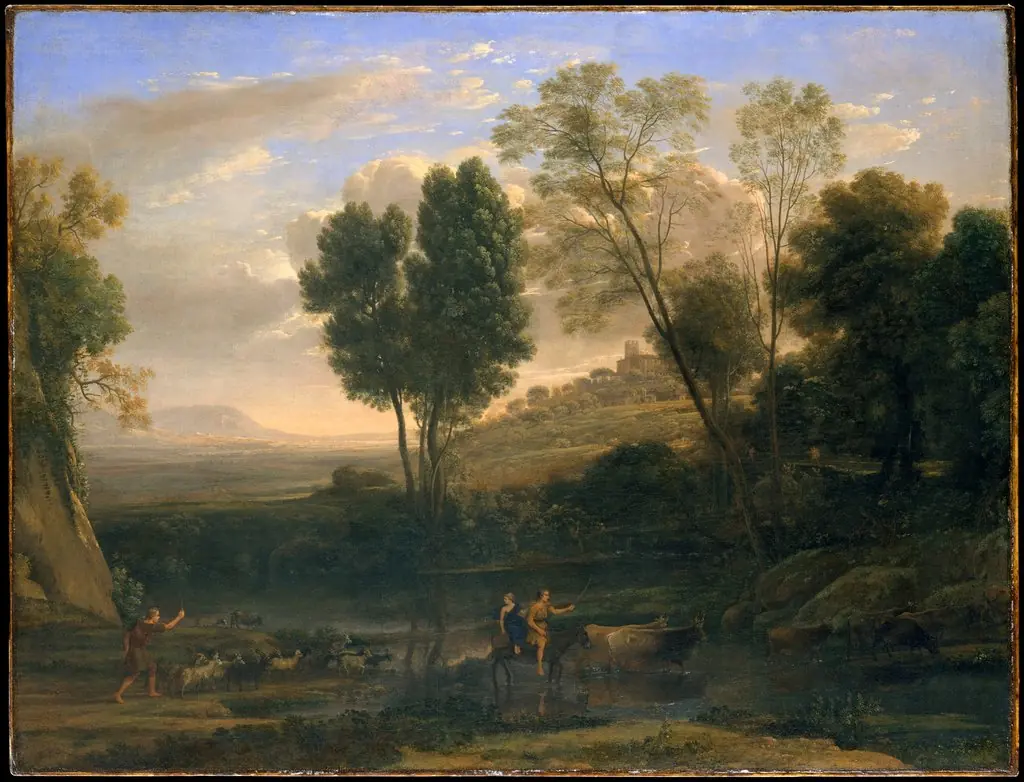 Sunrise
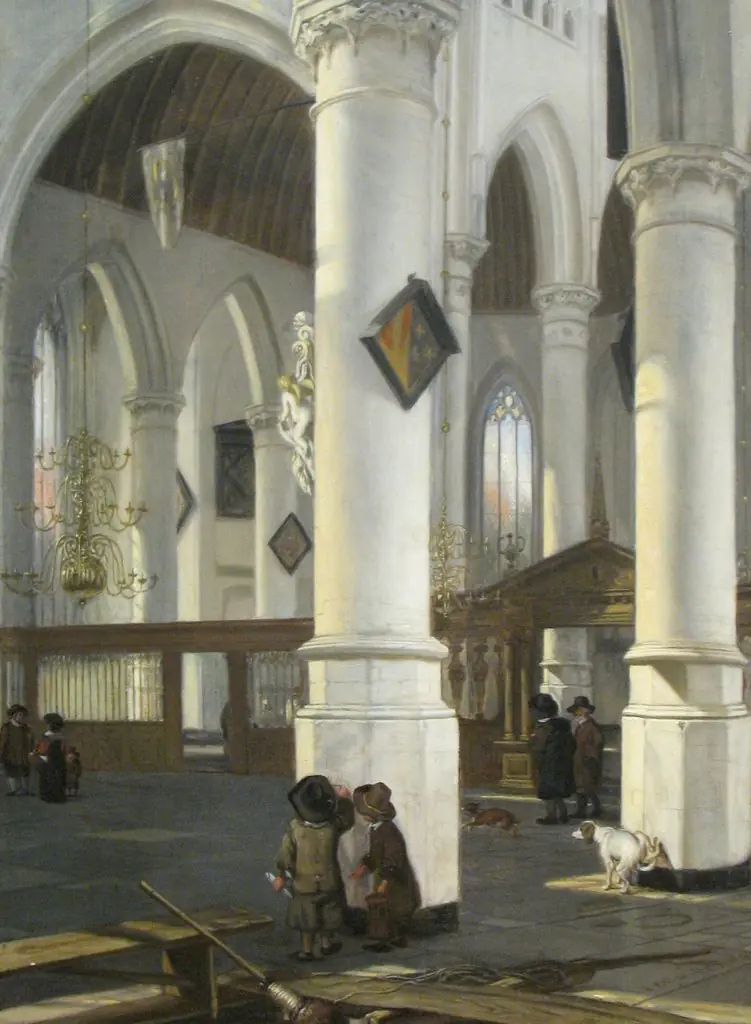 Interior of the Oude Kerk, Delft
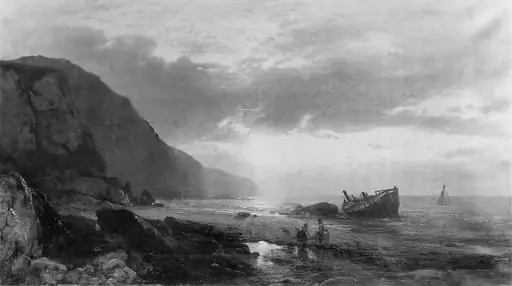 Seashore, Morning
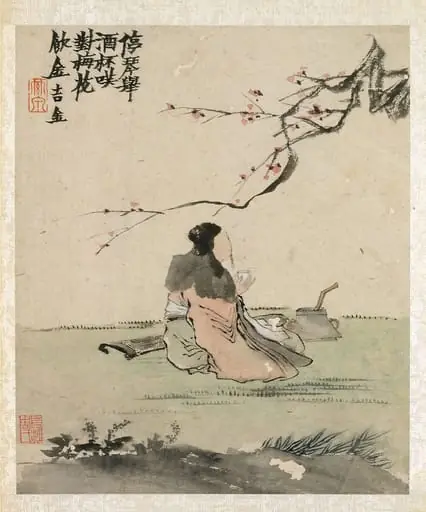 Untitled
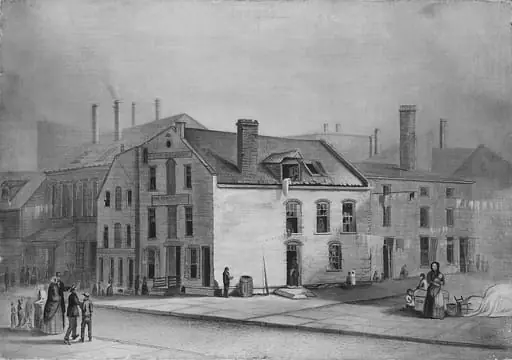 Old Brewery, Five Points Mission, New York
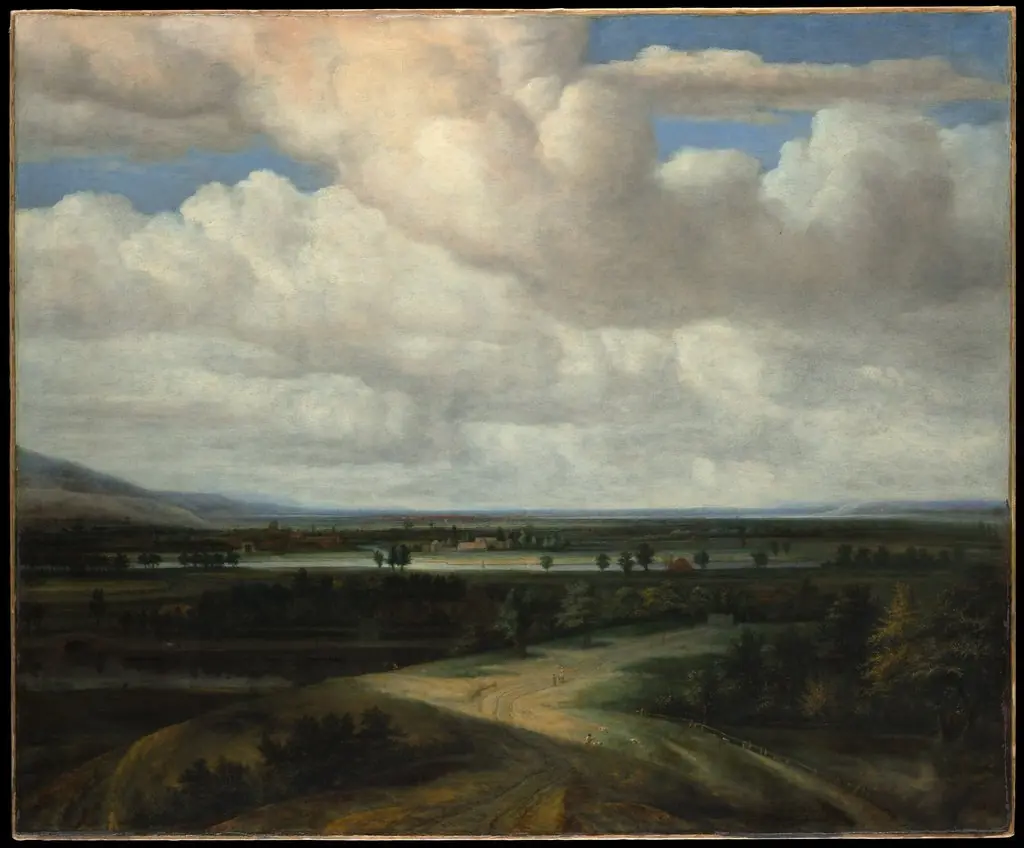 A Panoramic Landscape with a Country Estate
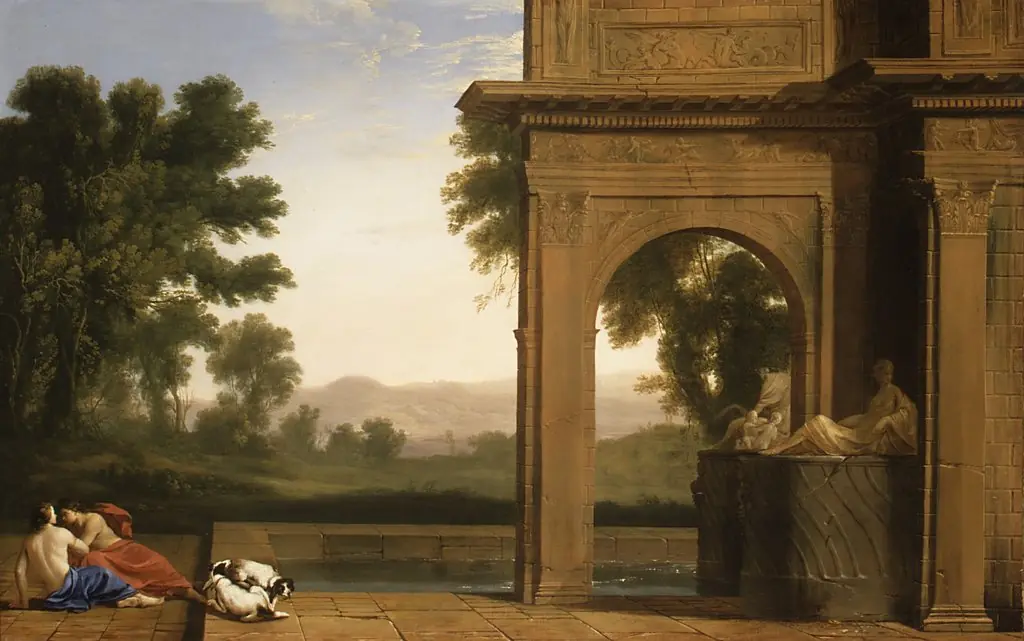 Classical Landscape with Figures
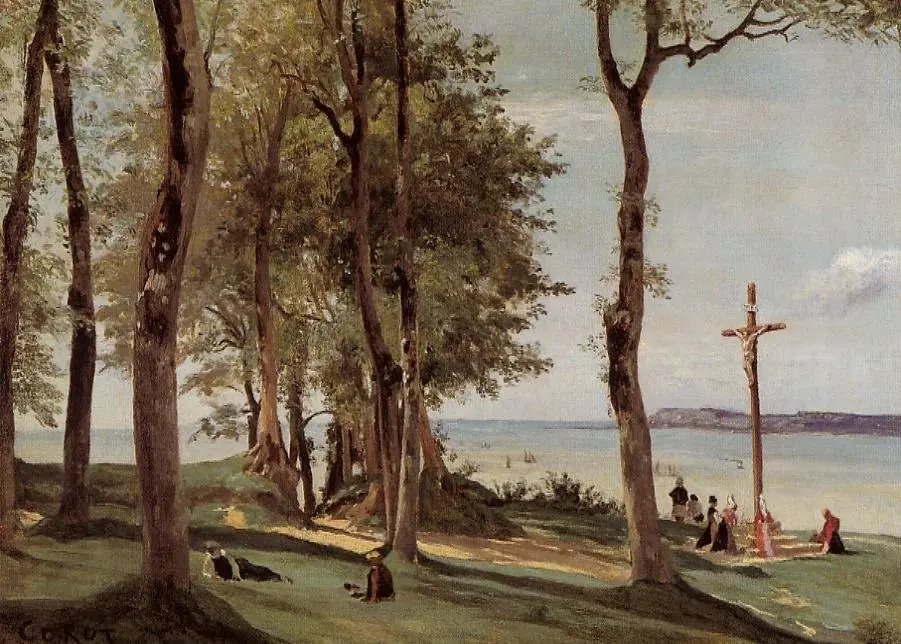 Honfleur: Calvary
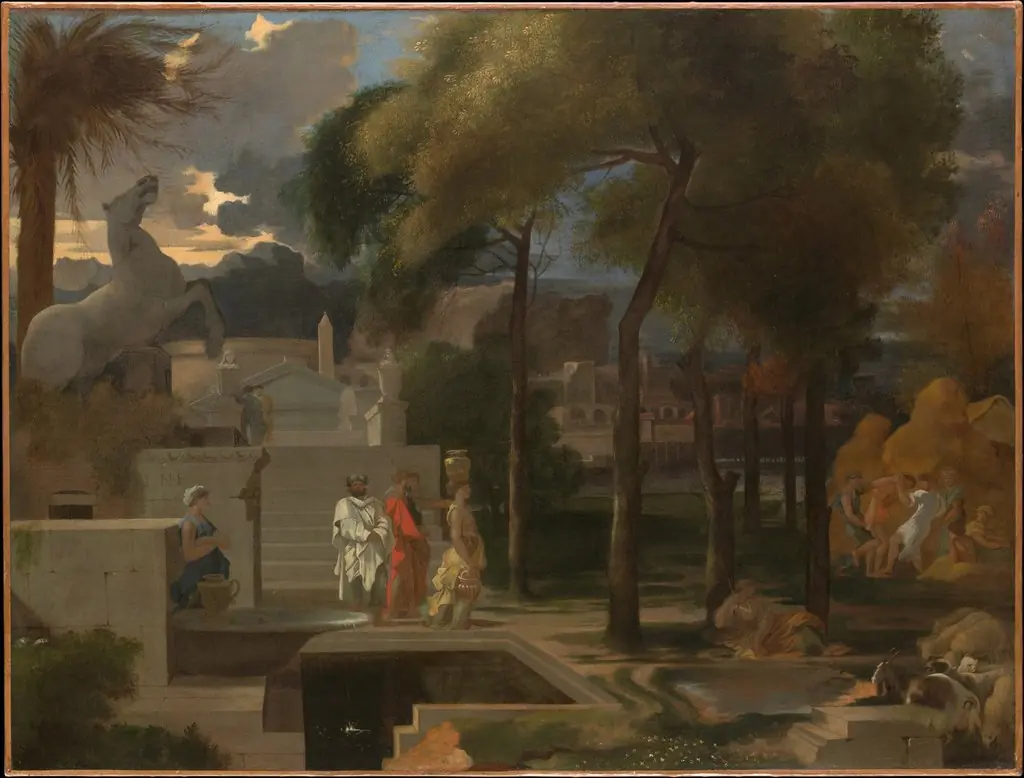 A Classical Landscape
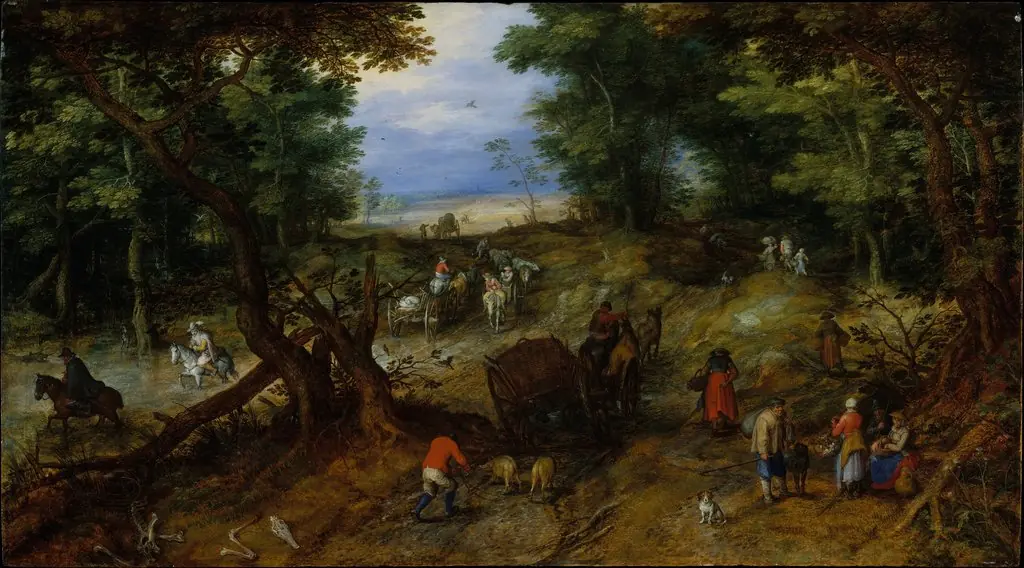 A Woodland Road with Travelers
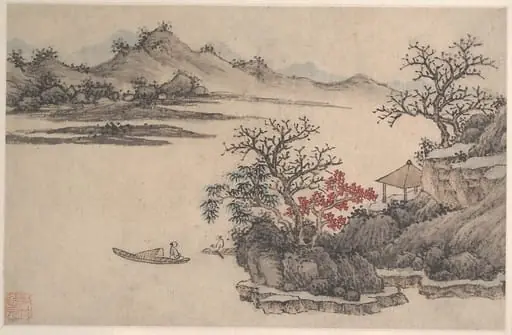 Untitled
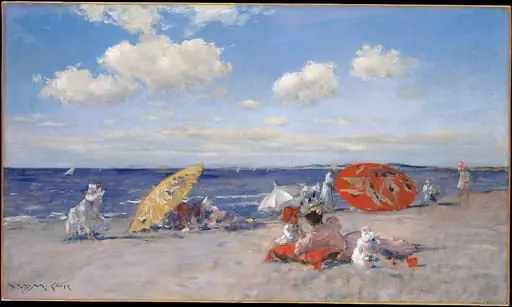 At the Seaside
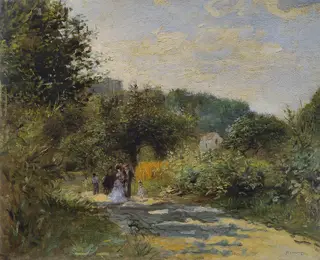 A Road in Louveciennes
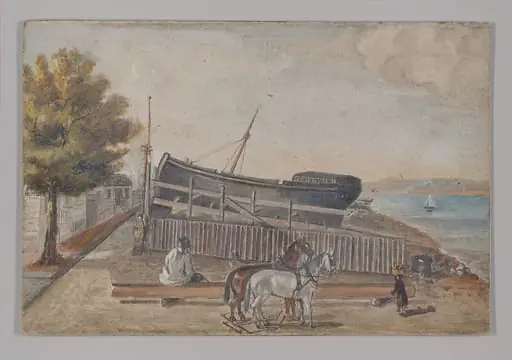 Berg's Ship Yard
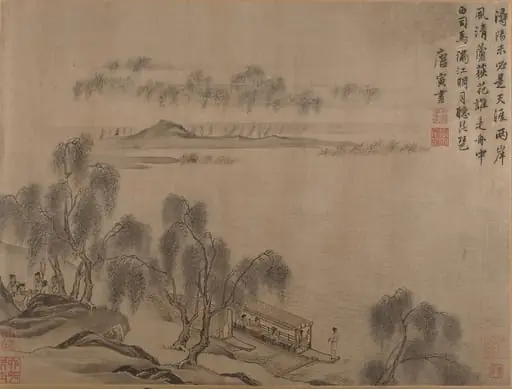 Untitled
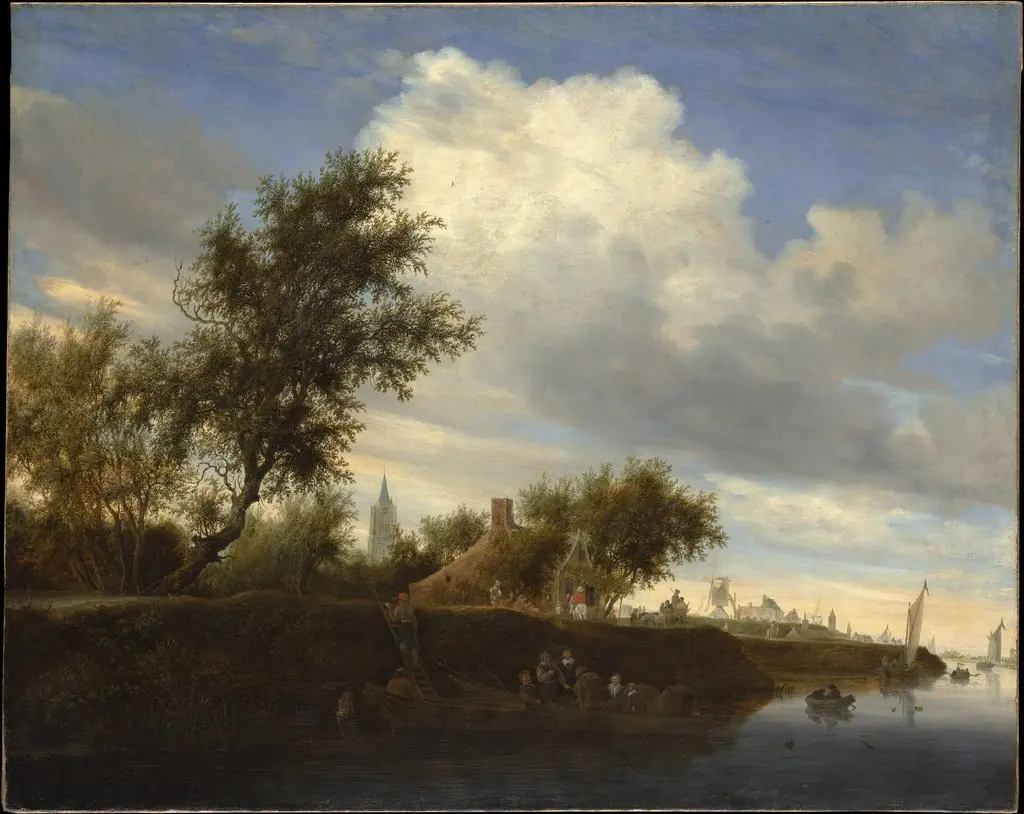 Ferry near Gorinchem
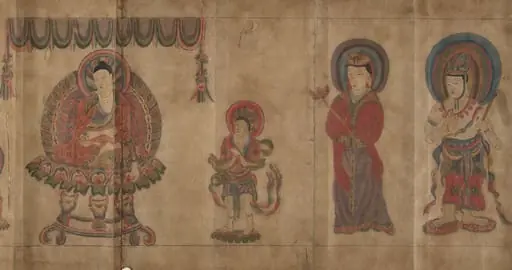 Untitled
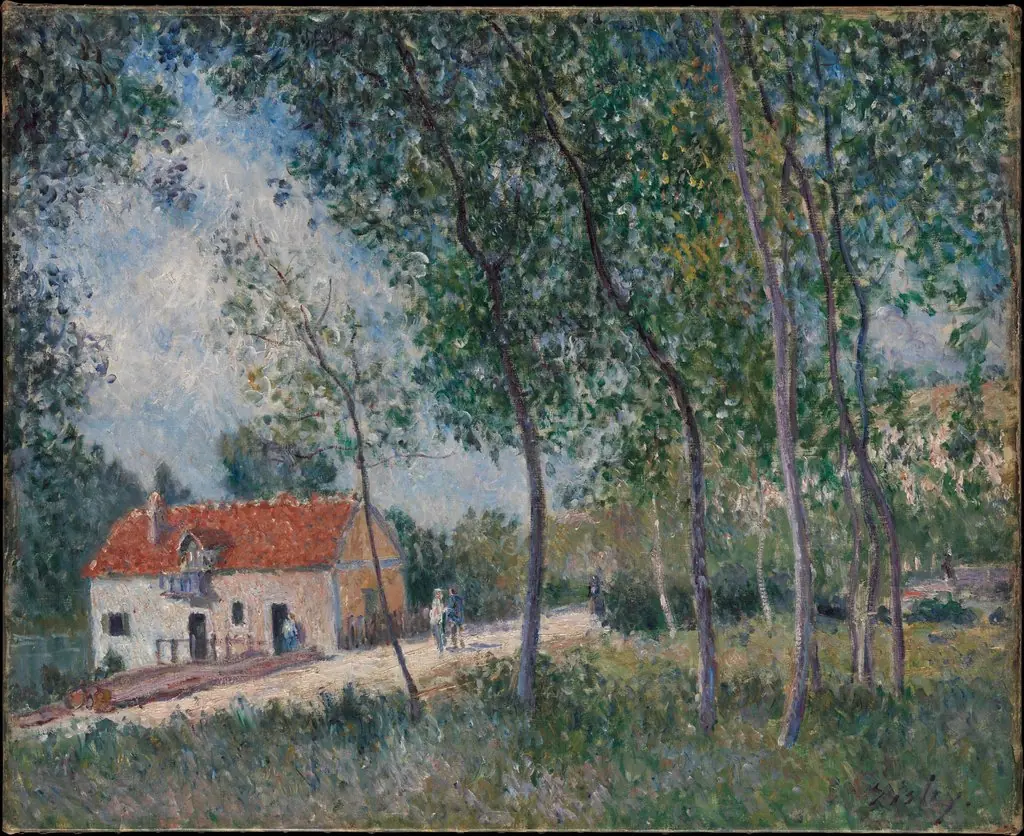 The Road from Moret to Saint-Mammès
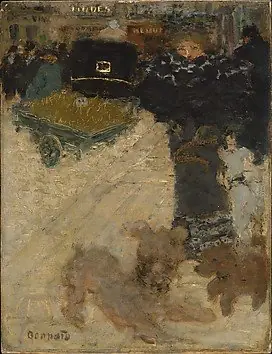 Street Scene, Place Clichy
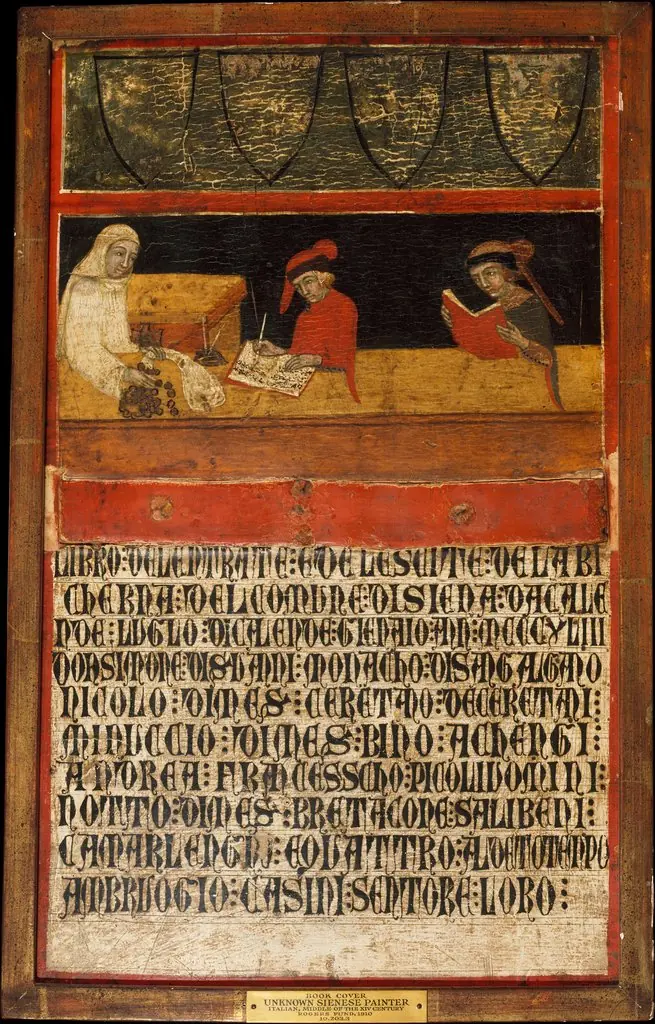 Book Cover
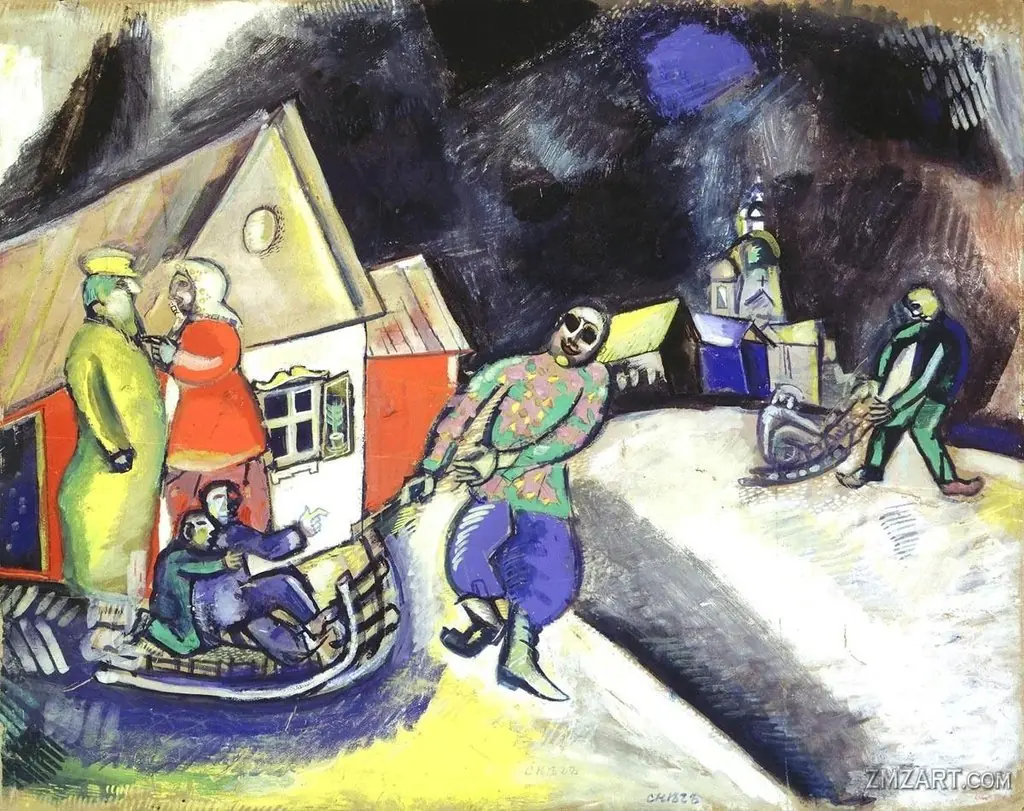 Snow, Winter in Vitebsk
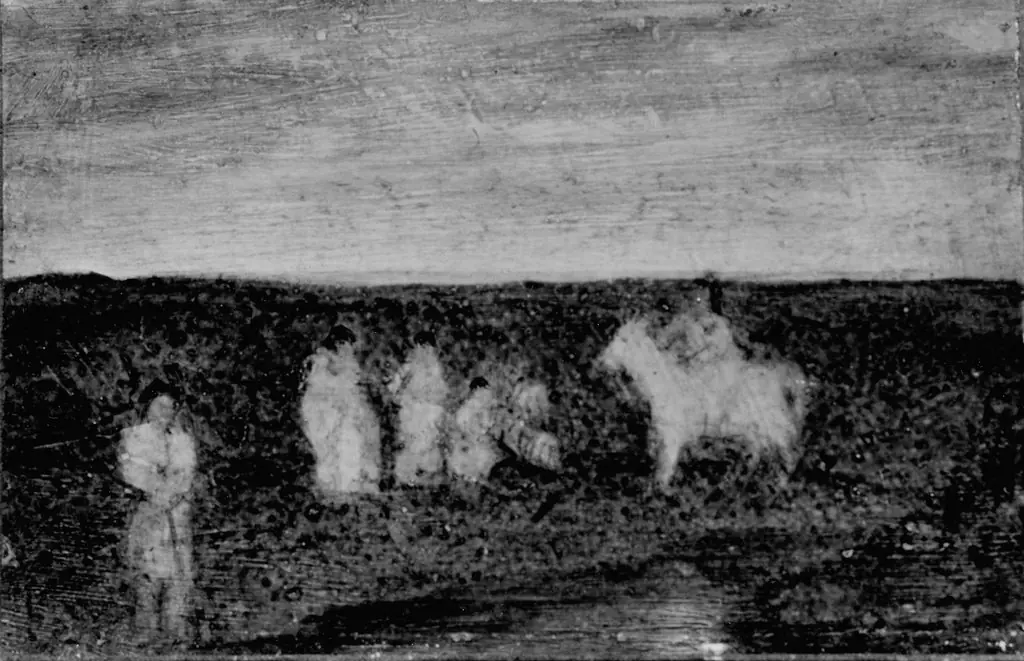 Landscape and Figures
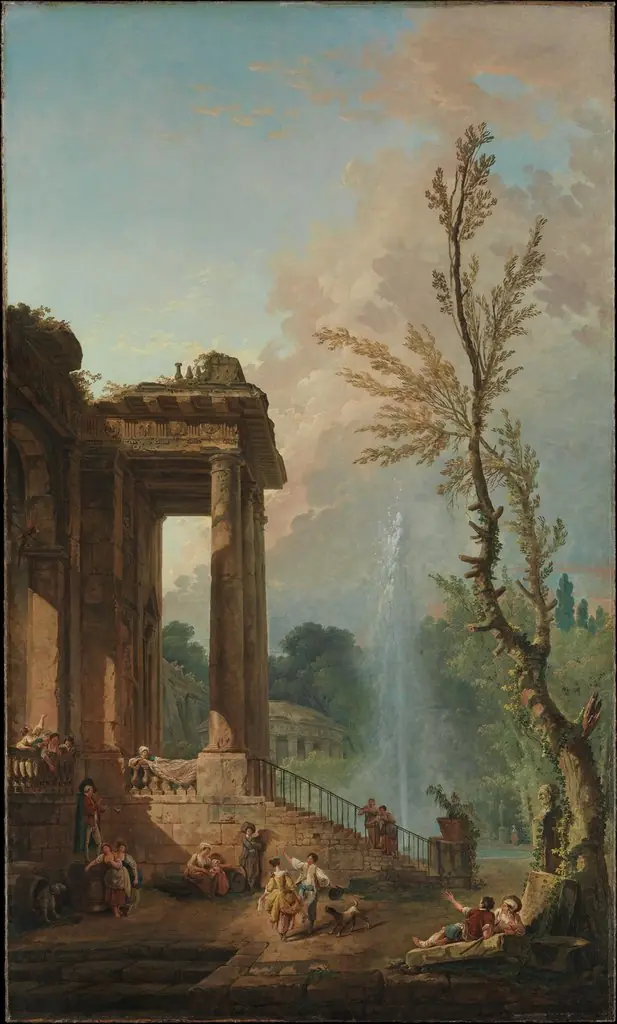 The Portico of a Country Mansion
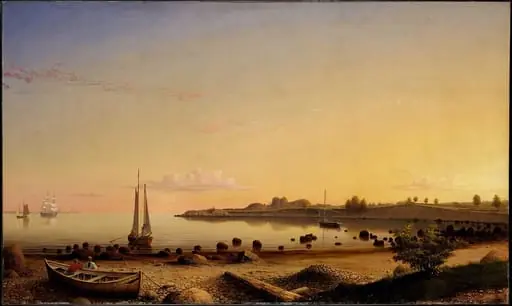 Stage Fort across Gloucester Harbor
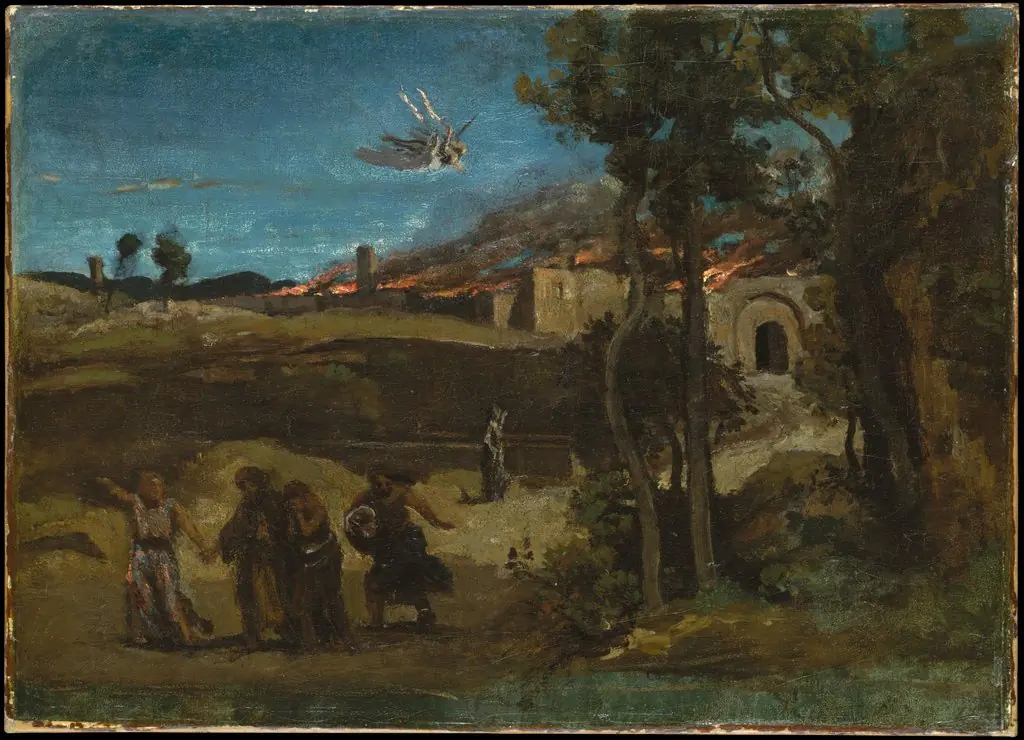 Study for "The Destruction of Sodom"
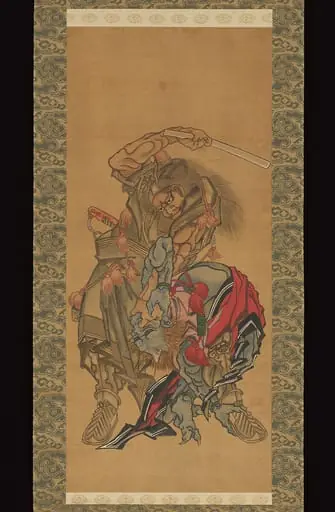 Untitled
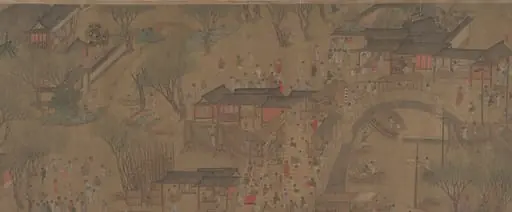 清 佚名 清明上河圖|Going Upriver on the Qingming Festival
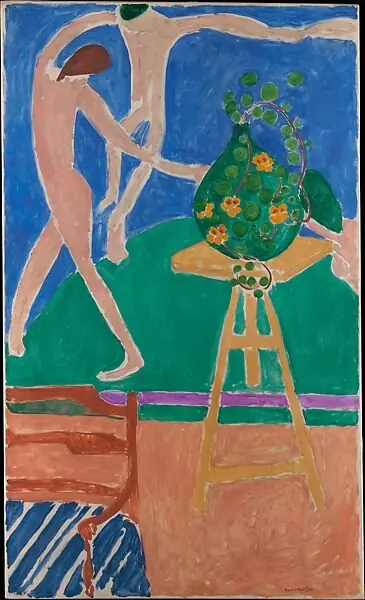 Nasturtiums with the Painting "Dance" I
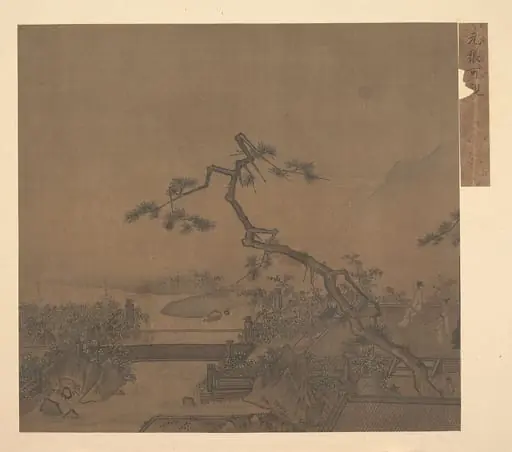 明/清 佚名 舊傳 元張可觀 月映松臺圖 冊頁|Moonlit terrace
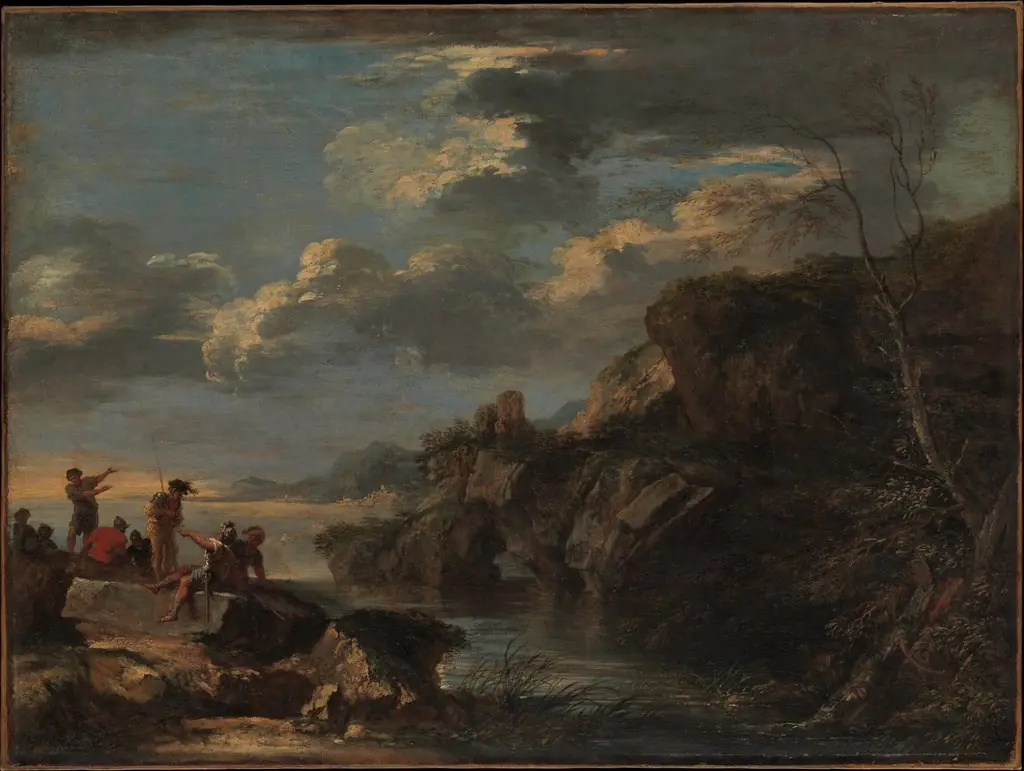 Bandits on a Rocky Coast
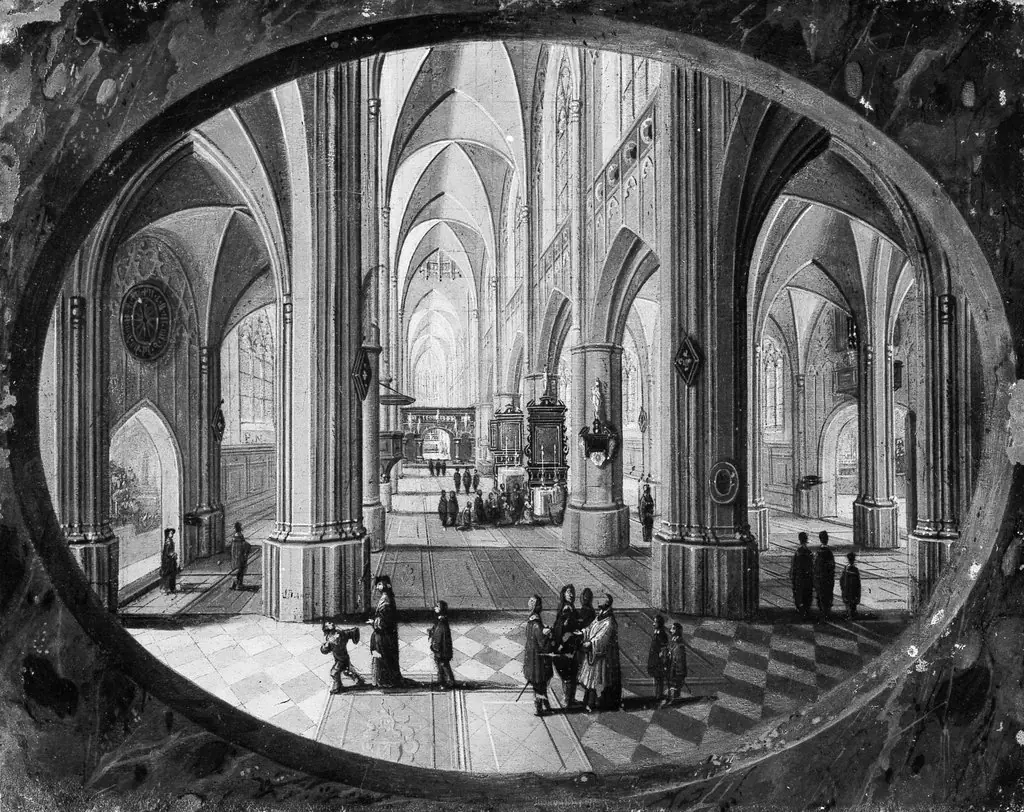 Interior of a Gothic Church by Day
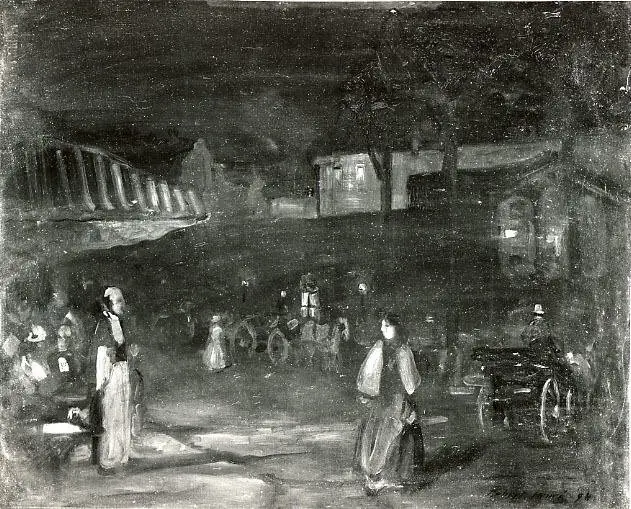 Paris Night
 Untitled
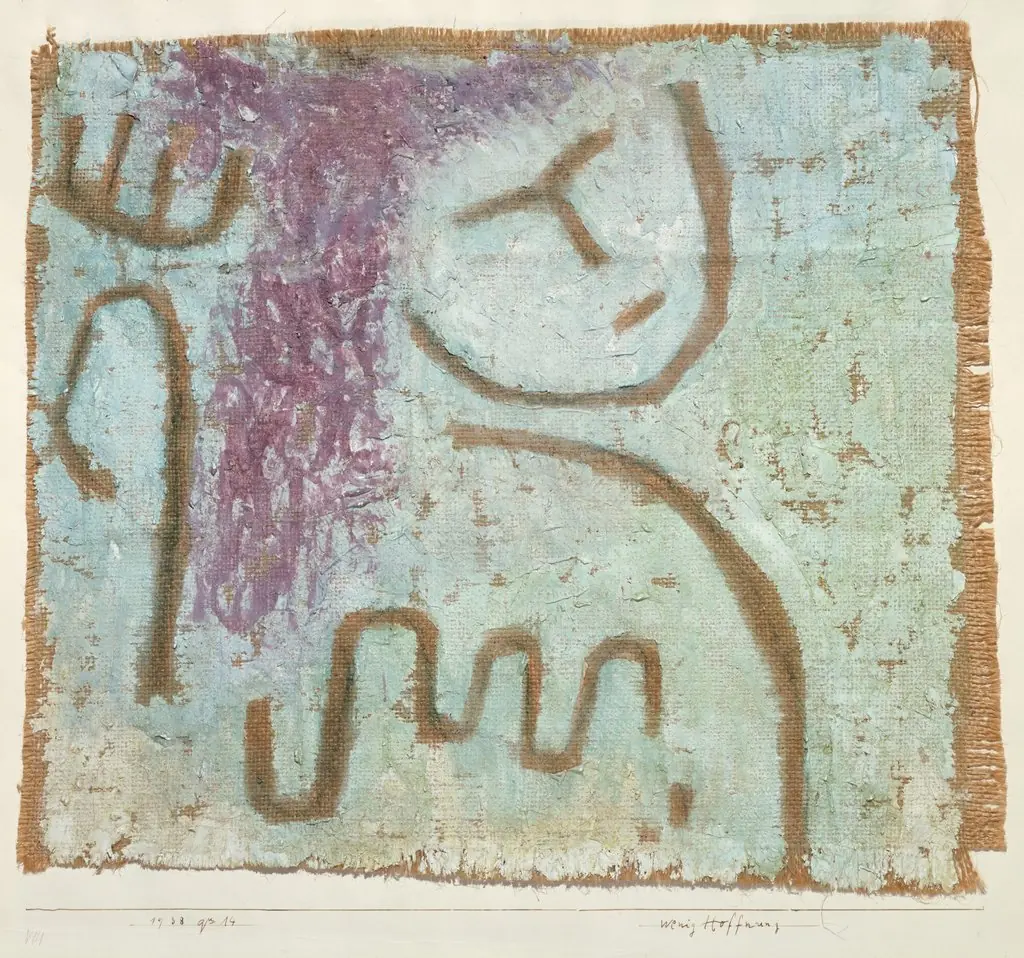 Little Hope
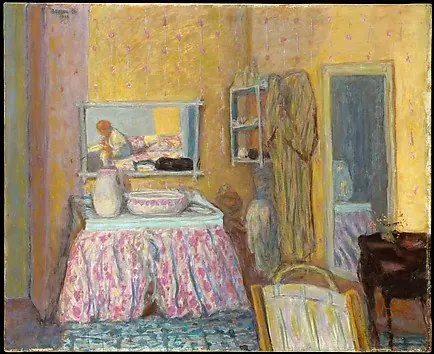 The Dressing Room
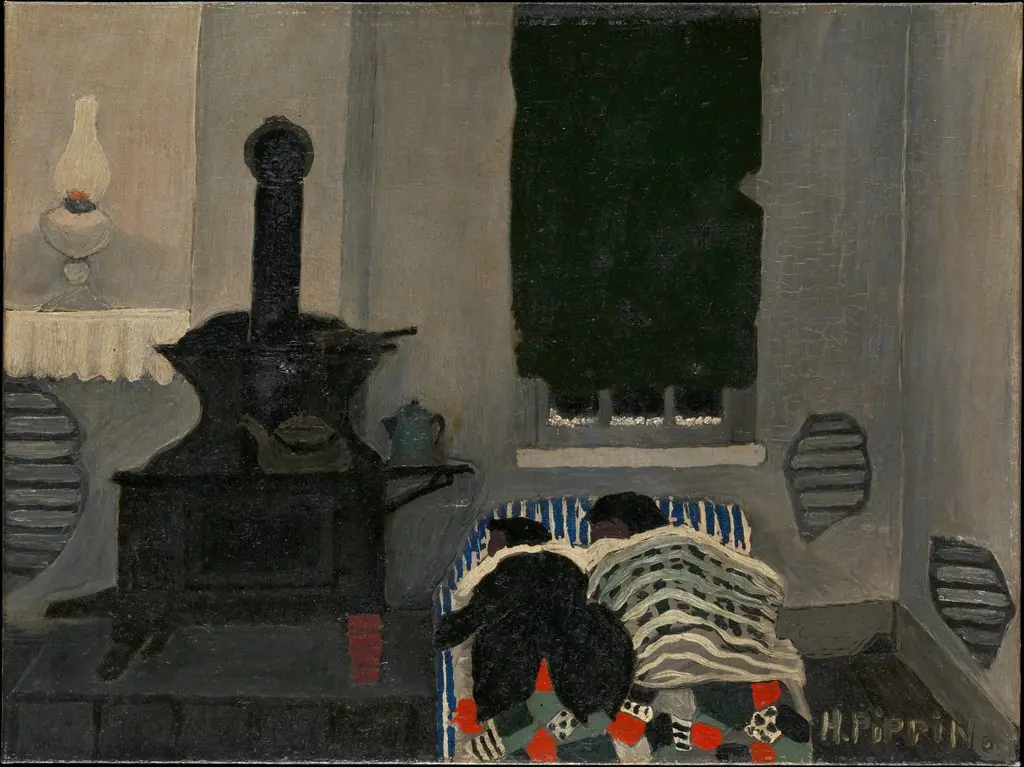 Asleep
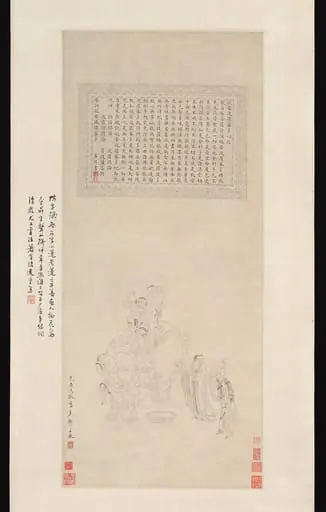 清 陳字 洗象圖 軸|Washing the White Elephant
 The Beach, Late Afternoon
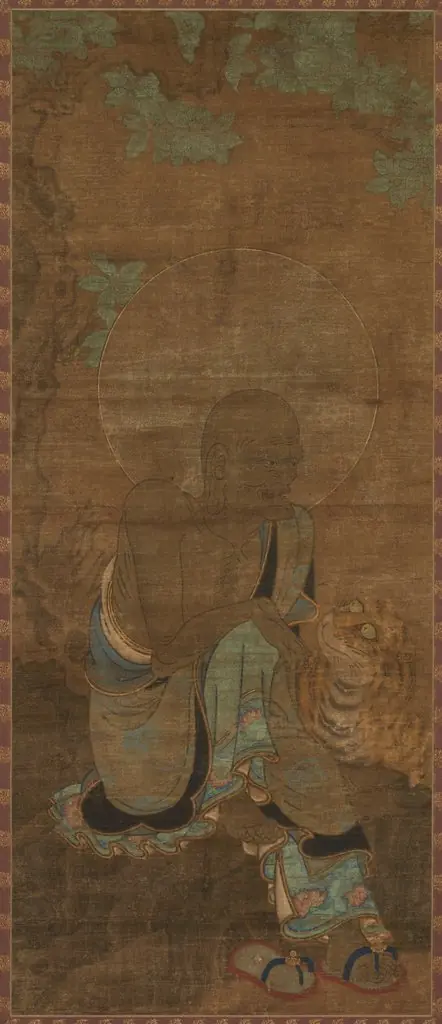 Rakkan (Arhat)
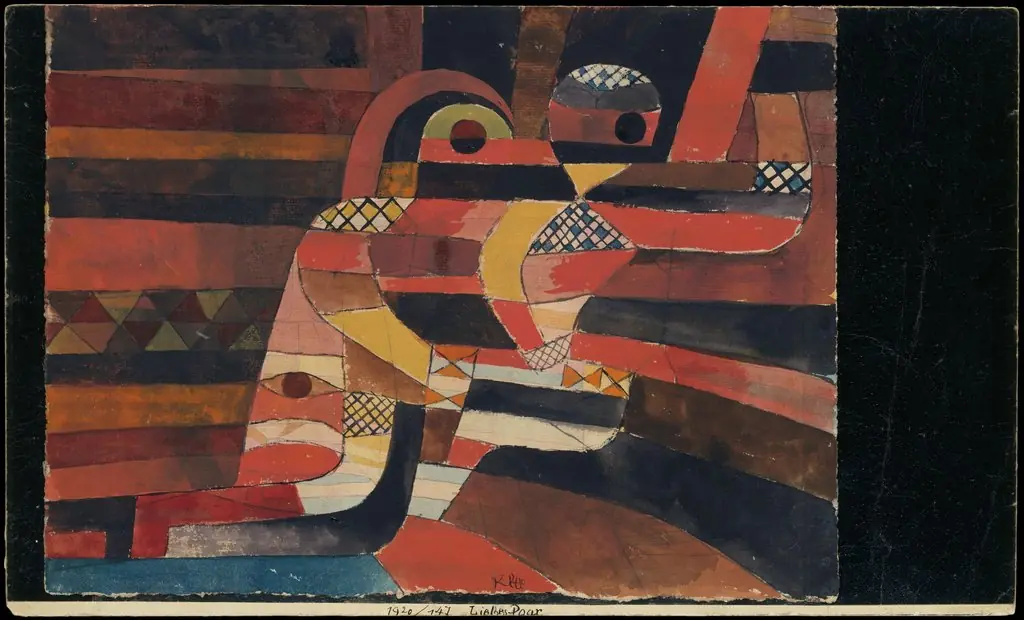 Lovers
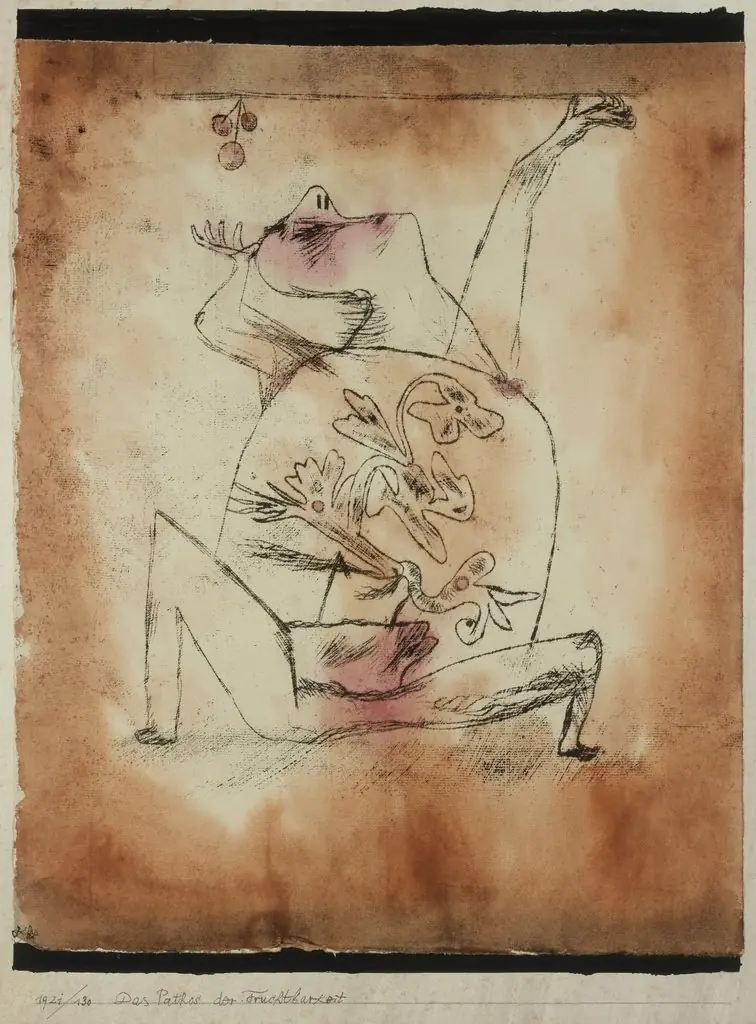 The Pathos of Fertility
 Untitled
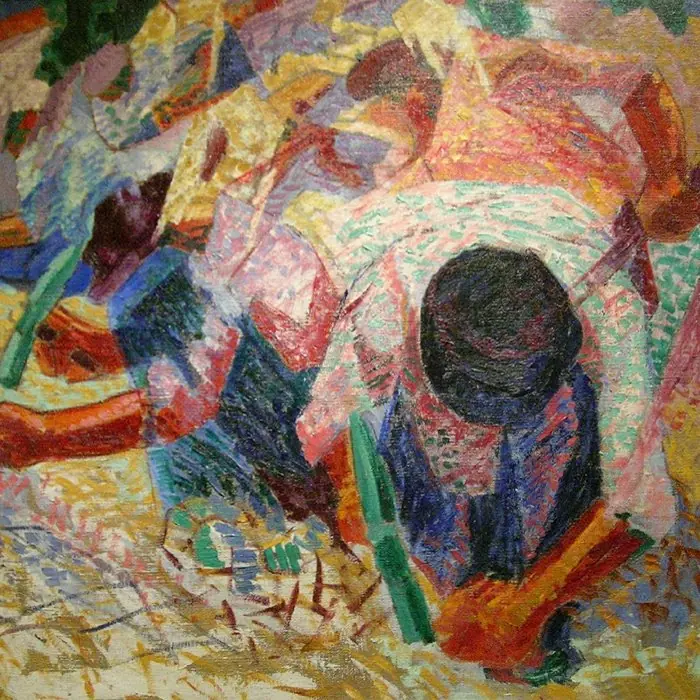 The Street Pavers
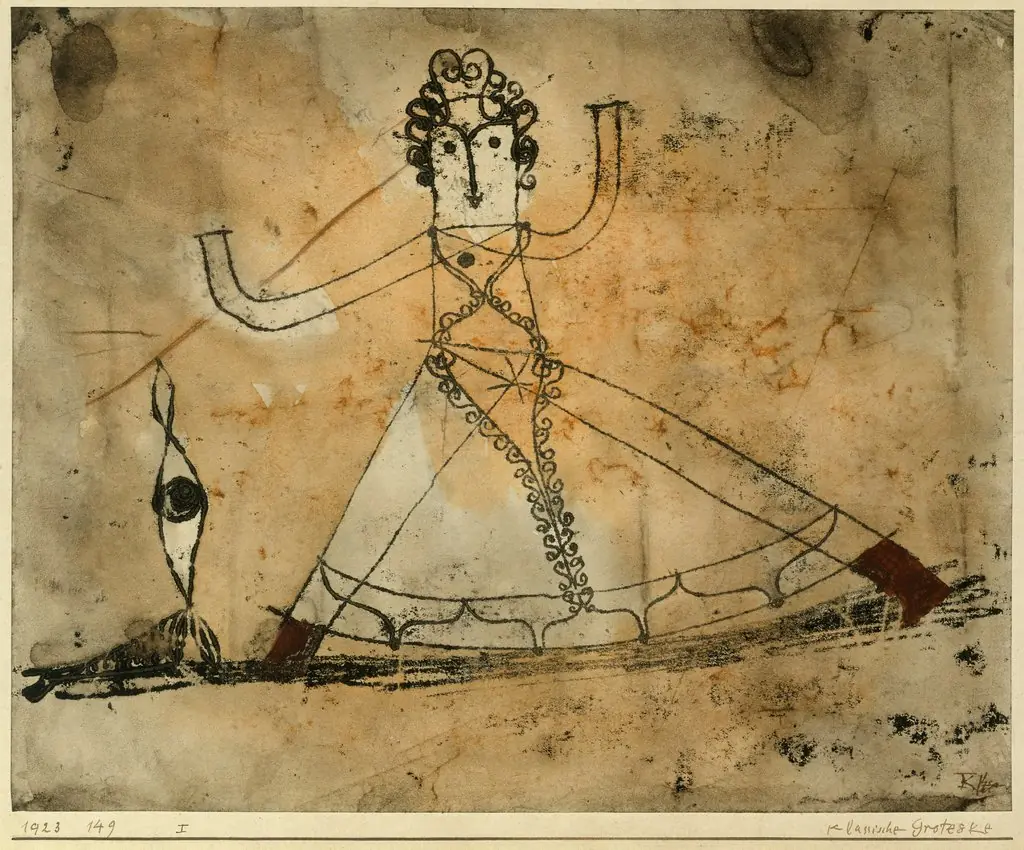 Classical Grotesque
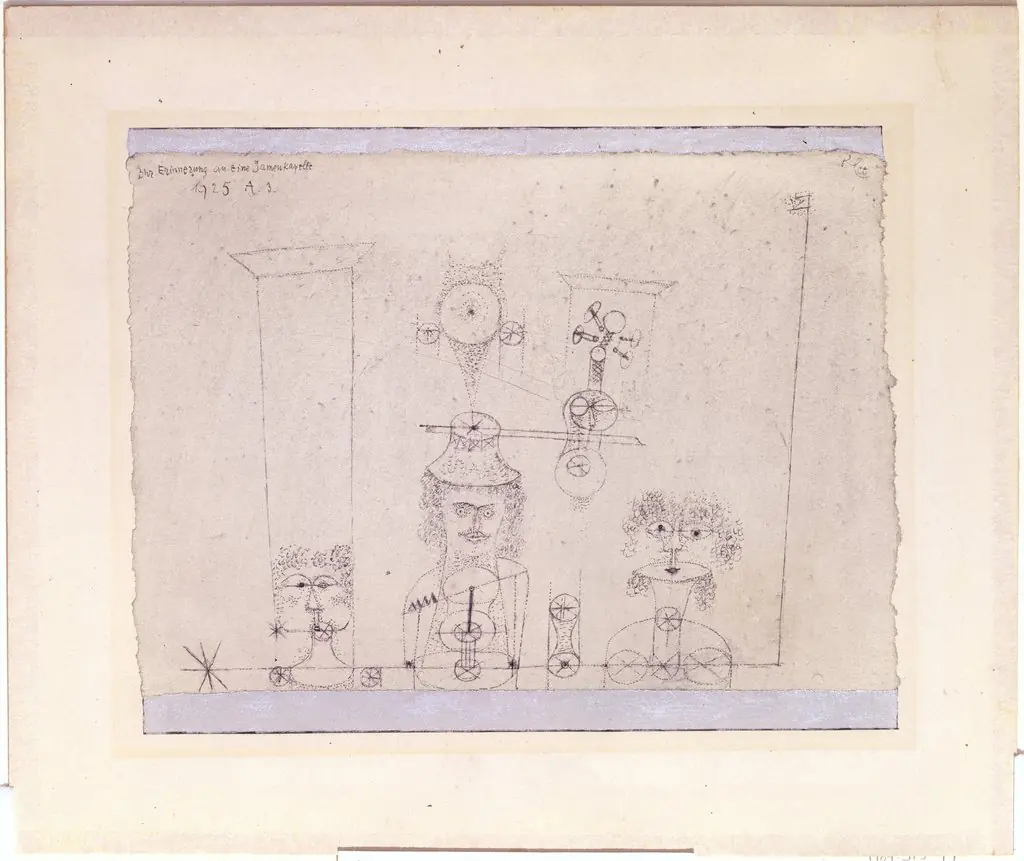 In Memory of an All-Girl Band
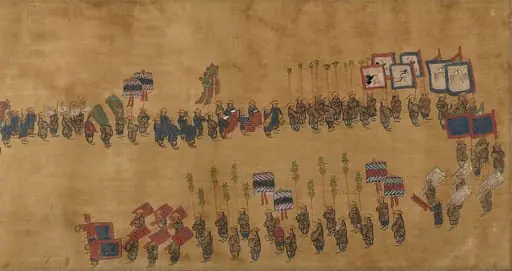 Untitled
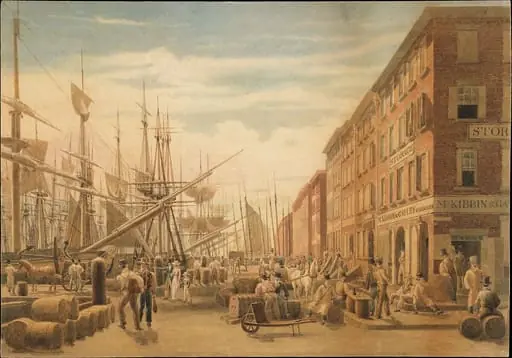 View of South Street, from Maiden Lane, New York City
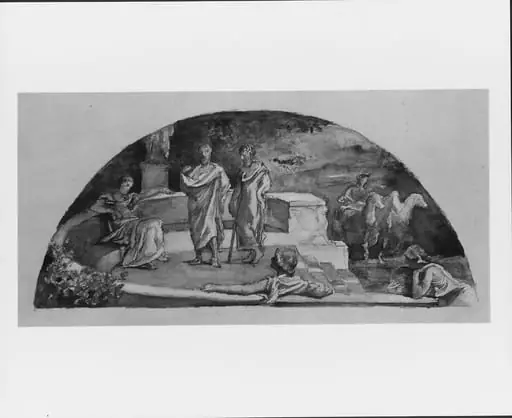 The Relation of the Individual to the State: Socrates and His Friends Discuss "The Republic," as in Plato's Account; Color Study for Mural, Supreme Court Room, Saint Paul, Minnesota State Capitol, Saint Paul
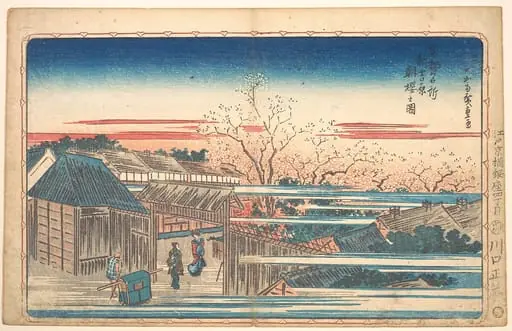 東都名所 新吉原朝桜之図|Morning Cherries at Yoshiwara
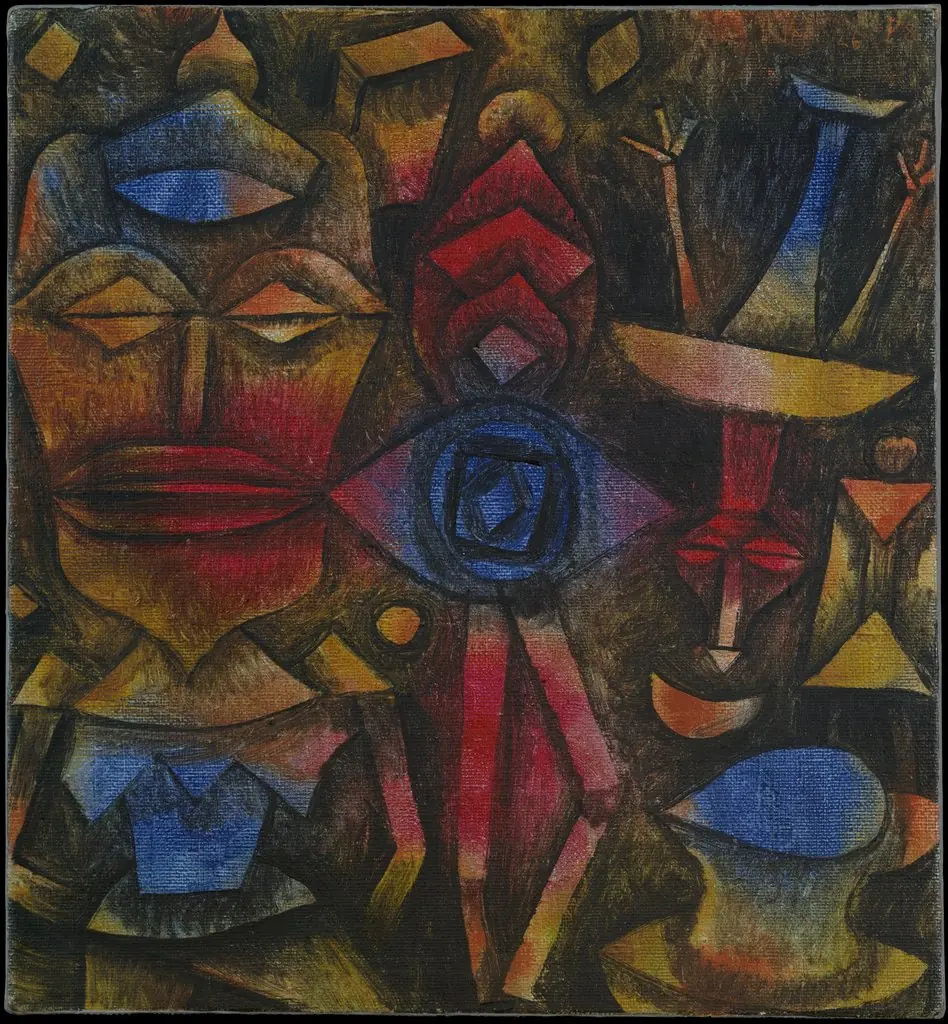 Collection of Figurines
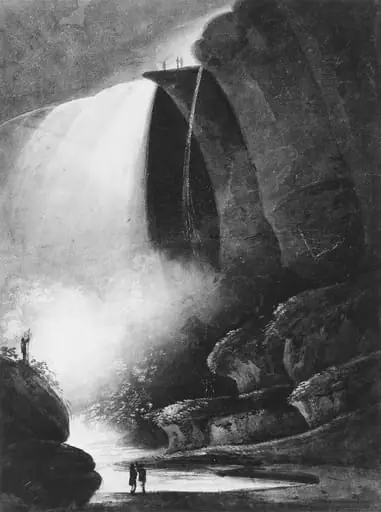 Niagara Falls—Table Rock by Moonlight
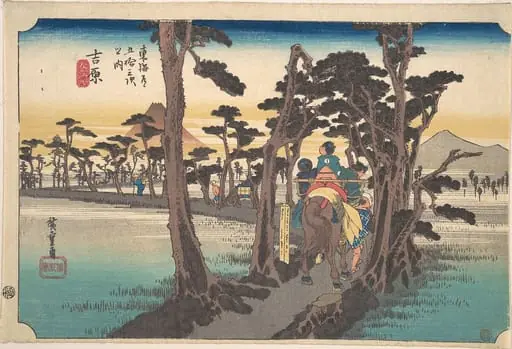 東海道五十三次之内 吉原 左富士|Yoshiwara, Hidari Fuji
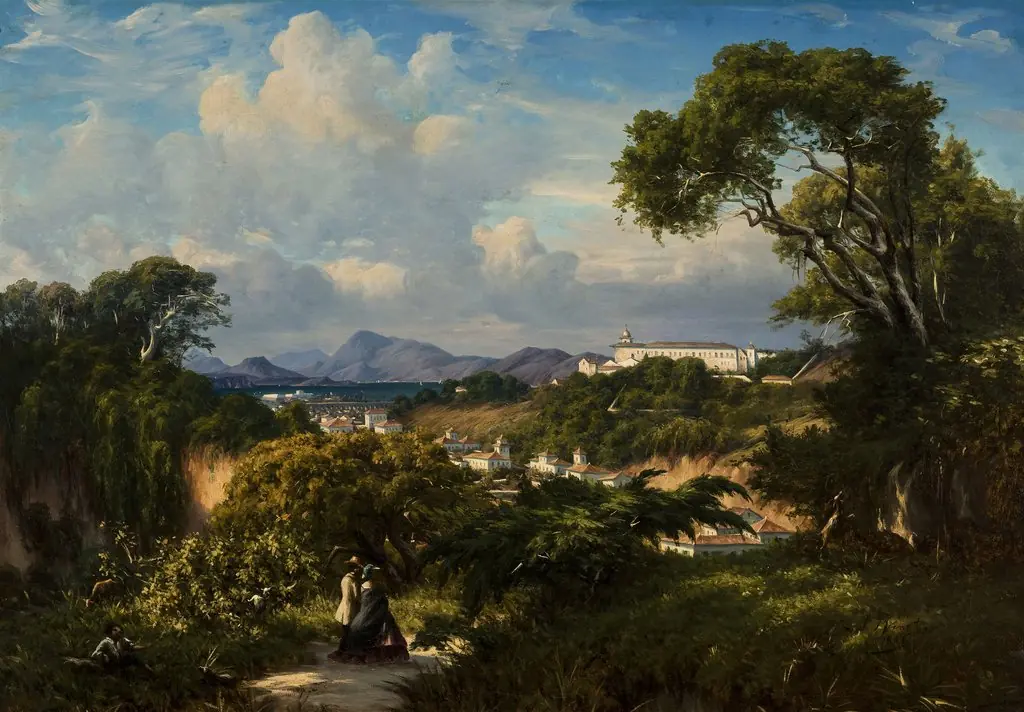 View of Santa Teresa Convent from the Heights of Paula Matos
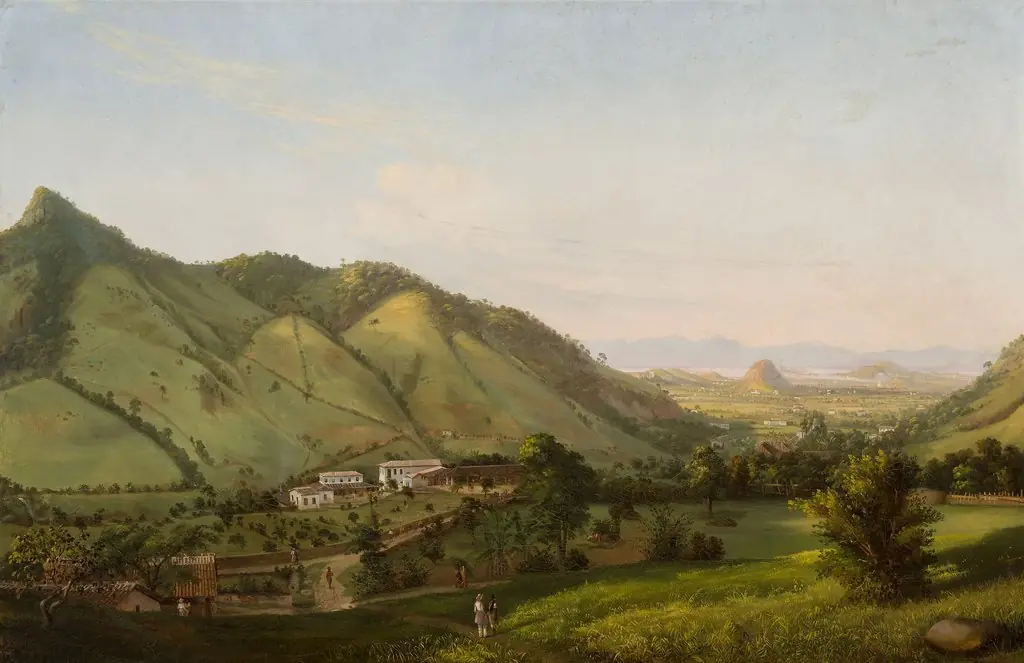 Meuron factory in Andaraí, Río de Janeiro
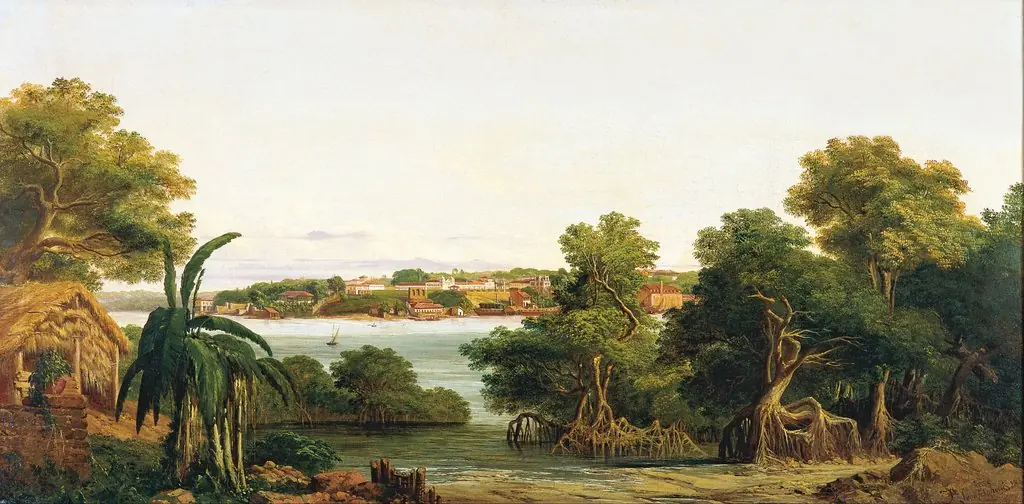 View of São Luis do Maranhão
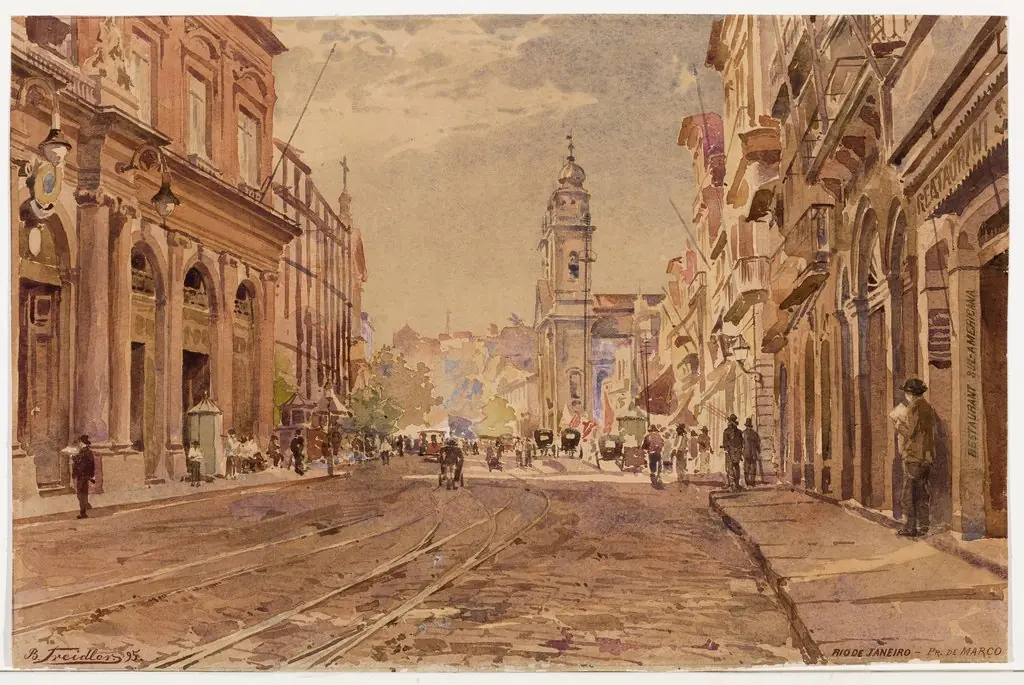 Rio de Janeiro - Pr. de Março
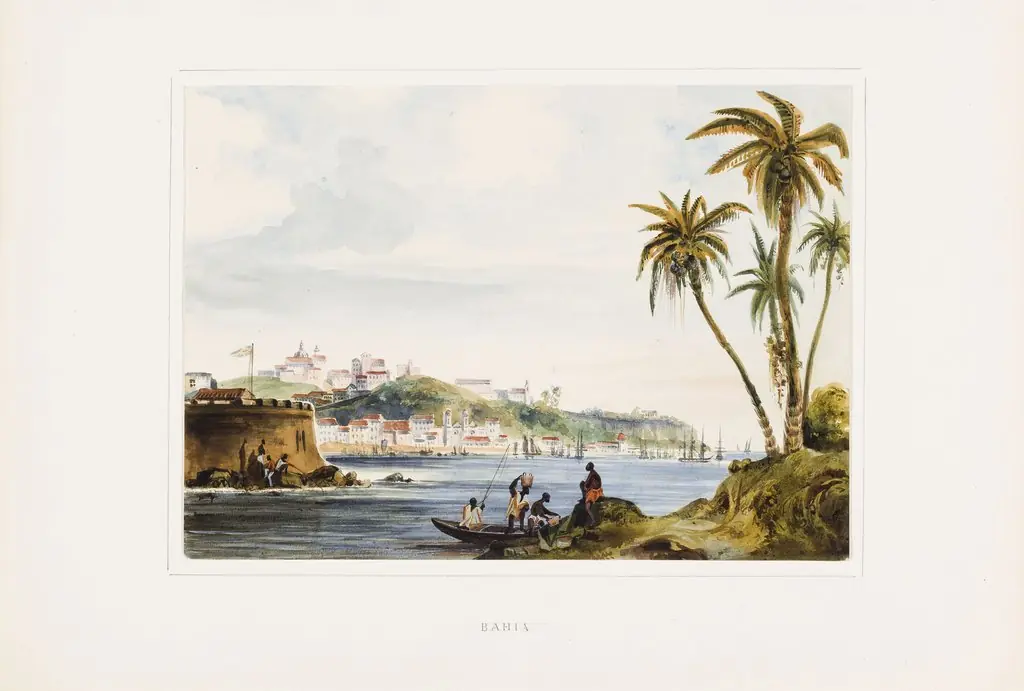 Bahia
Bahia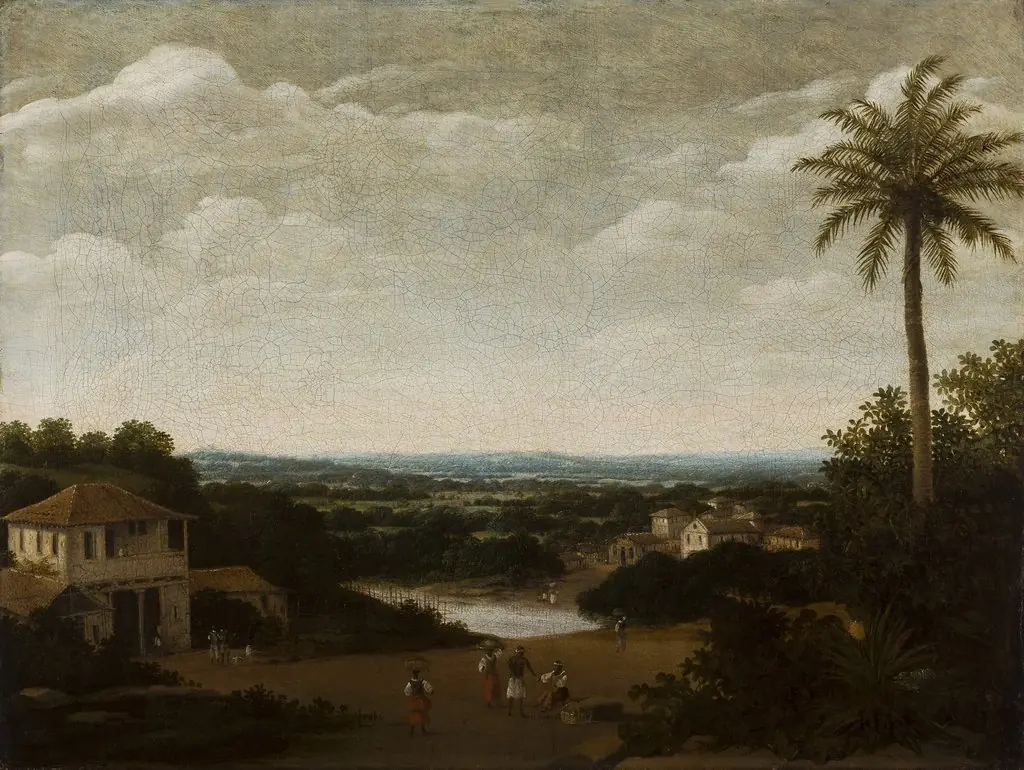 Vilarejo (atribuído)
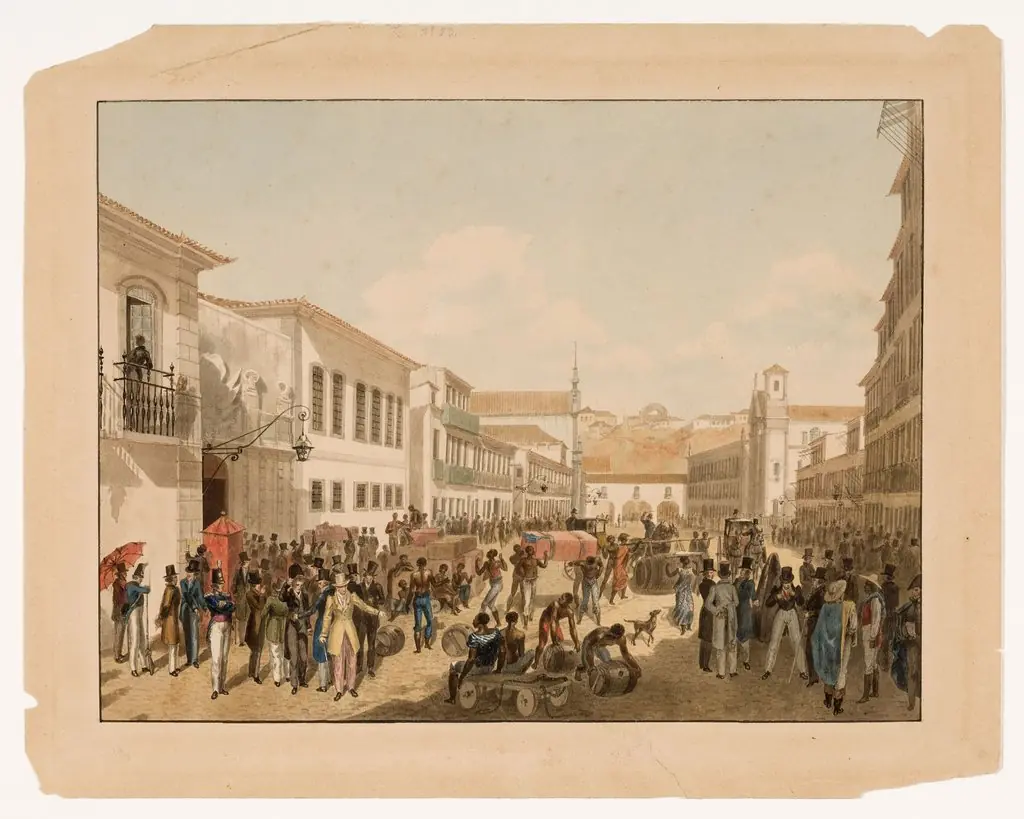 Rua Direita, Rio de Janeiro (atribuído)
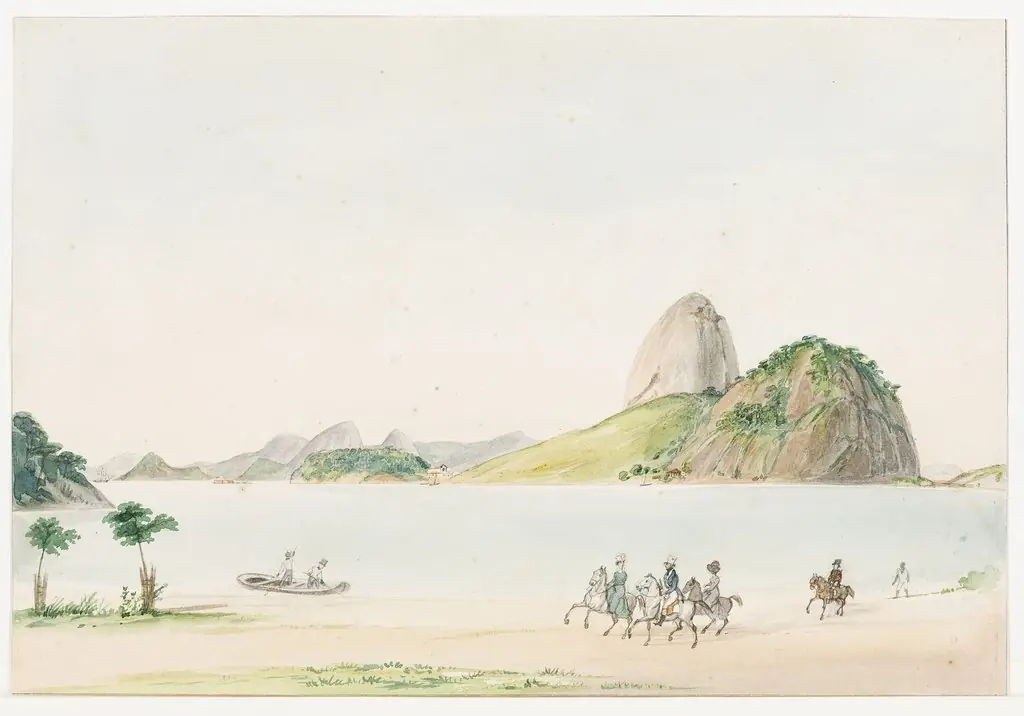 Praia de Botafogo com Pão de Açúcar (atribuído)
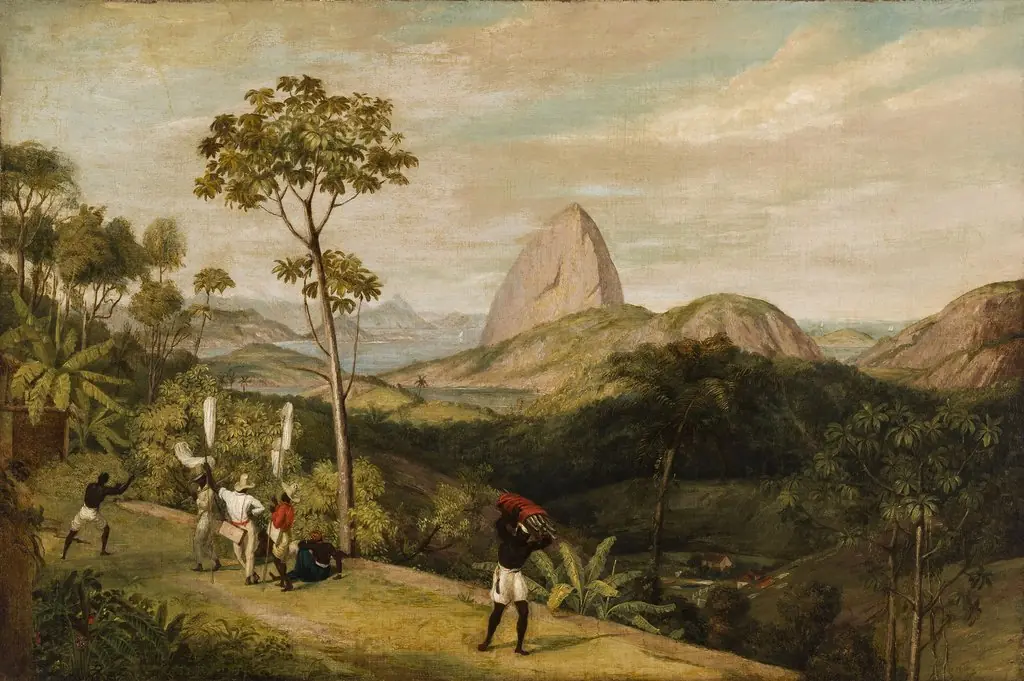 View of Sugarloaf Mountain from the Silvestre Road
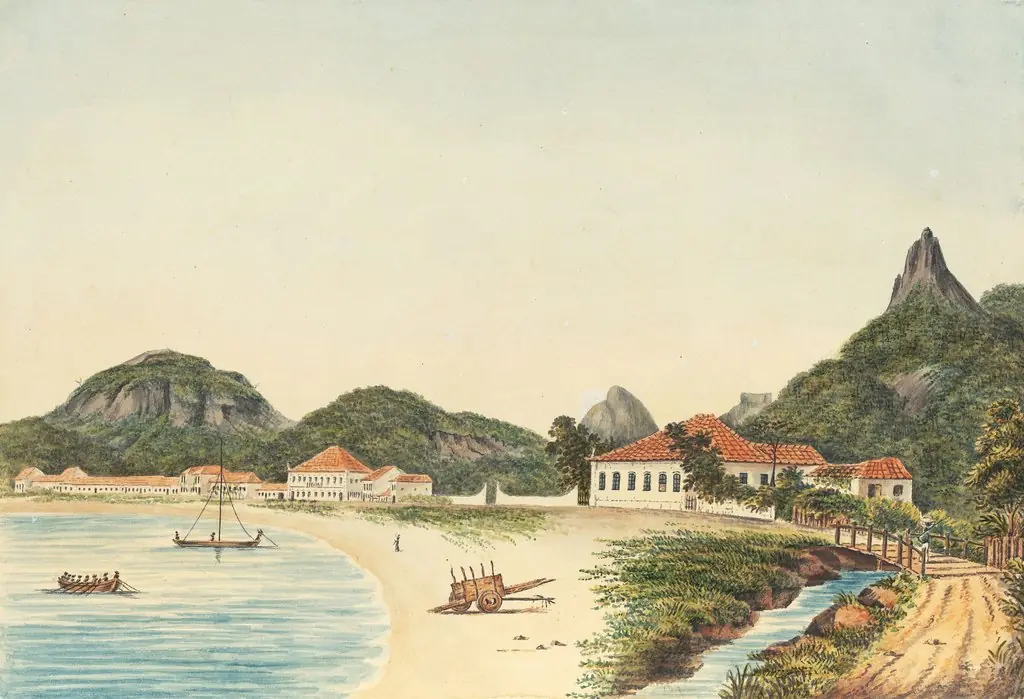 Praia de Botafogo com Dois Irmãos, Gávea e Corcovado ao fundo (atribuído)
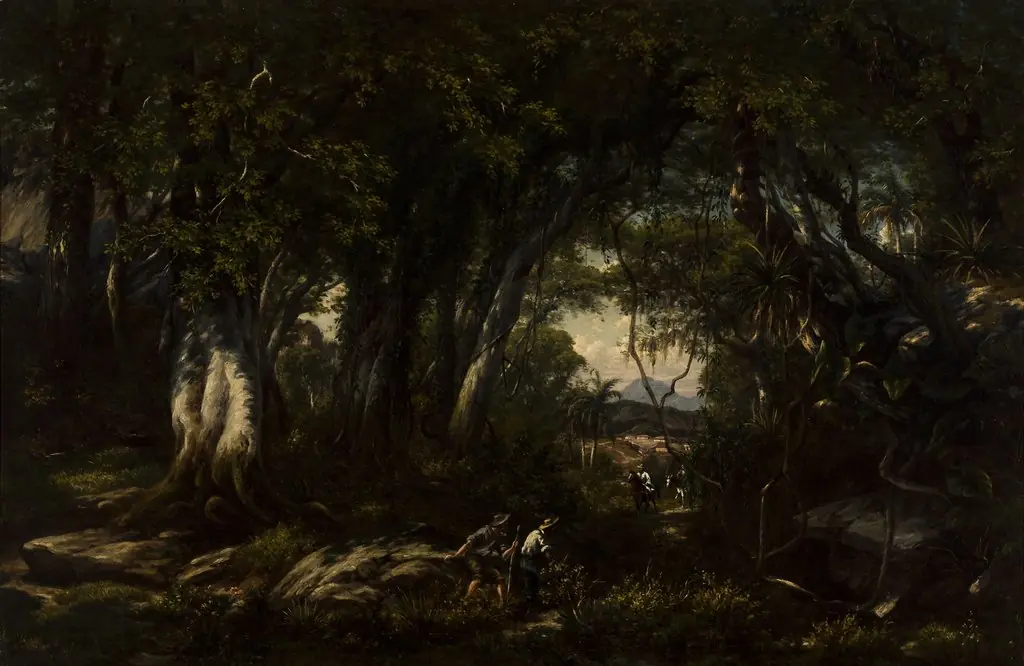 Cena na floresta da Tijuca (atribuído)
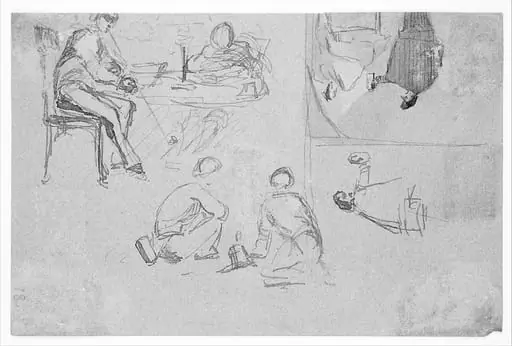 Four sketches (from Sketchbook)
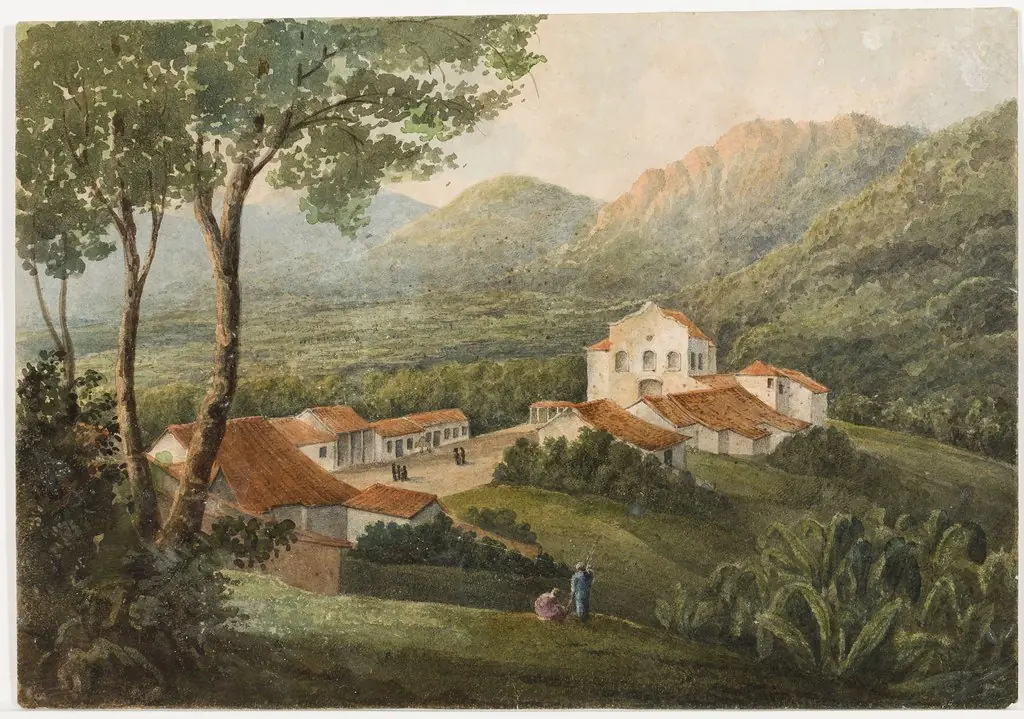 Vila rural e serra (atribuído)
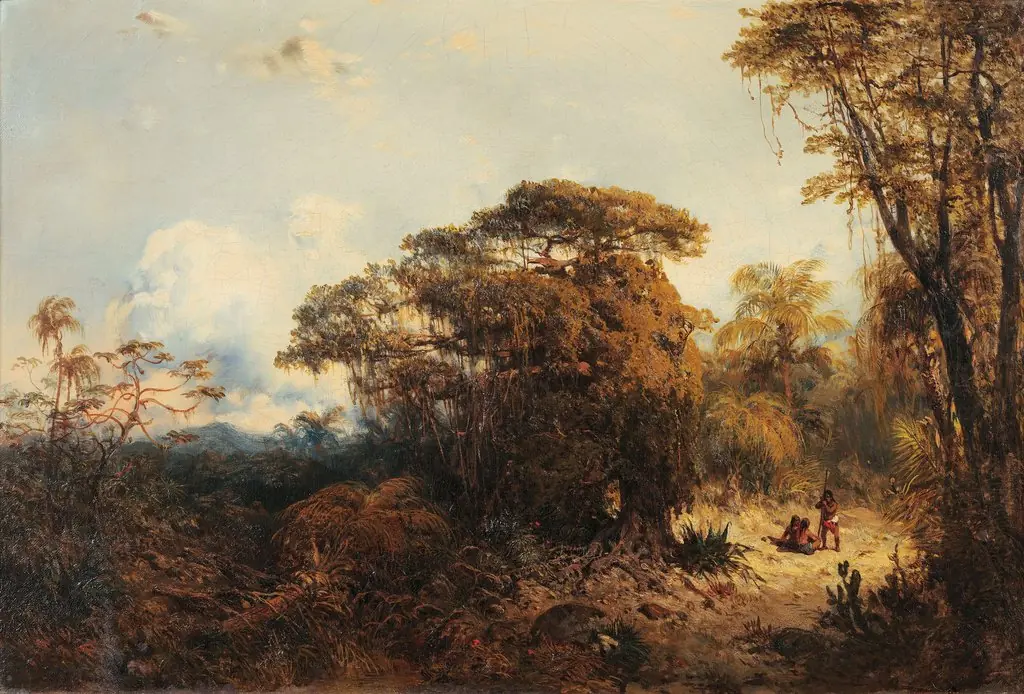 Paisagem com índios (atribuído)
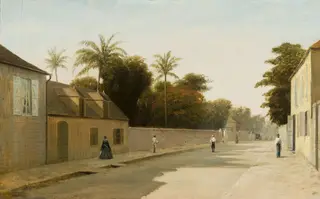 Paisagem urbana (atribuído)
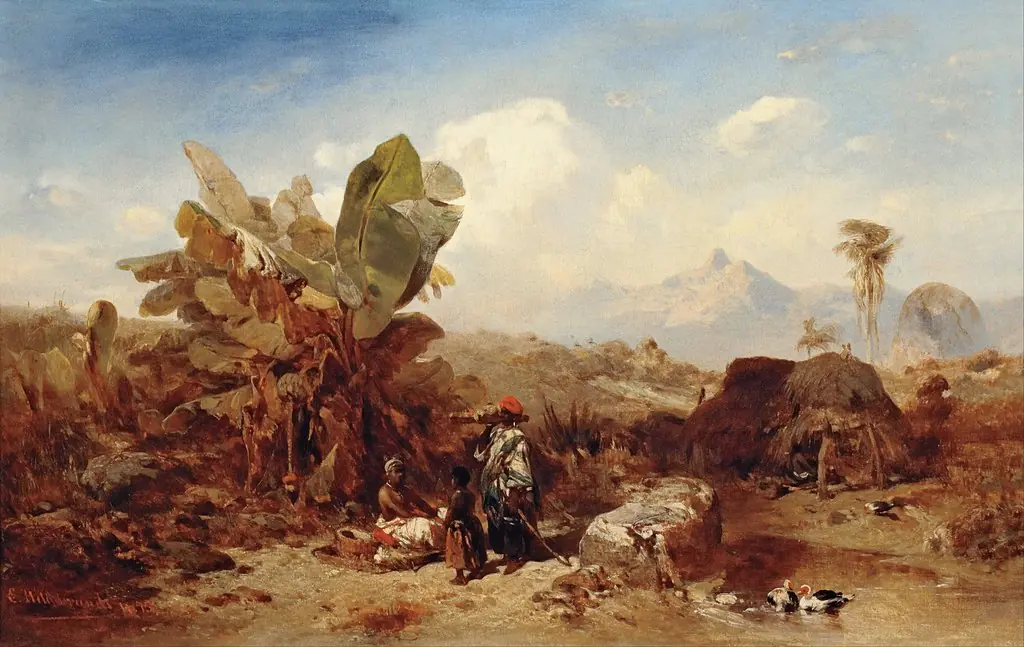 Landscape with Black People
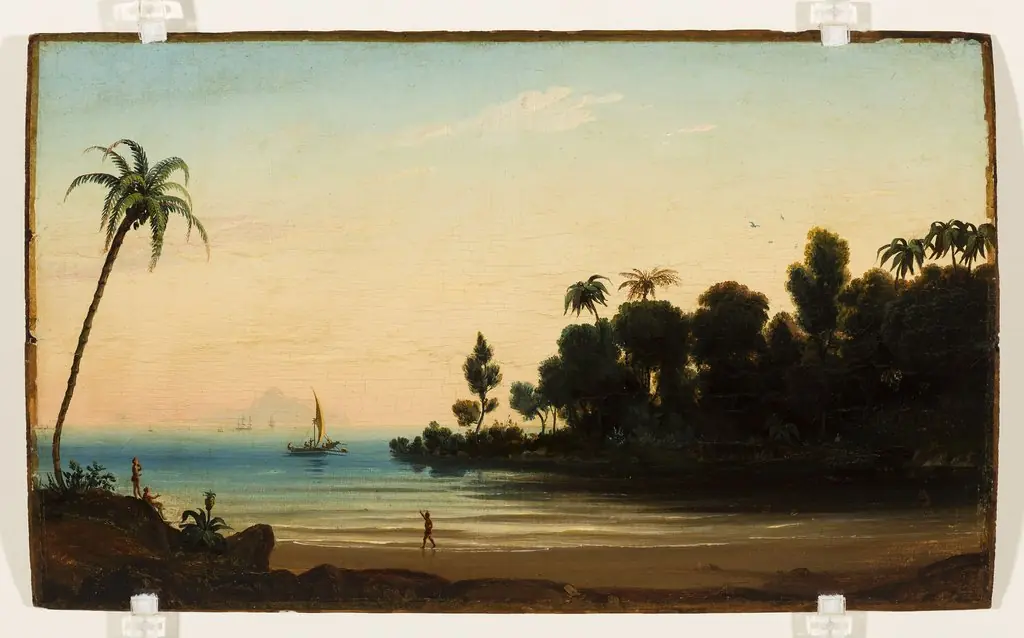 Praia com índios e veleiro (atribuído)
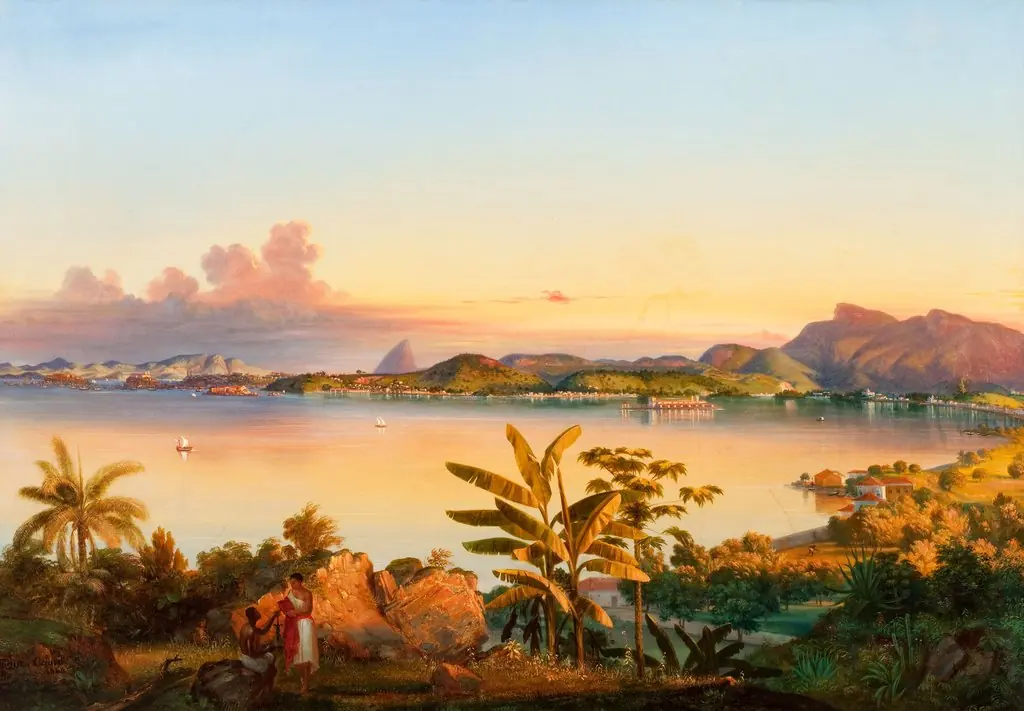 Rio de Janeiro
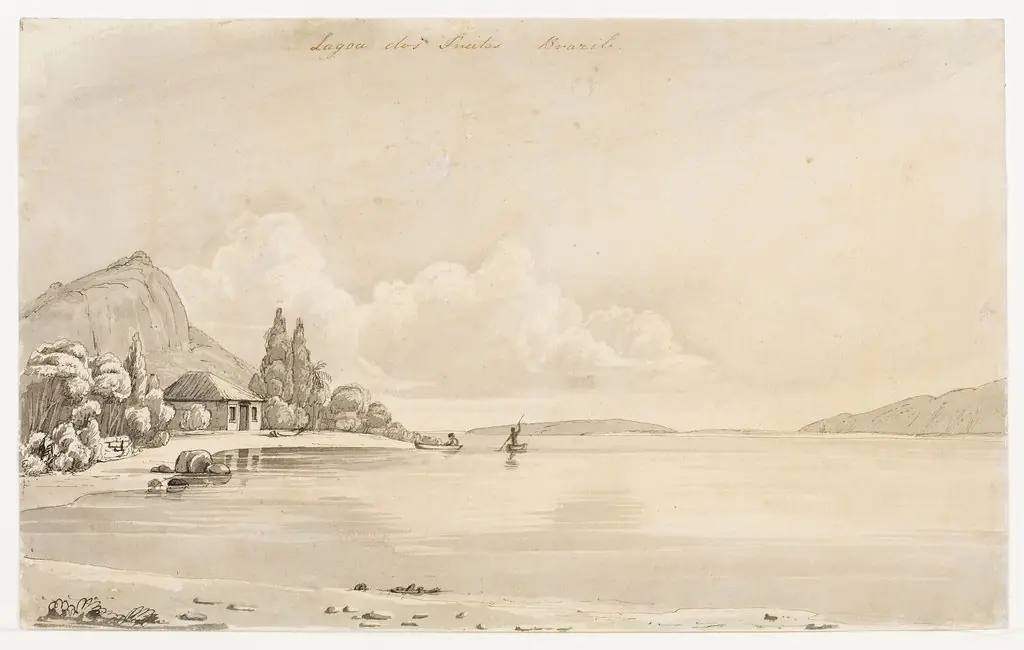 Lagoa dos Freitas. Brazil
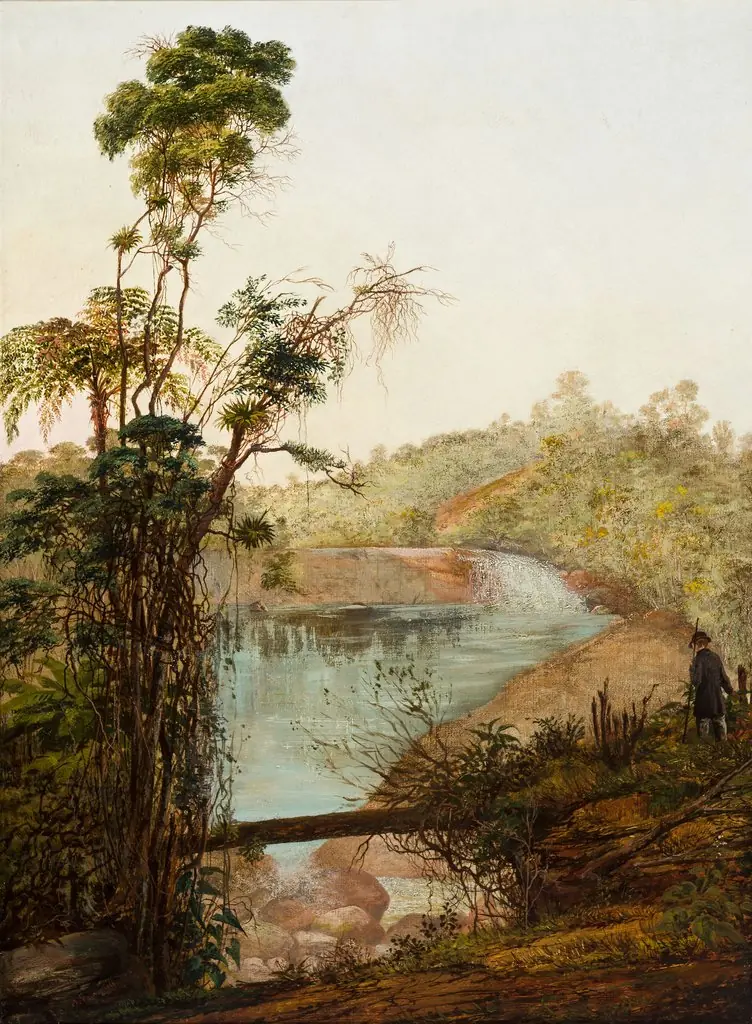 Cascata de Itamaraty em Petrópolis
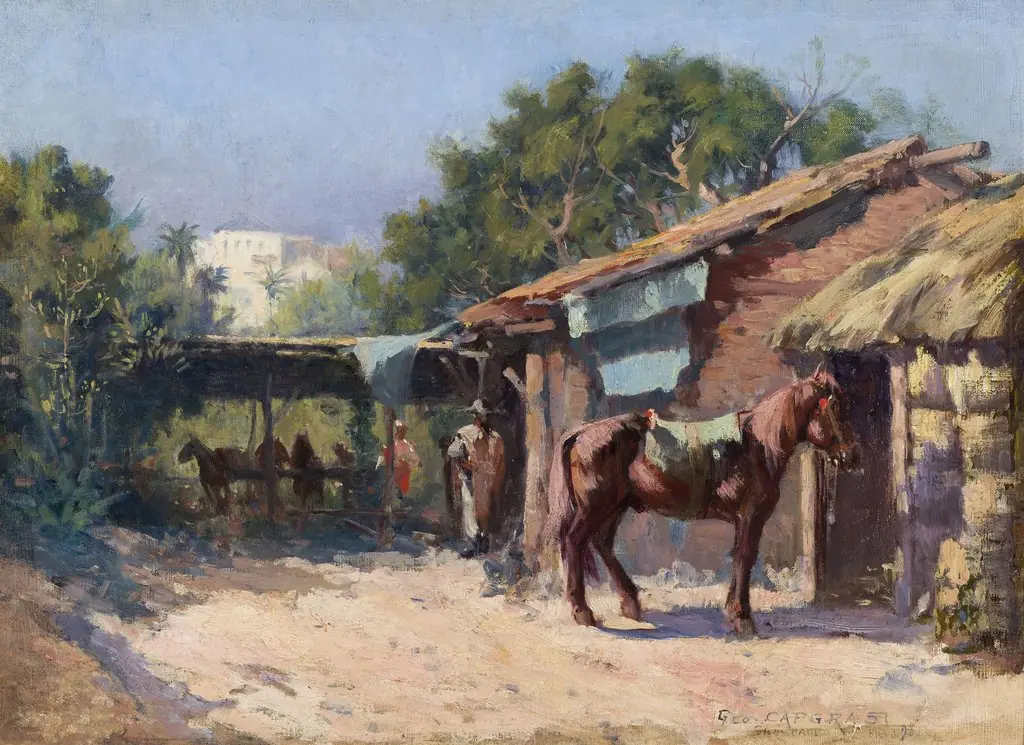 Arredores de São Paulo (atribuído)
 Paisagem à beira rio (atribuído)
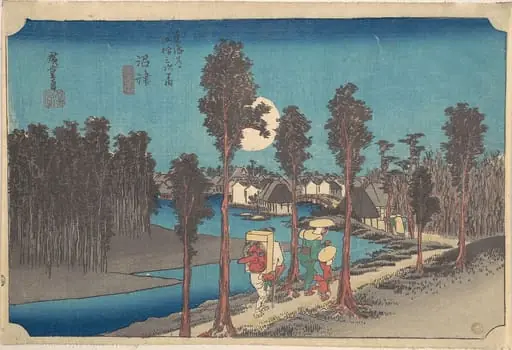 東海道五十三次之内 沼津 黄昏図|Numazu Ki Kure
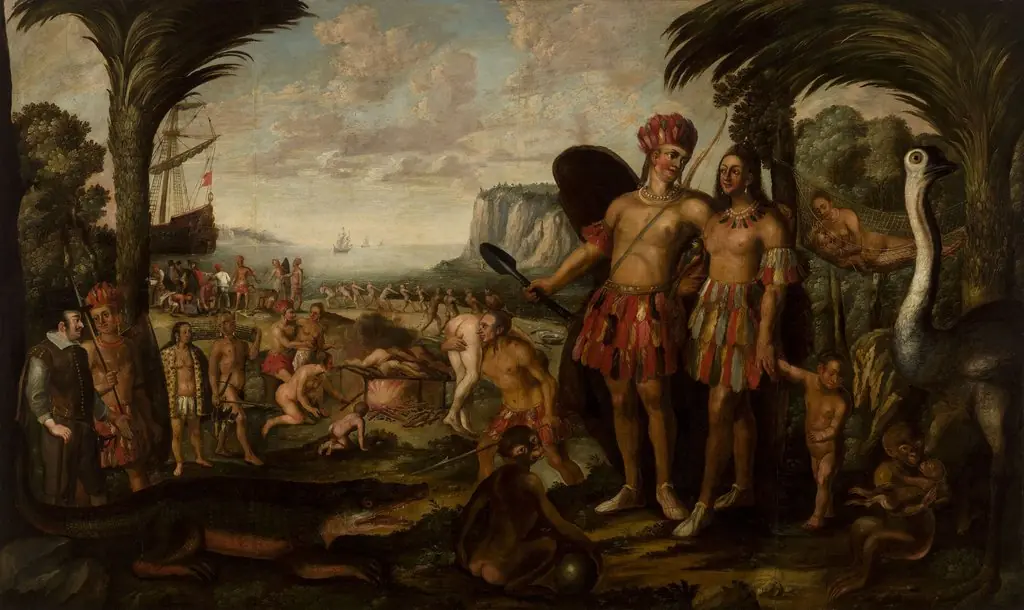 America
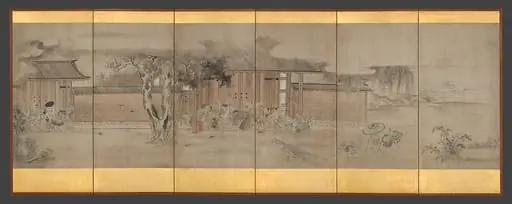 Untitled
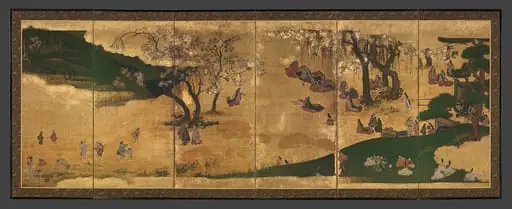 花見・紅葉狩図屏風|Cherry-Blossom and Maple-Leaf Viewing
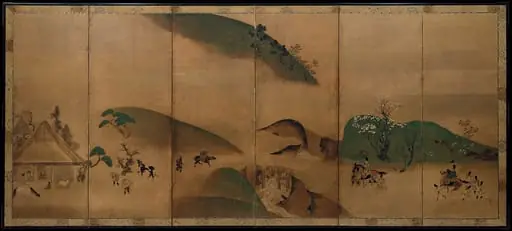 俵屋宗達工房 大原御幸図屏風|Royal Visit to Ōhara, from The Tale of the Heike
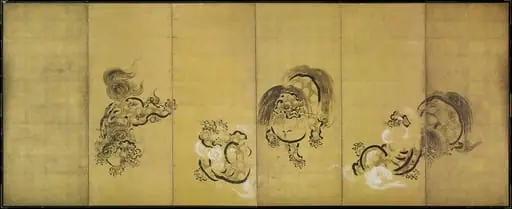 舞楽図屏風 ・唐獅子図屏風|Bugaku Dances (front); Chinese Lions (reverse)
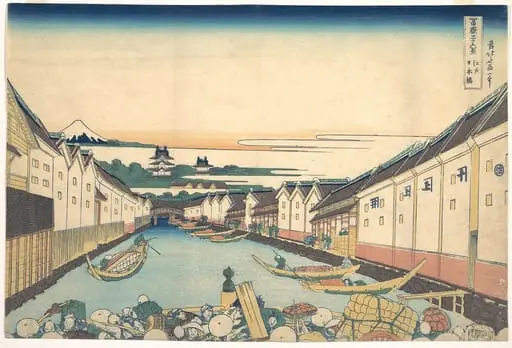 冨嶽三十六景 江戸日本橋|Nihonbashi in Edo (Edo Nihonbashi), from the series Thirty-six Views of Mount Fuji (Fugaku sanjūrokkei)
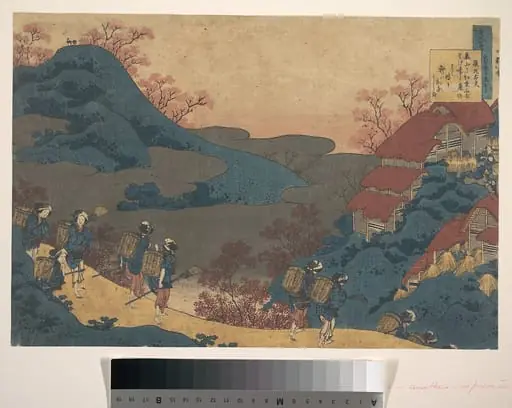 百人一首 乳母かゑとき 猿丸太夫|Poem by Sarumaru Dayū, from the series One Hundred Poems Explained by the Nurse (Hyakunin isshu uba ga etoki)
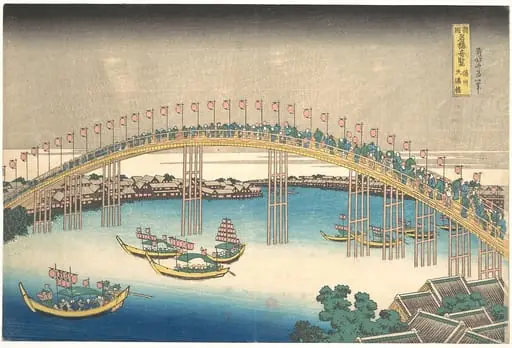 諸國名橋奇覧 摂洲天満橋|Tenman Bridge at Settsu Province (Sesshū Tenmanbashi), from the series Remarkable Views of Bridges in Various Provinces (Shokoku meikyō kiran)
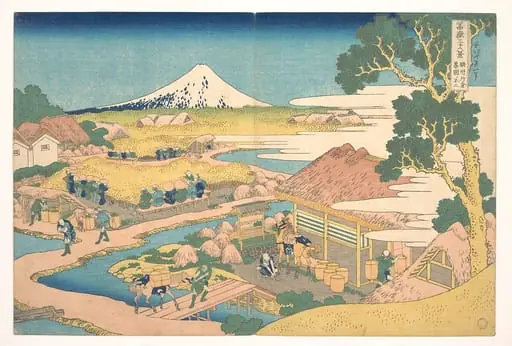 冨嶽三十六景 駿州片倉茶園の不二|Fuji from the Katakura Tea Fields in Suruga (Sunshū Katakura chaen no Fuji), from the series Thirty-six Views of Mount Fuji (Fugaku sanjūrokkei)
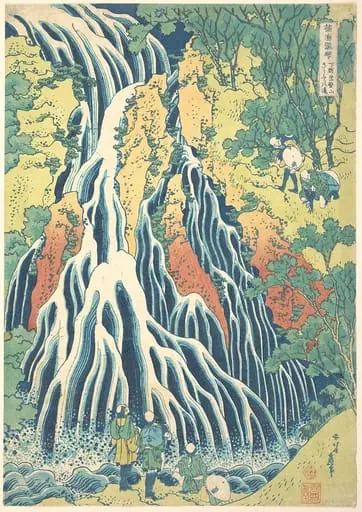 諸國瀧廻リ 下野黒髪山 きりふりの滝|Kirifuri Waterfall at Kurokami Mountain in Shimotsuke (Shimotsuke Kurokamiyama Kirifuri no taki), from the series A Tour of Waterfalls in Various Provinces (Shokoku taki meguri)
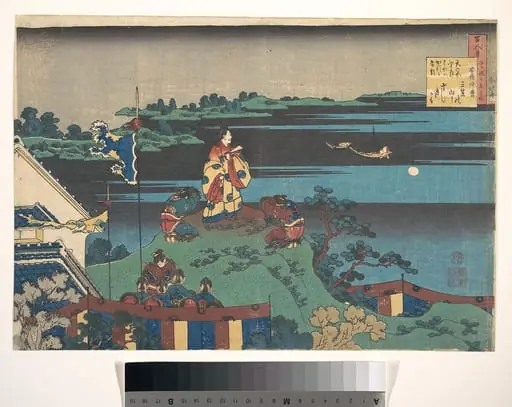 百人一首 宇波かゑとき 安部仲麿|Poem by Abe no Nakamaro, from the series One Hundred Poems Explained by the Nurse (Hyakunin isshu uba ga etoki)
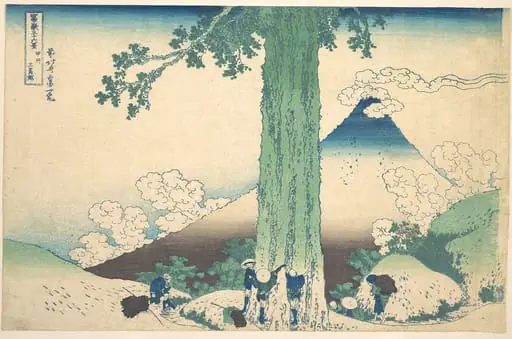 冨嶽三十六景 甲州三島越|Mishima Pass in Kai Province (Kōshū Mishima goe), from the series Thirty-six Views of Mount Fuji (Fugaku sanjūrokkei
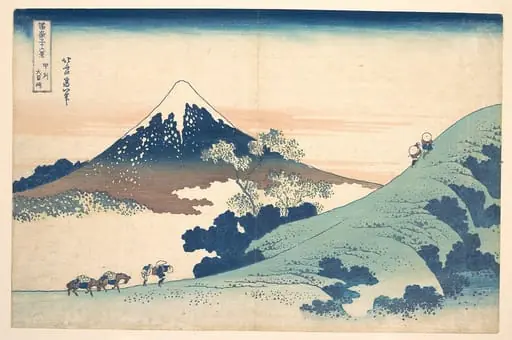 冨嶽三十六景 甲州犬目峠|Fuji from Inume (?) Pass
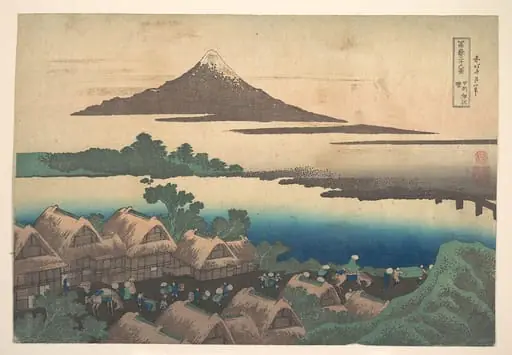 冨嶽三十六景 甲州伊沢暁|Dawn at Isawa in Kai Province (Kōshū Isawa no akatsuki), from the series Thirty-six Views of Mount Fuji (Fugaku sanjūrokkei)
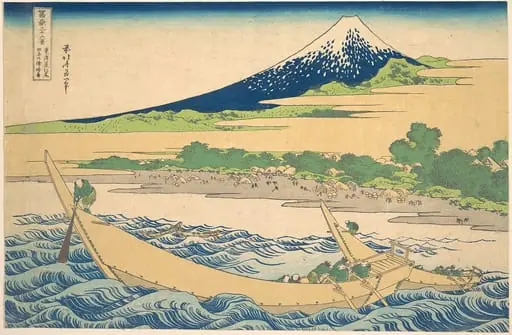 冨嶽三十六景 東海道江尻田子の浦略図|Tago Bay near Ejiri on the Tōkaidō (Tōkaidō Ejiri Tago no ura ryaku zu), from the series Thirty-six Views of Mount Fuji (Fugaku sanjūrokkei)
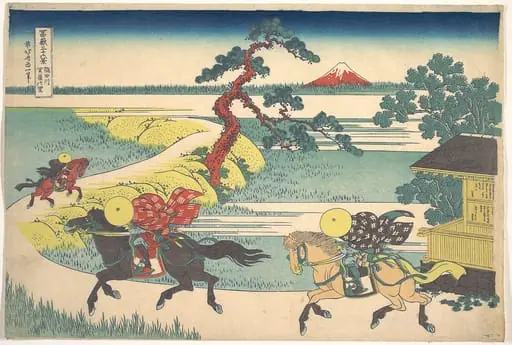 冨嶽三十六景 隅田川関屋の里|Sekiya Village on the Sumida River (Sumidagawa Sekiya no sato), from the series Thirty-six Views of Mount Fuji (Fugaku sanjūrokkei)
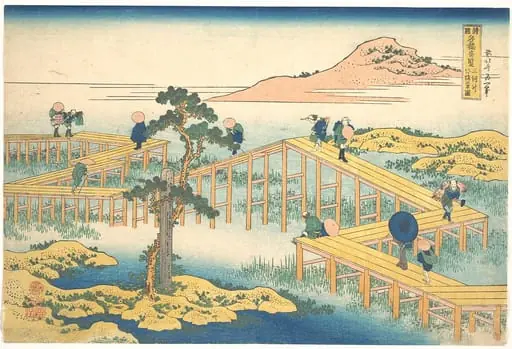 諸國名橋奇覧 三河の八ツ橋の古図|Ancient View of Yatsuhashi in Mikawa Province (Mikawa no Yatsuhashi no kozu), from the series Remarkable Views of Bridges in Various Provinces (Shokoku meikyō kiran)
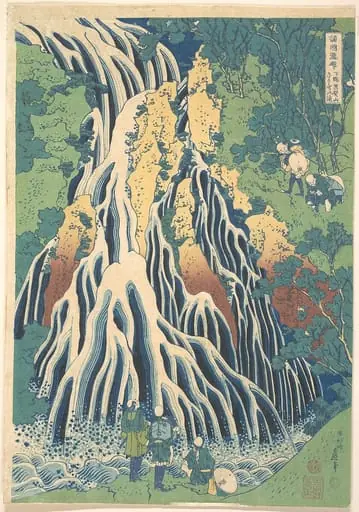 諸國瀧廻リ 下野黒髪山 きりふりの滝|Kirifuri Waterfall at Kurokami Mountain in Shimotsuke (Shimotsuke Kurokamiyama Kirifuri no taki), from the series A Tour of Waterfalls in Various Provinces (Shokoku taki meguri)
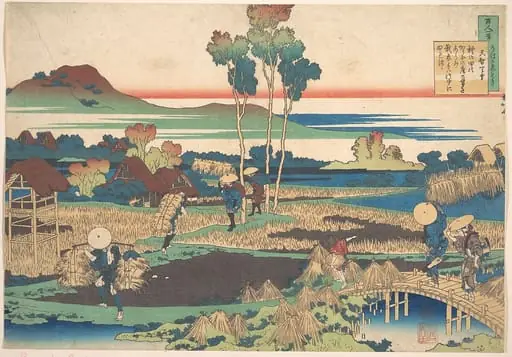 百人一首 うはかゑとき 天智天皇|Poem by Tenchi Tennō, from the series One Hundred Poems Explained by the Nurse (Hyakunin isshu uba ga etoki)
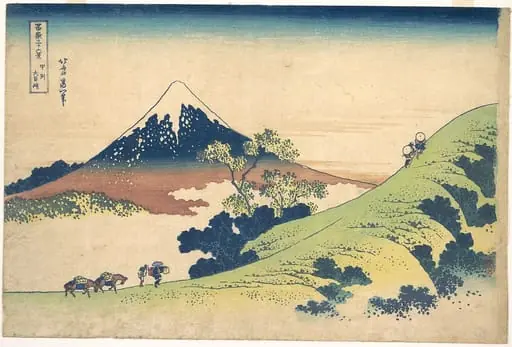 冨嶽三十六景 甲州犬目峠|The Inume Pass in Kai Province (Kōshū Inume tōge), from the series Thirty-six Views of Mount Fuji (Fugaku sanjūrokkei)
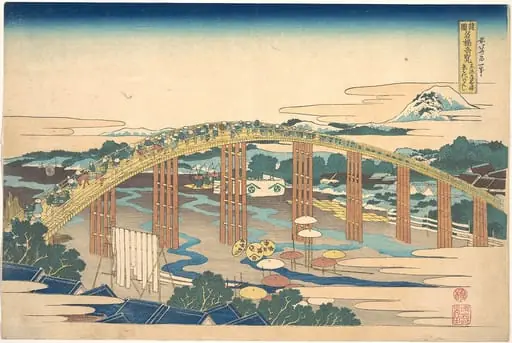 諸國名橋奇覧 東海道岡崎矢はぎのはし|Yahagi Bridge at Okazaki on the Tōkaidō (Tōkaidō Okazaki Yahagi no hashi), from the series Remarkable Views of Bridges in Various Provinces (Shokoku meikyō kiran)
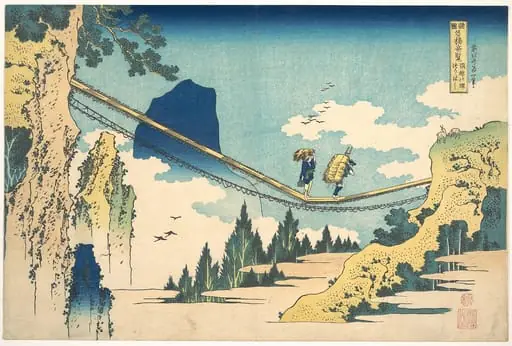 諸國名橋奇覧 飛越の堺つりはし|The Suspension Bridge on the Border of Hida and Etchū Provinces (Hietsu no sakai tsuribashi), from the series Remarkable Views of Bridges in Various Provinces (Shokoku meikyō kiran)
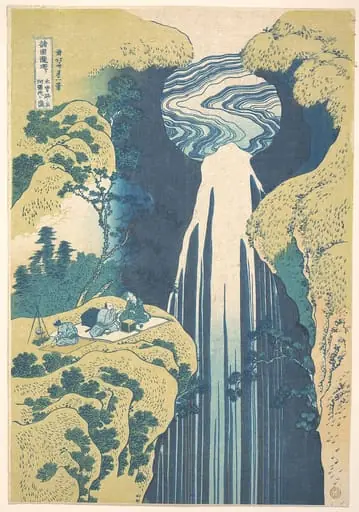 諸國瀧廻リ 木曽路ノ奥 阿彌陀ヶ瀧|The Amida Falls in the Far Reaches of the Kisokaidō Road (Kisoji no oku Amida-ga-taki), from the series A Tour of Waterfalls in Various Provinces (Shokoku taki meguri)
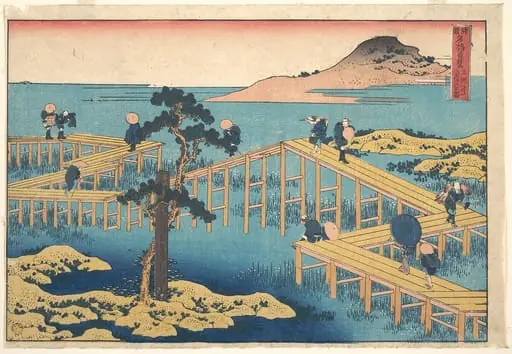 諸國名橋奇覧 三河の八ツ橋の古図|Ancient View of Yatsuhashi in Mikawa Province (Mikawa no Yatsuhashi no kozu), from the series Remarkable Views of Bridges in Various Provinces (Shokoku meikyō kiran)
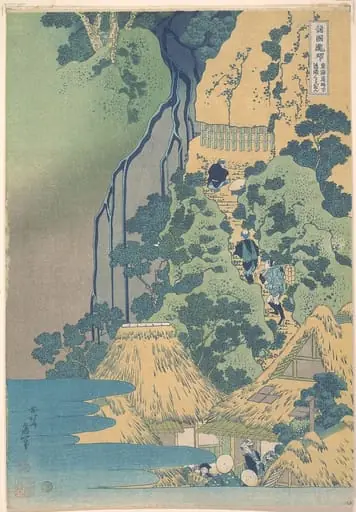 諸國瀧廻リ 東海道坂ノ下 清瀧くわんおん|Kiyotaki Kannon Waterfall at Sakanoshita on the Tōkaidō (Tōkaidō Sakanoshita Kiyotaki kannon), from the series A Tour of Waterfalls in Various Provinces (Shokoku taki meguri)
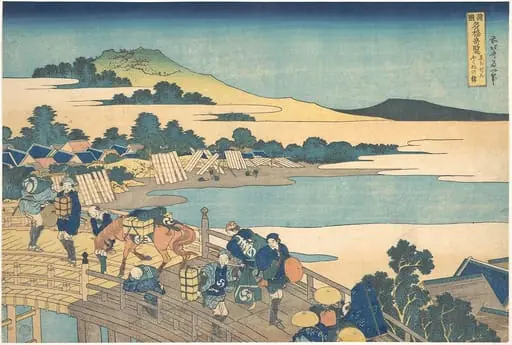 諸國名橋奇覧 ゑちぜんふくゐの橋|Fukui Bridge in Echizen Province (Echizen Fukui no hashi), from the series Remarkable Views of Bridges in Various Provinces (Shokoku meikyō kiran)
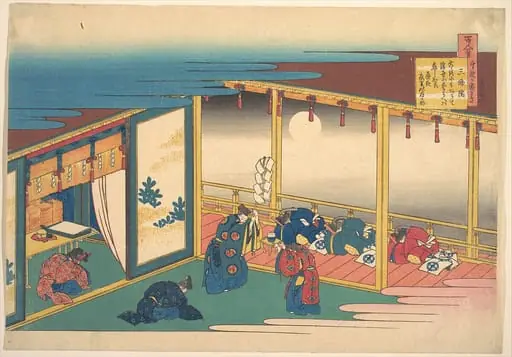 百人一首 うばがゑとき 三条院|Poem by Sanjō-in, from the series One Hundred Poems Explained by the Nurse (Hyakunin isshu uba ga etoki)
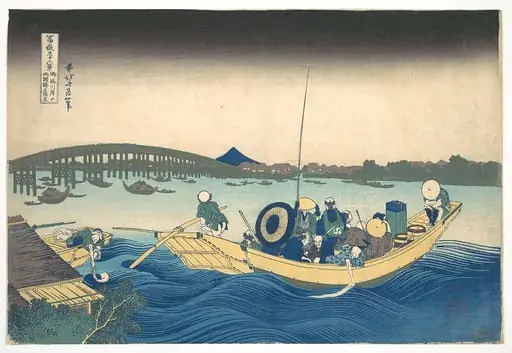 葛飾北斎画 冨嶽三十六景
御厩川岸より両国橋夕陽見|Viewing the Sunset over Ryōgoku Bridge from the Onmaya Embankment (Onmayagashi yori Ryōgokubashi sekiyō o miru), from the series Thirty-six Views of Mount Fuji (Fugaku sanjūrokkei)
葛飾北斎画 冨嶽三十六景
御厩川岸より両国橋夕陽見|Viewing the Sunset over Ryōgoku Bridge from the Onmaya Embankment (Onmayagashi yori Ryōgokubashi sekiyō o miru), from the series Thirty-six Views of Mount Fuji (Fugaku sanjūrokkei)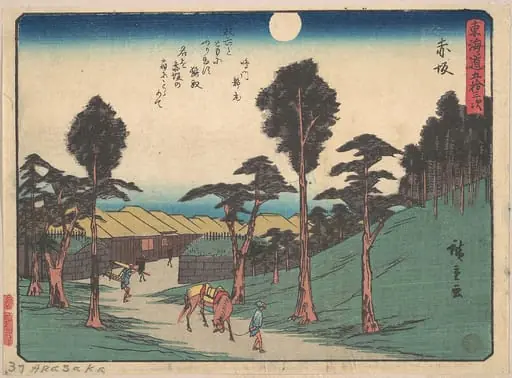 東海道五十三次 赤坂|Akasaka
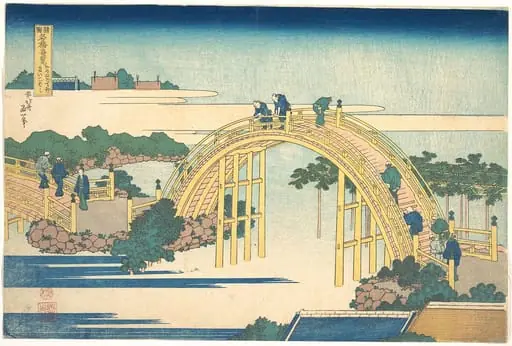 諸國名橋奇覧 かめゐど天神たいこはし|The Arched Bridge at Kameido Tenjin Shrine (Kameido Tenjin Taikobashi), from the series Remarkable Views of Bridges in Various Provinces (Shokoku meikyō kiran)
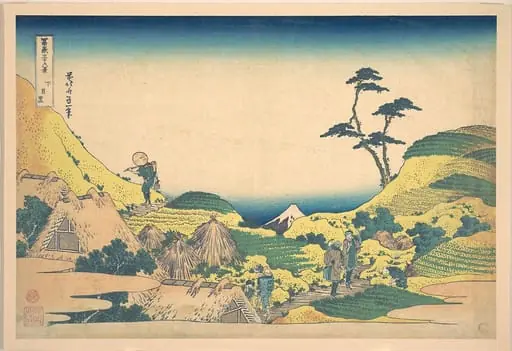 冨嶽三十六景 下目黒|Lower Meguro (Shimo Meguro), from the series Thirty-six Views of Mount Fuji (Fugaku sanjūrokkei)
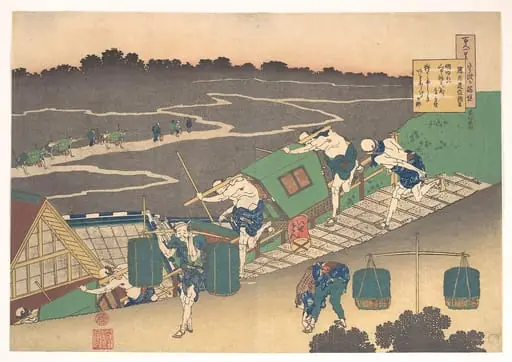 百人一首 宇波か縁説 藤原道信朝臣|Poem by Fujiwara no Michinobu Ason, from the series One Hundred Poems Explained by the Nurse (Hyakunin isshu uba ga etoki)
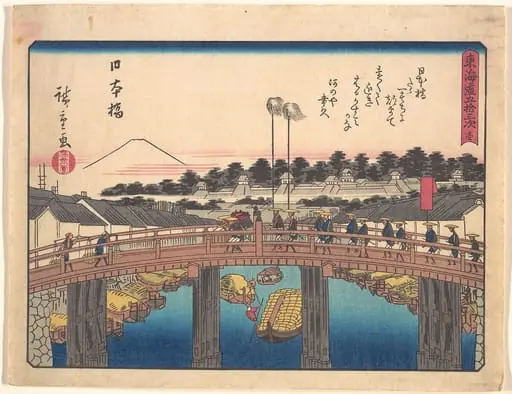 Untitled
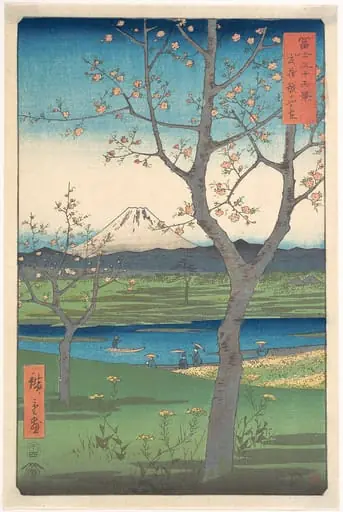 富士三十六景 武蔵越かや在|Musashi, Koshigaya Zai
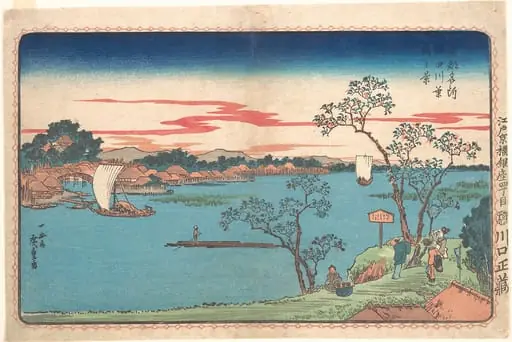 Sumidagawa, hazakura no kei|東都名所 隅田川葉桜之景|A View of Cherry Trees in Leaf along the Sumida River
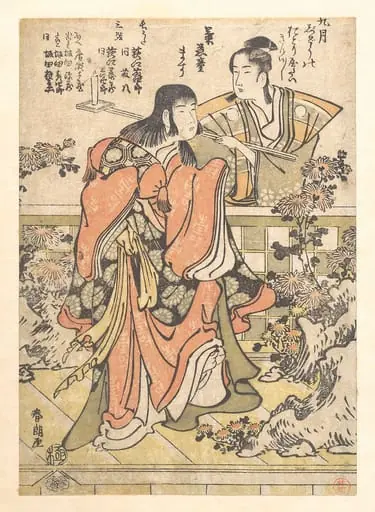 Untitled
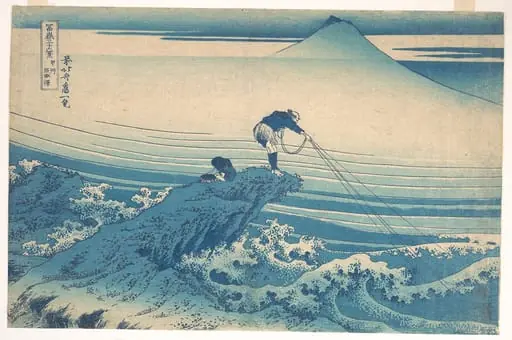 冨嶽三十六景 甲州石班沢|Kajikazawa in Kai Province (Kōshū Kajikazawa), from the series Thirty-six Views of Mount Fuji (Fugaku sanjūrokkei)
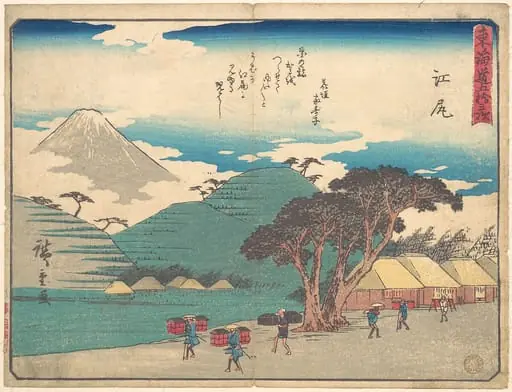 東海道五十三次 江尻|Ejiri
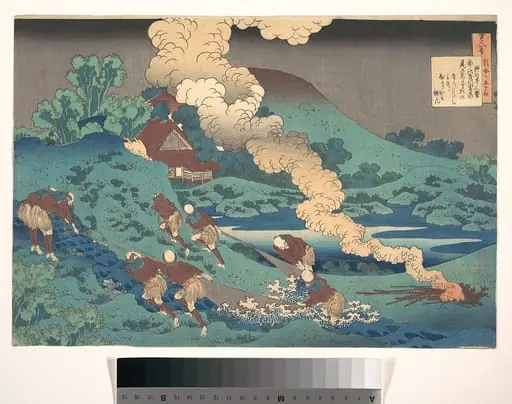 百人一首 乳母かゑとき 柿の本人麿|Poem by Kakinomoto Hitomaro, from the series One Hundred Poems Explained by the Nurse (Hyakunin isshu uba ga etoki)
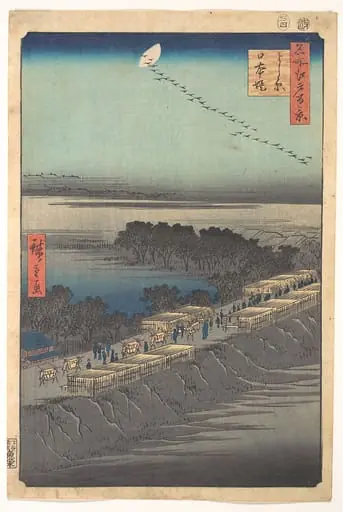 「名所江戸百景 よし原 日本堤」|“Nihon Embankment at Yoshiwara,” from the series One Hundred Famous Views of Edo (Meisho Edo hyakkei, Yoshiwara, Nihonzutsumi)
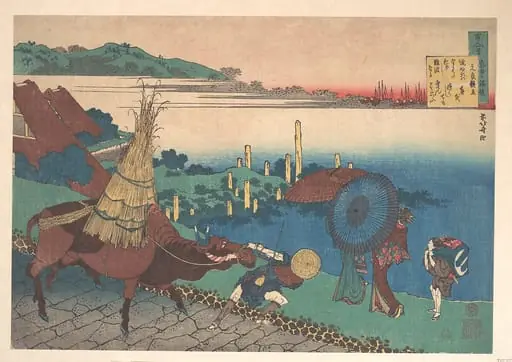 百人一首 乳母かえ説 元良親王|Poem by Motoyoshi Shinnō, from the series One Hundred Poems Explained by the Nurse (Hyakunin isshu uba ga etoki)
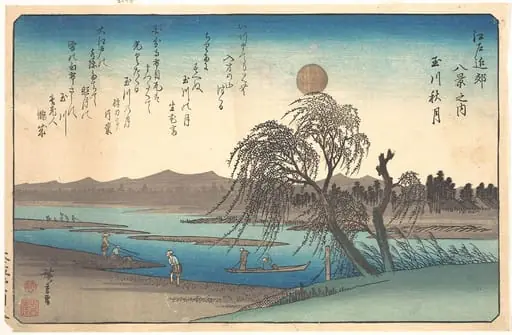 Tamagawa Shugetsu|江戸近郊八景之内 玉川秋月|Autumn Moon on the Tama River
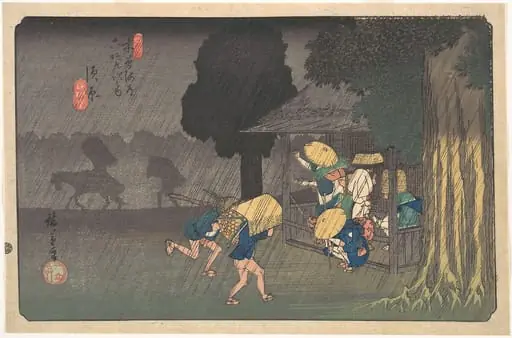 木曽海道六拾九次之内 須原|Suhara, from The Sixty-nine Stations of the Kisokaidō
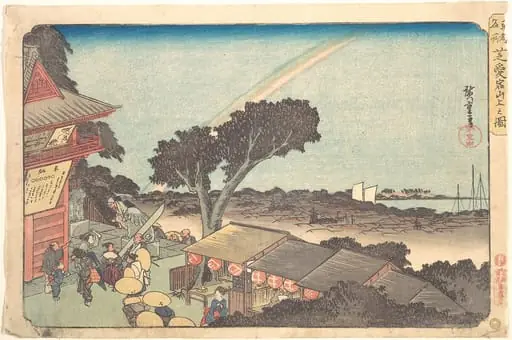 東都名所 芝愛宕山上の図|Shiba Atago Sanjo no Zu
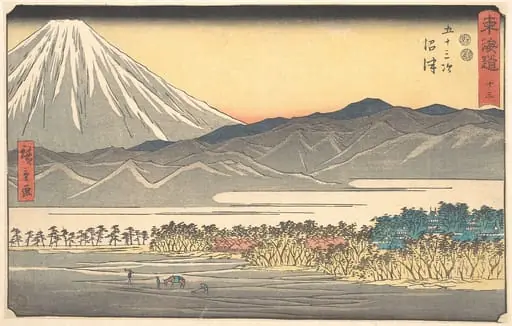 東海道五十三次 沼津|Numazu
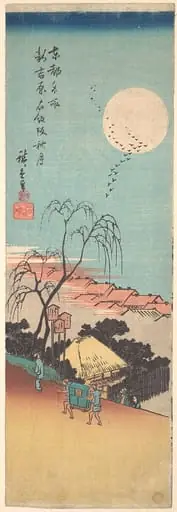 東都名所 新吉原衣紋阪秋月|Shin Yoshiwara Emonzaka Aki no Tsuki
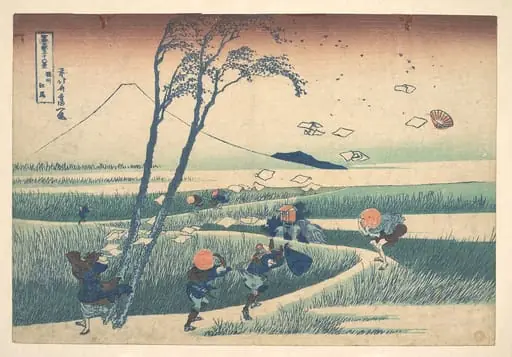 冨嶽三十六景 駿州江尻|Ejiri in Suruga Province (Sunshū Ejiri), from the series Thirty-six Views of Mount Fuji (Fugaku sanjūrokkei)
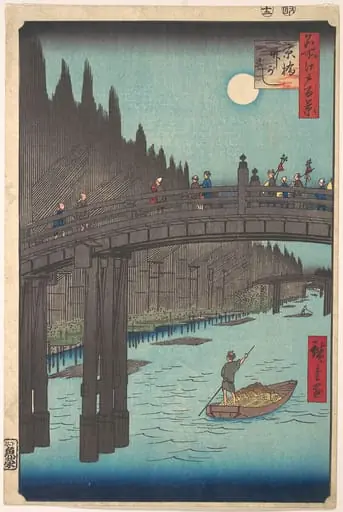 名所江戸百景 京橋竹がし|Full Moon Over Canal, with Bridge and Huge Stacks of Bamboo along the Bank
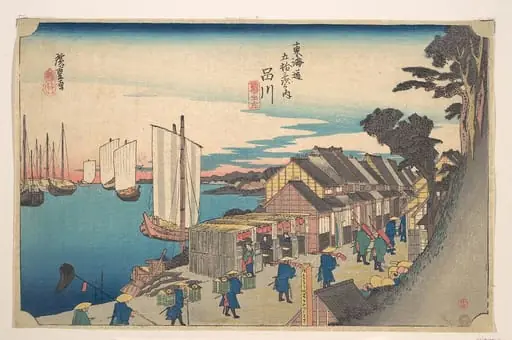 東海道五十三次之内 品川 諸侯出立|Shinagawa; Shoko Detachi
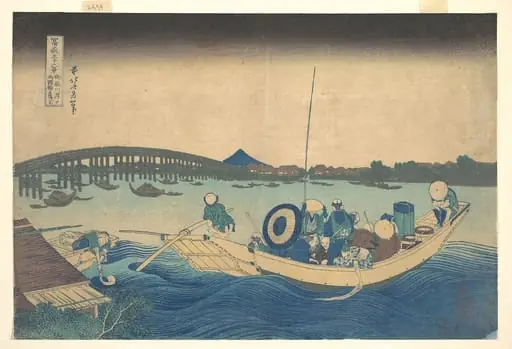 冨嶽三十六景 御厩川岸より両国橋夕陽見|Viewing the Sunset over Ryōgoku Bridge from the Onmayagashi Embankment (Onmayagashi yori Ryōgokubashi sekiyō o miru), from the series Thirty-six Views of Mount Fuji (Fugaku sanjūrokkei)
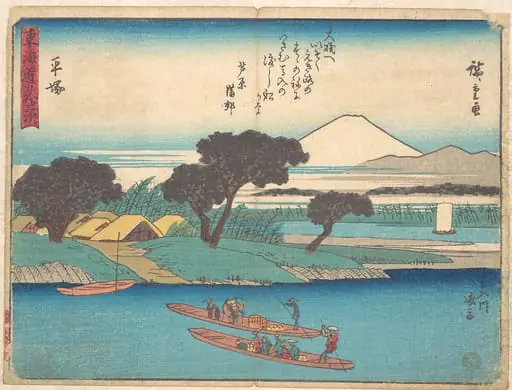 東海道五十三次 平塚|Hiratsuka
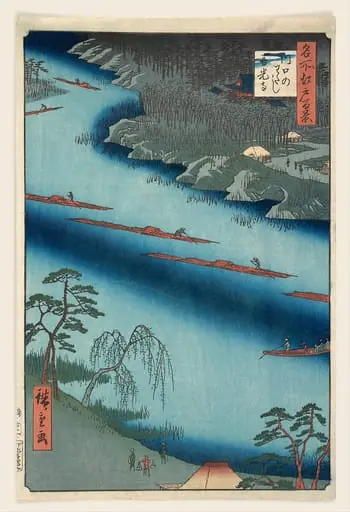 名所江戸百景 川口のわたし善光寺|Kawaguchi
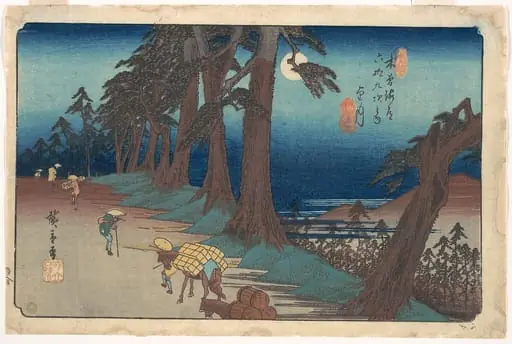 木曽海道六拾九次之内 望月|Mochizuki Station
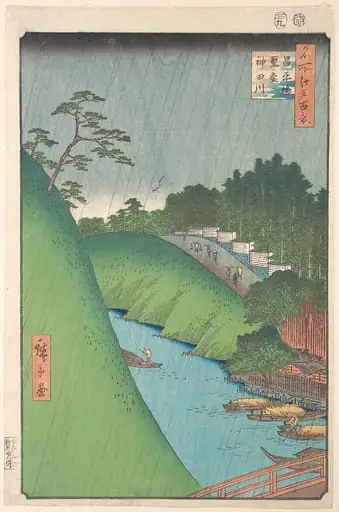 名所江戸百景 昌平橋 聖堂 神田川|Shohei Bridge, Seido Temple and Kanda River
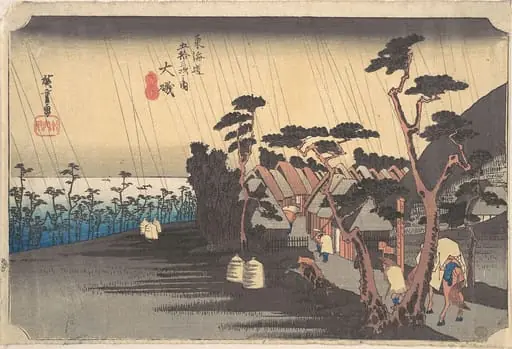 東海道五十三次之内 大磯 虎ケ雨|Tiger Rain at Ōiso Station
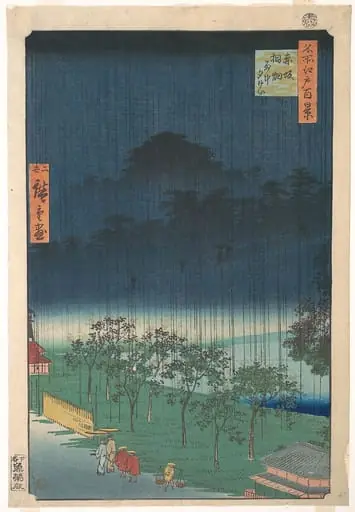 Untitled
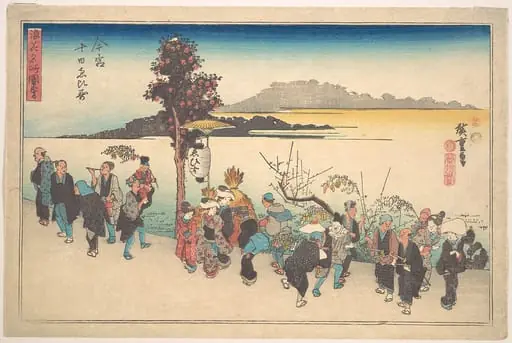 浪花名所図会 今宮 十日恵比寿|Imamiya Toka Ebisu
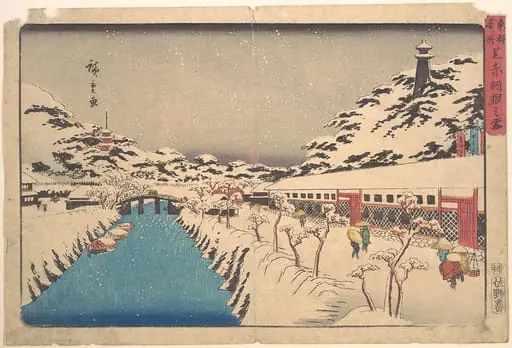 Atagoshita Yabu-Kōji|東都名所 芝赤羽根之雪|Winter Landscape
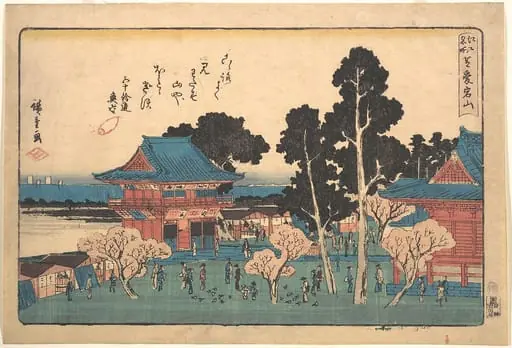 江戸名所 芝愛宕山|Shiba Atogayama
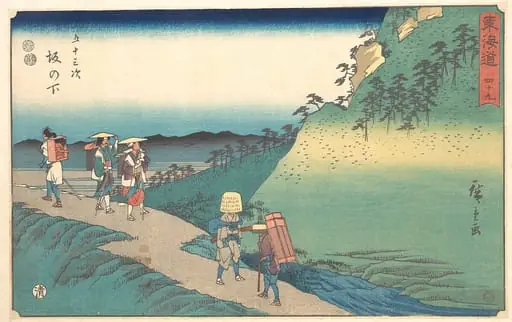 東海道五十三次 坂の下|Saka no Shita
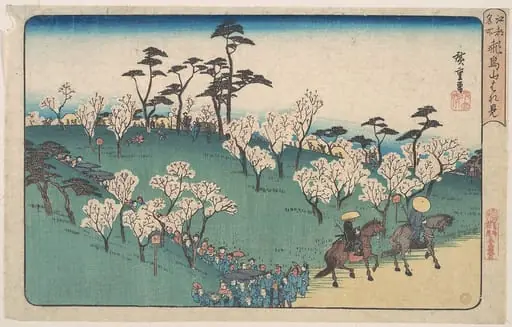 江都名所 飛鳥山はな見|Asakayama Hanami
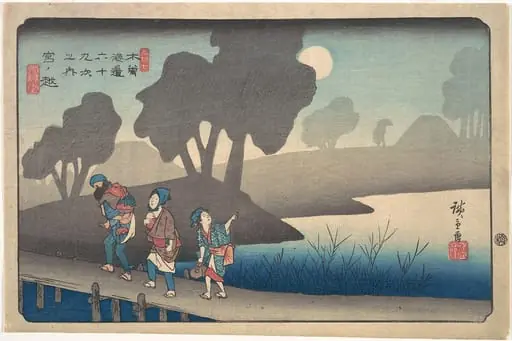 木曽海道六拾九次之内 宮ノ越|Moonlit Night at Miyanokoshi, from The Sixty-nine Stations of the Kisokaidō
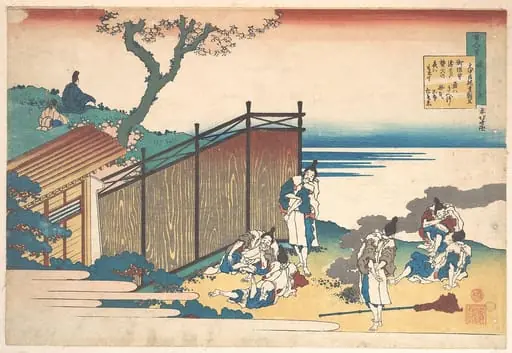 百人一首 姥か恵と起 大中臣能宣朝臣|Poem by Ōnakatomi no Yoshinobu Ason, from the series One Hundred Poems Explained by the Nurse (Hyakunin isshu uba ga etoki)
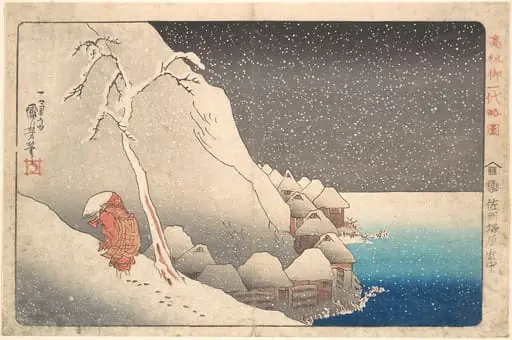 歌川国芳画 「高祖御一代略図 佐州塚原雪中」|Concise Illustrated Biography of Monk Nichiren: In Snow at Tsukahara on Sado Island
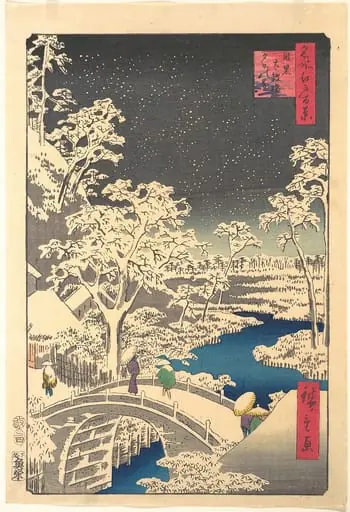 名所江戸百景 目黒太鼓橋夕ひの岡|Ochanomizu
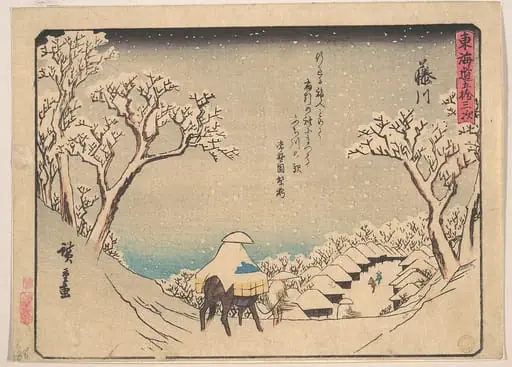 東海道五十三次 藤川|Fujikawa
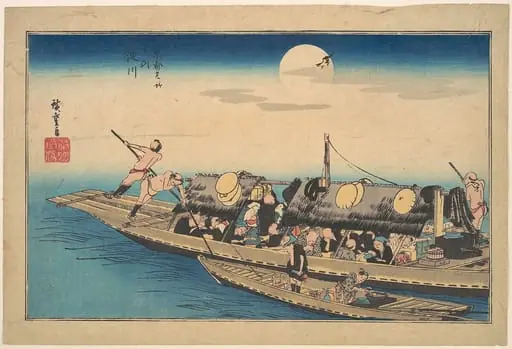 Yodogawa|京都名所之内 淀川|On the Yodo River
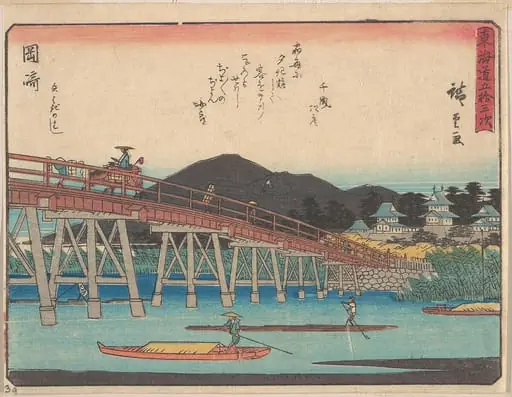 東海道五十三次 岡崎|Okazaki
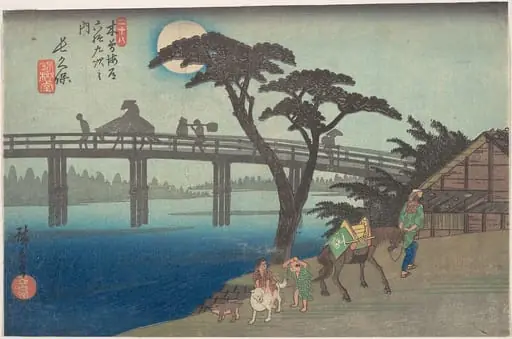 木曽海道六拾九次之内 長久保|Nagakubo, Station No. 28
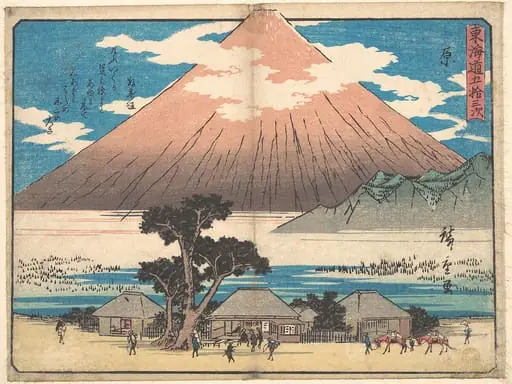 東海道五十三次 原|Hara
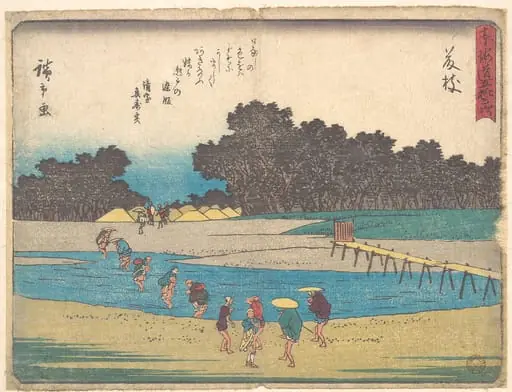 東海道五十三次 藤枝|Fujieda
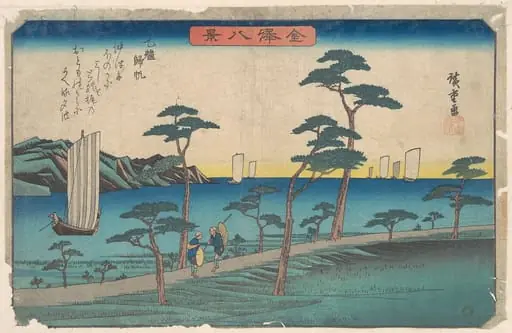 金沢八景 乙艫帰帆|Otomo Kihan
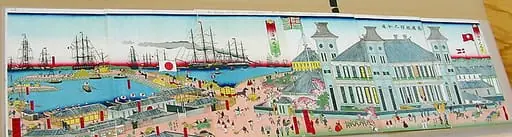 Untitled
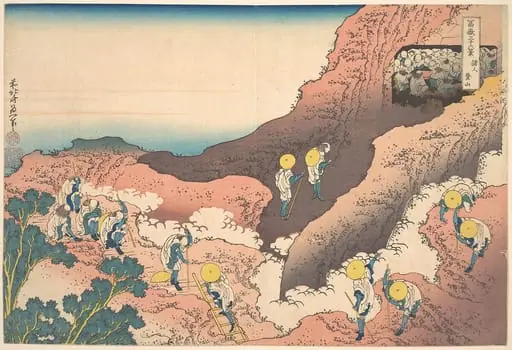 冨嶽三十六景 諸人登山|Groups of Mountain Climbers (Shojin tozan), from the series Thirty-six Views of Mount Fuji (Fugaku sanjūrokkei)
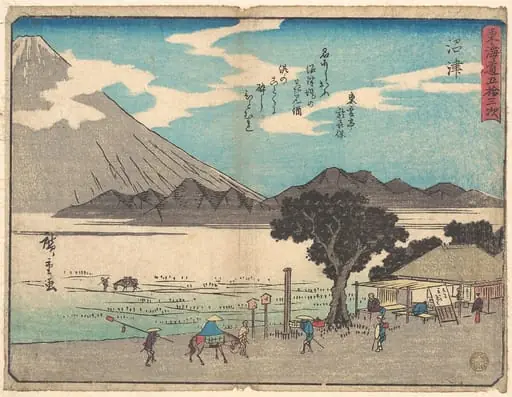 東海道五十三次 沼津|Numazu
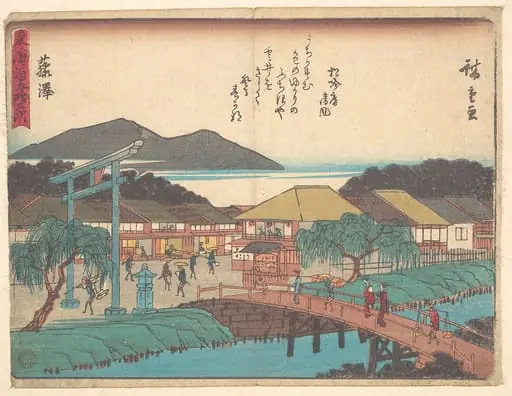 東海道五十三次 藤沢|Fujisawa
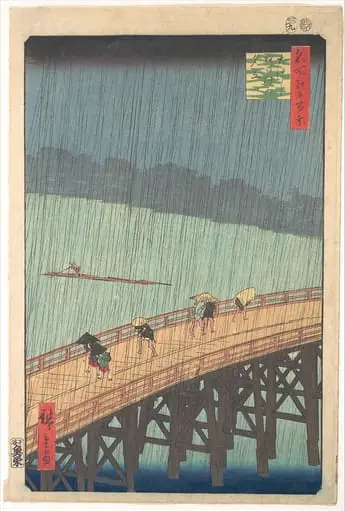 名所江戶百景 大はしあたけの夕立|Sudden Shower over Shin-Ōhashi Bridge and Atake (Ōhashi Atake no yūdachi), from the series One Hundred Famous Views of Edo (Meisho Edo hyakkei)
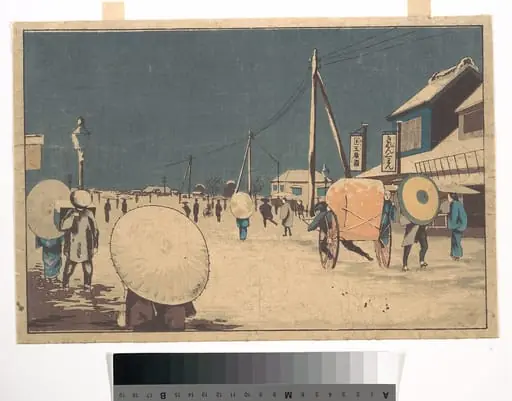 Untitled
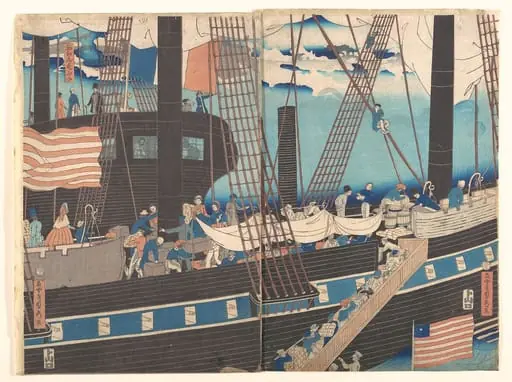 「横浜交易西洋人荷物運送之圖」|“Yokohama Trade: Westerners Loading Cargo”
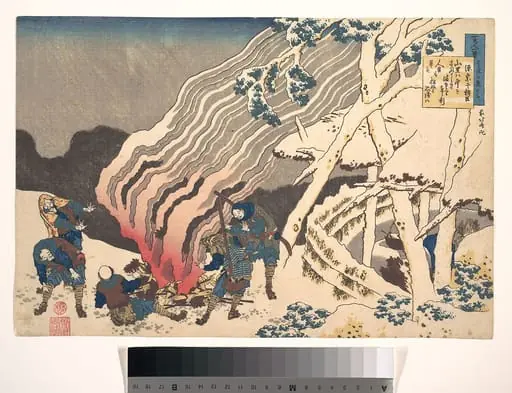 百人一首 うはかゑとき 源宗于朝臣|Poem by Minamoto no Muneyuki Ason, from the series One Hundred poems Explained by the Nurse (Hyakunin isshu uba ga etoki)
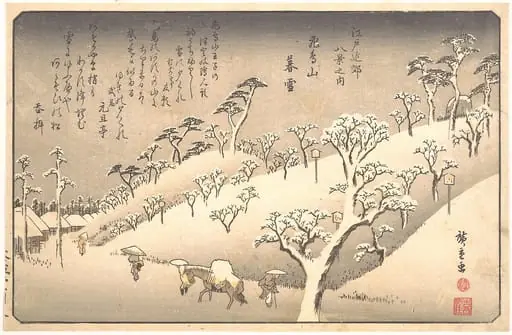 Asukayama Bosetsu|江戸近郊八景之内 飛鳥山暮雪|Asukayama in the Snow at Evening
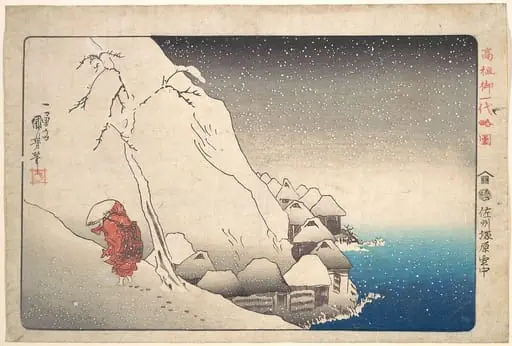 Sashu Tsukahara setchu|Nichiren in Snow at Tsukahara, Sodo Province
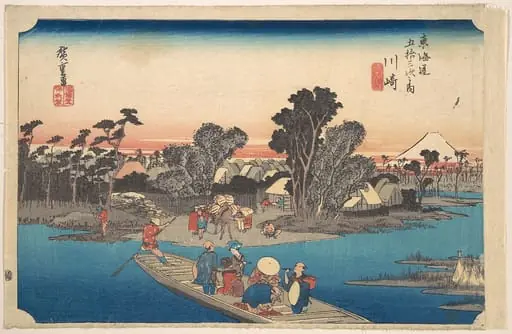 東海道五十三次之内 川崎 六郷渡舟|Ferry Boat Crossing the Rokugo River
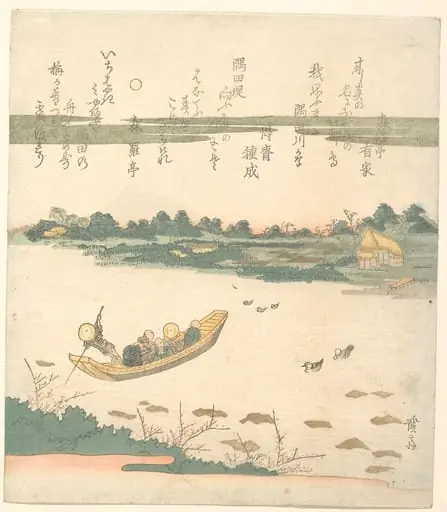 Untitled
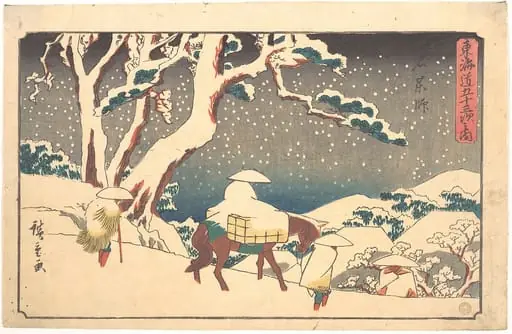 東海道五十三次之内 石薬師|Gyosho Tokaido: Ishikushi
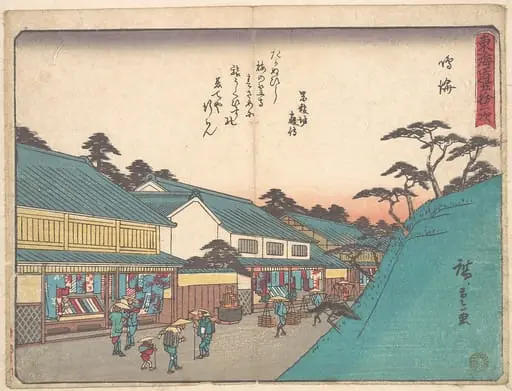 東海道五十三次 鳴海|Narumi
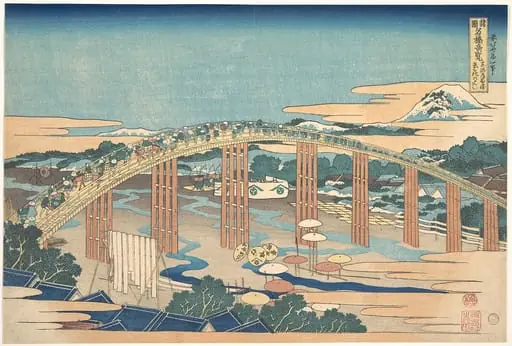 諸國名橋奇覧 東海道岡崎矢はぎのはし|Yahagi Bridge at Okazaki on the Tōkaidō (Tōkaidō Okazaki Yahagi no hashi), from the series Remarkable Views of Bridges in Various Provinces (Shokoku meikyō kiran)
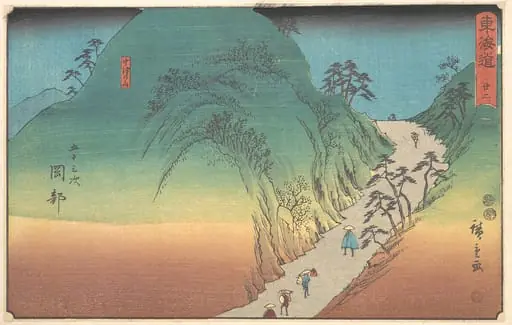 東海道五十三次 岡部 宇津の山|Okabe
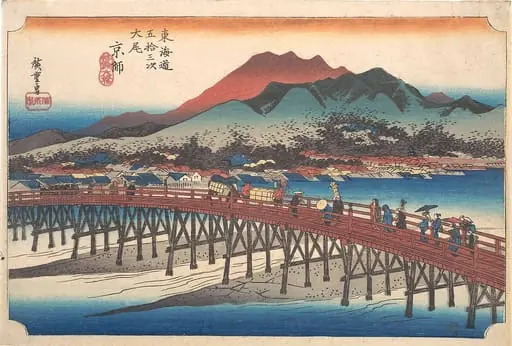 歌川広重画 「東海道五十三次 大尾 京師 三条大橋」|Kyoto: The Great Bridge at Sanjō (Taibi, Keishi, Sanjō Ōhashi), from the series Fifty-Three Stations of the Tōkaidō (Tōkaidō gojūsan tsugi)
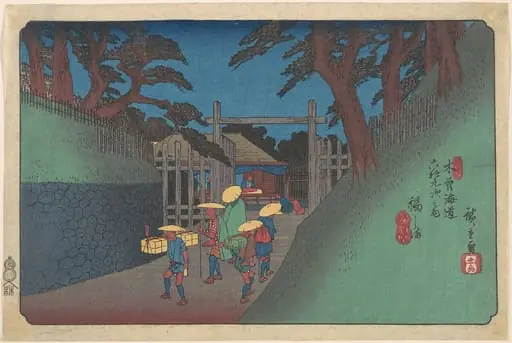 木曽海道六拾九次之内 福しま|Fukushima Station
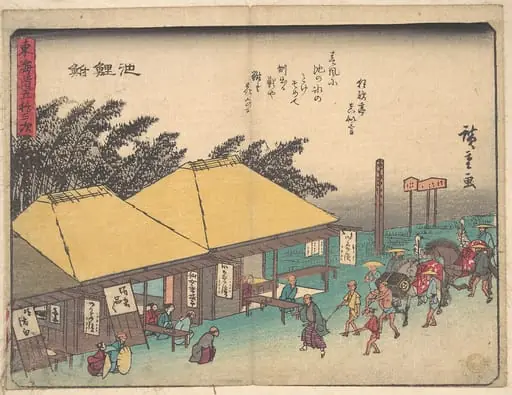 東海道五十三次 池鯉鮒|Chiryu
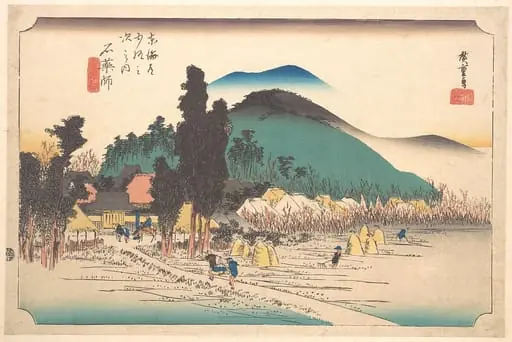 東海道五十三次之内 石薬師 石薬師寺|The Ishiyakushi Temple at Ishiyakushi
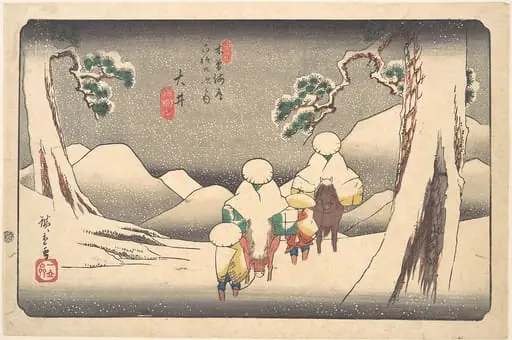 木曽海道六拾九次之内 大井|Ōi
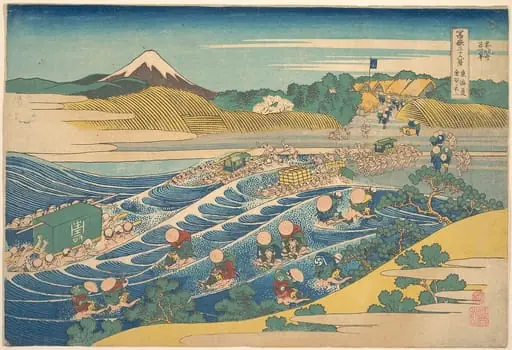 葛飾北斎画 冨嶽三十六景
東海道金谷の不二|Fuji Seen from Kanaya on the Tōkaidō (Tōkaidō Kanaya no Fuji), from the series Thirty-six Views of Mount Fuji (Fugaku sanjūrokkei
葛飾北斎画 冨嶽三十六景
東海道金谷の不二|Fuji Seen from Kanaya on the Tōkaidō (Tōkaidō Kanaya no Fuji), from the series Thirty-six Views of Mount Fuji (Fugaku sanjūrokkei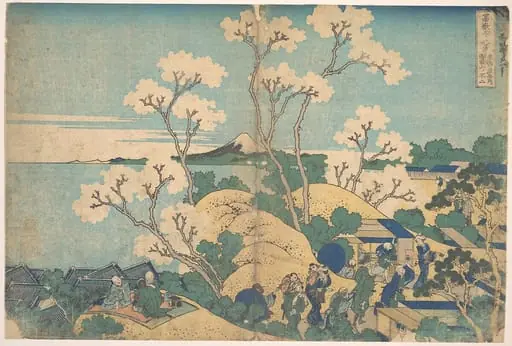 冨嶽三十六景 東海道品川御殿山の不二|Fuji from Gotenyama at Shinagawa on the Tōkaidō (Tōkaidō Shinagawa Gotenyama no Fuji), from the series Thirty-six Views of Mount Fuji (Fugaku sanjūrokkei)
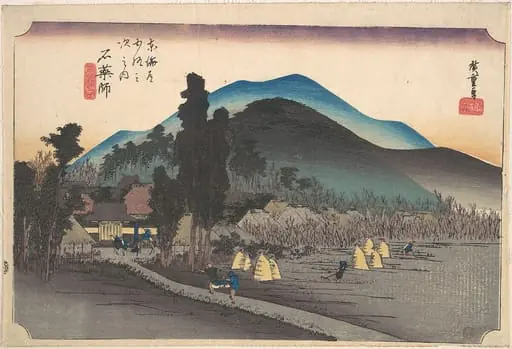 東海道五十三次之内 石薬師 石薬師寺|Ishiyakushi, Ishiyakushi Ji
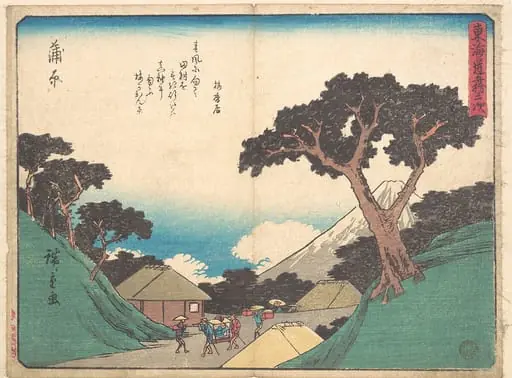 東海道五十三次 蒲原|Kambara
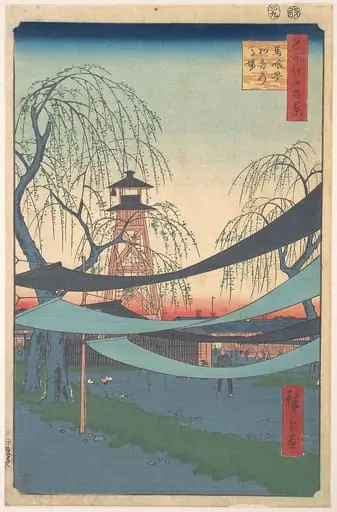 名所江戸百景 馬喰町初音の馬場|The First Race Course, Horse-Dealer's Street
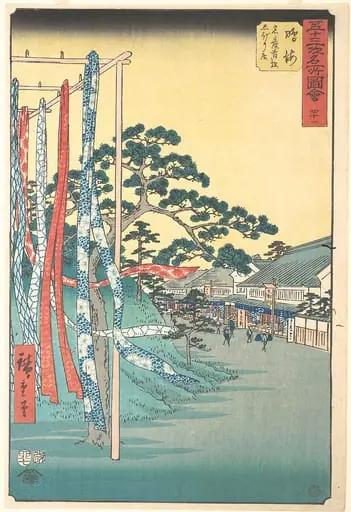 五十三次名所図会 鳴海 名產有松しぼり店|Narumi, Meisan Arimatsu Shibori Mise
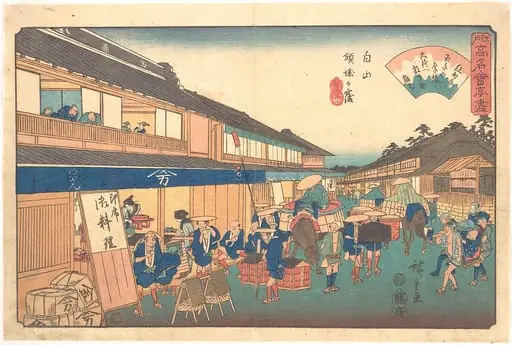 Hakusan Keiseiga Kubo (Daisen)|江戸高名会亭尽 白山傾城ヶ窪|Tea house in Hakusen district
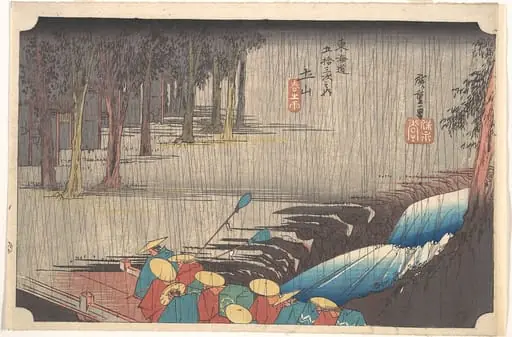 東海道五十三次 土山 春の雨|Spring Rain at Tsuchiyama, from the series Fifty-three Stations of the Tōkaidō
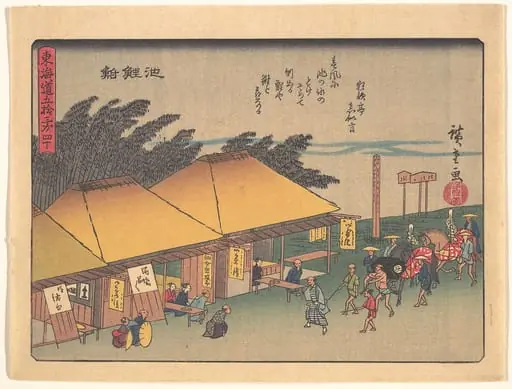 東海道五十三次 池鯉鮒|Chiryūshuku, from the series The Fifty-three Stations of the Tōkaidō Road
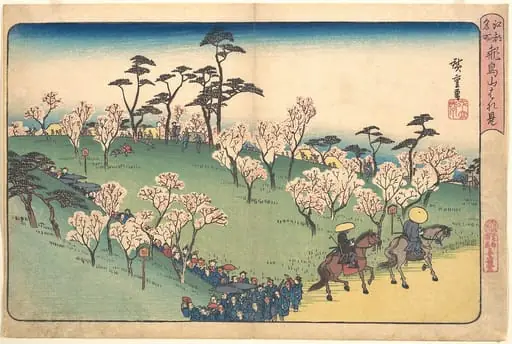 江都名所 飛鳥山はな見|Asukayama Hanami
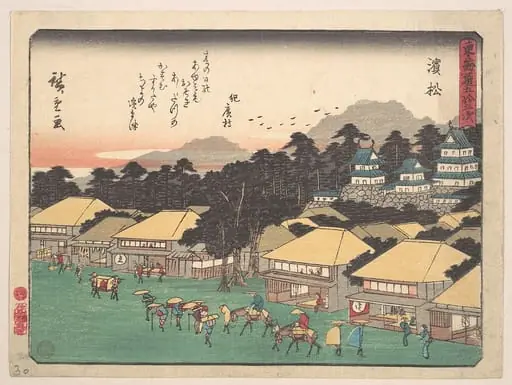 東海道五十三次 浜松|Hamamatsu
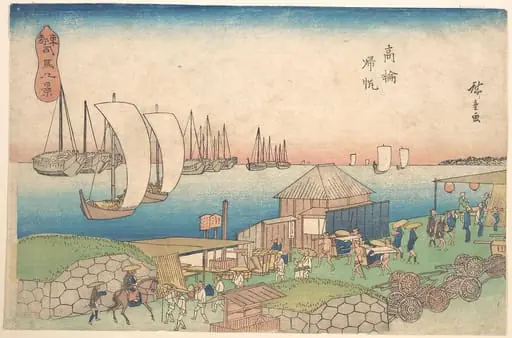 東都司馬八景 高輪帰帆|River View at Takanawa
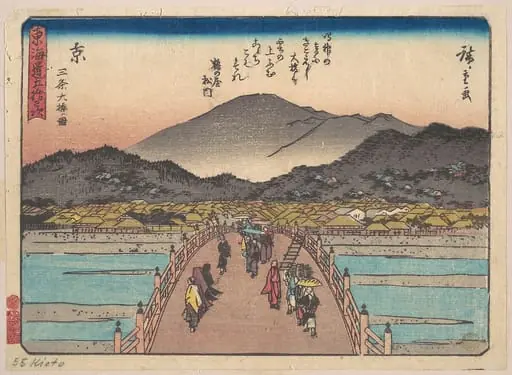 東海道五十三次 京 三条大橋図|Kyoto: Sanju Ohashi no zu.
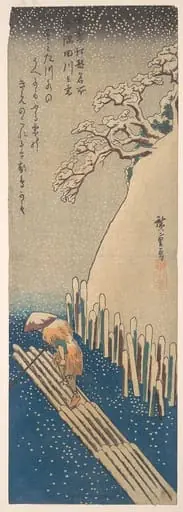 Untitled
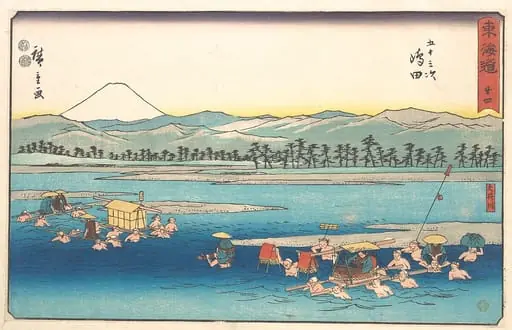 東海道五十三次 島田 大井川|Shimada
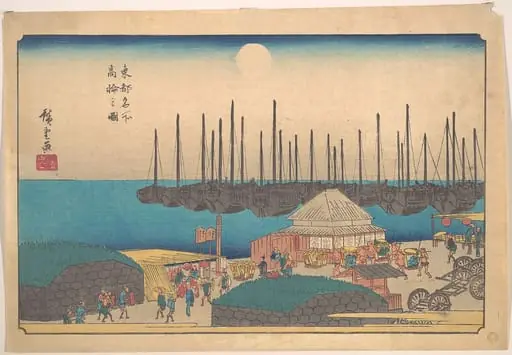 東都名所 高輪之図|Takanawa no Zu
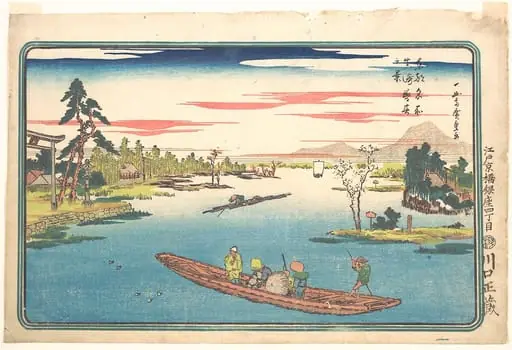 Masaki, boshun no kei|東都名所 真崎暮春之景|A View of Late Spring at Masaki
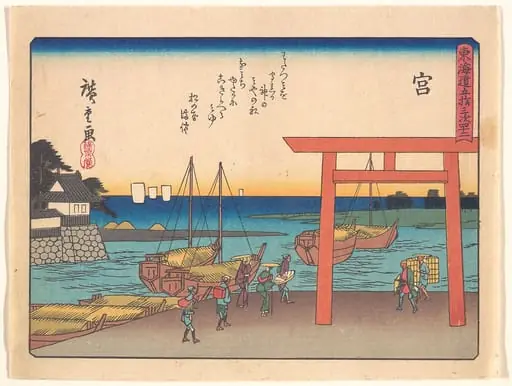 東海道五十三次 宮|Miya, from the series The Fifty-three Stations of the Tōkaidō Road
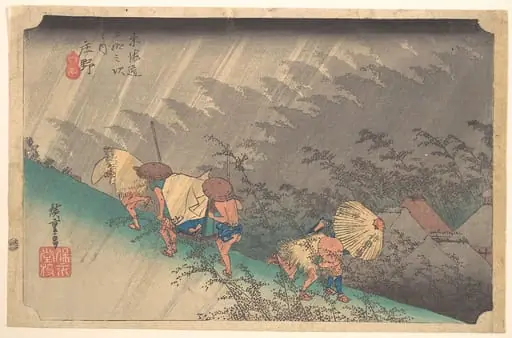 Shōno Hakuu|東海道五十三次之内 庄野 白雨|White Rain at Shōno
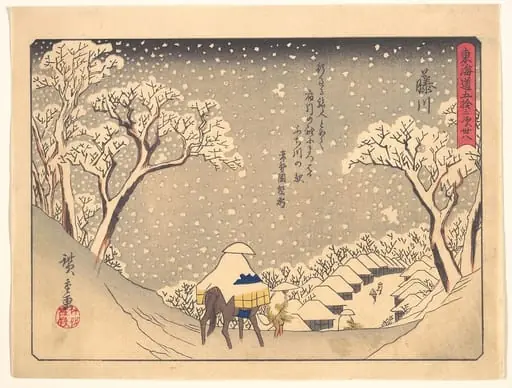 東海道五十三次 藤川|Fujikawa, from the series The Fifty-three Stations of the Tōkaidō Road
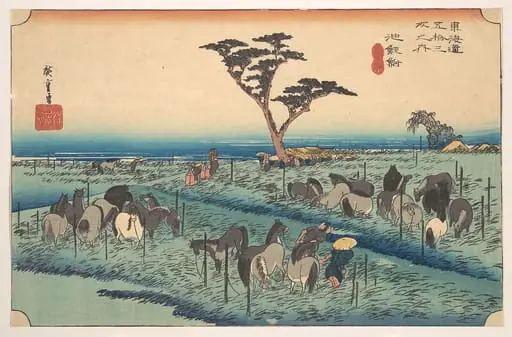 東海道五十三次 池鯉鮒 首夏馬市|Chiriu, Station No. 40
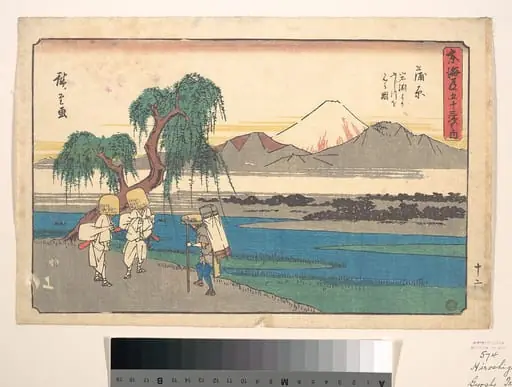 東海道五十三次之内 蒲原 岩淵よりふじ川を見る圖|Kambura Station
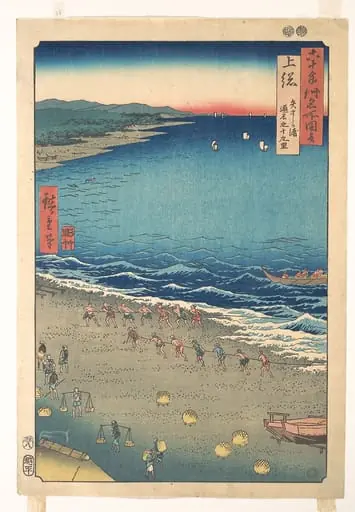 Kazusa Yazashi-ga-ura tsumei|六十余州名所図会 上総 矢さしか浦 通名九十九里|Yasashi Beach, known as Kujūkuri, Kazusa Province, from the series Views of Famous Places in the Sixty-Odd Provinces
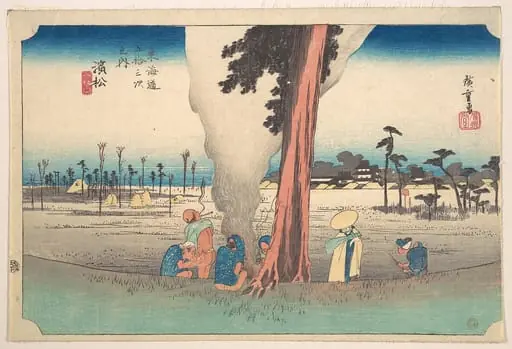 東海道五十三次之内 濱松 冬枯の図|Hamamatsu, Toko no Zu
Frequently asked questions
What is Human Figure?
Human Figure is a subject in art. The nude, as a form of visual art that focuses on the unclothed human figure, is an enduring tradition in Western art.
How many Human Figure works does Artifact World Gallery have?
Artifact World Gallery holds 200 public-domain Human Figure works, all free to view and download.
Who are the key Human Figure artists?
Key Human Figure artists in the collection include Jean Baptiste Camille Corot, Alfred Sisley and Pierre-Auguste Renoir.
Where can I see Human Figure works?
Human Figure works in the collection are held by Metropolitan Museum of Art, Pinacoteca de São Paulo and Cleveland Museum of Art.