Artwork
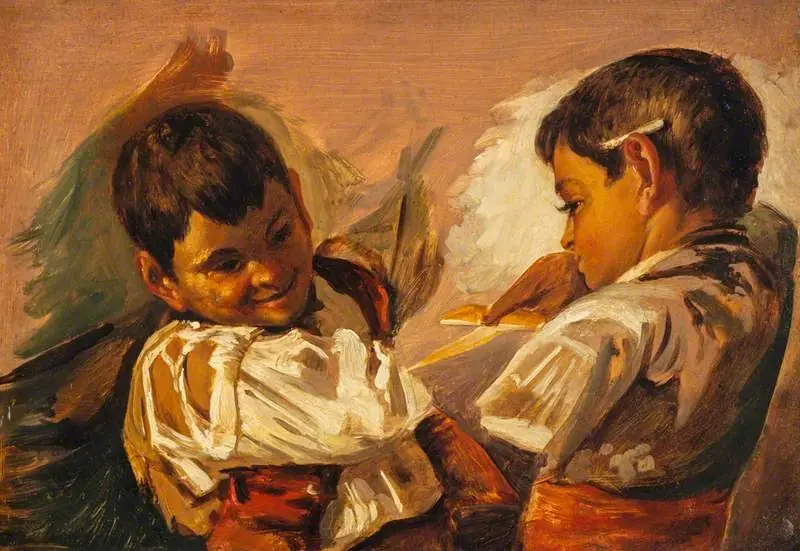
Two Boys Playing with a Kendama Toy
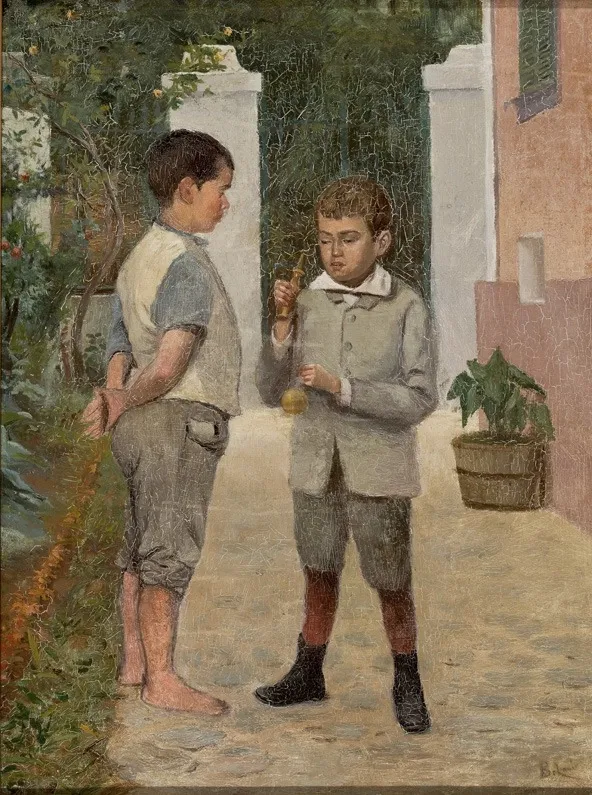
Two Boys Playing with a Kendama Toy is an oil painting by the Naturalist artist Belmiro de Almeida. It dates from 1906 and is held in the collection of the São Paulo Museum of Art.
About this work
Overview
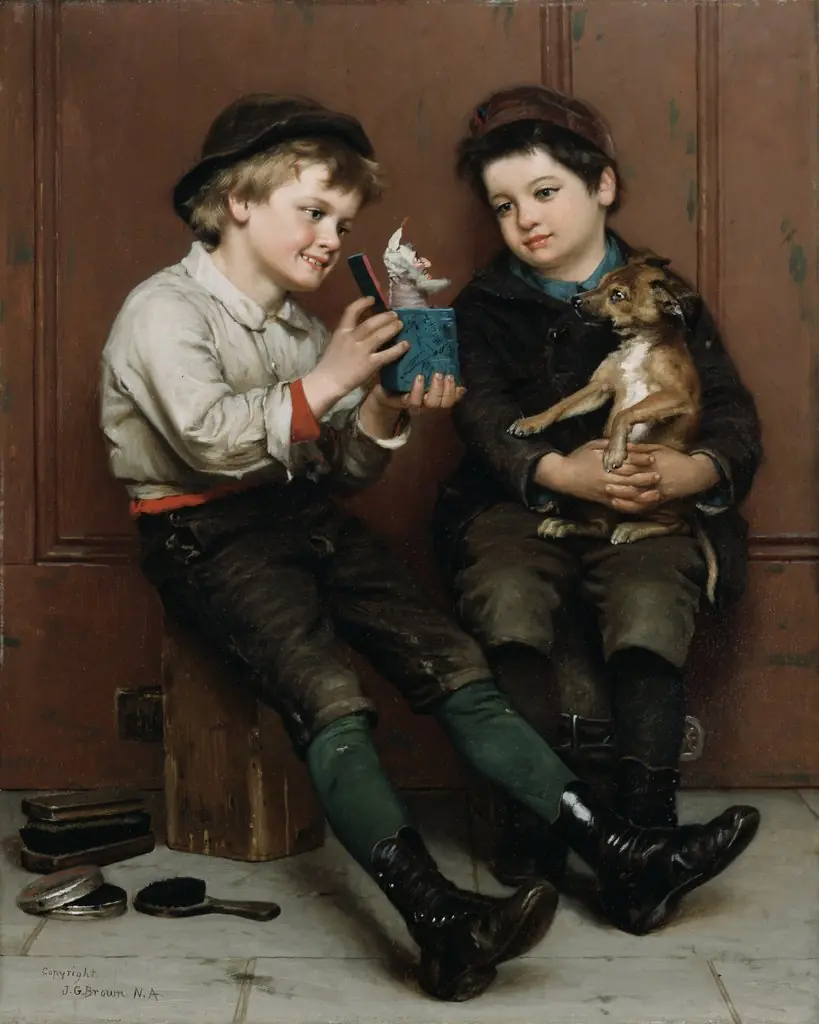
Painted around 1906 by Belmiro de Almeida, this oil work captures a quiet moment of childhood play. It is part of the collection at the São Paulo Museum of Art, where it stands as a modest yet evocative example of early 20th-century Brazilian genre painting. The scene is unadorned, focusing on two boys engaged in a simple pastime, rendered with restrained detail and naturalistic lighting.
Subject & Meaning
The painting portrays two boys interacting with a kendama, a traditional Japanese skill toy, suggesting a blend of local and imported cultural elements in urban Brazilian life. Their postures and attire reflect everyday dress of the period, while their concentration conveys the innocence of unstructured play. No narrative climax is implied; the value lies in the quiet authenticity of the moment.
Technique & Style
Almeida employs a soft chiaroscuro to define form without dramatic contrast, grounding the figures in a sunlit outdoor setting.
Almeida employs a soft chiaroscuro to define form without dramatic contrast, grounding the figures in a sunlit outdoor setting. Brushwork is loose yet deliberate, particularly in the rendering of fabric and foliage. The background remains muted, allowing the boys’ figures and the kendama to anchor the composition. Color is subdued, favoring earth tones and pale hues that enhance the scene’s tranquility.
History & Provenance
The painting has remained in Brazil since its creation, entering the São Paulo Museum of Art’s collection in the mid-20th century. Its provenance is unbroken, with no record of public exhibition prior to its acquisition by the museum. It has not been widely reproduced or studied outside institutional contexts, preserving its status as a quiet, locally significant work.
Context
Created during a period of rapid urbanization in São Paulo, the painting reflects a middle-class domestic sphere where children’s play incorporated both local customs and imported objects. The kendama’s presence hints at global trade influences, while the boys’ clothing and setting align with contemporary depictions of urban youth in Brazilian art of the era.
Legacy
Though not widely known beyond regional art circles, the work contributes to a broader understanding of everyday life in early 20th-century Brazil. It exemplifies how artists like Almeida documented ordinary moments without romanticism, offering a visual record of childhood and material culture that remains relevant for social and art historical study.
Artist & collection