Artwork
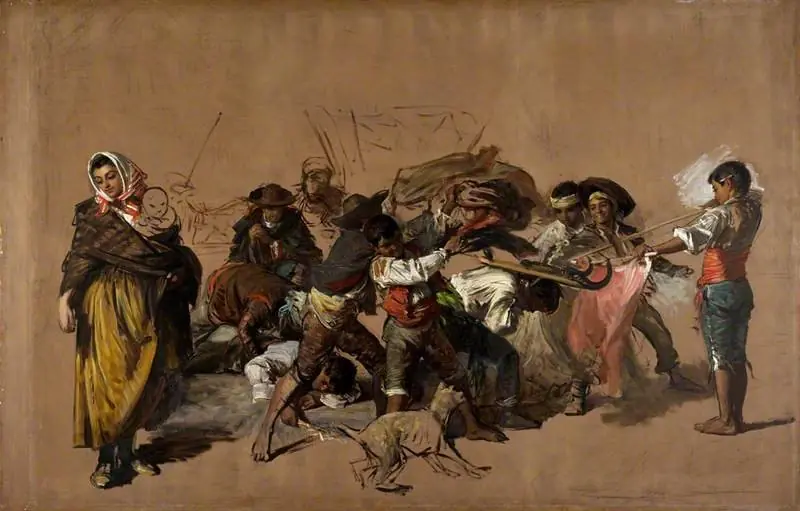
Two Boys: Study after 'Spanish Boys Playing at Bull-fighting' (NG 534)
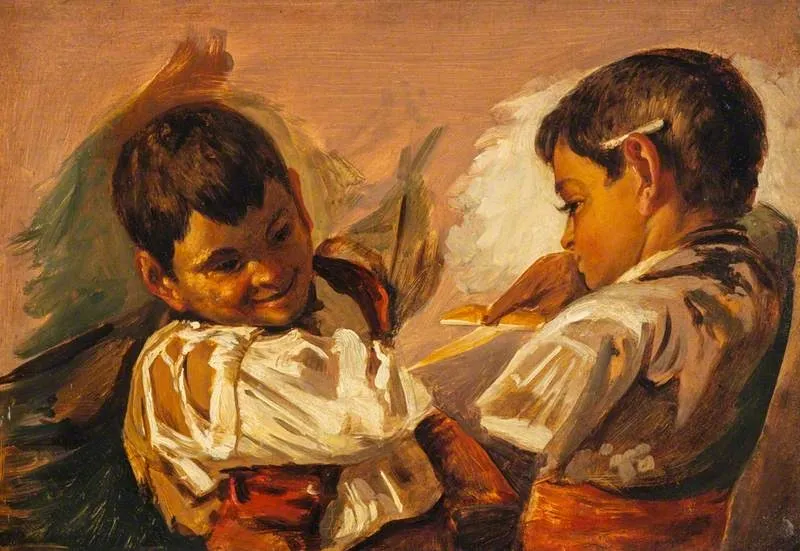
Two Boys: Study after 'Spanish Boys Playing at Bull-fighting' (NG 534) is an oil painting by John Phillip. It dates from 1852 and is held in the collection of the National Galleries Scotland.
About this work
Overview
The piece is held in the collection of the Scottish National Gallery, where it stands as a quiet testament to his evolving focus on regional authenticity.
Painted around 1852, this oil work by Scottish artist John Phillip is a study derived from his broader engagement with Spanish subject matter. It was created shortly after his first trip to Spain in 1851 and reflects his shift toward depicting everyday scenes from Spanish life. The piece is held in the collection of the Scottish National Gallery, where it stands as a quiet testament to his evolving focus on regional authenticity.
Subject & Meaning
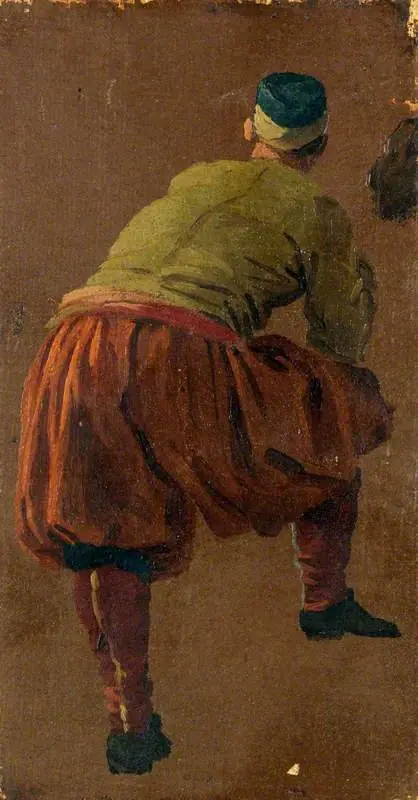
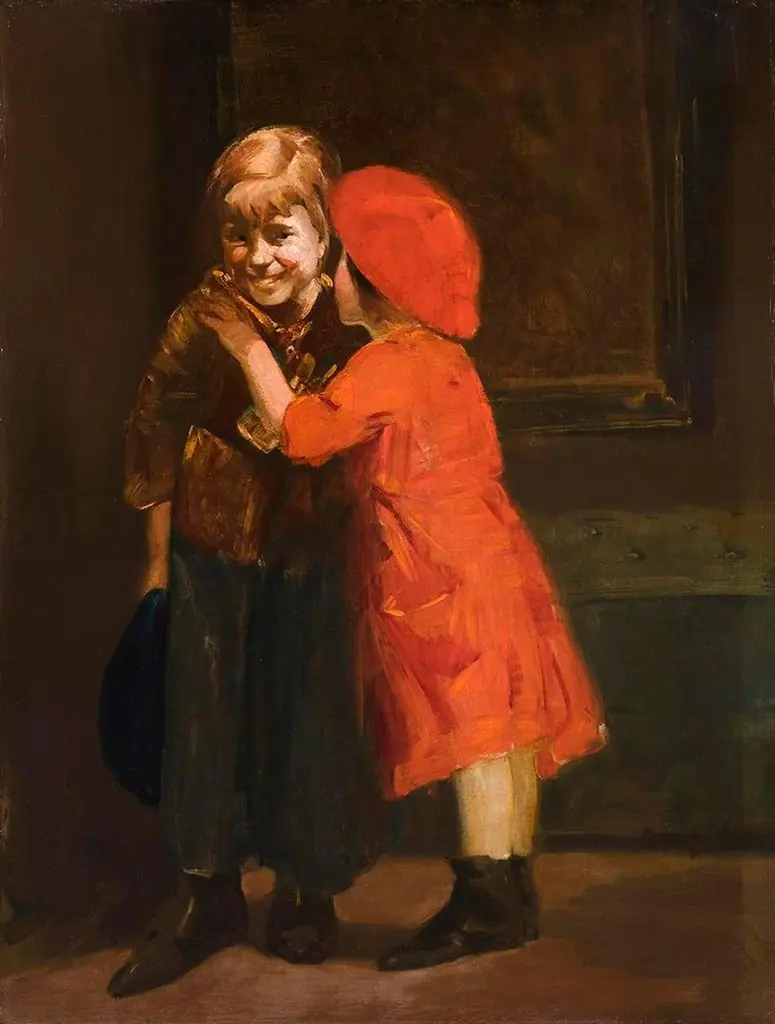
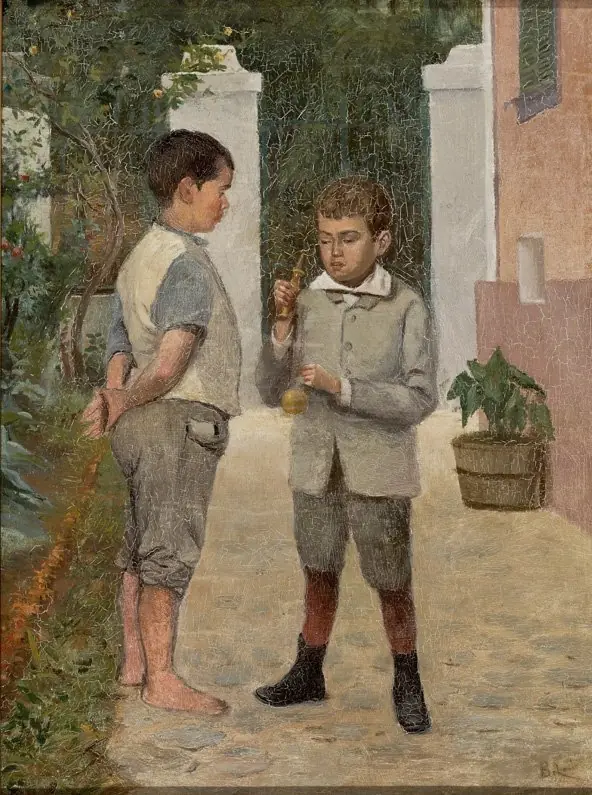
The painting portrays two boys engaged in a spontaneous, improvised game that evokes the spectacle of bullfighting. Dressed in simple, locally typical clothing, they are absorbed in their mimicry, no adults present, no grand stage, only the raw energy of childhood play. The scene carries no overt narrative or moral, instead offering a candid glimpse into the informal pastimes of rural Spanish youth, observed with empathy rather than exoticism.
Technique & Style
Phillip employs warm, earthy tones and loose, fluid brushwork to convey motion and immediacy. The boys’ clothing, white shirts, red and brown trousers, contrast subtly against the muted background, directing focus to their gestures. Soft modeling of forms and gentle transitions between light and shadow suggest natural daylight, reinforcing the painting’s sense of spontaneity and unposed realism.
History & Provenance
The painting entered the Scottish National Gallery’s collection as part of the broader acquisition of Phillip’s works following his death in 1867. It was likely painted during or shortly after his 1851 journey to Spain, a pivotal moment that redirected his artistic focus. Its status as a study suggests it was part of a series of observations made on-site, later refined into larger compositions.
Context
Phillip’s turn to Spanish themes coincided with a wider 19th-century European fascination with Iberian culture, fueled by travel and romanticized notions of authenticity. Unlike many contemporaries who emphasized drama or poverty, Phillip often chose quiet, domestic moments. This work aligns with his preference for unidealized scenes, distinguishing his approach within the genre of Orientalist and regionalist painting.
Legacy
Though less known than some of his contemporaries, Phillip’s focus on everyday Spanish life contributed to a more grounded representation of the region in British art. This study, in particular, reveals his commitment to observing rather than constructing narrative. Its preservation in a national collection underscores its role as a document of cultural observation, not spectacle.
Artist & collection
Artist
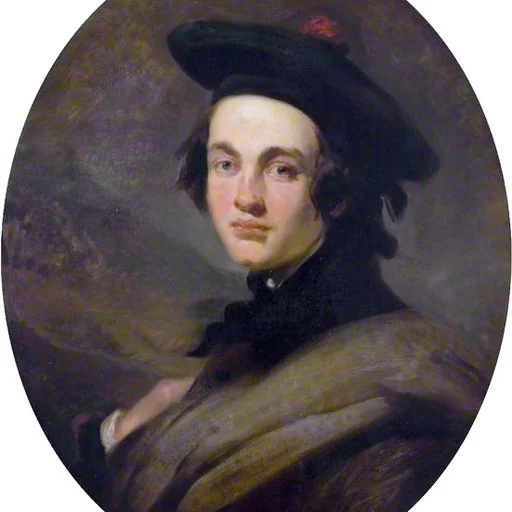
John Phillip (19 April 1817 – 27 February 1867) was a Scottish painter best known for his portrayals of Spanish life. He started painting these studies after a trip to Spain in 1851. He was nicknamed John 'Spanish' Phillip.