Artwork
Saints Nicholas of Tolentino, Roch, Sebastian, and Bernardino of Siena, with Kneeling Donors
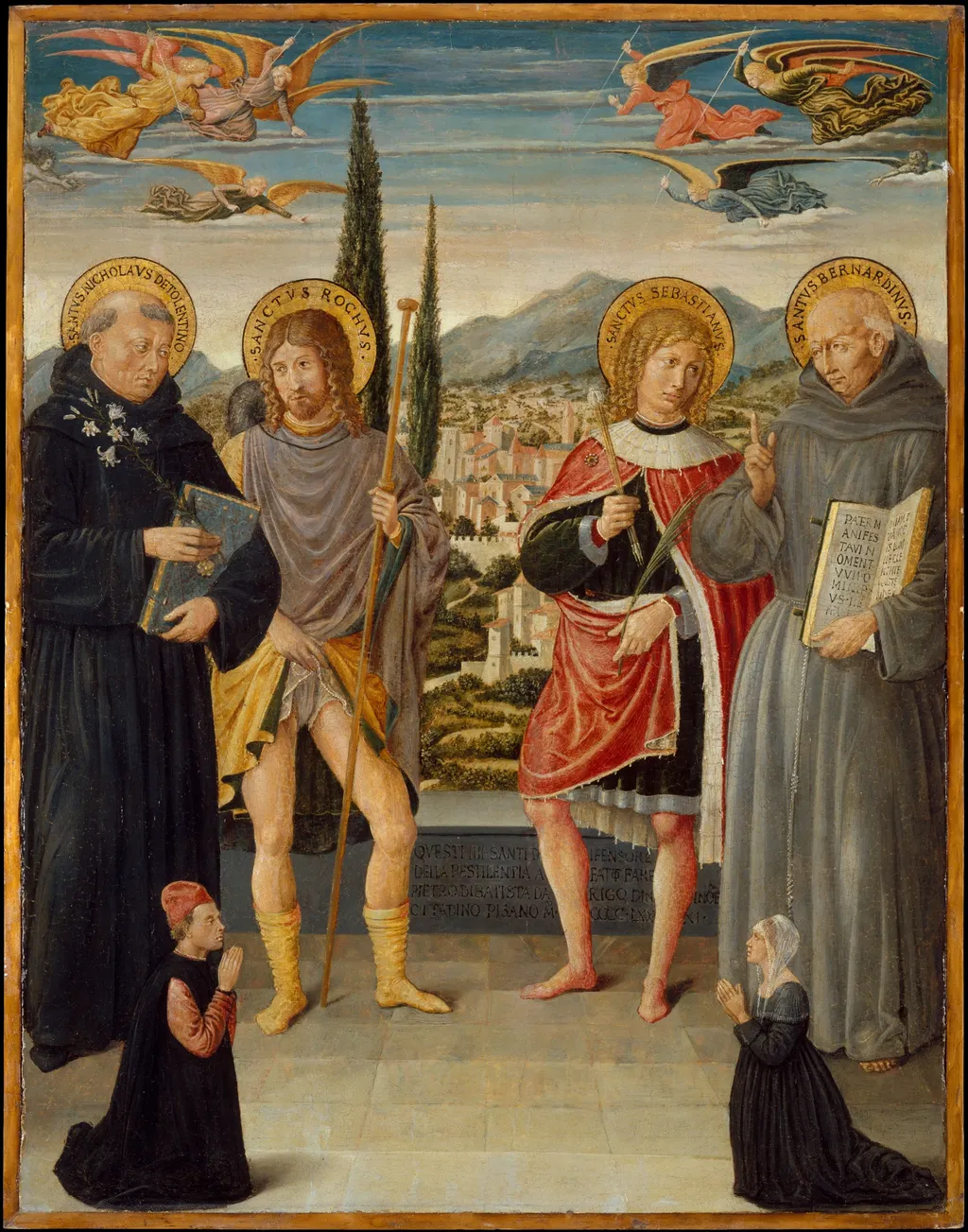
Saints Nicholas of Tolentino, Roch, Sebastian, and Bernardino of Siena, with Kneeling Donors is an unspecified painting by the Early Renaissance artist Benozzo Gozzoli. It dates from 1491 and is held in the collection of the Metropolitan Museum of Art.
About this work
In 1481 the Pisan citizen Pietro di Battista d'Arrigo di Minore commissioned Benozzo Gozzoli to paint four plague saints, Nicholas of Tolentino, Roch, Sebastian, and Bernardino of Siena, above a pair of tiny kneeling donors. Now in the Metropolitan Museum of Art, the panel shows angels brandishing spears over a distant town, a warning of the epidemic the saints were asked to ward off.
Overview
This small devotional painting, created by the Florentine artist Benozzo Gozzoli in 1481, depicts four saints revered for their protection against disease.
This small devotional painting, created by the Florentine artist Benozzo Gozzoli in 1481, depicts four saints revered for their protection against disease. Commissioned by Pietro di Battista d’Arrigo di Minore, a Pisan citizen, the panel served as a personal plea for safeguarding during a time of plague. The composition features the standing holy figures above two kneeling donors, with a distant town and celestial protectors in the background, alluding to the very threat the artwork sought to avert.
Subject & Meaning
The panel features Saints Nicholas of Tolentino, Roch, Sebastian, and Bernardino of Siena, explicitly identified by an inscription as "defenders against the pestilence." Roch is identifiable by the plague ulcer on his thigh, while Sebastian holds an arrow and a martyr's palm. Below these intercessors, two small kneeling figures represent the donors, seeking divine protection.
Angels carrying spears hover above a distant town, likely Pisa, symbolizing the divine judgment or disease from which the patrons implored deliverance.
Technique & Style
Gozzoli executed this work using tempera and gold, originally on a wood panel. Measuring approximately 76.5 by 59.7 centimeters, its modest size suggests it was intended for private devotion. The painting has since been transferred from its initial wooden support to canvas.
This technique, common for the period, allowed for vibrant colors and intricate details, enhancing the spiritual impact of the figures and their attributes.
History & Provenance
Pietro di Battista d’Arrigo di Minore, a resident of Pisa, commissioned this panel in 1481. Its documented history in more recent times begins in 1900, when it was part of Comte Robert de Pourtalès's collection in Paris. The painting later moved to the New York art market, acquired by dealer Kleinberger in 1967.
It ultimately entered the collection of the Metropolitan Museum of Art in 1971 as a bequest from Harry G. Sperling, bearing the object number 1976.100.14.
Context
This painting exemplifies a common practice during the Renaissance, where individuals commissioned personalized votive images to address specific anxieties, particularly during widespread epidemics like the plague. Patrons often invoked locally venerated saints believed to offer protection. Gozzoli's panel thus reflects a deeply personal and culturally significant response to the pervasive threat of disease, channeling faith and artistic patronage as a means of seeking solace and intervention.
Own this work as a print
Artist & collection
Artist
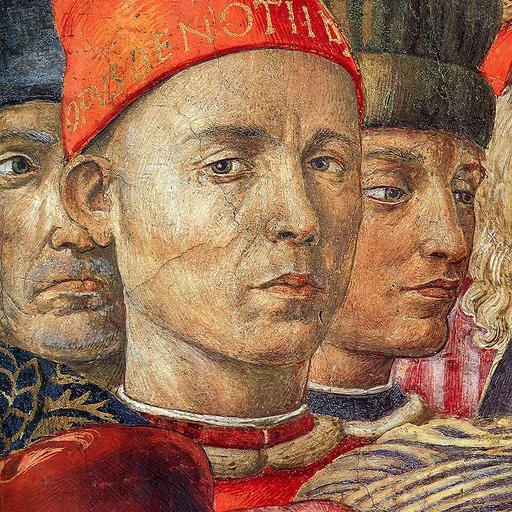
Benozzo Gozzoli (pronounced; born Benozzo di Lese; c. 1421 – 4 October 1497) was an Italian Renaissance painter from Florence. A pupil of Fra Angelico, Gozzoli is best known for a series of murals in the Magi Chapel of…

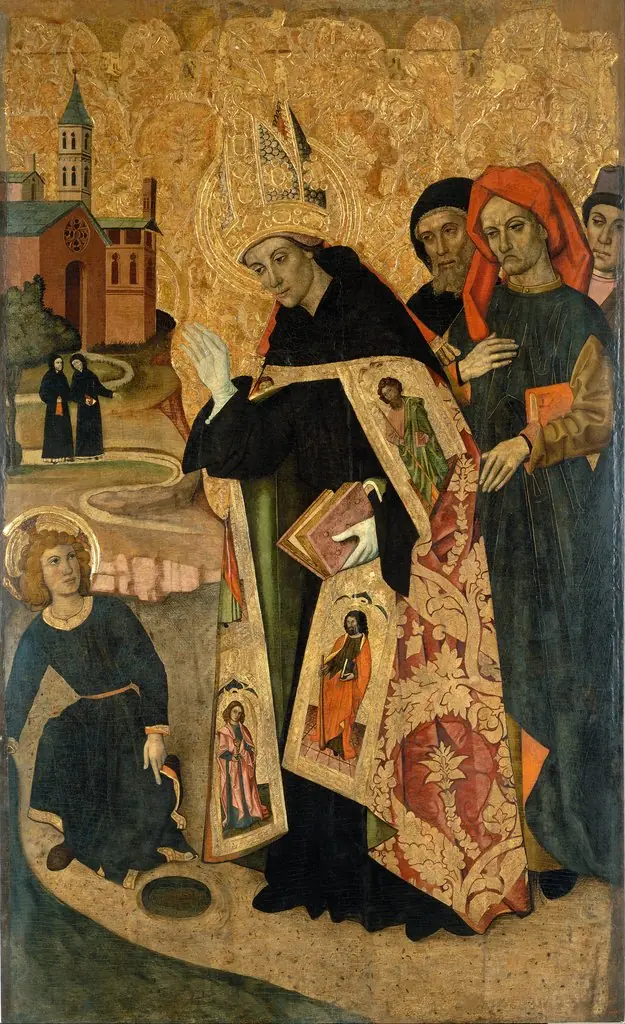 Saint Augustine Meditates on the Trinity when the Child Jesus Appears before him
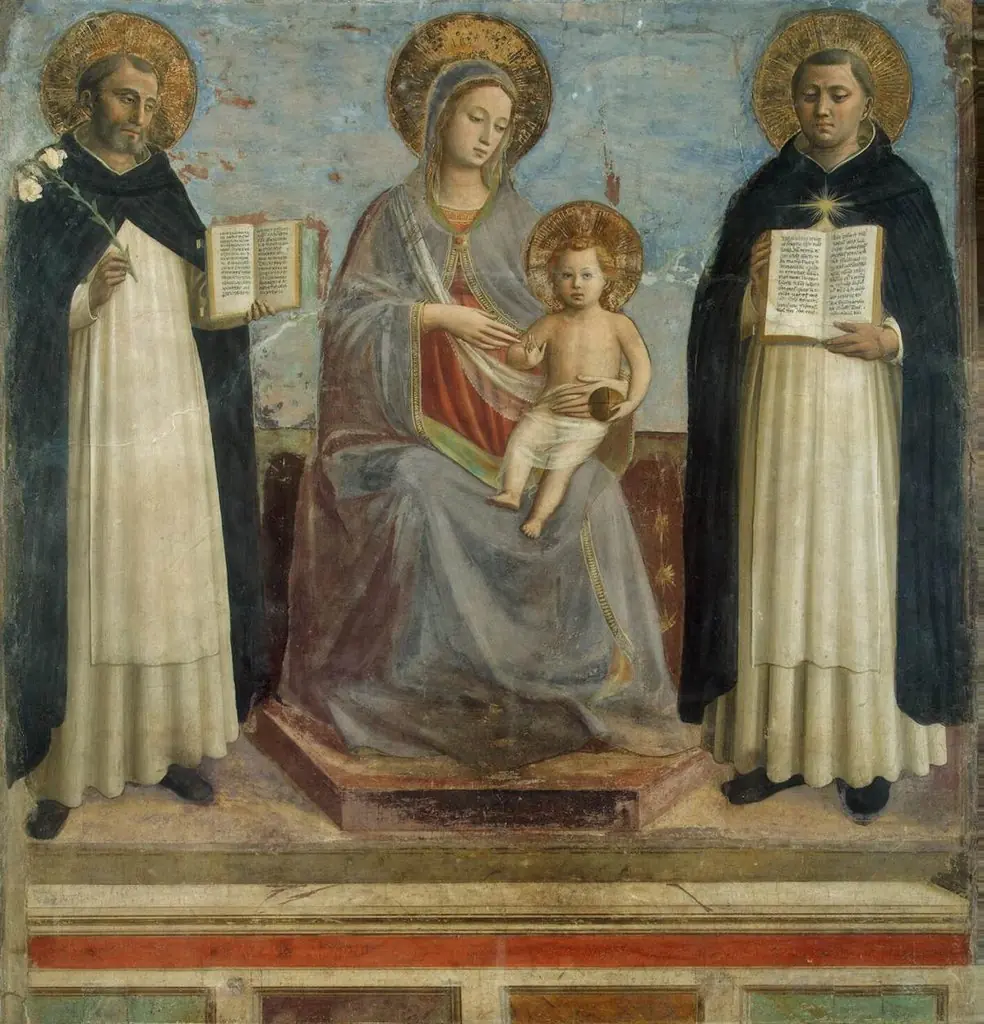 Madonna and Child
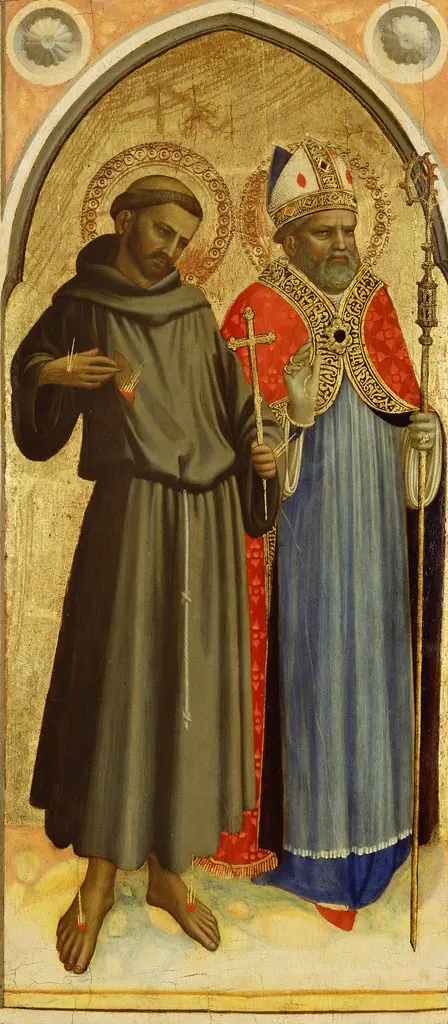 Saint Francis and a Bishop Saint
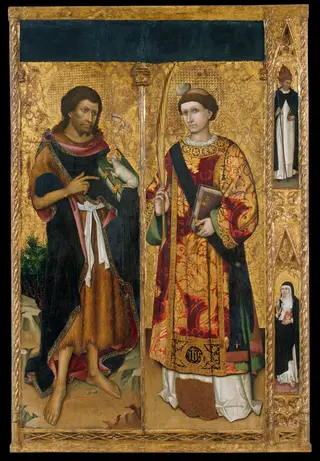 Saint John the Baptist and Saint Stephen
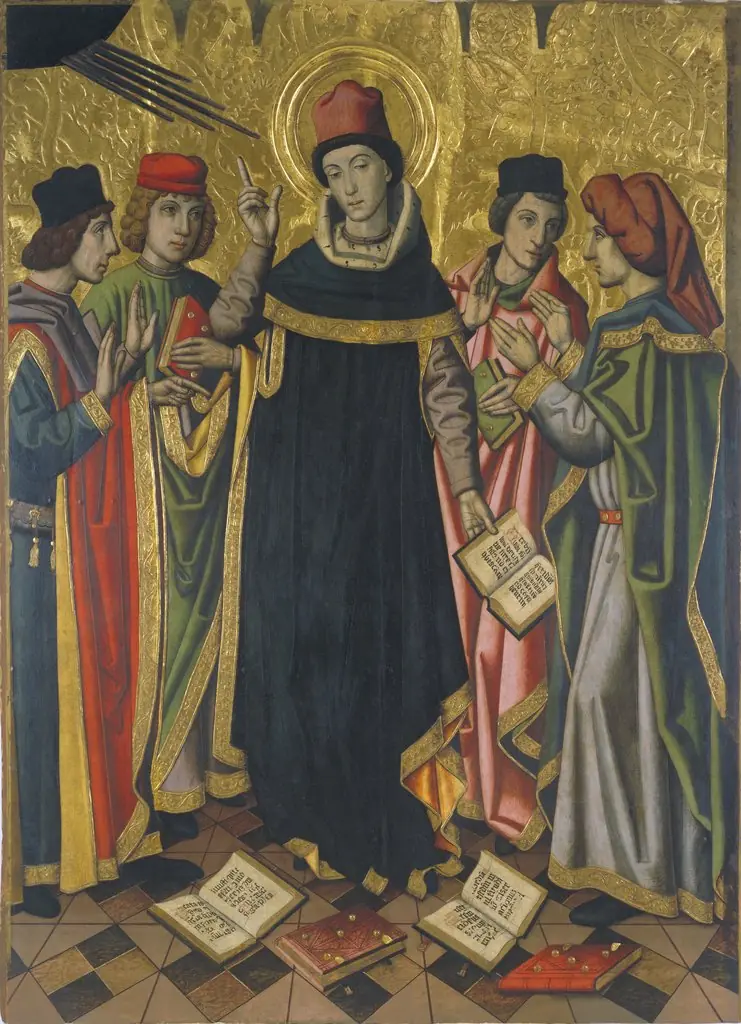 The Conversion of Saint Augustine
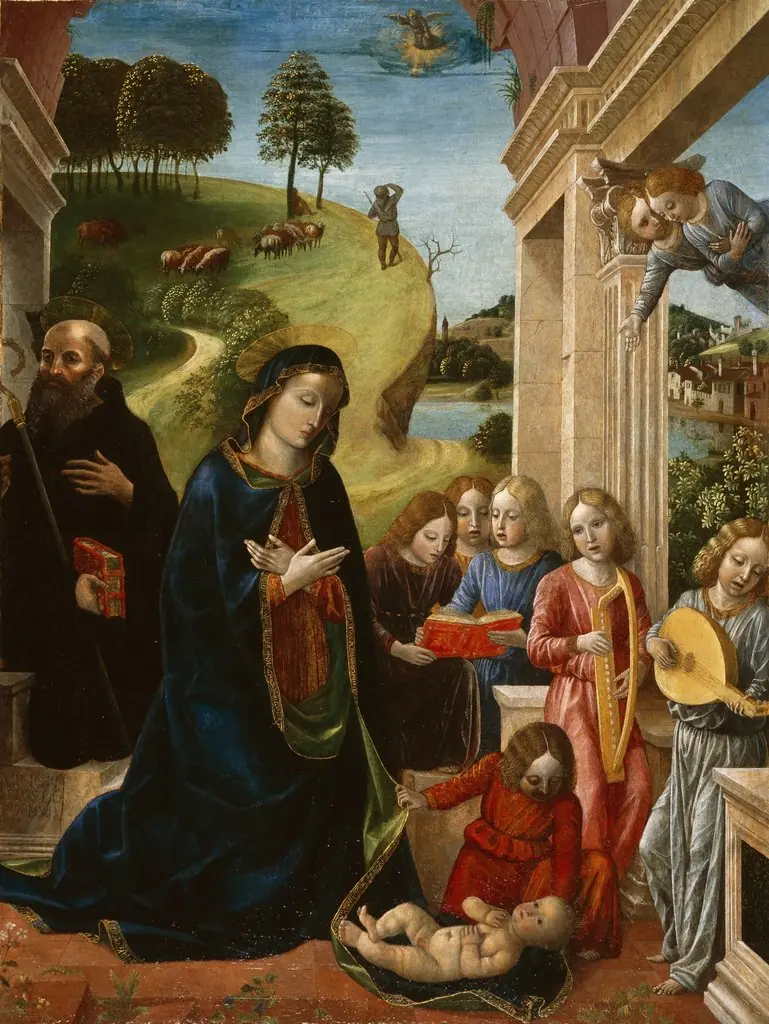 Adoration of the Child with St. Benedict and Angels
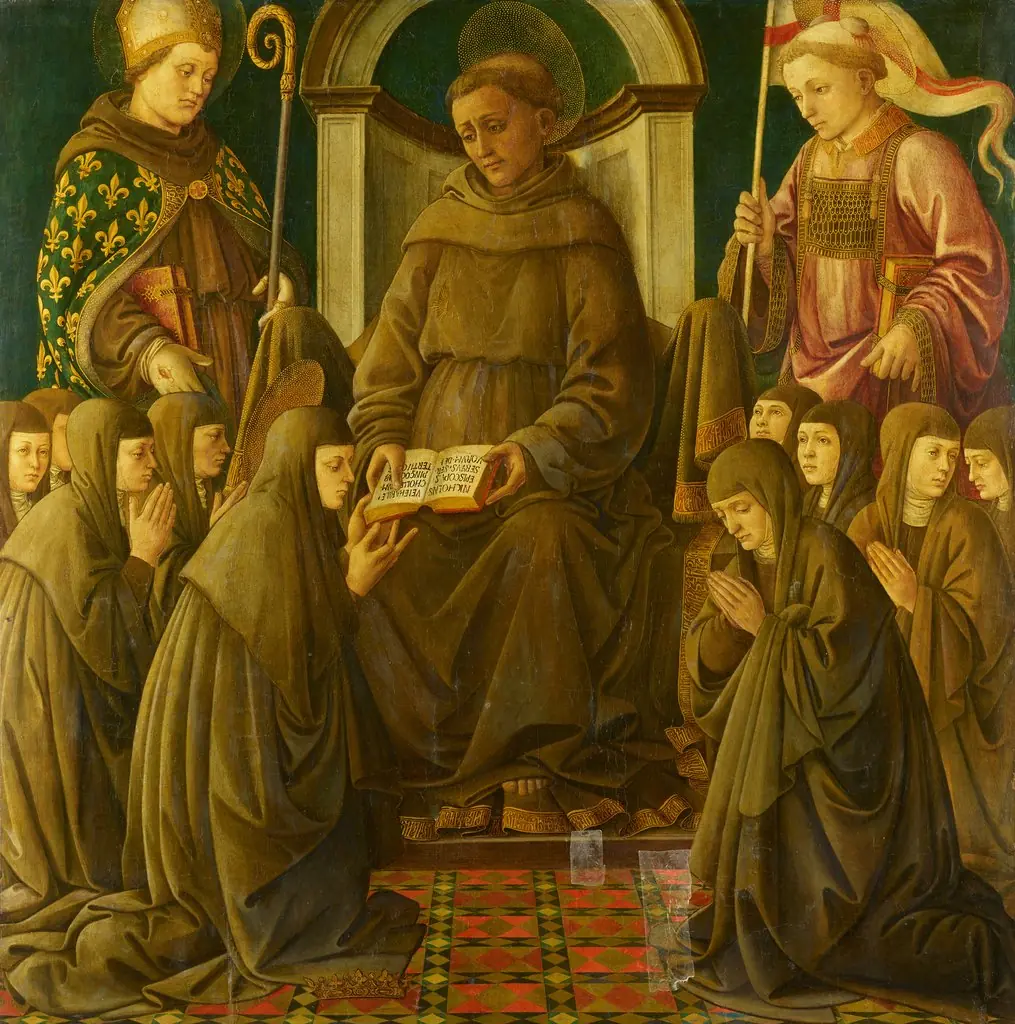 The enthroned St. Francis presents the rule of the order to St. Clare
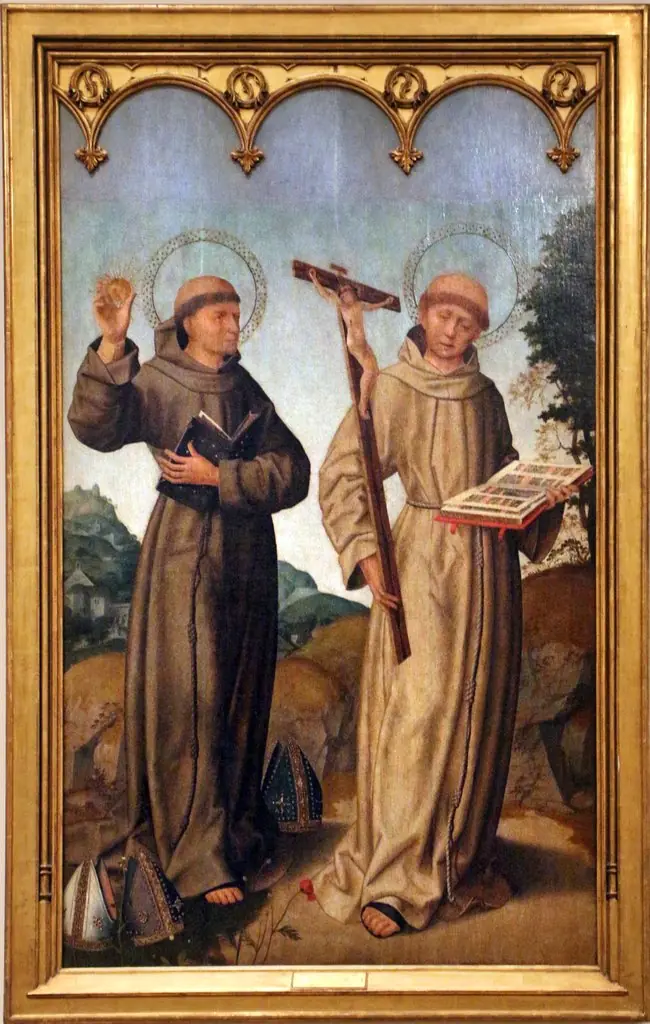 São Bernardino de Siena e Santo António
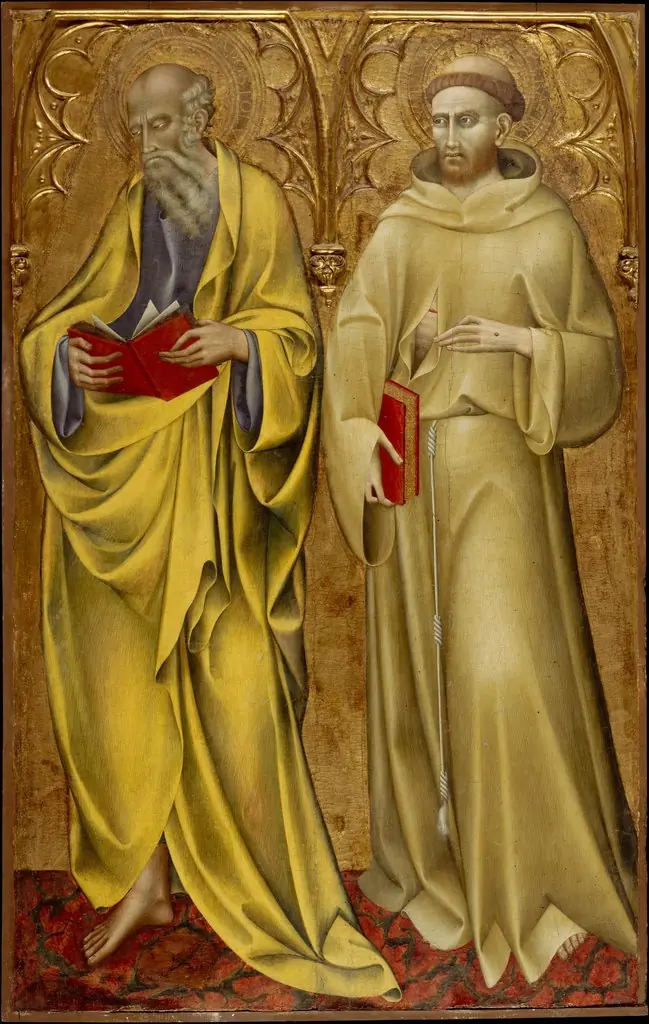 Saints Matthew and Francis
 Saint Giles with Christ Triumphant over Satan and the Mission of the Apostles
 The Investiture of Saint Clare: the Saint receiving the clothes of her Order from Saint Francis
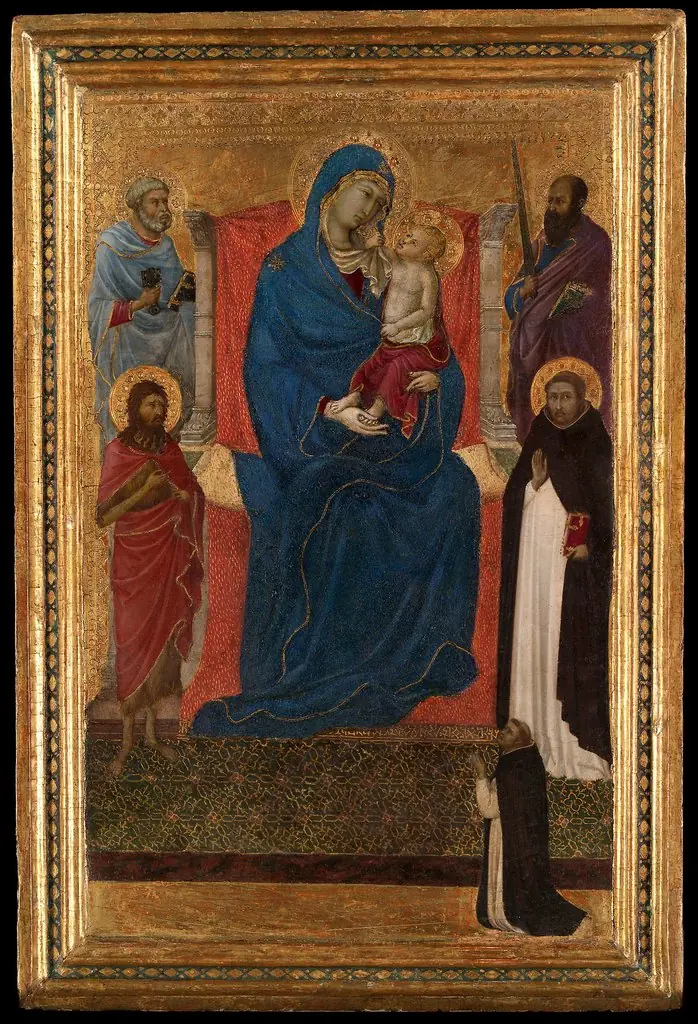
- Virgin and Child Enthroned with Saints Peter, Paul, John the Baptist, Dominic and a Donor