Artwork
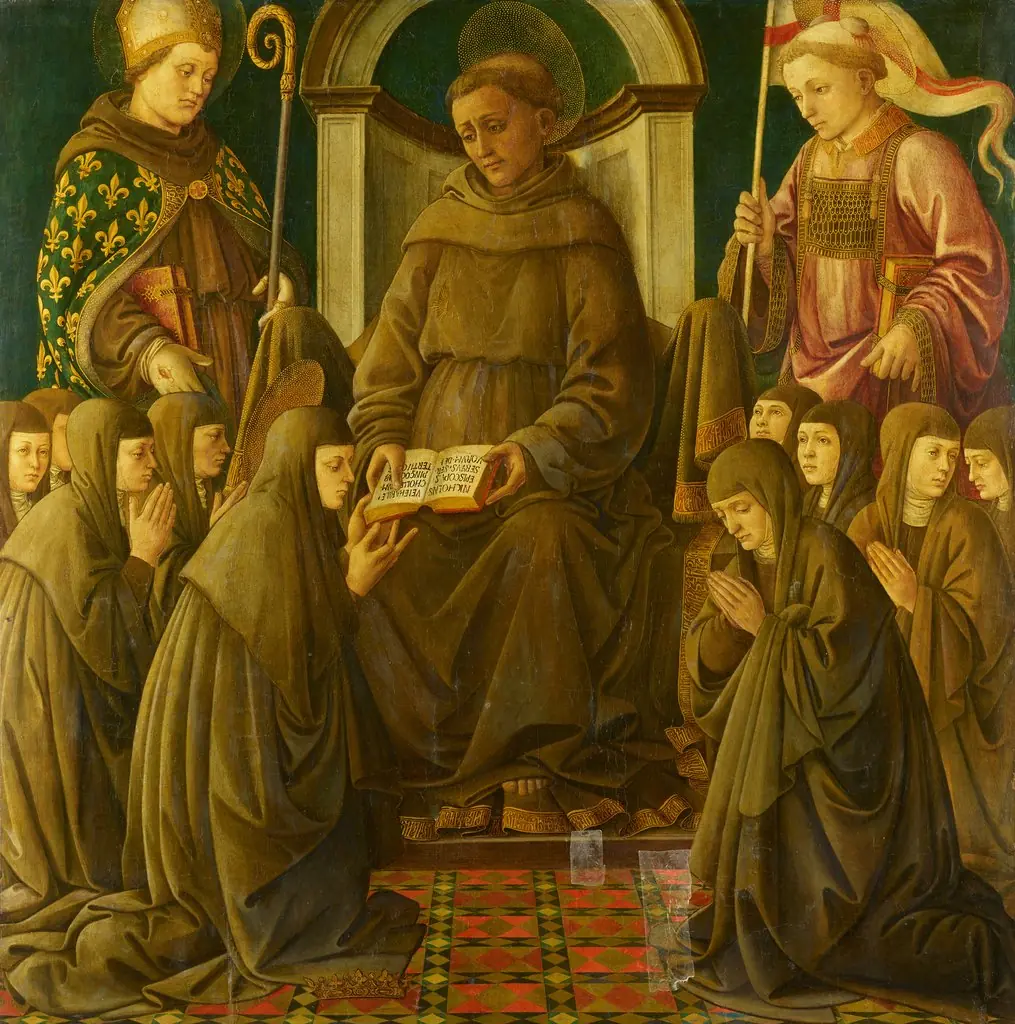
Saint Augustine Meditates on the Trinity when the Child Jesus Appears before him
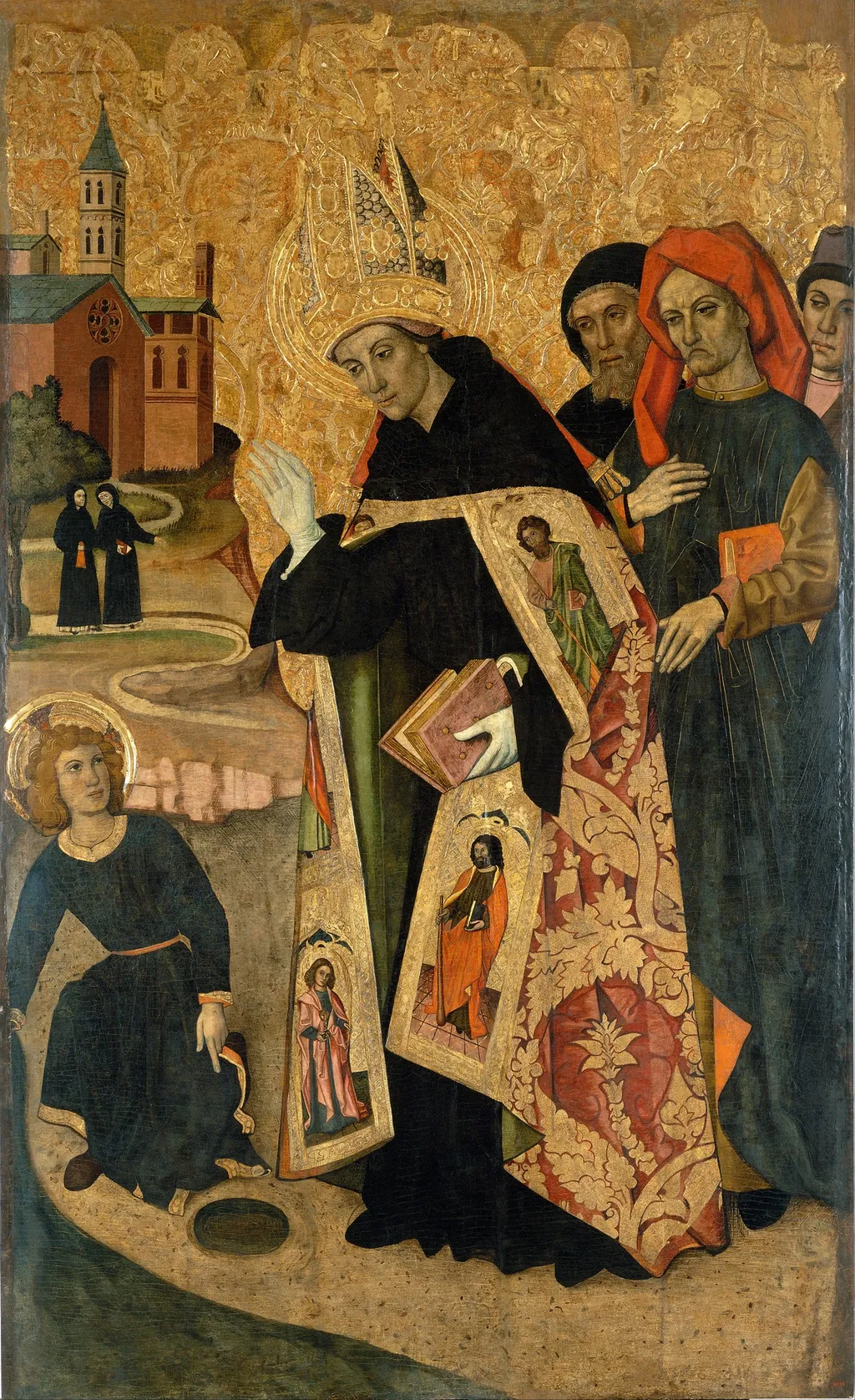
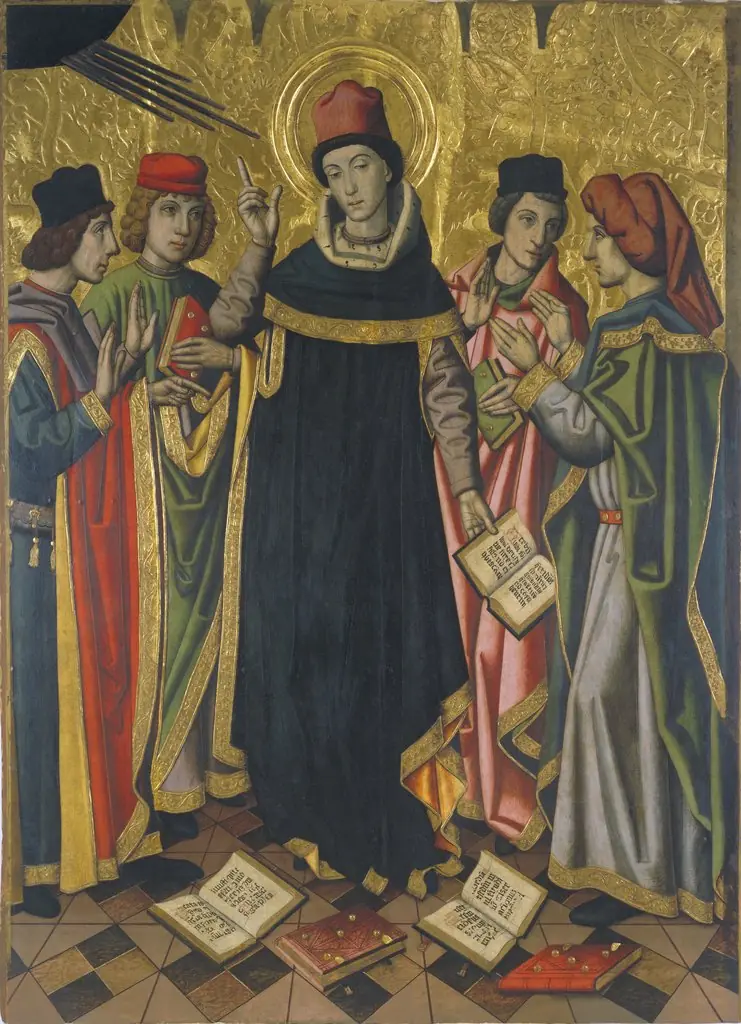
Saint Augustine Meditates on the Trinity when the Child Jesus Appears before him is a tempera painting by the Gothic painting artist Pablo Vergós. It dates from 1470 and is held in the collection of the Museu Nacional d'Art de Catalunya. This stucco painting, dated to around 1470, portrays Saint Augustine of Hippo in a moment of spiritual reflection.
About this work
Overview
This stucco painting, dated to around 1470, portrays Saint Augustine of Hippo in a moment of spiritual reflection. Attributed to Pablo Vergós, it belongs to the late Gothic tradition in Catalan religious art. The work is preserved in the Museu Nacional d'Art de Catalunya, where it serves as an example of devotional imagery from the region’s medieval ecclesiastical culture.
Subject & Meaning
The saint, centrally positioned, is shown in deep meditation with hands clasped, while surrounding figures, possibly scholars or angels, observe in silence.
The scene illustrates Augustine’s legendary vision of the Child Jesus, which occurred during his contemplation of the mystery of the Trinity. The saint, centrally positioned, is shown in deep meditation with hands clasped, while surrounding figures, possibly scholars or angels, observe in silence. The moment captures a divine revelation within an intellectual pursuit, blending theological inquiry with mystical experience.
Technique & Style
Executed in stucco, the painting employs a relief-like surface with gilded and earth-toned backgrounds to suggest sacred space. Figures are rendered with elongated proportions and restrained gestures typical of late Gothic aesthetics. The use of gold leaf enhances the otherworldly atmosphere, while the architectural backdrop provides a sense of depth without naturalistic perspective, consistent with devotional conventions of the period.
History & Provenance
The work originated in a Catalan religious context, likely commissioned for a monastic or cathedral setting. It entered the collection of the Museu Nacional d'Art de Catalunya through the consolidation of ecclesiastical artworks in the late 19th and early 20th centuries. Its attribution to Pablo Vergós, a documented Catalan painter of the era, is based on stylistic comparison with other regional works from the same period.
Context
Created during a time when Catalan religious art emphasized contemplative saints and doctrinal themes, this painting reflects the influence of Augustinian spirituality in monastic communities. The depiction of divine revelation through vision aligns with broader medieval devotional practices that sought to make abstract theological concepts tangible through imagery, reinforcing faith through visual narrative.
Legacy
Though not widely known outside regional art history, the painting remains a significant example of Gothic stucco work in Catalonia. It contributes to the understanding of how theological ideas were visually encoded in local contexts, offering insight into the devotional habits and artistic priorities of late medieval Catalan clergy and patrons.
Own this work as a print
Artist & collection

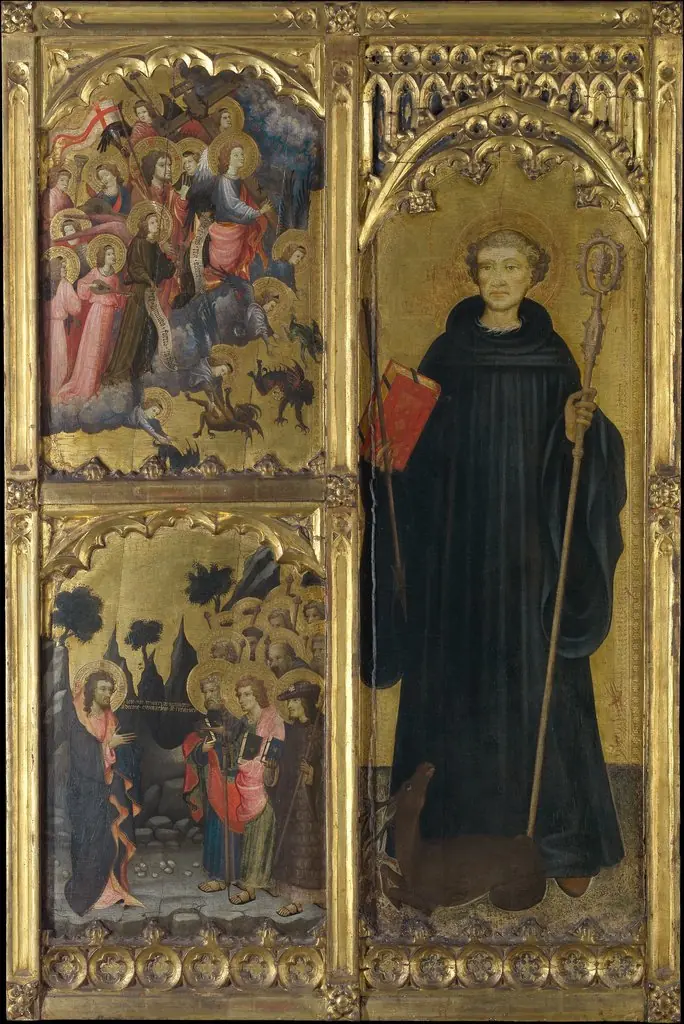 Saint Giles with Christ Triumphant over Satan and the Mission of the Apostles
 Saints Nicholas of Tolentino, Roch, Sebastian, and Bernardino of Siena, with Kneeling Donors
 Saint Dominic
 Saint John the Baptist and Saint Stephen
 St. Bernard of Clairvaux and scenes of his life
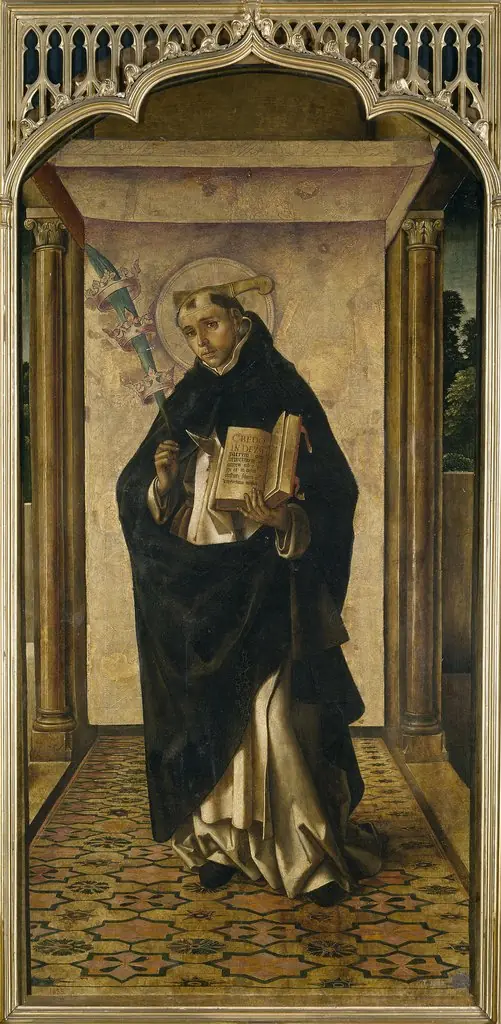 Saint Peter Martyr
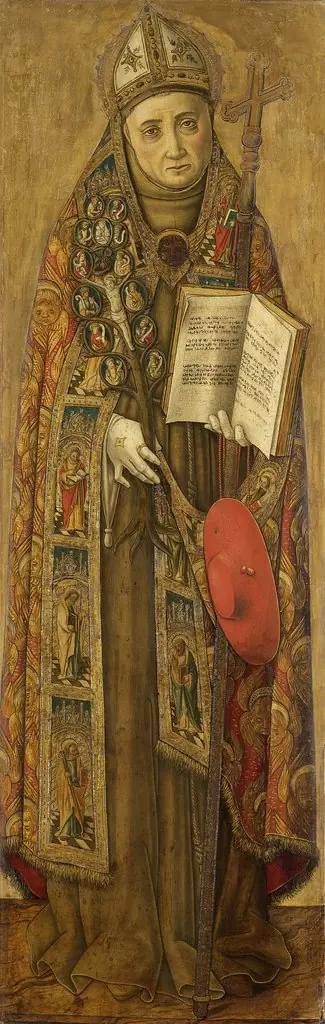 St. Bonaventure, pendant to St. Louis
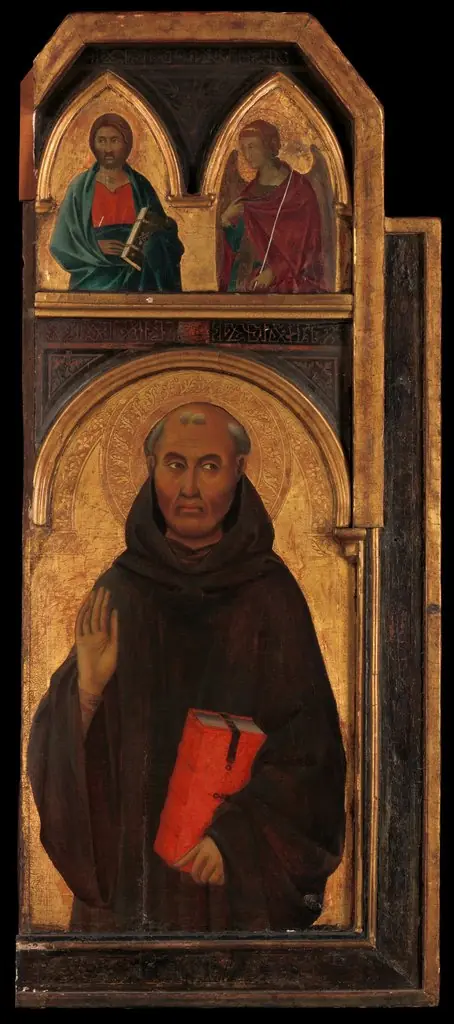 Saint Benedict
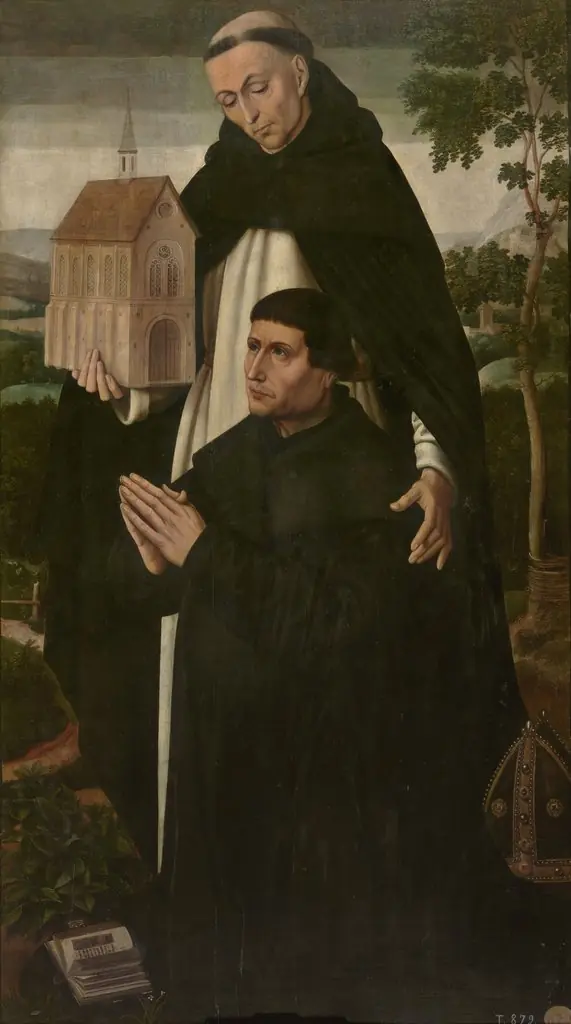 Santo Tomás y un donante
 The enthroned St. Francis presents the rule of the order to St. Clare