Artwork
Madonna and Child
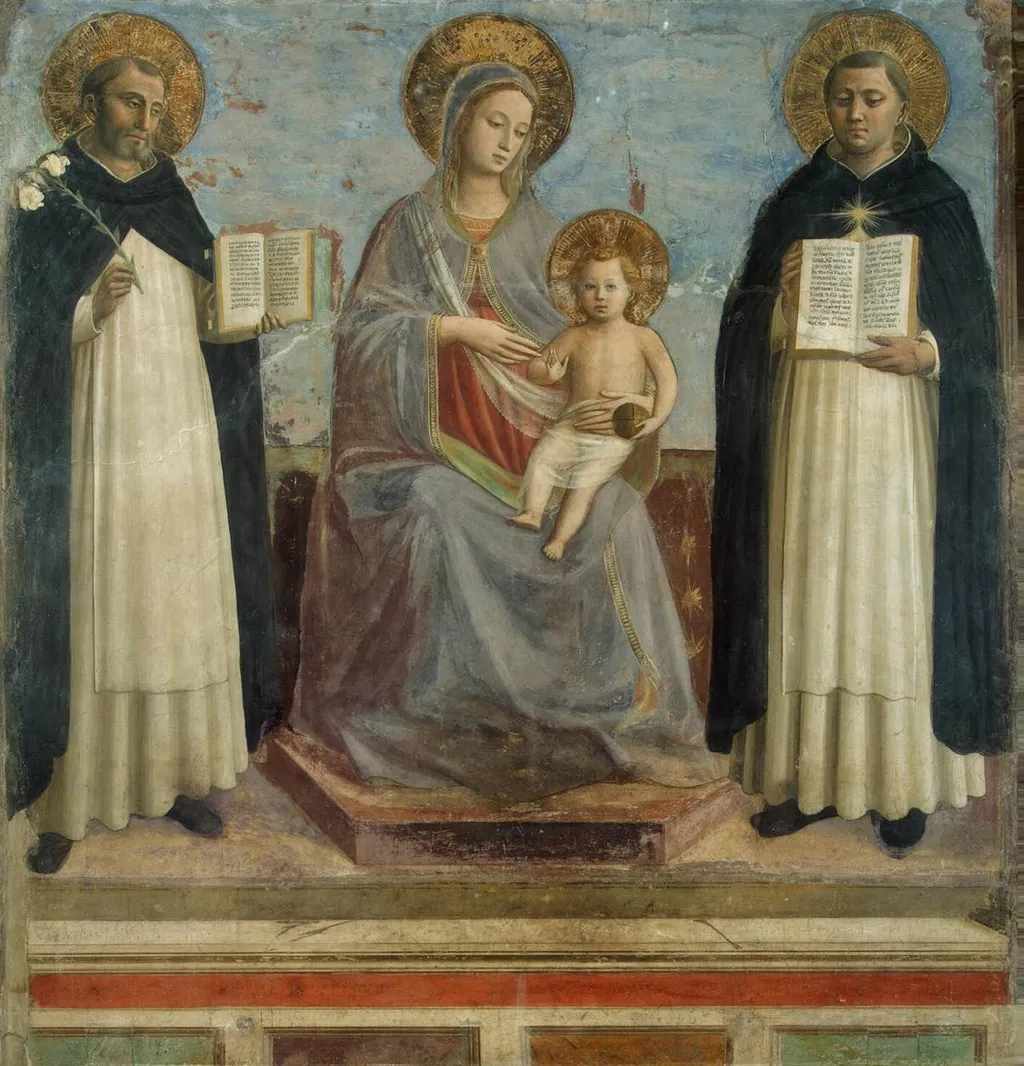
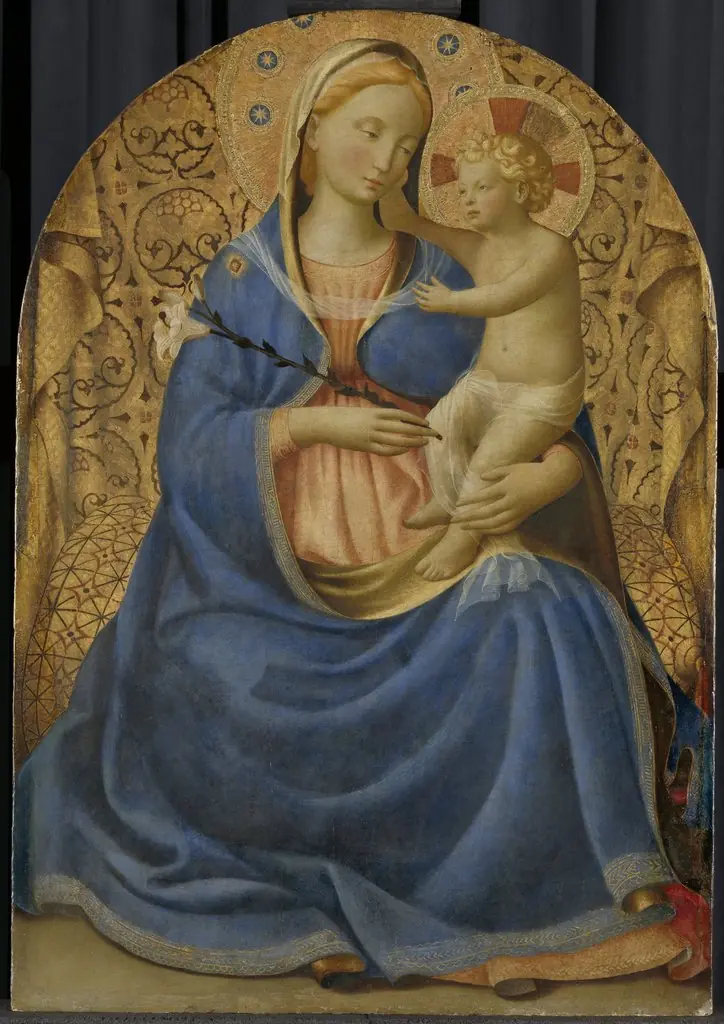
Madonna and Child is a fresco painting by the High Renaissance artist Fra Angelico. It dates from 1430 and is held in the collection of the Hermitage Museum.
About this work
Subject & Meaning
Dominic holds a lily, symbol of purity, while Thomas bears a book and a golden star, attributes of his theological wisdom and divine illumination.
The fresco shows the Virgin Mary enthroned with the Christ Child, flanked by the Dominican saints Dominic and Thomas Aquinas, identifying it as a sacra conversazione. Dominic holds a lily, symbol of purity, while Thomas bears a book and a golden star, attributes of his theological wisdom and divine illumination. The Child grasps a sphere representing his sovereignty over the world and raises his other hand in blessing, gazing directly at the viewer, whereas the other figures lower their eyes and share identical halos.
The composition’s symmetrical arrangement and minimal decorative detail emphasize a contemplative, unified holy conversation intended to foster devotion within the Dominican convent.
Technique & Style
The work is a fresco, originally executed on the wall of the dormitory of the Convent of San Domenico at Fiesole and later detached from the wall and transferred to canvas during the Napoleonic suppressions. It measures 196 × 187 cm. Stylistically it is classified as a sacra conversazione, with the Virgin enthroned at the center flanked by Saints Dominic and Thomas Aquinas. The composition retains a markedly medieval character: the figures are hieratic and vertical, with isocephaly, and all wear flat circular rayed halos shown without perspective.
The throne is rendered with weak architectural perspective, its backrest low and plain, while a single column appears at the far right against a washed blue ground. The saints stand symmetrically in the white habits and black hooded cloaks of the Dominican order, their eyes lowered, while only the Christ Child looks outward toward the viewer, holding the globe in his left hand. The style is austere and sober, stripped of decorative excess in order to direct the viewer's religious attention, with light unifying the figures and drapery into a sense of divine illumination.
History & Provenance
The fresco was executed circa 1430 for the dormitory of the Convent of San Domenico in Fiesole, where it remained until the Napoleonic suppressions of the early 19th century. After the convent’s closure the wall painting was detached, transferred to the art market, and sold to the Florentine dealers A. Mazzonti and K. Conti, who later disposed of it to the Hermitage Museum in St Petersburg. The work, a fresco by Fra Angelico, measures 196 × 187 cm and depicts the Madonna and Child flanked by Saints Dominic and Thomas Aquinas.
Its creation reflects the early Renaissance sacra conversazione style and the original decorative program of the Dominican dormitory.
Originally painted in the dormitory of the Convent of San Domenico in Fiesole, this fresco fragment was detached from the wall during the Napoleonic suppression of Italian religious institutions. Following its removal, the work was transferred to canvas and sold by Napoleonic agents to Russian buyers, eventually entering the collection of the Hermitage Museum in St. Petersburg, where it remains held today.
The artwork measures approximately 196 by 187 cm. While specific inventory numbers are not provided in the available records, its provenance traces a direct path from the Fiesole convent to the Hermitage via intermediaries identified as Florentine painters A. Mazzonti and K. Conti. The piece has not been noted for specific temporary exhibition loans in the provided sources, with its history focused primarily on its displacement and acquisition.
Context
Scholars regard this fresco as a pivotal early expression of Fra Angelico's mature style, anticipating the spiritual sobriety of his later San Marco frescoes. stylistically, the work retains medieval features, hieratic vertical figures, non-perspectival circular halos, and isocephaly, while advancing toward more restrained and mystical forms. The minimal decorative apparatus and unified divine light serve to deepen the observer's religious participation rather than dazzle the eye.
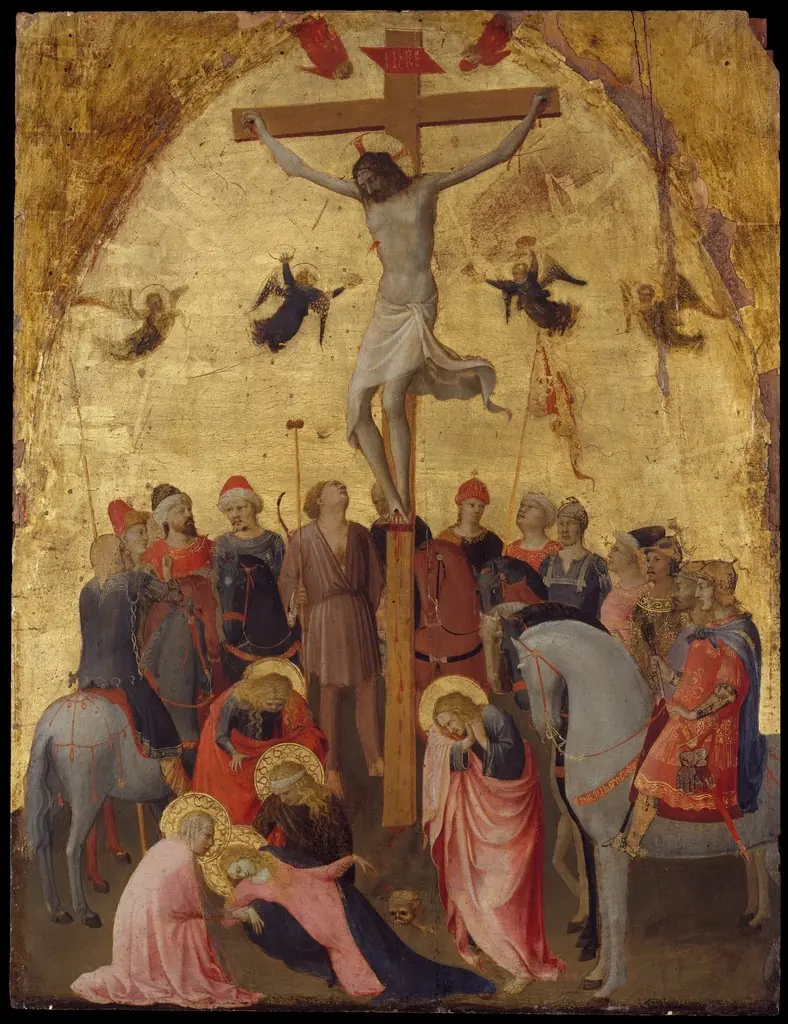
The fresco's Dominican context is significant: created for the convent of San Domenico, Fiesole, it formed part of a cenobitic visual program that stimulated communal spiritual life. Its removal during the Napoleonic suppressions, like that of its companion Crucifixion with Mourners and St Dominic (now Louvre), represents the broader dispersal of Italian religious art. A related fresco of c. 1438 at Cortona, depicting St Peter Martyr in place of Thomas Aquinas, demonstrates the artist's sustained engagement with Dominican iconography in this period.
Legacy
The fresco is regarded as an important early document of Fra Angelico's mature style, marking his move toward sober, mystical forms in both pictorial language and iconography. Stripped of decorative elements, it sought to heighten the religious participation of the viewer, with minimal narrative detail inviting mental completion. Its restrained handling of light, falling clearly on the figures and drapery to create a sense of divine illumination, anticipates the visual language he would develop in the frescoes of the Convent of San Marco in Florence, where the spiritual life of the cenobitic community further stimulated and enriched his art.
The work is also cited, alongside the related Crucifixion with Mourners and St Dominic now in the Louvre, as evidence of this early stylistic evolution. A comparable composition by the same artist, the Madonna and Child with St Dominic and St Peter Martyr of around 1438 in the church of San Domenico in Cortona, demonstrates the continuation of the format. The painting's later trajectory, detached and sold during the Napoleonic suppressions before reaching the Hermitage, has secured its place in the canon of Italian Renaissance fresco painting.
Overview
Fra Angelico's fresco fragment, Madonna and Child, dates to approximately 1435. This painting, executed in the demanding medium of fresco, exemplifies the Italian Renaissance master's devotional style. Originally part of a larger composition within a monastic setting, it now resides in the collection of the State Hermitage Museum in St. Petersburg, Russia, offering a glimpse into early Renaissance artistry.
Artist & collection

Artist
Fra Giovanni da Fiesole (born Guido di Pietro; c. 1395 – 18 February 1455), known posthumously as Fra Angelico ( FRAH an-JEL-ik-oh, Italian: ), was an Italian Dominican friar and painter active during the early…

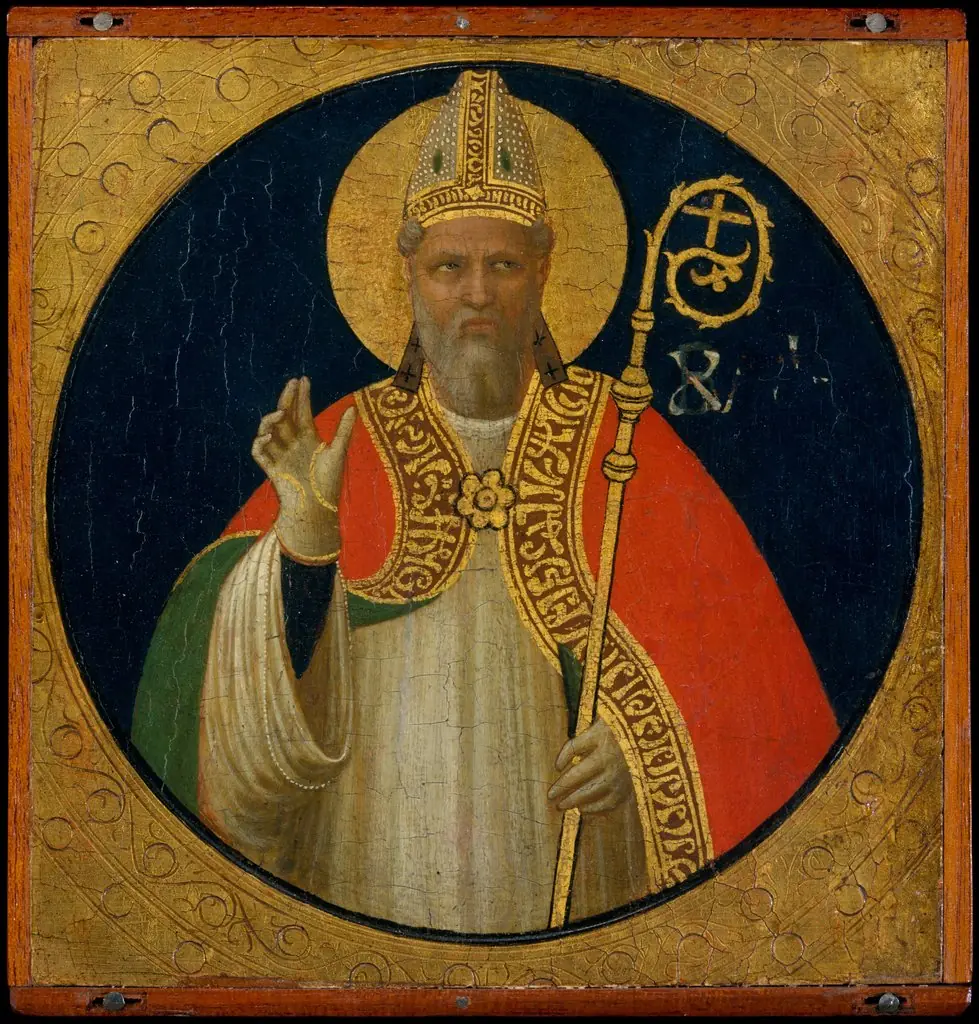
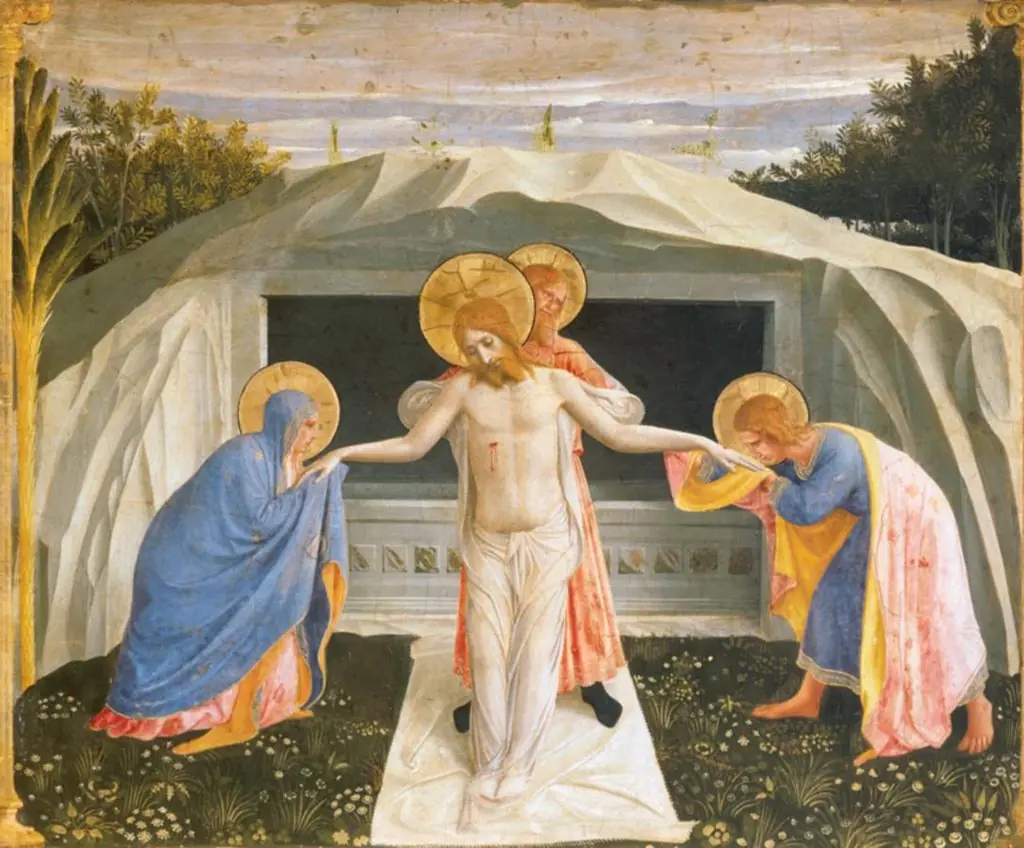
- Madonna and Child with Saints
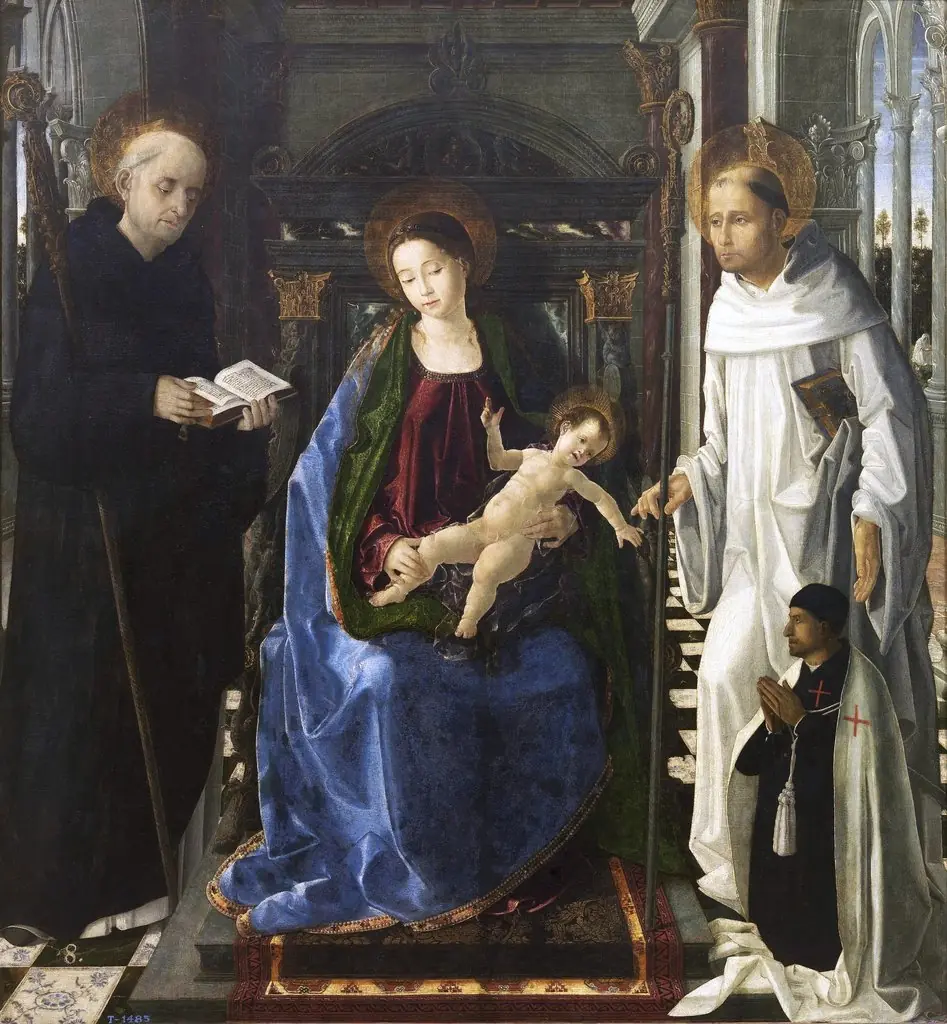 The Virgin of the Knight of Montesa
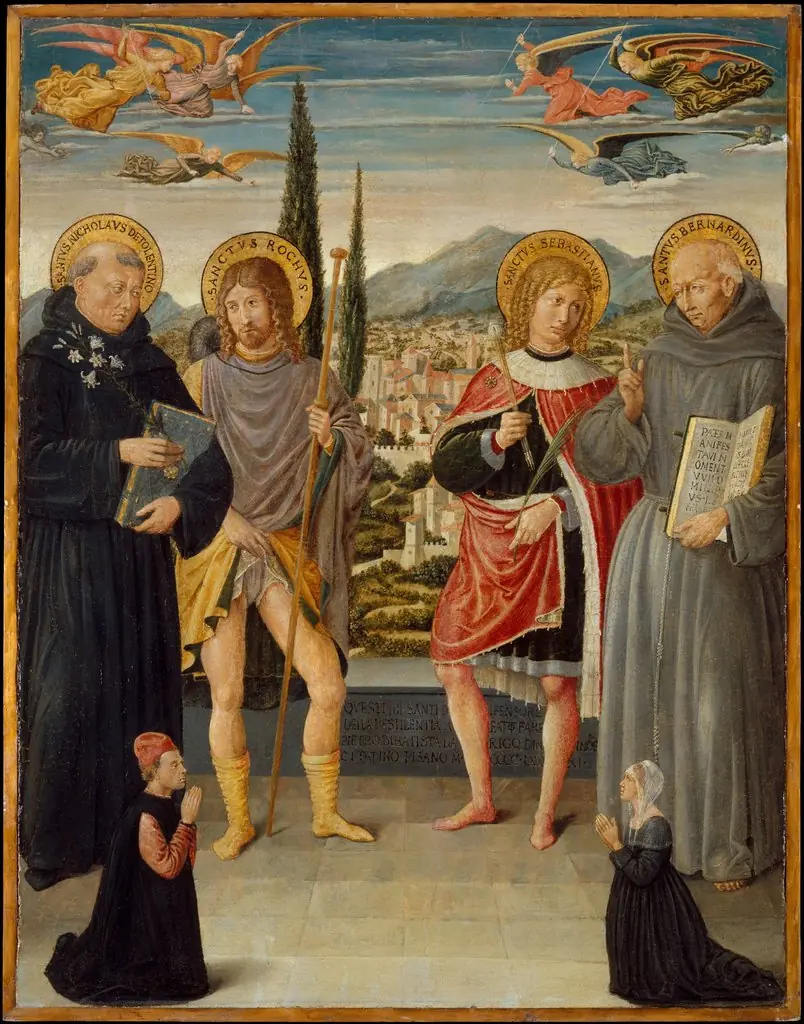 Saints Nicholas of Tolentino, Roch, Sebastian, and Bernardino of Siena, with Kneeling Donors
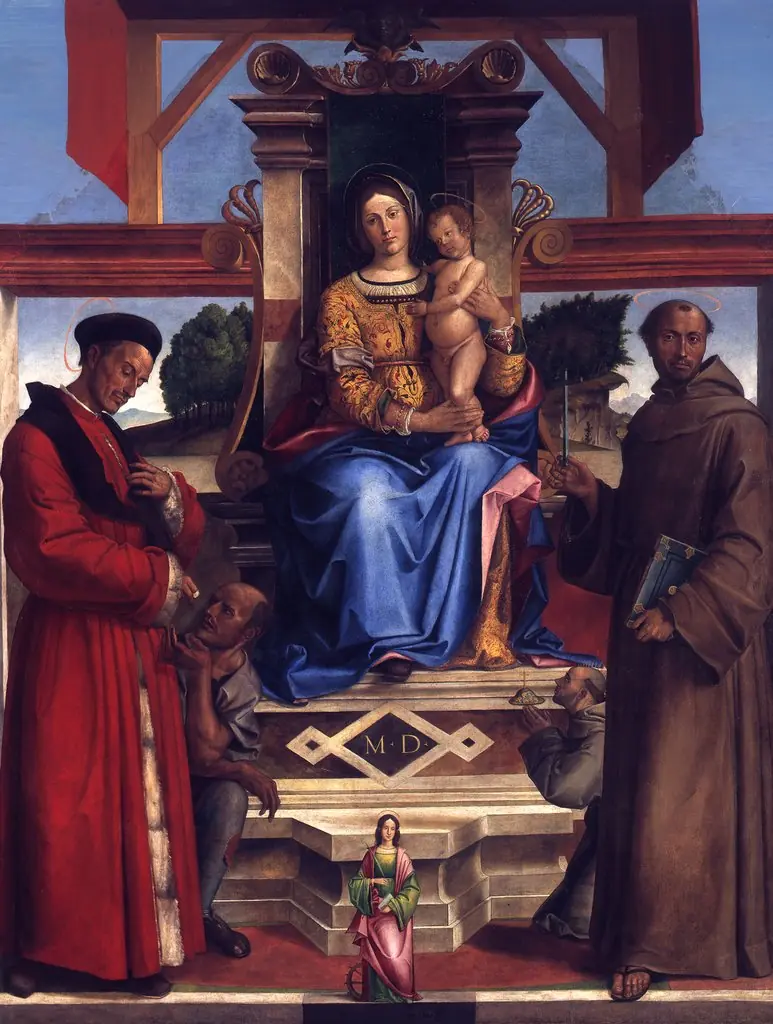 The Virgin and Child Enthroned and St. Homobonus, Francis of Assisi, Catherine of Alexandria and the Donor Bernadino da Feltre (Death 1494)
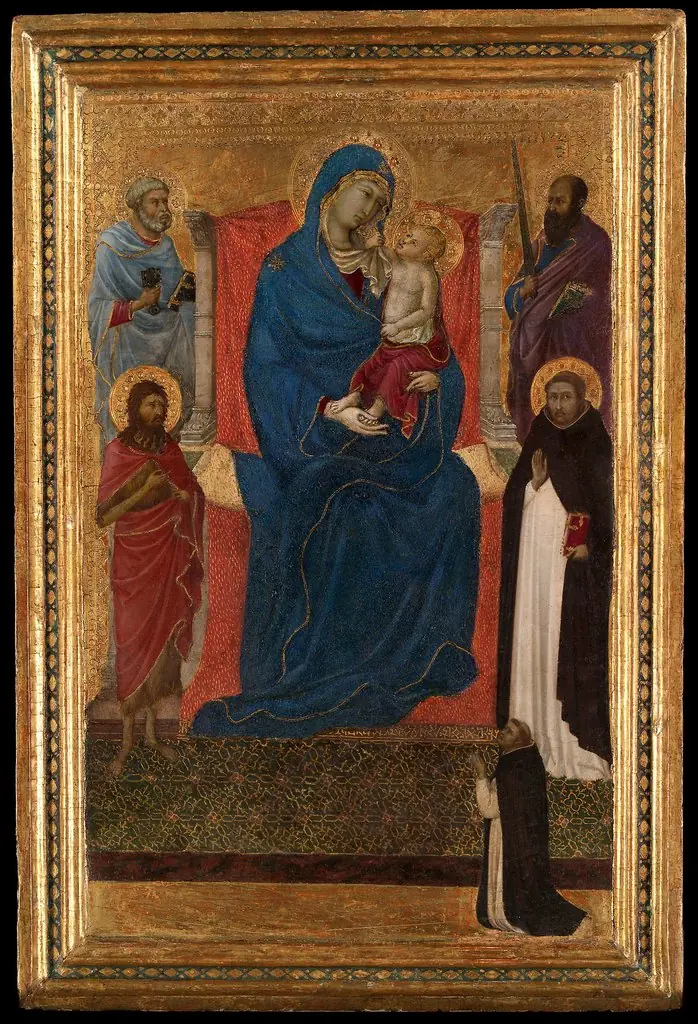 Virgin and Child Enthroned with Saints Peter, Paul, John the Baptist, Dominic and a Donor
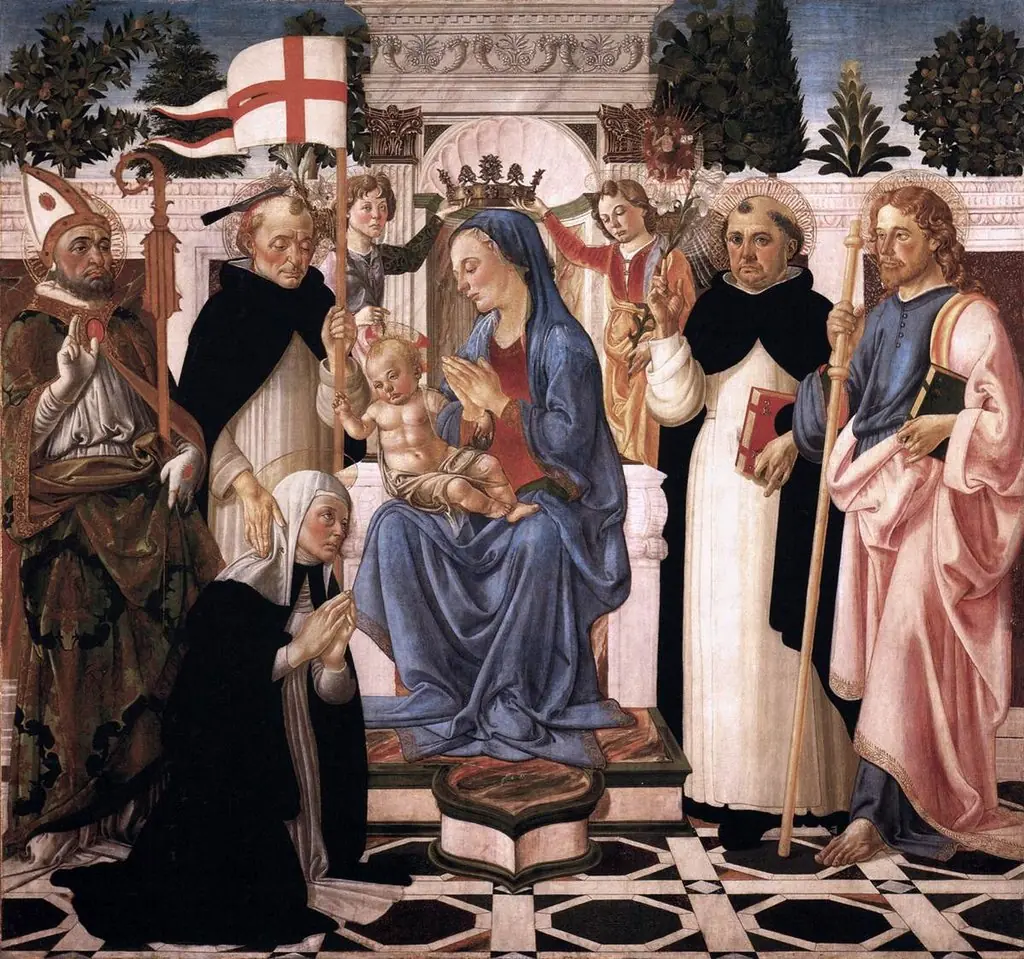 Madonna and Child with Five Saints and Two Angels
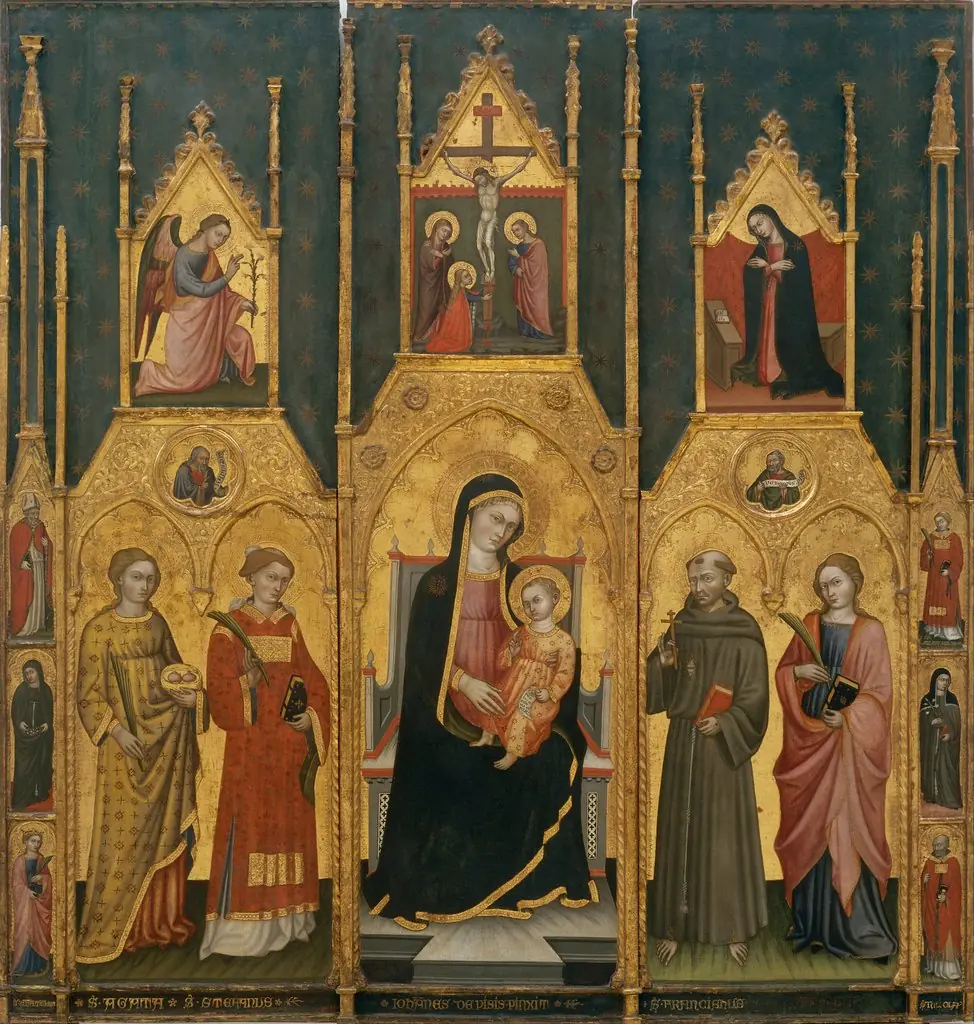 Altarpiece of the Virgin with Saints Agatha, Stephen, Francis and a Martyr Saint
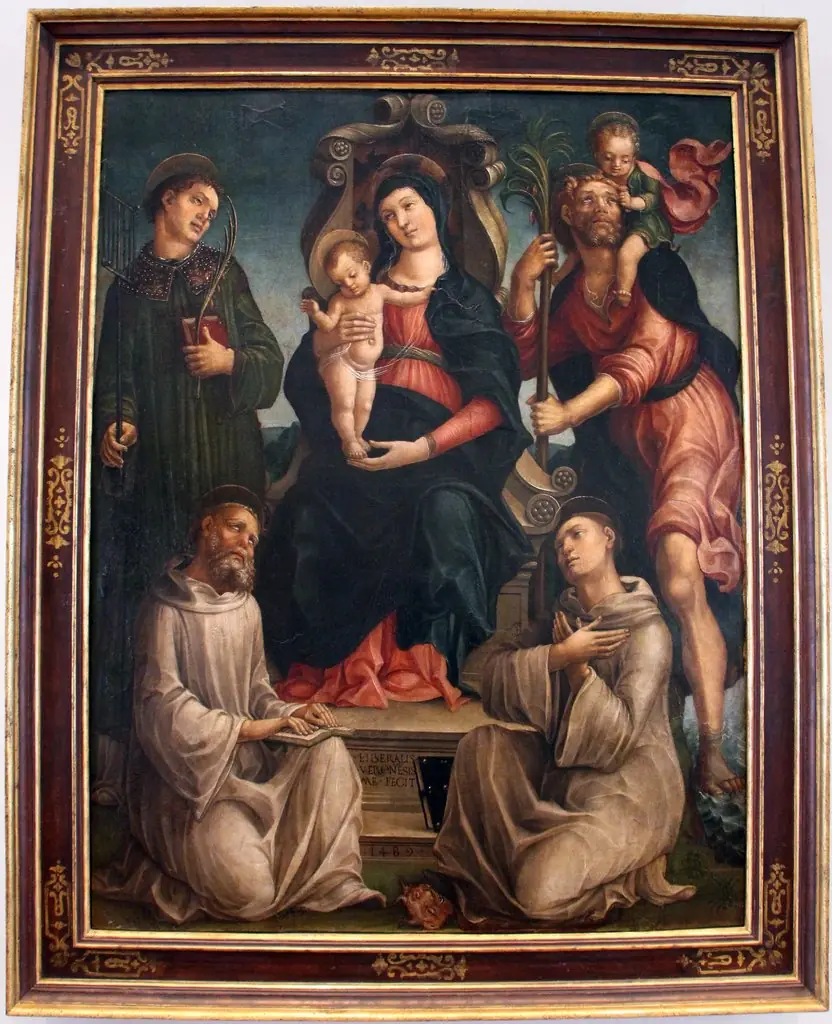 Thronende Maria mit dem segnenden Kind und den Heiligen Benedikt von Nursia, Laurentius und Bernhard von Clairvaux
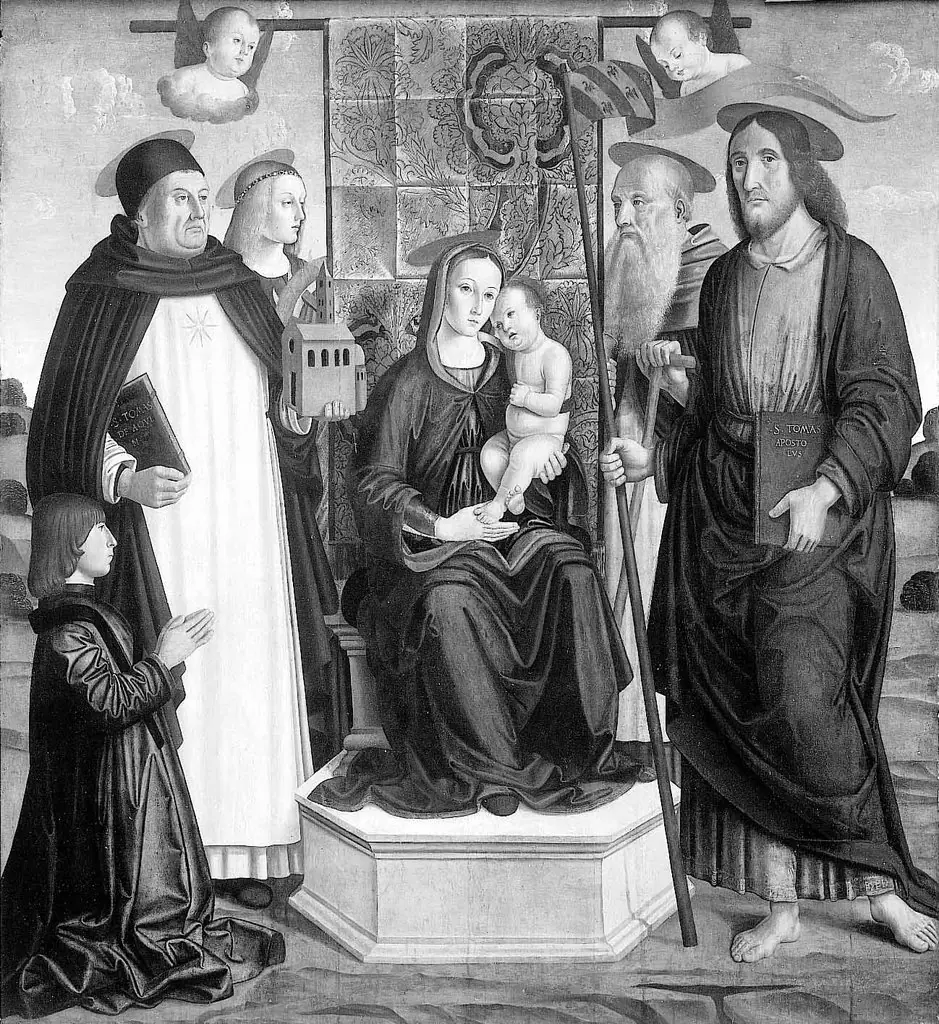 The Virgin and Child Enthroned with Saints
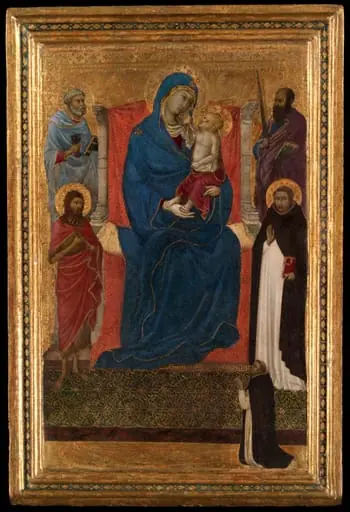 Virgin and Child Enthroned with Saints Peter, Paul, John the Baptist, and Dominic and a Dominican Supplicant
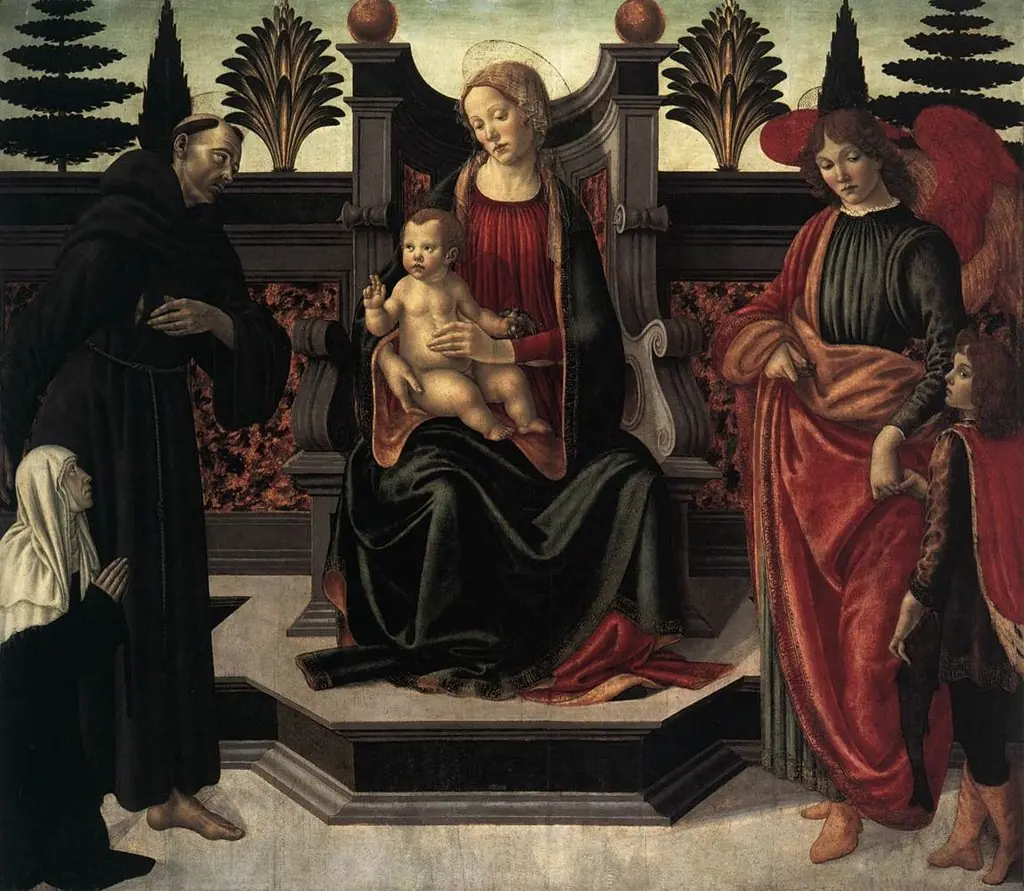 Madonna and Child Enthroned
 Mary with Child, St. Francis, St. Catherine and young St. John the Baptist