Artwork
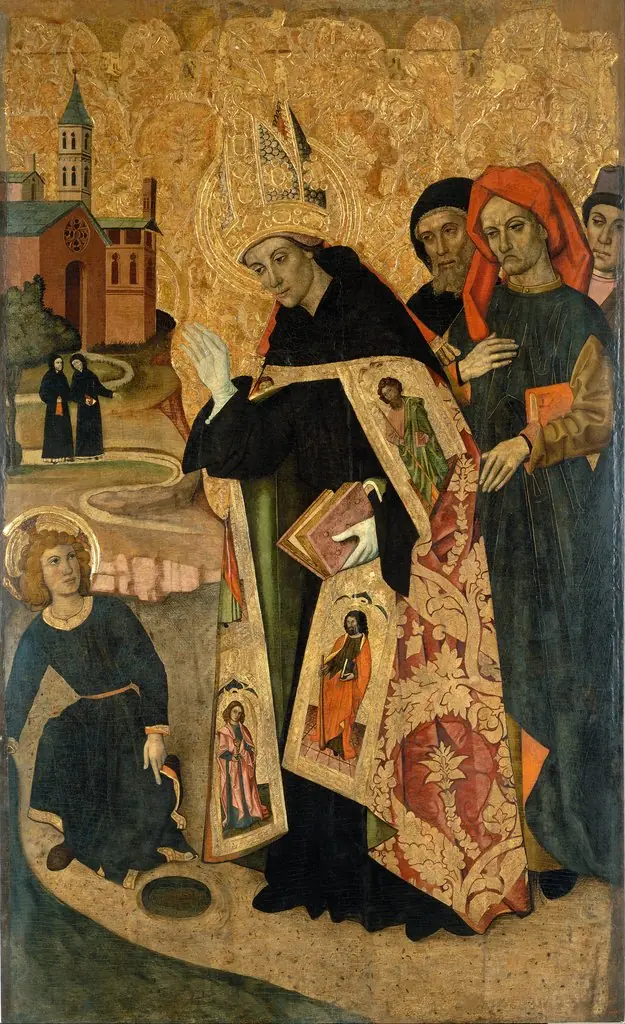
The Conversion of Saint Augustine
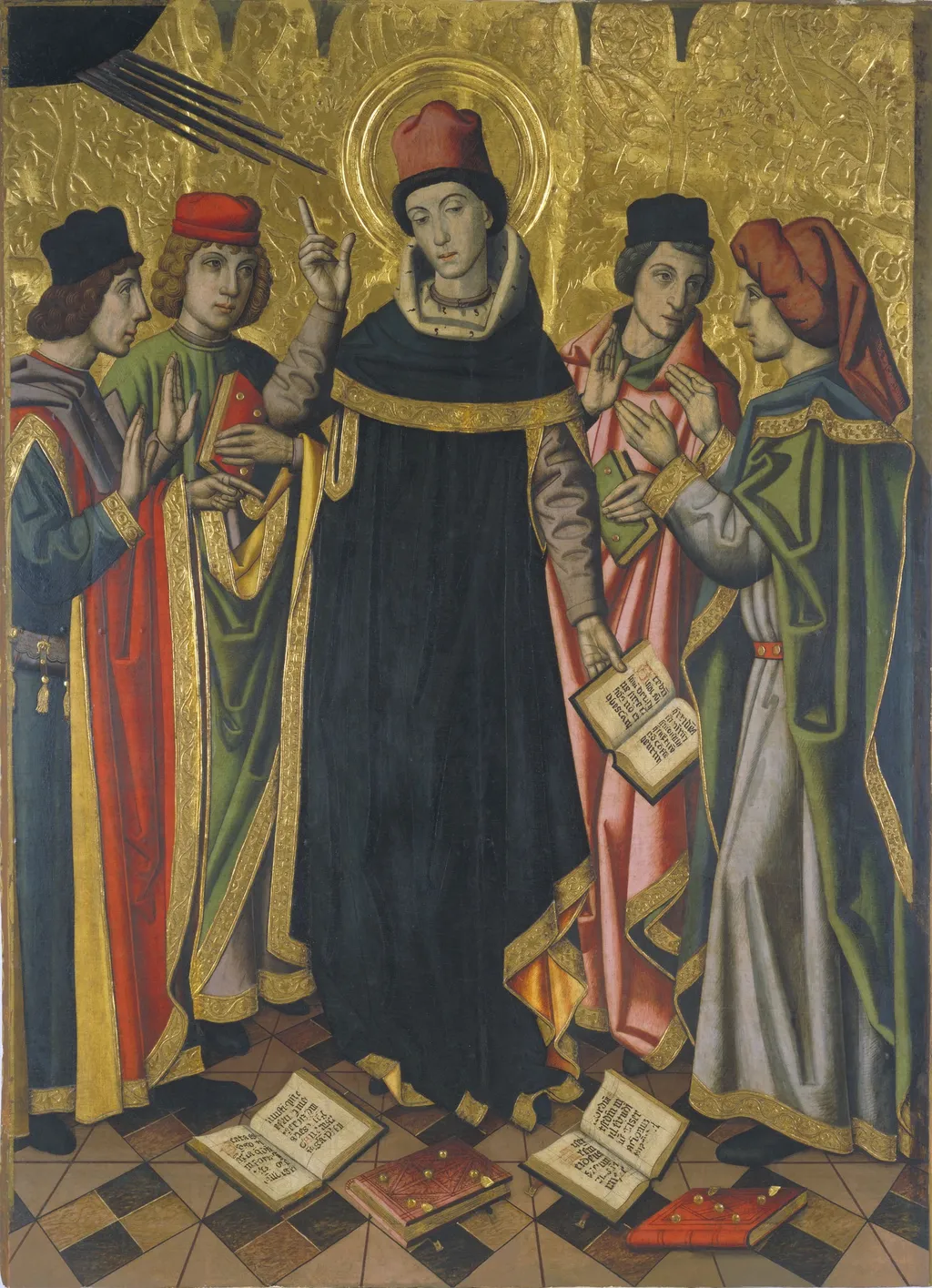
The Conversion of Saint Augustine is a tempera painting by the Gothic painting artist Pablo Vergós. It dates from 1470 and is held in the collection of the Museu Nacional d'Art de Catalunya.
About this work
Overview
Though often described as a painting, its material and technique align with decorative stucco work common in late medieval Catalan religious art.
The Conversion of Saint Augustine is a stucco relief painting attributed to Pablo Vergós, dated to around 1470. Though often described as a painting, its material and technique align with decorative stucco work common in late medieval Catalan religious art. It resides in the Museu Nacional d'Art de Catalunya, where it is recognized as part of a broader tradition of devotional imagery from the region’s Gothic period.
Subject & Meaning
The scene illustrates Saint Augustine of Hippo in a moment of spiritual awakening, surrounded by four figures who may represent disciples or theological companions. The central figure, identified by his red hat and dark robe with gold trim, holds a book and gestures upward, suggesting divine revelation. The surrounding figures, each with books, convey a shared contemplative atmosphere, emphasizing the intellectual and sacred nature of Augustine’s conversion.
Technique & Style
Executed in stucco, the work employs raised relief to model figures against a gilded background, a technique that merges sculptural form with painted detail. The figures are rendered with elongated proportions and stylized drapery, characteristic of late Gothic aesthetics. The textured gold wall enhances spatial depth without perspective, reinforcing the otherworldly tone typical of devotional panels from this era.
History & Provenance
The work likely originated in a Catalan monastery or cathedral chapel, where such reliefs adorned altars or choir screens. It entered the collection of the Museu Nacional d'Art de Catalunya in the early 20th century, following the consolidation of religious artworks dispersed after the 19th-century ecclesiastical confiscations. Its attribution to Pablo Vergós is based on stylistic parallels with documented works from his circle.
Context
Created during the late Gothic period in Catalonia, the piece reflects the region’s emphasis on devotional imagery that fused spiritual narrative with ornamental richness. Stucco reliefs like this were favored in ecclesiastical settings for their durability and luminous surface, complementing liturgical rituals. The focus on Augustine, a key Church Father, underscores the period’s interest in theological authority and monastic tradition.
Legacy
Though not widely known outside Catalan art circles, the relief remains a significant example of how religious themes were rendered in three-dimensional media during the late Middle Ages. It contributes to understanding the transition from purely painted panels to hybrid sculptural forms in devotional art, influencing later regional practices in altarpiece design and liturgical decoration.
Own this work as a print
Artist & collection

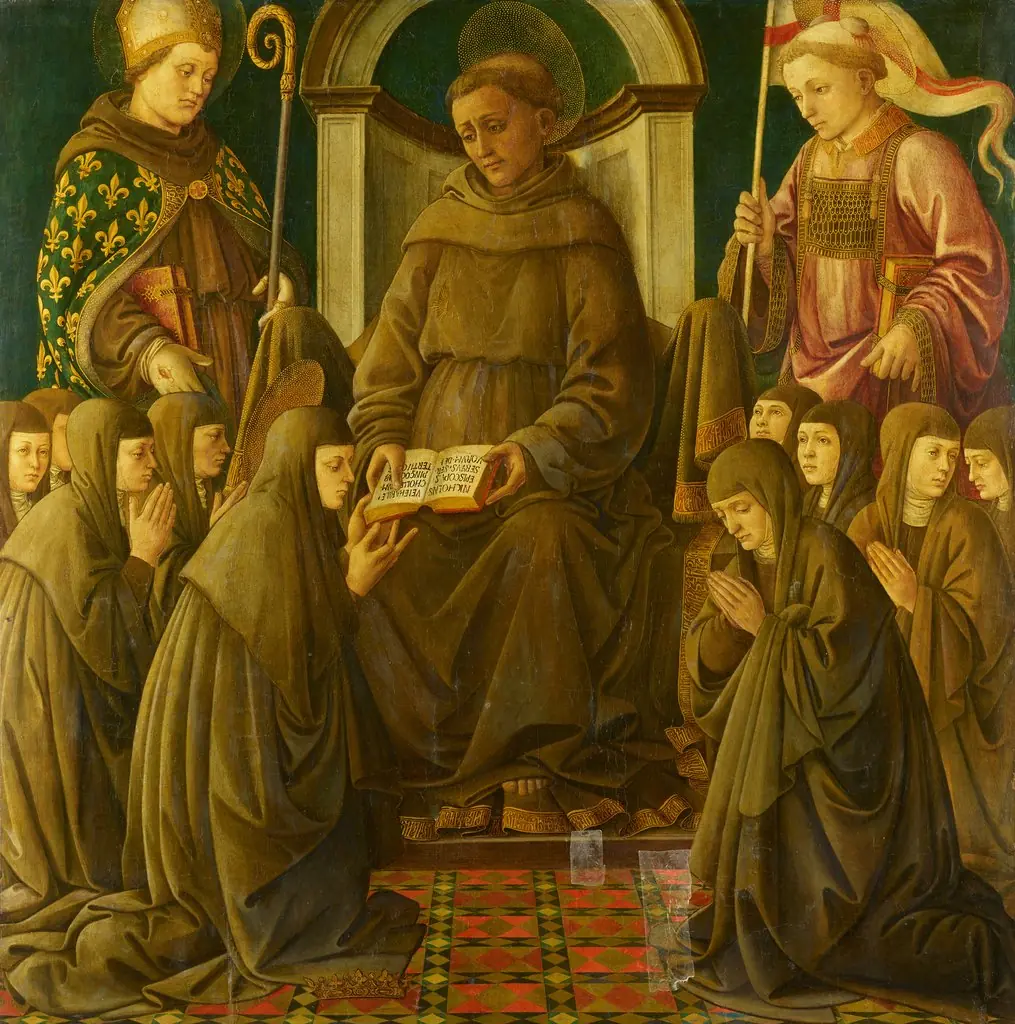 The enthroned St. Francis presents the rule of the order to St. Clare
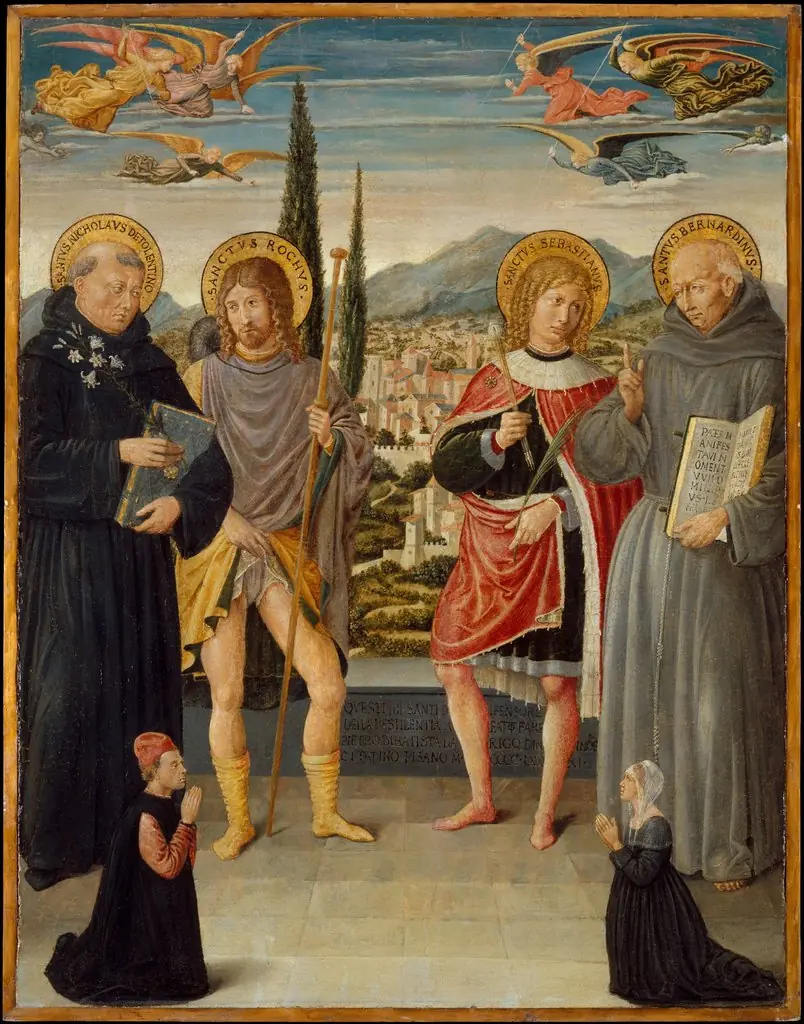 Saints Nicholas of Tolentino, Roch, Sebastian, and Bernardino of Siena, with Kneeling Donors
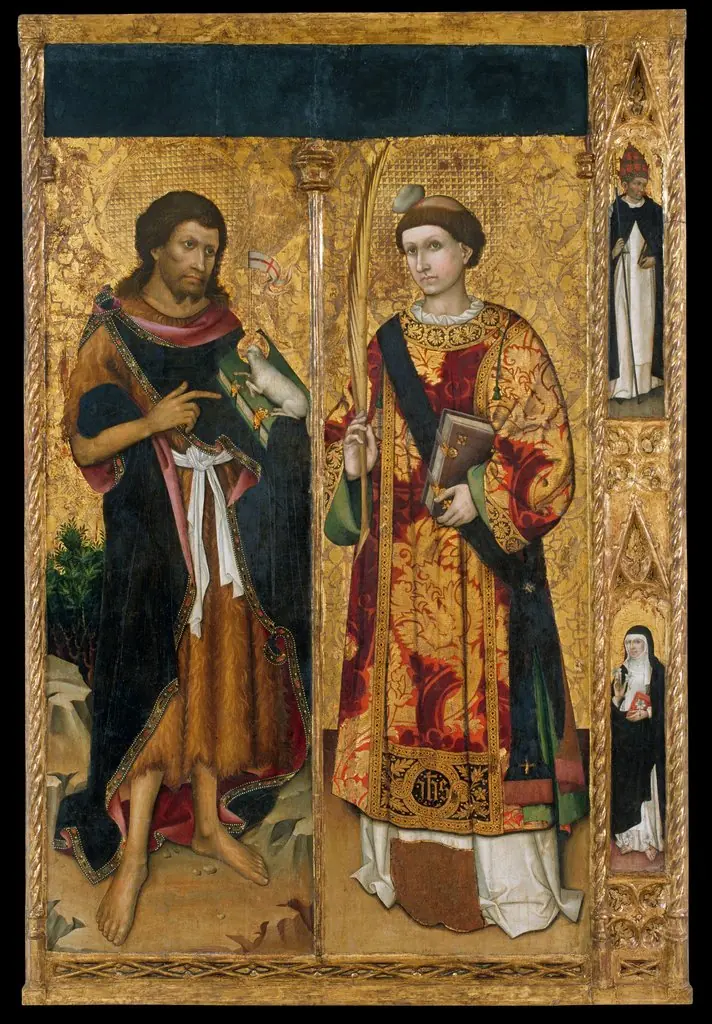 Saint John the Baptist and Saint Stephen
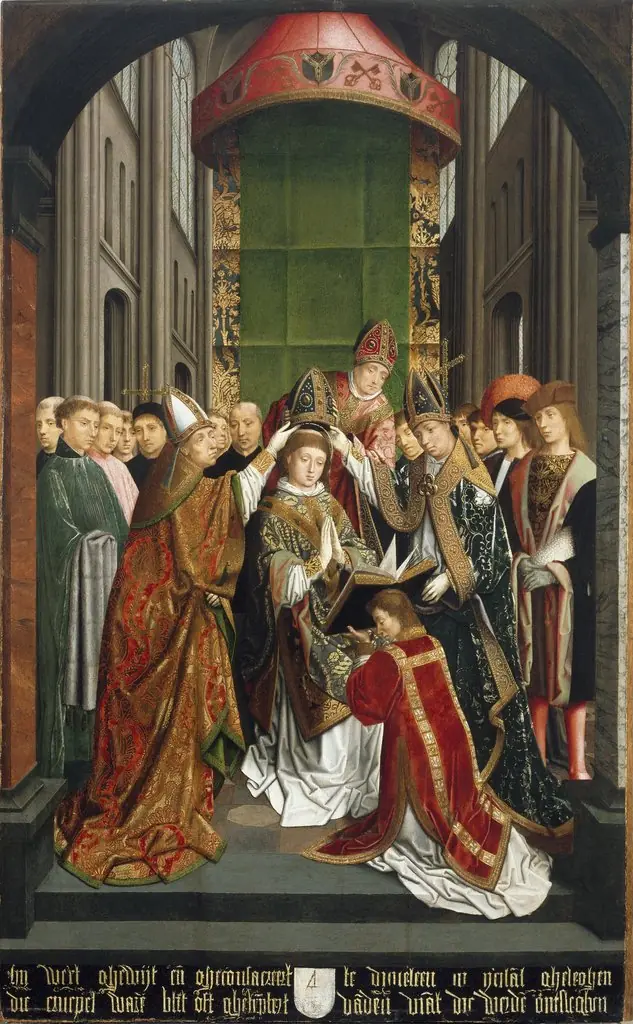 The Enthronement of Saint Romold as Bishop of Dublin
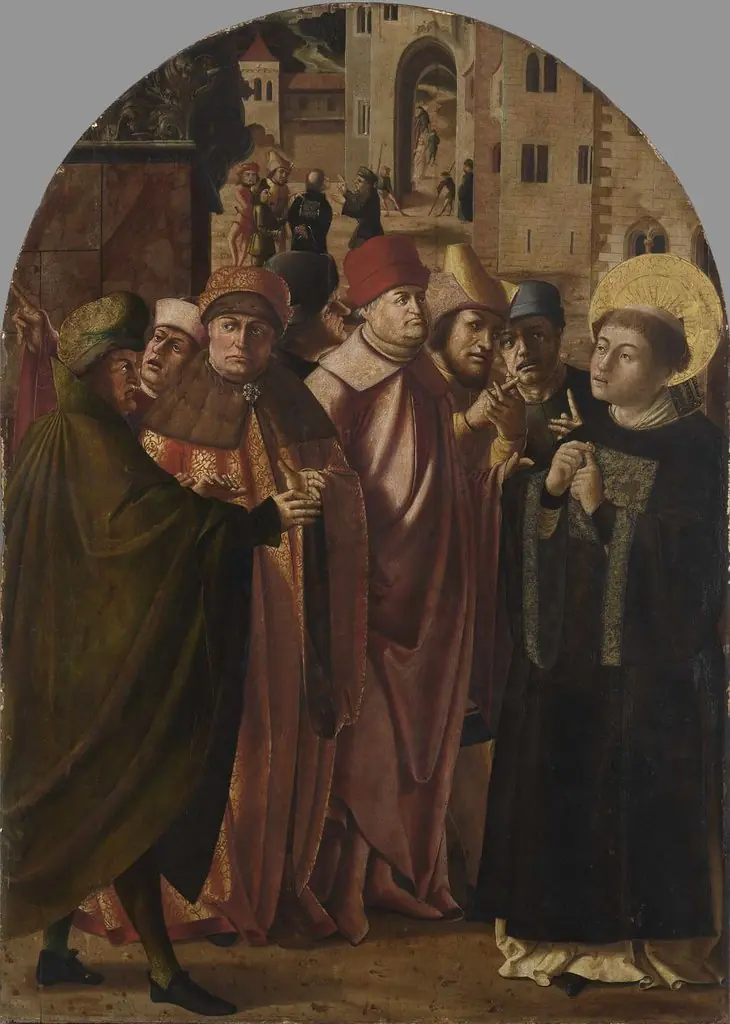 Jakobus-Stephanus-Altar: Disputation des hl. Stephanus
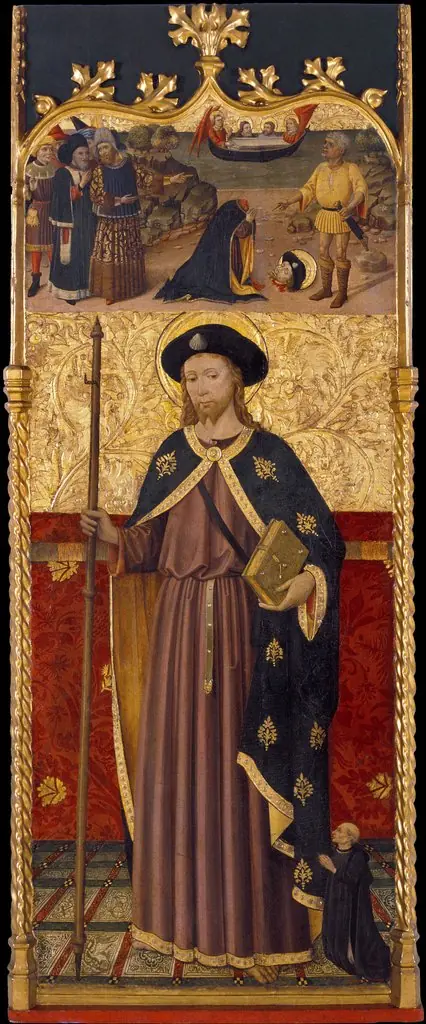 Saint James with a Donor, Decapitation of Saint James
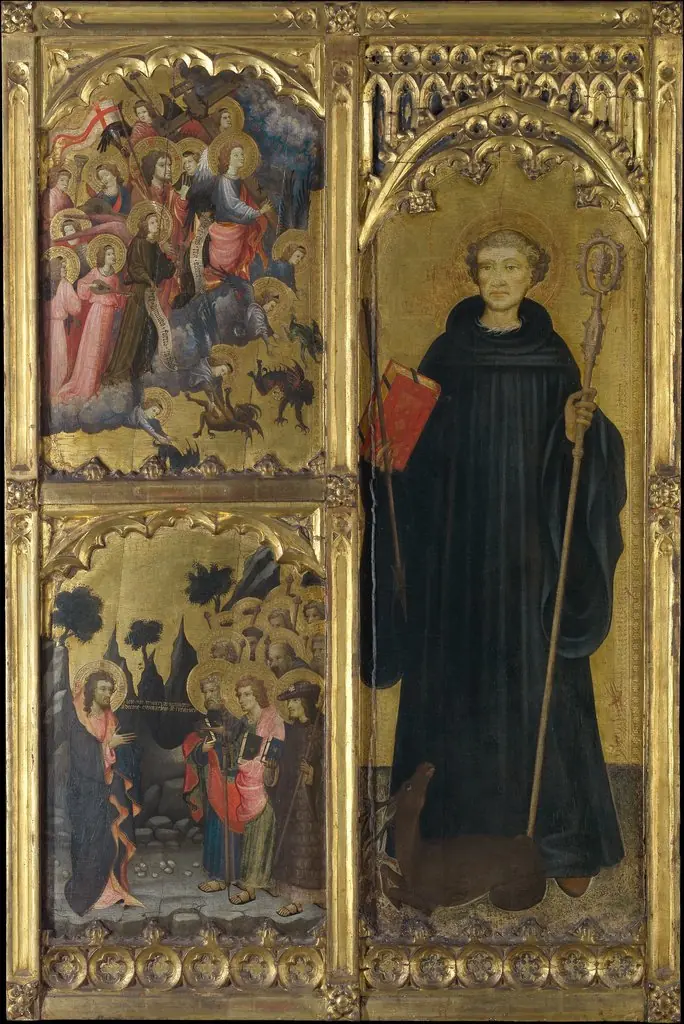 Saint Giles with Christ Triumphant over Satan and the Mission of the Apostles
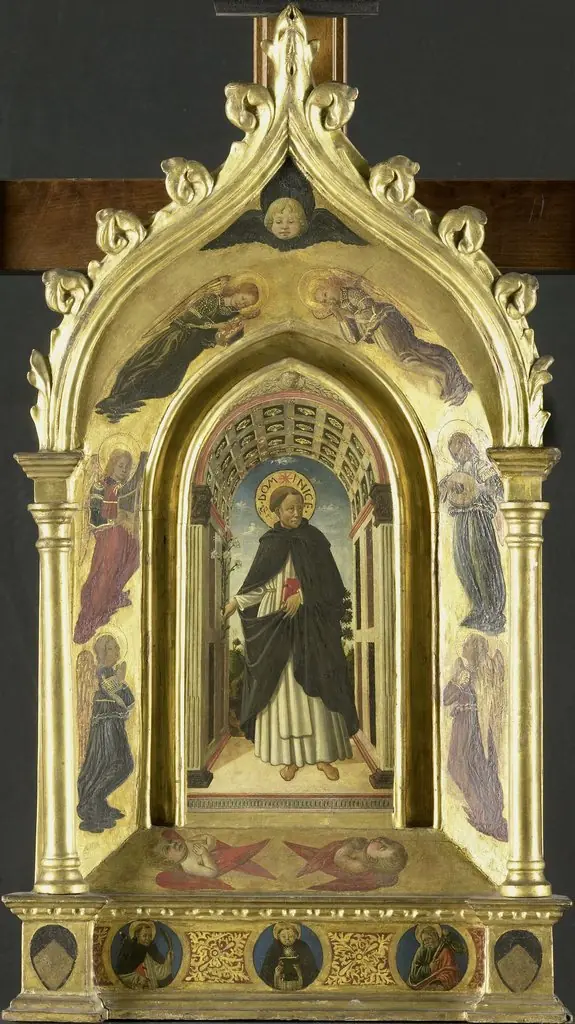 Saint Dominic