Artwork
Saint Ursula with Two Angels and Donor
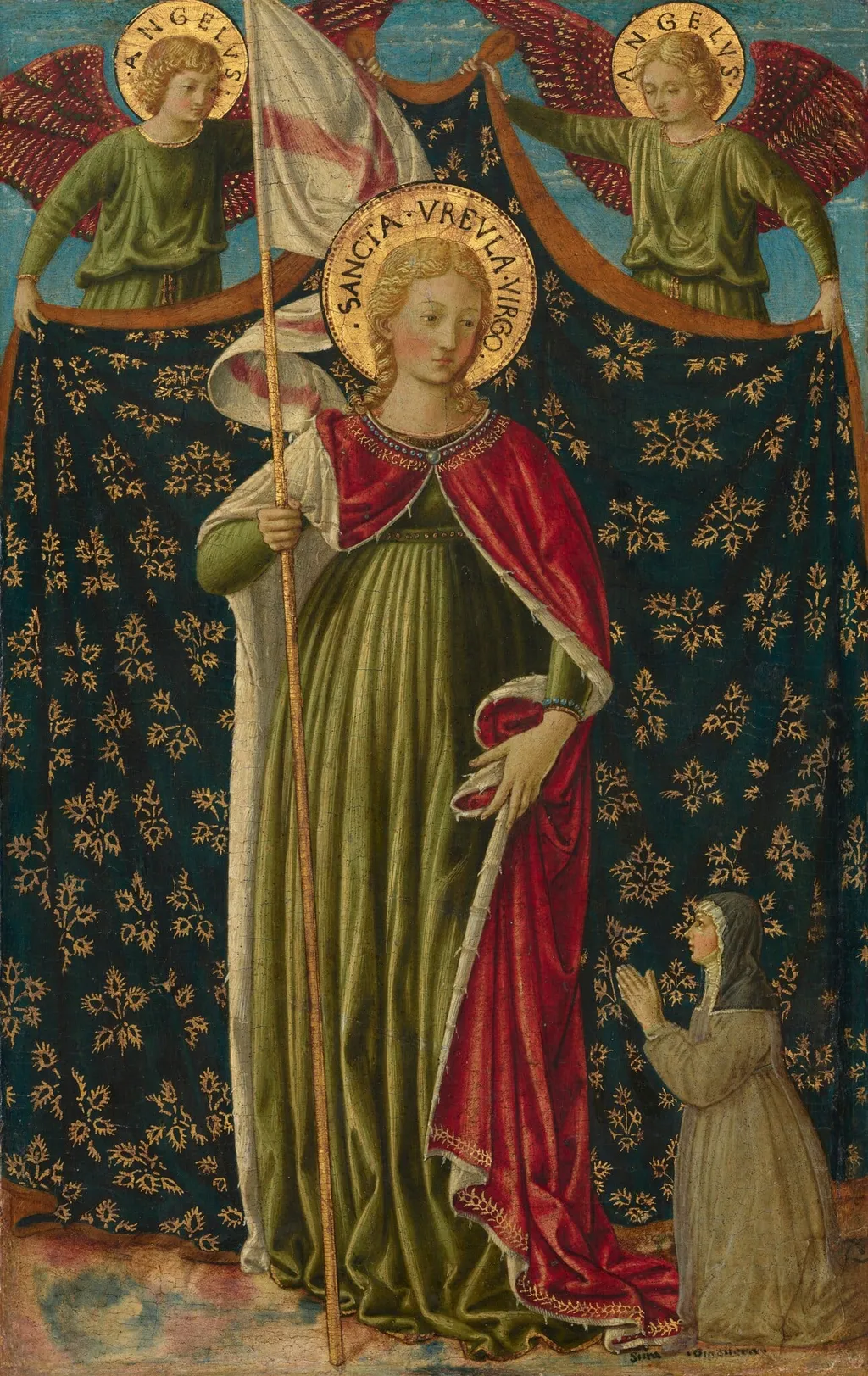
Saint Ursula with Two Angels and Donor is a tempera painting by the Early Renaissance artist Benozzo Gozzoli. It dates from 1458 and is held in the collection of the National Gallery of Art.
- Inscription
- Inscribed:on halo of central saint: .SANCTA.VREVLA.VIRGO. (original inscription, miscorrected during an early restoration, was "VRSVLS"); on halo of saint in upper right:.ANGELVS.; on halo of saint in upper left: .ANGELVS.; below nun in lower left, partially legible, "o" above the other letters: Suora .Ginevera.
About this work
Saint Ursula stands with two angels and a kneeling donor. Careful detail in the angels' wings and the donor's clothing marks Benozzo Gozzoli's hand. Painted in 1458 in tempera on panel.
Subject & Meaning
The panel depicts Saint Ursula, a fourth-century Christian martyr venerated in medieval Europe, accompanied by two angels and an unidentified male donor.
The panel depicts Saint Ursula, a fourth-century Christian martyr venerated in medieval Europe, accompanied by two angels and an unidentified male donor. Ursula is central, dressed in elaborate, gold-trimmed robes, evoking her royal lineage. The angels flank her, one holding a martyr’s palm, a symbol of her sanctity and violent death, while the other presents a crown, reinforcing her celestial reward.
The donor, kneeling in profile at the lower left, embodies pious devotion, seeking spiritual intercession through his commission. The work’s iconography merges hagiographic tradition with devotional intent, emphasizing Ursula’s role as protector and the donor’s hope for salvation.
Technique & Style
The work is executed in tempera on a poplar panel support, consistent with Florentine practice in the mid-fifteenth century. Gozzoli’s handling combines fine, linear draughtsmanship with delicate hatching in the modeling of faces and drapery, producing a luminous, enamel-like surface. The figures are arranged in a shallow, stage-like space, with Saint Ursula centrally placed and the donor kneeling at lower left, framed by two hovering angels.
The palette relies on saturated reds and blues, heightened with gold in the halos and brocade details, while the landscape recedes through atmospheric haze. The painting’s condition appears stable; abrasion is limited to minor losses in the upper paint layers, and the original gilding remains largely intact.
History & Provenance
The panel Saint Ursula with Two Angels and Donor was painted by Benozzo Gozzoli in 1457, as indicated by the date inscribed on the frame and recorded in the artist’s Libro di ricordi. Commissioned for a private devotional context, the work likely originated in Florence, where Gozzoli was active during the mid-fifteenth century. By the third quarter of the nineteenth century, it had entered the collection of Grand Duke Georg II of Saxe-Meiningen, possibly acquired through the art market in Florence.
By 1900, it was housed in Meiningen Castle, Saxony. The painting was sold in the mid- or late 1920s to Duveen Brothers, who then transferred it to the Samuel H. Kress Foundation in March 1937. The Kress Foundation donated the work to the National Gallery of Art, Washington, D.C., in 1939.
The painting is held in the National Gallery of Art, Washington, D.C., as part of the Samuel H. Kress Collection. Its inventory number is not specified in the cited sources. The work entered the museum in 1939 as a gift from the Samuel H. Kress Foundation.
Prior to its acquisition by the Kress Foundation in March 1937, it had been owned by Grand Duke Georg II of Saxe-Meiningen, who likely acquired it in Florence during the mid-19th century. It was later sold in the mid- to late 1920s through Duveen Brothers before entering the Kress collection.
Overview
This painting, Saint Ursula with Two Angels and Donor, was created by the Florentine artist Benozzo Gozzoli around 1458. Executed in tempera on panel, the work presents the Christian martyr Saint Ursula flanked by two celestial figures, alongside a kneeling donor. It exemplifies Gozzoli's approach to religious imagery during the early Renaissance, combining meticulous detail with a devotional subject.
Context
Benozzo Gozzoli, a pupil of Fra Angelico, was active during a transformative period in Florentine art. The early Renaissance saw artists exploring new representational techniques, moving towards greater realism while often retaining traditional compositional structures. Gozzoli is particularly recognized for his extensive fresco cycles, such as the Magi Chapel in the Palazzo Medici-Riccardi, which showcased his ability to integrate narrative complexity with rich, descriptive detail, a characteristic also evident in this panel painting.
Own this work as a print
Artist & collection
Artist
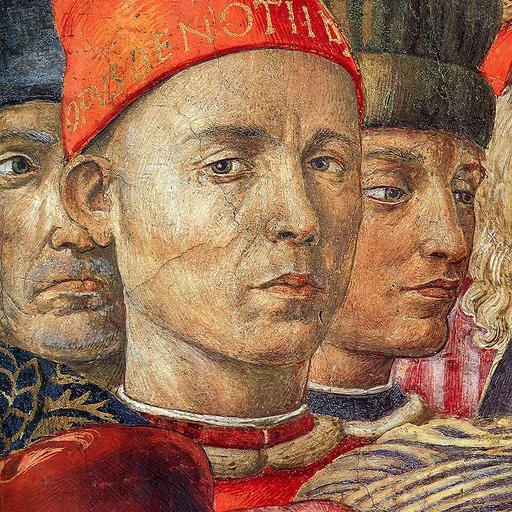
Benozzo Gozzoli (pronounced; born Benozzo di Lese; c. 1421 – 4 October 1497) was an Italian Renaissance painter from Florence. A pupil of Fra Angelico, Gozzoli is best known for a series of murals in the Magi Chapel of…

- Saint Lucy
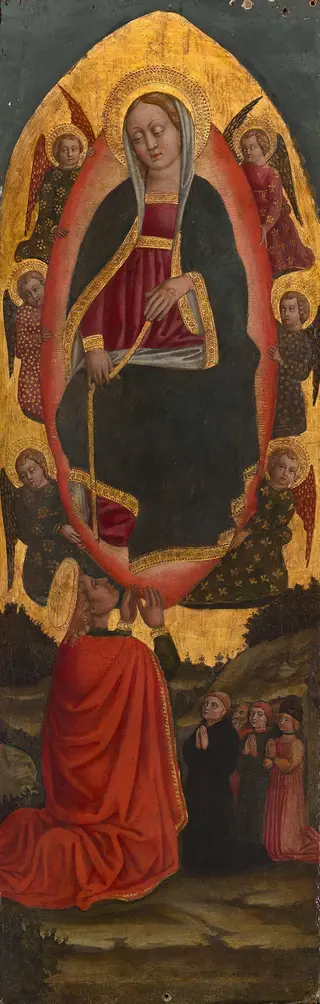 The Assumption of the Virgin with Saints from an Augustinian altarpiece
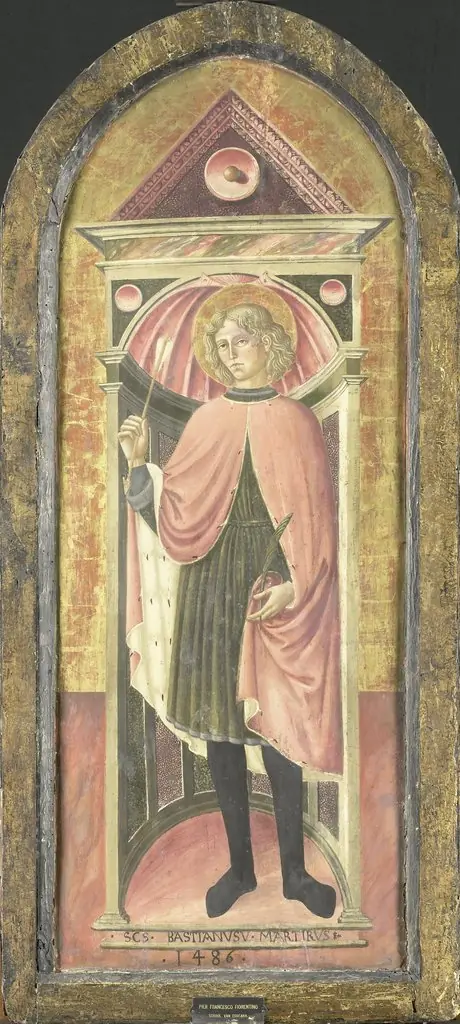 Saint Sebastian
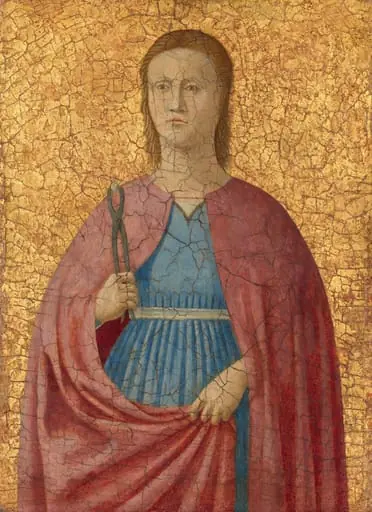 Saint Apollonia
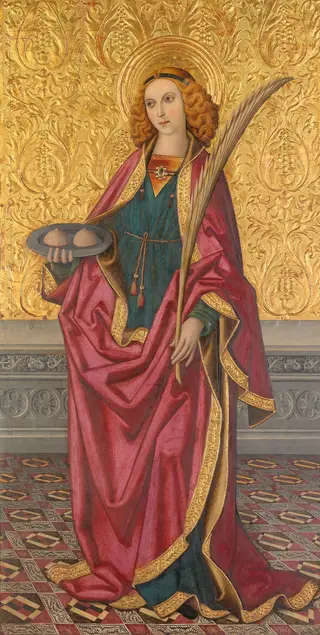 Saint Agatha
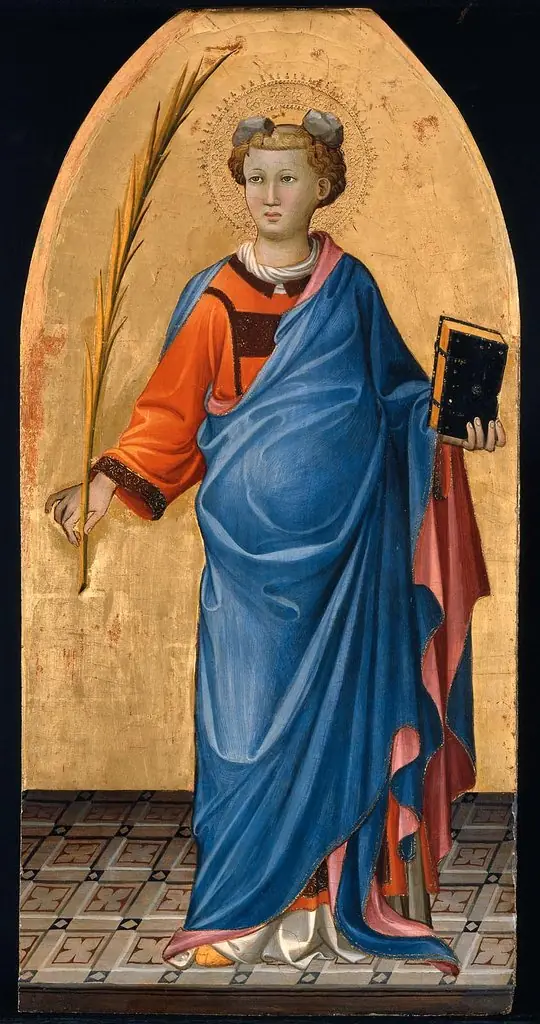 Saint Stephen
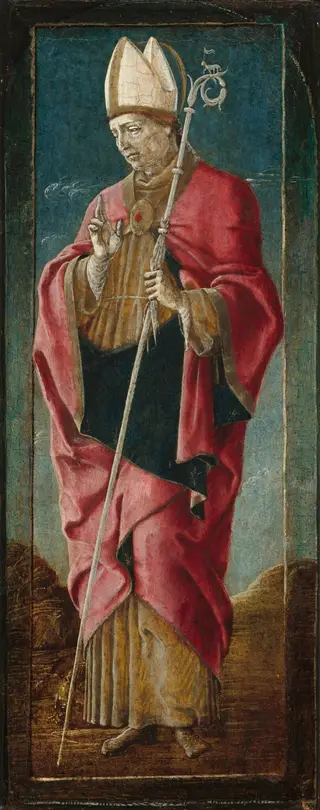 Saint Louis of Toulouse
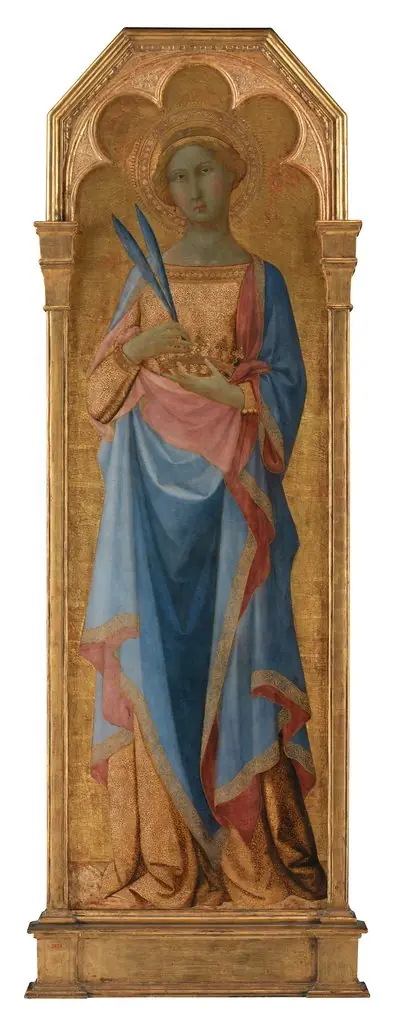 St. Corona
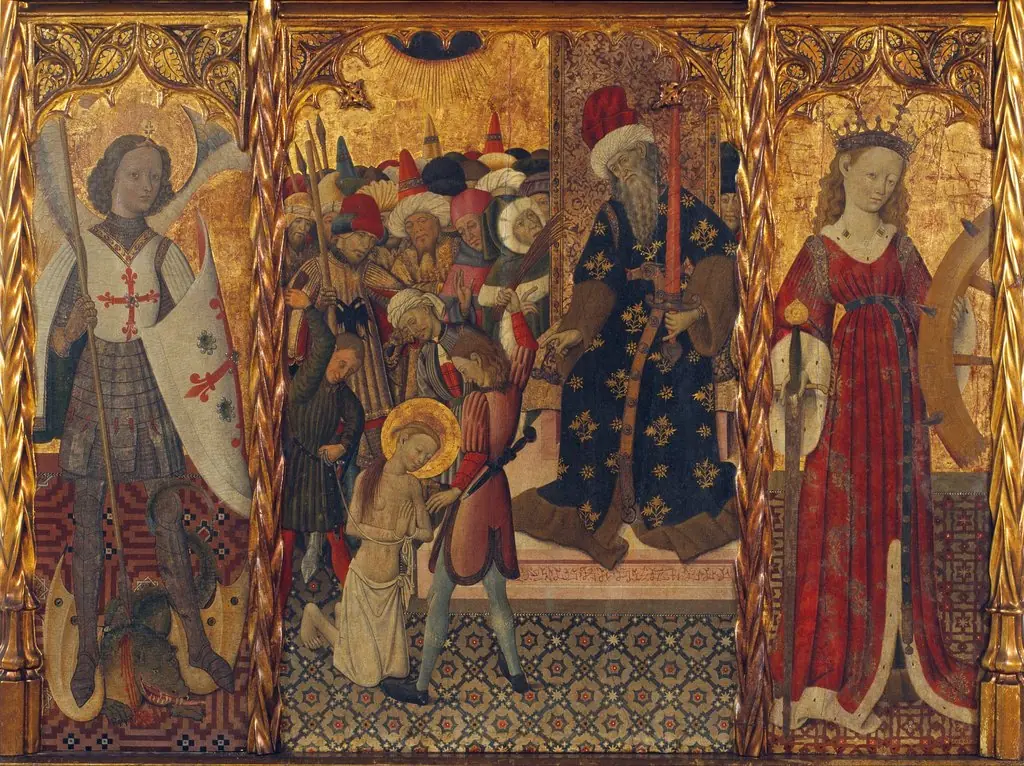 Saint Michael, Martyrdom of Saint Eulalia and Saint Catherine
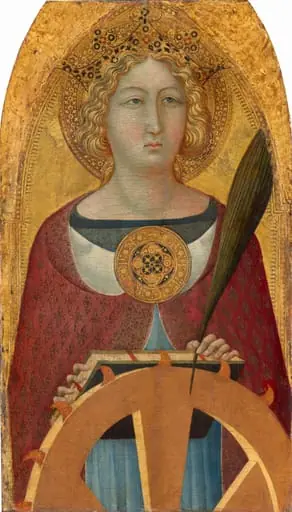 Saint Catherine of Alexandria
![Saint Catherine of Alexandria, with an Angel [right panel], by Pietro Lorenzetti](https://artifactworldgallery.com/img/pietro-lorenzetti--saint-catherine-of-alexandria-with-an-angel-right-panel--8acb359f1d360041-w320.webp) Saint Catherine of Alexandria, with an Angel [right panel]
Saint Catherine of Alexandria, with an Angel [right panel] Madonna and Child with Angels