Artwork
Christus am Kreuz
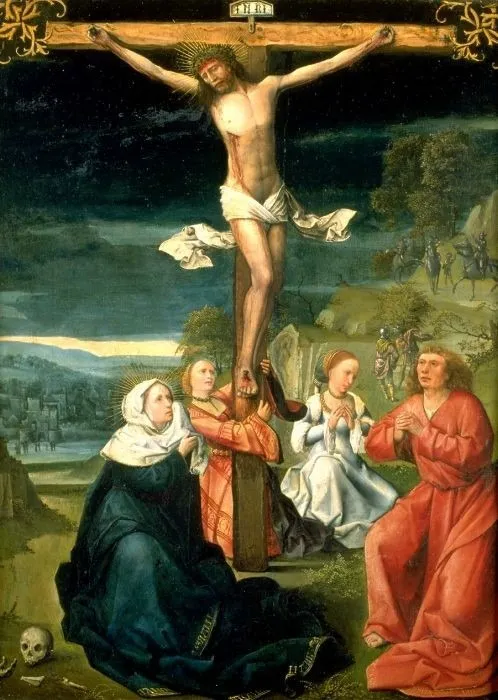
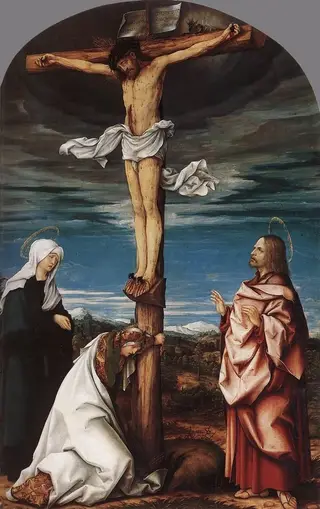
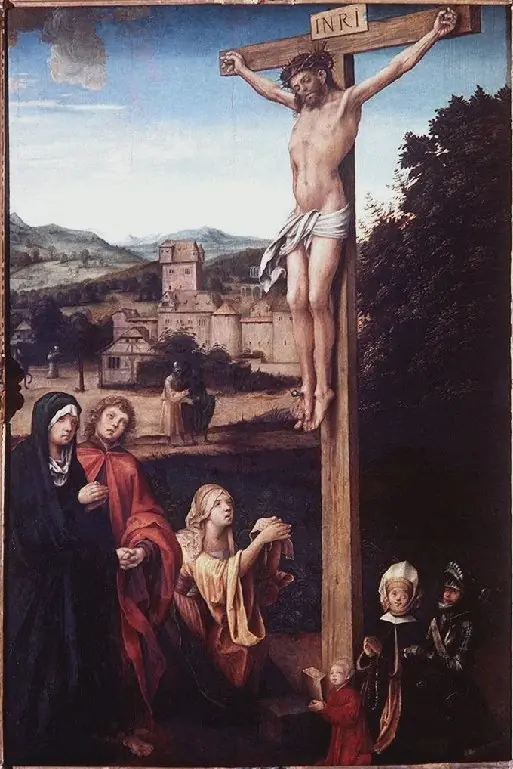
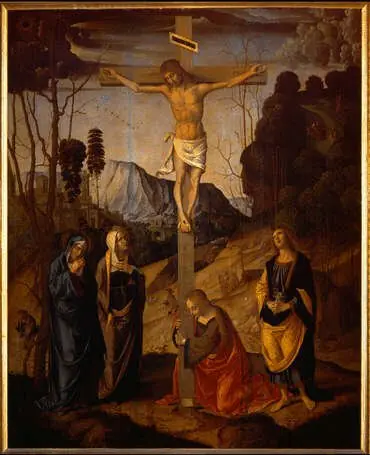
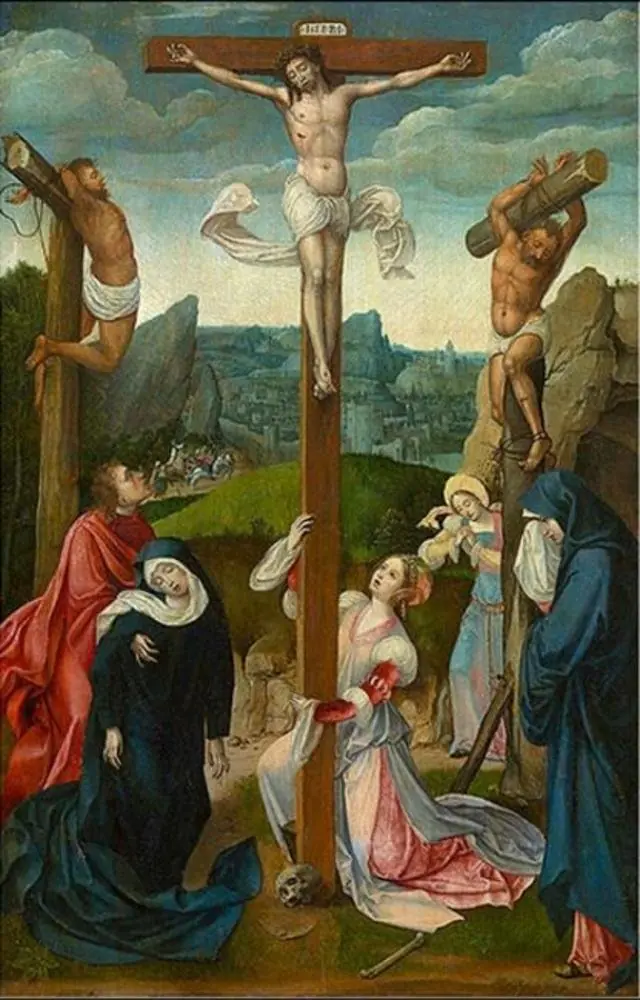
Christus am Kreuz is an oil painting by the Northern Renaissance artist Bernard Van Orley. It dates from 1515 and is held in the collection of the Gemäldegalerie Berlin.
About this work
Overview
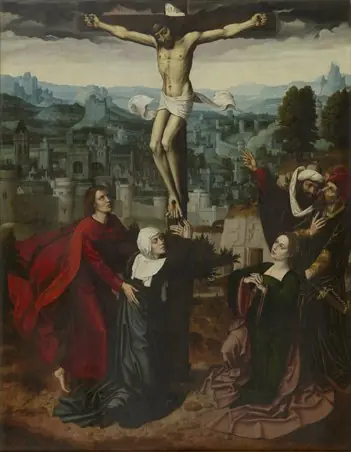
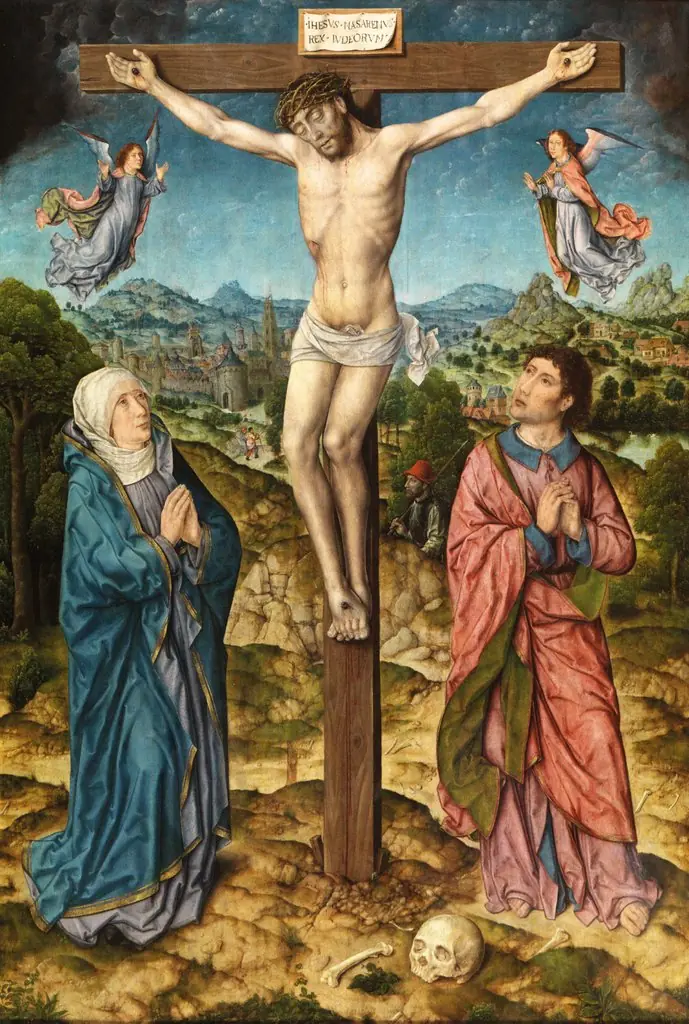
Christus am Kreuz is a religious painting created by the Flemish Renaissance artist Bernard van Orley in 1515. Executed in oil paint on a wooden panel, the work measures 66.5 cm in height and 49.5 cm in width. It is classified as a religious painting and depicts the crucifixion of Jesus Christ. The painting is currently held in the Gemaldegalerie Berlin.
Subject & Meaning
To the left, a woman in dark blue robes with a white headdress and halo kneels with clasped hands, representing the Virgin Mary.
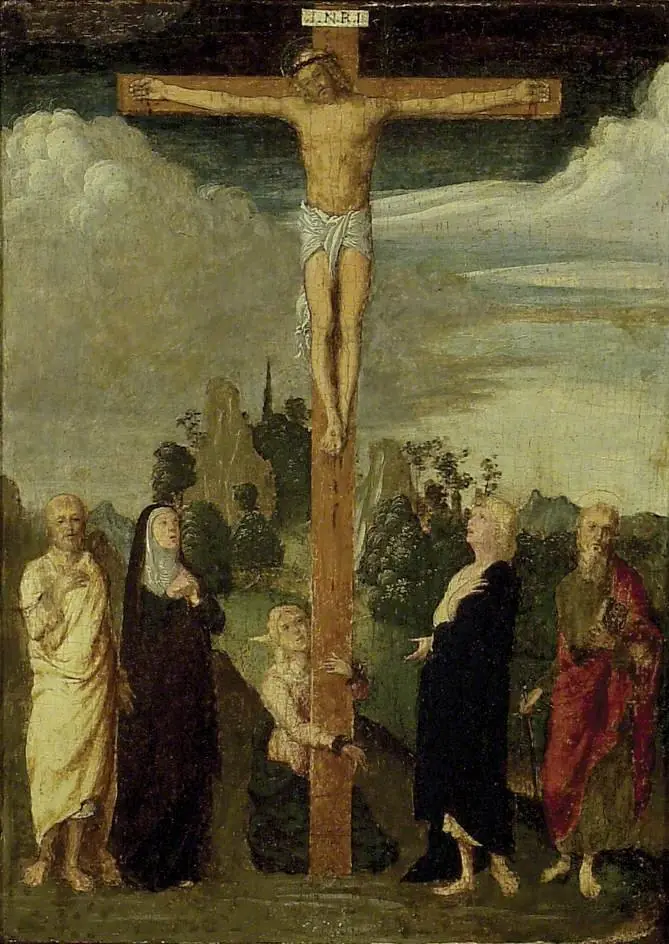
The composition centers on the crucified Jesus, whose arms are outstretched and nailed to a wooden cross. He wears a crown of thorns and a white cloth around his hips, and a wound is visible in his side. At the foot of the cross, four figures gather in mourning and prayer. To the left, a woman in dark blue robes with a white headdress and halo kneels with clasped hands, representing the Virgin Mary. Beside her, a figure in orange-red robes reaches up toward the cross, likely depicting Saint John the Evangelist. To the right, a seated woman in white and blue robes and a standing man in flowing red robes pray with their hands together. A skull and bones lie on the ground at the lower left, a traditional symbol of Golgotha, the site of the crucifixion, signifying mortality and the triumph of death that Christ's sacrifice overcomes. A small inscribed plaque appears at the top of the cross.
Technique & Style
The work is executed in oil paint on a wooden panel support. Van Orley employed smooth, detailed brushwork with careful modeling of the drapery and flesh tones of the figures. The palette is characterized by deep blues, rich reds, and greens, which contrast against a dark, atmospheric sky. The background features a distant landscape with buildings and water to the left, and figures on horseback to the right, providing spatial depth. Ornamental gold corners frame the upper edges of the composition, adding a decorative element that bridges the painted space with the physical panel.
Context
Bernard van Orley was a versatile Flemish artist and a leading figure of the Northern Renaissance, active in Brussels where he was born between 1487 and 1491 and died in 1541. Although he never visited Italy, he belonged to the group of Italianizing Flemish painters known as Romanists, who were profoundly influenced by Italian Renaissance painting, particularly the works of Raphael. Van Orley received his knowledge of the Renaissance style through engravings and the Raphael Cartoons for the Acts of the Apostles tapestries, which were present in Brussels between 1516 and 1520. His early works continued the traditions of Jan van Eyck and Rogier van der Weyden, but he gradually integrated Italianate motifs, figure types, and spatial relationships into his art. As a court artist for the Habsburg rulers, he was highly productive, often concentrating on the design of his works and leaving their execution to his large workshop, which resulted in considerable variation in the quality of his surviving paintings.
Artist & collection
Artist
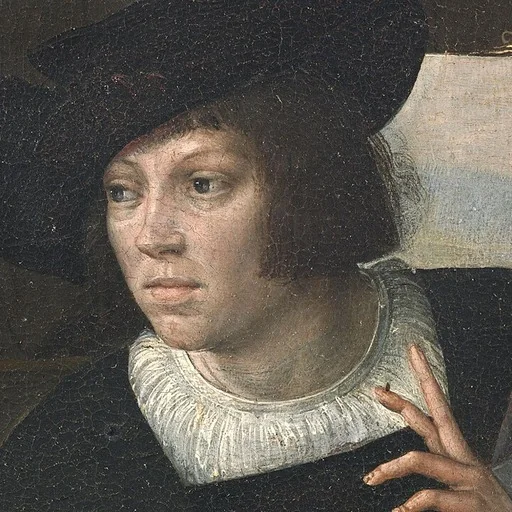
Bernard van Orley (between 1487 and 1491 – 6 January 1541), also called Barend or Barent van Orley, Bernaert van Orley or Barend van Brussel, was a versatile Flemish artist and representative of Dutch and Flemish…

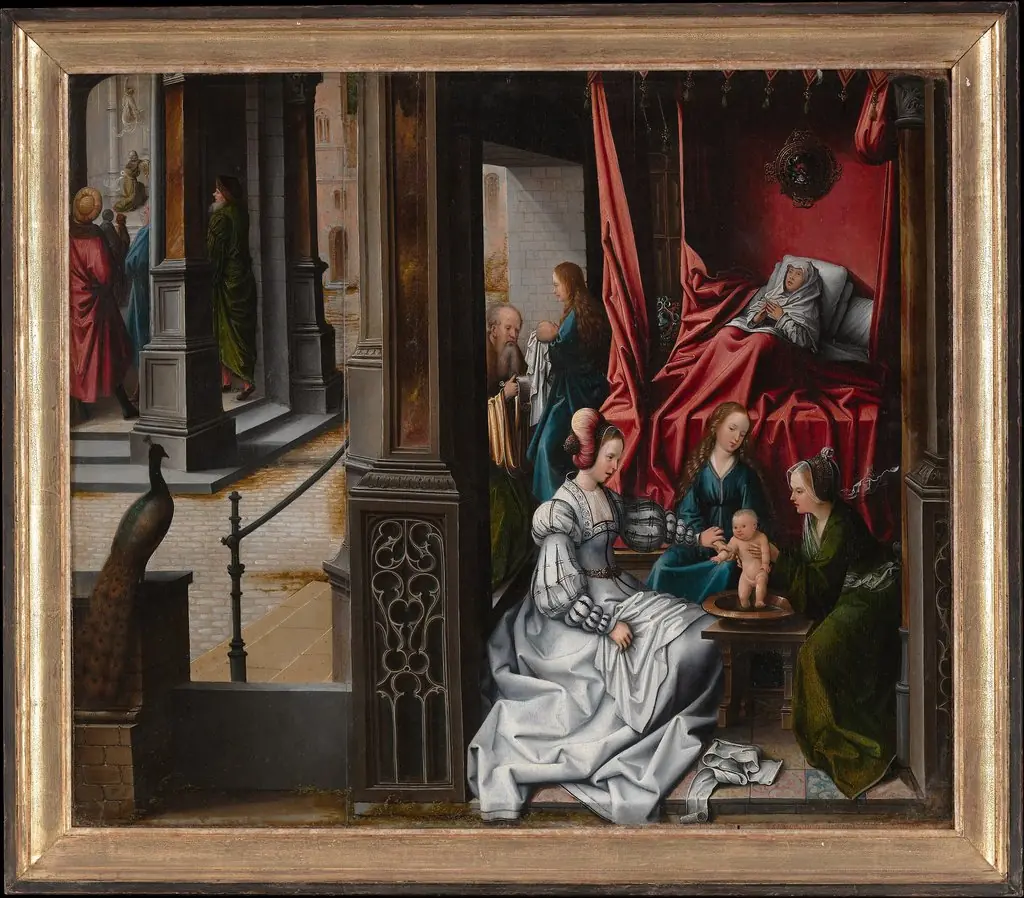 The Birth and Naming of Saint John the Baptist; (reverse) Trompe-l'oeil with Painting of The Man of Sorrows
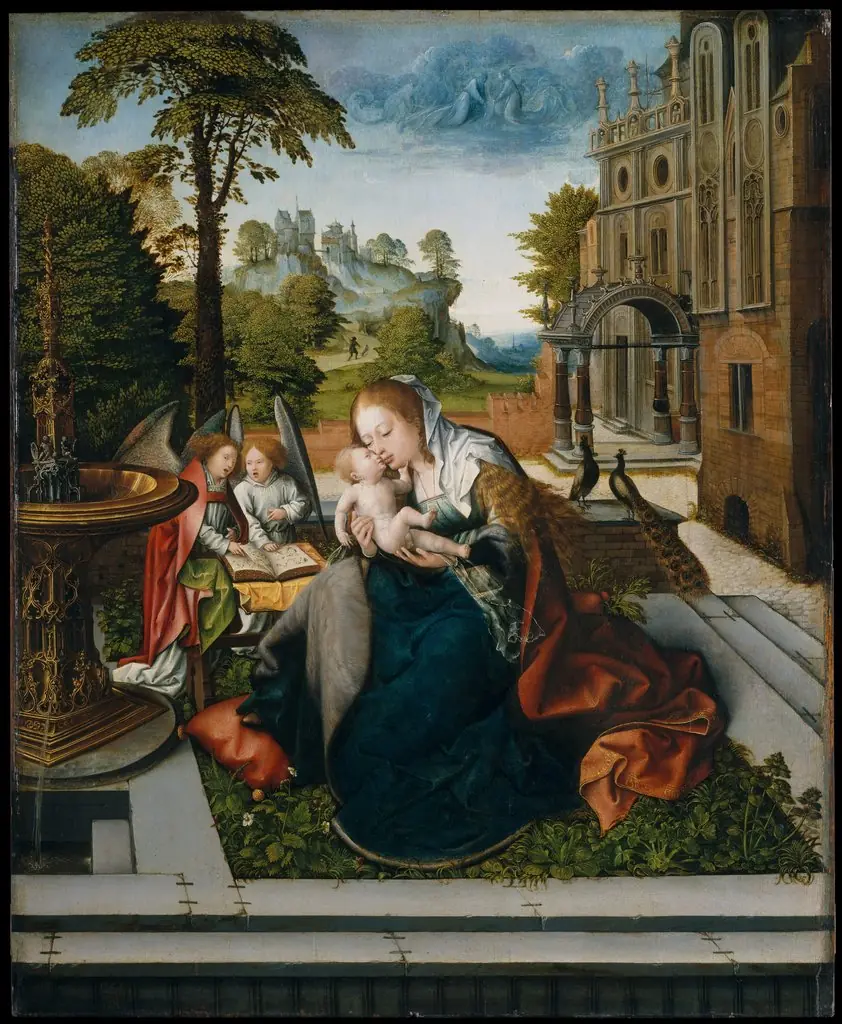 Virgin and Child with Angels
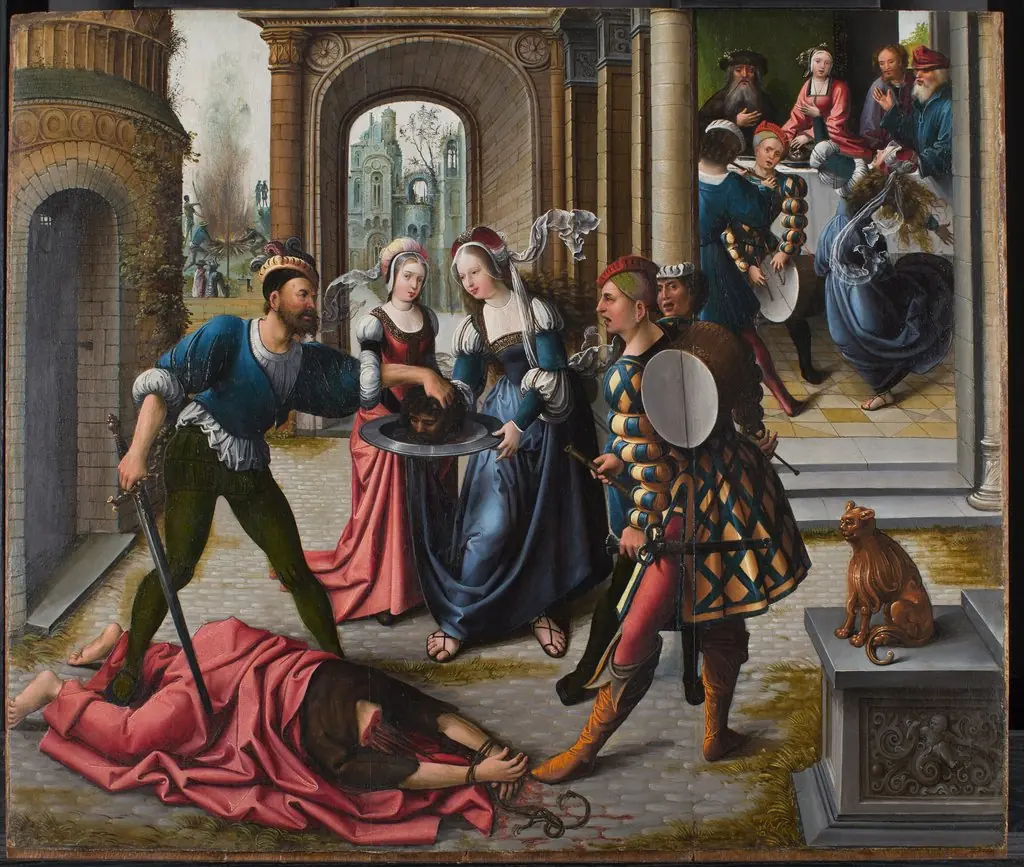 The Martyrdom of Saint John the Baptist
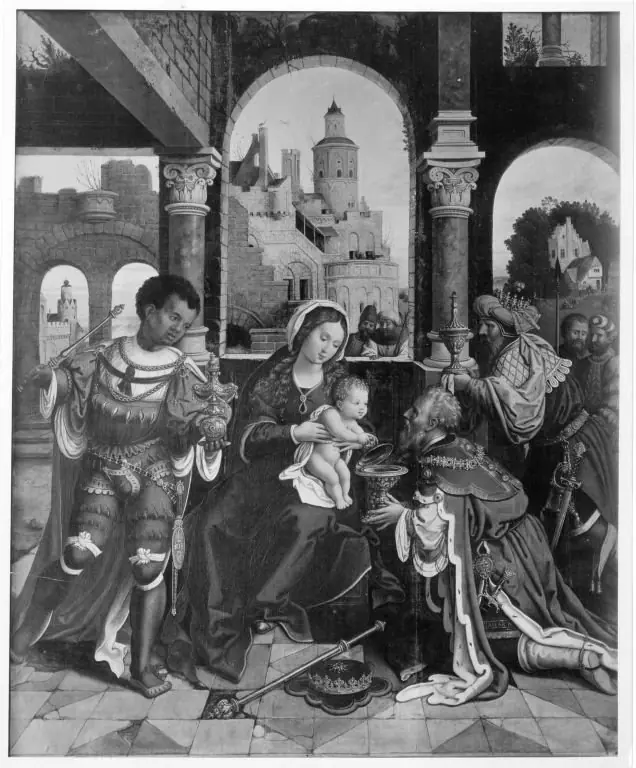 The Adoration of the Magi
![Christ among the Doctors [obverse], by Bernard Van Orley](https://artifactworldgallery.com/img/bernard-van-orley--christ-among-the-doctors-obverse--78795f311364e613-w320.webp) Christ among the Doctors [obverse]
Christ among the Doctors [obverse]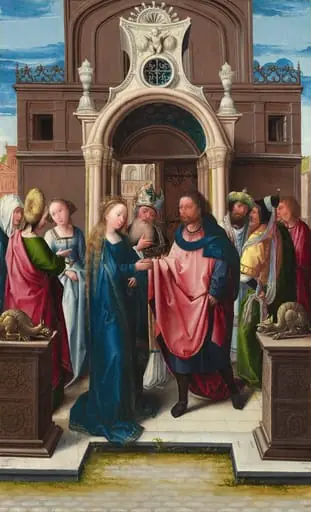 The Marriage of the Virgin
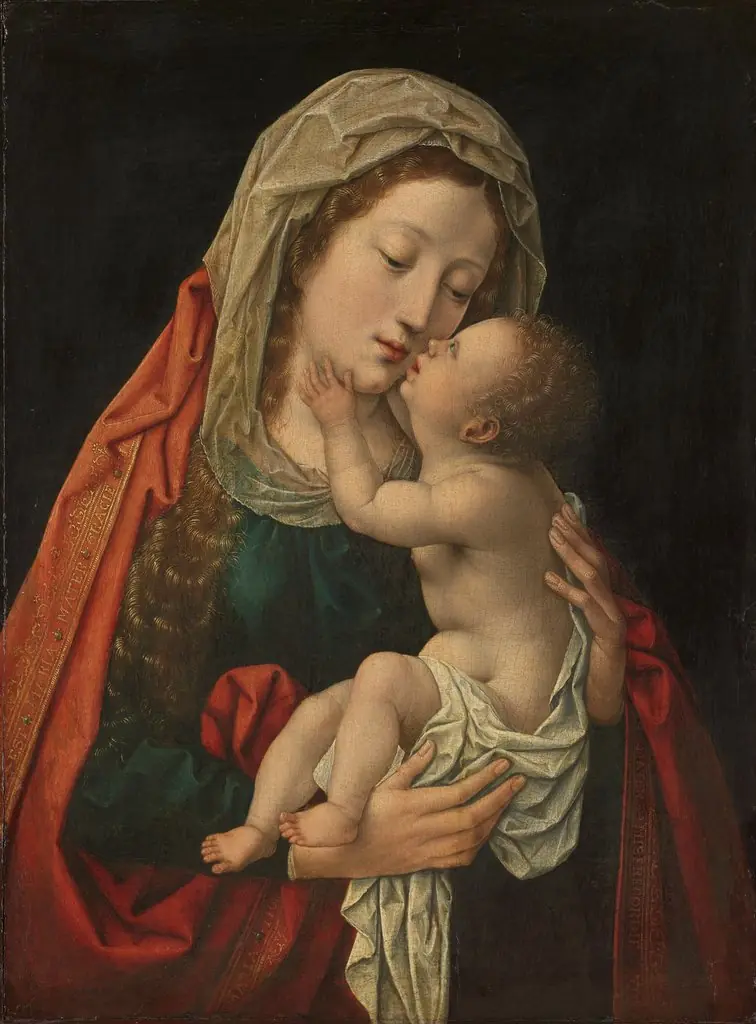 The Virgin and Child
 The Virgin and Child with the Infant Saint John the Baptist