Artwork
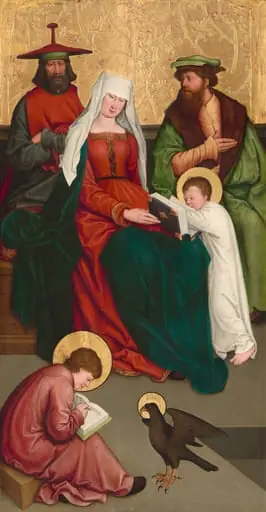
John the Evangelist is taught to write
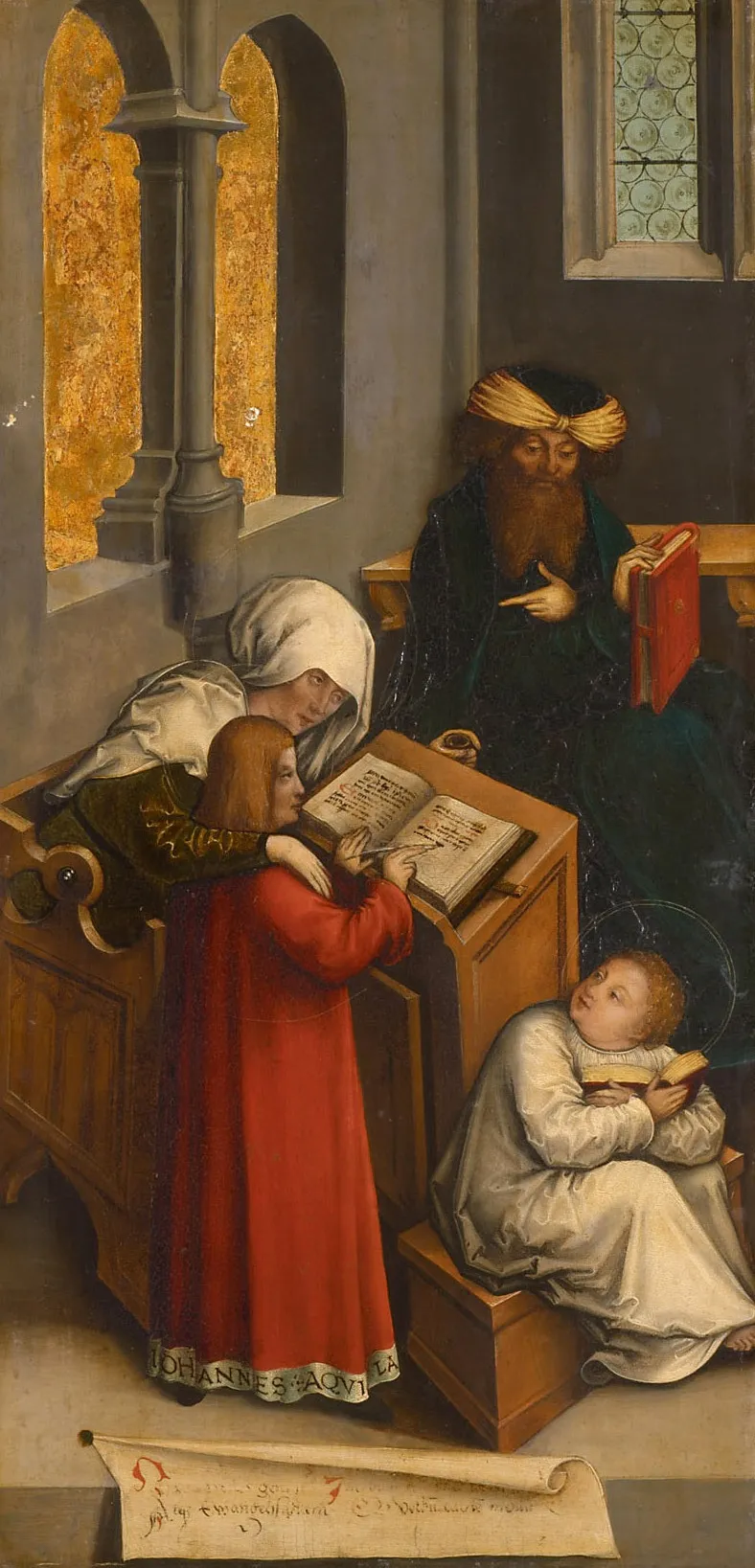
John the Evangelist is taught to write is an oil painting by the Northern Renaissance artist Bernhard Strigel. It dates from 1510 and is held in the collection of the Kunsthistorisches Museum.
About this work
Subject & Meaning
The painting depicts John the Evangelist, one of the four Evangelists and traditionally identified as the disciple whom Jesus loved.
The painting depicts John the Evangelist, one of the four Evangelists and traditionally identified as the disciple whom Jesus loved. According to legend, John was instructed in writing so that he could compose his Gospel, a narrative that established him as the author of one of the four canonical texts of the New Testament.
In Christian iconography, John the Evangelist is conventionally represented as a youthful, beardless figure, distinguishing him from his similarly named contemporary John the Baptist. He is frequently shown with an eagle, his symbolic attribute drawn from the four living creatures of Ezekiel's vision and Revelation, which medieval exegesis associated with the soaring, contemplative theology of his Gospel.
As a religious work by Bernhard Strigel, the painting belongs to the devotional tradition of visualizing the Evangelist at the moment of receiving literacy and divine inspiration, presenting him as both author and inspired witness.
Technique & Style
The work is executed in oil paint on a wooden panel support, identified specifically as spruce. It is classified as a painting within the religious genre and dated to 1510. The panel measures 61 cm in height by 30 cm in width, giving it a narrow, vertical format suited to a devotional panel of this type.
Attribution is given to Bernhard Strigel together with his workshop, indicating collaborative handling of the design and execution rather than a wholly autograph production.
Overview
John the Evangelist is taught to write is a 1510 oil painting by Bernhard Strigel, a prominent German artist of the Swabian school, associated with the Northern Renaissance. The work is part of the Kunsthistorisches Museum's collection.
History & Provenance
Created in 1510, the painting reflects Strigel's work within the Northern Renaissance. His association with Emperor Maximilian I and activity in Augsburg, Innsbruck, and Vienna contextualize the piece within the artistic and imperial circles of the time.
Context
As part of the Northern Renaissance, the painting shares the movement's characteristics of detailed realism and religious themes. Strigel's involvement with imperial courts influenced the work's quality and reach.
Legacy
While specific lasting impacts of John the Evangelist is taught to write on subsequent art movements are not broadly highlighted, it remains a notable example of Strigel's contribution to the Northern Renaissance, valued for its technical and thematic qualities.
Artist & collection
Artist
Bernhard Strigel (c. 1461 – 4 May 1528) was a German portrait and historical painter of the Swabian school, the most important of a family of artists established at Memmingen. He was born at Memmingen and was probably a…

![Margarethe Vöhlin [reverse], by Bernhard Strigel](https://artifactworldgallery.com/img/bernhard-strigel--margarethe-vohlin-reverse--01f4c80425fbb8fe-w320.webp)
![Margarethe Vöhlin [obverse], by Bernhard Strigel](https://artifactworldgallery.com/img/bernhard-strigel--margarethe-vohlin-obverse--435992056faaebf8-w320.webp)
![Hans Roth [obverse], by Bernhard Strigel](https://artifactworldgallery.com/img/bernhard-strigel--hans-roth-obverse--9904e8cf2692db0d-w320.webp)
![Hans Roth [reverse], by Bernhard Strigel](https://artifactworldgallery.com/img/bernhard-strigel--hans-roth-reverse--9e98efc46bbdf23c-w320.webp)
- São Jerónimo entrega o hábito a Santa Eustóquia com Santa Paula
 Virgin and Child with Saint Anne
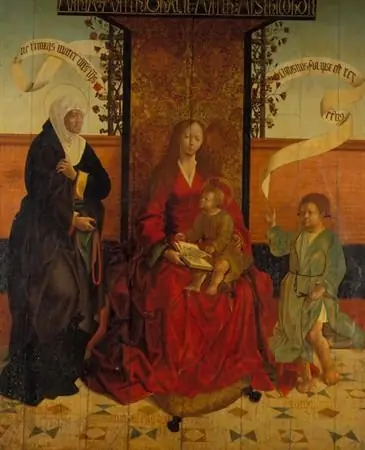 Mary and child, Saint Julita and Saint Guerito.
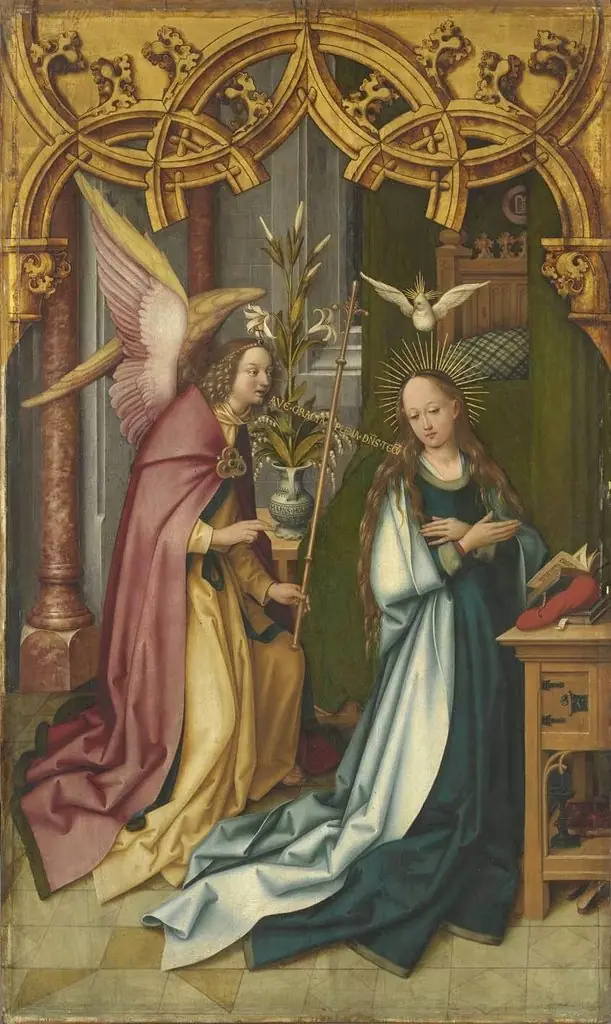 Kaisheimer Altar: Verkündigung Mariens
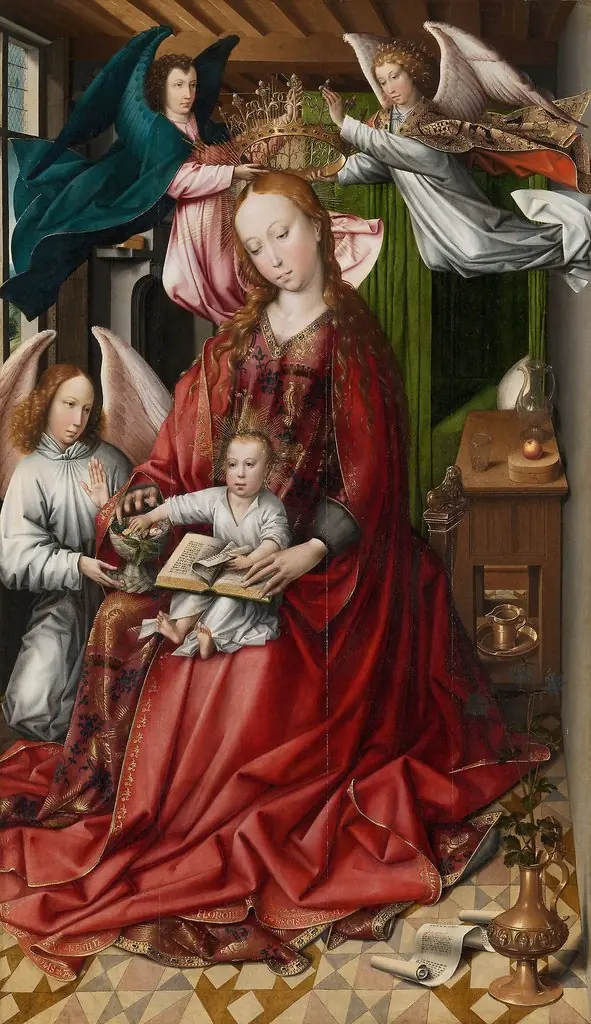 Virgin and Child Crowned by Angels
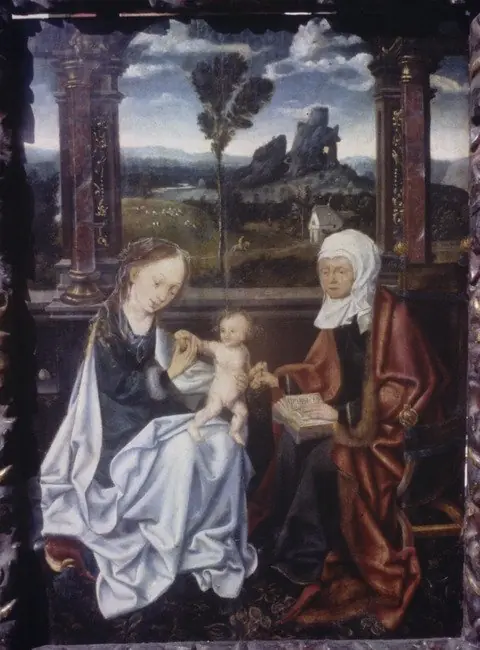 De H. Anna-te-Drieën
 The Education of the Infant Christ
 Madonna and Child with St. Anne.
 Adoration of the Child with St. Benedict and Angels
![The Saint Anne Altarpiece: Saint Anne with the Virgin and Child [middle panel], by Gerard David](https://artifactworldgallery.com/img/gerard-david--the-saint-anne-altarpiece-saint-anne-with-the-virgin-and-chi--781e919f9012a004-w320.webp) The Saint Anne Altarpiece: Saint Anne with the Virgin and Child [middle panel]
The Saint Anne Altarpiece: Saint Anne with the Virgin and Child [middle panel] Christ's Bath