Artwork
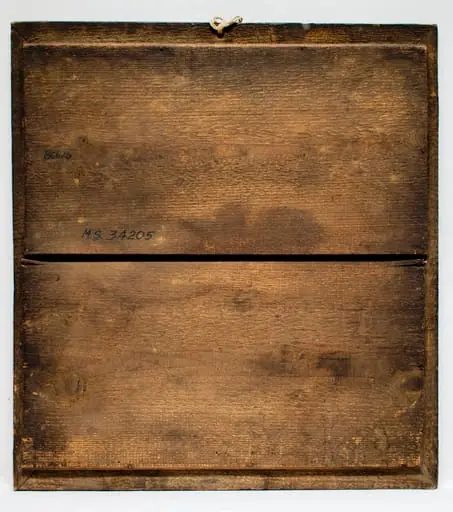
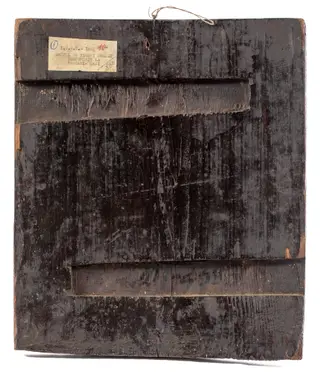
Hans Roth [reverse]
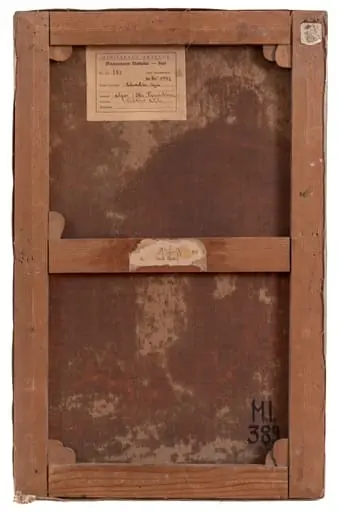
![Hans Roth [reverse], by Bernhard Strigel, oil, 1527](https://artifactworldgallery.com/img/bernhard-strigel--hans-roth-reverse--9e98efc46bbdf23c-w1024.webp)
Hans Roth [reverse] is an oil painting by the Early Baroque Italian artist Bernhard Strigel. It dates from 1527 and is held in the collection of the National Gallery of Art.
- Inscription
- Inscribed:Roth family coat-of-arms center: per pale sable, a unicorn rampant argent, and silver, a fess also s able; crest: a demi-unicorn per fess argent and sable; upper right above coat-of-arms: U.4.
About this work
Technique & Style
The work belongs to the genre of heraldic art, reflecting the sitter’s civic symbolism, and was created in 1527 as recorded in the documentation.
The painting is executed in oil on a wooden panel, a support frequently used in early sixteenth‑century Central European art. Its material comprises oil paint applied to the panel, situating it within the traditional panel‑painting medium of the period. The work belongs to the genre of heraldic art, reflecting the sitter’s civic symbolism, and was created in 1527 as recorded in the documentation.
As a panel painting by Bernhard Strigel, it exemplifies the precise brushwork and formal composition typical of the era, though detailed technical examinations of the surface are absent from the available records.
History & Provenance
Hans Roth [reverse] was painted by Bernhard Strigel in 1527, executed in oil on panel. The work is thought to have originally belonged to Hans Roth (d. 14 March 1573) and Margarethe Vöhlin (d. 5 July 1582), associated with Memmingen, Augsburg, and Ulm. According to a 1988 letter from Anton H. Konrad in NGA curatorial files, the pictures may have remained with the Roth family at the Schloss at Reutti (now Neu-Ulm) until 1890, when bankruptcy forced dispersal of the collection; this proposal remains unverified because the Schloss archive no longer exists.
By January 1922 the painting had passed to Manoli Mandelbaum in Berlin, who consigned it through Julius Böhler in Munich. It was subsequently handled by Paul Cassirer in Berlin before being purchased in March 1922 by Ralph Harman Booth (1873–1931) and Mary Batterman Booth (d. 1951) of Grosse Pointe, Michigan. The Booths gifted the work to the National Gallery of Art in 1947, where it remains today.
The painting is held in the collection of the National Gallery of Art in Washington, D.C. It entered the museum as a gift in 1947 from Ralph Harman Booth and Mary Batterman Booth. Its accession is recorded as part of the National Gallery of Art's holdings, though a specific inventory number is not provided in the documented provenance. Exhibition records for the work are not noted in the available sources.
The provenance traces the work from the Roth family in Reutti (now New‑Ulm) through several dealers before its acquisition by the museum.
Overview
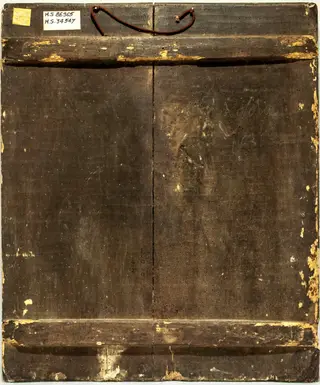
Bernhard Strigel, a German painter associated with the Swabian school, completed Hans Roth [reverse] in 1527. Executed in oil on panel, this work represents the reverse side of a portrait. While the obverse typically features the sitter, the reverse often displayed heraldic devices or inscriptions, providing additional context about the individual depicted. This particular panel showcases a coat of arms, a common practice for such works.
Subject & Meaning
The reverse of the Hans Roth portrait features a distinctive coat of arms set against a vibrant red background. This heraldic emblem includes a horse's head and a shield, elements that would have identified the sitter or their family lineage. Such personal insignia on the back of a portrait served to reinforce the identity and social standing of the individual presented on the primary side of the panel. A brown wooden frame with a grid of bars further encloses the design.
Context
Bernhard Strigel was a prominent artist from Memmingen, active during the early 16th century. He came from a family of artists and likely received his training under Bartholomäus Zeitblom in Ulm, a significant artistic center. Strigel's reputation extended to the imperial court, where he was favored by Emperor Maximilian I. His broader artistic output encompassed both religious subjects and a notable body of portraiture, reflecting the diverse demands of his patrons.
![Margarethe Vöhlin [reverse]](https://artifactworldgallery.com/img/bernhard-strigel--margarethe-vohlin-reverse--01f4c80425fbb8fe-w320.webp)
Own this work as a print
Artist & collection
Artist
Bernhard Strigel (c. 1461 – 4 May 1528) was a German portrait and historical painter of the Swabian school, the most important of a family of artists established at Memmingen. He was born at Memmingen and was probably a…

![Margarethe Vöhlin [obverse], by Bernhard Strigel](https://artifactworldgallery.com/img/bernhard-strigel--margarethe-vohlin-obverse--435992056faaebf8-w320.webp)
![Hans Roth [obverse], by Bernhard Strigel](https://artifactworldgallery.com/img/bernhard-strigel--hans-roth-obverse--9904e8cf2692db0d-w320.webp)
 Suprescu
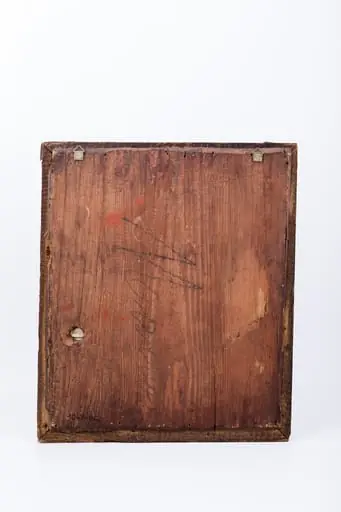
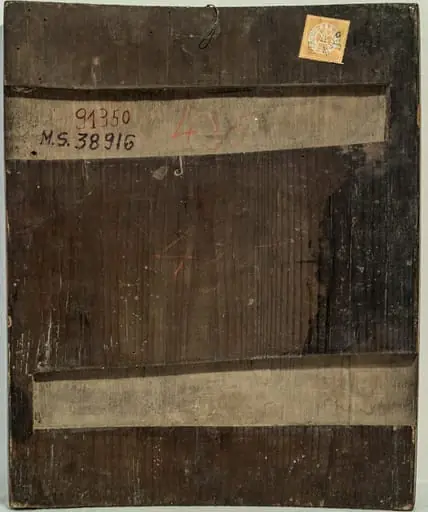 Sfânta Paraschiva încoronată este reprezentată frontal, 3/4, Nimbul trasat cu roșu depășește linia chenarului și partea superioară a coroanei. Tehnica iluminării treptate cu elemente specifice: accentuarea zonei ochilor, tonurile de pământ ale umbrelor. Tunica decorată cu motive fitomorfe ample incizate în stratul de foiță. Mantie închisă în față, cu decor linar și bordură lată cu motive geometrice 3 șiruri de incizii în grund). Pe cap, umeri lăsat pe spate, un maforion de culoare deschisă. În mâna dreaptă, Sfânta ține o cruce mică, rusească, (6 brațe)în stânga un rotulus desfășurat cu inscripția scrisă în limba slavonă: Cred în unul Dumnezeu… alte inscripții: pe chenar de o parte și de alta a nimbului: Chipul Sf. Mucenițe Parascheva Vineri, în colțul stâng al icoanei ѾOН pe nimbul cruciger al lui Iisus, reprezentat ca pe sfântul Keramion. Cromatica: Chenar roșu cu două linii galbene și mărginit cu brun; fond - foița metalică decorată prin incizare, cu chenar multiplu din motive geometrice reteate. Tip Krashnuskha. Pe spate, un timbru al miliței RPR.
 Icoambla
 Maica Domnului, Sfântul Nicolae, Sfântul Gheorghe, Sfântul Mihail
 Cele 4 scene sunt despărțite de un câmp cruciform unde este reprezentat pe Iisus răstignit. La baza crucii, dealul Golgotei și craniul lui Adam asupra căruie se scurge sângele Mântuitorului răscumpărând păcatele. Deasupra crucii, Duhul sfânt sub formă de porumbel, pe fondul unei stele cu 8 colțuri, mai sus, pe nori, Dumnezeu Savaot în veșminte luminate, ținând globul pământesc. În jurul capului nimb înstelat, în 8 colțuri. Pe latura orizontală în dreapta - luna, în stânga soarele, antropomorfizate. Cele 4 scene : stânga sus - Sf. Nicolae în veșminte de arhiereu cu cartea sfântă deschisă în mâna stângă, cu cea dreaptă blagoslovind, la nivelul umerilor pe nori, reprezentată în dreapta Maica Domnului, în stânga Iisus Hristos; dreapta sus - Maica cu Pruncul de tip Eleusa (Teodorovskaia); În registrul de jos, stânga este reprezentat Iisus Înger al Marelui Sfat cu aripi și nimb înstelat. Mâniile le are împreunate la piept. Iisus este reprezentat așa cum era înainte de a se întrupa pe pământ pentru a se arata oamenilor. Inscripția de pe chenar - "IИС ХС Благое Молчание" ("Iisus Milostiv"); scena din dreapta, Maica Domnului cu pruncul privind către un personaj îngenuncheat. Această icoană făcătoare de minuni din Rusia este cunoscută ca fiind vindecătoare de diferite boli fizice și psihice, dar și ca alungătoare a tristeții și ajutătoare a celor stăpâniți de patimi trupești. Pe chenarul lat, partea inferioară a icoanei la stânga Sf. Evdinia și la dreapta Arh. Gavriil. În conformitate cu erminiile icoanelor bizantine, compozițiile sunt fundamentate pe linii verticale și orizontale. Stratul de foiță este imprimat cu motive vegetale, inscripțiile pe chenar cu roșu, cele din interior cu negru.
 Scena Coborârii de pe cruce sau Punerea în mormânt, Plângerea Domnului, se regăsește și pe epitafurile pictate din biserici(picturi pe pânză înfățișând înroparea lui Isus. Acesta se păstrează în altar , în Vinerea Mare, sau vinerea Prohodului fiind așezat pe masa pe sub care trec credincioșii(numită aer), apoi se înconjoară cu el biserica de trei ori iar în final se intră în biserică pe sub acest epitaf, în semn de participare simbolică la îngroparea Domnului) Scena este redată pe orizontală. Prohodul Domnului este redat conform erminiei, aici cu un număr redus de personaje. Isus Hristos, coborât de pe cruce, deasupra peitri mormântului, așezat pe giulgiul susținut de Iosif din Amariteea și Nicodim, ambii în vârstă. Iisus are ochii închiși, mâinile împreunate pe piept, în jurul capului nimb iradiant, influență apuseană. Central, lângă trupul lui Iisus, Fecioara Maria frângându-și mâinile și privind către Fiul ei. Înveșmântată cu maforion cernit și stola brun roșcat. Nimb simplu. În spatele ei , crucea răstignirii, în dreapta evanghelistul Ioan, în stânga Maria Magdalena și Maria lui Nicodim. Doi îngeri înaripați(posibil arhangheli, inscripțiile nu se disting. Concentrarea converge către Iisus, către care privesc și sunt aplecați cu toții. Aureolele redate la o anunită distanță de capul personajelor, sunt inspirate din pictura apuseană. Drapajul veșmintelor realizat cu măiestrie, urmărind anatomia corpului. Fondul brun roșcat, nuanță mai deschisă decât chenarul lat pe care este trecută cu majuscule albe, pe trei laturi, inscripția "Mormânt nou s-a deschis pentru trupul tău preacurat împăratul împăraților" Latura de jos cu stratul pictural deteriorat a fost pictat ulterior într-o nuanță de verde închis.
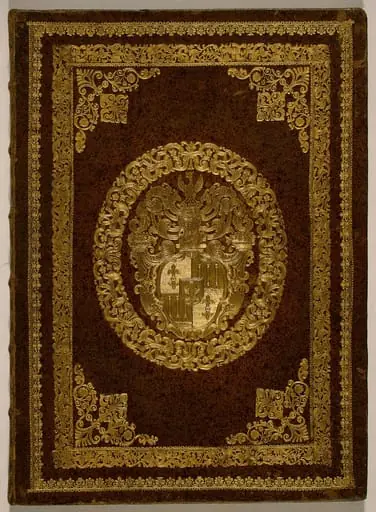 Title Page
 Mănăstirea Cozia
 În centrul icoanei este Crucea, iar în stânga crucii este Sfântul Împărat Constantin, și în dreapta este Împărăteasa Elena, mama sa. Deasupra fiecăruia este inscripționat numele inversat. Veșmintele sfinților împărați sunt pictate cu roșu vermillon, roz, brun, bej, verde kaki. Poartă coroane împărătești și aureole de sfinți, mantiiile de împărați le au prinse la gât cu fibulă. În spatele fiecăruia este câte un înger păzitor. În registrul superior, deasupra crucii, sunt ramuri de finic. Fondul este verde, culoarea Sfântului Duh, la Pogorâre, cu stele albe și roșii, reprezentând cerul și văzduhul de Duh Sfânt. În registrul inferior este o alternanță de câmpuri paralele, cromatizate cu albastru și alb, cu pete și tușe de roșu. Cromatica este armonioasă și puternic vie și pastelată: roșu vermillon, verde spanac-avocado, kaki, roz, brun, bej, albastru, alb, negru. Inscripția dn româno-chirilică se traduce IC XC Iisus Hristos Sf Constantin Sf Elena. Icoana reprezintă pictura Țării Oltului.
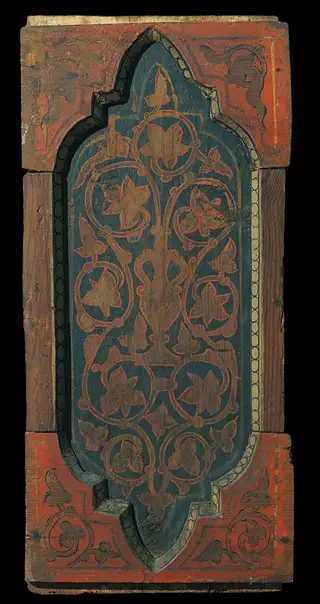 Coffered ceiling panel with plant motifs
 Sfântul Serghie