Artwork
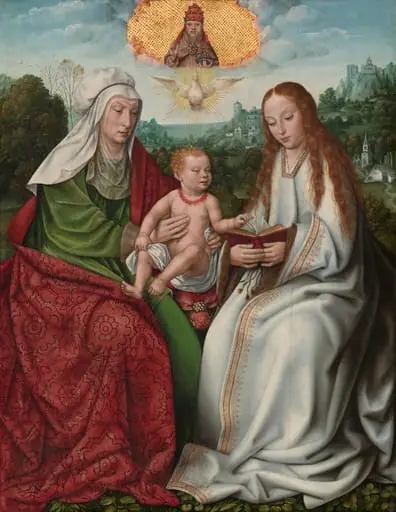
The Saint Anne Altarpiece: Saint Anne with the Virgin and Child [middle panel]
![The Saint Anne Altarpiece: Saint Anne with the Virgin and Child [middle panel], by Gerard David, oil, 1510](https://artifactworldgallery.com/img/gerard-david--the-saint-anne-altarpiece-saint-anne-with-the-virgin-and-chi--781e919f9012a004-w1024.webp)
The Saint Anne Altarpiece: Saint Anne with the Virgin and Child [middle panel] is an oil painting by the Northern Renaissance artist Gerard David. It dates from 1510 and is held in the collection of the National Gallery of Art. This oil on panel painting, titled The Saint Anne Altarpiece: Saint Anne with the Virgin and Child, dates from approximately 1500 to 1520.
- Inscription
- Inscribed:upper center on a band around the Virgin's forehead: SVSSIPE MARIA MATER GRACIE
About this work
Saint Anne sits with the Virgin and Child in an oil panel from about 1510. The figures form a pyramid, a common composition of the period, their faces soft and gentle. The soft transitions of color come from glazing, thin layers built up over time.
Subject & Meaning
Saint Anne, the Virgin Mary, and the Christ Child form an intimate, hierarchical grouping: Anne, as matriarch, supports Mary, who in turn cradles the Child.
The middle panel of Gerard David’s Saint Anne Altarpiece depicts the Holy Kinship, a central theme in late medieval devotion. Saint Anne, the Virgin Mary, and the Christ Child form an intimate, hierarchical grouping: Anne, as matriarch, supports Mary, who in turn cradles the Child. This tri-generational composition underscores the sacred lineage of Christ while emphasizing Anne’s role as the matriarch of salvation.
Symbolically, the arrangement reflects the theological concept of sacra parentela, where Anne’s sanctity is transmitted through Mary to Christ. The tender physical contact, Anne’s hand on Mary’s shoulder, Mary’s embrace of the Child, reinforces themes of divine grace, familial piety, and the Incarnation’s earthly roots.
Technique & Style
Gerard David executed The Saint Anne Altarpiece: Saint Anne with the Virgin and Child in 1510 using oil paint on a wooden panel. The work is a sizable vertical composition, measuring 236.1 cm in height and 97.5 cm in width, which accommodates its religious subject matter depicting Saint Anne, the Virgin Mary, and the Christ Child. The medium and support are characteristic of traditional Early Netherlandish painting, allowing for meticulous detail and rich coloration.
While specific stylistic assessments regarding the artist's handling and the painting's condition are not detailed in the available records, the work's material composition and monumental scale firmly align it with the formal qualities of early sixteenth-century Flemish altarpieces.
History & Provenance
The Saint Anne Altarpiece: Saint Anne with the Virgin and Child was painted by Gerard David in 1510, as evidenced by stylistic and documentary consensus []. Commissioned for an unknown patron, it first surfaced in the collection of Cardinal Antonio Despuig y Dameto in Palma de Mallorca by 1813, remaining with his heirs, the Counts of Montenegro, until at least 1845 []. By 1899, it entered the collection of Léon de Somzée in Brussels, passing to his son Gaston de Somzée before 1902 [,].
Sold via Charles Fairfax Murray to Agnew & Sons (London) in May 1902, it was acquired by the Sedelmeyer Gallery (Paris) in January 1906 []. Eugene Fischhof briefly owned it before selling it in April 1907 to Peter A. B. Widener of Lynnewood Hall, Pennsylvania []. Upon Widener’s death, it was inherited by his son Joseph E. Widener and donated to the National Gallery of Art in 1942 [].
The middle panel of Gerard David's Saint Anne Altarpiece is held in the collection of the National Gallery of Art in Washington, D.C., having entered the institution as a gift in 1942 from Joseph E. Widener via the estate of his father, Peter A. B. Widener. Prior to this acquisition, the work passed through several private hands, including Cardinal Antonio Despuig y Dameto in Palma de Mallorca and the Somzée family in Brussels. Its documented exhibition history includes display at The New Gallery in London during the 1899–1900 season as part of a show featuring Flemish and British masters.
Additionally, the panel was presented at the Exposition des Primitifs flamands et d'art ancien held at the Hôtel de Gouvernement Provincial in Bruges in 1902, where it was listed under the ownership of C. and G. de Somzée.
Context
Documented in 19th‑century scholarship, the middle panel of the Saint Anne Altarpiece appears in Bover’s 1845 catalog and was noted by Justi (1886), establishing early scholarly attention. Its public exhibition at the London New Gallery (1899‑1900) and the Bruges primitive art show (1902) underscored its recognized importance. Provenance records trace the work from Cardinal Antonio Despuig through the Somzée collection to its 1942 acquisition by the National Gallery of Art, reflecting sustained appreciation.
Contemporary analysis places the painting circa 1510 within Gerard David’s oeuvre, highlighting its role in the transition from late Gothic to early High Renaissance devotional imagery and its influence on subsequent representations of Saint Anne.
Legacy
After its execution in 1510, the middle panel of the Saint Anne Altarpiece entered a complex provenance that included ownership by the Despuig family, the Somzée collectors, and ultimately the National Gallery of Art in Washington, D.C., acquired in 1942. Its visibility grew through exhibitions such as the 1899‑1900 London show of Flemish and British masters and the 1902 Bruges exhibition of primitives, signaling early scholarly attention. Subsequent inclusion in major collections and catalogues has positioned the work as a reference point for studies of Early Netherlandish devotional imagery, influencing later interpretations of the Holy Kinship motif.
Overview
This oil on panel painting, titled The Saint Anne Altarpiece: Saint Anne with the Virgin and Child, dates from approximately 1500 to 1520. It depicts Saint Anne, the mother of the Virgin Mary, alongside her daughter and grandson, the Christ Child. As the central panel of a larger altarpiece, it would have formed the focal point of a devotional work, illustrating a significant familial relationship within Christian iconography.
Artist & collection

Artist
Gerard David (c. 1460 – 13 August 1523) was an Early Netherlandish painter and manuscript illuminator known for his brilliant use of color. Only a bare outline of his life survives, although some facts are known. He may…

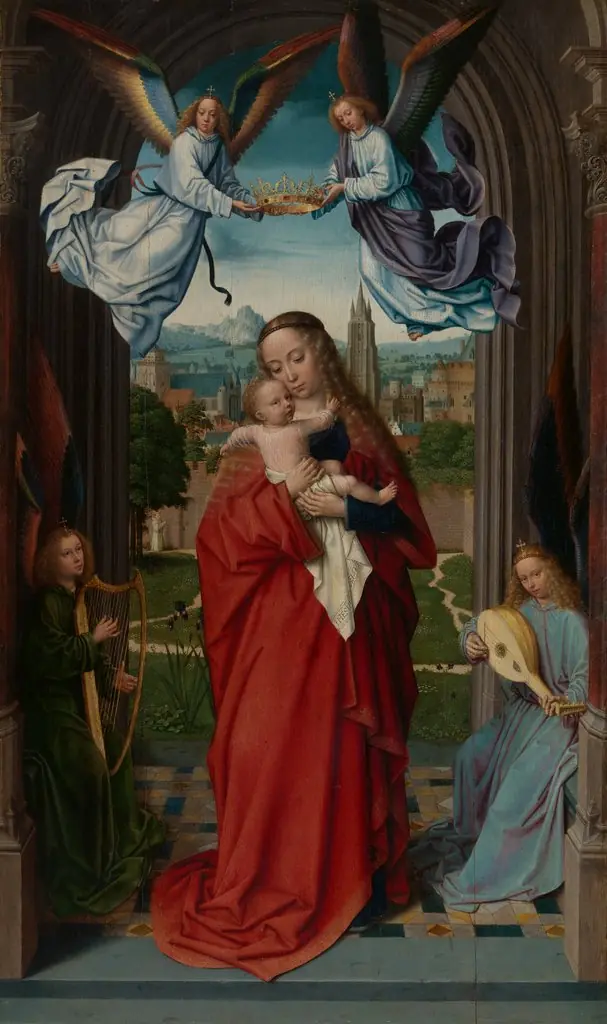 Virgin and Child with Four Angels
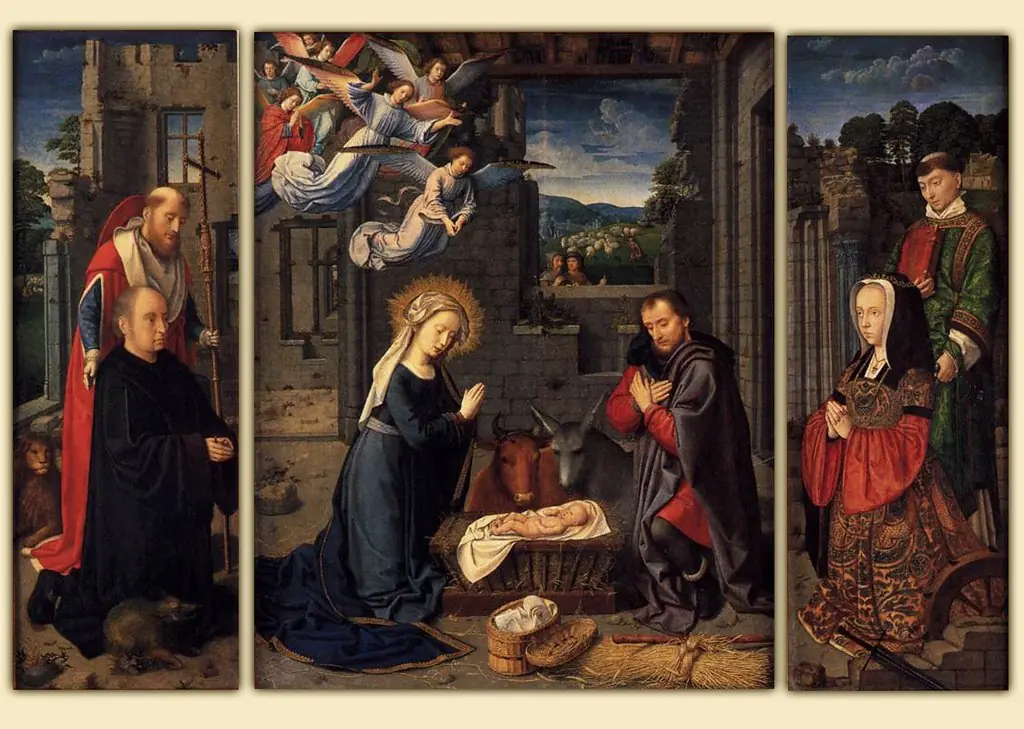 The Nativity with Donors and Saints Jerome and Leonard
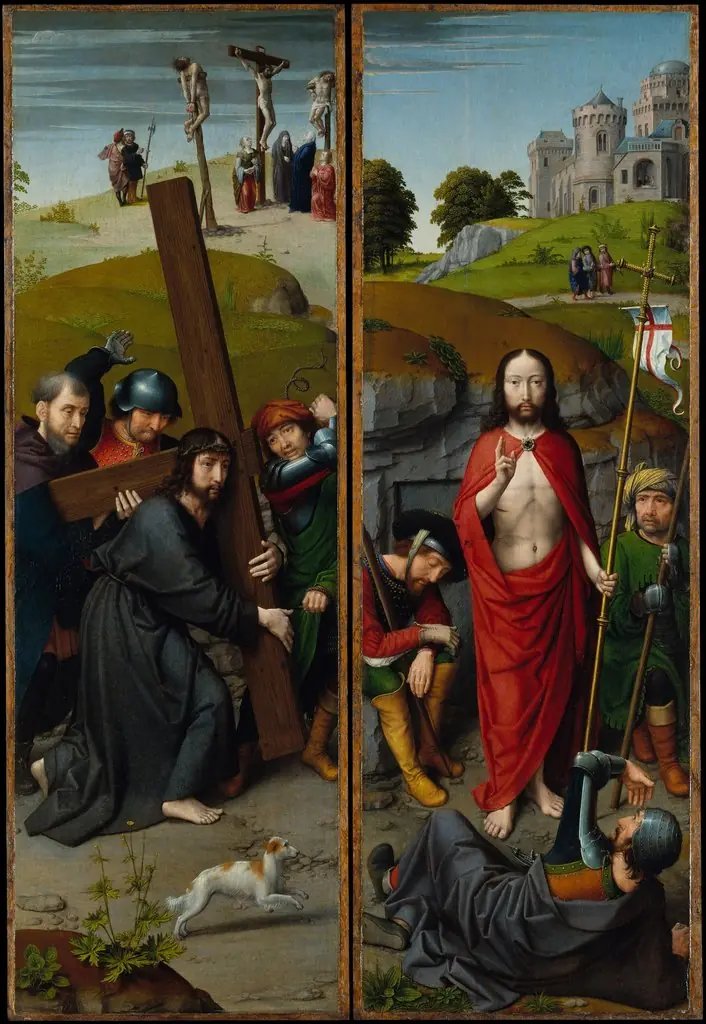 Christ Carrying the Cross, with the Crucifixion; The Resurrection, with the Pilgrims of Emmaus
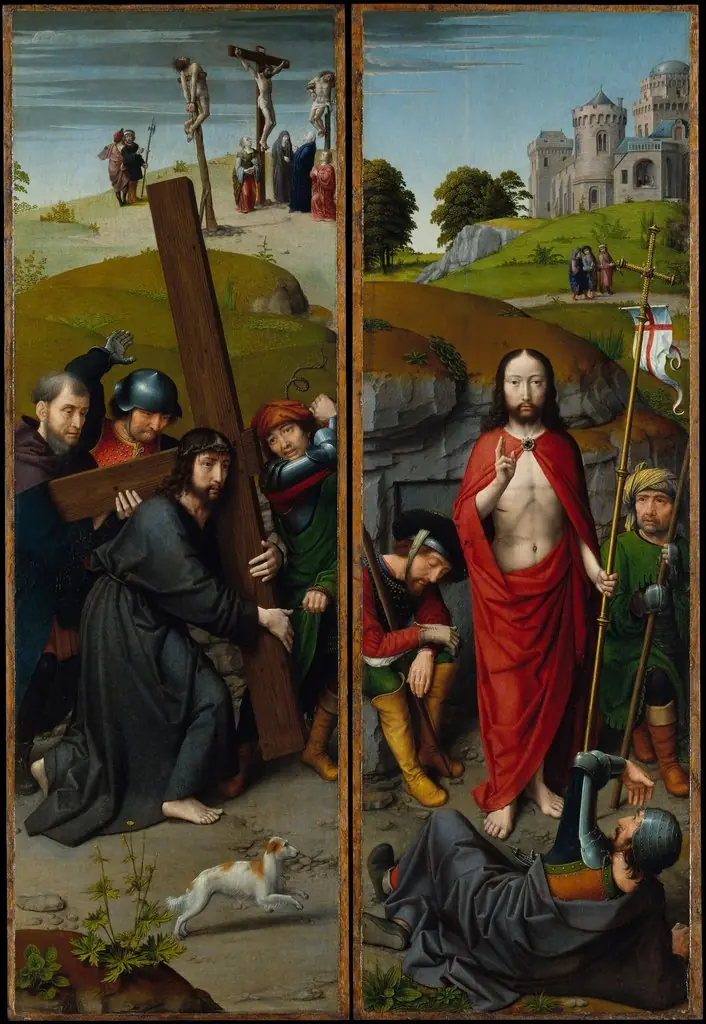 Christ Carrying the Cross, with the Crucifixion; The Resurrection, with the Pilgrims of Emmaus
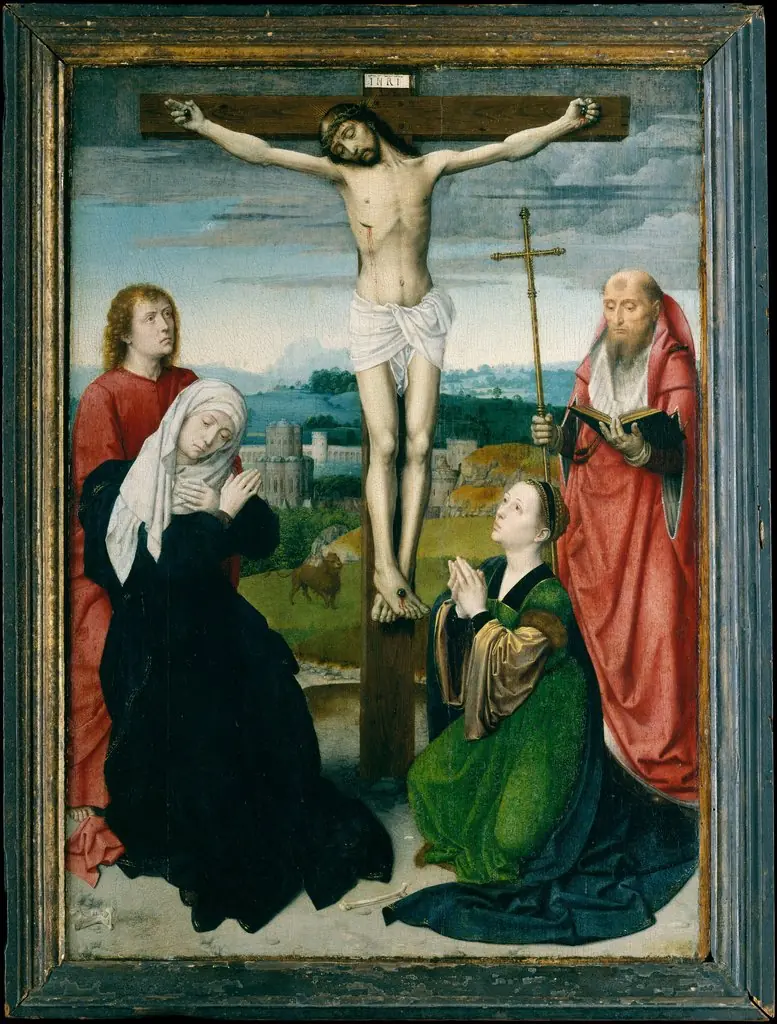 The Crucifixion
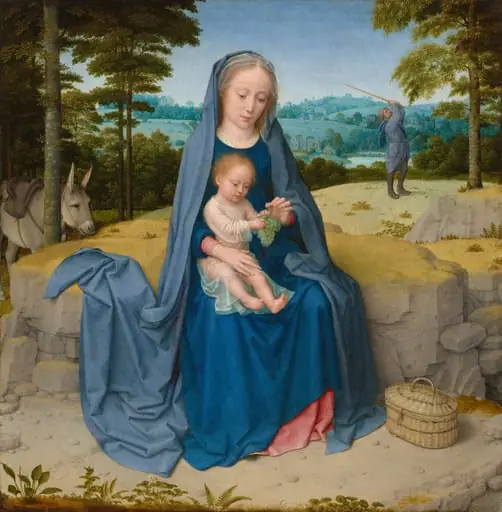 The Rest on the Flight into Egypt
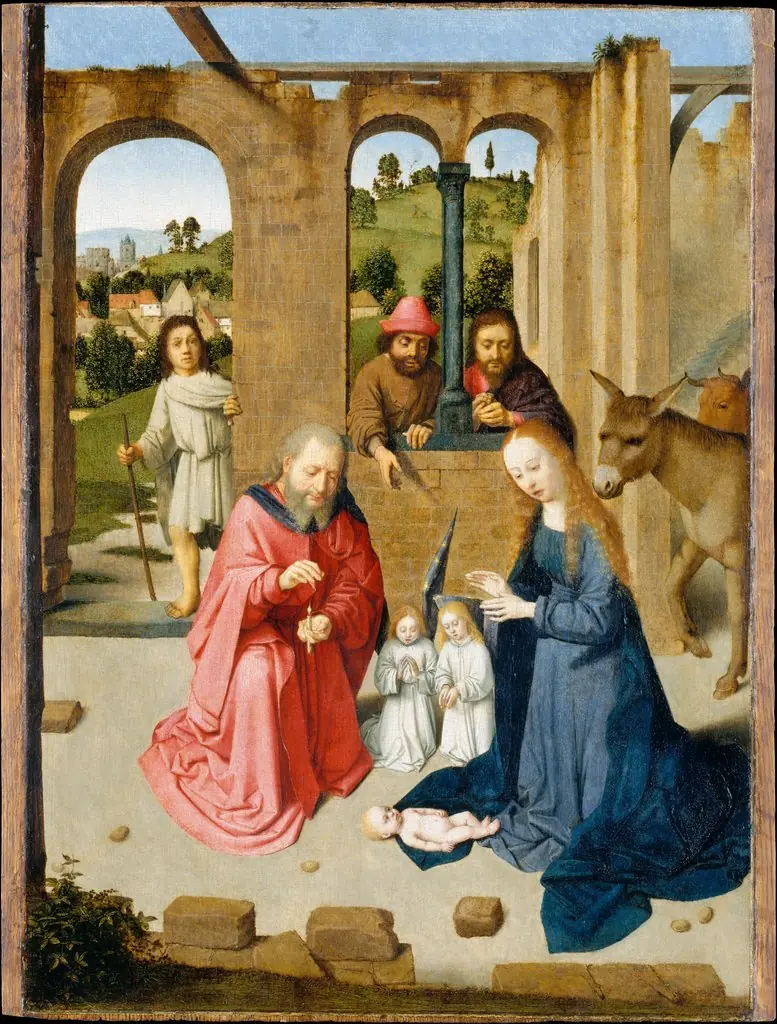 The Nativity
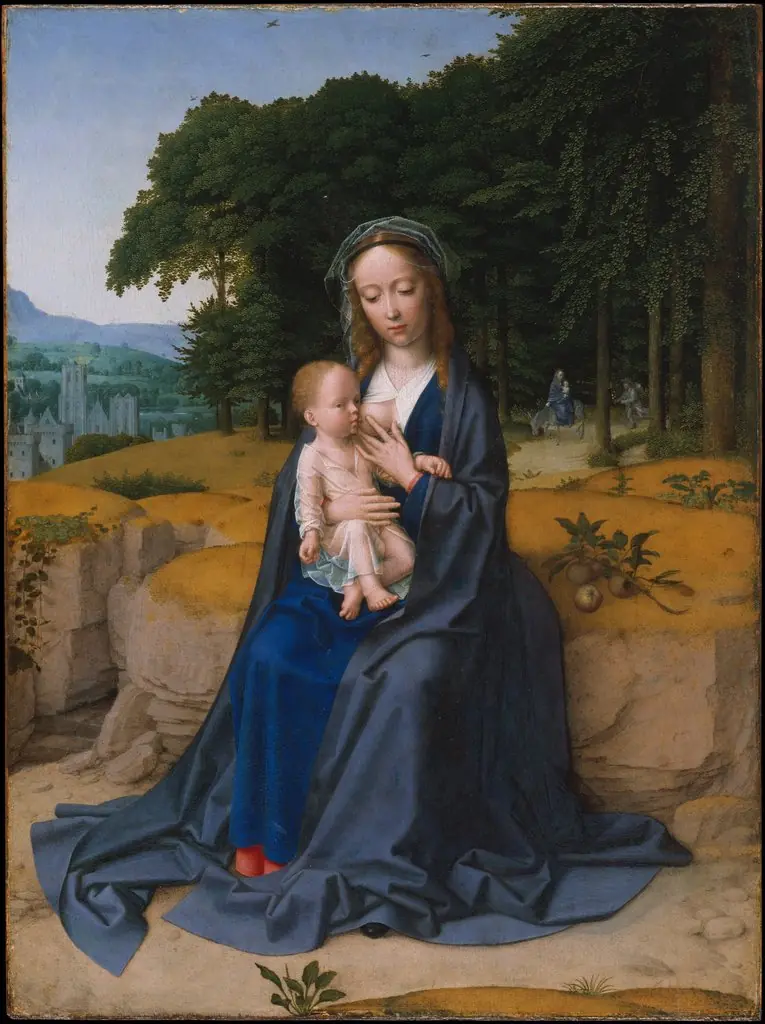 Rest on the Flight into Egypt