Artwork
Saint Mary Salome and Her Family
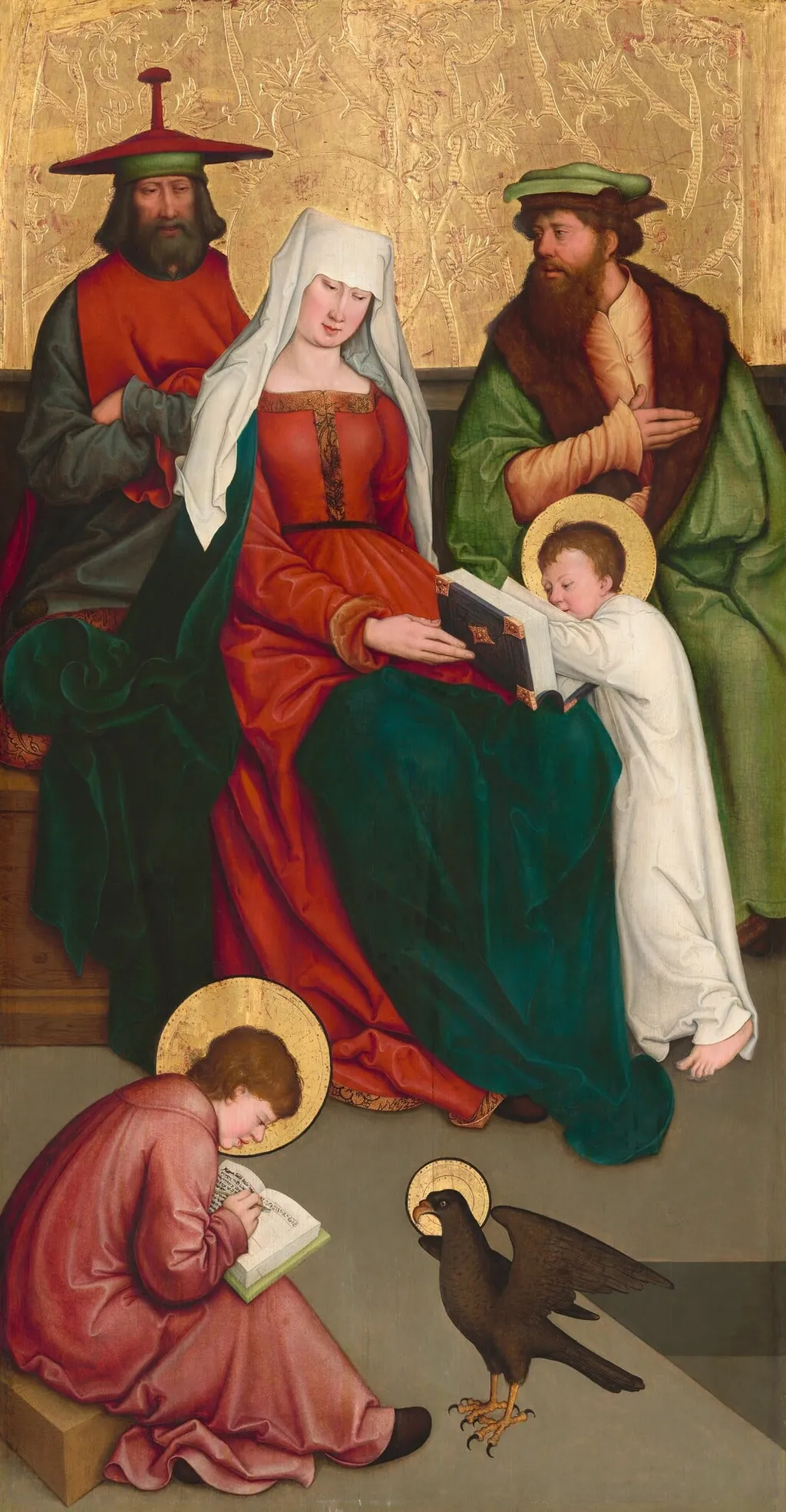
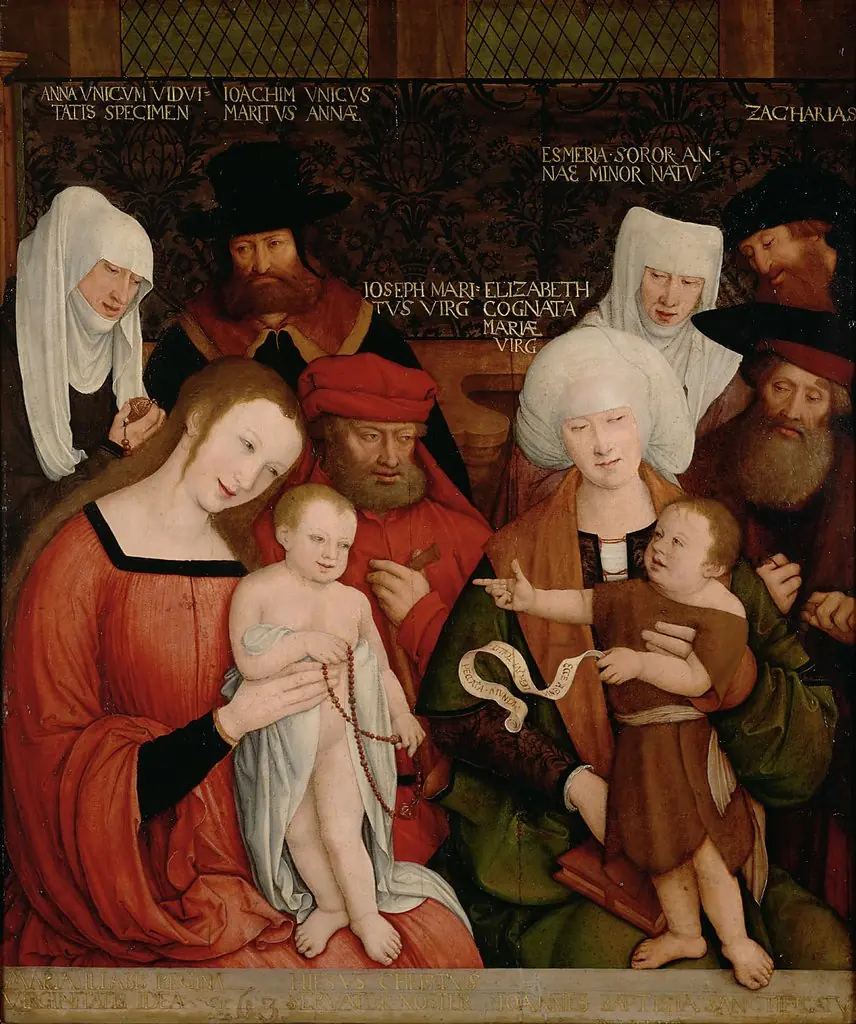
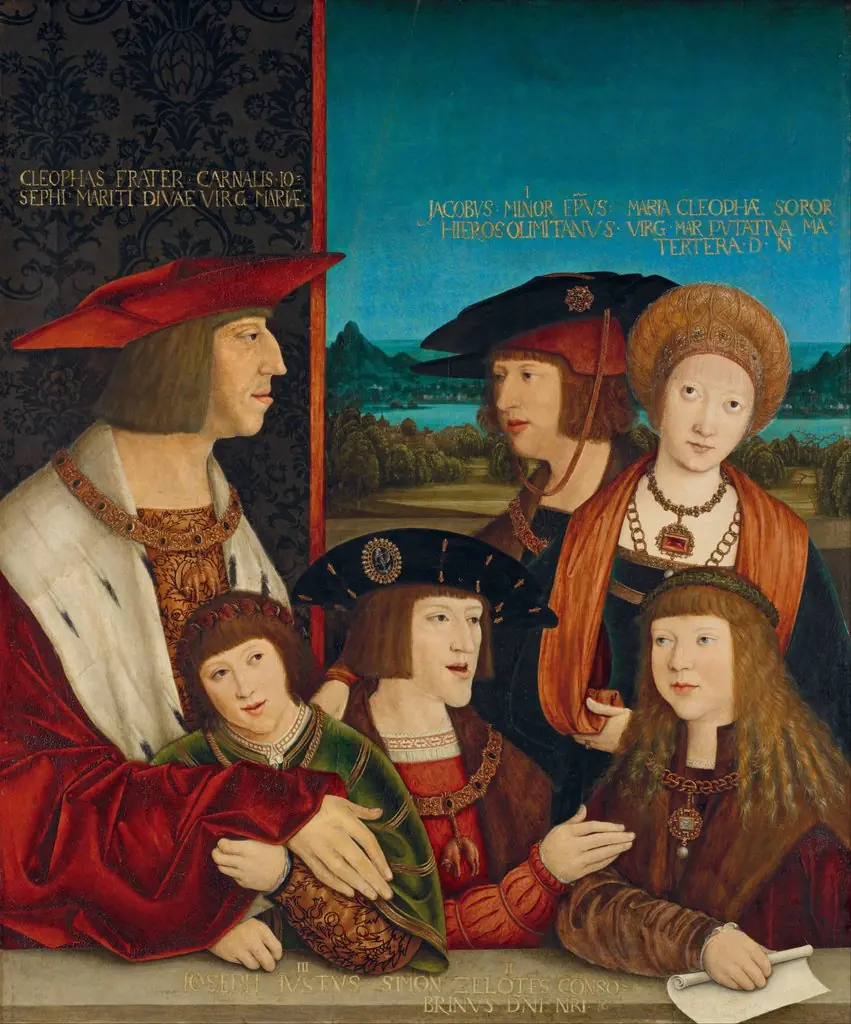
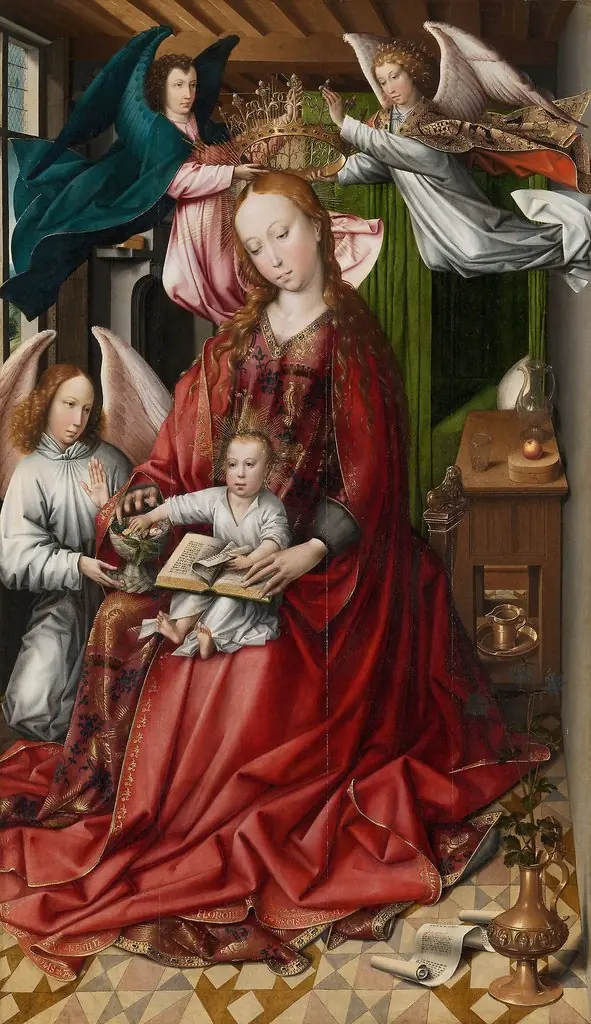
Saint Mary Salome and Her Family is an oil painting by the Northern Renaissance artist Bernhard Strigel. It dates from 1524 and is held in the collection of the National Gallery of Art.
- Inscription
- Inscribed:on halo of female figure: SANCTA MARIA SALOME; on halo of child at cetner: SANCTVS IACOBVS MA; on halo of child at lower left: SANCTV IOHANES EWAN
About this work
Technique & Style
Its composition centers on the standing figure of Saint Mary Salome, whose calm, frontal presence anchors the scene.
Executed in oil on a single oak panel, the painting measures 125 cm in height and 65.7 cm in width.
Its composition centers on the standing figure of Saint Mary Salome, whose calm, frontal presence anchors the scene. The figures are modeled with smooth transitions and a restrained palette, where soft modeling and subtle glazes articulate drapery folds and anatomical structure. The background is a neutral, shadowed space that isolates the group, directing attention to the quiet dignity of the figures and the delicate handling of light across their faces and garments.
History & Provenance
The painting Saint Mary Salome and Her Family by Bernhard Strigel is presently held by the National Gallery of Art in Washington, D.C., where it has been part of the Samuel H. Kress Collection since its acquisition in 1954. The work entered the museum’s galleries in 1956 and was formally gifted to the institution in 1961, remaining on view as part of the permanent collection. Its provenance traces a chain of ownership from early 20th‑century dealers and collectors in Europe to the Kress Foundation, culminating in the museum’s acquisition.
Overview
Bernhard Strigel, a German artist, completed Saint Mary Salome and Her Family around 1524. This oil on panel painting exemplifies the Northern Renaissance style. The work presents a religious narrative, characteristic of historical painting during this period, and reflects Strigel's proficiency in depicting figures and scenes with detailed observation.
Subject & Meaning
The painting portrays Saint Mary Salome and her family in an intimate, domestic setting. Strigel renders the figures engaged in a quiet, seemingly ordinary moment, which imbues the scene with a sense of personal connection. The artist incorporates subtle elements, such as the period clothing and household furnishings, to suggest the everyday life of the family, making the sacred subject relatable to contemporary viewers.
Context
Born in Memmingen around 1461, Bernhard Strigel was a prominent painter of the Swabian school. He specialized in both portraiture and historical subjects, earning the patronage and favor of Emperor Maximilian I. This painting, created in the early 16th century, aligns with the broader artistic trends of the Northern Renaissance, which often combined religious themes with meticulous realism and attention to detail.
Artist & collection
Artist
Bernhard Strigel (c. 1461 – 4 May 1528) was a German portrait and historical painter of the Swabian school, the most important of a family of artists established at Memmingen. He was born at Memmingen and was probably a…

![Margarethe Vöhlin [reverse], by Bernhard Strigel](https://artifactworldgallery.com/img/bernhard-strigel--margarethe-vohlin-reverse--01f4c80425fbb8fe-w320.webp)
![Margarethe Vöhlin [obverse], by Bernhard Strigel](https://artifactworldgallery.com/img/bernhard-strigel--margarethe-vohlin-obverse--435992056faaebf8-w320.webp)
![Hans Roth [obverse], by Bernhard Strigel](https://artifactworldgallery.com/img/bernhard-strigel--hans-roth-obverse--9904e8cf2692db0d-w320.webp)
![Hans Roth [reverse], by Bernhard Strigel](https://artifactworldgallery.com/img/bernhard-strigel--hans-roth-reverse--9e98efc46bbdf23c-w320.webp)
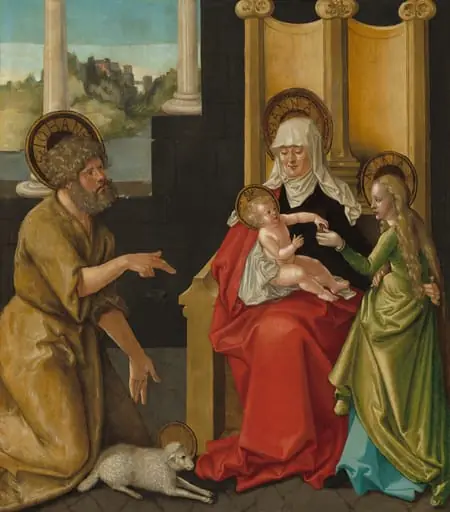 Saint Anne with the Christ Child, the Virgin, and Saint John the Baptist
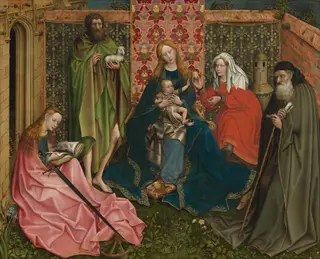 Madonna and Child with Saints in the Enclosed Garden
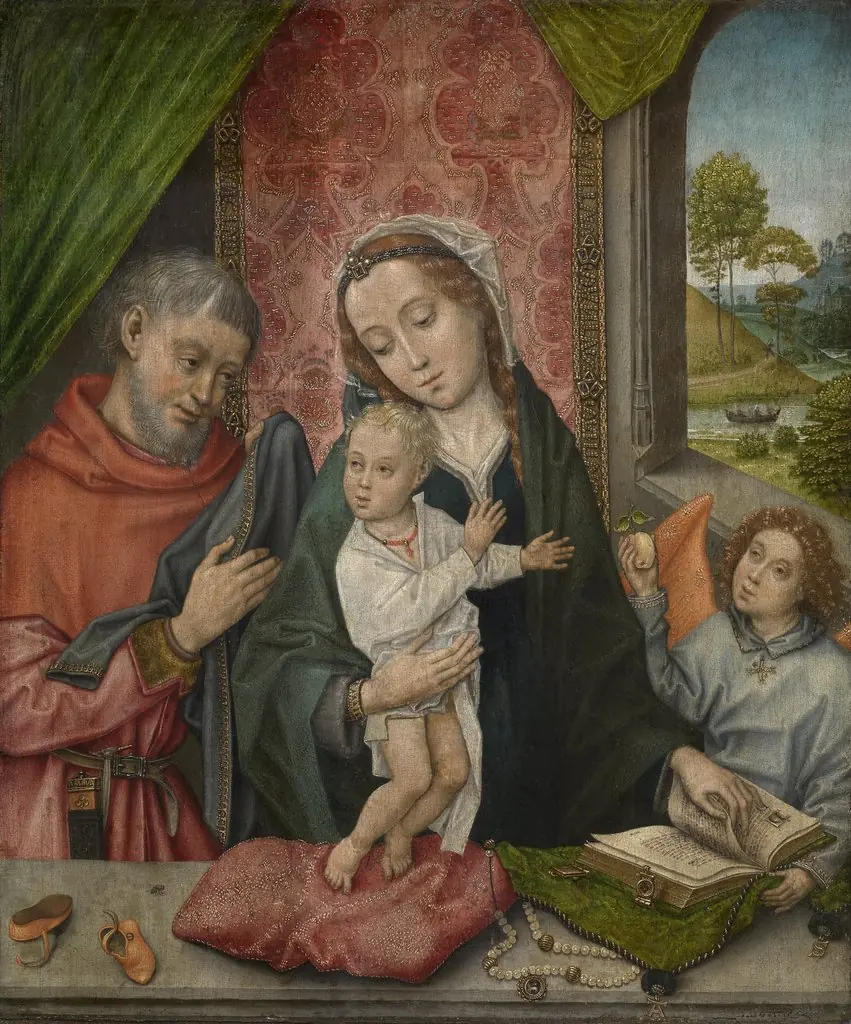 The Holy Family with an Angel
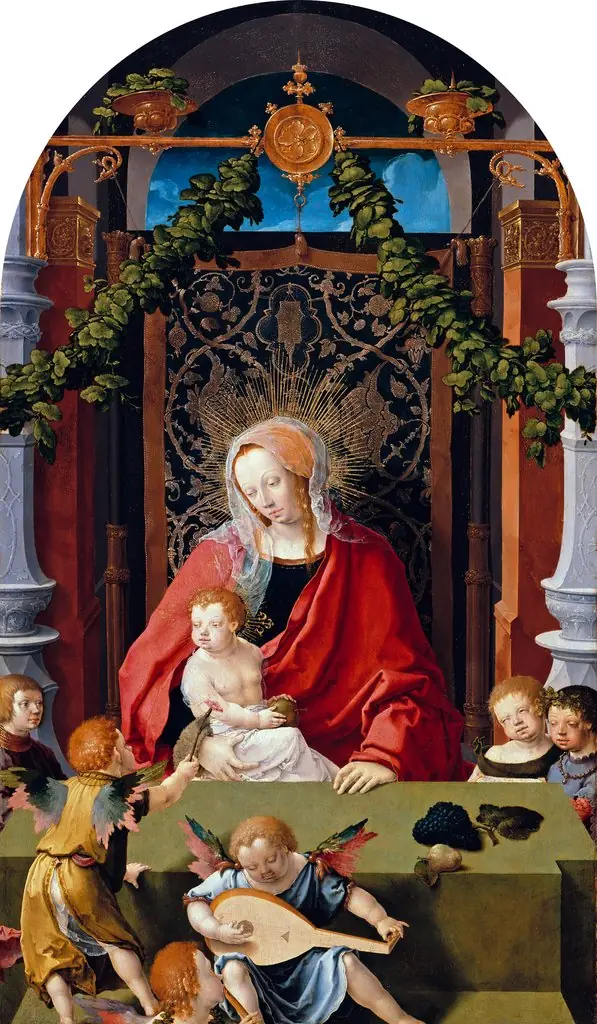 Virgin and Child with Angels
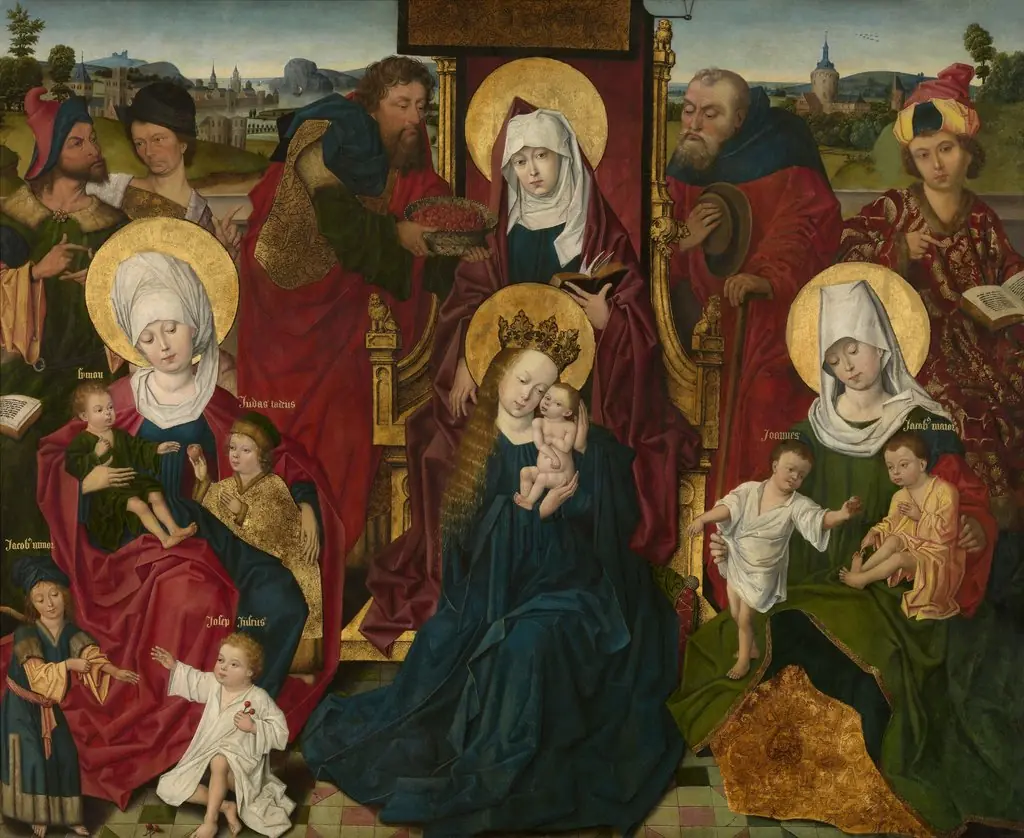 Holy Kinship
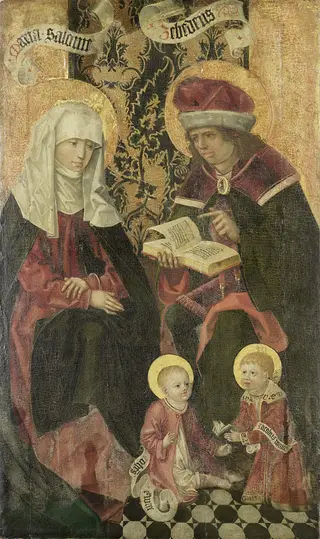 "The Family of Zebedee
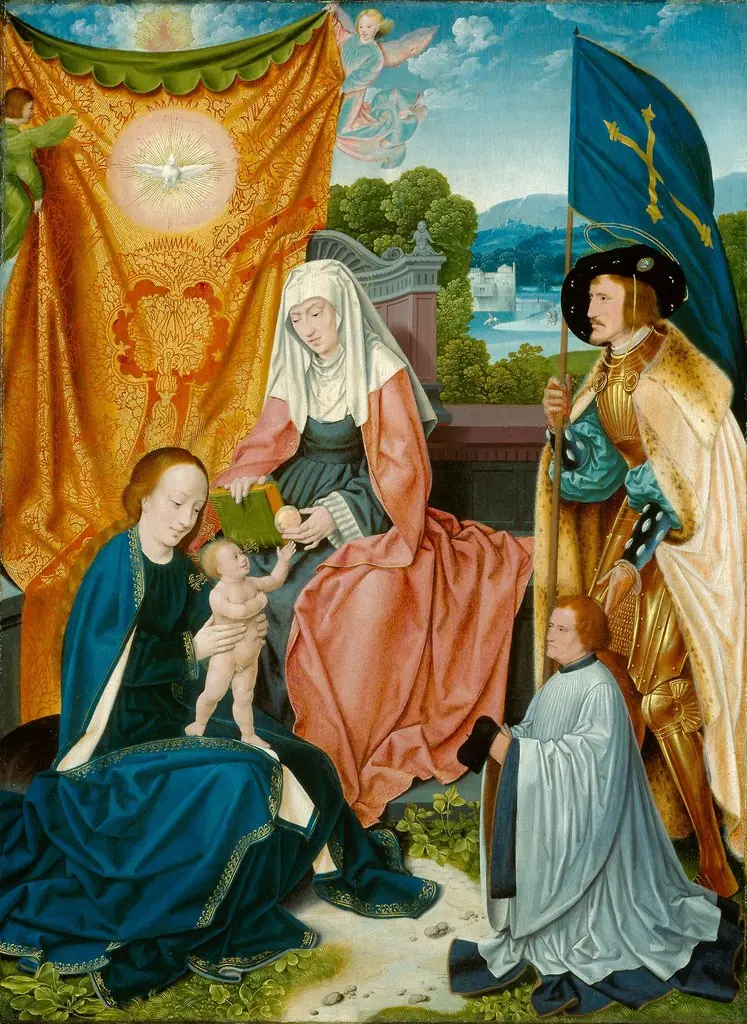 Virgin and Child with Saint Anne, Saint Gereon, and a Donor
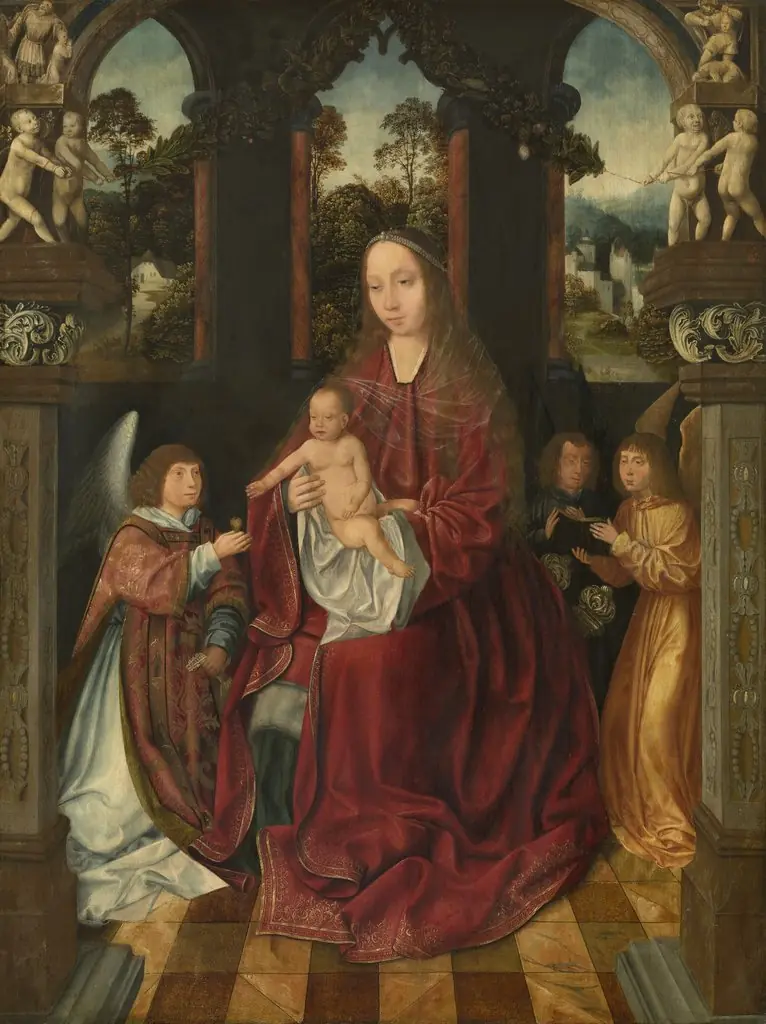 Madonna with Angels
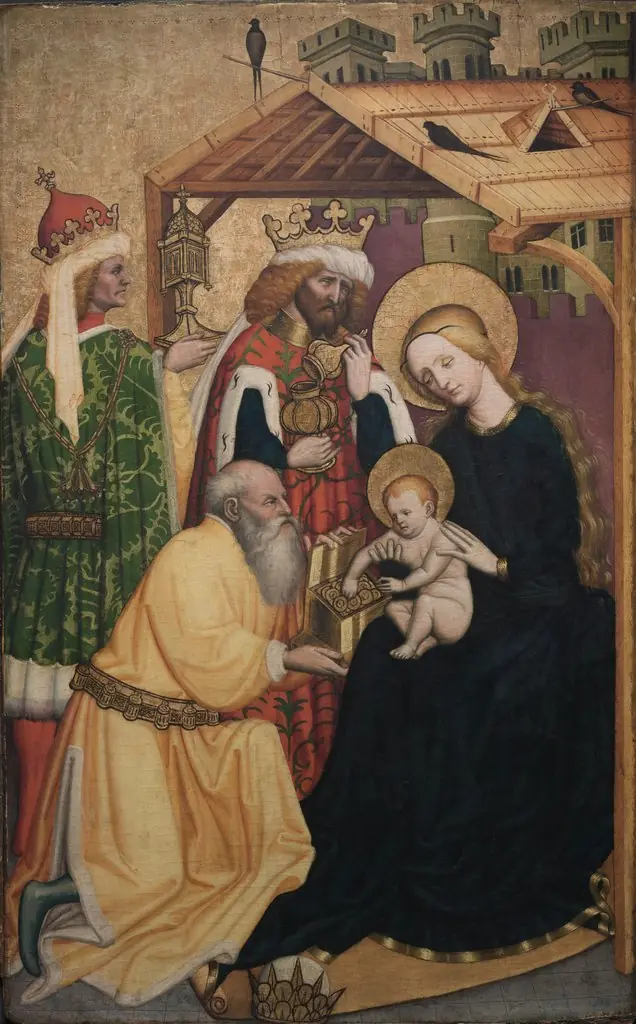 Adoration of the Magi
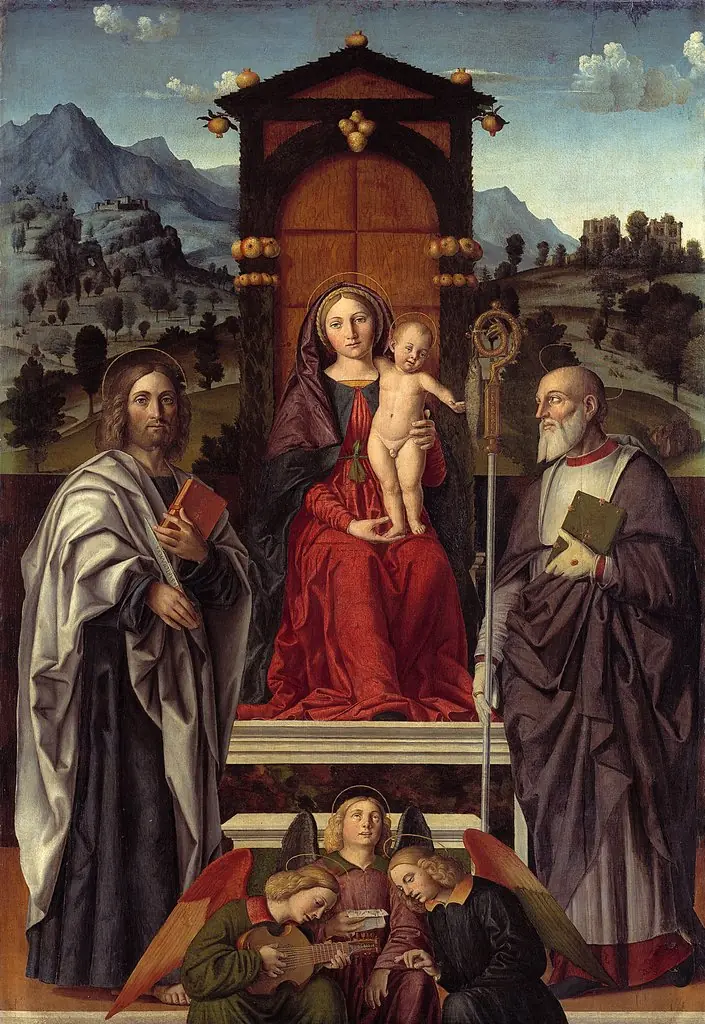 Mary and Child Enthroned with Saints
 Virgin and Child Crowned by Angels